
Experts Matter. Find Yours.
Connect for media, speaking, professional opportunities & more.

Want to save on home loans? Just talk to your peers!
For most of us, finance is complex. Yet making financial decisions is part of day-to-day life. Take mortgages. Around 60 percent of U.S. households have a home mortgage, but how many actually understand its real value? Calculating things like interest rate trade-offs or closing costs is not easy, and research finds that a majority of families make financial mistakes because they fail to understand benefits or savings that might be open to them in refinancing. There are ways to overcome this kind of “information friction”—the obstacles to understanding that make it hard for people to process complex financial ideas and concepts. One of these is education. Ensuring that people have direct access to clear information can help inform household decisions. That seems pretty basic. Another, perhaps less understood, mechanism is the “peer effect”—the way we learn from and are influenced by what our peers or colleagues say or do. A new paper published in the Review of Financial Studies by Gonzalo Maturana, associate professor of finance, takes a fresh look at how the peer effect can help households make better decisions about their mortgages. And he finds that work colleagues and associates can actually have a far greater positive impact on our financial outcomes than we might expect. Together with Jordan Nickerson from MIT’s Sloan School of Management, Maturana ran a large-scale study of a particular U.S. peer group: public school teachers employed by the state of Texas. Here’s what the study found: Where there was a lot of mortgage refinancing going on among teachers in a particular school, individuals were a stunning 20.7 percent more likely to refinance their own mortgage. In other words, they were far more disposed to investigate alternatives and take advantage of the better deals on offer. The peer effect was also a critical factor in their subsequent choice of mortgage lender. Maturana and Nickerson also found that the more savings a particular peer group was making in mortgage repayments, the more refinancing activity there was in that school or teacher network. It is clear. With financial decisions, the network effect can create a positive feedback loop, said Maturana. Household finance and mortgages are top of mind and play a part in most American families – and if you are a journalist looking to cover this topic – then let our experts help. Gonzalo Maturana is an Associate Professor of Finance at the Goizueta Business School. He is an expert in the areas of corporate, household and real estate finance. Gonzalo is available to speak to media regarding this topic – simply click on his icon now to arrange an interview today.



October is Disability Awareness Month - contact a UMW expert if you are covering
One in four Americans lives with a disability, according to the Centers for Disease Control and Prevention. At the University of Mary Washington, it’s one in eight. “With those sorts of numbers, it’s mind-boggling [that] disability doesn’t have more automatic inclusion when people think about diversity,” said UMW Professor of English Chris Foss. As the Americans with Disabilities Act’s 30th year and October’s Disability Awareness Month shine a light on one of the country’s most underrepresented groups, so does a new UMW course. Offered for the first time this fall, Intro to Disability Studies (IDS) delves into the 21st-century experience of a diverse population, exploring cognitive, sensory, mobility and other differences as just as essential to the human condition as gender and race. The 16-week course fans out across disciplines, examining disability throughout the lifespan in historical, political, social and other contexts. Years in the making, the class is team-taught by faculty and staff – from art history, education, English, historic preservation, psychology and the Office of Disability Resources (ODR) – who’ve poured their time and passion into the topic in hopes it gains traction. “It took a lot of meetings, discussion and work on Google Docs to pull this together,” said Professor of Art History Julia DeLancey, who borrows from her first-year seminar, “The Beauty Difference Gives Us,” to deliver an IDS session on how disabilities affect artists’ work. If you are a journalist looking to cover Disability Awareness Month and the Americans with Disabilities Act’s 30th year, then let the experts from the University of Mary Washington help with your story. Dr. Julia DeLancey and Dr. Chris Foss are available to speak with media about this important topic – simply click on either icon to arrange an interview today.




Volunteers receiving government aid while unemployed face scrutiny, bias from public
With the worldwide spike in unemployment caused by the COVID-19 pandemic, many people may turn to volunteerism as a way to pass their newly found free time. But new research suggests that volunteers who also receive government aid are often judged negatively as "wasting time" that could be used to find paid employment. "We found that aid recipients are scrutinized to a greater extent than those who are working, including the underemployed, with observers demonstrating a strong bias toward believing that aid recipients should be using their time to pursue employment opportunities above all else," said Jenny Olson, an assistant professor of marketing at the Indiana University Kelley School of Business and corresponding author of the research forthcoming in the International Journal of Research in Marketing. "This is beyond education, personal leisure, and spending time with family and friends. "As a result, they are given less latitude in how they use their time, and can even be seen as more moral for choosing not to engage in prosocial behaviors, when such behaviors take time away from gaining paid employment," Olson added. "The simple act of volunteering among aid recipients -- versus not mentioning volunteering -- not only shapes judgments of the individual aid recipients, but this information can also impact views toward federal tax policy more broadly." Although volunteering is a positive activity that partially combats the negative stereotype of a welfare beneficiary, Olson and her colleagues found that it also sparks anger among observing consumers, with aid recipients being perceived as being "less moral for choosing to volunteer." Factors that minimize these judgments include being perceived as taking strides toward gaining employment via education and being perceived as unable to work. Other co-authors of the paper, "How Income Shapes Moral Judgments of Prosocial Behavior," are Andrea Morales of Arizona State University, Brent McFerran of Simon Fraser University in Canada and Darren Dahl of the University of British Columbia. The research was supported in part by grants from the Social Sciences and Humanities Research Council of Canada. According to a 2019 report from the Organisation for Economic Cooperation and Development, public spending on government assistance averaged more than 20 percent across 36 countries in 2018. Many countries -- including those in Asia, Europe, and the Americas -- have seen a rise in the number of people receiving benefits over the years, a total now reaching into the billions. The extent to which the welfare state is supported depends, in no small part, on public sentiment. Previous research has shown that support for government spending on welfare programs is directly related to how the voting public perceives the beneficiaries. This is the first paper to document a link between prosocial behavior and support for federal spending on welfare programs. "Given that individuals perceive opportunity costs for their own time, it stands to reason that they perceive them for others as well," Olson said. "Because government programs are supported by 'their' taxpayer dollars, observers often feel justified in suggesting how aid recipients spend their time." The research shows that consumers prefer different patterns of tax redistribution as a function of viewing aid recipients making nonfinancial choices. Specifically, consumers support allocating fewer tax dollars toward supporting government assistance programs after hearing about an aid recipient who volunteers his time. Researchers conducted nine studies across three countries. They randomly presented participants with scenarios about hypothetical aid recipients and asked them to offer judgment about how the recipients used their time, such as engaging in volunteer activities or sending out resumes. Participants were asked how they viewed target individuals on a morality index and how they felt about them emotionally. For interviews with Jenny Olson, contact George Vlahakis at 812-855-0846 or vlahakis@iu.edu.


Start Your Children's Day Off Right So They Can Be Productive at School
Though the 2020 school year may be very different from past years, it's still an ideal time to get kids back on track—with their activity, nutrition and overall wellness to support a productive and happy school year. Breakfast is an important meal for kids and should not be overlooked. According to the Academy of Nutrition and Dietetics, kids who eat breakfast in the morning are more alert during the school day and perform better. If you don’t have a lot of time for a sit-down breakfast, try brown-bagging it with a banana, a bag of trail mix made with whole-grain cereal, shelled pistachios and a favorite dried fruit (like diced apricot, pineapple or mango). "When it comes to school lunches, even if lunch break this year means your child is sitting at your kitchen table and not at the school cafeteria, that does not mean you can't have fun and pack a nutritious lunch," says Rebecca Shenkman, MPH, RDN, LDN, director of the MacDonald Center for Obesity Prevention and Education at Villanova's M. Louise Fitzpatrick College of Nursing. A continued favorite lunch box fad for kids is the Bento Box lunch. "These sleek lunch boxes offer an easy way to provide a visually appealing meal for kids while helping parents compartmentalize and assemble a healthy meal by placing a different food group in each section," says Shenkman, who suggests cut-up grapes, whole wheat crackers with peanut butter, cheese sticks and sliced cherry tomatoes—"anything to get kids to eat healthier and that you can keep in the fridge until they're ready to eat knowing that you provided them nutritional energy for the day."


Canadian's Digital Behavioral Shifts in Relation to the The Coronavirus Pandemic
This article is part of a series of insights that reveal a Canadian perspective on the impact of the COVID-19 pandemic on consumer behavior and significant audience shifts across digital platforms. Things are moving fast. Following our last update regarding digital media consumption during the Coronavirus pandemic, this article will highlight some of the major category changes reflected as of the week March 16 - 22, 2020. Key Insights from Our Analysis Digital consumption continues to grow: the visits and minutes curve is not flattening Key content categories such as news, social media, and government are being driven by higher engagement: metrics include visits and duration More engagement with news sites: sites categorized as local, business/finance, and general news are main drivers Categories that focus on entertaining, kids, food, financial advice, and children’s education are also seeing growth: growth comes from increases in aggregate unique visitors, visits and minutes Automotive manufacturers, real estate, sports and travel entities have seen decreases: however, they are poised for major increases and a bounce back. Mobile platforms are driving growth: some differences between desktop and mobile engagement Canadian's total digital consumption continues to grow When we analyzed Canadian total digital media consumption to compare the percentage change between the week of March 16, 2020 and the first weeks of January 2020, February 2020, and March 2020, we found that overall digital engagement is not flattening. Even comparing the beginning of March against mid-March, we can see visitation, visits, and engagement continuing to grow. Looking at the total digital consumption trend over time, we can see growth in total minutes spent online while total visits have remained relatively flat. Media Consumption Growth by Category There are several content categories that we are seeing major growth in each of the time periods: These digital categories of news/information, social media, entertainment, government and games are showing continuous growth. The need for ongoing news and information updates, government information, flocking to social media to bring community together and message, and the need to be entertained with visitation and engagement on Entertainment and Games Entities. News and Information Category Insights To look at the news/information category a bit closer – it is amazing to see the category growth over the past few weeks of Canadians going to news entities to get updates. The hockey stick growth from the start of March 2020 is very evident. The news and information growth is being driven by local news, general news, and business/finance news. That being said – technology, politics, and weather are also seeing growth. Through these time periods, we are also seeing some other categories that are showing significant growth. Many of the categories are a result of many Canadians being home bound and isolated, and with families with kids having the kids at home. Platform Variance for Media Consumption One of the areas that we have been asked most about is whether we find any variances between desktop and mobile platforms. When reviewing the data, there is greater engagement with mobile platforms in the week of March 16 compared to other weeks. Amidst the global COVID-19 pandemic, we are seeing a significant increase in digital consumption amongst Canadian consumers. The data trends show Canadians are flocking online with significant growth in news entities, instant messaging, social media, government resources, entertainment, music destinations, video, and financial websites. What this means for marketers and advertisers is a significant opportunity to reach Canadians who are highly engaged and are looking for relevant and timely content. It comes down to delivering the right message, at the right time, in front of the right audience, in brand safe environments.



Insights and Analysis of Canadian Digital Media Consumption During the Coronavirus Pandemic
In the midst of the COVID-19 crisis, millions of Canadians are staying home and turning to their computers, smartphones, and tablets as a core source of news, information, education, and entertainment. This article is part of a series of insights that reveal a Canadian perspective on the impact of the COVID-19 pandemic on consumer behavior and significant audience shifts across digital platforms. This week we will highlight some of the major category changes reflected as of the week March 23 - 29, 2020. Key Insights from Our Analysis: Digital consumption continues to grow, although at a slower pace Canadians are still consuming news at a record pace, but growth is slowing Sports and Real Estate declines are slowing Retail overall is stable but key categories like Toys, Apparel, and Books are increasing in consumption Canadian usage in Dating, Pets, Food, and Family & Youth Education on the rise Canada's Total Digital Population An analysis of Canadian Total Digital Media consumption looking at the percent change from week of March 23, 2020 to March 29, 2020 from the previous week of March 16, 2020 to March 22, 2020 showed continued increase of Unique Visitors (UVs), Visits, and Minutes, but does reveal that some increases are at a slower rate than previous weeks. Unique Visitors grew by +1%, Visits by +2%, and Minutes by +5%. At a top line that is still substantial growth, but throughout this release we will give insights into what is driving these increases, and in some cases highlight categories that are starting to show recovery. Analysis from the News and Information Category This category has been a huge focus over the past few releases given the amazing growth of Unique Visitors, Visits, and Minutes as COVID-19 became more prevalent in Canada. Canadians flocked to News/Information websites in record numbers driven by General News, Local News, Weather, and Politics. With that being said, during our latest week of data (week of March 23, 2020 to March 29, 2020) we have seen a lower percentage increase for the category. There is still growth, but the growth is at a slower rate. The category is still a huge area of focus and visitation and engagement are near record high levels. Analysis from the Retail Category The Retail category has also been a particular focus as bricks and mortar shopping has significantly changed, and in some places closed where they are deemed non-essential. Overall, the Retail category has seen a pretty flat line of growth in Unique Visitors, Visits, and Minutes. That being said, we have seen some sub-categories show growth that is greatly over-indexing. This growth in the Retail category is being driven by these subcategories: Toys, Books, Apparel, Sports/Outdoor, Department Stores/Malls. Toys is leading the charge with a 27% week-over-week growth in Unique Visitors. Analysis from Sports and Real Estate Categories The Sports and Real Estate categories have been two of several categories hit by major decreases in visitation and engagement during the COVID-19 pandemic in Canada. With live sports on hold for most of the major sports leagues in North America – there has been a decline across the board. That being said, during the week of March 23, 2020 to March 29, 2020 for the first time since our COVID-19 analysis began we have seen a decrease in the rate of decline in Visitation, and an in fact an increase in week-over-week Minutes. In terms of the Real Estate category, we have seen small week-over-week decreases with -3% in Unique Visitors, -7% in Visits, and -6% in Minutes – compared to the double-digit declines in the past few weeks. Insights from Other Categories of Interest There were a few other categories that hit our radar this week when looking at the data. These categories have seen week-over-week increases – that show Canadians are increasing Visitation and Engagement with this content. Many of these categories reflect the reality that people are isolated at home – with either kids (whom they must entertain and educate) or without kids or a partner – and they are looking to meet new people (Dating). The Pets category showed big increases, and Lifestyle – Food showed increases in activity. Canadians are apparently focused on love, kids, pets, and their tummies!

Back to school anxiety - How can parents prepare kids as the time to go back to school gets closer?
The new school year is usually an exciting time for kids and a time to celebrate for parents who have been keeping busy all summer long. A new grade and new adventures at school await. But this year, with children heading back to class in just a few short weeks, anticipation has been replaced by anxiety as a lot of kids are stressed about the idea of returning during COVID-19. For most children, predictability can play a major part in being comfortable and feeling secure. As well, with children seeing the news, having spent months in lockdown and knowing that they’ll likely be wearing a mask all day, the pressure of the ‘unknown’ may be enormous. “It is normal for kids to feel nervous about returning to school, especially if they have been learning from home for months,” said Dr. Meredith Rausch, a leading counselor education expert and associate professor in the Department of Advanced Studies and Innovation in the College of Education at Augusta University. “To help ease their anxiety, I encourage parents to reassure their children about the safety measures in place to keep them safe and remind them about the positives, such as being able to see their friends and teachers.” Rausch also recommends the following tactics parents can do at home to help ease the back-to-school anxiety. Wear a mask at home: Wear one while playing a game, reading a book or having some screen time. Normalizing life in a mask may be the new normal. Share how you feel: Parents who can share their feelings will likely prompt children to share their own. Let kids know that adults are nervous and are sometimes afraid too, and encourage young ones to open up and express any lingering or pent up emotions. This coming school year will be like no other in memory, and as parents get kids ready to head back into the classrooms – there are still a lot of questions remaining. If you’re a journalist covering this topic – then let our experts help. Dr. Meredith Rausch is a leading expert in counselor education, and her research focuses on underserved populations, particularly LGBTQ+ individuals and women. Rausch is available to speak with media regarding this important subject. Simply click on her name to arrange an interview today.


MEDIA RELEASE: CAA study reveals a majority of Ontario drivers favour provincial towing oversight
A recent study conducted on behalf of CAA South Central Ontario (CAA SCO) indicates that 90 per cent of Ontario drivers agree with regulations such as tow truck licensing, certification and provincial oversight. The study, commissioned in April 2020, revealed that only 1 out of 5 Ontario drivers feel “very protected” under the current system. “Consumers should have the confidence that they will be protected regardless of where in the province they are and what kind of towing services they may require,” says Teresa Di Felice, assistant vice-president of government and community relations. The study also showed that half of Ontario drivers believe that tow trucks in Ontario are licensed. This is not the case. A lack of provincial oversight in the towing industry has led to a municipal patchwork of bylaws, which includes inconsistent towing rates, processes, and standards. It has also left motorists unsure on what the rules are, and how to protect themselves from fraudulent activities particularly when it comes to collision tow services. At present, only 18 of Ontario’s 444 municipalities have bylaws regulating towing. That is less than five percent of all communities across the province. “Provincial oversight should provide consistent levels of training for operators, ensure the vitality of an important service on Ontario roads, establish penalties for those that do not follow the rules and recognize people drive outside of cities boundaries.” Some other interesting facts from the study are: An overwhelming majority (91%) of the respondents oppose the idea of anyone driving a tow truck without specific tow truck driver education or training. More than 4 out of 5 respondents agree that the cost of towing and related fees can be misleading. In June, the Ontario government announced its commitment to assemble a task force to review and reform the towing industry. For over a decade, CAA has been advocating for changes to the towing industry. The announcement of a provincial task force is a strong step in the right direction. As part of the journey toward a fair towing framework, please join CAA, the Ontario Provincial Police (OPP) and the Provincial Towing Association of Ontario (PTAO) for a virtual discussion on the challenges of the towing industry and an overview of what the future of towing could entail. The virtual townhall will take place on Wednesday, August 12, 2020 from noon to 1:30 p.m. To register and for more information, visit: https://www.caasco.com/blog/News/government-focuses-on-the-towing-industry-have-your-say The statistically representative study, commissioned by CAA SCO and conducted by Campaign Research between April 21st to 24th, 2020, surveyed 5,003 Ontarians that hold a valid driver’s license. The study was conducted through online surveys. A probabilistic sample of a similar size would have a margin of error of plus or minus 1.4%, 19 times out of 20.



Ask an Expert: How can you recognize false information about the virus?
Lisa K. Fazio, assistant professor of psychology at Vanderbilt Peabody College of education and human development, gives tips to social media consumers on how to recognize misleading information about COVID-19. For more information, read an essay about ways to identify misinformation written by Fazio for the Peabody Reflector. Vanderbilt University faculty are sharing their expertise on a range of topics related to COVID-19. Subscribe to Vanderbilt’s “Ask an Expert” series on YouTube to get the latest updates.


MEDIA RELEASE: Watch for Bikes: Top nine tips for cycling safety success
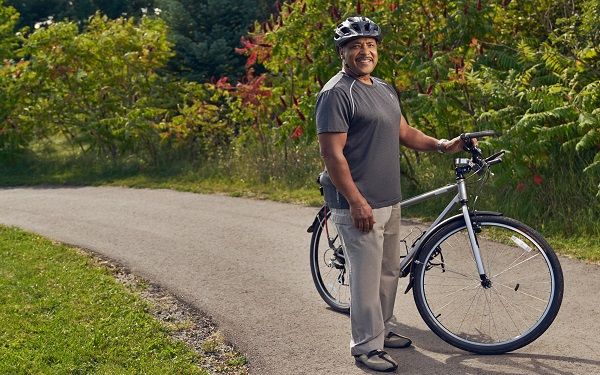
The summer months are fast approaching and with more cyclists and drivers expected to re-emerge on the roads, CAA South Central Ontario (SCO) is encouraging motorists to keep the safety of cyclists in mind when sharing the road. “Cycling is an excellent way to stay active during the pandemic and many more are picking up the activity, but as the province works towards reopening, we need to stay vigilant for everyone’s safety,” says Teresa Di Felice, AVP of government and community relations at CAA SCO. All drivers and cyclists are advised to follow public health guidelines, be predictable, be patient, communicate their intentions with signals, regularly check blind spots, and turn on their lights during dawn, dark and dusk. “In Ontario, there are tough penalties for those who do not follow the rules of the road, yet many remain unaware of what these rules are. Whether you’re on two wheels or four, get to know the following rules and best practices,”adds Di Felice. CAA is also reminding all motorists of these important rules of the road: Be aware. Do not use headphones or mobile devices while driving and pay attention. Yield to cyclists. Motorists should not be driving in a bike lane unless making a right turn. Watch for the approaching cyclists and never speed up and cut off a cyclist when making a right turn Keep a safe distance. Drivers must keep at least a one metre distance from other cyclists. If it is not possible, safely change lanes to pass. The penalty for not doing so is a $110 fine. Practice the Dutch Reach. Avoid “dooring” cyclists by doing the Dutch Reach. CAA launched a new Dutch Reach video for users to practice as more people out on their bikes. Some cycling-specific safety tips: Ride with traffic. Riding against traffic flow is dangerous, illegal and a leading cause of car-bike collisions. Protect yourself. Drivers, use your seat belts. Cyclists, wear your helmets. Be visible. Use reflectors and lights in dark and overcast conditions. It’s the law. Be predictable. Obey traffic signs and be clear with your intentions with other drivers. Under Ontario’s Highway Traffice Act (HTA), a bicycle is considered a vehicle, just like car or truck and must follow the same rules of the road. Ride close to home. As cyclists start to use their bikes for the first time in awhile, remember to stay close to home as you are starting out. Put your cycling safety knowledge to the test with CAA’s new cycling safety quiz. For all other cycling information, visit caasco.com/cycling. If you run into a problem that cannot be fixed on the spot, CAA Bike Assist will transport you and your bicycle to wherever you need to go. It's available as part of your membership 24 hours a day, 7 days a week, 365 days a year.