
Experts Matter. Find Yours.
Connect for media, speaking, professional opportunities & more.

A vacation free of emails, obligations and answering to the boss – let our expert columnist explain!
UMW’s resident writer for the Lynne Richardson is back with another great piece in The Free Lance-Star – just in time for summer. It’s a call to action for bosses and employers to let their people be free when they’re relaxing away from work on that cherished summer vacation. It’s about taking a time out when they’ve booked that time off. “So, you leave for the big trip. It’s a long flight and when you take your smartphone off of airplane mode, you realize you’re getting emails from your office. A co-worker needs information. Somebody wants to know where you left the file he needs for a meeting tomorrow. Your boss needs you to call him as soon as possible as he’s meeting with his boss tomorrow and needs a refresher on a project you are working on. So, you take a deep breath and respond to each of the requests. After all, you haven’t really disengaged yet from work. But the next day is the same. You continue to receive "emergency" emails. It’s like you cannot leave the office, because folks are tethered to you in some way. So, this is a cautionary tale for supervisors. Your folks need time away. They need to be away in every sense of the word. Please give them permission to not respond to emails while on vacation. There are very few emergencies that would require you to reach out to them. If it means that you, Mr. Supervisor, must wait a few days for some information, so be it.” If you like this – read the rest of the article attached below. So, do you have a plan in place to ‘un-plug’ while off? Should workplaces have mandatory policies about contacting people when they are away? Worry not – our experts can help. Dr. Lynne Richardson is a columnist, mentor and her expertise focuses on leadership management and higher education administration. She is available to speak with media about leadership…and even bad bosses. Simply click on her icon to talk with her and arrange an interview.


Covering World No Tobacco Day – Let our experts help!
May 31 is the WHO’s World No Tobacco Day. And despite all the awareness campaigns, education and advice – people are still lighting up. In fact, according to the CDC: More than 16 million Americans are living with a disease caused by smoking. Cigarette smoking is responsible for more than 480,000 deaths per year in the United States, including more than 41,000 deaths resulting from second-hand smoke exposure. This is about one in five deaths annually, or 1,300 deaths every day. On average, smokers die 10 years earlier than non-smokers. If smoking continues at the current rate among U.S. youth, 5.6 million of today’s Americans younger than 18 years of age are expected to die prematurely from a smoking-related illness. This represents about one in every 13 Americans aged 17 years or younger who are alive today. With marketing toward youth increasing and e-cigarettes and vaping now a part of the mainstream – is the fight against big tobacco becoming even harder? There’s a lot there to cover and that’s where our experts can help. Dr. Martha Tingen is a behavioral nurse scientist targeting prevention of tobacco use in children. She is available to speak with media any time – simply click on her icon to arrange an interview.


Do you go to the school of your choice, your parent’s almamater or as far away from home as humanly possible? Picking a college or university is a challenge at the best of times and one that impacts most American families in one way or another. A study completed by Professor of Psychology Holly Schiffrin was cited in an article in The News Minute entitled “How Much Freedom do Students have while Choosing their Undergraduate Course?” “One study in the Journal of Child and Family Studies found that parents’ excessive involvement in their children’s lives yields unfavourable results. The lead author Holly Schiffrin argues, ‘Parents are sending an unintentional message to their children that they are not competent.’ This is in turn, could result in feelings of depression and dissatisfaction.” The path to university and college is never easy and is always a journey filled with pressure and unsolicited advice. All the factors involved, well intended or not can come with consequences and outcomes. It’s an interesting topic and if you are covering, let one of our experts help. Dr. Holly Schiffrin is an internationally known expert on intensive and helicopter parenting. She is available to speak with media, simply click on Holly’s icon to arrange an interview.


Belief in the ‘Prosperity Gospel’ Does Not Turn People into Successful Entrepreneurs
But the belief that God financially rewards the faithful can fuel values linked to entrepreneurial thinking, Baylor University study finds Belief in the “Prosperity Gospel” — that God financially blesses faithful followers — does not turn individuals into successful entrepreneurs. But prosperity beliefs can fuel values linked to entrepreneurial thinking, such as power and achievement, according to a Baylor University study. However, researchers found no direct relationship between prosperity beliefs and willingness to take risks, and little connection to recognizing opportunities. Risk-taking and identifying opportunities are typical traits of entrepreneurs, according to the national study. “As revealed in our findings, a belief that God will provide financial benefit to the faithful is not enough to push someone to launch a business,” said lead author Kevin D. Dougherty, Ph.D., associate professor of sociology in Baylor’s College of Arts & Sciences. “The relationship between prosperity beliefs and starting a business is indirect and inconsistent.” The study — Prosperity Beliefs and Value Orientations: Fueling or Suppressing Entrepreneurial Activity” — is published in the Journal for the Scientific Study of Religion. For the study, researchers analyzed data from a nationally representative survey of 1,066 working adults. Their goal was to connect prosperity beliefs, human values, entrepreneurial attitudes and entrepreneurial action. They found that values — both by themselves and in conjunction with religious beliefs — are important predictors of how and whether individuals might launch a business. Participants responded to a three-item scale to measure beliefs that faith and faithful behavior lead to success at work and in business. The items included: “God promises that those who live out their faith will receive financial success;” “Believers who succeed in business are evidence of God’s promised blessing;” and “I believe faithful believers in God receive real financial benefits in this life.” Participants also responded to questions relating to The Theory of Basic Human Values, which recognizes such universal values as openness to change, achievement, security, power and benevolence. In general, “entrepreneurs tend to think differently than non-entrepreneurs, prizing achievement and self-direction while downplaying tradition and conformity,” said co-author Mitchell J. Neubert, Ph.D., professor of management in Baylor’s Hankamer School of Business. Value orientations of self-enhancement and openness to change are associated with recognizing opportunities and taking risks — entrepreneurial behaviors that correlate with creating new businesses. While prosperity beliefs by themselves show little direct impact on entrepreneurship, they do influence the impact of values and attitudes related to creating a business. Prosperity beliefs can strengthen the relationship between self-enhancement values and opportunity recognition, but they seem to reduce the relationship between openness to change and willingness to take risks. Another significant finding pertains to gender. Men and women who accept prosperity beliefs are no different in their willingness to take risks or start businesses, said co-author Jerry Z. Park, Ph.D., associate professor of sociology in Baylor’s College of Arts & Sciences. In general, risk-taking and business startups are more common among men. The study also shows that education and experience are key predictors of entrepreneurship, but those resources may be difficult to acquire for some prosperity believers because of social and economic circumstances. While individuals in that group have hope, it seems contingent on divine action rather than human action, Neubert said. “Can prosperity preachers Joel Osteen and T.D. Jakes save the U.S. economy? Probably not. But nor are they damning it,” Dougherty said. “The type of positive, self-help gospel they preach can enhance specific value orientations that are related to entrepreneurial thinking and entrepreneurial behavior.” *The research was supported by a National Science Foundation grant. ABOUT BAYLOR UNIVERSITY Baylor University is a private Christian University and a nationally ranked research institution. The University provides a vibrant campus community for more than 17,000 students by blending interdisciplinary research with an international reputation for educational excellence and a faculty commitment to teaching and scholarship. Chartered in 1845 by the Republic of Texas through the efforts of Baptist pioneers, Baylor is the oldest continually operating University in Texas. Located in Waco, Baylor welcomes students from all 50 states and more than 90 countries to study a broad range of degrees among its 12 nationally recognized academic divisions. ABOUT THE COLLEGE OF ARTS & SCIENCES AT BAYLOR UNIVERSITY The College of Arts & Sciences is Baylor University’s oldest and largest academic division, consisting of 25 academic departments and seven academic centers and institutes. The more than 5,000 courses taught in the College span topics from art and theatre to religion, philosophy, sociology and the natural sciences. Faculty conduct research around the world, and research on the undergraduate and graduate level is prevalent throughout all disciplines. Visit www.baylor.edu/artsandsciences.





Baylor Researchers Share Sleep and Memory Recall Tips to Help Tackle College Finals
It’s final exam season for college students across the country. And final exams often come with all-night study sessions and gallons of coffee. But do such things really help? In recent years, Baylor University researchers have identified a few practices that could help students get enough sleep and retain information for their exams. Here are some tips pulled from their research. Say No to All-Nighters Poor sleep during finals is common as students sacrifice bedtime for study time. Students are under more stress, use more caffeine to stay awake and are exposed to more bright light. Fewer than 10 percent of undergraduates maintain the recommended average of 8 hours per night of sleep or even the recommended minimum of 7 hours of sleep per night. Baylor researchers Michael Scullin, Ph.D., assistant professor of psychology and neuroscience in Baylor’s College of Arts & Sciences and director of Baylor’s Sleep Neuroscience and Cognition Laboratory, and Elise King, M.I.D., M.A., assistant professor of interior design in Baylor’s Robbins College of Health and Human Sciences teamed together to find out if more sleep equaled better success. Their December 2018 study found that students who succeeded in averaging eight hours of sleep for five nights during final exams week did better than those who did not. Sleeping for eight hours was associated with a four-point grade boost. “Better sleep helped rather than harmed final exam performance, which is contrary to most college students’ perceptions that they have to sacrifice either studying or sleeping. And you don’t have to be an ‘A’ student or have detailed education on sleep for this to work,” Scullin said. King said students know that sacrificing sleep to complete school work is not a healthy choice, but they assume they don't have a choice, often remarking that there aren't enough hours in the day for coursework, extracurriculars, jobs, etc. “This removes that excuse,” King said. Sleep Consistency is Key In a study of sleep and creativity done in 2017, King and Scullin found that interior design students with highly variable sleep habits — cycling between “all-nighters” and “catch-up” nights — had decreased cognition in attention and creativity, especially with major projects. “Whether or not they ‘pull an all-nighter,’ when students cut their sleep, the effects are obvious,” King said. “They have trouble paying attention during class, and they aren't as productive during studio time.” To be successful at the challenge, students need to manage their time better during the day. Getting more sleep at night then allows them to be more efficient the next day. “By training students in their first year of college, if not earlier, that they can sleep well during finals week without sacrificing performance, we may help to resolve the ‘global sleep epidemic’ that plagues students in America and abroad,” Scullin said. Looking for Better Recall? Tell a Friend What You Learned Students who are given information and tell someone about it immediately recall the details better and longer, according to a 2017 study led by Baylor psychologist Melanie Sekeres, Ph.D., assistant professor of psychology and neuroscience in Baylor’s College of Arts & Sciences. She said this “replaying” method takes a lot of effort but is worth it in the long run. “A week later, the memory was just as good,” Sekeres said. “Telling someone else about what you’ve learned is a really effective way for students to study instead of just re-reading the textbook or class notes.” In the study, students were shown 24-second clips from 40 films over a period of about half an hour. The study focused on their retention of both the general plot of the films as well as such details as sounds, colors, gestures, background details and other peripheral information that allow a person to re-experience an event in rich and vivid detail, said Sekeres. “We tell students to test yourself, force yourself to tell someone about the lecture,” Sekeres said. “Even by writing out some question for yourself about the information, then later answering them yourself, you are more likely to remember the information. Unfortunately, simply re-reading or passively listening to a recording of your lecture in hopes of remembering the information isn’t a great study strategy by comparison.” ABOUT BAYLOR UNIVERSITY Baylor University is a private Christian University and a nationally ranked research institution. The University provides a vibrant campus community for more than 17,000 students by blending interdisciplinary research with an international reputation for educational excellence and a faculty commitment to teaching and scholarship. Chartered in 1845 by the Republic of Texas through the efforts of Baptist pioneers, Baylor is the oldest continually operating University in Texas. Located in Waco, Baylor welcomes students from all 50 states and more than 90 countries to study a broad range of degrees among its 12 nationally recognized academic divisions.


Cybersecurity – Is it finally getting the attention it deserves? Ask our experts!
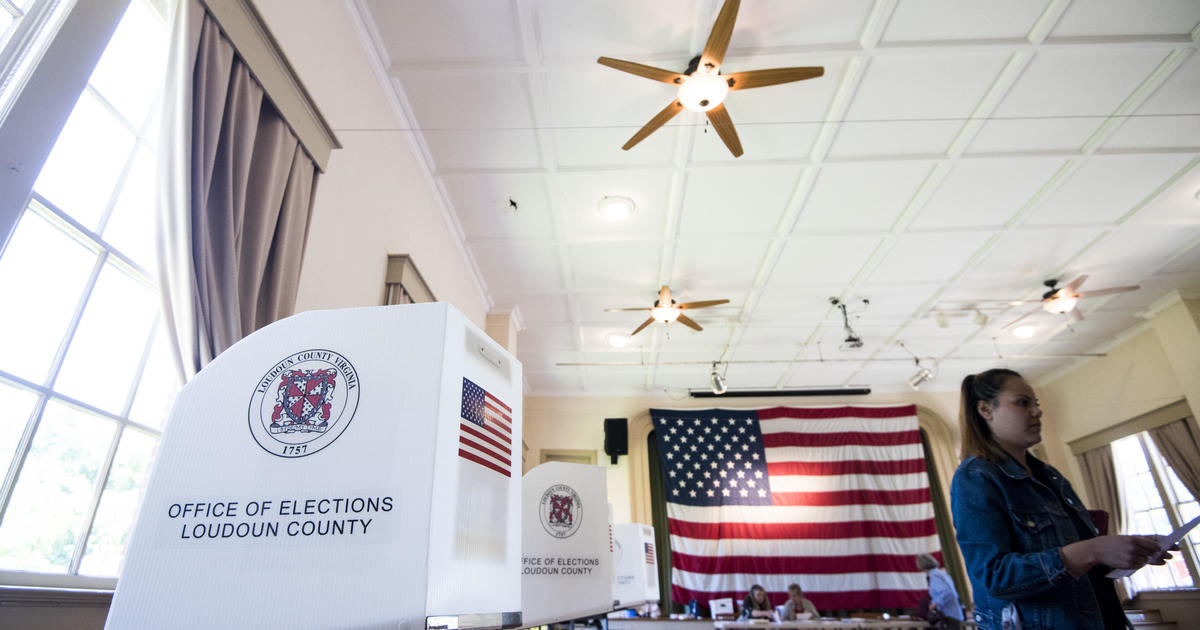
It’s been talked about, dominated the news and has cost some companies billions – but it seems like finally America’s leaders are taking the issue of cybersecurity seriously. With an election looming and non-stop threats coming from enemies near and afar, it seems like America’s leaders are now on side in the battle against cybersecurity. Last week President Trump signed an executive order directing the creation of programs to grow and strengthen our cybersecurity workforce to meet the challenges of the 21st century. “America built the internet and shared it with the world; now we will do our part to secure and preserve cyberspace for future generations.” President Donald J. Trump It’s a lofty goal – and odds are an expensive one, but will it work? Who are the chief actors behind potential cyber-attacks? What are the key targets? What are the costs to secure America’s cyber-territory? And more importantly, what are the consequences if we do not? There are a lot of questions out there and that’s where out experts can help. Dr. Seth Hamman earned his Ph.D. in computer science with an emphasis in cybersecurity at the Air Force's graduate school, the Air Force Institute of Technology, located at Wright-Patterson Air Force Base. As a researcher he is interested in helping to shape the young and growing discipline of cybersecurity education. Contact him today for your story! Simply click on his icon to arrange an interview.


Diplomas, degrees and massive debt – what’s the answer?
For most – this time of year is when parents get to watch their children become young adults as they accept their degree or diploma and ideally enter out into the world of careers and the workplace. However, for most – it also means facing the reality of serious student debt. As of last year, it was reported that … In America, the average student debt is $38,390. The median student debt is between $10,000 and $25,000. 2% of the borrowers owe $100,000 or more. The total US student debt was $1.52 trillion shared among 44.2 million people. The numbers are staggering. But what toll does this take on the career options of young graduates? Does the concept of debt discourage pursuing higher education? Why is education so expensive? And … what can, and should students be doing to avoid leaving school so deep in the red? There are a lot of questions to be answered and that’s where our experts can help.
/arc-anglerfish-arc2-prod-mco.s3.amazonaws.com/public/L6SURNCQV5FBDM3EJRPWVSETNU.jpg)
Modern times call for modern solutions. In these days of digital transformation – the new trenches of warfare are dug in cyberspace. In fact, just recently NATO ran a four-day drill where the exercise simulated a cyber attack on a country’s infrastructure and election process. Cyber-warfare is the new reality across the globe. It’s with these advancements that the Georgia Southern University Center for Applied Cyber Education (CACE) signed an Education Partnership Agreement (EPA) with the 688th Cyberspace Wing (688 CW). “As of now, we are the only academic organization in the country that has a direct EPA with the 688 CW,” said CACE Executive Director Scott Scheidt. “The collaboration supports research and development activities for Georgia Southern faculty and students across multiple disciplines, allowing them access to defense laboratory projects that would not otherwise be available in an educational environment.” Are you interested in cyber-warfare or covering this topic? Do you need to know more? Just how vulnerable is America? What are the likely targets? And who are the actual likely perpetrators? There’s still a lot to learn about this topic and that’s where an #expert from Georgia Southern University can help with your coverage. Scott Scheidt is the executive director of the Center for Applied Cyber Education at Georgia Southern University. He is an expert in cyber security and cyber workforce development. Scott is available to speak with media regarding this topic – simply click on his icon to arrange an interview.

Working together to promote veteran education
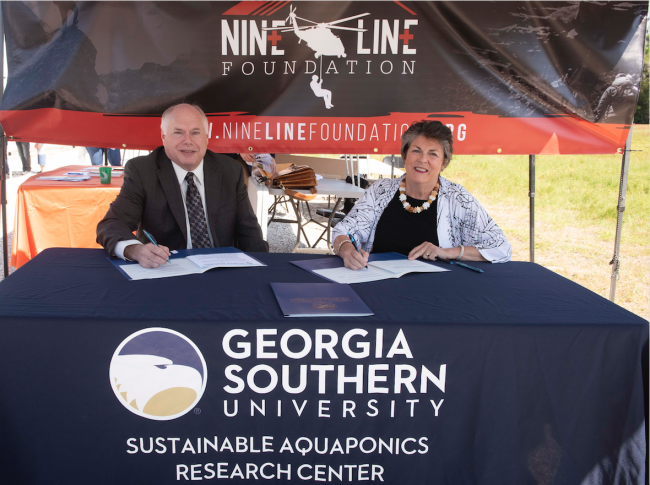
Georgia Southern University recently signed an agreement (see attached) with Nine Line Foundation that will assist veterans as they transition back into civilian life. Veterans will be enrolled in an aquaponics training program with the University’s Armstrong Campus’ Sustainable Aquaponics Research Center (SARC) at a compound at Nine Line Apparel in Savannah, Georgia. Aquaponics, or soilless farming, mixes aquaculture, the farming of fish, and hydroponics, to fuel the growth of plants in water. The SARC, a 4,100 square-foot greenhouse, has four independent recirculating systems, each containing 900-gallon tanks capable of holding more than 100 mature tilapia. Working within the College of Science and Mathematics, the SARC is focused on providing students, faculty and volunteers with the opportunity to conduct fundamental, interdisciplinary research in the area of aquaponics. The partnership with Nine Line Foundation will extend education opportunities to area homeless veterans and provide faculty and students an opportunity to engage with the veterans. Are you interested in learning more about his project and how Nine Line Foundation and Georgia Southern University are working together to provide opportunities and training to veterans? SARC’s director, Brent Feske available to speak with media – simply click on his icon to arrange an interview.

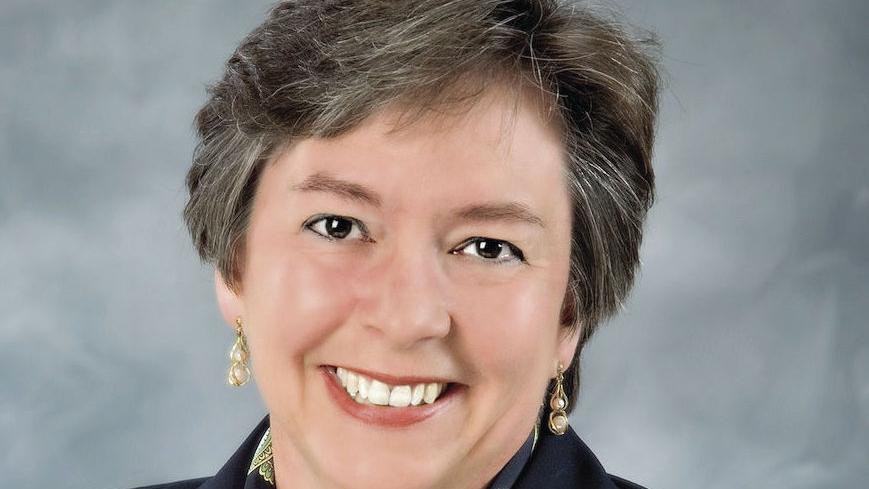
In her most recent column with The Free Lance-Star, University of Mary Washington’s Lynne Richardson extols a witty, pointed and yet optimistic piece about bad bosses, why they might be bad and how there’s even a silver lining to each bad boss’ behavior. Here’s a piece from her open letter. “Dear Bad Boss, Your staff complains about you. You’re a micro-manager. Or maybe you’re a detached manager, showing little interest in your people or the work they do. Or maybe you put such pressure on your employees that they feel stressed all the time and hate coming to work. Of course, because of this, productivity suffers. Maybe you have incredibly high expectations that are unachievable, especially because you either don’t know to hire or you don’t train your folks. There is no possible way for the folks in your organization to reach your ridiculous expectations. Whatever the reason your folks don’t respect you, I want to thank you. Say what? Yes, Bad Boss, I appreciate you being bad. And I have two reasons…” If you like this – read the rest of the article attached below. So, do you have a bad boss? Do you know someone who does? Any chance … you just might be a bad boss? Worry not – our experts can help. Dr. Lynne Richardson is a columnist, mentor and her expertise focuses on leadership management and higher education administration. She is available to speak with media about leadership … and even bad bosses. Simply click on her icon to talk with her and arrange an interview.