
Experts Matter. Find Yours.
Connect for media, speaking, professional opportunities & more.

Is America’s economy about to learn a very hard lesson regarding student debt?
1.5 trillion dollars. That’s an enormous amount of money. And it’s the anchor around the next generation of Americans who have student debt. In fact, we’re now seeing people declaring bankruptcy before they’ve actually started accumulating wealth and participating in the economy. All of this spells bad news for the future. But what can be done? Is this a problem for politicians to solve? Is it up to schools to the schools charging thousands per year in tuition? Do lenders need to be regulated? Or should the onus fall on the student’s themselves who sign on the dotted line for loans they already know will be hard to pay back? There are a lot of questions out there and that’s where the experts from Cedarville University can help. Kim Jenerette is the Executive Director of Financial Aid at Cedarville University and is an expert in student debt, student load default rates and the overall affordability of education. Kim is available to speak with media regarding this growing issue. Simply click on his icon to arrange an interview. Source:


What can the Big Mac tell us about our economy?
McDonald’s is celebrating Big Mac’s 50th anniversary by giving away MacCoins, which customers can use to buy a Big Mac in 50 countries. The idea of creating this burger currency, according to the company, originated from the “Big Mac Index,” which The Economist has used since 1986 to compare real currencies across the globe. Because McDonald’s has more than 36,000 restaurants in more than 100 countries, the price of its top-selling burger, locally produced in more than 80 countries, has been used to indicate the purchasing power of a country’s economy. What does burgernomics tell us about our economy? Dr. Simon Medcalfe is a professor of economics and finance at Augusta University and is available to discuss: • How the Big Mac Index is calculated • What the latest Big Mac Index says about the U.S. dollar and the U.S. economy • Why the Big Mac has been called the nearly perfect commodity for currency comparison Medcalfe has published academic articles in the areas of sports and health economics and economic education as well as contributed to labor economics and entrepreneurial finance textbooks. Contact us to schedule an interview with Dr. Medcalfe or learn more about his expertise. Source:


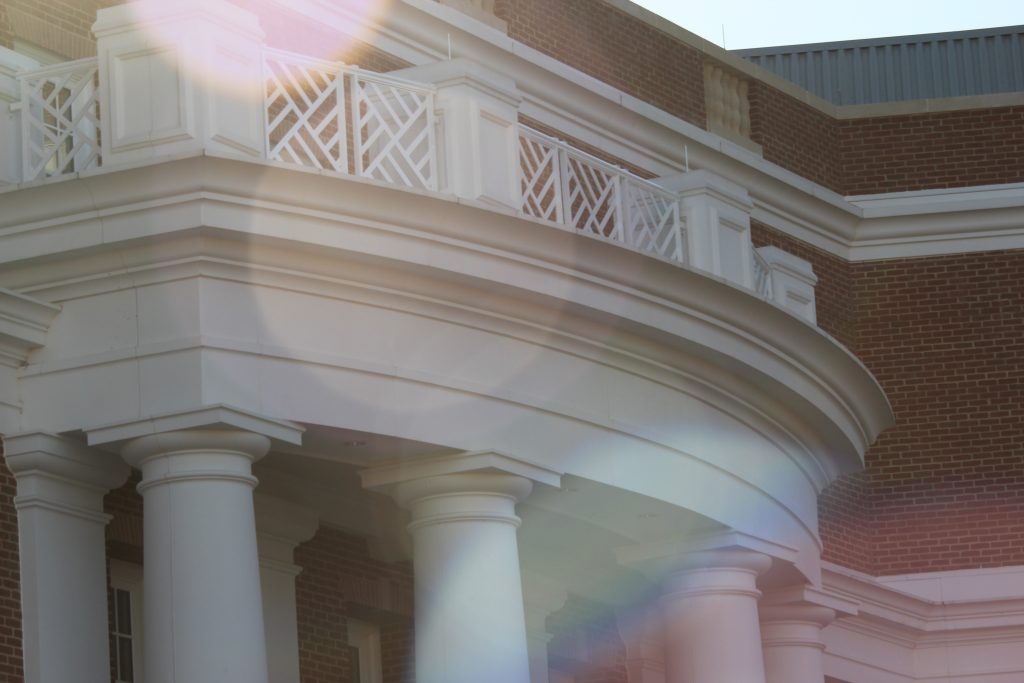
Unconventional Tech Conference Brings International Audience to UMW
Join us July 30 – August 3! Educators from Canada to Cairo, the UK and across the U.S. will attend the University of Mary Washington’s Digital Pedagogy Lab. Dynamic keynote speakers like NPR’s lead education blogger, Anya Kamenetz, and Columbia University’s Jade E. Davis will ask participants to re-imagine technology’s role in higher education, finding the best ways to teach with and about it. Hosted by UMW’s trend-setting Division of Teaching and Learning Technologies (think ground-breaking initiatives like Domain of One's Own), DPL delves deep into digital pedagogy, covering everything from cultural humility to “mad genius” storytelling. We’re also on Twitter – so follow along and join in on the conversation - @DigPedLab and #digped. Source:

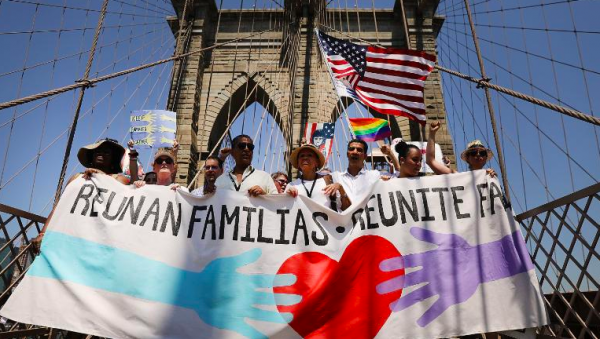
6 Facts We Learned Working with Migrants and Refugees Around the World - Facts 3 and 4 Working with migrants and refugees is our business at Catholic Relief Services. CRS was founded in 1943 to assist refugees during World War II. Seventy-five years later, we are still coming to the aid of people escaping conflict, violence and natural disasters. While CRS doesn’t resettle refugees in the United States (these programs are run by the Catholic Church’s Migration and Refugee Service and Catholic Charities), our rich history has taught us valuable lessons on how to best help families fleeing crisis. 3. Support the Family. The family unit provides the primary support for children during the traumatic refugee experience -- whether it is witnessing violence or crossing a desert on foot. CRS focuses on keeping families together. This means housing a family together and using any services provided – from trauma counseling to income generation – to boost family cohesion. Shannon Senefeld is a global development expert at CRS. She has published and presented extensively on international children’s issues and the importance of strengthened family care for children’s development. See her contact information at the bottom. 4. Kids Need School and Play. CRS is dedicated to keeping up children’s education, to provide stability and normality and give them hope for the future so they can be productive citizens wherever they end up. Kids need to be kids, too. Whether they are in a camp or any sort of migrant or refugee holding center they need a space to play. Caroline Brennan is the Emergency Communications Director for Catholic Relief Services. In her role, she travels to and/or works in areas facing natural or man-made emergencies. See her contact information at the bottom. The experts at Catholic Relief Services are available to help with any media coverage or insight that is required regarding this ongoing news story and issue that is continuing in America. Simply click on any of their icons to arrange a time for an interview. Source:


Baylor Gerontology Expert: It's Important for People to Know the Signs of Elder Abuse
Gerontology expert James Ellor, Ph.D., M.Div., professor in Baylor University’s Diana R. Garland School of Social Work, said it's important to remind people what elder abuse looks like and how they can respond if they see the signs. Reports of abuse are most often submitted by family members, hospital staff and law enforcement. But churches and other organizations should also be diligent, Ellor said, adding that clergy are considered mandatory reporters in many states. “No one group of caring persons can solve this problem alone; it takes a community of caring lay and professional leaders to even try to start to make a difference,” Ellor said. Elder abuse – intentional or negligent acts by a caregiver or trusted individual – comes in many forms: * neglect or isolation * physical abuse, sexual abuse * exploitation or financial abuse * emotional and psychological abuse * verbal abuse and threats “If signs are noticeable, the next steps will depend on the type of abuse. In most cases, counseling support is critical, but often the need for medical help or legal help is also very important,” Ellor said. Read the linked article to learn more. ... Dr. Ellor works with older adults around issues of mental and spiritual health. He has served on the executive committee of the Midwestern Geriatric Education Center and provided education, counseling and planning for individuals and groups who work with seniors. His research includes work in entrostomal therapy, hunger, the church as service provider, spiritual assessment and intervention techniques with cognitively impaired older adults. Source:


Second Annual SUU Child Behavioral Health Conference
The second annual Southern Utah University Child Behavioral Health Conference is happening this week, May 17-18, 2018. Representing expertise across the field of child and pediatric behavioral health, the invited presenters include Gregory Snyder, Lindsey Ricciardi, Julia Thompson, and Kelsie Hendrickson. Dr. Michelle Grimes, Assistant Professor of Child Clinical Psychology at Southern Utah University and founder of the Child Behavioral Health Conference, wanted to create an opportunity for the professional community by bringing a continuing education event focused on evidence-based behavioral healthcare to southern Utah. “So often, behavioral health providers in rural areas have to invest a significant amount of time and financial resources travelling to conferences to receive continuing education. This ongoing training is necessary to stay current in the field, and also to maintain professional licensure. My goal for the SUU Child Behavioral Health Conference is to match the high quality you would find at a national event, while increasing the accessibility to healthcare providers in our community and surrounding areas.” Last year’s conference focused on common behavioral health disorders of childhood and adolescence. This year the conference will include a variety of topics relevant to adolescents, children, and parenting; broadly focusing on addressing complex cases in an outpatient setting. “We are focusing on complex clinical cases and added a seminar on ethical issues that arise when working with youth. The seminar will emphasize ethics related to adolescents and risk behavior, eating disorders, and trauma.” The conference welcomes all healthcare professionals from psychologists and pediatricians to social workers and treatment center staff. “We have attendees from Idaho, Utah, and Nevada and various behavioral health and medical disciplines are represented. This also serves as a professional development opportunity for students; we are pleased that students from SUU and other universities throughout Utah have registered. We hope to continue to build a regional interdisciplinary focus. We look forward to holding this event annually.” Dr. Grimes is a licensed psychologist with specialized training in clinical child psychology. Her clinical and research interests focus on behavior disorders of childhood, sibling conflict, and pediatric sleep disorders. She is familiar with the media and available for an interview. Simply visit her profile. Source:


The Struggle for DREAMers in Utah - Explore DACA
On Tuesday, April 24, 2018, a third federal judge ruled against the Trump administration’s push to end Deferred Action for Childhood Arrivals (DACA). U.S. District Judge John Bates called the administration’s attempts to end DACA “arbitrary,” “virtually unexplained,” and “unlawful.” He put a hold on the decision, allowing the Department of Homeland Security 90 days to give better reasoning to cancel the program or it would be fully reinstated. Dr. Stephen Allen, associate provost of International Affairs at Southern Utah University and expert on American immigration policy, sees the struggle for “DREAMers” in Utah and across the nation. “In March, the Supreme Court refused to hear a challenge to DACA,” said Dr. Allen. “That decision, along with the April 24 federal court ruling, has taken pressure off of Congress to act on the issue. The result is a great deal of uncertainty for DREAMers, families, and employers.” Originally enacted by President Obama, DACA is an immigration policy that shields undocumented immigrants that were brought to the United States as children. The youth apply to obtain a renewable two-year deferred action from deportation and to be eligible for a work permit. DACA has helped hundreds of thousands obtain driver’s licenses, social security numbers and attend school. Steps to eliminate DACA were initiated by the Trump administration in late 2017, but previous federal rulings have stalled the efforts. “Rescinding DACA would have a tremendous impact on Utah,” said Dr. Allen. “The program has allowed nearly 10,000 young people in Utah to come forward and pass background checks and live legally in the United States. There is strong evidence that the majority of these young people are productive citizens who are gainfully employed and/or enrolled in school. According to the non-profit and non-partisan organization Interfaith Worker Justice (IWJ), ending DACA would cost Utah alone nearly $476.5 million in annual GDP losses.” Dr. Allen believes that in general, Utahan’s have a strong commitment to keeping families together. “The United States is the only country most DREAMers have known. Deporting nearly 700,000 individuals would result in separation from families and losing the ability to legally work in the United States.” Dr. Allen specializes in international enrollment and admissions, developing global partnerships, and international education. He is familiar with the media and available for an interview. Source:


It’s time to invest early in your child’s financial literacy
April 20 is Teach Children to Save Day. It's an educational program established by the American Bankers Association (ABA) to encourage kids to develop good savings habit as early as possible in their financial life. But is it necessary? When kids should be playing and having fun, is getting a head start on economics a bit heavy? The reality is – a quiz about personal finances offered last year by Financial Engines saw only 6 percent of Americans pass. That means a staggering 94 percent of Americans didn't have a confident grasp on financial literacy. Bad financial choices can last a lifetime and that's why it's best to start young, and develop sound habits and wisdom as early as possible. So, what do Americans need to know and do about becoming financially literate? What are the potential consequences to not just Americans, but the country’s economy if we remain a nation that’s basically ignorant to the value of a dollar? Dr. James Philpot, certified financial planner and associate professor of finance and general business at Missouri State University, can address the costs of financial illiteracy and explain how to teach kids about money matters. Click on his icon to set up an interview with him. Source:


#NeverAgain - Students Taking Matters Into Their Own Hands
On April 20, 2018, the 19th anniversary of the Columbine High School shooting, students across the nation will walk out of their classrooms in protest of their leaders’ failure to pass laws protecting them from gun violence. Just last month, hundreds of thousands of students, teachers, and supporters rallied in Washington DC, for March for Our Lives, led by a group of students from Marjory Stoneman Douglas High School. These students, some of the latest to be affected by gun violence in schools, are using their voices to inspire change. John Meisner, Assistant Professor of Education at Southern Utah University and advocate for students on and off campus, recently voiced his concerns and support. “As a voting adult, I’m horrified that this problem has only been getting worse since the Columbine High School tragedy, and our elected leaders pretend that there is nothing that can be done. We have countless laws that have been enacted regarding public safety, and yet for this one, we do nothing.” Meisner recommends that as parents, mentors, and peers, we should support the efforts of these students. “I’m hugely proud of these students for refusing to accept this inaction and taking matters into their own hands. I don’t know that we’ve ever seen such organization and movement by high school and junior high school students. They’re often disrespected as ‘entitled’ and ‘lazy,’ but this latest tragedy has mobilized this population into action. We’re seeing youthfulness and enthusiasm combined with a social media savvy that is a powerful force. I think that as adults we should be proud of these efforts and support them fully.” Students crave relevance in their school work and lives. According to Meisner, the walkout is a perfect example of this. “I’m hopeful that they will not relent on the pressure until something is done. Maybe with this new movement, the Parkland tragedy will be the last.” “As educators, we should not only be concerned about the physical well-being of our students but should also see that their academic wellbeing is important too. They will be fully invested in topics that matter to them.” John Meisner has a deep love of education and a passion for teaching. Meisner also serves on the Allies on Campus committee working to support LBGTQ+ students and faculty through social events and educational outreach. He is familiar with the media and available for an interview. Simply visit his profile. Source:


Cedar Crest College fights food insecurity with food pantry
It’s a topic that isn’t often talked about, but it’s reaching near epidemic proportions: Food insecurity on America’s college and university campuses. With the costs of education rising – students are having to make the unfortunate and unhealthy choice of deciding whether to pay for school or pay for food. Some are scrounging, some are going hungry and it’s a trend that needs to stop. Cedar Crest College was one of dozens of schools to participate in a recent survey conducted by Temple University and the Wisconsin HOPE Lab assessing the basic needs of university students across the nation. The study determined that 36 percent of students on U.S. College campuses suffer from food insecurity. You can read the full report here. In light of that shocking report, Cedar Crest College is continuing to work diligently to combat hunger on campus. The college currently operates a food pantry on campus that is open to all students – traditional undergrads, adult learners and graduate students. The pantry operates solely on donations and gifts, and the college hosts two food drives each year to stock it. It offers non-perishable food items, toiletries and frozen meals. “It is harder to concentrate on your academic work when you are hungry,” said Mary Alice Ozechoski, Vice President of Student Affairs & Traditional Enrollment. “We believe that students who are food insecure need assistance so they can focus on what matters: completing their education.” Mary Alice Ozechoski is available to speak with media regarding this issue. Simply click on her icon to arrange an interview. Source:
