
Experts Matter. Find Yours.
Connect for media, speaking, professional opportunities & more.
Microsoft Working to Close the STEM Gap
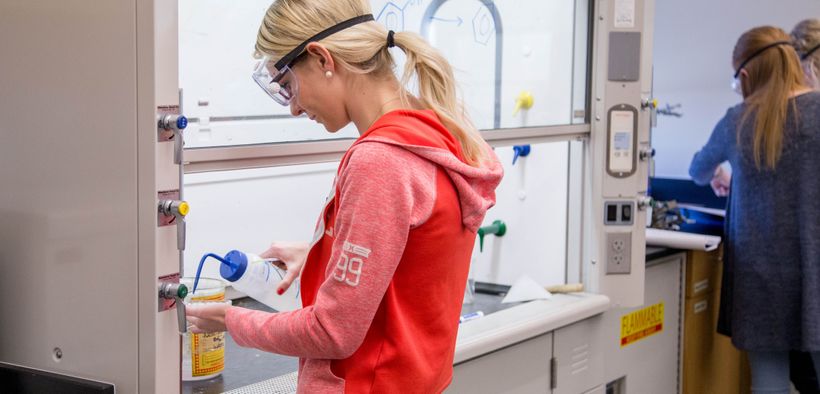
Even with a higher priority placed on science, technology, engineering, and math (STEM) throughout education in the US, only a fraction of girls are likely to pursue a STEM career. According to the National Center for Education Statistics, while more than 57 percent of college undergraduates are women, only 18 percent progress into STEM careers. With a clear gap, Microsoft set out to better understand what causes girls and women to lose interest in STEM subjects and careers, as well as what strategies have the greatest potential to reverse the trend. According to Microsoft, the goal of the study “was to inform our work in this area and to share learnings with schools, government leaders, nonprofits, employers and others. What we learned is that conditions and context can make a significant difference to girls, young women and their interest in STEM. And the solution doesn’t necessarily require a curricula overhaul.” Dr. Shalini Kesar, Associate Professor of Information Systems at Southern Utah University and advocate for women in technology, has known for years that girls and young women are a critical missing part of STEM studies and careers. “The stubborn gender disparity in STEM fields has sparked important debates on the underlying reasons,” said Kesar. “Some attribute the gender disparity to social and infrastructural factors, lack of mentors and role models, and lack of awareness about what these fields offer in terms of educational and career opportunities. Others point to studies that indicate traditional mindsets of computing as ‘boring’ and ‘only for boys’ as a major reason why girls and young women do not consider a degree or career in this field.” The study found that “we may be able to make significant strides just by showing girls and young women how STEM knowledge is applicable outside of the classroom, and how it can power their aspirations to make the world a better place.” “Recently, I was invited to collaborate with Microsoft on research which quantifies many of my observations from over 20 years of working to reduce the gender gap in STEM and computing,” said Kesar. “This work is an essential step forward in helping us learn more about how girls and young women currently perceive STEM.” Dr. Kesar was recently recognized by the Women Tech Council, receiving the Education Excellence Award at the 2016 Women Tech Awards. She is familiar with the media and available for an interview. Simply visit her profile.


The Invisible Continue to Remain Invisible
The New York Times piece illustrates an observation few are willing to discuss and focus within realms such as U.S. legislation and academia. Let's not forget to mention the overarching implications related to the criminal justice and judicial systems within the country as well. Within the field of education I have, along side many great scholars, attempted to define the implications for Black males as they related to the historical and contemporary ramification of being within a system initially intended for White males only. Overall, we have attempted to tell the stories of Black males from both a quantitive and qualitative perspective as they relate to the effects of institutionalized racial oppression. But overall, these stories are largely ignored through the need to focus on Blacks as one monolithic group. This tendency allows for issues specifically related to Black males to be washed out. As Ralph Ellison emphasizes within Invisible Man ( 1952), they indeed become "Invisible." Source:


Baylor Professor, Public Relations Ethics Expert Shares Thoughts on Resignation of ICE Spokesman
James Schwab, spokesman for the U.S. Immigration and Customs Enforcement (ICE) in San Francisco, recently resigned his position -- alleging that Trump administration officials, including U.S. Attorney General Jeff Sessions, made false public statements after the agency’s recent Northern California sweep to arrest undocumented immigrants. Marlene Neill, Ph.D, APR, an expert on public relations ethics and coauthor of the new book "Public Relations Ethics: Senior PR Pros Tell Us How to Speak Up and Keep Your Job," said it's incredibly challenging for PR professionals when they feel their integrity is at stake or when they are at odds with their supervisors. If Schwab's accusations are founded, Dr. Neill said she feels he made the best decision. "I applaud James Schwab for his moral courage and willingness to stand firm in his values despite a high personal cost. From news accounts, it appears he tried to persuade other executives to be more forthright and truthful in their communication, but was unsuccessful in his efforts. That left him no choice but to resign. In our new book, we discuss different persuasive approaches senior executives can use to advocate for ethical communication. However, when those efforts fail, it leaves communication executives with few options to maintain their integrity. That is why it is so important to have a personal crisis plan." Dr. Neill, Ph.D., APR, is an assistant professor at Baylor University. She teaches courses in public relations and advertising. She also serves as the faculty adviser for the Baylor PRSSA chapter. Her research interests include public relations management and ethics. She has published research in the following journals: Journal of Mass Media Ethics, Public Relations Review, Journal of Communication Management and Journal of Advertising Education. Neill is an accredited member of the Central Texas Chapter of the Public Relations Society of America. She served as the chair for the Southwest District of PRSA in 2011. At the national level, Neill served a three-year term on the Universal Accreditation Board, which administers the examination for Accreditation in Public Relations; the Nominating Committee, which selects national board officers in 2012; and was appointed to the Board of Ethics & Professionals Standards in January of 2013. Dr. Neill is available to comment. Source:



Why are so many surprised? Yes, her actions are on the extreme side, but her espoused racist ideology is not unfamiliar to public education. Today, the Department of Education states that public schools across the country are composed vastly with White teachers. On the other hand, schools have become more diverse with increasing numbers of Black and Latino students. But what’s most troubling is not the race of teachers, but the ideologies they adopt toward their students of color. The idea postulated for eons that all teachers believe all students are capable is simply a fallacy. Research has shown that White teachers have less expectation for Black academic potential. In fact, it has been shown that White teachers have preconceived negative racialized stereotypes of children as young as preschool. Therefore, it is not out of this world expectation in regard to understanding the ramification. For example, it has been found that when Black students have White teachers, the teachers see them as more disruptive than their Black colleagues. But Black teachers perception of White and Latino perceptions is seen as unaffected. Black student are also suspended, expelled, placed in special education, and overlooked in terms of advanced classroom placement when they have White teachers. Therefore, every White teacher may not have a podcast that communicates Charles Murray or David Duke sentiments, but the slithered evidence of their shared ideological thinking is operating within public schools across the country. Source:

The Empathy Gap Between White Social Workers and Clients of Color
Empathy is a core human attribute — but it is far from infallible. In social work, an empathy gap tied to racial identity can lead to worse outcomes for people of color. We like to think of ourselves and our colleagues as empathetic, but our experiences and actions can often contradict this notion. What does this mean for education and the world at large, and how can we improve this? Terence Fitzgerald, clinical associate professor at the USC Suzanne Dworak-Peck School of Social Work and scholar of institutional racism, policy and child welfare, shares his recent research on racial empathy in social work. Source:
Misleading our children – is revisionist history harming the education of our nation’s students?
It’s astounding and almost as if it’s a scene from a movie – meddling, mid-level politicians trying to revise and alter curriculums to ensure children in classrooms are only getting certain points of few and perspectives when it comes to key moments in American history. It’s a level of petty-propaganda usually associated with paranoid regimes in far-away countries. But these days, it’s a homegrown problem. In Texas, the state Board of Education is being slammed for altering facts, twisting perspectives and intentionally omitting moments in history from it’s curriculum. According to USA Today, “The state is considering revisions to the 2010 standards, which a group of academics slammed in a report Thursday. Among their complaints: lessons downplaying slavery as the Civil War's cause, exaggerating the influence of Moses on U.S. democracy and applauding the National Rifle Association and Newt Gingrich's Contract with America. "The quibble over wording here could not be more misleading," said Emile Lester, a report co-author and political science professor at the University of Mary Washington in Virginia.” So how does this happen and how is it allowed in modern America? And how common is this throughput the country? Is it a matter of too much power in the hands of those with an agenda or a reflection on an education system in a sate of neglect by elected officials? There are a ton of questions that need to be asked. That’s where an expert from at the University of Mary Washington can help. Dr. Emile Lester, associate professor of political science at the University of Mary Washington, an expert in church and state issues is available to speak with media regarding this issue. Simply click on Emile’s icon to arrange an interview. Source:



Gender Gap Grows Wider Globally
The World Economic Forum (WEF) began calculating the global gender gap in 2006. Yesterday, it released the results of the 2017 Global Gender Gap Report and the news is bad – for the first time in more than a decade, the gender gap is widening. This year's report revealed that the divide between men and women stood at 32 percent, up from 31.7 percent last year. The Global Gender Gap Index ranks 144 countries and compares them across four ‘pillars’: economic participation and opportunity, education, political empowerment, and health and survival. The best scores overall belonged to three Scandinavian countries. Iceland had the smallest gender gap at 22 percent. How about the United States? While the U.S. has improved its overall gender gap, this year's report showed it moved down the rankings to 49th place. The score was 0.72 or a gender gap of 28 percent. The pillar featuring economic participation, which includes salaries, workforce participation and leadership, has one of the fastest-growing gaps. Globally, women are earning less than men. The WEF believes the economic gender gap will now not be closed for 217 years. When considering a woman's income as a percent of a man’s, the U.S. came in at 13th place, where a woman can expect to make on average only 64.8 percent of that of what a male earns. Why is this the case even though more women than men are graduating from universities? Can this worrying trend be changed? What steps must be taken to make the playing field equal for all in America? Dr. Shannon Wooden, gender studies expert and professor of English at Missouri State University, can provide insight on this topic. She can address the gender pay gap and why companies need more female representation in senior and board levels. Contact her for an interview. Source:


Seeing the light of neutron star collisions
UNIVERSITY PARK, Pa. — When two neutron stars collided on Aug. 17, a widespread search for electromagnetic radiation from the event led to observations of light from the afterglow of the explosion, finally connecting a gravitational-wave-producing event with conventional astronomy using light, according to an international team of astronomers. Previous gravitational-wave detections by LIGO (Laser Interferometer Gravitational-Wave Observatory) and Virgo, a European observatory based in Pisa, Italy, were caused by collisions of two black holes. Black hole collisions generally are not expected to result in electromagnetic emissions and none were detected. "A complete picture of compact object mergers, however, requires the detection of an electromagnetic counterpart," the researchers report online today (Oct. 16) in Science. The Aug.17 detection of a gravitational wave from the collision of two neutron stars by gravitational wave observatories in the U.S. and Europe initiated a rapid cascade of observations by a variety of orbiting and ground-based telescopes in search of an electromagnetic counterpart. Two seconds after detection of the gravitational wave, the Gamma Ray Burst monitor on NASA's Fermi spacecraft detected a short gamma ray burst in the area of the gravitational wave's origin. While the Swift Gamma Ray Burst Explorer — a NASA satellite in low Earth orbit containing three instruments: the Burst Alert Telescope, the X-ray Telescope and the Ultraviolet/Optical Telescope — can view one-sixth of the sky at a time, it did not see the gamma ray burst because that portion of the sky was not then visible to Swift. Penn State is in charge of the Mission Operations Center for Swift. The satellite orbits the Earth every 96 minutes and can maneuver to observe a target in as little as 90 seconds. Once the Swift team knew the appropriate area to search, it put the satellite's instruments into action. Swift is especially valuable in this type of event because it can reposition to a target very quickly. In this case, the telescope was retargeted approximately 16 minutes after being notified by LIGO/Virgo, and began to search for an electromagnetic counterpart. Read more about Swift's involvement in detecting the neutron star collision here: https://www.eurekalert.org/pub_releases/2017-10/ps-stl101617.php To speak with Penn State's Swift researchers, contact Joslyn Neiderer at jms1140@psu.edu. Source:
