
Experts Matter. Find Yours.
Connect for media, speaking, professional opportunities & more.
UF builds community resilience in Jacksonville’s Historic Eastside neighborhood
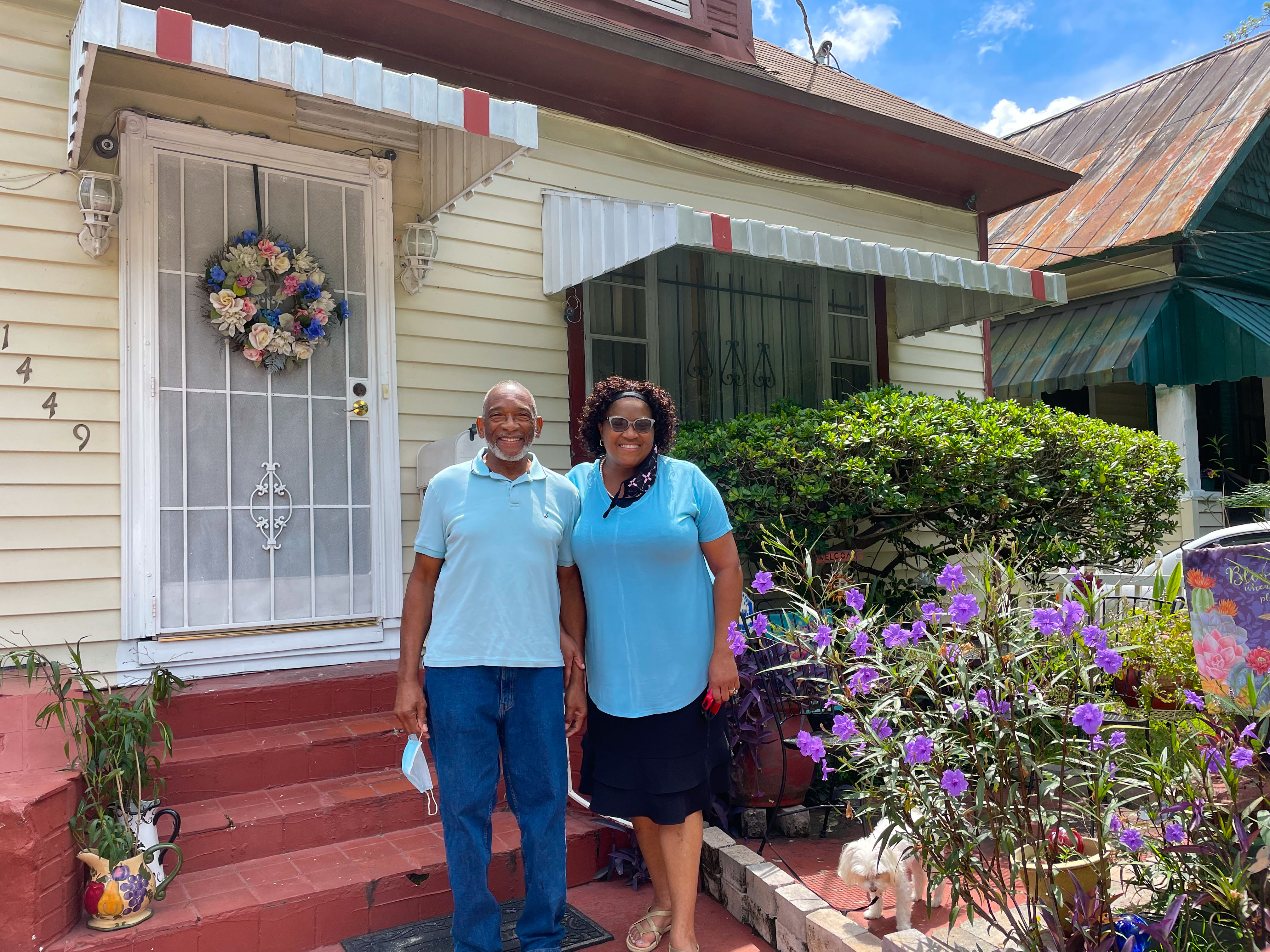
As the University of Florida continues to expand its presence in Jacksonville, Gators are undertaking sustainability projects to improve the city’s neighborhoods. Faculty and students in the College of Design, Construction and Planning’s Florida Institute for Built Environment Resilience (FIBER) have spent the past four years focusing on the role of housing design in community health resilience in Jacksonville’s Historic Eastside neighborhood, interviewing resident stakeholders and collaborating with citywide organizations that are helping to restore older homes. Findings from the UF research will be instrumental in informing future community planning and housing design decisions, potentially leading to more health-centered, sustainable neighborhoods. “Our research in Jacksonville focuses on how we can inform the development of community infrastructure that holistically supports human well-being across mental, emotional, and physical dimensions,” said Lisa Sundahl Platt, Ph.D., a FIBER research faculty member and an assistant professor of interior design at UF, who added that this holistic, health-centered approach is known as salutogenic design. “We are also actively collaborating with community organizations in Jacksonville and researchers from UF to explore improved strategies for designing and constructing community infrastructure that effectively responds to potential hazards.” A community-wide collaboration UF has conducted a pilot study over the past year on the Jacksonville-based Restore, Repair, and Resilience (R3) initiative that is underway in Historic Eastside – surveying residents about how the design quality of their housing and surrounding environments affects their overall well-being. This interdisciplinary project has brought together FIBER and members of the R3 Group – a coalition of organizations that includes the JEA utility company, LIFT JAX (committed to eradicating generational poverty), the Historic Eastside Community Development Corporation, the United Way of Northeast Florida, and Local Initiatives Support Corporation Jacksonville. FIBER-led research has received ongoing support from the Florida Resilient Cities grant, which is funded by the Jessie Ball duPont Fund. The scope of the R3 project is being scaled up through a U.S. Department of Energy grant awarded through JEA, which will allow for an expansion of home revitalization efforts in Eastside Jacksonville. FIBER’s ongoing housing and health community action research on these efforts will be supported through a grant from the LS3P Foundation. “Many residences we evaluated need help with improvements to housing energy efficiency, building ventilation, building shell structural integrity, and materiality,” Platt said. “For example, underperforming flooring material can create potential trip hazards for older adults. Deterioration in interior materials, caused by degrading components of the building envelope, can also lead to mold and mildew growth in interior environments, which can contribute to poor interior environmental quality issues and acute and chronic health conditions.” Respiratory health issues are often caused by material and ventilation design failures, which can affect people of all ages, especially vulnerable populations such as children and older adults. Oftentimes, interior designers see that the environmental risks that compromise human well-being are coming from both the outside and inside of the buildings. “As we continue to address priorities, our focus extends beyond energy and building efficiency to encompass comprehensive factors of built environment resilience that impact overall community health and well-being,” Platt said. “There's still significant progress to be made in the design of sustainable housing that supports community salutogenic health." Keeping residents safe and healthy UF research has continued to prove that interior resilience for living environments plays a vital role in people’s mental and physical health. “People spend roughly 90% of their time indoors, so it is important to understand the types of design conditions and materials that we’re putting into spaces and how they can affect the occupants of those living in said spaces,” said UF student Milena Rodriguez Mendez, who is one of Platt’s graduate research assistants. Students like Mendez are using qualitative and quantitative research methods to engage in collaborative community-led research that includes academics, for-profit organizations, nonprofits, citizen scientists, and neighborhood stakeholders. “I aim to center my work on social justice and equity, and I believe this initiative represents a meaningful step in that direction,” Mendez said. “Our focus is on the residents of this vibrant yet at-risk community.” FIBER researcher Jason von Meding added, “We want to know how future housing policies can address some future health concerns. We have a lot of youth in the community that are participating, which I think is important.” The FIBER housing and health team is actively pursuing additional funding to expand this research, in collaboration with UF Health Jacksonville’s Department of Community Engagement. “Our goal is to develop an open-source online platform that disseminates lessons learned and proof-of-concept findings on the impact of regenerative housing design on human and ecological health,” Platt said. “This resource will be valuable for other cities and neighborhoods facing similar challenges in housing quality, affordability, and accessibility.” Looking to know more about this project or connect with Lisa Platt? Simply click on her icon now to arrange an interview today.



3 Things A Climate Scientist Learned From Jane Goodall
In a recent Forbes article, Marshall Shepherd reflects on three key lessons he has drawn from the life and work of Dr. Jane Goodall. Shepherd frames Goodall’s legacy—spanning primatology, conservation, and public engagement—as deeply instructive for climate scientists and environmental advocates. He argues that her methods and mindset have more to teach than simply how to observe nature; they speak to how we engage with the world. First, Shepherd highlights immersion: Goodall’s decades of patient observation in the Tanzanian forests demonstrates the power of being physically—and emotionally—present to truly learn from ecosystems. For Shepherd, climate science must go beyond remote data collection: getting into the field and understanding local realities matters. Second, he emphasizes patience. Goodall’s willingness to wait, sometimes for years, for breakthroughs in understanding primate behavior offers a lesson for climate researchers, whose progress may unfold over decades. Third, he admires her tenacity—a commitment sustained over a lifetime, even under adversity. Shepherd suggests that tackling climate change requires that same kind of enduring resolve, especially when public attention or funding waxes and wanes. Through these reflections, Shepherd presents Goodall not just as an icon of conservation but as a model for scientific humility and perseverance. He invites readers to see the parallels between animal behavior research and climate work—and to adopt practices of listening, patience, and resolve in confronting our planet’s changing trajectory. Dr. J. Marshall Shepherd is a leading international weather-climate expert and is the Georgia Athletic Association Distinguished Professor of Geography and Atmospheric Sciences at the University of Georgia. Dr. Shepherd was the 2013 President of American Meteorological Society (AMS), the nation’s largest and oldest professional/science society in the atmospheric and related sciences. View his profile here Dr. J. Marshall Shepherd is a leading international weather-climate expert and is the Georgia Athletic Association Distinguished Professor of Geography and Atmospheric Sciences at the University of Georgia. He's available to speak with the media about this topic - simply click on his icon now to arrange an interview today.

Expert Spotlight: Advancing Child & Youth Behavioral Health with MBC
Children and youth today face increasingly complex mental health challenges, requiring care that is personalized, evidence-based, and responsive to evolving needs. Measurement-Based Care (MBC), also referred to as Measurement-Informed Care (MIC), is a proven framework that leverages client-reported data to guide treatment decisions, enhance engagement, and improve clinical outcomes. With CARF’s updated accreditation standards now requiring MBC in youth services, organizations globally are prioritizing its adoption. On September 30, Greenspace Health brought together a panel of experts including Theresa Lindberg, MSC, LPC, Managing Director for Child and Youth Services, CARF International, who shared real-world examples, lessons learned from successful implementations, and actionable strategies for embedding MBC in youth-serving organizations. The webinar was recorded and is available below for viewing. This is an important topic, and if you are interested in learning more - then let us help. Theresa Lindberg is Managing Director of Child and Youth Services at CARF International. If you are looking to connect with Theresa , view her profile below to arrange an interview today.



University Communications Needs a Bigger Role in the Research Conversation
While attending the Expert Finder Systems International Forum (EFS), several notable themes emerged for me over the 2-day event. It's clear that many universities are working hard to improve their reputation by demonstrating the real-world impact of their research to the public and to funders, but it's proving to be a challenging task - even for the largest R1 universities. Many of these challenges stem from how institutions have traditionally organized their research functions, management systems, and performance metrics. Engaging faculty researchers in this process remains a significant challenge, despite the need for rapid transformation. While this EFS conference was very well-organized and the speakers delivered a great deal of useful information, I appeared to be one of the few marketing and communications professionals in a room full of research leaders, administrative staff, librarians, and IT professionals. There's a certain irony to this, as I observe the same phenomenon at HigherEd marketing conferences, which often lack representation from research staff. My point is this. We can't build better platforms, policies, and processes that amplify the profile of research without breaking down silos. We need University Communications to be much more involved in this process. As Baruch Fischhoff, a renowned scholar at Carnegie Mellon University, notes: Bridging the gap between scientists and the public “requires an unnatural act: collaboration among experts from different communities” – but when done right, it benefits everyone. But first, let's dive in a little more into RIM's and Expert Finder Systems for context. What are Research Information Systems (RIMs) Research Information Management systems (aka Expert Finder Systems) are the digital backbone that tracks everything researchers do. Publications, grants, collaborations, patents, speaking engagements. Think of them as massive databases that universities use to catalog their intellectual output and demonstrate their research capacity. These systems matter. They inform faculty promotion decisions, support strategic planning and grant applications, and increasingly, they're what institutions point to when asked to justify their existence to funders, accreditors, and the public. But here's the problem: most RIM systems were designed by researchers, for researchers, during an era when academic reputation was the primary currency. The game has fundamentally changed, and our systems haven't caught up. Let's explore this further. Academic Research Impact: The New Pressure Cooker Research departments across the country are under intense pressure to demonstrate impact—fast. State legislators want to see economic benefits from university research. Federal agencies are demanding clearer public engagement metrics. Donors want stories, not statistics. And the general public? They're questioning whether their tax dollars are actually improving their lives. Yet some academics are still asking, “Why should I simplify my research? Doesn’t the public already trust that this is important?” In a word, no – at least, not like they used to. Communicators must navigate a landscape where public trust in science and academia is not a given. The data shows that there's a lot of work to be done. Trust in science has declined and it's also polarized:. According to a Nov. 2024 Pew Research study, 88% of Democrats vs. 66% of Republicans have a great deal or fair amount of confidence in scientists; overall views have not returned to pre-pandemic highs and many Americans are wary of scientists’ role in policymaking. While Public trust in higher education has declined, Americans see universities having a central role in innovation. While overall confidence in higher education has been falling over the past decade, a recent report by Gallup Research shows innovation scores highest as an area where higher education helps generate positive outcomes. Communication is seen as an area of relative weakness for scientists. Overall, 45% of U.S. adults describe research scientists as good communicators, according to a November 2024 Pew Research Study. Another critique many Americans hold is the sense that research scientists feel superior to others; 47% say this phrase describes them well. The traditional media ecosystem has faltered:. While many of these issues are largely due to research being caught in a tide of political polarization fueled by a significant rise in misinformation and disinformation on social media, traditional media have faced serious challenges. Newsrooms have shrunk, and specialized science journalists are a rare breed outside major outlets. Local newspapers – once a reliable venue for highlighting state university breakthroughs or healthcare innovations – have been severely impacted. The U.S. has lost over 3,300 newspapers since 2005, with closures continuing and more than 7,000 newspaper jobs vanished between 2022 and 2023 according to a Northwestern University Medill Report on Local News. Competition for coverage is fierce, and your story really needs to shine to grab a journalist's attention – or you need to find alternative ways to reach audiences directly. The Big Message These Trends are Sending We can’t just assume goodwill – universities have to earn trust through clear, relatable communication. Less money means more competition and more scrutiny on outcomes. That's why communications teams play a pivotal role here: by conveying the impact of research to the public and decision-makers, they help build the case for why cuts to science are harmful. Remember, despite partisan divides, a strong majority – 78% of Americans – still agree government investment in scientific research is worthwhile. We need to keep it that way. But there's still a lot of work to do. The Audience Mismatch Problem The public doesn't care about your Altmetrics score. The policymakers I meet don't get excited about journal impact factors. Donors want to fund solutions to problems they understand, not citations in journals they'll never read. Yet our expert systems are still designed around these traditional academic metrics because that's what the people building them understand. It's not their fault—but it's created a blind spot. "Impact isn't just journal articles anymore," one EFS conference panelist explained. "It's podcasts, blogs, media mentions, datasets, even the community partnerships we build." But walk into most research offices, and those broader impacts are either invisible in the system or buried under layers of academic jargon that external audiences can't penetrate. Expert systems have traditionally been primarily focused on academic audiences. They're brilliant at tracking h-Index scores, citation counts, and journal impact factors. But try to use them to show a state legislator how your agriculture research is helping local farmers, or explain to a donor how your engineering faculty is solving real-world problems? There's still work to do here. As one frustrated speaker put it: "These systems have become compliance-driven, inward-looking tools. They help administrators, but they don't help the public understand why research matters. The Science Translation Crisis Perhaps the most sobering observation came from another EFS Conference speaker who said it very plainly. "If we can't explain our work in plain language, we lose taxpayers. We lose the community. They don't see themselves in what we do." However, this feels more like a communication problem masquerading as a technology issue. We've built systems that speak fluent academic, but the audiences we need to reach speak human. When research descriptions are buried in jargon, when impact metrics are incomprehensible to lay audiences, when success stories require a PhD to understand—we're actively pushing away the very people we need to engage. The AI Disruption Very Few Saw Coming Yes, AI, like everywhere else, is fast making its mark on how research gets discovered. One impassioned speaker representing a university system described this new reality: "We are entering an age where no one needs to click on content. AI systems will summarize and cite without ever sending the traffic back." Think about what this means for a lot of faculty research. If it's not structured for both AI discovery and human interaction, your world-class faculty might as well be invisible. Increasingly, you will see that search traffic isn't coming back to your beautifully designed university pages—instead, it's being "synthesized" and served up in AI-generated summaries. I've provided a more detailed overview of how AI-generated summaries work in a previous post here. Keep in mind, this isn't a technical problem that IT can solve alone. It's a fundamental communications challenge about how we structure, present, and distribute information about our expertise. Faculty Fatigue is Real Meanwhile, many faculty are experiencing serious challenges managing busy schedules and mounting responsibilities. As another EFS panelist commented on the challenges of engaging faculty in reporting and communicating their research, saying, "Many faculty see this work as duplicative. It's another burden on top of what they already have. Without clear incentives, adoption will always lag." Faculty researchers are busy people. They will engage with these internal systems when they see direct benefits. Media inquiries, speaking opportunities, consulting gigs, policy advisory roles—the kind of external visibility that advances careers and amplifies research impact. And they require more support than many institutions can provide. Yet, many universities have just one or two people trying to manage thousands of profiles, with no clear strategy for demonstrating how tasks such as profile updates and helping approve media releases and stories translate into tangible opportunities. In short, we're asking faculty to feed a system that feels like it doesn't feed them back. Breaking Down the Silos Which brings me to my main takeaway: we need more marketing and communications professionals in these conversations. The expert systems community is focused on addressing many of the technical challenges—data integration, workflow optimization, and new metadata standards — as AI transforms how we conduct research. But they're wrestling with fundamental communication challenges about audience, messaging, and impact storytelling. That's the uncomfortable truth. The systems are evolving whether we participate or not. The public pressure for accountability isn't going away. Comms professionals can either help shape these systems to serve critical communications goals or watch our expertise get lost in translation. ⸻ Key Takeaways Get Closer to Your Research: This involves having a deeper understanding of the management systems you use across the campus. How is your content appearing to external audiences? —not just research administrators, but the journalists, policymakers, donors, and community members we're trying to reach. Don't Forget The Importance of Stories: Push for plain-language research descriptions without unnecessarily "dumbing down" the research. Show how the work your faculty is doing can create real-world benefits at a local community level. Also, demonstrate how it has the potential to address global issues, further enhancing your authority. And always be on the lookout for story angles that connect the research to relevant news, adding value for journalists. Structure Expert Content for AI Discoverability: Audit your content to see how it's showing up on key platforms such as Google Gemini, ChatGPT. Show faculty how keeping their information fresh and relevant translates to career opportunities they actually care about. Show Up at These Research Events: Perhaps most importantly, communications pros need to be part of these conversations. Next year's International Forum on Expert Finder Systems needs more communications professionals, marketing strategists, and storytelling experts in the room. The research leaders, administrators and IT professionals you will meet have a lot of challenges on their plate and want to do the right thing. They will appreciate your input. These systems are being rapidly redesigned - Whether you're part of the conversation or not. The question is: do we want to influence how they serve our institutions' communications goals, or do we want to inherit systems that work brilliantly for academic audiences but get a failing grade for helping us serve the public?



Georgia Southern University’s Allen E. Paulson College of Engineering and Computing and College of Education are teaming up to bring the latest innovative research on renewable energy to STEM educators and their classrooms across Georgia. That’s all thanks to a $600,000 grant from the National Science Foundation to establish the Engaging Educators in Renewable Energy (ENERGY) program. The funds will support a three-year-long initiative that will bring Valentin Soloiu, Ph.D.’s energy research into high school and technical college classrooms. Soloiu and engineering graduate students from Georgia Southern will conduct research related to renewable energy, reducing greenhouse gas emissions, and mitigating climate change, covering topics like renewable and alternative energy (solar and wind), climate change, enhanced energy technologies and the development of sensors and controls for energy applications and smart grids. Soloiu, the Allen E. Paulson Distinguished Chair of Renewable Energy, will be joined by mechanical engineering professor Mosfequr Rahman, Ph.D. and Elise Cain, Ph.D., director of the Educational Leadership Program in the College of Education, in developing the program. “The core requirement is to conduct state-of-the-art, transformative research in science and engineering,” explained Soloiu. “After that is complete, we bring high school and technical college teachers in to translate this research into classroom-ready modules.” Teachers will be selected from a large pool of statewide applicants to work alongside faculty and graduate students from the College of Engineering and Computing. They’ll also receive funds to incorporate that research into their curriculum. Soloiu will oversee the program as the principal investigator, with Cain serving as the education lead, bringing a multidisciplinary approach to the program. “I think interdisciplinary collaborations are vital in academic work,” noted Cain. “Faculty from the Allen E. Paulson College of Engineering and Computing contribute their technical knowledge and skills related to renewable energy, while I bring my College of Education perspectives on educational contexts and pedagogy. Working together allows us to create a robust program with immediate and lasting impacts.” Educators will visit local companies and interact with leaders in renewable energy, such as Gulfstream Aerospace in Savannah, Georgia, and Rolls-Royce Power Systems in Aiken, South Carolina. These experiences are designed to help teachers share career opportunities with students they might not otherwise encounter. “This program reflects the essence of our institutional mission,” said Cain. “It’s about discovery, teaching, and community engagement—all grounded in excellence and innovation.” Soloiu echoed those sentiments. “Many teachers and students in rural areas don’t even know what we do here at Georgia Southern,” explained Soloiu. “By engaging with educators directly, we’re creating awareness, inspiration, and pipelines to higher education and high-tech careers. This is reflective of the University’s dedication to our communities as we move towards R1 status.” Looking to know more about this important research happening at Georgia Southern - Valentin Soloiu is available to speak with media. Simply click on his icon now to arrange an interview today.


Play, Learn, Lead: How Aston’s Gamification-Driven MBA Is Redefining Business Learning
Professor Helen Higson OBE of Aston Business School, discusses why gamification is embedded in all of the School's postgraduate portfolio of degrees Give the students something to do, not something to learn; and the doing is of such a nature as to demand thinking; learning naturally results. (attributed to John Dewey, US educational psychologist (1859-1952) Imagine you’re the CEO of a cutting-edge robotics firm in 2031, making high-stakes decisions on R&D, marketing and finance; one misstep and your virtual company could collapse. You win, lose, adapt, and grow. This isn’t a case study, it’s your classroom experience at Aston Business School in Birmingham. Imagine you’re participating in Europe’s biggest MBA tournament, the University Business Challenge, where your strategic flair and financial acumen will be tested against the continent’s sharpest minds. Then you’re solving real-world sustainability crises in the Accounting for Sustainability Case Competition, crafting solutions that could be showcased in Canada. What if you could do all this from your classroom seat, armed with only your MBA learnings, teamwork and the thrill of gamified learning. At Aston, we believe the best way to master business is by doing business. That’s why we’ve embedded active learning through games, simulations, and competitions across all our postgraduate programs. The results? Higher engagement, deeper learning, and students who graduate with confidence and real-world skills. Research says gamified learning boosts motivation, lowers stress, and helps students adopt new habits for lifelong success. As educational researchers Kirillov et al. (2016) found, “Gamification creates the right conditions for student motivation, reduces stress, and promotes the adoption of learning material—shaping new habits and behaviours.” This has led to what Wiggins (2016), calls the “repackaging of traditional instructional strategies”. In Aston Business Sschool we have long embraced this approach as a way of increasing student outcomes and stimulating more student engagement in their learning. Our Centre for Gamification in Education (A-GamE), launched in 2018, is dedicated to advancing innovative teaching methods. We run regular seminars with internal and external speakers showcasing gamification adoption, design and research and we use these techniques across the ABS in a wide range of disciplines. (We have included two examples of this work in our list of references.) Furthermore, in 2021 we published a book which outlines the diverse ways in which we use these methods (Elliott et al. 2021). Subsequently, during 2024 we redesigned all our postgraduate portfolio of degrees, and as part of this initiative games and simulations were embedded across all programmes. Why Gamification Works Through simulations like BISSIM, students step into executive roles, steering futuristic companies through the twists and turns of a dynamic marketplace. A flagship programme running since 1981, BISSIM was developed in collaboration between academics from ABS and Warwick Business School, and every decision on R&D, marketing, or HR has real consequences as teams battle each other for the top spot. After each year of trading the results are input into the computer model. The results are then generated for each company in the form of financial reports, KPIs and other non-financial results and messages. Each team’s results are affected by their own decisions and the competitive actions of the other teams, as well as the market that they all influence. This year one of our academics, Matt Davies, has been awarded an Innovation Fellowship further to commercialise the game. Competitions with Global Impact We also encourage students to take part in national and international competitions which have the same effect of developing their engagement with real-life business problems on a global scale. Beyond the classroom, Aston students represent the university in major competitions like the University Business Challenge (in which ABS had the highest number of UK teams this year) and the Accounting for Sustainability (A4S) Case Competition, for which we are an “anchor business school”. Here, theory gets stress-tested against real-world scenarios and top talent from around the globe. The result? Award-winning teams, global experience, and friendships built under pressure. At the heart of this approach is Aston’s Centre for Gamification (A-GamE), dedicated to making learning interactive, motivating, and fun. Regular seminars, fresh research, and close ties to industry keep the curriculum evolving and relevant, so students graduate ready to lead, adapt, and thrive in any business environment. Why does it matter? In a volatile, fast-paced economy, employers appreciate agility, teamwork and decisiveness. At Aston, every simulation and competition is geared towards sharpening these skills. Graduates emerge not only knowledgeable, but prepared for the job market. Engagement Our students have been embracing these opportunities. Six MBA/Msc teams developed their A4S videos, hoping to reach the final in Canada early in 2025, and three teams out of nine reached the national UBC finals. Additionally, the BISSEM simulation has just finished inspiring another group of MBA students (particularly as the prize for the winning team was tickets to a game at our local Aston Villa premiership football (soccer) club, currently riding high in the league!). Typical feedback from non-Finance specialists is that they suddenly surprised themselves during their participation in the simulation and were reconsidering the options of taking a career in Finance. It seems that our original purposes have been met – increased confidence, passion, deep learning and engagement have been achieved. To interivew Professor Higson, contact Nicola Jones, Press and Communications Manager, on (+44) 7825 342091 or email: n.jones6@aston.ac.uk Elliott, C., Guest, J. and Vettraino, E. (editors) (2021), Games, Simulations and Playful Learning in Business Education, Edward Elgar. Kirillov, A. V., Vinichenko, M. V., Melnichuk, A. V., Melnichuk, Y. A., and Vinogradova, M. V. (2016), ‘Improvement in the Learning Environment through Gamification of the Educational Process’, International Electronic Journal of Mathematics Education, 11(7), pp. 2071-2085. Olczak, M, Guest, J. and Riegler, R. (2022), ‘The Use of Robotic Players in Online Games’, in Conference Proceedings, Chartered Association of Business Schools, LTSE Conference, Belfast, 24 May 2022, p. 79-81. Wiggins, B. E. (2016), ‘An Overview and Study on the Use of Games, Simulations, and Gamification in Higher Education’, International Journal of Game-Based Learning (IJGBL), 6(1), 18-29. https://doi.org/10.4018/IJGBL.2016010102


Strategies for Minimizing Rising Risks to Mobile Apps from Privacy Laws
As mobile apps become more central to customer engagement, they’re also drawing closer scrutiny under global data privacy laws. In this expert-backed article, Antonio Rega, Managing Director at J.S. Held, and Ian Cohen, CEO of LOKKER, outline how businesses can identify hidden privacy risks—particularly those created by third-party SDKs and what steps they can take to stay compliant. What’s covered: • How data minimization and purpose limitation apply to mobile architecture • Real-time consent dilemmas and SDK-related exposure • Transparency gaps in mobile data flows • Upcoming enforcement trends and what they signal for app owners With decades of combined experience in digital forensics, risk, and data governance, Rega and Cohen bring sharp insight into a fast-evolving regulatory landscape. Whether you’re developing, auditing, or overseeing mobile platforms, this article breaks down what’s at stake and how to protect both users and your organization. Looking to connect with Antonio Rega? Click on his profile icon to arrange an interview or get deeper insights into data privacy, risk, and mobile app compliance. For any other media inquiries, contact : Kristi L. Stathis, J.S. Held +1 786 833 4864 Kristi.Stathis@JSHeld.com.


From Johnny Carson to Campaign Debates – Farnsworth Brings Politics to the Public
Professor Stephen Farnsworth isn’t just analyzing politics, he’s shaping the conversation. Whether moderating congressional debates or exploring the political power of humor, he brings sharp insight and historical context to national audiences. As a professor of political science and director of the Center for Leadership and Media Studies at the University of Mary Washington, Farnsworth recently moderated two high-profile congressional debates in Virginia’s 7th and 10th districts — both aired on C-SPAN (2024 7th District Debate; 2022 10th District Forum). He’s also delivered public lectures for UMW’s Great Lives series, using figures like Johnny Carson and Charlie Chaplin to trace the role of humor in shaping American political identity. Watch the full talks: Johnny Carson and Political Humor, and Charlie Chaplin. These public-facing programs reflect his broader mission: helping voters, students, and media audiences understand how politics works — and why it matters. Click the icon below to connect with: Stephen Farnsworth, Professor of Political Science and International Affairs; Director, Center for Leadership and Media Studies. Expertise: Political communication, presidential humor, Virginia elections, public engagement.



Taming "The Bear": Villanova Professor Examines Workplace Toxicity in FX's Acclaimed Series
In the latest season of FX’s award-winning series “The Bear,” lead character and chef Carmen “Carmy” Berzatto finds himself at a crossroads. A culinary genius, Carmy has successfully overseen the reinvention of his family’s Italian beef shop as a high-end restaurant—shepherding a dedicated, if unpolished, crew of sandwich makers into a world of haute cuisine, fine wine and elevated service. However, over the course of this transition, his exacting standards have contributed to a culture of anxiety, dysfunction and resentment in the workplace. Despite staff members’ professional and personal growth, tempers still flare like burners on a range, with Carmy’s obsessive attention to detail and single-minded pursuit of perfection spurring conflict. By season’s end, grappling with the fallout from a mixed review seemingly influenced by the back-of-house “chaos,” the chef is forced to confront a complicated and thorny question: Am I getting in the way of my own restaurant’s success? Carmy’s dilemma, while fictional, reflects the very real challenges many modern businesses face when excellence is prioritized at the expense of psychological safety and workplace harmony. Per Manuela Priesemuth, PhD, who researches toxic work climates, aggression on the job and organizational fairness, the warning signs are all too frequently overlooked in high-pressure environments like restaurants. “Some high-stakes industries have a characteristic of having toxic behavior more accepted,” says Dr. Priesemuth. “When it’s more accepted or normed, it’s a real problem.” As she explains, workers in the food service industry, much like medical professionals in an operating room or military personnel in a combat zone, have a tendency to view measured communication and thoughtful interaction as a luxury or even, in some cases, a hindrance. Essentially, there’s a common misconception that working with an edge—yelling orders, avoiding dialogue and berating “underperformers”—gets the job done. “In all of these high-stakes environments where it’s thought there’s leeway to talk negatively or disparagingly, people are mistaken in the productivity result,” Dr. Priesemuth says. “It actually changes for the better in positive climates, because people who are treated with dignity and respect are better performers than those who are mistreated.” To Dr. Priesemuth’s point, research increasingly shows that workplace culture, not just talent or technical ability, is an essential driver of organizational success. In an environment like Carmy’s kitchen, where pride and passion often give way to personal attacks and shouting matches, the on-the-job dynamic can effectively undermine productivity. What may begin as an intended push for excellence can instead result in burnout, high turnover and weakened trust—outcomes that are especially problematic in collaborative, fast-paced industries like hospitality. “There’s even evidence that abusive behavior in restaurant settings can lead to food loss,” shares Dr. Priesemuth. “So, there is a sort of retaliation from the employees who are going through this experience, whether it’s measured [in profit margins] or impact on the customer.” In order to prevent these less-than-ideal outcomes, businesses should take steps proactively, says Dr. Priesemuth. More specifically, they should clearly articulate their values and expectations, considerately engage with their staff’s opinions and concerns and consistently invest in their employees’ growth and development. In the world of “The Bear,” a few of Carmy’s managerial decisions in the second season could be seen as moves in the right direction. At that juncture, he was leveraging his industry connections to provide his restaurant’s staff with the tools and training necessary to thrive in Chicago’s fine dining scene, building skills, confidence and goodwill. “If you give people voice—such as input on the menu, for example, or more autonomy in completing a certain task—it boosts morale,” says Dr. Priesemuth. “It helps people feel that they have input and that they are valued members of the team; it’s this sort of collaborative, positive relationship that increases commitment and performance.” Establishing this type of work culture, grounded in open communication, mutual respect and a shared sense of mission, takes concerted effort and constant maintenance. In situations in which toxicity has already become an issue, as it has in Carmy’s kitchen, the task becomes decidedly more difficult. Typically, it demands a long-term commitment to organizational change at the business’ highest levels. “Adjusting the tone at the top really matters,” says Dr. Priesemuth. “So, if the owner were to treat their chefs and waiters with the dignity and respect that they deserve as workers, that also trickles down to, for example, the customer.” A leader’s influence on workplace morale, she contends, is nuanced and far-reaching. When those in charge model a lack of empathy or emotional distance, for instance, a sort of toxicity can take root. Likewise, when they repeatedly show anger, animosity or frustration, those same feelings and attitudes can have an ingrained effect—regardless of a staff’s talent or ability. Given the outsized role owners, supervisors and managers play in shaping organizational culture, Dr. Priesemuth further notes, “Leaders must also feel that they’re being supported. You can’t have someone who’s exhausted, works 80 hours a week and has relationship and money issues and expect them to say, ‘What are your problems? What do you need?’” In many ways, her insights speak directly to the struggles Carmy faces and prompts throughout “The Bear’s” run. At every turn, he’s dogged by family and relationship troubles, mounting financial pressures and unresolved trauma from a past role. Ultimately, as would happen in real life, his difficulty in healthily processing and addressing these issues doesn’t just harm him; it affects his staff, manifesting itself as a need for control and a crusade for perfection. “There are spillover effects from your own personal life into your job role. In the management field, that has become increasingly clear,” says Dr. Priesemuth. “Whatever you’re going through, whether it’s from an old job or something personal, it will automatically spill over into your current work life and your interactions. And, vice versa, what’s happening to you at work will [impact you off the clock].” In dramatic fashion, the fourth season of “The Bear” concludes with Carmy acknowledging as much. Determining that there are other aspects of his life desperately in need of attention, he surrenders the reins of his business to chef de cuisine Sydney “Syd” Adamu and maître d’hôtel Richard “Richie” Jerimovich, appointing them part-owners. While the soundness of this decision remains a subject for the show’s next season, Carmy justifies the move with a blunt admission: “It’s the best thing for the restaurant. We have to put the restaurant first… I don’t have anything to pull from.” In the end, in both “The Bear” and management studies, there’s an understanding that building healthy and productive work environments requires active engagement and positive reinforcement on the part of leadership. In a sense, creating a strong work culture is shown to be a lot like preparing a phenomenal meal; it’s a matter of attentiveness, patience and care. Without those ingredients, the result could very well be a recipe for disaster.


ChristianaCare Appoints Jennifer Moberg, DNP, Vice President of Emergency Services
Jennifer Moberg, DNP, MPA, RN, CPPS, NEA-BC, has been appointed vice president of Emergency Services at ChristianaCare. In this role, she will oversee the delivery of safe, high-quality, patient-centered care across ChristianaCare’s emergency departments and support prehospital services and trauma programs. Jennifer Moberg, DNP, has been appointed vice president of Emergency Services at ChristianaCare. Moberg has a strong track record of improving care quality, safety and caregiver engagement in complex health care settings. She has helped build more diverse teams, reduce staff turnover and lead major emergency department renovation projects. She has also worked to make patient care more efficient and improve safety for caregivers by strengthening security practices. Prior to joining ChristianaCare, Moberg served as director of Emergency Services at HealthPartners in Bloomington, Minnesota. She also worked as a senior advisor assessing and standardizing security protocols across hospitals and clinics. Earlier in her career, she spent more than 20 years at Abbott Northwestern, where she served as a critical care nurse and later as a patient care manager. Moberg earned a Doctor of Nursing Practice in executive leadership from Baylor University. She holds a Master of Public Affairs in nonprofit leadership from the University of Minnesota and a Bachelor of Science in nursing from Bethel University. She reports to Chief Nurse Executive Danielle Weber, DNP, MSM, RN-BC, NEA-BC.

