
Experts Matter. Find Yours.
Connect for media, speaking, professional opportunities & more.

Baylor Expert: Don't Lose Focus on Spiritual and Mental Well-being
Baylor Social Work professor shares tips and resources during stressful half-way mark of semester Holly Oxhandler, Ph.D., LMSW., associate dean for research and faculty development and associate professor in the Diana R. Garland School of Social Work. October marks the halfway point to the fall semester and can carry all the excitement, stress and anxiety of another academic term winding to a close. The month also typically marks one of the busiest times of the year for university counseling centers across the nation. With unique challenges in 2020 related to COVID-19, the University has acknowledged those hardships for all in the Baylor Family by taking the initiative to focus on mental health throughout October. Baylor University’s Holly Oxhandler, Ph.D., LMSW, associate dean for research and faculty development and associate professor in the Diana R. Garland School of Social Work, is an expert on mental health, primarily anxiety and depression, as well as religion and spirituality in clinical practice. In this Q&A, she shares tips and resources to students, faculty and staff who are facing all of the typical challenges of another mid-term while also navigating a global health crisis. Q: The 2020 fall semester provided challenges and obstacles never seen before in higher education. Why has COVID-19 been a uniquely stressful influence on the mental and spiritual well-being of students, faculty and staff? There are a number of reasons COVID-19 has been a uniquely stressful influence on the mental and spiritual well-being of those in higher education. First, there are the unanticipated layers and learning curves of new considerations and adjustments to course delivery, safety protocols, dining, campus activities and communication, to name a few, on top of the typical adjustments and emotions we all navigate at the beginning of each fall semester. Second, those in higher education entered fall 2020 without the “typical” summer that’s needed to reset, make adjustments and plan for the upcoming year’s activities. For example, many administrators, faculty and staff spent the summer not only planning for the usual upcoming academic year but also reconfiguring classes to be hybrid or online or simultaneously include both in-person and online students, in addition to modifying student activities and faculty research project timelines and plans. For degree programs that include internships, like social work, there have also been additional layers of consideration in order to comply with our professional accreditation standards. Third, we recognize that many students, their family members, as well as Baylor faculty and staff members’ loved ones, have been affected by the economic impact of COVID-19, adding a layer of financial stress. Fourth, many within the Baylor community – staff, faculty and students – have needed to juggle childcare and homeschooling their children as they continue to engage in their own work and/or educational expectations. Finally, the fear of contracting COVID-19, especially among the most vulnerable and high-risk populations, has been constantly present. Not only are we adjusting to this academic year with new ways of being and new protocols that keep us and one another safe, we’re also facing unexpected waves of fear and layers of grief for the missed events, opportunities and connections we had hoped to experience. As resilient as our community is, I think it’s important to remember we cannot “operate as usual” because things aren’t usual. Instead, we must allow ourselves and one another the time, margin, flexibility and grace needed to sit with and move through the rising emotions, grief, stress, loneliness, fear and uncertainty as they come. We cannot skip or bypass these emotions, but instead, must move through them, often with the support of loved ones and/or a trained mental health care provider. Q: Mental and spiritual health are challenging during even a typical semester experience. What are some of the effects and reactions you’ve witnessed to these circumstances among students, faculty and staff compared to a non-COVID-19 semester? As human beings navigating a global pandemic to the best of our ability, our mental and spiritual health have all been impacted to some degree this semester as we have individually and collectively faced a number of unexpected difficulties. I have also seen a beautiful response to the reality of this collective struggle in my interactions with Baylor faculty, staff and students that includes deep empathy for one another and an increase in valuing authenticity as we engage in the high-quality, meaningful work we each do. It has been a gift to witness Baylor community members holding space for colleagues’ and students’ vulnerability as we admit this is hard for various reasons and recognize that we cannot just push our way through this season. When we admit this isn’t easy and that we are all juggling so much to the best of our ability through thick layers of uncertainty, it gives those around us permission to admit their experiences, too. In fact, I think when we create space for that shared vulnerability and empathy in our interactions with others, we can better assess the current situation, remain present to one another and discern what steps are needed to move forward together, particularly because we’re not carrying an additional layer of effort pretending that everything is fine. That said, the Garland School of Social Work conducted a couple of well-being surveys since this summer to internally check in on how our faculty and staff are coping with this season and identify the biggest stressors they’re facing and sources of support. Our faculty and staff have also been continually checking in on our students through this season. Not only do we see many noting the same stressors that we’re all facing these days, normalizing how difficult this is for each of us, but the act of nonjudgmentally holding that space for ourselves and one another has been a tangible step of offering the care we know is uniquely woven into the Baylor experience. Q: How can individuals within the campus community tend to their spiritual health to close out the semester? I would invite readers to take a moment to pause and identify a few spiritual practices that uniquely support them well, even if that means thinking back to less stressful seasons. The key to note here is that these are practices which require regular engagement, similar to if we were to practice a new instrument or sport. Spiritual practices can vary based on our faith tradition and may include praying; meditating; centering prayer; reading our religious text; walking a labyrinth; journaling; practicing gratitude; listening to a sermon or faith-based podcast; praying over and contemplating scripture; engaging in creativity; practicing daily examen; or listening to spiritual music. Some practices may involve other individuals that can be done safely, including seeking spiritual direction, participating in a Bible or faith-based book study with others or engaging in worship (even virtually!). These practices can offer a sense of groundedness and a reminder that God is with us, including through this season. As we continue to navigate this season of uncertainty, it is critical that we intentionally weave in spiritual practices that offer rhythms, routines and a grounded faith that can support us well through the waves of difficulty. Especially on campus, I would encourage Baylor community members to follow along with Spiritual Life’s resources and events, or check out Better Together BU, a partnership supported by both Spiritual Life and Multicultural Affairs. Q: How can individuals within the campus community tend to their mental health to close out the semester? Tending to our mental health in this last stretch of the semester will be so important as we move into the stress of finals, the complex emotions tied to the holidays, grief with upcoming celebrations looking different this year (including how we celebrate holidays, who we celebrate with and the reality of many having lost loved ones to COVID-19) and the reality of seasonal affective disorder on the horizon. In fact, in a typical year, about 5% of U.S. adults have seasonal affective disorder (SAD), with another 10-20% having mild forms of it. In light of all of the added transition, uncertainty, complexity of caregiving and homeschooling while working/studying at home, layers of loneliness and grief, I do hope our Baylor students, staff and faculty will actively prioritize taking good care of their mental health and supporting others’ mental health care, too. One way I highlight this with my social work students is by recommending creating a self-care plan that pays attention to our physical health, mental health, social support and spiritual health. If we can identify some strategies to holistically care for ourselves well and be mindful of potential barriers to navigate, we may have more resilience and practices to draw from to cope with challenges and stressors that arise. Finally, although NAMI highlights that 1 in 5 of us are currently facing a mental health struggle, some studies have shown that over 80% of us will meet criteria for a mental illness by young adulthood or middle-age. Therefore, I highly recommend that anyone who is noticing any changes in their mood, diet, sleep habits, behaviors or overall well-being immediately reach out for help. Students are encouraged to reach out to Baylor’s Counseling Center, CARE team or the BARC. Faculty and staff also have resources available through Baylor’s employee assistance program. Other resources for finding a mental health provider include HelpPRO, Psychology Today, Low Cost Help or these additional resources. For those who are deeply struggling, please reach out to the Suicide Prevention Lifeline at 1-800-273-8255 or text ‘HOME’ to 741-741 for the Crisis Text Line. As part of my faith and my social work values, I believe that each of us are worth caring for ourselves, including caring for our mental health alongside our spiritual and physical health. Q: What successes or bright spots have you seen within your campus experience that offer encouragement to how the Baylor Family has handled the crisis throughout the semester? I am regularly amazed by the Baylor students, faculty and staff, the ways we have navigated the crisis together this semester, and I am especially grateful for President Livingstone’s and Provost Brickhouse’s leadership since March. This semester, some bright spots have included Dr. Deborah Birx’s reflections on Baylor’s efforts to keep everyone safe from COVID-19, the Fall Faculty meeting and Dr. Peter Hotez’s appreciation of how Baylor leaders have kept the Baylor and Waco community safe and following along when Baylor students take over Baylor’s Instagram account (like Brandon Nottingham’s takeover on World Mental Health Day!). As the Garland School of Social Work’s associate dean for research and faculty development, I have also loved learning about the ways so many Baylor faculty are offering their unique research expertise and wisdom to serve others through this difficult time, such as Dr. Emily Smith’s “Friendly Neighbor Epidemiologist” Facebook page to explain COVID-19 information. I’ve also been reminded of what a gift it is to be a part of the Garland School of Social Work (GSSW) and this community of faculty, staff and students. The resilience, creativity, love for serving others, dedication to the social work profession and care for our students is so apparent within the GSSW. I have especially seen how my faculty and staff colleagues have adapted courses and assignments, creatively considered students’ needs and juggled their research responsibilities while extending grace to themselves and one another as we navigate this season together as a school to the best of our ability. Similarly, seeing our students’ resilience, flexibility, support of one another, commitment to the profession and heart for the clients and communities they serve is truly inspiring. Finally, Dean Jon Singletary’s servant-leader heart for the GSSW and the ways he has supported our school through so much transition over the last five years has been a gift. One example of this includes the two hours of weekly well-being time he extends for all GSSW staff and faculty to use in support of our spiritual and mental health care. Q: What gives you hope for the spring semester and beyond as students continue through their academic endeavors? Truthfully, our students’ presence and their enthusiasm over the fields of study they are dedicating their lives to gives me hope. As a professor, there is nothing like watching a student become fully alive in the work they are passionate about and feel as though they were made to do. Our students’ willingness to fully participate in the transformational education that Baylor offers, especially in this difficult season of COVID-19, is an honor to witness as a professor and certainly gives me hope. Further, seeing the ways our students are empathically caring for their neighbor by following Baylor’s safety guidelines, growing in their faith, checking in on one another, understanding faculty and staff are doing their very best and continuing to demonstrate their determination to learn and grow is an inspiration. My hope and prayer for our students as well as our staff and faculty colleagues as we move through the remainder of the fall semester and into the spring is that they rest as they need to and prioritize taking good care of their mental and spiritual health. I also pray that we recognize as a community that by caring for our spiritual and mental health, by taking this season one day at a time, by trusting we are doing our best and by reaching out for help when needed, we give others permission to do the same.


2024 presidential and Michigan state elections: MSU experts can comment
MSU experts can discuss national political issues to the Supreme Court and constitutional issues to Michigan's state politics and races The 2024 presidential election is in full swing. As President Joe Biden is set to cruise to the Democratic nomination and former President Donald Trump is likely poised to receive the Republican nomination, 2024 is setting up to be a rematch of 2020. Michigan’s primary is now earlier on the calendar, Feb. 27, with the Republicans holding a caucus to award their remaining delegates on March 2. Despite being a presidential election year, Michigan has important statewide elections. An open U.S. Senate seat, vacated by retiring Sen. Debbie Stabenow, could tip the balance of power in the Senate, potentially deciding which party holds the majority. Michigan’s seventh and eight congressional races have incumbents leaving office, making those set to be some of the most nationally watched and funded races nationally. The state House currently has an exact bipartisan split, setting up races with very high stakes. Michigan State University experts are available to comment on many issues of the presidential election including: political parties and their evolution, campaign strategy and polling, Trump’s legal troubles and the U.S. Supreme Court, political diversity and messaging and local elections and voting. Additionally, several of these experts can comment on Michigan’s federal and state elections. General presidential and Michigan election issues Corwin Smidt is an associate professor of American politics and research methods in the Department of Political Science in the College of Social Science. He can comment on national elections and polling for the presidential election as well as statewide elections. Contact: smidtc@msu.edu "Michigan continues to trend toward being a battleground state, but right now it looks like a battle of attrition. Donald Trump's poll numbers really haven't improved as much since 2021 as Joe Biden's have declined, but Governor Whitmer's popularity remains high. The state Republican party continues to have fights over its management and will have a contested and possibly divisive Senate primary. Despite this, Republicans have a chance to pick up seats in the US House and state legislature because of Democratic retirements and ongoing redistricting changes." Matt Grossmann is the director of MSU’s Institute for Public Policy and Social Research and a professor of political science. He is an expert on a broad range of topics surrounding the 2024 election, including political parties ,campaigns and elections. He also oversees survey research, candidate development and legislative training at MSU. Additionally, he can discuss Michigan’s primary and elections. Contact: grossm63@msu.edu “The presidential nomination process evolved out of reforms to the delegate selection process for those conventions, which now means delegates are overwhelmingly selected based on presidential primary results. From the voters’ perspective, it often looks like any other election where you select your preferred candidate. But the parties still have power to coordinate their rules and selection procedures. Michigan has an opportunity to set the terms for future elections, showing that it can become engaged, with diverse interests, and earn the right to vote early in the process in 2028. Since Michigan does not have party registration, voters will be able to participate in the primary of their choice, which has provided an incentive for individuals to vote in the contest that presents the most uncertainty.” Read more from Grossmann on MSUToday. Dante Chinni is a research specialist in MSU’s School of Journalism and is the director of the American Communities Project in the College of Communication Arts and Sciences. He can discuss polling and changes in the parties over time, as well as the voting patterns among groups in specific places. He can also comment on various Michigan political issues. Contact: chinni@msu.edu “In Michigan, and in other states, the 2024 election will be determined by the margin of victory in different kinds of places. Can the Democrats get what they need out of the big city and college town communities, like Wayne, Ingham and Washtenaw counties? Can the Republicans get the numbers they need out of blue-collar middle suburbs, such as Macomb? The turnout and margins in those kinds of places, and others, will determine who wins in November.” Constitutional issues and the Supreme Court Jordan Cash is an assistant professor of political theory and constitutional democracy in James Madison College. He can comment on general requests about the presidency and national elections as well as issues surrounding the Supreme Court. Contact: cashjor1@msu.edu “The 2024 election is already shaping up to be one of the most unusual elections in American history, but one of the most unique aspects is the role that the judiciary is likely to play in the process. With former president and likely Republican nominee Donald Trump facing indictments at both the state and federal levels, the election season is as likely to be punctuated with legal news and updates as it is with campaign speeches and negative advertising. Moreover, the Supreme Court will be critical as it has heard or will likely be hearing cases surrounding whether states can disqualify Trump from the ballot under the 14th Amendment and whether he has absolute immunity from when he was president. When we also consider that President Joe Biden is facing his own investigations from House Republicans, the election seems poised to not only raise the political stakes but also considerable constitutional and legal questions.” Read more from Cash about presidential elections on MSUToday. Brian Kalt is a professor of law and the Harold Norris Faculty Scholar in the College of Law. He can comment on 20th Amendment issues, the electoral college and presidential prosecution and immunities. Contact: kalt@law.msu.edu “A lot of constitutional law questions that seemed purely theoretical are now front and center in our election campaign. Hopefully, the Supreme Court will move quickly and provide some clarity and certainty on these issues so that when November rolls around, voters can make a fully informed choice.” Ryan Black is a professor of American politics in the Department of Political Science in the College of Social Science, and a faculty affiliate in the College of Law. His expertise includes public opinion and the Supreme Court, and he can speak to appointments and vacancies. Contact: rcblack@msu.edu “Results of the 2024 election have the potential to profoundly shift the center of gravity in the politics of appointments to the federal judiciary, which includes, most importantly, the Supreme Court. There is no doubt that a president's most enduring legacy is who they put on the High Court, but confirmation politics today make the partisan makeup of the Senate a prominent roadblock in a president’s path to success.” Erica Frantz is an associate professor of comparative politics in the Department of Political Science in the College of Social Science. She is a specialist on issues and themes relating to authoritarianism. Contact: frantzer@msu.edu “Today’s democracies typically fall apart at the hands of their elected leaders, such that elections are critical focal points for understanding democratic trajectories. Importantly, research shows that where leaders come to power backed by personalist parties – or parties that are synonymous with the leader’s persona – the risk of democratic erosion increases substantially. For the U.S., this implies that the more the Republican Party becomes indistinguishable from Trump, the more American democracy is vulnerable to collapse from within should Trump return to the presidency.” Political messaging and diversity Dustin Carnahan is an associate professor in the College of Communication Arts and Sciences. His work focuses on how exposure to political information influences people’s attitudes, beliefs and decisions. His recent research focuses on how people come to encounter and believe misinformation and the effectiveness of messages designed to correct misinformed beliefs. Contact: carnaha9@msu.edu “While research suggests that political misinformation does not have a profound impact on voters’ decisions, the proliferation of misinformation can have more subtle effects on voters and elections – such as fostering toxic discourse around issues and candidates, promoting political polarization and distracting from more substantive matters. Concerns around misinformation are likely to be of great interest during the upcoming election cycle as advances in AI technology pose significant challenges to voters’ ability to identify what is real and what is fake.” Eric Juenke is an associate professor of American politics in the Department of Political Science in the College of Social Science. He can comment on issues relating to minority candidates, specifically the candidacy and election of minority candidates. Additionally, he teaches in the Chicano/Latino Studies program. Contact: juenke@msu.edu “While we do seem to have a rematch at the top of the ticket, with a vice president who is a woman of color and another vice president who has yet to be announced but could also be a woman candidate, we will be seeing a continued diverse candidate pool this cycle, I expect. It’s still early yet in the congressional races, but there should be a number of high-profile races in the country and in Michigan that should highlight a more diverse candidate pool. While the parties still have a long, long way to go in recruiting and supporting women and racial and ethnic minority candidates to run for office, the trajectory is positive.” Daniel Bergan is an associate professor and the director of master’s studies in the College of Communication Arts and Sciences, who also has an appointment in James Madison College. His research focuses on constituent communications with policymakers. Contact: bergan@msu.edu “When communicating with a policymaker, especially one with whom you disagree, you want to prevent them from discounting your opinion. One way to do this is by citing quality evidence to support your position. When contacting a policymaker about an issue, be aware that they may discount your opinion if they disagree. But note also that carefully crafted communications can convey your position without being written off — and could improve how accurately the policymaker understands public attitudes about public policies.” Read more from Bergan on MSUToday. Importance of local elections Sarah Reckhow is a professor of American politics in the Department of Political Science in the College of Social Science. She can comment on topics related to education policy in the presidential election. She is a specialist on local elections and school board elections. Contact: reckhow@msu.edu “Partisan polarization is having a growing impact on education politics, and we can see growing disagreement between Democrats and Republicans on key issues such as school choice and curriculum. This polarization is playing a role in elections, even nonpartisan school board elections, and it will be an important trend to watch in 2024.” Erin Kramer is the community liaison coordinator for MSU Community and Student Relations. She also advises MSUVote to support students and the local community voting. She can comment on efforts to promote voting efforts and resources that can be offered by universities and municipalities. Contact: kramere6@msu.edu “Michigan State University is home to MSUvote, an Initiative that strives to support students in their civic engagement. Student participation in voting is both a right and a responsibility. MSUvote is committed to getting out the vote,getting out the vote, reducing barriers to registration, and supporting all educational initiatives. Over the years, Michigan State has been fortunate to work with the East Lansing, Lansing, Meridian Township, and Bath Clerks to support our students in exercising their right to vote. Participation is foundational to the function of democracy, and we are committed to supporting students in that activity. MSUvote has hosted registration rallies, absentee parties, and worked to facilitate awareness of elections through multiple campus channels over the years to support participation and education. This year, the MSU STEM Building will be home to one of East Lansing’s Early Voting Centers, it will be operating Saturday Feb. 17 through Sunday Feb. 25.” Top issues for voters David Ortega is an associate professor in the Department of Agricultural, Food and Resource Economics in the College of Agriculture and Natural Resources, where he is also a faculty laureate. He can comment on consumer, producer and agribusiness decisions that affect the agricultural and food sectors, including the cost of food, which remains a concern for many Americans. Contact: dlortega@msu.edu “Persistent high food prices are a constant reminder of the economic difficulties facing voters. Although overall inflation has cooled and grocery price increases have moderated, food costs 25% more today than it did four years ago. And given the frequent nature of grocery shopping, food costs have a disproportionate impact on how voters perceive inflation.” Robert Brathwaite is the associate dean for research and an associate professor with a specialization in international relations in James Madison College. He can comment on foreign conflict and relations, including how it will impact U.S. policy and the presidential election. Contact: brathwa1@msu.edu “As the war between Russia and Ukraine approaches it two-year mark, the political and economic ramifications of this conflict are becoming more profound. Some political dynamics to watch this year associated with this conflict include changes in NATO’s military posture, political unity of the European Union, deepening Sino-Russian strategic cooperation, and the 2024 US presidential election. This conflict will also impact important global economic trends this year that include global energy supplies, food security, technology export controls, and the role of the US dollar in the global economy. More importantly, this ongoing conflict is a catalyst to evolving changes in the global security architecture with costs and consequences that are unknown.” Jason Miller is the interim chairperson of them Department of Supply Chain Management and the Eli Broad Professor in Supply Chain Management in the Broad College of Business. He can comment on various supply chain issues such as the impact of Suez Canal diversions on disruptions and inflation as well as the impact of tariffs on U.S. firms and consumers, as foreign conflict and trade are top of mind this presidential election. Contact: mill2831@broad.msu.edu “Business leader across industries ranging from manufacturing and mining to retailing are closely watching the 2024 election cycle, as the outcome could substantially shape the business landscape in the form of tariffs, foreign policy toward China and Russia, and the extent of military escalation in the Mideast. All of these policies affect strategic, long-term decisions regarding global sourcing, market entry strategies, and capacity and demand planning.” Antonio Doblas Madrid is an associate professor in the Department of Economics in the College of Social Science. He can comment on the economy and the effect of inflation, which remains a top issue for voters this year. Contact: doblasma@msu.edu “The economy and inflation is an issue on the minds of many Americans.Forecasters and market-based measures of expectations both predict that inflation is likely to continue falling gradually in 2024, to about 2.5%. Thus, the inflation shock that hit the economy is expected to continue fading, although it may take some time to go that last mile from 3% to 2%. The Fed also appears to be quite optimistic on inflation, given its latest forward guidance.” Read more from Doblas Madrid on the economy and inflation on MSUToday.


Estimating Adults Living with Intellectual Disabilities in America - Our Experts Look at the Numbers
A new study conducted by faculty researchers at the Institute of Public and Preventive Health at Augusta University shows the prevalence of intellectual disability (ID) in adults. But looking at childhood survey data of those with ID, conclusions can be drawn on how many adults have intellectual disability. The study was conducted by Teal Benevides, PhD, assistant professor in the Institute of Public and Preventive Health at Augusta University, Biplab Datta, PhD, assistant professor in IPPH and the Department of Health Management, Economics and Policy, Jennifer Jaremski, research associate in IPPH, and Michael McKee, PhD, associate professor at the University of Michigan. The study estimates the number of adults living with ID is .95% or 9.5 per 1,000 adults between the ages of 21 and 41. “Intellectual disability is diagnosed in childhood,” said Benevides. “It needs to be diagnosed early. It’s not something that just happens in adulthood. So relying on the estimate that’s from childhood surveys is a good start. It’s just aging estimates up based off the current population of the U.S. So I do feel pretty confident that we can base future projections off in the absence of better epidemiological evaluations of prevalence.” She added it’s important to realize a lot of people with ID are now out of high school and age out of educational services to support them at the age of 21. They may fall through the cracks during the transition to adulthood and may not be receiving the services they need. “Many adults with ID are going to require services and support. They’re likely going to require housing support, employment support and many of them are food insecure,” Benevides said. “I think policymakers at both the state and federal level need to know about this because regardless of whether or not our policymakers support Medicaid expansion, many people with ID are also going to need adequate healthcare coverage because the vast majority of people with intellectual disability are not employed.” Not just that, many of those with ID are more likely to experience disparities in housing, employment, education, poverty and more. Biplab Datta and Teal Benevides In Georgia, Benevides said there is a waitlist of 7,000 people looking for Medicaid services for adults with intellectual and developmental disabilities, and there’s just not enough resources available to assist those with ID. Another concern is that people with ID have the same life span and those who may prove care, such as parents or guardians, don’t know what will happen to their older children with ID when they aren’t around or are unable to assist them. “What alarms me is we don’t have sufficient services and supports for adults. We just don’t have them,” she said. “When people ask for services, support and resources, there’s no place to point them to unless they are children.” Biplab Datta, PhD, is an assistant professor in Institute of Public and Preventive Health and in the Department of Population Health Sciences at Augusta University. Teal Benevides, PhD, OTR/L is an associate professor and the Director of Faculty Development, Institute of Public and Preventive Health Both experts are available to speak about this important research - simply click on either expert's icon to arrange an interview and time to talk today.


University of Delaware designated a top producer of Fulbrights
The U.S. Department of State’s Bureau of Educational and Cultural Affairs recognized the University of Delaware as one of the colleges and universities with the highest number of students selected for the Fulbright U.S. Student Program. Fulbright Top Producing Institutions like the University of Delaware value global connections and support members of their campus communities in pursuing international opportunities. Eleven students from UD were selected for Fulbright awards for academic year 2023-24. This marks the first time UD has been officially designated as a Fulbright Top Producer, though UD has had 100 Fulbright U.S. Student Program recipients to date. “As a pioneer in global education, the University of Delaware is excited to be recognized among the nation’s key partners in the Fulbright U.S. Student Program,” said UD President Dennis Assanis. “We are proud of our Fulbright recipients this year, as well as those from past years. Our incredibly talented students and those who support them know this experience is deeply transformative for the individual and truly beneficial for our global society. We look forward to continuing to build the Fulbright community at UD.” The Fulbright Program is the U.S. government’s flagship international academic exchange program. Since 1946, the Fulbright Program has provided over 400,000 talented and accomplished students, scholars, teachers, artists, and professionals of all backgrounds with the opportunity to study, teach, and conduct research abroad. Fulbrighters exchange ideas, build people-to-people connections, and work to address complex global challenges. Fulbright advising is housed within UD’s Honors College. UD provides Fulbright advisement to UD graduating seniors, graduate students and alumni. The program serves U.S. citizens who have earned a bachelor's degree but have not yet completed a doctoral or terminal degree in their discipline. "It is extremely fitting that in the year UD is celebrating its 100th anniversary of study abroad, we are also able to celebrate making Fulbright's top producer list,” said Michael Chajes, dean of UD’s Honors College. “Many students come to UD because of our commitment to helping students pursue their academic passions in other countries. The fact that they have been so successful at receiving Fulbright awards is a measure of both the outstanding students we have here at UD and the incredible mentorship they receive from our faculty and staff." Chajes is available for interviews on this exciting new designation. He can be reached by clicking his profile.



The annual Healthy Georgia Report has been released by Augusta University’s Institute of Public and Preventive Health and it gives a snapshot of how Georgians stack up against not only neighboring states, but the country when it comes to a variety of health topics. This year’s report has added information on adult dental health, poor mental health, skin cancer and overdose deaths. Information on HIV risk behaviors, breast cancer screenings and colon cancer screenings have also returned. The report has been delivered to lawmakers, community leaders and researchers in Georgia to provide them with tangible figures on how Georgia is faring in numerous topics. The goal is to stimulate conversations about public health needs and, in turn, promote action, such as policy changes, greater community engagement and the appraisal of funds. Biplab Datta, PhD, assistant professor in the IPPH and the Department of Health Management, Economics and Policy, has collaborated with other IPPH faculty and staff to update the report. Datta has seen the impact this can have with state leaders. “They have a good appetite for data driven policy changes. I think this report actually helps them in that direction,” said Datta. “We tried to present data in a way that policy makers may find helpful in deciding on appropriate policy choices.” Overdose deaths is one of the new categories this year and is a hot topic nationwide. The report shows Georgia has the sixth lowest rate of overdose deaths in the country. Datta said that’s good, but the number is trending upwards and now should be the time to take steps to prevent it from getting worse. “We cannot be satisfied. We are doing a good job but need to be on our toes to prevent it from further ascending,” Datta said. Another category that Georgia is trending in a good direction is cigarette smoking. But the opposite is true for the obesity rate in the Peach State. The data shows Georgia has the 14th highest rate of obesity in all of the U.S. and the number is on the rise. The data also shows it’s related to household income and education. Adults who are below the federal poverty line and without a college degree are significantly more likely to be obese. Also, those in the 18-to-49 age group have a high rate of obesity compared to the national and regional average. “That is problematic because if someone is developing some cardiometabolic conditions in this age group, they will be at high risk for adverse cardiovascular events at an older age. So we need to focus on food habits, physical exercise, and other health promoting behaviors to prevent and control obesity,” Datta said. Another interesting topic is those in Georgia who have health insurance coverage. While coverage in adults is second lowest in the nation, there is a slight uptick in the number of people who have coverage from the past few years. The number is much better for children with health insurance. He points out that many state programs like PeachCare for Kids may account for the differences. Datta said one topic that definitely needs to be investigated more is cancer rates. He said we observe a low prevalence rate, despite the common perception and other data sources suggest a relatively higher incidence rate of cancer in Georgia. He believes we may be seeing lower survival rates that are not included in the survey. “I think we need more investigation into this particular issue,” said Datta. “Why are we seeing so low numbers of cancer prevalence when we know that cancer incidence rates are very high in Georgia?” The Healthy Georgia Report is the only report of its kind in the state Looking to know more or connect with Biplab Dhatta? Then let us help. Biplab is available to speak with media regarding this important topic. Simply click on his icon now to arrange an interview today.

It's happening ... and the NFL likely couldn't be happier now that the Kansas City Chiefs are returning to the SuperBowl. Ever since Taylor Swift made her first appearance back in September to cheer on her new beau Travis Kelce, the attention she has brought has had serious returns for the league in the form of new fans, surging ticket prices and record-breaking ratings on TV. In a recent interview with CNBC, Chiefs CEO Clark Hun indicated that 'Our female audience has grown leaps and bounds.' And a recent study from Apex Marketing Group says that Swift has generated brand value of $331.5 million for the Chiefs and the NFL. Goizueta professor of marketing Mike Lewis examined Swift’s fandom to uncover who considers themselves Swifties. He found her fandom is strongest in the younger generations but found 22% of Baby Boomers also claim to be fans. And while her fandom leans female, 29% of male respondents claimed they were fans. And, when he looked at the NFL, Lewis found an interesting link. “There is considerable overlap between football and Taylor Swift fandom. 38% of football fans consider themselves Swift fans compared to only 21% of football apathetics,” says Lewis. Professor Lewis’ full report also looks at the political leanings of Swift fans and their religious affiliations. Mike Lewis is a Professor of Marketing and the Faculty Director at the Emory Marketing Analytics Center. His work focuses on the intersection of sports analytics and sports marketing. He studies issues ranging from player performance analytics to brand equity in sports. This approach makes Professor Lewis a unique expert on fandom as his work addresses the complete process from success on the field to success at the box office. Mike is available to talk about the economic impact Taylor Swift is having on professional football - simply click on his icon now to arrange an interview today.


Expert Help: Augusta University faculty offers financial advice for college students
The world of finances isn't always an easy one for students to navigate. Wendy Habegger, PhD, senior lecturer in the Hull College of Business, suggests several ways college students can improve their financial literacy, even after their collegiate career. Habegger said most don’t have a good grasp of what that is, despite being one of the most foundational building blocks to help students start off on the right foot. “They should know their credit scores just as quickly as their GPA and they should protect it just as vigorously,” Habegger said. She also suggests students have a credit card but with the caveat they use it wisely and be sure to pay their bills in a timely fashion. While they might like using cash, having a credit card will start to build a good credit history that they’ll likely need down the road. “The sooner they get started, the better they are of having good credit when they leave (college),” she added. When looking at their student loans, there are ways they can be better prepared when they start having to pay them back. During that deferral period, she suggests students really consider what a job may pay. Also, when selecting a payment plan for college loans, make sure it’s something they can make monthly payments on without any problems. She also said people need to think about public service jobs that may offer loan forgiveness or asking a potential employer about any loan forgiveness programs. “Some employers out there will offer some sort of that. The military is a good career and they are happy to be help pay off your student loans. Other businesses may offer that as well. It can be a good perk on both sides of the table, for the company and student looking for a first time job.” This is great advice and an important topic, so if you’re a reporter looking to know more, then let us help. Wendy Habegger is a respected finance expert available to offer advice on making the right money moves during volatile times. To arrange an interview, simply click on her icon now.

Georgia Southern University launches ‘Together We Soar’ Campaign
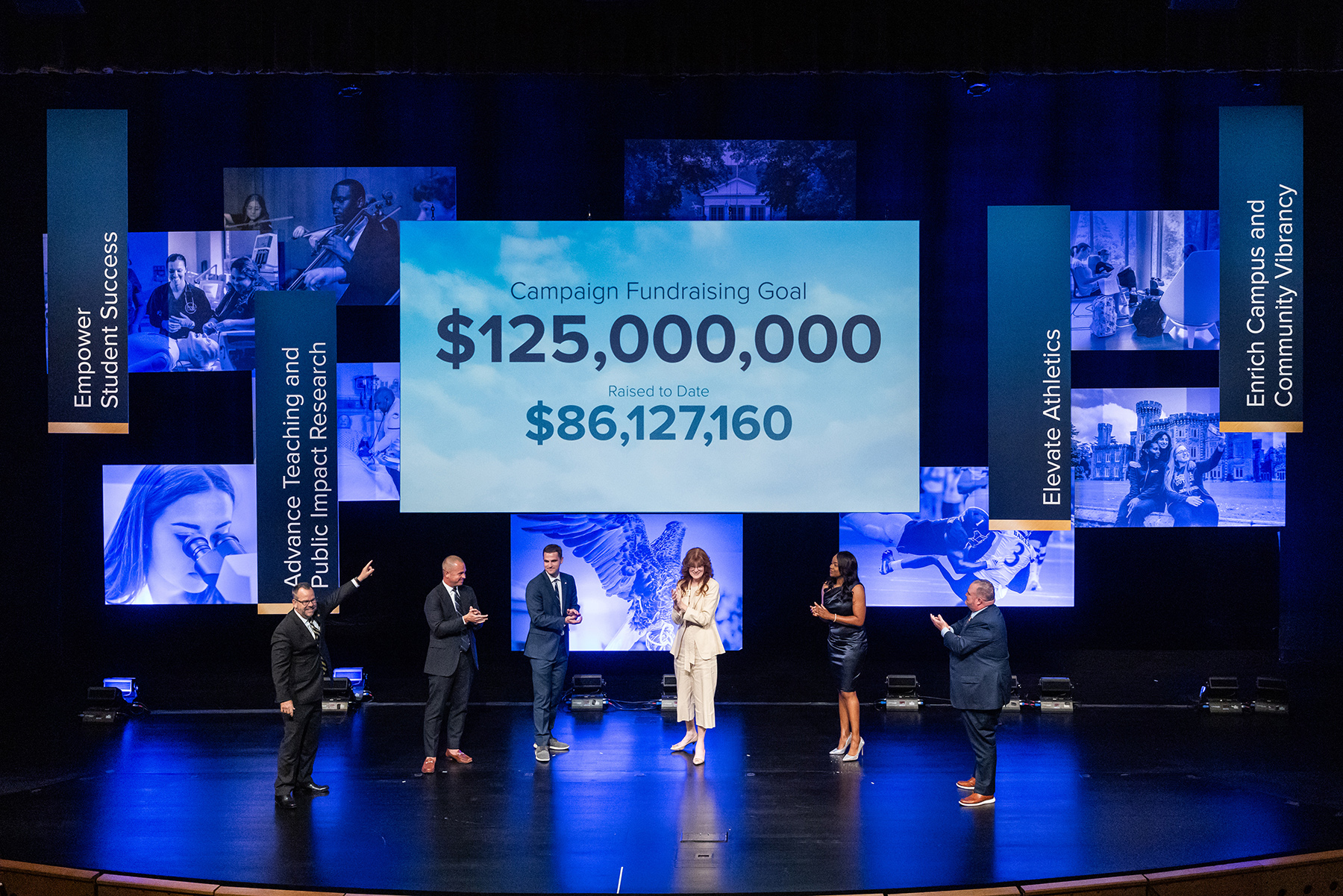
Georgia Southern University proudly announces the launch of its comprehensive campaign, “Together We Soar: The Campaign for Georgia Southern University.” This transformative initiative aims to elevate the University’s impact on students, faculty, research, athletics, and the communities it serves. Georgia Southern, renowned for its majestic campuses adorned with southern live oaks and towering pines, symbolizes not just American freedom but also the promise, achievement and boundless potential of its students. The University’s trajectory is on the rise, reaching for greater heights in education and community impact. Central to this momentum is the unwavering support from alumni, friends and the community. Publicly launched last Friday evening, Together We Soar: The Campaign for Georgia Southern University aims to raise $125 million by 2026. More than $86 million has already been secured. Dr. Kyle Marrero, President of Georgia Southern, expressed his gratitude and vision for the University. “Georgia Southern is on the move, in motion, and soaring to new heights. The ‘Together We Soar’ campaign—fueled by the generous support of our alumni, friends, and partners—will ensure our ability to drive innovation, develop talent, transform lives, and propel the economic development of a growing region.” (L-R) Georgia Southern President Kyle Marrero, Vice President for University Advancement Trip Addison, Deputy Athletics Director of Development Davis Hendrickson, Executive Director of Development Julie Gerbsch, Director of Alumni Relations Ava Edwards, and University Campaign Co-chair Leonard Bevill on stage at the Oct. 20 launch event for Together We Soar: The Campaign for Georgia Southern University. The campaign has identified four primary objectives: Empower Student Success: The campaign aims to stimulate learning by recruiting high-achieving students, increasing student access, and promoting inclusive excellence and career readiness. Advance Teaching and Public Impact Research: The focus is on meeting regional economic needs, increasing faculty expertise, and enhancing research capacity. Elevate Athletics: The campaign seeks to attract and retain elite student-athletes, provide top-notch facilities, and boost the Competitive Excellence Fund. Enrich Campuses and Community Vibrancy: The goal is to improve the communities surrounding the campuses and teach about local wildlife, among other initiatives. Campaign co-chairs Mike Sanders and Leonard Bevill shared their excitement for the campaign and what it will mean for Georgia Southern. “I could not be more excited about Georgia Southern and its possibilities. Opportunities abound for our University and the Together We Soar Campaign is the catalyst. It is time to do ‘more with more.’” - Mike Sanders “‘Together We Soar’ is spot on. From across campus to athletics and throughout our community, we’re perfectly aligned and equipped to launch to historic heights. I’m very blessed and excited to be involved.” Leonard Bevill The campaign also highlights the significant economic impact of Georgia Southern, with a regional economic contribution of $1.1 billion in fiscal year 2022. The University plays a critical role in the economic growth and transformation of Southeast Georgia. Marrero said Georgia Southern invites all its supporters, alumni and the community to join this transformative journey. With collective support, there’s no limit to how high Georgia Southern can soar. For more information or to contribute to the “Together We Soar” campaign, visit GeorgiaSouthern.edu/TogetherWeSoar.

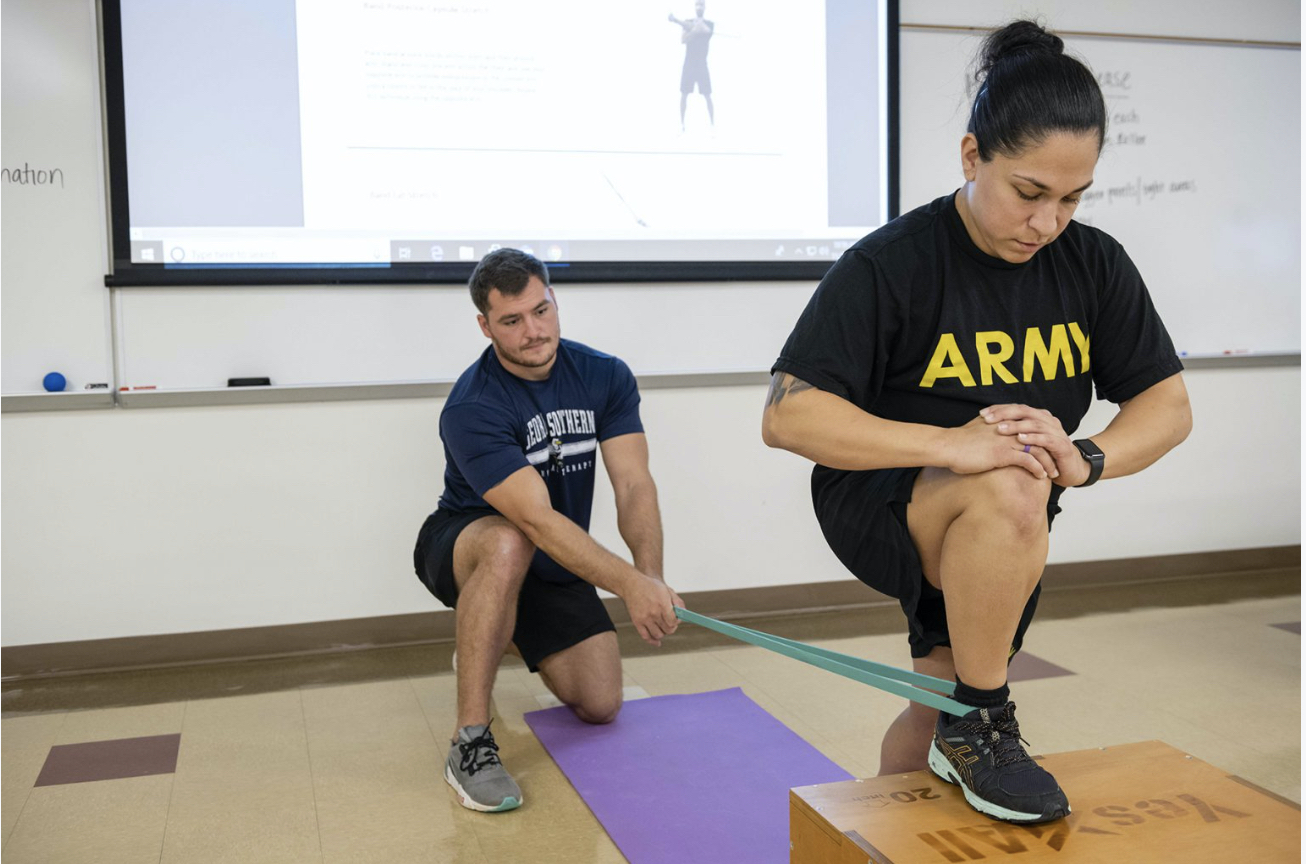
The Georgia Southern University Soldier Performance and Readiness (SPAR) program received a $1.5 million, two-year grant from the Department of Defense’s U.S. Army Medical Research and Development Command (USAMRDC). The grant will expand Georgia’s Southern research and programming capacity in injury prevention techniques that ensure force readiness for the Army. “Through this large-scale research study, Georgia Southern doctoral students have opportunities to be involved in the research process and work directly with soldiers,” said Nancy Henderson, Ph.D., assistant professor in the Doctor of Physical Therapy (DPT) program. “Additionally, the grant will fund graduate assistant positions in the Doctor of Physical Therapy program.” USAMRDC’s mission is to provide solutions to medical problems for American service members at home and abroad, as well as to the public at large. The scope of this effort and the priorities attached to specific projects are influenced by changes in military and civilian medical science and technology, operational requirements, military threat assessments and national defense strategies. Extramural research and development programs play a vital role in the fulfillment of the objectives established by the organization. Research and development funded through this are intended to benefit both military and civilian medical practices. “The grant investigates different physical training programs to identify those practices that best prevent non-combat injuries,” said Henderson. “Faculty on the research team will seek to advance the body of literature by determining the best educational models to educate soldiers on injury-prevention topics.” This is the first time that Georgia Southern will act as lead investigator on a collaborative research project with an Army research institute. However, SPAR has long been involved in multiple branches of research with community impact. “Georgia Southern has several initiatives underway to help improve the health, fitness and performance of military service members, law enforcement personnel and firefighting and rescue personnel,” said Joseph Kardouni, Ph.D., director of the Tactical Performance Group. “The Tactical Athlete Certificate (TAC) program is one of these initiatives that teaches service members exercise fundamentals to help mitigate training-related injuries. The funding coming through Medical Research and Development Command will improve evidence-based teaching methods and inform similar efforts to teach service members within this field. Leaders from health and human performance programs within the Army understand the importance of leveraging partnerships with academic institutions to work toward improving the quality of life, health and occupational performance of soldiers.” Faculty and students in the DPT program have educated soldiers on injury prevention topics since 2016 and this grant further provides students with the opportunity to assess effectiveness while learning how to improve educational methods with military service members. “This research is an important next step in delivering on the promise of the SPAR program and Georgia Southern’s close working relationship with Army research partners,” said Interim Vice President for Research and Economic Development Christopher Curtis, Ph.D. Curtis also noted that funding was made possible by the advocacy of U.S. Rep. Buddy Carter and the strong support of Georgia’s legislative delegation in Washington D.C. Interested in learning more or looking to talk with Nancy Henderson? Simply click on her icon now or Contact Georgia Southern's Director of Communications Jennifer Wise at jwise@georgiasouthern.edu to arrange an interview today.


Georgia Southern launches new merchandise line to benefit ‘Freedom’ and the Wildlife Center
“Freedom” merchandise is now available for purchase at Southern Exchange in Statesboro. Items will be available soon at the University Store on the University’s Armstrong and Statesboro campuses and in the gift shop at the Center for Wildlife Education located on the Statesboro Campus. Proceeds will benefit the Wildlife Center and Freedom’s care. Georgia Southern University is launching a new brand and merchandise line that will benefit and honor Freedom, the University’s live bald eagle mascot that flies before each home game in what many call the “most exciting 30 seconds in college football.” Unable to survive on his own because of an injury to his beak as a newborn, Freedom came to Georgia Southern in 2004 and now lives at the University’s Center for Wildlife Education in Statesboro alongside other eagles, raptors, reptiles and waterfowl. He will celebrate his 20th birthday this December. As an ambassador for Georgia Southern and symbol of our nation, Freedom has inspired thousands annually at the Center for Wildlife Education, Georgia Southern football games, the St. Patrick’s Day parade in Savannah, commencements, community events and other appearances, such as at the Charles Swab Classic PGA tour event earlier this year in Texas. To support Freedom and the Wildlife Center, University Communications and Marketing, Georgia Southern’s office of Athlete Brand Management and Licensing, the Wildlife Center and the university’s retail partners are collaborating to launch a new line of merchandise featuring Freedom. One shirt includes “Freedom’s Ride,” and depicts Freedom perched in the back of a 1977 International Scout often seen around town as it’s owned and driven by handler and Wildlife Center Executive Director Steve Hein. “Freedom belongs to Georgia Southern students, faculty, the Statesboro community and all those he encounters” Hein said. “It’s natural to want to express a unique relationship spanning 20 years and what better way to do this than by making his image available for people to wear and promote. I’m excited about this program, honored to be his plus-one, and greatly appreciate everyone’s support for Freedom, his care and his future.” The Freedom merchandise is designed to be both inspirational and stylish. Items are in development, but initial offerings could include: Hats T-Shirts Hoodies Posters Postcards Proceeds will benefit the Wildlife Center and Freedom’s care. Items will be available starting this week at Southern Exchange near the Georgia Southern campus in Statesboro and will be available soon at the University Store on the University’s Armstrong and Statesboro campuses and in the gift shop at the Wildlife Center located on the Statesboro Campus. Interested in learning more or looking to talk with Wildlife Center Executive Director Steve Hein? Simply click on his icon now or Contact Georgia Southern's Director of Communications Jennifer Wise at jwise@georgiasouthern.edu to arrange an interview today.
