
Experts Matter. Find Yours.
Connect for media, speaking, professional opportunities & more.
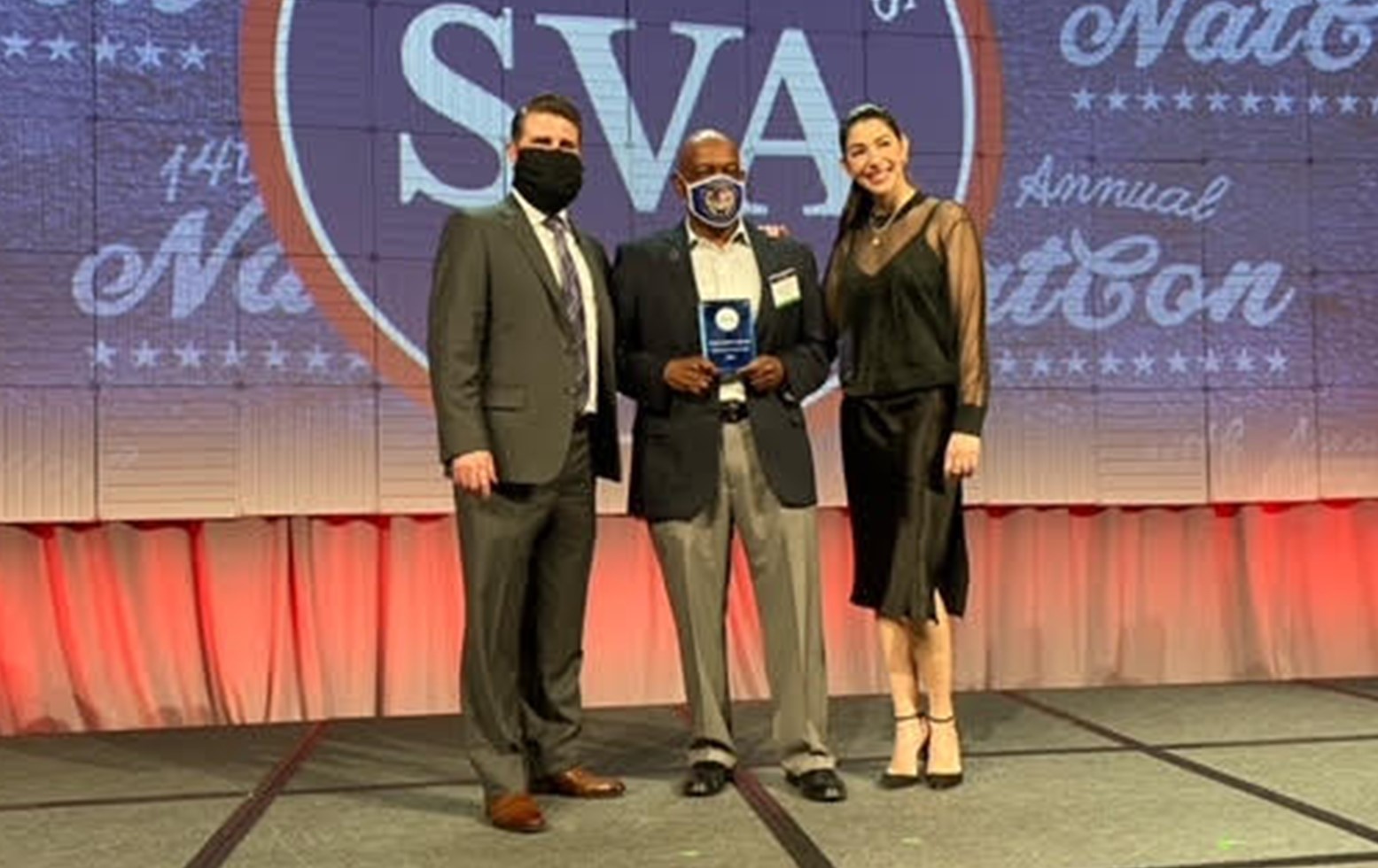
Georgia Southern University was selected as a finalist for the Chapter of the Year awarded by Student Veterans of America (SVA), an organization focused on advocating for and advancing resources for veterans in higher education. The University has SVA chapters on the Statesboro Campus and Armstrong Campus in Savannah, both of which were recognized with the award. “I am so proud of both of our SVA Chapters,” said Col. George Fredrick, Ed.D., director of Military and Veteran Services. “They offer truly outstanding support to our military-connected student population at Eagle Nation.” While this is the first time Georgia Southern has been a contender for this acknowledgement, the University has a tradition of being recognized for its investment in the military community. The Army ROTC program was established in 1980, and has won the MacArthur Award four times since 2009 for being one of the nation’s top ROTC programs. The Military Times publication named Georgia Southern as a Top 15 Best for Vets 4-year school for five consecutive years, including in 2019 when the University was ranked No. 1. Because the University operates near Hunter Army Airfield in Savannah and Fort Stewart in Hinesville, a number of students, faculty and staff are enlisted, retired or spouses of military members. Richelle Keilholz, Ed.D., is the staff advisor for SVA-Armstrong, and she believes this makes the campus community and military community deeply intertwined. “They become part of the campus culture, and I think that’s where you start to see that excellence comes when you have that kind of devotion,” said Keilholz. “You want to see our military service members, our family members and our spouses succeed in the military community and in higher education.” Georgia Southern’s relationship with veterans isn’t common among other universities, said military veteran project coordinator Rudy Duero. Many veterans feel overlooked and are an “untapped resource,” but not at Georgia Southern. “It’s awesome to have a group of individuals at the executive level who care and respect the opinions of the veteran students,” Duero said. “Veterans are being heard and they know that they’re being heard when they have good leadership representing them. The communication is always open.” Georgia Southern is one of five schools to be named a finalist for the award. The University sent a delegation to Orlando to attend the awards ceremony on Jan. 7. Academic and financial resources for veterans looking to pursue a degree can be found here. And if you’re a journalist looking to cover how Georgia Southern is working to support our veterans and the university’s military veteran project – then let us help. Rudy Duero is available to answer your questions - simply reach out to Georgia Southern Director of Communications Jennifer Wise at jwise@georgiasouthern.edu to arrange an interview today.


Georgia leaders to speak as part of Georgia Southern’s 2022 MLK Jr. commemorative events
Rev. Francys Johnson, J.D., (‘01) and Amir-Jamal Touré, J.D., will serve as speakers during Georgia Southern’s 2022 Martin Luther King (MLK) Jr. Celebration Dinners on Jan. 25 in Statesboro and Jan. 26 on the Armstrong Campus in Savannah, respectively. Johnson is a civil rights attorney, public theologian, educator and advocate who succeeded Stacey Abrams and Raphael Warnock as chair of the New Georgia Project. Johnson will speak at the MLK Celebration Dinner on Jan. 25 at 6 p.m. in the Nessmith-Lane Center Ballroom on the Statesboro Campus. Touré is the resident scholar for Geechee Kunda Cultural Center and Museum in Riceboro, Georgia, and a Djeli (chronicler of Gullah Geechee history). He has performed internationally in sharing history and culture and is known for his work in socioeconomic, politics and social justice areas. Touré will speak on Jan. 26 at 6 p.m. in the Student Union Ballroom on the Armstrong Campus in Savannah. During the celebration dinners, the Office of Multicultural Affairs (OMA) will hand out inaugural Drum Major of Justice Awards, which will be given to student leaders and student organizations that OMA leadership determine best exemplify MLK’s commitment to social justice. In addition to the evening events, student, faculty and staff volunteers will join OMA and Office of Leadership and Community Engagement for a weekend of community service from Jan. 15 through Jan. 17 as part of the Eagles in Action: MLK’s Legacy of Service initiative.

Expert available to discuss Holmes trial verdict
Elizabeth Holmes, founder of the failed blood testing start-up Theranos, was found guilty Monday of four of 11 charges of fraud, after a closely watched trial that lasted nearly four months. A jury determined that she deliberately misled investors. Todd Haugh, associate professor of business law and ethics and the Arthur M. Weimer Faculty Fellow in Business Law at the Indiana University Kelley School of Business, is available to comment on the verdict and future sentencing. Haugh’s research focuses white collar and corporate crime, business and behavioral ethics, and federal sentencing policy, exploring the decision-making processes of the players most central to the commission and adjudication of economic crime and unethical business conduct. He can discuss: • The size of the potential sentencing and the calculation the judge will make in determining it (the statutory maximum is high -- 20 years; the sentencing guideline will be very high -- maybe life imprisonment; but the actual sentence will be much, much lower); • The impact the acquitted conduct will have on the sentence (none -- the law allows the judge to consider all conduct, even counts she was acquitted of) • The impact of Holmes going to trial versus pleading guilty (significant because she loses cooperation credit, for example); • The larger business ethics and compliance implications of the case, which Haugh believes are significant, given the high profile nature of Theranos and Holmes, the culture of Silicon Valley, and the rarity of a criminal trial in a case like this); Haugh can be reached at thaugh@indiana.edu and 812-855-6539


Georgia Southern University has established a new research and outreach center, the Institute for Water and Health, to investigate the complex interactions between water and human activities, and protect and restore public health in a changing environment. As part of the University’s focus on public impact research, the center will foster collaboration among scientists, government agencies, industry, nonprofit organizations and communities. Coastal Georgia is the perfect location for such an institute to conduct interdisciplinary research because it lies at the intersection of many social, economic and ecological issues. The center supports the region through research, workforce training for students, and actively involving communities in water resource management decision-making process, said Asli Aslan, Ph.D., associate professor in Georgia Southern’s Jiann-Ping Hsu College of Public Health Department of Biostatistics, Epidemiology and Environmental Health Sciences. Now also director of the Institute for Water and Health, Aslan is a water microbiologist, and her research program bridges ecosystem and human health. She has ongoing funded projects on tracking sources of water pollution and assessing health risks associated with exposure to chemical and microbial contaminants. She works with local communities and nonprofit organizations to encourage water stewardship behaviors. Aslan has served in various federal and state agencies and organizations as an adviser, reviewer, scientific committee member and affiliated faculty. She is also the founder and currently the co-chair of the Water and Health Committee of the American Public Health Association. “We want to create a nationally recognized institution that provides meaningful solutions for community needs,” said Aslan. “Our immediate plan is to develop a coalition with all stakeholders in the region to address issues related to increased water demand, impact of sea-level rise on water resources, and potential emerging contaminants in our urban and rural water infrastructure. We are in the process of establishing a community advisory group consisting of scientists from academic institutions, representatives from local and state governments, community leaders, non-profit organizations and businesses to identify and prioritize community needs in water research and education.” For example, she said, although one in every six households in Georgia has a private well, few residents realize any water testing, treatment or well maintenance is the sole responsibility of the property owner as per the Safe Drinking Water Act. Aslan said the Institute for Water and Health will work with the homeowners to help them recognize potential risks and provide solutions that will keep families safe in the long term. “We also look at sources of contaminants using state-of-the-art-methods. And if you know where the pollution is coming from precisely, it’s easier to go fix that problem once and for all, which has a direct impact on the decision-making process to protect water resources.” she said. These new techniques allow researchers with the institute to provide test results within a few hours, which helps end-users to be informed the same day instead of days where most water testing methods currently take about 48 hours. The implications of these methods are broad, as they can be used to identify pathogens in storm water or in household drinking water pipes; assess how new sustainable water treatment technologies efficiently remove contaminants, or provide same-day results for recreational beach monitoring. “We can do all this fancy research in the lab, but it will be very important for us to go out into the community and talk to people, ask them what their immediate needs – our goal is to involve communities from the very beginning of our research so that we co-develop meaningful solutions that will improve the quality of their everyday lives,” Aslan said. “Our group at Georgia Southern consists of established researchers from multiple disciplines such as environmental education, public health, social and behavioral sciences, environmental and computational engineering, coastal ecology, and we are growing everyday”. Carl L. Reiber, Ph.D., Georgia Southern’s provost and vice president for academic affairs, said the center will pull together faculty from across the University, many of whom have already established themselves as water experts within their own discipline. He expects the center to take a very visible role for the University and is renovating space in Savannah near the Armstrong campus to house the center and its labs. “The Institute for Water and Health will bring to southeast Georgia an awareness of the importance of water quality, water management and how tightly these areas are aligned with our health,” Reiber said. “The public impact of this institute is immeasurable and will ultimately increase the quality of life in our community.” If you're a journalist looking to know more about this topic or are looking to cover - then let us help. Asli Aslan, Ph.D., is a water microbiologist, and her research program bridges ecosystem and human health. She has ongoing funded projects on microbial source tracking, health risk assessment of water resources, and the ecology of pathogens in the aquatic environment. She is available to speak with reporters – simply click her icon now to arrange an interview today.

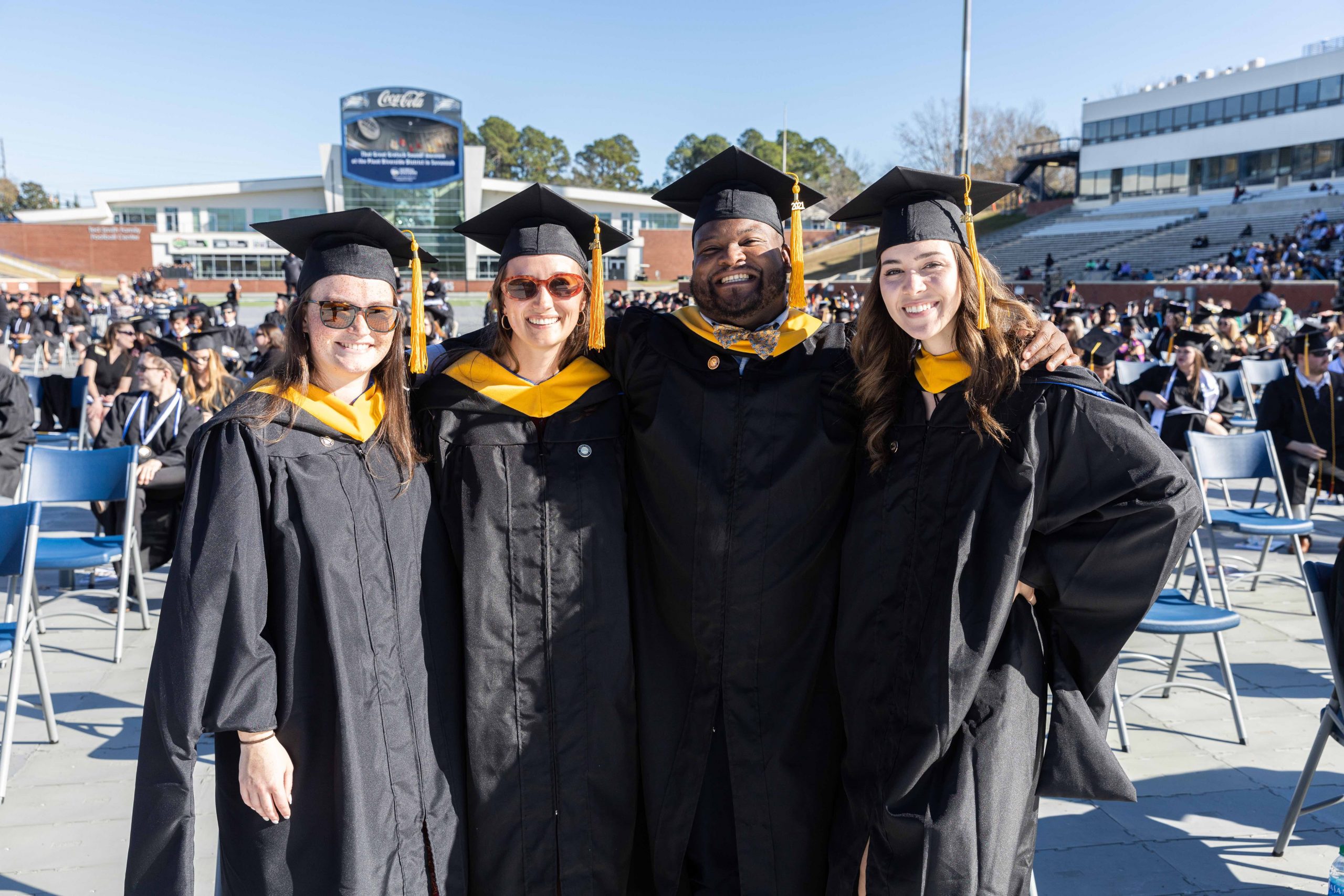
Hats off to the 2,100 graduates at Georgia Southern
Last week, approximately 2,100 undergraduate and graduate students from Georgia Southern University’s Statesboro, Armstrong and Liberty campuses received associate, baccalaureate, master’s, specialist and doctoral degrees in three Fall 2021 Commencement ceremonies. Georgia Southern President Kyle Marrero welcomed the graduates and their families to the University’s Fall Commencement ceremonies, held at the Savannah Convention Center in Savannah on Dec. 11, and the Allen E. Paulson Stadium in Statesboro on Dec. 13 and 14. He commended the graduates on their achievements and tenacity. “Graduates, I don’t need to tell you about your unique college journey, which has been challenging for all of us,” said Marrero. “I am very proud of how, together, we have persevered allowing us to have a successful semester and today, our commencement ceremony. You, our graduates, deserve great recognition.” During the Savannah ceremony, Georgia’s 2022 Teacher of the Year Cherie Dennis (Armstrong ‘10), who teaches English to Speakers of Other Languages at Hesse K-8 School in Savannah-Chatham County Public Schools, addressed the packed house with a call for kindness. “My hope for you is that you go out into the world with your eyes and your hearts wide open,” she said. “That you go out into the world and make something beautiful out of its cracks and imperfections. A world that is bound together by the irrefutable strength and integrity of kindness. Be the repairers of the world; the menders of the world; the bridge builders; the constructive, contributive citizens who nurture communities large and small. And that may sound daunting, but really it all starts with something so very simple, something so very possible and within your reach. Something you knew how to do even as a child. Just being kind.” Sachin Shailendra, chair of the University System of Georgia Board of Regents and president of SG Contracting, Inc. in Atlanta, spoke at the first ceremony in Statesboro. “Georgia Southern – which in a few minutes will be your alma mater – is one of the shining stars among our 26 institutions,” he said. “It ranks as one of Georgia’s best comprehensive universities, with a growing reputation for research that impacts not only vital industries but the environment and our communities. The degree you earned lets everyone know you learned from outstanding faculty, top staff and talented fellow students. “The opportunities ahead of you are many. I know this because of my own experience. I was born in Georgia, but my father was not. I am only a generation away from the farmers my family were in India. Education has been a game changer for both me and my family, and I know it’s a major accomplishment for many of you. I hope your degree will inspire you to take the next steps in building your future. So go out into the world and create a worthy future, not only for yourselves, but one that will represent Georgia Southern, our entire university system, and this state as well…Your education has already changed you. It also has the power to change your community, and move our state forward in exciting ways.” To read the full release please see the attachment below. This is a great moment for Georgia Southern University and if you are looking to learn more about this year's graduating class or the school - then let us help. Simply reach out to Georgia Southern Director of Communications Jennifer Wise at jwise@georgiasouthern.edu with your questions or to arrange an interview today.
Experts in the Media – Learn how UMW is doing its part to preserve Indigenous history
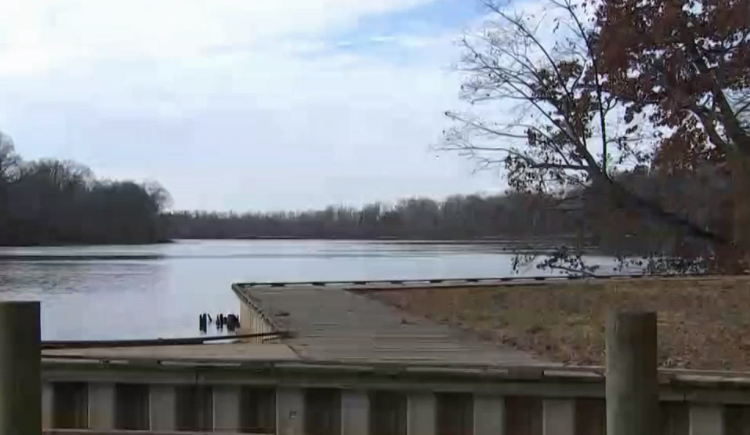
The members of Virginia’s Rappahannock and Patawomeck tribes can trace their roots back to the times before the first European contact. For hundreds of years, their people fished the rivers and inhabited the area near the Potomac and Rappahannock rivers. It was a rich history and today the efforts to preserve the stories and records of those times are being bolstered by UMW students and faculty. The work was recently featured in a piece by NBC-4 in Washington, D.C. Professor Lauren McMillan and her students are helping with that mission. King George County economic development officials approached her with an idea to create a Native American heritage trail, hopeful that it would drive ecotourism and draw visitors to public access points. “The first step that we did was say we need to consult with the tribes whose stories we’d be telling," McMillan said. Then the class did a deep dive. "We then started diving into the archives, the historical records, oral histories and the archaeological record as well,” McMillan said. They’ve created signs that will go up in seven different locations in King George. Each one tells a different story about the local tribes, spotlighting the past and present. “When you learn Virginia history, you learn about a lot of stuff that happened in Jamestown and that’s kind of the last place you learn about Indians in Virginia history, but we've been here all along,” Brad Hatch, a member of the Patawomeck Tribe, said. “We’ve been preserving our own culture and heritage and it's here for everybody to see." The students worked hard to put that heritage and culture on full display. They also envision their project inspiring others to do some research of their own about Virginia’s first residents. December 07 - NBC News Indigenous history is a fascinating topic – and one being covered more and more by media. And if you’re a reporter looking to know about the work UMW is doing with of the Rappahannock and Patawomeck tribes or other topics – then let us help. Lauren McMillan is the University of Mary Washington's resident historical archaeologist and an expert on middle-Atlantic American history. Dr. McMillan is available to speak with media – simply click on her icon now to arrange an interview today.


On Rethink What’s Possible, a podcast by Milwaukee School of Engineering, MSOE students, faculty, staff, alumni and community partners share their inventions, research, industry trends, projects, experiences and how they’re rethinking what's possible. Artificial intelligence. Machine learning. High performance computing. Super computers. These terms have been around for quite a while now, but only in recent years the research has been put into practice and there are no signs of it slowing down. Episode Three, 'Humanizing Machine Learning,' Artificial intelligence (AI) is becoming prominent in more and more industries each day, including health care. Artificial intelligence (AI) is becoming prominent in more and more industries each day, including health care. Join Dr. Sheila Ross and Dr. John Bukowy, AI faculty experts from Milwaukee School of Engineering (MSOE) and student Ethan Hindes as they discuss the advancements of AI in “Humanizing Machine Learning,” part of the MSOE podcast, “Rethink What’s Possible.” They talk about its impact on their research with the Medical College of Wisconsin to identify and assess the severity of damage to blood vessels in kidneys. Hindes also discusses how he found his way to major in computer science. The podcast is available for download and well worth listening to. And, if you are a journalist interested in learning more or arranging an interview with Dr. Ross or Bukowy – simply click on either expert's icon now to arrange an interview today.



On Rethink What’s Possible, a podcast by Milwaukee School of Engineering, MSOE students, faculty, staff, alumni and community partners share their inventions, research, industry trends, projects, experiences and how they’re rethinking what's possible. Episode Two, “Erasing the Stigma of Mental Health,” features industry experts Dr. Carol Sabel, MSOE School of Nursing chairperson, and Sue McKenzie Dicks, vice president of healthy culture at Rogers Behavioral Health. The pair discusses the importance of mental health with recent MSOE graduate Jake Egan, who shares his own personal mental health journey and how he dealt with juggling an intense academic workload and a variety of internships. According to the National Alliance on Mental Illness, trying to tell the difference between what expected behaviors are and what might be the signs of a mental health condition isn’t always easy, but identifying a problem early can help lead to the best outcome. The U.S. has the highest rates of mental health disease (27%) as compared to any other industrialized country. One in five adults suffer from some sort of mental health illness and 3.3 million children ages 6-17 receive treatment or counseling for emotional or behavioral issues. The stigma surrounding mental health care is beginning to subside, and more individuals are seeking care. By 2025, the demand for mental health services is expected to outpace supply by 10,000—and in the U.S. 60% of psychiatrists are 55 or older. Our nation is facing a shortage of mental health care providers. In a move to address the shortage of mental health care providers in the United States, Dr. Carol Sabel and the MSOE School of Nursing partnered with Rogers Behavioral Health to offer a Psychiatric Mental Health Nurse Practitioner Program (PMHNP). This innovative new program, coupled with educating nurses at the bachelor’s and advanced practice levels in the area of mental health, is increasing the pipeline of qualified mental health professionals. The podcast is available for download and well worth listening to. And, if you are a journalist interested in learning more or arranging an interview with Dr. Carol Sabel – simply click on her icon now to arrange an interview today.

On Rethink What’s Possible, a podcast by Milwaukee School of Engineering, MSOE students, faculty, staff, alumni and community partners share their inventions, research, industry trends, projects, experiences and how they’re rethinking what's possible. Episode Four, 'Rooted in STEM,' features Seandra Mitchell, vice president of student affairs and campus inclusion, and Liz Taylor, director of STEM, as they dive into the importance of diversity in STEM and MSOE’s efforts to offer STEM experiences to shape a more equitable future. According to the National Science Foundation, 111,402 bachelor’s degrees in engineering were conferred nationwide in 2018, the most recent data available. Of those degrees, roughly 64% were white, roughly 12% were Hispanic or Latino, roughly 12% were Asian or Pacific Islander, roughly 4% were Black or African American, and the rest listed themselves as something else. In 2021, MSOE celebrated the opening of the We Energies STEM Center at MSOE. The new center is the premier STEM destination in Milwaukee for K-12 students and home to MSOE’s STEM outreach efforts. The purpose is to provide an accessible, dedicated space for students from all walks of life to explore, create and define their future in STEM. The podcast is available for download and well worth listening to. And, if you are a journalist interested in learning more or arranging an interview with MSOE's Director of STEM outreach, Liz Taylor – simply click on her icon now to arrange an interview today.

Emory Experts - Why Companies Invest in Local Social Media Influencers
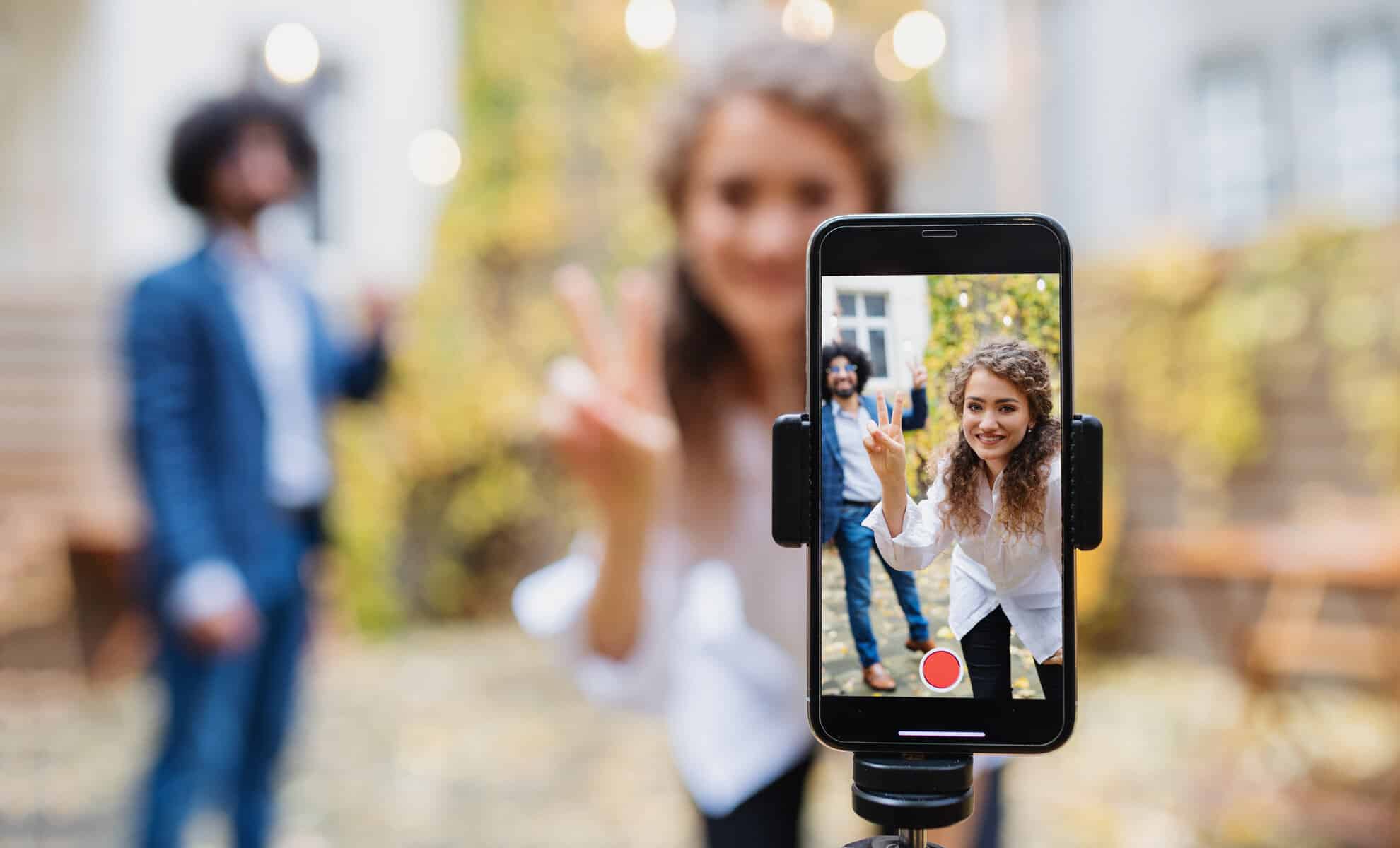
Companies seek local influencers to pitch products. Even though most influencers amass geographically dispersed followings on social media, companies are willing to funnel billions of sponsorship dollars to multiple influencers located in different geographic areas, effectively creating sponsorships that span cities, countries, and in some cases even, the globe. The desire to work with local influencers has spawned advertising agencies that specialize in connecting companies with influencers and may soon redefine the influencer economy. This trend has merit, our research team finds. In a new Journal of Marketing study, we show a positive link between online influence and how geographically close an influencer’s followers are located. The nearer a follower is geographically to someone who posts an online recommendation, the more likely she is to follow that recommendation. To investigate whether geographical distance still matters when word of mouth is disseminated online, our research team examined thousands of actual purchases made on Twitter. We found the likelihood that people who saw a Tweet mentioning someone they follow bought a product would subsequently also buy the product increases the closer they reside to the purchaser. Not only were followers significantly associated with a higher likelihood to heed an influencer’s recommendation the closer they physically resided to the influencer, the more quickly they were to do so, too. We find that this role of geographic proximity in the effectiveness of online influence occurs across several known retailers and for different types of products, including video game consoles, electronics and sports equipment, gift cards, jewelry, and handbags. We show the results hold even when using different ways to statistically measure the effects, including state-of-the-art machine learning and deep learning techniques on millions of Twitter messages. We posit that this role of geographic proximity may be due to an invisible connection between people that is rooted in the commonality of place. This invisible link can lead people to identify more closely with someone who is located nearby, even if they do not personally know that person. The result is that people are more likely to follow someone’s online recommendation when they live closer to them. These online recommendations can take any form, from a movie review to a restaurant rating to a product pitch. What makes these findings surprising is that experts predicted the opposite effect when the internet first became widely adopted. Experts declared the death of distance. In theory, this makes sense: people don’t need to meet in person to share their opinions, reviews, and purchases when they can do so electronically. What the experts who envisioned the end of geography may have overlooked, however, is how people decide whose online opinion to trust. This is where cues that indicate a person’s identity, such as where that person lives in the real world, come into play. We may be more likely to trust the online opinion from someone who lives in the same city as us than from someone who lives farther away, simply because we have location in common. Known as the social identity theory, this process explains how individuals form perceptions of belonging to and relating to a community. Who we identify with can affect the degree to which we are influenced, even when this influence occurs online. Our findings imply that technology and electronic communications do not completely overcome the forces that govern influence in the real world. Geographical proximity still matters, even in the digital space. The findings also suggest that information and cues about an individual’s identity online, such as where he/she lives, may affect his/her influence on others through the extent to which others feel they can relate to him/her. These findings on how spatial proximity may still be a tie that binds even in an online world affirm what some companies have long suspected. Local influencers may have a leg up in the influence game and are worth their weight in location. For these reasons, companies may want to work with influencers who have more proximal connections to increase the persuasiveness of their online advertising, product recommendation, and referral programs. Government officials and not-for-profit organizations may similarly want to partner with local ambassadors to more effectively raise awareness of—and change attitudes and behaviors towards—important social issues. Goizueta faculty members Vilma Todri, assistant professor of Information Systems & Operations Management, Panagiotis (Panos) Adamopoulos, assistant professor of Information Systems & Operations Management, and Michelle Andrews, assistant professor of marketing, shared the following article with the American Marketing Association to highlight their new study published in the Journal of Marketing. To contact any of the experts for an interview regarding this topic, simply click on their icon to arrange a time to talk today.


