
Experts Matter. Find Yours.
Connect for media, speaking, professional opportunities & more.

Researchers awarded £2 million to develop drugs to prevent epileptic seizures in children
• Three-year research project to develop new drug treatments for childhood epilepsy • Scientists will test new treatment on pieces of living brain tissue • The research is a collaboration between Aston University, Bristol University and Jazz Pharmaceuticals. Scientists at Aston University have started work on a project that will look for new drug treatments to prevent the onset of childhood epilepsy. The three-year Medical Research Council (MRC) funded project is a collaboration led by researchers in the College of Health and Life Sciences at Aston University, partnered with Bristol University and Jazz Pharmaceuticals. They have been awarded £2 million to explore how epilepsy becomes established in the brain and how this process might be prevented. The researchers will test new drugs in the human brain, using samples of living tissue taken from children with difficult to treat epilepsies who have had to have brain surgery. Epilepsy is a brain disease which is characterised by seizures. As Professor Gavin Woodhall, lead researcher and co-director of Aston Institute of Health and Neurodevelopment, explains: “Seizures are periods of time when networks of brain cells are too active and are uncontrollably excited and spiking. If uncontrolled excitation spreads to brain regions that control movement, then too many brain cells are ‘talking at the same time’ and we can see seizures as changes in movement such as jerks and twitches.” Upon receiving the grant, Professor Woodhall said: “We will be able to study epilepsy in such detail that we hope to be able to treat the problems that underly epilepsy and not just the seizures themselves. And this could help pave the way to prevent epilepsy from developing in children at all. “Essentially we want to find a treatment that stops the brain from being able to establish epilepsy after the first seizure - via a new drug treatment. We will be testing a known drug and a new drug to see if the drug can do this.” As part of the research for this project the scientists will look at how different amounts of epileptic activity in the brain can alter the brain’s excitability. The researchers predict that if there are a lot of seizures, the synapses in the brain will decrease their activity and brain cells will become more likely to spike. Professor Woodhall added: “This is why we will test antiepileptic drugs, and new drugs designed to interfere with homeostatic scaling - which is a form of plasticity, in which the brain responds to chronically elevated activity in a neural circuit with negative feedback, allowing individual neurons to reduce their overall action potential firing rate. “By interfering with homeostatic scaling we will be able to see if they can prevent seizures from developing or reducing their intensity.” The research will allow Professor Woodhall and his team to be able to record the life history of the disease. This is something which has not been done before in this level of detail and it is predicted it will help to shed light on how epilepsy initially develops in the brain. Following on from the three-year project the team will move into drug development and then clinical trial. For more information about research being undertaken at AIHN please go to our website. If you are interested in the courses we have available in this area please go to our course pages.


New research highlights the economic importance of live music to Birmingham and the West Midlands
It found local authorities need to more explicitly recognise the economic, social and cultural value of live music and live music venues The report calls for dialogue between music stakeholders and government The research is published by Aston University and supported by the AHRC-funded Creative Industries Policy and Evidence Centre. New research by the Birmingham Live Music Project (BLMP) highlights the huge economic value of Birmingham’s live music scene, the vital contribution small independent venues make, the ongoing impact of the pandemic and what is needed to support the recovery of the sector in the city. The research is published by Aston University, with colleagues from Newcastle University and Birmingham City University, and supported by the Arts and Humanities Research Council (AHRC)-funded Creative Industries Policy and Evidence Centre. In 2019, the UK’s live music sector was valued at over £1.3 billion. After almost a decade of strong growth the sector helped push the UK music’s overall GVA from £3.5 billion in 2012 to £5.8 billion in 2019, the outbreak of the global pandemic brought it to a near standstill. This paper explores, through a local lens and a focus on Birmingham, the challenges stakeholders across the live music sector have faced in recent years. The research finds that small live music venues are the lifeblood of this financial, cultural and community asset for the city. In 2019 Birmingham helped bring 877,000 music tourists to the West Midlands, with a total cultural spend in the region of £252,000,000 (UK Music). But during summer 2020, the research published today found, Birmingham’s live music capacity of approx. 98,000 dropped by around 75%. This impacted ticket prices, the availability of events across the city, and the economic viability of shows – while some venues could stay open, they couldn’t make a profit. The report makes clear independent venues need protection and support particularly in the wake of the pandemic. It calls for dialogue between music stakeholders and government in advance of the 2025 review of the EU-UK Trade and Co-Operation Agreement to identify the best means of reducing friction and support for the efforts to improve the Agreement, for example work on border force training, expanding the number of checkpoints where carnets and Music Instrument Certificates can be checked, reducing bureaucracy for live event transport and haulage, examination of further measures to develop the ’dual registration’ system for specialist hauliers to ease pressure on touring. Dr Patrycja Rozbicka, a senior lecturer in politics and international relations at Aston University and one of the report authors, said: “Local authorities need to more explicitly recognise the economic, social and cultural value of live music and live music venues, including grassroots venues, to their region(s). “Environmental, health, culture and city regeneration strategies have to take account of the existing and huge potential contribution of live music to the city and region. “What is needed is a cross-policy approach, implementation of a Night-time Industry Impact Assessment and dialogue between local authorities and the music sector, where the recently launched West Midlands Music Board could play a role. “We would like to see the creation of information hubs to support local venues and audiences with initiatives such those undertaken by the Liverpool City Region including a Music Fund which supports activities of the Liverpool City Region Music Board as well as helping with funding applications and advice. You can read the full report here.


Partnership with Hims & Hers Expands In-Person Healthcare Access in Four States
Hims & Hers Health, Inc. (“Hims & Hers”, NYSE: HIMS), the trusted consumer-first platform focused on providing modern personalized health and wellness experiences to consumers, and one of the nation’s premier health systems, ChristianaCare, today announced a partnership that will expand access to healthcare services and create a more seamless care journey for patients. The partnership will benefit customers in Delaware, Maryland, New Jersey and Pennsylvania, and expands the Hims & Hers’ partnership network with providers to now include 10 states and Washington D.C. Hims & Hers offers treatments for a broad range of conditions, including those related to sexual health, hair loss, dermatology, mental health and primary care. This collaboration allows licensed medical providers on the Hims & Hers platform to connect patients with ChristianaCare’s industry leading Center for Virtual Health and extensive primary and specialty care provider network when appropriate. Referrals may occur if a patient presents with a complex medical history, requires additional in-person follow up or evaluation, or needs care for a condition that the Hims & Hers platform does not support. This collaboration advances the Hims & Hers mission to expand access to high-quality, convenient and affordable care by adding another high-quality health system to its growing network of provider relationships. “ChristianaCare stands for excellence in healthcare and is rated as one of the best hospitals in America, making them an excellent and trusted partner in ensuring a high-quality care experience throughout a consumer’s journey,” said Hims & Hers Chief Operating Officer Melissa Baird. “Healthcare consumers today want easy-to-use, on-demand access to high-quality care both digitally and in-person, so our proprietary platform, coupled with partnerships such as ChristianaCare, help them smoothly navigate more of their healthcare needs.” ChristianaCare is one of the country’s most dynamic healthcare organizations that is committed to improving health outcomes, increasing access to high-quality care and lowering the costs for patients. Its Center for Virtual Health makes health care accessible and convenient, available 24/7 through computer, tablet or smartphone. By partnering with Hims & Hers, ChristianaCare gains access to a broader patient population for its Center for Virtual Health and extensive network of primary care, outpatient services, and specialty care services, including its comprehensive stroke center and regional centers of excellence in heart and vascular care, cancer care and women’s health. “ChristianaCare is thrilled to partner with Hims & Hers to make high-quality health care available to its customers who have complex needs or need additional services that Hims & Hers does not provide,” said Sharon Anderson, MS, RN, FACHE, ChristianaCare’s chief virtual health officer and president of ChristianaCare’s Center for Virtual Health. “At ChristianaCare, our Center for Virtual Health provides personalized health care consultations that are immediate, coordinated, continuous and available 24/7, delivering value to our patients and making a positive impact on health,” she said. This partnership with ChristianaCare builds upon established relationships with other high-quality providers, including Carbon Health in California; Oschner in Louisiana; Mount Sinai Health System in New York City; and Privia in the District of Columbia, Georgia, Maryland, Texas, and Virginia. ChristianaCare will provide support to select counties within Delaware, New Jersey, Pennsylvania and Maryland.


Aston University and Birmingham Women’s and Children’s NHS Foundation Trust (BWCH) have pledged to work together to address health provision in the city by signing a Memorandum of Understanding to co-develop paediatric health initiatives and the health services workforce of the future to deliver them. The strategic partnership between the University and BWCH aims to develop the health services workforce of the future together (particularly focusing on course development and delivery, including placements). It will also invest in shared posts that support closer links between academic, education and healthcare provision and support honorary appointments and initiate collaborative projects including joint research, to develop world-leading research and provision in the field of paediatric health and wellbeing. The partnership will make the most efficient use of resources and reduce duplication by providing a range of shared services, as well as continuously developing new ways to work together, with a view to supporting innovation in the field of healthcare. These activities will build on the existing joined up work taking place between Aston University and Birmingham Women’s and Children’s NHS Foundation Trust, such as shared use of the MRI scanning services in the Aston Institute for Health and Neurodevelopment and joint research projects examining topics including epilepsy in children, eating behaviours and neurodevelopment. Both organisations are also members of Birmingham Health Partners, the city’s clinical-academic research alliance, which includes maternal health as one as its key strategic focus areas. Professor Anthony Hilton, pro-vice-chancellor and executive dean of the College of Health and Life Sciences at Aston University, said: “The signing of this Memorandum of Understanding formalises the existing relationship between our two organisations and represents a strong joint commitment to improving healthcare provision in our city. “Working collaboratively enables us to bring together world-leading research with outstanding clinical provision, for the benefit of our students, patients accessing BWCH services and our city and region. I look forward to developing the many ways in which our organisations can work together to improve healthcare provision in Birmingham.” Matthew Boazman, deputy chief executive officer of Birmingham Women’s and Children’s Hospital NHS Foundation Trust, said: “The partnership between BWCH and Aston University represents a wonderful opportunity for us to ensure that Birmingham has access to world-class healthcare provision and that those entering the workforce are as ready as they can be.”


How to Blend Different Approaches to Peer Learning
Learn about how Dr. Karen Finlay and the team at Hamilton Health Sciences have implemented meaningful peer learning in a safe environment to improve patient care, quality and collaboration in a constructive environment. Learn more here: https://realtimemedical.com/software-solutions/ See more Customer Stories: https://realtimemedical.com/about-realtime-medical/what-customers-are-saying/ #radiology #peerlearning #diagnosticimaging


West Grove Campus Awarded $2.5M Grant from Chester County for Capital Improvement Projects
Funds earmarked for information technology, medical equipment and facility upgrades The ChristianaCare West Grove campus has received a $2.5 million American Rescue Fund Plan Act (ARPA) grant from the Chester County Government for capital improvement projects related to information technology, medical equipment and facility renovation. ChristianaCare finalized the purchase of its West Grove campus (formerly Jennersville Hospital) from Tower Health in June 2022. The hospital has been closed since Dec. 31, 2021. “We are enormously grateful to the Chester County Commissioners for this generous grant,” said Douglas Azar, MHA, ChristianaCare senior vice president, Strategic Clinical Integration. “Our assessment and inventory of the facility indicate that while it contains some usable equipment, including hospital beds and some imaging and diagnostic equipment, there is a lot of work to be done in many key areas. For example, the building currently contains no information technology infrastructure and no laboratory equipment. This funding will provide much-needed help as we build out these critical areas,” he said. “This grant is a tremendous resource as we plan next steps for the West Grove campus,” said Heather Farley, M.D., MHCDS, FACEP, ChristianaCare’s co-lead for the campus development strategy. “Ensuring that the facility has the very best technology and medical equipment will enable us to provide expert care to our neighbors in southern Chester County for many years to come.” The Chester County Commissioners approved ARPA grants to 73 groups and organizations totaling close to $40 million last month, following recommendations by six independent review teams. The teams, comprised of county residents and county government staff, developed a system that followed ARPA guidelines to review proposals and address priorities for funding. “These funds represent a substantial investment in much-needed local programs and services including support for public health,” said County Commissioners’ Chair Marian Moskowitz. “Being able to financially assist ChristianaCare as they work toward bringing hospital services back to southern Chester County firmly met ARPA guidelines and was very important to us.” (From left) Bettina Tweardy Riveros, Chief Health Equity Officer and Senior Vice President, Government Affairs and Community Engagement at ChristianaCare, Marian Moskowitz, Chair of the Board of Commissioners of Chester County, Michelle Kichline, Chester County Commissioner, Heather Farley, M.D., MHCDS, FACEP, ChristianaCare’s co-lead for the campus development strategy and Douglas Azar, MHA, ChristianaCare senior vice president, Strategic Clinical Integration Commissioner Josh Maxwell added that “when ChristianaCare stepped up to take over Jennersville Hospital and bring health care services back to the county, we pledged to support them in those efforts in ways that we, as county government, can. The ARPA program has provided us with the opportunity to fulfill that pledge, with funding that might otherwise be cost-prohibitive.” ChristianaCare is reimagining health care at the West Grove campus and is taking a phased approach to the opening of services. The first phase will be to re-establish emergency services. Subsequent phases are still under consideration. Due to required facility upgrades and plan development, it is unlikely that any services will open within the next 12 months. Since June, Azar, Farley and others at ChristianaCare have participated in meetings and listening sessions with community leaders and small groups to gain input into planning for services at the campus. They have met with local and state government officials, school officials, chambers of commerce, nonprofit organizations, emergency responders, faith leaders and employers in the area. Commissioner Michelle Kichline noted the correlation between ChristianaCare’s focus on meeting community needs and the county’s focus on community involvement in the ARPA grant review process. “Having county residents involved in reviewing and recommending our ARPA applications has been exciting and rewarding,” she said. “They know their local communities best and evaluated and selected projects that address needs across the county. “We know that ChristianaCare is doing the same and see the $2.5 million ARPA grant as a smart investment in restoring crucial health care services to our residents.” The West Grove campus represents a significant expansion and commitment of ChristianaCare to provide health services to communities in southern Chester County. Since 2020, ChristianaCare has added three primary care practices located in Jennersville, West Grove and Kennett Square. Combined, these three practices are now the “medical home” for 22,000 residents in these communities.

Are butter boards bad for you? An expert view on the latest food trend
In an unexpected twist, butter seems to be back on the menu. After years of being a maligned ingredient that many people shied away from, butter has now become the latest food trend on social media, thanks to the recent popularity of “butter boards”. These are sort of the meat-free equivalent of a charcuterie board. Butter is whipped then spread onto a chopping board, sprinkled with a variety of toppings – from sweet to savoury – and served with an accompaniment of choice (such as bread or a toasted baguette). But although they may be delicious, butter is still full of saturated fat – which many of us know can be harmful to our health. Here’s what you may want to consider before whipping up a butter board of your own. Is butter really that bad? Butter is made from cream, the fat-rich part of milk. While it’s usually made from cow’s milk, it can also be made from other milks such as goat milk. The reason that butter has been seen as a no-go for so many years is because it’s one of the ultimate sources of saturated fat. Butter contains around 80% fat, of which about two-thirds is saturated fat. It contains little else nutrient-wise. Saturated fats should be avoided in large amounts as they’re linked with many health problems, including heart disease and shorter life expectancy. Clinical trials have also shown that saturated fats can have an negative effects on blood cholesterol levels. When it comes to butter on its own, it appears that eating it has a relatively small or neutral effect on the risk of heart disease. But research that compared butter to olive oil (another source of saturated fat) found that butter can increase levels of LDL cholesterol, which is sometimes called “bad” cholesterol as it’s linked to greater risk of heart disease. But the majority of the butter many of us consume in our diets comes from other foods such as biscuits, cakes and pastries. Alongside butter, these foods tend also to contain high amounts of sugar, while being low in other nutrients. High intakes of these types of foods is also linked with greater risk of heart disease. Overall, sharing a butter board with friends every now and then is unlikely to cause much harm to your health. But doing it often, or eating very large quantities, could raise cholesterol levels and increase your risk of cardiovascular disease somewhat. It’s also worth bearing in mind what toppings you serve your butter board with. Certain foods (such as processed or cured meats) also contain saturated fats, and should only be enjoyed occasionally. Butter alternatives Since butter is very calorific and fat-rich, some people may want to look at using butter alternatives for the base of their butter board. The first substitute many people might look to is margarine. Margarine is chemically very similar to butter. Depending on the product though, it only contains around 40%-70% fat, making it a lighter alternative with a possibly similar taste. In the past, the processes needed to make margarine solid resulted in the production of trans fats, which have been linked to increased risk of heart disease. But these processes have since been improved so margarine no longer contain trans fat. So it may be a good option for people wary of the amount of fat they consume. Another alternative people may look at using is ghee, also sometimes known as clarified butter. A staple of Indian cooking, this is still made from milk, but the fat is much more concentrated as most of the water has been simmered away. This means it won’t have the same creamy texture as butter. Grass-fed ghee is as rich in saturated fats as butter. It also contains naturally produced trans fats. However, these trans fats are different to the industrially produced types which are bad for our health. But since ghee contains more calories than butter, it may not be the best choice for a butter board, especially if you’re looking for the best flavour. Cultured butter may also be a choice for your butter board. This is made from cream which has been fermented like yoghurt. However, no research to date has looked at whether the probiotics in cultured butter provide the same health benefits as those in yoghurt and other fermented foods. Nutrition-wise, it contains the same amount of fat and calories as regular butter. All in all, butter is not bad. But since it’s very high in calories and cholesterol, you may want to try not to have too much. Sharing a butter board with some friends or loved ones every now and again is unlikely to have any long-term negative impact on your health.


Deprivation in childhood linked to impulsive behaviour in adulthood – new study
Inflation is running high around the globe, largely fuelled by Russia’s war in Ukraine and the COVID pandemic. As a result, many households are having to choose between eating and heating. Deprivation has a terrible immediate effect on children – as anyone who has experienced real hunger knows – but it can also affect things like impulsive behaviour in later life. “Trait impulsivity”, the preference for immediate gratification, has been linked to spending more on food, especially unhealthy, highly calorific food. Studies have shown that children who experience poverty and food insecurity tend to have a higher body-mass index as adults than those who do not. In a study published in Scientific Reports earlier this year, my colleagues and I showed that children who experience deprivation make more impulsive choices than children who don’t. We studied 146 children, with an average age of eight, living in some of the most deprived areas of England and compared them with children living in some of the most affluent neighbourhoods. Children were given a choice between taking home a small amount of money (for example, £1) or getting £10 a week, or even more a year later. How long a person is willing to wait for the larger amount of money can be used to calculate a “discount rate” that shows how much the waiting time reduces the value of the money. An impulsive person might prefer £1 now because the value of £10 in six months is “discounted” to less than £1 right now. This means that, for them, the £10, is discounted by £9 over the six-month wait. A less impulsive person might be willing to wait six months for £10, but not wait for a whole year for £15. This means that, for them, the value of the £15 is discounted by £5 over the additional six-month wait. This discount rate is a measure of how impulsive someone is. The results showed that children living in the most deprived areas had significantly higher discount rates than children living in the least deprived areas, regardless of age or intelligence, indicating that deprivation was the causal factor in the children’s choice. A stable trait This preference for immediate outcomes is a stable personality trait that remains constant throughout a person’s life. In our most recent study, published by the Royal Society, we investigated impulsivity in over 1,000 older adults aged between 50 and 90. We found that older adults, living in the most deprived areas, show the same preference for smaller-sooner financial outcomes as the children in our first study. We also found that a person’s job predicted the choices they made. Adults working in technical or routine occupations, such as mechanics or cleaners, chose to receive smaller amounts of money than wait for larger amounts compared with people in professional occupations, such as engineers or scientists. These findings are concerning because impulsivity doesn’t just predict obesity. These findings tell us a lot about why people living in poorer areas tend to be unhealthier than people living in wealthy areas. People who experience deprivation as children are more likely to choose to do things that, although they might be pleasurable in the short term, are unhealthy in the long run. This includes overeating, taking drugs, smoking cigarettes and gambling. We know too, that impulsivity can help to explain why some people go on to become addicts, while other people can avoid some of the more harmful effects of drugs and alcohol. Deprivation is one of many factors that can lead to impulsive behaviour throughout a person’s lifetime. Genetics also plays a role in impulsivity. Policymakers can’t do anything about a person’s genes but they can influence the nation’s long-term mental and physical health by minimising child poverty. Failing to do so will have long-term implications for the children living through today’s cost of living crisis.


Research suggests nutrition education should be on the curriculum of all medical students as well as other healthcare professionals Association for Nutrition develops new curriculum ready for medical students Aston University is one of the pioneers in delivering and embedding nutrition education as part of its medical school undergraduate programme. All healthcare professionals should study a curriculum of nutrition education during their studies in order to help better support public health – new paper suggests. Nutritional researchers from Aston University, with colleagues from other universities and leading nutritional groups, worked with the Association of Nutrition (AfN) to help develop a curriculum that can be rolled out amongst all undergraduate medical school students with potential for modules to be taught to other healthcare professional courses. The paper jointly published in the British Journal for Nutrition and BMJ Nutrition, Prevention and Health examined the development of a new curriculum aimed at undergraduate medical students and made recommendations on its roll out nationally, with a view to it subsequently being implemented into other healthcare courses. The AfN Undergraduate Curriculum in Nutrition for medical doctors has been designed to be presented to medical students as an integral part of their general undergraduate training, making it clear how nutrition interrelates with the study of other systems and contributes to an inclusive understanding of health and disease. Dr Duane Mellor, clinical dietitian and senior lecturer at Aston Medical School at Aston University and co-author on the paper, said: “At present, lifestyle related health problems from living with obesity, through to high blood pressure, type 2 diabetes, heart disease and several cancers can all be linked to diet across our communities. Whereas in hospitals around a third of patients coming in can be undernourished. “Nutrition and food play a key role to both keeping us healthy and helping to manage disease, which is why it is imperative we educate our future doctors and other health professionals about the role of nutrition in patient care.” The paper sets out not only the need for nutrition education and the gaps, but how it can be included as part of what is already a very busy and content heavy curriculum. It builds on areas of the curriculum where nutrition could even be used to help teach concepts such as epidemiology. It highlights how historically medical education along with the education of many health professionals not specialising in nutrition often have only a few hours of teaching on the subject. Dr Glenys Jones, deputy chief executive at the Association for Nutrition, who led the curriculum development project and is co-author on the recent paper, said: “Nutrition is a key and modifiable determinant of health and wellbeing, therefore it is essential our future medical and healthcare professionals are equipped to be able to identify when nutrition could be involved in a patient’s condition in order for this to form part of their care. “The curriculum is not designed to turn our doctors into nutritionists or dietitians, but to give them the knowledge and skills to be able to think about whether nutrition could be playing a role and having the confidence and knowledge of who, when and how to refer on to suitable nutrition professionals when this is needed.” Aston University is a pioneer in the key area of nutrition education of the future healthcare workforce. As one of few UK universities with a dietitian or nutritionist as part of the teaching team within its medical school, these skills are now being developed to benefit the training of other health professionals. Dr Mellor added: “As one of a few dietitians and nutritionists embedded into the teaching team at Aston Medical School, we have been able to integrate nutrition across our curriculum. “It is great to be able to highlight how nutrition links to the basic science areas such as biochemistry through to how you can encourage a patient to think about changing their diet in clinical skills". Aston University has also started to explore with the Association for Nutrition the potential need for nutrition education in other professions. From this an outline of a core curriculum for nutrition for a range of health professionals is in development. Dr Mellor also plans to work with colleagues to further develop nutrition teaching at Aston University, thus helping students across subjects such as optometry and pharmacy to gain a better understanding of nutrition and how it impacts on their areas of expertise. For more information about Aston Medical School please visit our website.
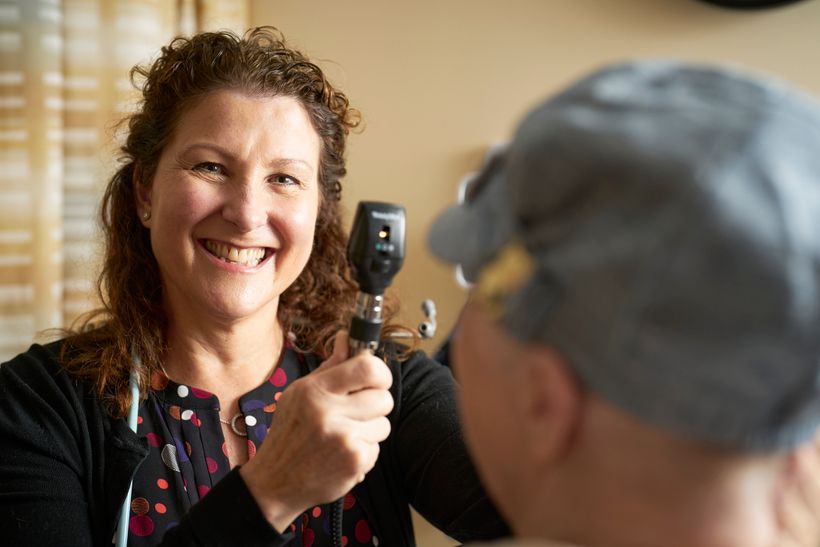
Adding Onsite Primary Care Practice in Cancer Center Earns National Innovator Award
ChristianaCare’s Helen F. Graham Cancer Center & Research Institute is the recipient of The Association of Community Cancer Center’s (ACCC) 2022 Innovator Award for its person-centered model of care that embeds a primary care provider in the cancer center for patients undergoing treatment who do not have a primary care provider. The Graham Cancer Center is among the first cancer programs in the nation to offer a program of this kind to its patients. “Earning the prestigious ACCC Innovator Award for our primary care practice is an accomplishment that belongs to our entire cancer care team which has worked long and hard to develop this unique program designed to improve our patients’ long-term health,” said Nicholas J. Petrelli, M.D., Bank of America endowed medical director of the Helen F. Graham Cancer Center & Research Institute. Patients diagnosed with cancer frequently have one or more concurrent chronic diseases, including heart disease, high blood pressure, COPD and diabetes. Cancer treatment can make these chronic medical problems worse, so it is important for patients to continue to see a primary care provider during their treatment, which can also help eliminate unnecessary emergency department visits. The new Primary Care Practice builds on the success of the Graham Cancer Center’s Oncology Express Unit, a program that offers urgent care to cancer patients in distress during treatment. “We conducted an informal survey that found as many as 15 percent of our patients did not have their own primary care provider,” said Cancer Program Clinical Director Cindy Waddington, MSN, RN, AOCN. “Having a primary care provider onsite working closely with the entire cancer care team helps ensure that essential patient care beyond cancer treatment is not delayed,” Waddington said. Patients are referred to the practice by their oncologists for any non-cancer health concerns. Since opening in January 2021, the program has received referrals to care for 234 patients. “Primary care in oncology has been a long-standing challenge for cancer patients and cancer programs,” said Family Nurse Practitioner Debra Delaney, RN, MSN, ACNS-BC, FNP-BC, who provides primary care services at the Graham Cancer Center. “Thankfully, we’ve been able to solve that challenge by addressing the whole person and promoting healthy living for the long-term.” Delaney helps patients manage their chronic medical conditions by monitoring their labs, refilling prescriptions and coordinating and communicating about any referrals they many need. “Following their cancer treatment, we help our patients transition to another practice, so they can continue to receive care for their primary care needs,” she said. The ACCC featured the program on its BuzzBlog. According to the ACCC, Innovator Award winners demonstrate the ability to advance the goals of improving access, quality and value in cancer care delivery, while also providing replicable solutions for other cancer programs and practices.
