
Experts Matter. Find Yours.
Connect for media, speaking, professional opportunities & more.

Adults need vaccines too? You bet. Find out why.
Back to school for kids also means time to get those immunizations up to date. But did you know that most adults, age 50 and older, may also need a few important vaccines as well? August is National Immunization Awareness Month, and what better time to check with your physician to see what vaccines may be appropriate for your age. “One of the most important immunizations for adults to have each year is the Influenza vaccine,” said Dr. Jose Vazquez, Chief of Infectious Diseases at Augusta University and AU Medical Center. “In elderly or older adults, in particular, the flu can turn deadly very quickly.” There was a was a high severity of the H3N2 influenza strain with record-breaking levels of influenza-like illness and hospitalization rates, according to the Centers for Disease Control and Prevention. “We hope to save more lives through appropriate and timely flu vaccinations,” Vazquez said. Furthermore, vaccines are necessary throughout our lives. Adults should keep their vaccinations up to date because immunity from childhood vaccines may wear off over the years. Other factors that can influence the need for different vaccines in adults include the individual’s underlying health conditions, career, lifestyle, and travel habits. Other important adult vaccines include Tdap (tetanus, diphtheria, and pertussis), pneumococcal (pneumonia prevention), and shingles. “Immunizations have proven to be very safe, and they are widely available. I recommend asking your primary care doctor about what vaccines you need to promote better health and prevent communicable diseases,” Vazquez said. To schedule an interview with Dr. Jose Vazquez, click on his expert profile. Source:



Electronic health records and the impact on workflow and costs
Healthcare practitioners and hospitals were initially slow to implement electronic health records (EHR) due to the perceived cost. The financial incentives from Medicare/Medicaid to adopt EHRs helped alleviate some of that concern, but the actual impact on workflow and profits, irrespective of those incentives, are still under investigation. In a research study, Steven D. Culler, adjunct associate professor of finance, along with David J. Ballard (Baylor Health Care System); Edmund R. Becker (Emory University); Dunlei Cheng (U of Texas); Briget da Graca (Baylor Health Care System); Neil S. Fleming (Baylor Health Care System); and Russell McCorkle (HealthTexas Provider Network) analyzed administrative, payroll, and billing data from 26 primary care practices in a Dallas-Fort Worth, Texas-based fee-for-service network that implemented EHRs from June 2006 through December 2008. In the 12-month period following implementation, staffing expenses increased 3 percent and practice costs increased 6 percent. The data revealed that “productivity, volume, and net income decreased initially, but recovered to/close to preimplementation levels after 12 months.” Given the recent rollout of EHRs across the country, the researchers noted the need for a longer-term investigation of the impact on productivity and costs. Source:


We Need to Normalize Mental Health Care in the Black Community
I am a PhD, a book author, a professor at USC. I work with organizations to create healthier and happier workplaces by reducing stress and building emotional resilience. And yet, until very recently, I have been reluctant to share my own story. It is a story of mental illness, recovery and resilience, a story of bipolar disorder. And I have been hesitant to share it because I did not want to experience the stigma associated with mental illness. I used to joke that I didn’t want to be the embodiment of “the nutty professor,” but the joke stopped being funny when the stigma against mental illness -- particularly in the black community -- negatively impacted my professional and personal life. In previous roles, I learned that it wasn’t acceptable for me to have a mental illness in my professional setting, and that it definitely was not okay to talk about it. My competence was questioned, even though I no longer had symptoms and was given a clean bill of health from my psychiatrist, and I was asked to not ‘out’ myself as having bipolar disorder to my students. That is why I’m sharing my story publicly: I hope to inspire my students to fight their way through their own mental health challenges. Even with all my degrees, even with my understanding of the healthcare system, finding affordable and accessible mental health services has often been a challenge for me. Even though I know what it’s like to have supportive family, friends and colleagues, and a fantastic healthcare team, I have struggled. These experiences have inspired my activism and advocacy for a world where using mental health services is no different than getting care for any other illness. Let me start with a little-known statistic: African Americans are 20 percent more likely to experience serious mental health problems than the general population, according to the Office of Minority Health. And yet: only about 25 percent of African Americans seek mental health care as compared to 40 percent of whites, according to the National Alliance on Mental Illness. The reasons for this discrepancy are plentiful: lack of health insurance, distrust of mental health care system, misdiagnosis of symptoms, lack of cultural competence, and stigma. Addressing these challenges for African Americans entails three parts: taking care of our mental health should be acceptable, accessible and affordable. Allow me to explain. Click the news article to read more. Source:


The effect of multitasking on worker performance
Diwas KC, associate professor of information systems & operations management, completed an in-depth investigation of the impact of multitasking in a complex work environment by analyzing patient flow and clinical data of physicians in a large hospital ER. The study provides important findings for understanding multitasking and its “implications for a knowledge economy, where attention and focus are significant drivers of productivity and quality.” The research indicated that multitasking starts out as a positive influence on work, giving physicians the “ability to utilize idle time between tasks.” Additionally, lower levels of multitasking actually improved the quality of care, since “low levels of stress can aid cognitive function.” Once multitasking behavior became excessive, productivity declined dramatically due to a variety of factors, including work interruptions and coordination costs. A higher level of multitasking also led to a drop in detected diagnoses and an increased rate of revisits in a 24-hour period for patients initially treated in the emergency department. Physicians spent less time with patients and their overall focus suffered. Source:


Who is protecting the children?
As a health care provider and patient advocate, I know that one of the worst things you can do is to radically separate children from their parents and from the rest of their family. The immigration ordeal is beyond tragic. Worse yet, now there is a chance that children may never be united due to faulty record keeping and a rush to keep a deadline. Parents may be forced to leave the country without their children. In my opinion, the detained children are being treated like criminals. Who is consenting for these DNA samples on behalf of the children? It seems to me that collecting DNA from minors without due cause or having legal consent from parents on file would be illegal and violating basic constitutional rights. Collecting DNA to compensate for a faulty record keeping system is not a valid reason to violate the rights of others. Violating policies and protocols in an attempt to rush to meet a deadline is beyond reprehensible. It is obvious that this decision was not well thought out. It is tragic that parents were separated from their children. It is unconscionable that the government would be taking advantage of the vulnerabilities of children and their parents – all for the sake of a political agenda. There exists the possibility that many of these children will grow up never seeing their parents or other family members ever again. Source:
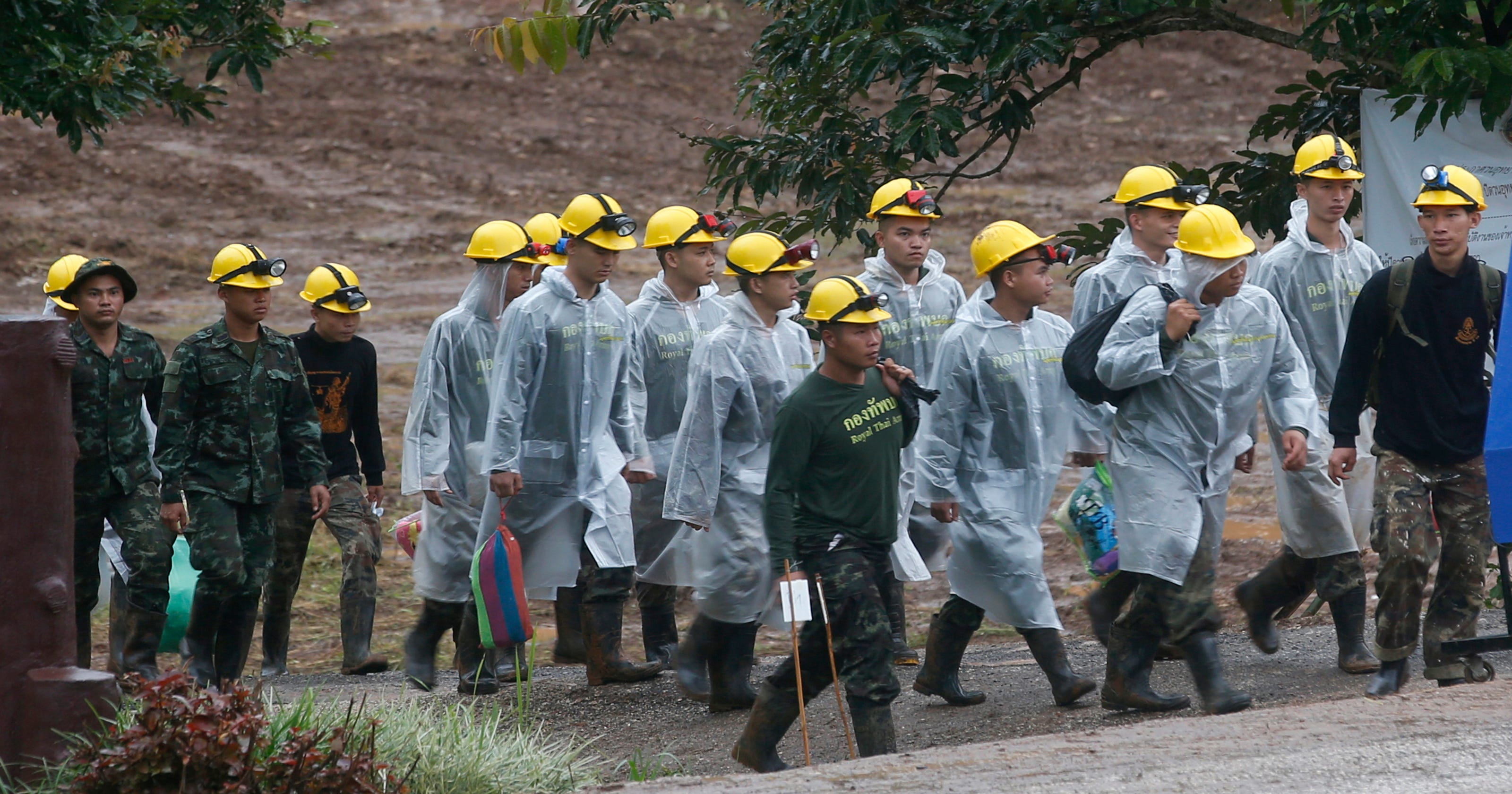
Disaster Psychologist Available to Discuss Thai Boys' Recovery from Trauma
The world watched with relief as 12 soccer players and their coach were rescued from a flooded cave in northern Thailand after an 18-day ordeal. Amid the relief at the players' safe rescue, Dr. Jamie Aten, a Wheaton College psychologist, says it’s important that they receive care for mental health needs in addition to the physical care they are receiving. Aten, the founder and Executive Director of the Humanitarian Disaster Institute at Wheaton College, is an internationally known expert who helps others navigate mass, humanitarian, and personal disasters with scientific and spiritual insights. Aten recommends the boys’ mental health be monitored closely following their rescue. “They may show extremes in behaviors ... they [may] sleep too much, or have difficulty sleeping,” he says. “They may develop triggers that weren’t there previously.” “Some may withdraw, while others need more attention. Over time these symptoms may lessen, but for some it could be a lifelong struggle.” To request an interview with Dr. Aten, contact Wheaton College Director of Media Relations LaTonya Taylor, latonya.taylor@wheaton.edu. Source:


Always Keep Families Together. Separation Damages Children.
The ongoing situation in America’s border towns with the detention and separation of thousands of children from their parents is both highly damaging for children and unnecessary. The actions of American authorities who are enforcing the ‘zero-tolerance’ policies have led to outcries from world leaders, American politicians and a large segment of the public. The following is a statement from Shannon Senefeld, Senior Vice President, Overseas Operations, Catholic Relief Services. “At Catholic Relief Services, keeping children with their parents is always one of our paramount goals. That’s true in emergencies, in health crises, in all of our long-term work combatting poverty and working to end the institutionalization of children. The research is clear – separating children from their families causes lasting mental, and even physical damage. Family support is vital for all children, especially those fleeing violence or dire poverty. “ As a Clinical Psychologist and with a long career working with vulnerable children around the world, Shannon Senefeld can speak with authority on why the ongoing situation with the separation of families on the US border. She can also speak to the root causes that propel families to migrate in the first place, such as rampant gang violence and poverty in Central America. Shannon is available to speak with media. For an interview – simply click on her icon to contact her and arrange a time. Source:


Baylor Gerontology Expert: It's Important for People to Know the Signs of Elder Abuse
Gerontology expert James Ellor, Ph.D., M.Div., professor in Baylor University’s Diana R. Garland School of Social Work, said it's important to remind people what elder abuse looks like and how they can respond if they see the signs. Reports of abuse are most often submitted by family members, hospital staff and law enforcement. But churches and other organizations should also be diligent, Ellor said, adding that clergy are considered mandatory reporters in many states. “No one group of caring persons can solve this problem alone; it takes a community of caring lay and professional leaders to even try to start to make a difference,” Ellor said. Elder abuse – intentional or negligent acts by a caregiver or trusted individual – comes in many forms: * neglect or isolation * physical abuse, sexual abuse * exploitation or financial abuse * emotional and psychological abuse * verbal abuse and threats “If signs are noticeable, the next steps will depend on the type of abuse. In most cases, counseling support is critical, but often the need for medical help or legal help is also very important,” Ellor said. Read the linked article to learn more. ... Dr. Ellor works with older adults around issues of mental and spiritual health. He has served on the executive committee of the Midwestern Geriatric Education Center and provided education, counseling and planning for individuals and groups who work with seniors. His research includes work in entrostomal therapy, hunger, the church as service provider, spiritual assessment and intervention techniques with cognitively impaired older adults. Source:


Dear President Trump, In response to the numerous school shootings, Please re-consider your agenda and work to make the educational system safe for our children. Consider allocating funding to allow for the following: *The placement of police sub-stations in middle and high schools that are in at-risk neighborhoods and studying the effect of police presence on the culture of safety. *The creation of school-based mental health clinics run by nurse practitioners and social workers. This will allow at risk and troubled youth to have immediate access to interventions and services. *The ability for community-based researchers to work pro-actively with schools to creatively solve the issue at the local level. Pass federal legislation addressing the minor consent to treat laws for mental health issues. In Washington State, where I live and practice, minors over the age of 13 can consent to mental health treatment without parental consent. The goal isn’t to take the healthcare decision making authority away from parents, the goal is to get youth the help they need before something tragic happens. Appoint a special task force or committee consisting of educators, healthcare providers, lawyers, social workers, and anyone else who directly works with at risk youth. I believe that the solutions will come from these committees. Submitted to POTUS May 19, 2018 Source:

Second Annual SUU Child Behavioral Health Conference
The second annual Southern Utah University Child Behavioral Health Conference is happening this week, May 17-18, 2018. Representing expertise across the field of child and pediatric behavioral health, the invited presenters include Gregory Snyder, Lindsey Ricciardi, Julia Thompson, and Kelsie Hendrickson. Dr. Michelle Grimes, Assistant Professor of Child Clinical Psychology at Southern Utah University and founder of the Child Behavioral Health Conference, wanted to create an opportunity for the professional community by bringing a continuing education event focused on evidence-based behavioral healthcare to southern Utah. “So often, behavioral health providers in rural areas have to invest a significant amount of time and financial resources travelling to conferences to receive continuing education. This ongoing training is necessary to stay current in the field, and also to maintain professional licensure. My goal for the SUU Child Behavioral Health Conference is to match the high quality you would find at a national event, while increasing the accessibility to healthcare providers in our community and surrounding areas.” Last year’s conference focused on common behavioral health disorders of childhood and adolescence. This year the conference will include a variety of topics relevant to adolescents, children, and parenting; broadly focusing on addressing complex cases in an outpatient setting. “We are focusing on complex clinical cases and added a seminar on ethical issues that arise when working with youth. The seminar will emphasize ethics related to adolescents and risk behavior, eating disorders, and trauma.” The conference welcomes all healthcare professionals from psychologists and pediatricians to social workers and treatment center staff. “We have attendees from Idaho, Utah, and Nevada and various behavioral health and medical disciplines are represented. This also serves as a professional development opportunity for students; we are pleased that students from SUU and other universities throughout Utah have registered. We hope to continue to build a regional interdisciplinary focus. We look forward to holding this event annually.” Dr. Grimes is a licensed psychologist with specialized training in clinical child psychology. Her clinical and research interests focus on behavior disorders of childhood, sibling conflict, and pediatric sleep disorders. She is familiar with the media and available for an interview. Simply visit her profile. Source:

