
Experts Matter. Find Yours.
Connect for media, speaking, professional opportunities & more.

Dr Keith Bradshaw OBE and the West Midlands Mayor met students on the Introduction to Healthcare programme at Aston University ‘NHS outbreak’ experience day The Introduction to Healthcare programme is generously funded by Keith Bradshaw 55 local school students attend the one-day event on Aston University campus. Dr Keith Bradshaw OBE and West Midlands Mayor Andy Street have visited Aston University to meet Year 9 students who were attending a healthcare experience day on campus as part of the University’s Introduction to Healthcare programme. 55 school students took part in a full day of activities experiencing some areas of the healthcare professions. In one activity, the students acted as NHS finance directors during a disease outbreak, where they were asked to make financial decisions, such as choosing which departments in a hospital would be allocated funds from a £1 million budget. The students listened to pitches from different NHS departments before creating a presentation outlining which areas would get some of the budget and the reasons why. The exercise allowed them to develop their teamwork, as well as reasoning and presentation skills. Keith Bradshaw, a prominent businessman and philanthropist, generously funds the Keith Bradshaw Introduction to Healthcare programme, which is designed to increase students' awareness of the various careers within the healthcare sector and support students with their journeys into higher education. Working with students in Years 8, 9 and 10 from schools within the Solihull, Birmingham and Black Country area, the programme aims to educate young people about opportunities within healthcare and the importance of achieving the right GCSE grades to pursue those professions. The programme was launched in 2018 following the success of Aston University’s Pathway to Healthcare Programme. Keith said: “It’s been a pleasure to meet students attending the healthcare programme and hearing more - through their presentations - about their ideas on how they might manage an NHS budget and in which areas they would choose to allocate funds. “One of the key objectives of this programme is to support young people so they can develop and deploy their skills for the benefit of the local community. “We must get the most out of our young people, so they can support our health and welfare and live fulfilling and rewarding lives, which is why this programme – intended to widen participation into healthcare – is so very important.” Andy Street, Mayor of the West Midlands, said: “I was pleased to have the chance to visit the Introduction to Healthcare experience day, to learn more about the programme and to hear directly from the participating students. “A key part of my mayoral mission is to help young people from across our region to raise their aspirations and support the creation of high-quality job opportunities for them here in the West Midlands. “So, I congratulate Aston University on their wonderful widening participation efforts and will certainly play my part in advocating to Government the merits of funding and expanding these sorts of pathway programmes that do so much to help young people from all backgrounds to not only aspire to brilliant jobs but also be practically supported on the best possible route into these professions.” For more information about the Introduction to Healthcare Programme at Aston University please visit our website.


ChristianaCare is out to revolutionize health care. One of the country’s most dynamic health care systems, ChristianaCare is partnering with two leaders in medical and therapy services to provide comprehensive, integrated virtual health services 24/7 to colleges, universities and other institutions of higher education. Together with PursueCare and SimpleTherapy, ChristianaCare created a bundled health care product that combines general medical services from ChristianaCare’s Center for Virtual Health, mental health and addiction treatment programs from PursueCare and hyper-personalized musculoskeletal care from SimpleTherapy. ‘The future of health care is virtual’ “At ChristianaCare, we know that the future of health care is virtual,” said Sharon Anderson, MS, RN, FACHE, ChristianaCare’s chief virtual health officer and president of ChristianaCare’s Center for Virtual Health. “When college students are able to access medical, behavioral health and musculoskeletal services through their phone or laptop, from their dorm room or a private space on campus, they’ll be more likely to get help when they need it. This is about delivering care to students on their terms, so that they can be healthy and supported with high-quality care throughout their college experience.” Personalized virtual health solutions will be available to students at participating higher education institutions through a customized portal accessible from any computer or mobile device. Students will be able to access assessments, resources and virtual treatment via modules or telemedicine sessions with licensed providers. The offering provides students with unlimited, on-demand care from a multidisciplinary team solving for a multitude of conditions. “For college and university student health services and administrators, this partnership offers a powerful new way to provide comprehensive, affordable health solutions that benefit students,” Anderson said. “In a highly competitive recruiting environment, these solutions are easy to implement and can add tremendous value. We are excited to partner with colleges and universities to strengthen their student health programs by creating a comprehensive virtual care solution to meet their student’s health care needs.” Through a single digital portal, participating students can access internal and family medicine providers from ChristianaCare’s Center for Virtual Health. PursueCare’s Joint Commission-accredited mental health, psychiatric and medication-assisted treatment providers, and SimpleTherapy’s licensed physical therapists specializing in musculoskeletal care, acute or chronic pain management, and strength and mobility training can all be accessed through the portal. Students will also have the option of using PursueCareRx for their pharmacy needs. PursueCareRx is a competitively priced full-service pharmacy that accepts most major insurance and delivers directly to customers. “Young adults face an escalating mental health and substance use crisis,” said Nick Mercadante, founder, and CEO of PursueCare. “Colleges and universities are frequently unable to comprehensively serve the increased need, and research suggests substance use, mental health and suicide carry a significant social stigma. Our goal is to work collaboratively with campus health resources to bring a low-barrier solution students can access privately, any time, on their terms. Additionally, partnering with a world-class health system like ChristianaCare means we can help support whole-person care needs.” “Chronic musculoskeletal disorders have never been more prevalent and traditional care pathways are often ineffective and costly,” said Arpit Khemka, co-founder and CEO of SimpleTherapy. "SimpleTherapy removes barriers for students allowing them to take control of their musculoskeletal health, reducing their need for high-cost, high-risk services, such as surgery and opioids, to manage pain. This results in higher compliance rates and more successful outcomes." Customized and co-branded product The product is designed for colleges, universities and all other higher education institutions. For a flat fee, a school will be able to offer care that is customized and co-branded with school-specific content to be an extension of existing campus health services. It provides curated resources for rapid pre-assessment, on-demand chat and discreet, personalized access to care for students on or off-campus. The innovative patient portal aims to improve and strengthen how schools offer health care solutions to their student population while reducing any potential interruptions of academic and athletic pursuits by making it possible for students to conveniently access care from anywhere. In addition, the offering eliminates social stigma and other access obstacles for students who are at-risk or potentially at-risk, making it more likely that students will avail themselves of treatment options and remain in school. These services are currently licensed to operate in Delaware, New Jersey, Pennsylvania and Maryland. Applications for licenses are underway in other states. ChristianaCare has long been a trailblazer in virtual health. Among its achievements, during the COVID-19 pandemic, ChristianaCare developed a COVID-19 virtual monitoring program that helped 37 companies in 14 states safely reopen with daily symptom monitoring, testing and connections to care for more than 10,000 employees. It’s Center for Virtual Health makes receiving care radically convenient, offering a full continuum of virtual care delivery programs. These programs include virtual primary care, specialty care programs and a Hospital Care at Home Program bringing hospital level of care to a patient’s home. The Center for Virtual Health cares for thousands of patients using state-of-the-art virtual care capabilities supporting patients in receiving care anytime, anyplace, including in the comfort of their own homes. For more information about the program, visit StudentCareSolutions.com.

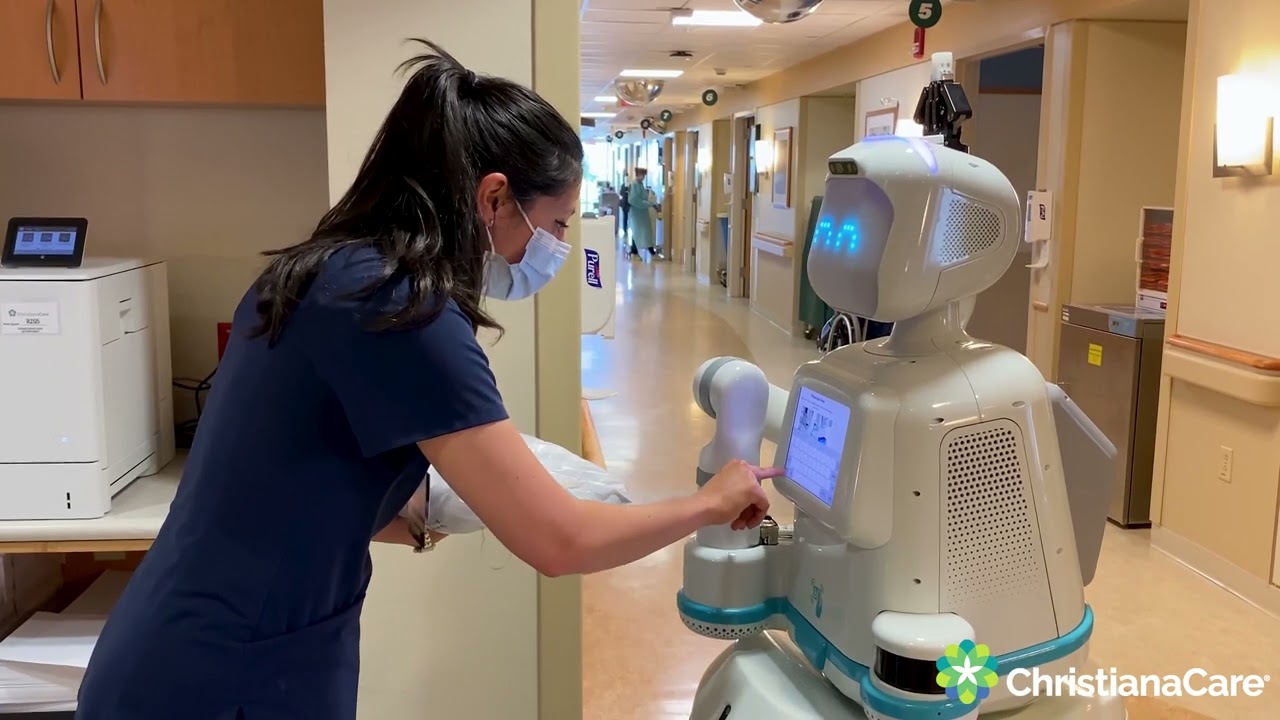
ChristianaCare is the first health system in the Philadelphia region piloting an innovative tool called Moxi, a collaborative robot — or “cobot”— that can assist in the hospital by making deliveries and performing other non-clinical tasks so that nurses and other clinical staff can spend more time focused on what they do best—caring for patients. With a landmark $1.5 million grant from the American Nurses Foundation, ChristianaCare will deploy a total of five Moxi cobots at Christiana Hospital. It is the largest single grant in the history of Nursing at ChristianaCare. Research published in the Journal of Nursing Management shows that nurses spend a significant amount of time — up to 33% of their shifts — on time-consuming but simple tasks such as dropping off lab specimens, collecting supplies or picking up medications from the pharmacy. By taking over these time-consuming but simple tasks, Moxi enables nurses to focus on patient care, where their skills are most needed. “Nurses need the time and space to deliver care and patient education at the top of their license,” said Ric Cuming, Ed.D., MSN, RN, NEA-BC, FAAN, chief nurse executive and president, ChristianaCare HomeHealth. “Moxi will be doing those hunting and gathering tasks such as getting equipment and supplies, which nurses are doing today but don’t need to be doing.” Cobots are designed to share workspace and interact directly with people. In ChristianaCare’s initiative, the Moxi cobots will be integrated with the Cerner Corporation electronic health record (EHR) platform and use artificial intelligence to proactively identify when nurses will need equipment, supplies, medications and lab tests. The Moxi cobots will be deployed to 11 inpatient units, partnering with more than 400 nurses. The American Nurses Foundation grant will enable ChristianaCare to evaluate the impact of cobots on nursing practice with the goal of scaling the technology if successful. “Moxi is not a replacement for a nurse or nursing position — or any position,” Cuming said. “It is an additional resource for nurses and their teams. “With robotic technology, we are using resources wisely and effectively, creating more efficient workflows, reducing repetitive tasks and freeing up nurses’ time for the complex clinical work that they excel at doing.” Reimagining Nursing ChristianaCare is one of 10 grant recipients from the American Nurses Foundation Reimagining Nursing (RN) Initiative. “We are proud that the American Nurses Foundation has the confidence in bold nurse-led ideas that will lead to large-scale, replicable change,” said Katherine Collard, MS, RN-BC, chief nursing informatics officer at ChristianaCare. “This grant will support nurses at ChristianaCare and our nursing colleagues across the nation in realizing their full potential, giving them the tools, resources and power to improve health care now and in the future.” With the American Nurses Foundation grant, ChristianaCare will conduct research on driving nursing outcomes through robotics. “We have a transformative opportunity to generate new knowledge and to move the science forward around robotics in nursing and in health care,” said Susan Birkhoff, Ph.D., RN, nurse scientist at ChristianaCare. “Through research, we will study Moxi’s impact to nursing caregivers that will have broad implications for nursing practice, workforce and education,” she said. ChristianaCare began exploring the potential of robotics to support Nursing with two Moxi cobots acquired in February, funded through the generosity of donors including Good Samaritan, Inc. and E.J. “Woody” Rice. With the grant, said Birkhoff, ChristianaCare will take Moxi to the next “bold frontier,” adding three more cobots with the goal of automating and optimizing nurses’ workflow without interrupting care. With five total cobots, ChristianaCare will be home to the largest number of Moxi robots in health care. The Little Bot That Can Before Moxi can become fully part of the care team, it must learn to navigate the hospital and respond to the nurses’ needs. Using artificial intelligence, Moxi is mapping out Christiana Hospital through sensors and other machine-learning technology so that the cobots can ultimately navigate and work autonomously. “When the Moxi cobots are fully integrated, we anticipate that they will complete up to 200 delivery tasks a day,” Collard said. “By making point-to-point deliveries, Moxi can save nurses hours of time and thousands of steps.” Designed to be compatible with the busy environments of hospitals, Moxi’s features include: Social intelligence: Moxi won’t bump into people or objects in hallways, waves when it sees someone new and happily poses for selfies. Mobile manipulation: Moxi can learn to use its robotic arm to operate existing automatic doors and elevator panels. Human-guided learning: The more Moxi is used, the more Moxi learns and adapts to the environment and specific ways of doing things. Friendly and safe design: With heart-shaped eyes and a friendly appearance, Moxi is designed to navigate safely and get the job done so nurses can focus on patient care. “What Moxi is doing in health systems like ChristianaCare is really transforming the way we think about health care and allowing staff to focus on the people in the hospital as opposed to the tasks,” said Dr. Andrea Thomaz, CEO and co-founder of Diligent Robotics, which created Moxi. “Robots are not something way in the future. Our robots work side-by-side with humans to ease the stress and workload of one of the most demanding jobs in society, nursing. The partnership between Diligent and ChristianaCare shows that the future is now.” Hospital Helper Directly from the Cerner EHR, Moxi will be able to anticipate clinician and patient needs and perform tasks without human involvement. Examples could include: Delivering items to patients based on nurses’ order requests. Making rounds across units to deliver lab samples on collections completed in the electronic health record. Making just-in-time deliveries of pharmaceuticals not stocked on the floor. Prioritizing tasks based on the nursing workload in a unit, so that the busiest nurses will get help first. “Connecting Moxi to the existing technology that clinicians use on a daily basis is key to making it easier to anticipate needs so clinicians can spend more time on patient care,” says Eva Karp, DHA, MBA, RN-BC, senior vice president, chief clinical and patient safety, Cerner. “Moxi could make a real difference in a nurse’s day — alleviating burnout and staffing shortages, which have become especially prevalent since the pandemic.” Incorporating the electronic health record into Moxi is part of the study funded by the American Nurses Foundation. “It’s absolutely in the best interest of our patients that Moxi can work alongside nurses so we can spend more time working directly with our patients to do what we do best,” said Pam Owen, MSN, RN-BC, nurse manager on 7E, one of the pilot units. “And Moxi brings a smile to people’s faces.” Fast Facts About Moxi Works in 22-hour shifts. Needs only two hours of charging time. Weighs about 300 pounds. Can carry a total weight of 70 pounds. Gender-neutral. Pronouns are “it” for a single Moxi cobot and “they” for more than one. Named one of America’s Greatest Disruptors in 2021 by Newsweek and one of the Best Inventions of 2019 by Time Magazine. About ChristianaCare Headquartered in Wilmington, Delaware, ChristianaCare is one of the country’s most dynamic health care organizations, centered on improving health outcomes, making high-quality care more accessible and lowering health care costs. ChristianaCare includes an extensive network of primary care and outpatient services, home health care, urgent care centers, three hospitals (1,299 beds), a freestanding emergency department, a Level I trauma center and a Level III neonatal intensive care unit, a comprehensive stroke center and regional centers of excellence in heart and vascular care, cancer care and women’s health. It also includes the pioneering Gene Editing Institute. ChristianaCare is nationally recognized as a great place to work, rated by Forbes as the 2nd best health system for diversity and inclusion, and the 29th best health system to work for in the United States, and by IDG Computerworld as one of the nation’s Best Places to Work in IT. ChristianaCare is rated by Healthgrades as one of America’s 50 Best Hospitals and continually ranked among the nation’s best by U.S. News & World Report, Newsweek and other national quality ratings. ChristianaCare is a nonprofit teaching health system with more than 260 residents and fellows. With its groundbreaking Center for Virtual Health and a focus on population health and value-based care, ChristianaCare is shaping the future of health care.


Join RealTime Medical at SIIM 2022!
Join RealTime Medical at Society for Imaging Informatics in Medicine (SIIM) Virtual Annual Meeting, where we will be announcing our latest advancements in how we empower radiologists to work more efficiently, improve quality and deliver better patient care. RTM operates one of Canada’s largest teleradiology networks covering over 30 hospital sites. This network is powered by the RealTime Medical AICloudSuite solution offering, delivering AI-enabled diagnostic workload balancing and first of a kind, multi-dimensional peer learning experience. The platform’s standards-based messaging enables ease of compatibility with existing HIS/RIS/PACS systems. RTM's co-founder, Dr. David Koff is a chair of SIIM’s session on advanced peer learning techniques and solutions. Visit our virtual booth via GRIP June 9-11. Access to the platform is already available! For more information about the event and to register, visit the official SIIM event website. Book your consultation today: https://realtimemedical.com/contact/


IMPROVING PATIENT CARE, ONE COMMUNITY AT THE TIME
The Deep River and District Hospital shared updates in the November 2021 Newsletter The Zinger. RealTime Medical’s platform now supports their radiology department. “On Tuesday, November 9, 2021, the organization transitioned our Diagnostic Imaging Radiology services to a third-party service provider, RealTime Medical (RTM) to support our X-ray and Ultrasound reading. Thank you to everyone who helped make the transition go smoothly. The turnaround time for reports has significantly improved from previous services. At times, patients are still in the Emergency Department when reports are received, which is a significant improvement and benefit to patient care! RTM provides 24-hours a day/ 7 days a week remote Radiology coverage, and a Radiologist is available 24/7. Posters with contact information for RTM have been posted on the Medical and Emergency Department nursing stations, as well as in the Physician room on medical.” Link to the original source.

INNOVATORS BRING AI INTO IMAGING SKILLS DEVELOPMENT
Originally from CHT Magazine By Jerry Zeidenberg October 30, 2019 Two Ontario hospital organizations – encompassing six sites – will soon deploy artificial intelligence to help with continuous learning and peer review in their imaging departments. By automatically detecting the types of cases being read by radiologists at St. Joseph’s Healthcare Hamilton and Hamilton Health Sciences, the system will deliver the latest journal findings, as well as personal pattern recognition and error avoidance, direct to their desktops. While radiologists at all Canadian hospitals are experts in their field, with years of education and experience, our understanding of diseases and illnesses is rapidly expanding and new insights are constantly appearing. To ensure that they’re aware of the latest research and best practices, many radiologists conduct journal and web searches while they’re reading cases at the hospital, or at night, from home. “Our radiologists and physicians spend a lot of time reading and searching for literature,” said Shairoz Kherani, who until recently was Director of Diagnostic Services at HHS. (She has since moved to Halton Health Care, in nearby Oakville, Ont., where she is Director of Diagnostic Services and Laboratory.) “Finding the right information can be a daunting process. Now it will be readily available.” “There are hundreds of new findings every day,” said Ian Maynard, CEO of RealTime Medical, of Mississauga, Ont., the company that’s providing the AI-powered solution, called AICloudQA™. “Radiologists can spend two or more hours a day searching independent medical data sources,” said Maynard. “Our solution saves radiologists a significant amount of time and effort by searching multiple data sources simultaneously, relative to the case at hand. We’re like a Google search on steroids for relevant medical data, helping radiologists apply the latest findings to their patient care”. Indeed, RealTime Medical is collaborating with Google Cloud and Sightline Innovation to deliver its AI-fueled solutions. The project is also supported by the National Research Council of Canada’s Industrial Research Assistance Program (NRC IRAP), resulting in a collaboration between these organizations and the hospitals using the solution. Not only does the automated searching save time and contribute to better medical outcomes for patients, but it helps reduce radiologist “burnout”, a serious issue today as radiologists feel overloaded by the demands placed on them, Maynard said. St. Joseph’s Healthcare Hamilton and Hamilton Health Sciences will introduce AICloudQA for peer learning and skills development across their sites by the end of this year. The hospitals will probably start with one site, or one physician group across all sites, and then steadily roll out the solution. The context-sensitive provision of journal articles and other sources of medical information is expected to be of great help to the radiologists, nuclear medicine physicians, cardiologists and other clinicians who use the system. There are 70 to 80 radiologists and medical imaging experts at Hamilton Health Sciences and St. Joseph’s Healthcare Hamilton who will be the prime users of AICloudQA. RealTime Medical’s Ian Maynard said the importance of timely and accurate information cannot be underestimated. As they’re reading cases, radiologists want the latest literature and personal pattern recognition notifications of what to be on the lookout for. “What they don’t want our patients and their families coming back to them later, asking why they didn’t know about the latest finding from Cleveland Clinic for example,” said Maynard. Dr. Karen Finlay, radiologist and Interim Chief of Radiology at Hamilton Health Sciences, agreed that radiologists are currently taking “a lot of time for research”. “If a radiologist steps off a case for five to 10 minutes to go to Google Scholar, that can really add up over the course of a day,” she said. Additionally, for those familiar with the impact of interruptions on the efficiency of the diagnostic process, that time impact can be significantly magnified to the detriment of diagnostic efficiency, which collectively impacts system-wide efficiency. The feed from AICloudQA, by contrast, is instantaneous, meaning the radiologist doesn’t have to stop what they are doing. Notably, the RealTime Medical system also uses AI to scan the readings done by radiologists, and to provide feedback on areas where they might want to focus on or look more closely in future. “It’s like the blind-spot warning system in your car, only it’s anonymously helping you avoid possible gaps in your own reading patterns,” said Maynard. “This is very valuable,” said Kherani. “The system can do intelligent sampling and note where a radiologist may want to improve. It can even spot patterns, time of day and other conditions when they may be more vulnerable.” Dr. Finlay observed that AICloudQA will also transform the process of peer learning at Hamilton Health Sciences and St. Joseph’s Healthcare Hamilton. It will do this, in one way, by increasing the pool of radiologists participating. One of the limitations of current peer review methods is that there’s often a limited number of potential reviewers, especially when a sub-specialty is involved – such as breast or neuro-imaging. RealTime Medical’s cloud-based solution offers the potential to connect with other hospitals across the province and the country, creating a critical mass of peers with a cross-section of experiences in each sub-speciality. This will enable a level of peer learning and best practice sharing that’s simply not possible with site-based systems. Increasing the number of radiologists in the peer learning pool also helps with the issue of anonymity. With site-based solutions, it’s sometimes possible to guess the identity of the radiologist or clinician being assisted, as physicians are often familiar with the reporting styles of their peers. Like all physicians – and people in general – radiologists don’t like to be judged. By making the system more anonymous, the Real Time Medical system makes peer learning more objective, valid and hence palatable for participants. This part of what is being called a “just culture” approach, that physicians are calling for in such solutions. AICloudQA embraces the “just culture” principles that physicians want and deserve. It is not punitive, and the information is not shared. Instead, it’s sent privately to the participating radiologist or clinicians, who can use it for self-improvement. At Hamilton Health Sciences and St. Joseph’s Healthcare Hamilton, the peer-reviewing will be prospective – that is, it’s done before the results are reported to the referring physician. Of course, there are only so many cases that can be reviewed before the process becomes counter-productive. The need for continuous learning must be balanced with the extra burden that’s placed on reviewers. “The trick is to make it a rich and rewarding learning experience, but not burdensome,” said Dr. Finlay. Hamilton Health Sciences and St. Joseph’s Healthcare Hamilton currently aim to review 2 percent of the cases, which is in keeping with other Canadian programs. Kherani noted there are other potential benefits to the AICloudQA platform. It has a workload balancing function, where it uses its intelligence to feed cases to the appropriate radiologist – based on availability and expertise. That not only offers the organization advantages with workflow and wait times, but it also benefits patients, as they obtain the most expert radiologist available. She said the system can eventually support different types of physicians involved in imaging, such as cardiologists, and not only radiologists. “It’s a multi-ology solution.” Dr. Finlay noted the system also supports critical results reporting – so that urgent findings are quickly sent to referring doctors. It can also be tweaked to include notification of unexpected findings – flagging colleagues about problems that were unanticipated, but should be addressed.

VANCOUVER IMAGING TO IMPLEMENT REALTIME MEDICAL AI
ORIGINALLY PUBLISHED IN CHT MAGAZINE VANCOUVER – Vancouver Imaging, a group of over 70 radiologists, has signed on to use RealTime Medical’s smart workload-balancing, physician skills development and error-avoidance platform. Vancouver Imaging, which provides reading services for hospital and out-of-hospital imaging centres, will implement the system in the first half of 2020 at its non-hospital clinics. Vancouver Imaging offers a wide variety of sub-specialty readings across all disciplines, including specialized expertise in emergency trauma radiology. The organization is the only group of radiologists in Canada offering around-the-clock, on-site, sub-specialty emergency reading services. “Emergency radiology is itself a sub-specialty and requires a unique set of skills,” said Dr. Savvas Nicolaou (pictured), the CEO of Vancouver Imaging and director of Emergency & Trauma Imaging at Vancouver General Hospital. “It’s unpredictable, with frequent interruptions. You often have to work with a limited amount of information from clinicians, and it can include everything from head-to-toe, including mass casualty situations that require proactive decision-making.” He added, “You’re always on, and never off.” The Emergency & Trauma sub-specialty requires “appropriate, patient-centered judgement in a matter of seconds.” Vancouver Imaging will deploy RealTime Medical’s AICloudWorks and AICloudQA platforms within their clinics. Collectively, the offerings encompass several AI applications, including high throughput workload balancing. RealTime Medical holds the U.S. and Canadian patents for its workload balancing algorithms and is one of only two patent holders for diagnostic workload balancing, along with the U.S. company, Virtual Radiologic. The cases are assigned to the appropriate radiologists based on sub-specialty, current workload and other parameters, creating an intelligent, diagnostic operations platform that is “context-aware,” a term originally coined by RealTime Medical to describe the capabilities of the platform. For example, radiologists with expertise in neurology will be the first to receive neuro cases, while thoracic or pediatric experts will be the first to receive cases of that type. The system also “balances” the work, to ensure that radiologists are receiving equal caseloads, subject to the case-specific service levels and business parameters established by the group. “The AI additions to this proven platform make it even more advantageous for us as a group as we pursue the delivery of Emergency Radiology services globally,” said Dr. Nicolaou, a world-renowned expert in Emergency & Trauma radiology, often referred to as the Founder and Pioneer of Emergency/Trauma Radiology in Canada. Dr. Nicolaou noted that AICloudWorks is vendor-neutral and can work with any HL7 and DICOM-based HIS, RIS and PACS solutions. “PACS integration can be very problematic,” said Dr. Nicolaou. “Being vendor-neutral is important to our flexibility as a group.” Vendor neutrality is important to Vancouver Imaging as their current environment includes workflows across multiple PACS solutions. Download CHT Reprint of Full Article

Aston University psychologists to take part in major study to improve concussion prognosis
Researchers from the Aston Institute of Heath and Neurodevelopment, in the College of Health and Life Sciences at Aston University, are taking part in a major multiple partner study to identify new ways to accurately predict whether patients will develop long-term complications as a consequence of concussion. Experts from the University of Birmingham and the Defence Medical Rehabilitation Centre, in collaboration with Defence Medical Services, are to lead the UK consortium carrying out the study. With year one funded by the Ministry of Defence (£2m) and projected to run over eight years, the multi-faceted study will include a trial involving 400 civilians and 400 military personnel aged over 18 with a new diagnosis of concussion (also known as a mild traumatic brain injury or mTBI) which has resulted in them needing hospital treatment or rehabilitation. At specific time intervals over two years, the participants will take part in nine different areas of research using a variety of medical techniques and assessments to establish if these can be used routinely by medics as ‘biomarkers’ to indicate prognosis and long term impact of concussion. Medical techniques and assessments being trialled include brain imaging and function, analysis of blood and saliva samples, and headache measures, as well as mental health, vision, balance, and cognitive performance. mTBI is common and has been declared a major global public health problem, with 1.4 million hospital visits due to head injury annually in England and Wales - 85% of which are classified as mTBI. It is also estimated that up to 9.5% of UK military personnel with a combat role are diagnosed with mTBI annually. The research will involve 20 University of Birmingham experts working across disciplines, including neurology, psychology, sports medicine, mathematics and academics within the University’s Centre for Human Brain Health, and will be coordinated by Birmingham Clinical Trials Unit. It will also be driven by experts at the Defence Medical Rehabilitation Centre Stanford Hall; Imperial College London; University of Westminster; University of Nottingham; Royal Centre for Defence Medicine; and University Hospitals Coventry & Warwickshire. Dr Caroline Witton, reader in psychology and scientific lead for magnetoencephalography (MEG) at the Aston Institute for Health and Neurodevelopment (IHN), Aston University said: "I am very excited to be part of this landmark study of traumatic brain injury. At IHN we are focussed on improving lives through brain imaging and this work has the potential to help the thousands of people each year who suffer long term disability following a concussion." Dr Jan Novak, lecturer in psychology and MRI lead at Aston University said: "It is outstanding that this prestigious work is being conducted at Aston University’s Institute of Health and Neurodevelopment. We will provide our expertise in brain imaging, prediction of outcomes in patient groups, and credentials in mTBI research to enrich the study. It is hoped that it will build upon existing collaborations with other local institutions and government bodies such as the Ministry of Defence." Alex Sinclair, professor of Neurology at the University of Birmingham and chief investigator of the mTBI-Predict project explained: “Although classified as mild, and many recover, the consequences of concussion can be profound with many patients suffering long-term disability due to persistent headaches, fatigue, imbalance, memory disturbance, and poor mental health including post-traumatic stress disorder, while it can have a significant impact on the economy through loss of working hours and demand on the health system. Identifying those patients most at risk of these disabling consequences is not currently possible. There is therefore a pressing need to develop accurate, reproducible biomarkers of mTBI that are practical for use in a clinical setting and can predict long-term complications. "Our programme of research will deliver a step change in the care of patients with mTBI, enabling a personalised medicine approach to target early intervention for those most in need but also identifying those with a good prognosis who can return rapidly to activities of daily living.” Co-Chief Investigator, Air Vice-Marshall Rich Withnall QHS Director of Defence Healthcare, UK Ministry of Defence said: “I am delighted that the Defence Medical Services, including the Defence Medical Rehabilitation Centre at Stanford Hall, will be working hand-in-glove with class-leading civilian colleagues and the National Rehabilitation Centre Programme. I fully support this ground-breaking research which I am confident will lead to significant clinical innovation to benefit military and civilian patients and have a translational positive impact for sporting activities from grass-roots to elite levels.” Chief Executive of Headway, Peter McCabe said: “We know that even a seemingly minor head injury can have a major impact on a person’s life – and often the lives of those closest to them. This is particularly the case if the brain injury goes undiagnosed or its effects are mistaken for other conditions. The frustration of not having an accurate diagnosis or receiving the right support can be compounded by the lack of a clear recovery pathway or timeline. We therefore welcome this study in the hope that it can advance our understanding of concussion and mTBI.”


ChristianaCare MICU becomes first in United States to renew Beacon Award for Excellence for fifth-consecutive three-year cycle ChristianaCare’s Medical Intensive Care Unit (MICU) has earned an unprecedented honor from the American Association of Critical-Care Nurses. Among the thousands of intensive care units in the United States, ChristianaCare’s MICU is the first unit in history to earn a Beacon Award for Excellence from the association, also known as AACN, five times in a row. The Beacon Award is one of the highest achievements in nursing. The recognition lauds hospital units that employ evidence-based practices to improve patient and family outcomes. The award provides gold, silver and bronze levels of recognition to hospital units that exemplify excellence in professional practice, patient care and outcomes. Of the six Beacon Award-winning patient care units currently in the state of Delaware, five are at ChristianaCare: MICU (gold – five-time winner). Cardiovascular Critical Care Complex (gold – three-time winner). Transitional Medical Unit (silver). Surgical Critical Care Complex (silver). Transitional Surgical Unit (silver). ChristianaCare was one of 34 hospitals in the nation in 2021 with multiple units receiving Beacon Awards. Beacon Award designations are active for three years. “Through their relentless and uncompromising pursuit to deliver care that is nonpareil, the nurses of ChristianaCare’s MICU have become the paragon of what our profession can accomplish,” said Ric Cuming, EdD, MSN, RN, NEA-BC, FAAN, ChristianaCare’s chief nurse executive and president of ChristianaCare HomeHealth. “The success of our ChristianaCare MICU, even in the face of this pandemic, also has inspired our health system’s other intensive care units to achieve unprecedented gains in safety and quality that have been recognized with the AACN’s Beacon Award, the touchstone by which all critical care nursing excellence and quality are measured.” Success in caring for patients amidst COVID-19 ChristianaCare’s values of love and excellence are at the heart of the 24-bed MICU at Christiana Hospital, which holds the most Beacon Awards in Delaware. This year’s award is especially meaningful on the heels of yet another difficult surge of COVID-19. “It is a testament to our nurses and the entire care team that we continued to reach milestones in patient safety and satisfaction even during the COVID-19 pandemic,” said Carol Ritter, MSN, RN, CCRN-K, CNML, who has been nurse manager on the MICU for 10 years and a leader on the unit during all of its Beacon Award wins. “Everyone brings a level of expertise to the unit. We truly serve together.” Beacon awards celebrate the professional dedication that a nursing team demonstrates in going above and beyond to provide respectful, expert care. “Meaningful recognition takes on even greater relevance and importance as we continue to meet the challenges of the COVID-19 pandemic,” said AACN President Beth Wathen, MSN, RN, CCRN-K. “Being recognized as a Beacon unit underscores these teams’ ongoing commitment to providing safe, patient-centered and evidence-based care to patients and families. This achievement is a tremendous honor to those who have worked so hard to achieve excellence in patient care and positive patient outcomes.” ChristianaCare is one of only 152 health care institutions in the nation and the only in Delaware to have gold-level units. In 2008, the MICU was the first unit in the state to receive the Beacon Award. MICU’s culture of continuous improvement The MICU’s commitment to data-driven, evidence-based care proved especially valuable during the pandemic’s early days. Prone positioning, a technique to help patients with acute respiratory distress syndrome (ARDS) to breathe better, had been a longtime practice in ChristianaCare’s ICU. ChristianaCare critical care nurses Maureen Seckel, MSN, APRN, ACNS-BC, CCNS, FCCM, FCNS, and Dannette Mitchell, MSN, APRN, ACNS-BC, CCRN, published an article in AACN Advanced Critical Care that described ChristianaCare’s pioneering adoption of this technique, which ultimately became standard practice nationally in the treatment of patients with COVID-19 and ARDS. “On our unit, we empower the team to provide evidence-based care and have the tools to guide the practice,” Seckel said. “Because of this we were able to incorporate a highly effective, life-saving measure into COVID-19 care early in the pandemic.” Continuous improvement is a hallmark of the unit. The MICU has seven Comprehensive Unit-based Safety Program teams that follow data-collection processes to view trends and compare them to national standards to improve care and outcomes. “The whole unit is involved in collecting data to assess and make changes,” said MICU nurse Olivia Ross, BSN, RN, CCRN. Among the MICU’s accomplishments are excellent outcomes in preventing common hospital-acquired infections, even during the pandemic: Zero instances of catheter-associated urinary tract infections in three years. Zero instances of central line bloodstream infections in one year. The unit’s dedication to being exceptional today and even better tomorrow also focused inward during the pandemic. During a time of constant change, the team recognized the need for support to handle the unprecedented stress and strain of the pandemic. “To give the most vulnerable patients the highest levels of care on a consistent basis, we needed to take care of ourselves and one another too,” Ritter said. Ritter and team leaders committed to open-door policies throughout the pandemic, and they partnered with ChristianaCare’s Center for WorkLife Wellbeing to enable licensed psychologists to round on the unit, offering real-time check-ins with caregivers to provide support. The Beacon Award has been a resounding lift and reward for the MICU team members. “Having this recognition, especially during times of distress in the community and the world, signifies excellent nursing care,” said MICU nurse Paige Merring, MSN, RN, CCRN. “And to me it signifies an amazing team and great outcomes, which is the primary purpose of why we are all here.”

Dr. Janice Nevin named among Modern Healthcare’s 2022 ‘Top 25 Women in Health Care’
Nevin praised for her work expanding ChristianaCare’s efforts in health equity, value-based care and emerging technology ChristianaCare President and CEO Janice E. Nevin, M.D., MPH, has been named one of Modern Healthcare’s Top 25 Women in Healthcare for 2022. This is the second time Dr. Nevin has received this distinction. Modern Healthcare chose awardees – female executives from different sectors of the health care industry – who are guiding health care improvement by influencing policy and care delivery models across the country. A panel of judges and the top editors of Modern Healthcare made the selections. The publication focused on Dr. Nevin’s leadership in ChristianaCare’s use of innovation and technology to aid in the battle against COVID-19 and improve health equity. It also called attention to her leadership in ChristianaCare’s collaboration with Highmark Health; through a new joint venture company, ChristianaCare and Highmark are combining their expertise and capabilities to create better health and to make health care more affordable for everyone by taking costs out of the system. “I am deeply gratified by this award, but it is even more so a recognition of the incredible work all of ChristianaCare’s caregivers do every day to create better health,” said Dr. Nevin. “Living our values of love and excellence, we are transforming care and becoming not just a health system—but a system that truly impacts health.” Dr. Nevin has overseen growth at ChristianaCare during the past year that includes a joint venture with AccentCare (formerly Seasons Hospice & Palliative Care) to expand in-home hospice and palliative care services throughout Delaware and a recently announced letter of intent to acquire Crozer Health, as well as the continued integration into the health system of Union Hospital in Cecil County, Maryland, which joined ChristianaCare in January 2020. At the same time, she has worked tirelessly to ensure the system continued its tradition of clinical excellence while maintaining financial health and stability. This year, ChristianaCare was recognized for the second consecutive year by Healthgrades as one of America’s 50 Best Hospitals and by Forbes as one of the best health systems to work for in the United States. Dr. Nevin continues to promote caregiver wellbeing and health equity. For the work of ChristianaCare’s Center for WorkLife Wellbeing to support its caregivers, ChristianaCare earned a 2021 Joy in Medicine recognition from the American Medical Association. The American Hospital Association’s Institute for Diversity and Health Equity named ChristianaCare a 2021 Carolyn Boone Lewis Equity of Care Award honoree for demonstrating health equity as a priority across the organization. “ChristianaCare is lucky to have Dr. Nevin’s leadership,” said Nicholas M. Marsini, Jr., chair of the ChristianaCare board of directors. “Having Modern Healthcare recognize her extraordinary efforts and passion is a wonderful acknowledgement of what we see on an ongoing basis. Dr. Nevin is incredibly invested in the wellbeing of ChristianaCare’s workforce, the communities we serve and the future of the U.S. healthcare system.” The recognition also highlighted Dr. Nevin’s work in promoting gender equity – from building an executive cabinet evenly split between women and men to the creation of ChristianaCare’s Gender Equity Taskforce, which focuses on issues like pay equity and leadership access. The profiles of all the winners were featured in the February 21 issue of Modern Healthcare.