
Experts Matter. Find Yours.
Connect for media, speaking, professional opportunities & more.

Childhood psychology expert on migrant children at U.S.-Mexico border
Kathryn Humphreys, assistant professor, department of psychology and human development, is available for commentary on the influx of migrant children at the border and group-based housing for these children. Kathryn received her doctoral degree in clinical psychology and has expertise in infant and early childhood mental health. Her research focuses on characterizing the early environment and examining links to later life outcomes. Some of her recent research finds that stressful or traumatic experiences occurring in a child’s earliest years—birth to age 5—have been linked to reduced hippocampal volume in adolescence, which is connected to learning, memory and mood.


Ask an Expert: What is COVID-19’s impact on the homelessness crisis?
The COVID-19 pandemic continues to impact the homeless community and homelessness crisis, including posing unique health risks to the homeless population and spurring a likely increase in homelessness due to job losses. “People experiencing homelessness are at enormous risk of exposure to the coronavirus, due to inability to self-isolate, as evidenced by outbreaks in congregate shelters,” says Marybeth Shinn, Cornelius Vanderbilt Chair and professor of human, organizational and community development at Vanderbilt Peabody College of education and human development. “With the cold weather coming, service providers are scrambling to provide food, shelter and outreach services safely, and to use rental assistance to get people into housing.” Shinn also explains that while eviction moratoriums imposed during the pandemic work to delay evictions, they do not prevent them. Arrears for rent, utilities and fees continue to accumulate when the moratorium ends, and landlords can continue to charge late fees for late payments. On the one hand, moratoriums will help keep many renters in their homes at a time when the alternatives, such as crowding in with friends and relatives or even becoming homeless, puts people’s health at risk. At the same time, landlords, especially small landlords, are also suffering. Landlords often have mortgages as well as other expenses to pay, relying on rental income to do so. In her new book with Abt Associates researcher Jill Khadduri, In the Midst of Plenty: Homelessness and What to Do About It, Shinn argues that homelessness is not a result of personal failure, but rather societal failure, as we have the knowledge and resources to end homelessness but lack the political will. As an immediate step during the pandemic, Shinn advises that Congress needs to enact relief for tenants and landlords, as well as reinstate weekly supplements to unemployment benefits to help people stay current on rent.


Japan Society Presents When Practice Becomes Form: Carpentry Tools from Japan
Installation view at the Takenaka Carpentry Tools Museum, Kobe, Japan. On the occasion of the 50th anniversary of Japan Society’s landmark building, the institution is pleased to present the new exhibition, When Practice Becomes Form: Carpentry Tools from Japan. The exhibition celebrates the spirit of architecture and craftsmanship through Japanese woodworking tools as well as architectural patterns and various models. The site-specific installation, conceived by the esteemed contemporary architect Sou Fujimoto in collaboration with Brooklyn-based Popular Architecture, reinterprets major themes from the exhibition and is in dialogue with the gallery’s spaces, highlighting an enduring connection between traditional Japanese wooden construction and modern architecture. Featuring hand tools and joinery techniques that have been used for hundreds of years to build Japan’s wooden architectural masterpieces (from temples and shrines to teahouses and bridges), the exhibition unpacks how the intangible qualities of craftsmanship, such as consummate experience, knowledge, and the honed skills of master carpenters, have been transformed into significant forms of architecture. A diverse array of tools—planes, chisels, saws—have played an important role in the development of architecture in Japan’s history, and this philosophy extends to Japan’s cultural heritage today. Integral to the process of making by master carpenters (tōryo) is their extensive knowledge of the local environment and of wood as a material. Using natural resources and learning from their predecessors’ practices, they construct buildings using a refined methodology. Their philosophy of sustainability—for example, joinery can be restored or repaired as needed by future craftspeople—has been handed down over generations. Themes emerging from the exhibition have been interpreted by the internationally acclaimed architect Sou Fujimoto. His firm, Sou Fujimoto Architects, is based in Paris and Tokyo, and has been selected as site design producer for the 2025 World Exposition in Osaka, Japan. Fujimoto has designed the Serpentine Gallery pavilion in London (2013) among other internationally recognized projects. For this exhibition, Fujimoto has worked with Popular Architecture to explore the coexistence of nature and architecture. “Japan Society has been a home of cultural exchange, and a meeting place of past and present. In this exhibition, traditional Japanese craftsmanship is revealed in a new light by the design of contemporary architect Sou Fujimoto, and it becomes a precious educational opportunity to learn from this history,” says Yukie Kamiya, Japan Society Gallery Director. The building of Japan Society’s headquarters, designed by the architect Junzo Yoshimura (1908–1997), a major figure in 20th century Japanese architecture, opened to the public in 1971, becoming New York City’s first permanent structure designed by a Japanese citizen. It will commemorate its 50th anniversary in 2021. The building resides on land donated by John D. Rockefeller 3rd (1906–1978), former President and Chairman of Japan Society, who sought to revitalize the organization’s activities after World War II. Rockefeller 3rd and Yoshimura first met in Japan in 1951, and their friendship for over two decades resulted in Japan Society’s current building in Manhattan. Since its opening, the building has continued to serve as the central platform for the interexchange of ideas, knowledge, and innovation between the U.S. and Japan within a global context. In 2011, the building was designated landmark status by the New York City Landmarks Preservation Commission. When Practice Becomes Form: Carpentry Tools from Japan explores the connections between techniques, tools, and forms from traditional practices in Japanese carpentry and contemporary design perspectives. Paying homage to Japan Society’s building, where the arts and cultures of Japan and the United States intersect, this exhibition delves into the artistry and craftsmanship of architectural practice. Complementing the exhibition is a series of related public programs, including lectures, a hands-on workshop, and gallery tours. A digital publication illustrated and designed by Nathan Antolik further expands upon the exhibition. This exhibition is organized by Japan Society in collaboration with Takenaka Carpentry Tools Museum, Japan. The exhibition design is by Sou Fujimoto, in collaboration with Popular Architecture as local architect. About Sou Fujimoto Born in Hokkaido in 1971, Sou Fujimoto graduated from the Department of Architecture, Faculty of Engineering at Tokyo University and established Sou Fujimoto Architects in 2000. He has won several international competitions, including his recent 1st prize for the 2014 International Competition for the Second Folly of Montpellier, France ("L'Arbre Blanc"). In 2019, he was selected as the master architect for the Tsuda University Kodaira Campus Master Plan development. Among his notable projects are the annual summer pavilion for the Serpentine Gallery in London (2013)—the youngest architect to receive the commission; House NA in Tokyo (2012); Musashino Art University Museum & Library (2010); and House N (2008). In 2012, he was part of the Japanese team that won a Golden Lion award for Best National Participation at the Venice Architecture Biennale for their design of alternative housing concepts for homes destroyed by the 2011 tsunami. Most recently, he was selected as site producer for the 2025 World Exposition in Osaka, Japan. About Popular Architecture Brooklyn-based Popular Architecture combines simplicity with innovation across multiple scales ranging from master plans to buildings, interiors, and products. The firm is directed by Casey Mack, RA, LEED AP. After completing his M.Arch at Columbia, Mack worked with the Office for Metropolitan Architecture in Hong Kong and New York. He has taught urban design at the New York Institute of Technology and Passivhaus housing at Parsons School of Constructed Environments. Currently, with the support of the Graham Foundation for Advanced Studies in the Fine Arts, he is writing the book Digesting Metabolism: Artificial Land in Japan 1954-2202 (Hatje Cantz Verlag, 2021).


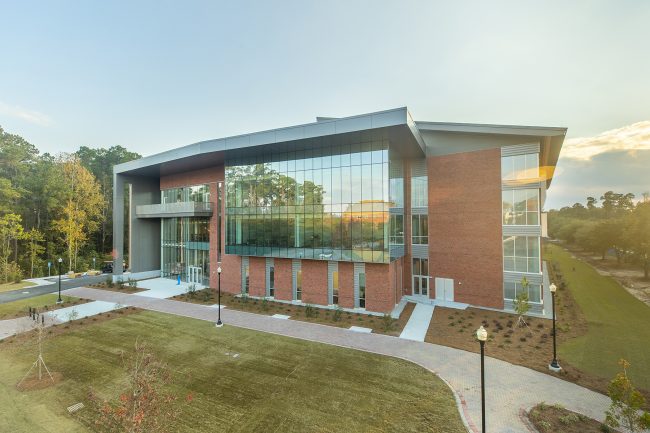
Last Friday, Georgia Southern officially opened its new Engineering and Research Building for students and researchers, a facility that will serve as the epicenter for engineering excellence and innovation in southeast Georgia. The building is designed to facilitate academic and institutional partnerships, inspire creative engineering and accelerate academic success for students in the College of Engineering and Computing. Through the instructional research labs and academic spaces that bridge theory and practice, students will be prepared to solve today’s challenges and to make tomorrow’s discoveries. “Today marks the culmination of years of forethought and investment from a number of state leaders, industry leaders and local advocates, who paved the way for us to be here,” said Georgia Southern President Kyle Marrero. “Leaders who, dating back to the 90s, could see the future of a growing industry, a state on the precipice of being a national leader in technology and innovation, and a critical need to develop talent in applied engineering across south Georgia.” The Engineering and Research Building’s sleek, contemporary environment defined by glass and natural light, soaring high-bay ceilings and modern, industrial feel is strengthened by new, industry-relevant equipment, instrumentation and technology that encourage active learning and sustainability. The highly efficient facility includes sustainable features that complements existing spaces on campus. The three-story building houses applied research spaces with a strong focus on manufacturing engineering, civil engineering, electrical and computer engineering, and mechanical engineering. The workspaces can be easily reconfigured for various uses, projects and applications and provide students with access to industry-grade equipment as well as expanded opportunities for undergraduate research. “The investment of the Engineering and Research Building solidifies Georgia Southern University’s commitment to students in providing a world-class education in the engineering field, while providing the space and resources necessary to facilitate such,” said student Kristifer Bell. “I am enthusiastic to continue my research work and look forward to the interdepartmental collaboration that will be encouraged through the housing of new student and faculty labs under one roof.” The full media release about this historic occasion is attached – and if you are a journalist looking to know more about this facility or Southern Georgia University -- simply reach out to Georgia Southern Director of Communications Jennifer Wise at jwise@georgiasouthern.edu to set and time and date.

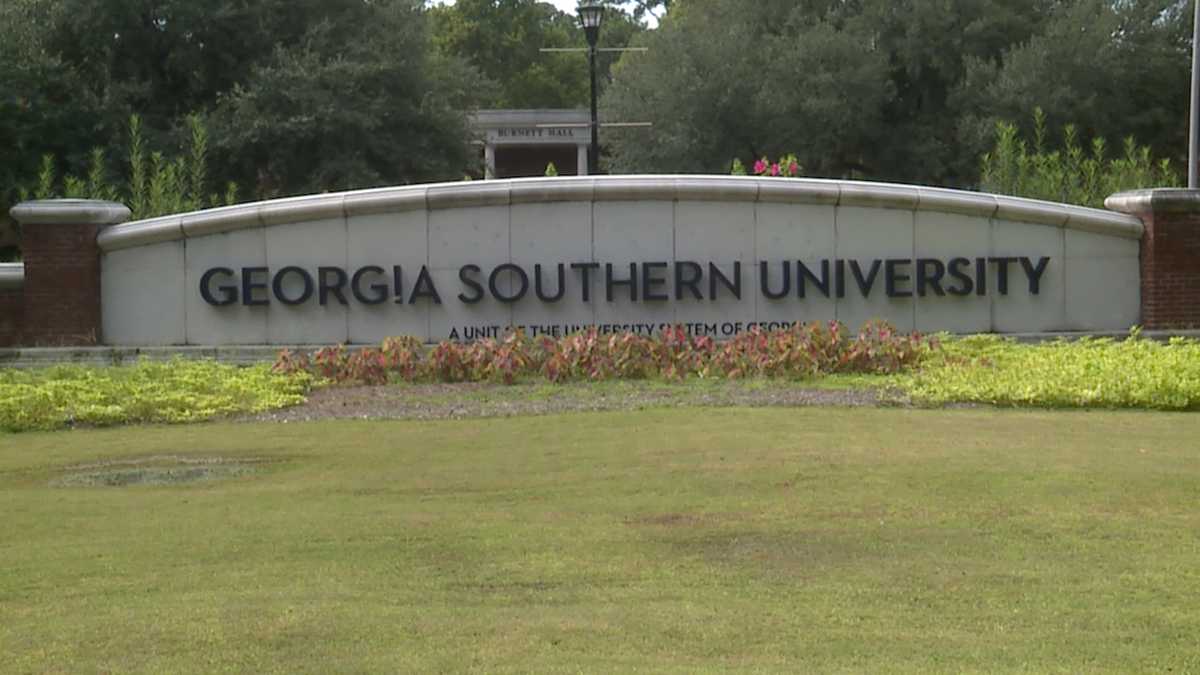
Georgia Southern University President Kyle Marrero delivered a virtual State of the University fall 2020 address to faculty and staff, broadcast live from the Performing Arts Center on the Statesboro Campus on Aug. 12. Maxing out with 1,507 viewers at one point, University members tuned in from remote locations to hear the president discuss how Georgia Southern is successfully adapting during extraordinarily difficult times and will continue to be nimble during the fall semester. “We are being asked to be innovative, flexible, nimble and willing to adapt and change,” Marrero said after welcoming all back to the three campuses. “And I want to thank you. You all have been tremendous, remarkable, heroic even, as we made it through these times and as we navigate through these uncertain times.” Marrero touted the herculean efforts of faculty and staff, who maintained the integrity of the University’s five pillars — student success, teaching and research, inclusive excellence, operational efficiency, effectiveness and sustainability, and community engagement, in the midst of a pandemic that caused the University to move fully online in March. He cited specific examples of performance excellence since March with the following collective efforts: Moved more than 5,000 classes to fully online to complete the Spring 2020 Semester; Delivered summer term fully online while seeing credit-hour generation move up by more than 4%, compared to the Summer 2019 Semester; Moved 4,600 students out of housing and provided support for more than 100 students who remained on campus; Refunded almost $11 million in housing, dining and fees to students; Held virtual Spring 2020 Commencement, viewed by more than 100,000 worldwide; Provided more than $11 million in CARES Act grant funding directly to students; Developed and began implementation of Initial Return to Campus and Return to Campus Plans, based on input from more than 130 faculty staff across campus and public health guidance from the Centers for Disease Control and Prevention and the Georgia Department of Public Health; Modeled a 14% state budget reduction for FY21, then completed a 10% realized reduction, totaling $14.2 million; Developed and implemented flexible and remote work processes; Assessed and modified almost 5,000 courses for fall 2020; Prepared campus with signage, cloth face coverings, face shields, PPE, hand sanitizer stations; Formed and implemented the CARES Service Center; Continued communication, coordination and monitoring of community health care providers, public/private schools, municipalities and agencies. Marrero also presented August figures showing that fall 2020 enrollment looks strong compared to this same time last year, however, he was quick to note that the figures may fluctuate based on various factors throughout the semester. Final fall enrollment figures will be released in October. “We can continue to move forward,” he said. “We can continue to elevate and live our mission and our vision and our values even in these times. We will adapt, we’ll be nimble and we’ll ensure that every day that the public health and safety of our faculty, staff, students and our community is of paramount importance. “I am confident that we are ready as we can be and together we’ll assess and navigate the entirety of the fall semester with the goal and outcome of our students being successful. As a whole Georgia Southern University can make it through this together.” If you are journalist and would like to know more about Georgia Southern university and how it is succeeding during COVID-19, simply reach out to Georgia Southern Director of Communications Jennifer Wise at jwise@georgiasouthern.edu to arrange an interview today.

Are Home Prices in Peril? FAU Expert Says Coronavirus Stimulus May Hold the Key
The United States housing market faces its biggest threat in more than a decade, and whether home prices can withstand the new coronavirus pandemic largely depends on an effective stimulus package, said Ken H. Johnson, Ph.D., a real estate economist in Florida Atlantic University’s College of Business. U.S. President Donald Trump recently signed a historic $2 trillion stimulus to boost a battered U.S. economy, and getting the aid exactly right is the key to avoiding the first sustained setback to home prices since the end of the housing boom in 2006, according to Johnson. “If the stimulus package ends up being more than we need, this will almost certainly trigger a non-trivial amount of inflation in the economy, which will increase mortgage rates, which, in turn, will place downward pressure on housing prices,” Johnson said. “If the stimulus is not sufficient enough to hold down unemployment and it increases the likelihood of mortgage default, mortgage rates will rise and put downward pressure on housing prices. Only if the stimulus is just right will increasing inflation and higher unemployment be held in check.” Fixed rates for 30-year mortgages rose from 3.29 percent on March 5 to 3.65 percent on March 19, before moving down to 3.5 percent last week as the stimulus gained momentum. The higher rates are an indication that investors are factoring in inflation and the higher likelihood of default, though the recent downward trend suggests that it was the threat of rising default probabilities that was having the bigger impact on mortgage rates, according to Johnson. Since bottoming in March 2012, U.S. home prices rose 61 percent over the next seven and a half years, according to the S&P/Case-Shiller 20-City Composite Home Price Index. The nation’s housing market rebounded from a devastating downturn when investors started renovating and reselling properties after buying them at deep discounts. The market has been robust ever since, but Zillow Group recently suspended its home-buying program as a result of the pandemic and how it may affect the housing market. The move means Zillow is worried that housing prices are at risk, according to Johnson. If mortgage rates were to climb from 3.5 percent to 5 percent, it would result in a 43 percent increase in the interest portion of a housing payment, dramatically reducing the purchasing power for consumers. “Only time will tell here,” Johnson said. “We are in uncharted waters, making it difficult to tell when and if we got the stimulus package right.” If you are a journalist covering how real estate and property values are being impacted by the COVID-19 pandemic – then let our experts help. Ken Johnson is the associate dean and Investments Limited professor in the College of Business at Florida Atlantic University. Ken is available to speak to media about this topic – simply click on his icon to arrange an interview and time.


Professor Barry Branch, Ledbetter Professor of the Practice at Scheller College of Business was a featured author in the article “National Rent Report for January 2020 Shows Growing Number of Renters” in the online magazine RENTCafe. Branch discussesd national trends that are leading more young people to rent rather than purchase a single-family home. “Young professionals are increasingly attracted to multifamily projects near their jobs. These buildings are attractive if they offer cutting edge technology that enables residents to work from home; attractive amenities that provide a healthy lifestyle and greater interaction with others; proximity to a variety of retail, food and entertainment attractions as well as public greenspaces; a significant reduction in their reliance on automobiles and access to public transportation; and greater flexibility to adjust to job changes and changes in their personal circumstances,” he said. In the piece he acknowledges the stable economy but notes that increased uncertainty in national, political, and economic environments may lead many people to resist the commitment to purchase a home. However, Branch points to the possibility that a larger demand for rental units may provide less inventory and therefore, an increase in rent prices. He states that “an offsetting factor among renters is the current trend towards rapidly increasing rental rates in many markets, which threatens their ability to manage their cost of living.” To offset these adverse factors, he cites low-interest rates that will incentivize developers to build more units and government programs for creating affordable housing as just a few factors that will continue to keep the rental market thriving. Are you a journalist looking to know more about this topic? Then let our experts help. Barry Branch is Sr. Professor of the Practice of Real Estate Development at Scheller College of Business, Georgia Institute of Technology. He is co-founder of The Branch-Shelton Company, LLC, a private investment management and financial advisory firm. Barry is available to speak with media regarding this important topic – simply click on his icon to arrange an interview.


2020 is going to be the year of politics – let Stephen Farnsworth be the expert you call first when you’re covering it. Like the final act in a great Shakespearean play – 2020 looks to be a year of tragedy, irony, comedy and intrigue. We can expect betrayal, vengeance, protagonists, antagonists, heroes and villains. With impeachment hearings, the DNC primaries, summer conventions, trade deals and the election that promises to be an epic display of speeches and stumping as well as vicious and vitriolic attacks. Dr. Stephen Farnsworth is a sought-after political commentator on subjects ranging from presidential politics to the local Virginia congressional races. He has been widely featured in national media, including The Washington Post, Reuters, The Chicago Tribune and MSNBC. He is author or co-author of six books on presidential communication. His latest work, 'Late Night with Trump Political Humor and the American Presidency' shows how late-night political humor, have responded to the Trump presidency. Employing a dataset of more than 100,000 late night jokes going back decades, Farnsworth and S. Robert Lichter discuss how the treatment of Trump differs from previous presidents, and how the Trump era is likely to shape the future of political humor. Stephen is available to speak with media – simply click on his icon to arrange an interview today.



It was a historic election in Georgia that saw changing tastes and shifting tides among voters across the state. The coverage was extensive and the experts from front and center in local and statewide media lending their expert perspectives and opinions to reports and journalists about the results. “A political science associate professor on Georgia Southern’s Armstrong Campus in Savannah says all the women who made history in Tuesday’s election overcame significant obstacles with their campaigns in Bulloch and Chatham counties. “Those three new women beat incumbents and that’s very unusual,” said Dr. Lara Wessel. “So when we see women or men beating incumbents, again we want to look to try to figure out what’s going on behind those election results. “What it says to me is that the citizens of Statesboro and the citizens of Savannah are interested in change.” Dr. Wessel adds that the five women who won elections are much more than trailblazers, they’re local proof female candidates can break through barriers that have held women out of some local political offices for centuries.” November 06 – NBC News Soon, Savannah will be welcoming four new aldermen, and two new alderman-at-large. “It’s majority progressive. It’s majority female. It’s majority community activists. A lot community activists," said Georgia Southern Associate Professor of Sociology Dr. Ned Rinalducci … “We’re going to see a shift to deal with things like affordable housing, homelessness, and less on development and tourism,” said Rinalducci. Rinalducci said the city saw a turnover back in 2015-ushering in more pro-business candidates. He said this election’s shift towards could be a sign of dissatisfaction with voters. “I think clearly there’s some discontent with the priorities of city government previous, and I think that was communicated clearly with yesterday’s election results," said Rinalducci. November 06 – ABC News The coming twelve months are going to be a busy one for political reporters across the state and country. If you are a journalist looking for political experts who can be a solid source of context and perspective for your stories – let us help. Dr. Lara Wessel and Ned Rinalducci are both available to speak to media about politics, elections and issues affecting voters. Simply click on either expert’s icon to arrange an interview. https://fox28media.com/news/local/municipal-election-draws-low-turnout-equates-to-sweeping-changes-in-savannah-races

The Great Recession: The downturn that wouldn’t end
The Great Recession ended 10 years ago, but University of Rochester economist Narayana Kocherlakota says it is still very much with us. David Primo, associate professor of political science and business administration, agrees that the country continues to feel the effects of the recession, though his take differs from Kocherlakota’s. And Lisa Kahn, a professor of economics at the University of Rochester, sees another lasting effect from the Great Recession. “Unemployment is very low right now, leading people to think that we’ve recovered,” says Kocherlakota. “Income levels, however, are now as much as 15 percent below where they might have been, if not for the recession.” Many economists blame the income slowdown on a natural decrease in the rate at which new ideas are discovered. But Kocherlakota, former president of the Federal Reserve Bank of Minneapolis, attributes it to something else. “Businesses don’t want to lock up money in physical investments because they’re nervous about another Great Recession,” he says. “That’s why there’s less innovation, and that’s why we have an income slowdown.” The Great Recession began in December 2007 after the bottom fell out of the US housing market. That was followed by a shortage of assets in the financial markets and the collapse of the financial sector, including banks, credit card companies, and insurance companies. The recession, the worst in the US since the Great Depression of the 1930s, officially lasted through June 2009, though unemployment levels didn’t peak until October of that year. According to Primo, the losers were homeowners, among others. The banks, which many observers say bear some responsibility for the recession, were bailed out by the government, while homeowners were not. That perceived double standard has led to the Occupy Movement, support for Democratic presidential candidate Bernie Sanders, and the election of Donald Trump, according to Primo. “Economists may be 100 percent correct in saying it was necessary to bail out the banks,” says Primo. “But that’s a difficult political argument to hear if you lost your house, while banks were bailed out.” Says Kahn: “Many firms take the opportunity provided by a recession to introduce technologies that reduce their reliance on workers. In the old days, we had bank tellers giving out money; now machines can do that,” she says. “In manufacturing, we’re shifting more and more to machines instead of workers. And a lot of that shift takes place during recessions.” Kahn points out that wages and employment have been falling for the last 30 years in exactly the types of jobs that are increasingly performed by machines. Kahn identifies an additional recession-related phenomenon, one that specifically targets college graduates. “It has always been bad to graduate during a recession,” says Kahn. “But the lost earnings from the Great Recession are much larger than they were in previous downturns, and it’s something that will stay with them long term.” Not only are fewer jobs available, the graduates find themselves competing against experienced workers who had recently been laid off. The net result is persistently lower wages.


