
Experts Matter. Find Yours.
Connect for media, speaking, professional opportunities & more.
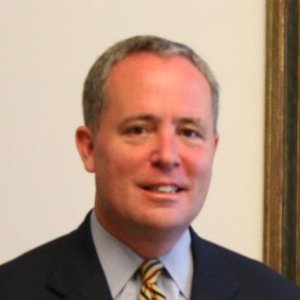


In his language to diplomats and about matters of international concern, Pope Leo is notably good at articulating and reaffirming the principles that Catholics insist must guide decision-making, without getting down into the conclusions at a contestable level. The way he speaks and his presence could make it easier to discuss such sensitive topics. There were times when Pope Francis would talk off the cuff and give exaggerated responses, which would sometimes cause [the Vatican] to have to backtrack. With Leo, it's always careful. I think he sees his job to be a model of deliberation, care and unequivocal commitment to first principles that everybody should live by.
Pope Francis was very prophetic, and he had a spiritual charism—there was a freedom there. He saw where the Church needed to go. He saw that it was too sluggish, too staid and too reserved, and his Laudato si' encyclical was really groundbreaking in what it could call us to... A fear with Pope Leo is that he's going to be too moderate and too much of a statesman. He wants to keep everyone happy and together, but I don't think "The universal Church is universal" approach works anymore. Because it's such a very large, complex world, it's very hard to hold together something that is unifying. Unity can only work locally.
Pope Leo is cautious, but he is still bold. He has still spoken out on Russia and Ukraine, the situation in the Middle East and all of that. And his caution is not out of fear; it's a caution out of truly wanting to listen before speaking. If anything, I think he's modeling a hunger for a "spirituality of we," and he's also insisting that we need silence for a little bit. It's a lot of noise, but the silence is going to help us understand what's that next step we take together.

AI in 2026 is evolving from a set of tools into a foundational layer shaping how work, decisions, and discovery happen across every industry. The focus is shifting toward more autonomous, integrated, and intelligent systems that augment human capabilities and redefine productivity and visibility.1. AI Agents Become the New InterfaceAI is moving beyond chat into autonomous agents that can take action, not just answer questions. These agents can research, schedule, execute workflows, and interact with other systems on your behalf. Instead of using apps, users increasingly “assign tasks” to AI.2. AI-Driven Search Replaces Traditional DiscoverySearch is shifting from links to answers. AI systems summarize, recommend, and cite sources directly, reducing clicks and reshaping how organizations get found. Visibility now depends on being structured, trusted, and machine-readable, not just ranked.3. Every Role Gets an AI CopilotAI copilots are now embedded across most professional tools, from Microsoft and Google to industry-specific platforms. Employees are expected to use AI to draft, analyze, and optimize their work, making AI literacy a baseline skill.4. Smaller Teams, Bigger OutputAI is dramatically increasing productivity, allowing lean teams to accomplish what previously required much larger groups. This is leading to flatter organizations, faster execution, and higher expectations for output and impact.5. Trust, Governance, and “Human-in-the-Loop” Become CriticalAs AI takes on more responsibility, organizations are prioritizing accuracy, transparency, and oversight. New roles and frameworks are emerging to manage risk, ensure ethical use, and validate AI-generated outputs.Bottom line:AI in 2026 is less about tools and more about systems that act, decide, and shape visibility, making it essential to rethink how work gets done and how expertise gets discovered.
The U.S. and Israel’s war with Iran is driving up fertilizer and fuel prices for U.S. farmers. Nate Bruce, a farm business management specialist with the University of Delaware Cooperative Extension, says the Middle East is a key hub for fertilizer supply chains, and particularly nitrogen fertilizers. A lot of nitrogen-based fertilizers are made using natural gas from the Middle East, so the closure of the Strait of Hormuz has consequences for the international fertilizer market.About 49% of the world’s global urea exports and 30% of the world’s ammonia exports are affected by the ongoing conflict, and while much of the fertilizer that U.S. farmers need for the upcoming growing season is already in the U.S., it is now much more expensive to buy.“Profit margins were already tight before the conflict,” Bruce said, “and having a substantial increase in production costs such as fertilizer creates margin issues for producers going into planting season this spring.”It’s a function of supply versus demand, Bruce said. And because corn production needs a lot of nitrogen to grow, the increased fertilizer costs will make corn more expensive to grow.Bruce said many farmers may shift the acres where they would have planted corn to soybeans, which don’t need nitrogen fertilizer to grow.However, farmers in the Mid-Atlantic may have an advantage insulating them a little bit from the conflict and hefty fertilizer and fuel price increases. Their advantage is the local poultry industry. Mid-Atlantic corn prices are usually higher than other places in the country because the poultry industry has a high demand for corn to use in their chicken feed.“This is a market-unique situation that helps buffer producers in the Mid-Atlantic,” Bruce said.To arrange an interview with Bruce, send an email to MediaRelations@udel.edu.

Pope Leo XIII was known as the "Pope of the East." He was actually listening to many of the patriarchs at the time who were opposed to a lot of the colonization that was happening—and Latinization. So, in my mind, it's notable that one of Pope Leo XIV's first addresses was to the Eastern Catholic Churches and that his first papal visit was to celebrate the 1700th anniversary of Nicaea [an ecumenical council that was among the first efforts to attain theological consensus among Christians]. To me, it signals his recognition of the concentric circles of unity that are needed. First of all, we Catholics have to figure out our own unity. But then what does it mean to be in right relationship with Churches that have equal dignity in terms of their apostolic heritage and have drifted away for historical reasons? I think Pope Leo XIV is trying to listen to the cry of our generation, and younger generations, and help us all discern what is the right response.
Leo XIII had followed Saint Augustine in saying that there can be no peace, except peace understood as a "tranquility of order," where order means that all things are ordered according to the will of Christ. What Leo XIII thought we needed to do is to find that and try to order our individual lives and our lives as a Church, so that the world can live in peace. Leo XIV also picks up on themes like that a lot. His first words on the on the loggia on May 8, 2025, were, "Peace be with you all!" And he keeps coming back to that, time after time, understanding that peace isn't just the absence of conflict. Peace is things being rightly ordered, and "rightly ordered" means a world in which people love each other, including through law and politics.
There are a few big themes, the first being migration. Pope Leo XIII saw emigration, which was actually forbidden by the Church, as an opportunity to build a new idea of the Church and extend its influence on the international scale. He took a really important stand to defend migrants, especially Italian migrants, at the time of the Great Italian Immigration, because he saw them as missionaries who could bring their faith to the United States. Pope Leo XIV carries that same instinct—he sees immigrants not as a plight, but rather as an opportunity to make contact with new worlds.From the European perspective, the commercial expansion of the U.S. and its westward growth was viewed with some fear during Leo XIII's papacy. Leo XIII again viewed this expansion as an opportunity, and he oversaw the establishment of new dioceses from Kansas westward in the U.S. He praised the development and mission of the American Church while also recognizing the hesitations many had about the new world. Leo XIV also has somewhat of a mixed relationship with the United States. He grew up in the U.S. but primarily lived in Peru, so he observed the U.S. from the outside and has a critical lens of the country. He recognizes both the insider and outsider perspective of the U.S.

A lunar eclipse occurs when the moon passes into the shadow of the sun. This happens when the sun, Earth and moon line up, with Earth in the middle. In a total lunar eclipse, the moon passes completely into the central portion of Earth’s shadow. If you were on the near-side of the moon during a total lunar eclipse, the entire surface of the sun would be blocked by Earth’s surface.During a total lunar eclipse, the only light that reaches the surface of the moon is refracted through Earth’s atmosphere, which essentially acts like a lens. Light is a wave, and every color of the rainbow has a different wavelength — red the longest and violet the shortest. As it happens, short-wavelength light is much more likely to be scattered when it passes through the atmosphere. This is why the sky looks blue during the day — the blue and violet sunlight passing overhead is scattered off its path, and some of it reaches our eyes. The red light isn’t scattered nearly as much, so more of it can pass through the atmosphere and, during a total lunar eclipse, reach the moon's surface.Unlike during a solar eclipse, no special safety precautions are necessary — it's perfectly safe to look at the moon (in or out of a lunar eclipse) with the naked eye. A pair of even low-power binoculars will certainly help show the moon in more detail. For photographing the moon, I would recommend a camera with some optical zoom — the moon is only about 0.5 degrees across. Because of the low lighting conditions, a tripod or other support would be helpful since a longer exposure time will be needed.On average, there are about two lunar eclipses per year, but only about one third of lunar eclipses are total. The next lunar eclipse will be in August; it will be a partial lunar eclipse. The next total lunar eclipse will occur at the end of 2028.One of my favorite things about total lunar eclipses is that it’s hard to know ahead of time quite what it will look like. The moon can take on a color ranging from burnt orange to red to grayish brown. The closer the moon passes to the center of Earth's shadow, the darker the color will be. Also, since the sunlight that reaches the moon during a total solar eclipse first passes through Earth’s atmosphere, atmospheric conditions — including clouds and even volcanic activity — can significantly affect the moon’s color.

CaptionResizeWrap TextRemoveSupport for, and trust in, public health is at a nadir. Recent accomplishments include the rapid development and approval of a safe and effective COVID-19 vaccine, effective mpox response, declines in opioid overdose deaths through harm reduction, and evidence-based public health initiatives addressing root causes of gun violence. Despite these initiatives, which have significantly reduced the population-level impact of injury and illness, perceived missteps in the management of COVID-19, pervasive mis- and disinformation, increasing public distrust, and a lack of financial support have contributed to the deterioration of public health’s ability to respond to disasters and emergencies. The impact of false narratives and disinvestments interrupt the public health workforce pipeline, denying students opportunities to be trained for and participate in public health emergency preparedness activities. In 2003, I began my career as a disaster epidemiologist conducting household interviews for rapid needs assessments being conducted by the US Centers for Disease Control and Prevention (CDC), the N.C. Division of Public Health, and the University of North Carolina following Hurricane Isabel.For more than two decades, I deployed with students in partnership with local, state, and federal public health agencies to respond to disasters and collect data that contributed to both the immediate and long-term mitigation of the negative health impacts of disasters.This work, conducted in communities across the United States, is only possible because of a community’s trust in public health agencies and individuals’ willingness to share their postdisaster needs with our interview teams, which typically include a public health student and a local resident.The collection of perishable data in postdisaster contexts is challenging regardless of circumstance, and alterations have been made over time to ensure better representation of pregnant women, migrant workers, and rural populations in these postdisaster assessments. Yet, these assessments would not be possible at all without trusted connections between governmental agencies, academic public health, and disaster-affected communities.Politicization threatens our ability to respondPoliticization of disaster response and disaster assistance, and the mis- and disinformation that has now become prevalent around it, make it more difficult to collect these data. Following Hurricane Helene, one of my public health students at the University of Delaware worked with the western North Carolina nonprofit Sustaining Essential and Rural Community Healthcare to conduct key informant interviews and a Community Assessment for Public Health Emergency Response community survey. Both officials and residents reported that misinformation took time and attention away from response activities and disinformation led residents to distrust the response and recovery.After the pandemic, we have a dramatically under-resourced public health preparedness and response system, even in the face of more frequent and severe disasters and public health emergencies. These challenges will continue to mount as the Trump administration dismantles not only public health but also science more broadly. If the administration continues with their stated intent to dismantle the National Center for Atmospheric Research, this will further limit our ability to understand the human health impacts of extreme weather and weather-related hazards associated with climate change. This comes after significant damage to other federal agencies, including the CDC, the Environmental Protection Agency, and the Occupational Safety and Health Administration, all of whom monitor and collect data on disasters caused by natural, biological, and technological or industrial hazards and risks.A weakened workforce pipelineWith the rapidly changing landscape, students are learning about “how things used to be,” with an asterisk next to almost all federal disaster and public health policies and legal frameworks noting that the material could be outdated quickly. However, it is important that students are aware of the mechanisms and functionalities that have existed before this most recent political upheaval. For new public health professionals to help build back programs in more sustainable and resilient ways, it is vital that they have a comprehensive understanding of the policies that were dismantled, as well as their strengths and weaknesses. However, limited job opportunities and ongoing uncertainty will steer this generation of public health students away from governmental public health careers, leaving a long-term deficit of expertise.The difference between an emergency and a disaster is that in an emergency, actions can be taken to avoid a disaster, which exceeds the capacity of an impacted community. The Federal Emergency Management Agency’s (FEMA’s) workforce is 20% smaller under the Trump administration, and mitigation grants through the Flood Mitigation Assistance and Building Resiliency Infrastructure and Communities programs have been eliminated. Reducing community capacity to manage social, systemic, and infrastructural risks through disaster risk reduction, mitigation, and anticipatory action will result in emergencies more frequently progressing into disasters. Furthermore, without federal capacity to respond in agencies like FEMA or CDC, the risks that a given emergency will become a disaster also drastically increase simply because of the ways resources are allocated. Students will no longer have the opportunity to participate in fieldwork when there are no federally supported disaster responses or to learn about disaster epidemiology when there is no longer funding for academic programs that teach students public health in complex emergencies and disaster epidemiology concepts. A safety net that is frayed in nondisaster times will simply unravel during a public health emergency.Overall, it is critical for both the current and future public health workforce to continue to work to identify and understand the social drivers of health and the ways in which the current regulatory, technological, and political moment is affecting public health in both the short and long term. Discussing the ongoing stress impacts of the “triple disaster” in Japan in 2011 (i.e., earthquake, tsunami, and nuclear accident at the Fukushima power plant), Adam highlighted the importance of identifying and understanding the impacts of new and unexpected stressors on population health.A call to action Borrowing from this framing, the next generation of public health professionals must now begin to engage in quantifying the public health impacts of these policies to generate the essential evidence base for the future reinvestment in, and reinvigoration of, public health emergency preparedness.Current public health students can begin to actively capture the baseline state of public health, commit to ongoing active surveillance and measurement, and engage with both objective measures of health and self-reported perceptions to track how the human-made and unexpected stressors like artificial intelligence, climate change, and political polarization may affect us.While being “political” has often been seen as a negative for public health officials, now is not the time for public health students to be insular or isolated. Although engaging with the political, legislative, legal, and business sectors as a public health student or professional may feel daunting, public health must now more than ever engage with a variety of new partners and tools for public health practice. We cannot respond to the current attacks on public health in isolation. Businesses must speak up regarding how important a healthy and safe workforce is to their success. Local officials must advocate for the health of their residents and communities.The long-held sovereignty of local public health governance must give way to regional collaborations like the recently announced Northeast Public Health Collaborative, which brings together 10 states and New York City to work together on issues like vaccine policy, public health financing, and public health data collection, management, and analysis.Public health has always had the impetus to protect previous achievements—vaccination, robust surveillance systems, workplace and environmental safety, maternal and child health, reducing health disparities—through monitoring and evaluation, education, regulatory enforcement, and other essential public health services. For public health students, now is the time to find your passion, engage with partners that can support you, and prepare to lead.
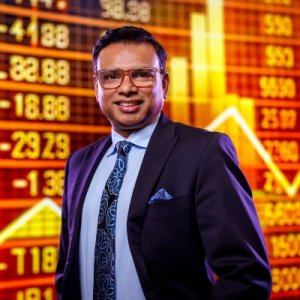
"The conflict with Iran is already showing up at the gas pump, and how much worse it gets depends entirely on how long this lasts. The Strait of Hormuz carries about a fifth of the world’s oil, and it’s effectively shut down for most commercial shipping right now. For the average American, that means higher gas prices, higher grocery prices, and more uncertainty layered on top of an economy already strained by tariffs and inflation. Here in Louisiana, we’ll feel it quickly — our refineries process the majority of U.S. crude, so global price shocks hit home fast. The short-term pain is real. The question is whether this conflicts ends quickly or turns into a long term affair."

AI interviews have become common practice in today’s hiring process. Even though a job candidate is talking to a computer and not a person, it’s important for them to treat this process the same as any other interview. Most AI platforms don’t just record answers, they also provide an analysis of interviews including keywords, clarity, depth of examples, confidence, tone, eye contact and facial expressions. While AI does not make the final hiring decision, it will provide a score or summary that recruiters could use to determine if a candidate moves on to the next round. These quick tips can help candidates prepare for these types of interviews.Before you record:• Check equipment to make sure everything is working and the software is updated. • Dress professionally including a jacket if appropriate.• Set up your space with good lighting, a neutral background, and turn off all notifications to avoid distractions.• Prepare as you would for any other interview - review the job description, research the organization, use the STAR method when providing examples.During the recording:• Be sure to look at the camera and not the screen. It might feel awkward but that’s technically where the "eye contact" will be.• Smile and be energetic as some AI software will assess your tone and engagement.• If you stumble, keep going. Your answers don’t have to be perfect but should be authentic.After the recording:• Some platforms will allow you to review your recording before submitting. Use this opportunity to take notes about your body language, pacing and clarity.• Keep track of the questions you were asked as they can help you prepare for similar questions in future interviews.

In terms of qualifying the importance of and subsequent search ranking of content Google relies on the notion of E-E-A-T. This stands for Experience, Expertise, Authoritativeness and Trustworthiness. It questions the credentials, reputation and honesty associated with the content it cralws, as well as the author and publishing domain. In fact, Google’s emphasis on E-A-T shows just how vital expertise marketing is to knowledge-based organizations. A well-designed expertise marketing program, with up-to-date expert content on a proven will naturally improve expert page rank on Google, as well as on your website and in newsrooms.

Across much of the Caribbean, the collapse of the Maduro regime has been met with a restrained but unmistakable sense of relief. Yet beneath the diplomatic restraint lies a shared understanding: for small island states that have absorbed the spillover effects of Venezuelan collapse for more than two decades, this moment represents the possible end of a long and destabilizing chapter. Migration pressures were immediate. By 2025, nearly seven million Venezuelan refugees and migrants were living in Latin America and the Caribbean. While mainland countries absorbed the largest absolute numbers, Caribbean islands faced some of the most intense per-capita impacts. Trinidad and Tobago hosted an estimated 45,000 to more than 70,000 Venezuelans in a population of roughly 1.5 million, placing sustained strain on schools, healthcare access, housing markets, and immigration systems. Against this backdrop, it is unsurprising that the end of the Maduro regime has been quietly welcomed. This moment also invites a reassessment of China’s expanding footprint in the Caribbean. Over the past decade, Beijing has deepened its presence through port infrastructure, telecommunications, energy projects, concessional lending, and diplomatic engagement, often filling financing gaps when Western attention appeared episodic. The emerging environment is one of recalibration rather than rupture. Caribbean governments are navigating a landscape in which external engagement is becoming more consequential, not less. Geography has not changed, but expectations have.What to watch nextAs this transition unfolds, several policy developments will determine whether cautious optimism proves warranted.First, whether Venezuelan outward migration to the Caribbean measurably slows. Sustained declines or credible pathways for voluntary return would be the clearest indicator that conditions inside Venezuela are stabilizing.Second, whether Caribbean public systems receive durable support rather than short-term humanitarian fixes. Education, healthcare, housing, and immigration systems absorbed migration pressures for years; meaningful relief will require budget support and institutional strengthening, not emergency framing alone .Third, whether organized crime and drug trafficking pressures in the Caribbean basin begin to ease.Finally, whether the region avoids a return to dependency-driven energy and infrastructure politics.For the Caribbean, hope today is not naïve. It is conditional. The Chávez–Maduro years imposed real costs on the region. Maduro’s end creates an opening for an intriguing turn in the historic relations with the US, the region’s most important economic partner.