
Experts Matter. Find Yours.
Connect for media, speaking, professional opportunities & more.
Beyond the Chair: How AI Is Transforming Modern Dentistry
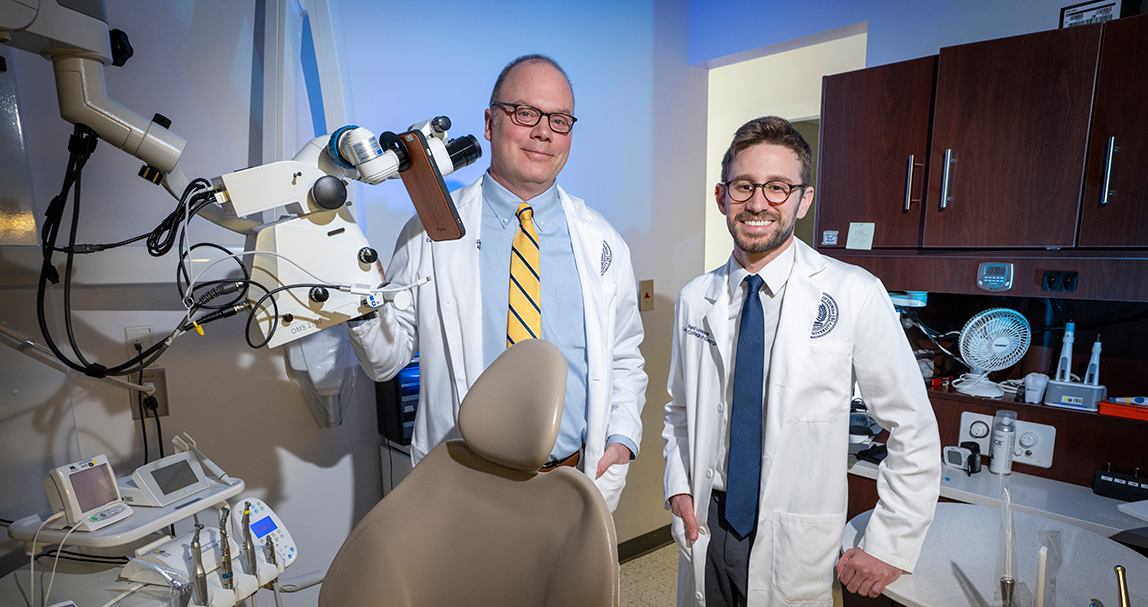
A recently published article from Augusta University’s Jagwire is highlighting how artificial intelligence is rapidly changing the future of dentistry not only in patient care, but also in education, research and clinical decision-making. The article features insights from Theodore Ravenel and third-year dental student Reid Loveless, who discuss both the opportunities and risks associated with AI integration in the profession. Ravenel explains how AI-powered tools are already assisting dentists with cavity detection, orthodontic planning, bone-loss analysis, and treatment forecasting, while also helping researchers process enormous amounts of clinical data more efficiently. He also emphasizes the importance of ethical safeguards, patient privacy and ensuring that AI tools are trained using diverse and accurate datasets. “It is really reshaping dentistry and how we practice dentistry.” Theodore Ravenel, DMD Loveless offers the perspective of a future clinician learning in an increasingly technology-driven environment. He describes how AI-supported educational tools developed by faculty such as Rafael Pacheco are helping students navigate complex patient scenarios, receive immediate feedback, and strengthen clinical reasoning skills. The article also highlights emerging technologies being used at the Dental College of Georgia, including virtual reality simulators and AI chatbots that provide students with real-time evaluations of dental procedures. Researchers such as Zoya Kurago are also leveraging AI to analyze large-scale datasets tied to cancer and oral disease research. Despite the excitement surrounding these advances, the article stresses that AI is intended to support, not replace, human clinicians. Empathy, communication and patient trust remain essential components of quality care. To learn more about how Augusta University is preparing future dental professionals for an AI-driven healthcare landscape, contact Rafael Pacheco at rapacheco@augusta.edu.

Pope Leo XIV Releases First Encyclical, "Magnifica Humanitas"
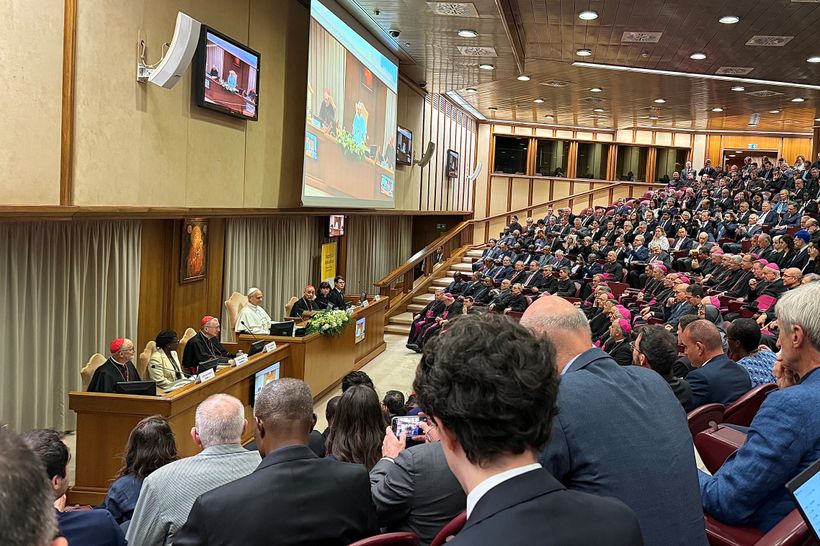
On May 25, 2026, Pope Leo XIV released his first papal encyclical, “Magnifica Humanitas: On Safeguarding the Human Person in the Time of Artificial Intelligence.” The letter—true to its title’s meaning of “magnificent humanity”—addresses how society, collectively, must preserve human virtues in a time of rapid technological advancement. The 42,000-word document features five distinct chapters, exploring various elements of the broader issue at hand and serving as a guidepost for moral and ethical use of technology, through the lens of Church teachings. It covers everything from the development and principles of Church social doctrine to technological responsibility, the culture of power, building civilization through love and preserving humanity through truth, work and freedom. “In recent years, it has become increasingly evident how rapidly and profoundly digitalization, artificial intelligence (AI) and robotics are transforming our world,” wrote Pope Leo in the encyclical’s introduction. “Technology should not be considered, in itself, as a force antagonistic to humanity. On the contrary… “Over the centuries, technological development has significantly improved the living conditions of humanity. At the same time, each phase of progress has also revealed the ambiguity of tools that can cause harm when not oriented toward the good… The power and prevalence of emerging technologies are interwoven into the fabric of daily life, shaping decision-making processes and deeply affecting the collective imagination: ‘Never has humanity had such power over itself.’ “[Most] people are watching and waiting, observing from afar and merely hoping for the best. For this very reason, crucial questions impose themselves on our conscience and can no longer be avoided: Where are we going? Toward what goal do we wish to orient ourselves? What direction should we choose as a people and as a human community?” What Is a Papal Encyclical? Popes have written more than 300 encyclicals—or “circulating letters”—since the mid-18th century. They were initially used to clearly communicate doctrine and guidance to priests throughout the world who were facing religious, political or social issues, which was especially useful as the world grew more interconnected and the Church grew larger. Beginning with Pope Leo XIII’s Rerum Novarum and continuing today, some papal encyclicals have been referred to as “social encyclicals” because they address a pervasive social issue through the lens of Catholic Social Teaching and are written not only for those within the Church, but laypeople as well. Some examples of those included Pope Saint John Paul’s 1987 Sollicitudo Rei Socialis on international inequality, and Pope Francis’ 2015 Laudato Si’ on environmental care and social justice. “[Pope Leo XIII and his successors] were developing a new way of teaching the world how to order itself according to Catholic principles, now translated into a vocabulary that would be intelligible to the larger world,” said Patrick Brennan, JD, Chair of Catholic Legal Studies at Villanova University Charles Widger School of Law, on LiveNow From Fox. “They try to address important social questions in ways that any person of goodwill can read and understand.” “Encyclicals contribute to our collective wisdom for how to live as community,” wrote Sally Scholz, PhD, professor of Philosophy at Villanova, in her recent contribution to Church Life Journal titled “What to Look For in Pope Leo XIV's First Social Encyclical.” “The principles and various themes they discuss offer guidance for day-to-day interpersonal interactions as well as for how to participate as a Catholic and as a “person of good will” at every level of social existence: in our families, our communities, our institutions, our states and in our ‘one human family.’” Observations From Magnifica Humanitas A New Twist on a Longstanding Issue While the types of technology being discussed in the letter—particularly artificial intelligence—are unique to our modern times, encyclicals addressing how to interact with contemporary technology are far from it. “Discussion of the relationship between humans and technology appears in many of the previous social encyclicals,” wrote Dr. Scholz in Church Life Journal. “It is a social phenomenon with so much promise but inspires so much fear for how it will change work and the workplace, communication, global trade, war and the family.” “Technology is integral to evolution. Understanding technology's relationship to human welfare means grasping its role within the flow of biological and human life,” wrote Sister Ilia Delio, OSF, PhD, the Josephine C. Connelly Endowed Chair in Christian Theology in the 2025 Global Sisters Report. What Pope Leo argues in his lengthy letter, boiled down to a few sentences, is that while technological advancements, and AI in particular, can be beneficial to society, they must never supersede human dignity, moral responsibility and the common good. A society that allows systems to replace human judgment, concentrate power or exploit workers risks dehumanization. For Jaisy Joseph, PhD, assistant professor of Theology and Religious Studies at Villanova University, particularly striking was something not written in the document itself, but rather spoken at the official promulgation of the letter in Rome. There, Pope Leo was joined in powerful reflection by Anthropic co-founder Christopher Olah. Olah analogized the current reality with bringing a fictional character to life, citing that while technical fields build the machinery of AI, “what character we choose, how it interacts with the world, how it ought to interact with the world— these are more clearly questions for the humanities, for religion, for philosophy, for society at large.” On that front, he then enlisted the help of the Church in addressing three pressing concerns related to AI and human flourishing, before ending with a request for the Church to continue to be an unyieldingly moral voice and informed critic. “The dynamic dialogue and discernment between Leo and Olah reflect a significant continuity with the Francis papacy,” Dr. Joseph said, referencing the late pontiff’s encouragement of “theology to adopt a transdisciplinary method that recognized how this discipline is part of a web of relationships among disciplines.” Technology Through the Lens of Augustinian Theology Throughout Magnifica Humanitas, Pope Leo’s ubiquitous thoughts and guidance on safeguarding humanity—particularly in the context of modern technology—are infused with references to the teachings of St. Augustine. “[Augustine’s teachings say] we need standards to guide our judgements and actions,” said Terence Sweeney, PhD, assistant teaching professor of Humanities at Villanova. “Pope Leo XIV, ‘a son of St. Augustine,’ offers us standards for how we judge our world in the age of AI. “One surprising standard in a document on Big Tech is that ‘a litmus test for social justice today is the treatment of migrants, refugees and those forced to move.’ Why this litmus test? Leo is shaped by Augustine’s rejection of communities of perfection where only the pure, powerful and perfect are welcome.” “Pope Leo beautifully aligns himself with traditional Catholic Social Teaching while grounding his vision in the theology of St. Augustine,” Dr. Joseph added. “The result is a groundbreaking defense of the human person in our new age of artificial intelligence.” Pope Leo, through a scriptural metaphor of the Tower of Babel, “resurrects Augustine’s famous warning that human history is a constant struggle between two loves fighting for our hearts,” Dr. Joseph said. He references how the builders of the tower tried to create “a single language, a single technology, a single direction” without reference to God. “The concluding paragraphs of chapter three highlight Pope Leo XIV’s distinctively Augustinian approach to evaluating the place of technology and scientific progress in the world,” said Emma Kennedy, PhD, assistant professor of Christian Ethics at Villanova University. “What we love, ‘both as individuals and as a society,’ will guide us to participate in ‘the rebuilding of Jerusalem’ or ‘the construction of Babel’––a contrast that hearkens back to Augustine’s ‘two cities.’” “Pope Leo [also] draws on an Augustinian spirituality that highlights fundamental desiring in the shared search for truth,” added Tim Hanchin, PhD, associate professor of Practical Theology at Villanova. “Our desire for truth, or wonder, reflects humanity’s transcendent origin and end. That we are created in the image and likeness of the Triune God (Genesis 1:26-27) distinguishes human knowing from mere data processing.” A Discussion on Slavery, Past and Present Intermixed with Pope Leo’s chapter four thoughts on modern slavery—such as various forms of human trafficking that he says are “directly linked to the digital economy”—he made an historic recognition and apology for the Church’s role in the transatlantic slave trade centuries ago. Tia Noelle Pratt, PhD, special assistant to the Vice President of Mission and Ministry at Villanova University, assistant professor of Sociology, and editor of the Journal of Catholic Social Thought, said that what makes this acknowledgement so important is how it differs from the way previous popes have addressed the issue, which have condemned slavery but remained at the individual level. “They spoke of their papal predecessors and those popes’ actions, but stopped short of invoking the institution itself and the institution's role in the promulgation of slavery,” Dr. Pratt said. Tying it back to current affronts on human dignity fueled by the digital age, Pope Leo penned his own papal version of the famous saying that “Those who cannot remember the past are condemned to repeat it.” “If we want to avoid the need to ask for pardon again in the future for having failed to respect the treasure of human dignity that is required by our faith, it falls to us today to denounce, clearly and firmly, trafficking in its many forms,” he wrote. “Pope Leo is telling us today that we cannot have detachment between the past and the present,” Dr. Pratt said. “We must see how these things are connected.” Inspired by Rerum Novarum, but Far From a Repeat Pope Leo XIV signed Magnifica Humanitas on May 15—the 135th anniversary of the release of Pope Leo XIII’s Rerum Novarum. That was the most famous social encyclical issued by the long-reigning pontiff and is considered to be a foundational text of modern Catholic Social Thought. It addressed numerous issues facing the working class during the time of the Industrial Revolution. On May 10, 2025—just two days after his election—Pope Leo referenced his namesake’s 1891 encyclical in an address to the College of Cardinals, foreshadowing the attention he intended to pay to the modern version of the same issue. “Pope Leo XIII in his historic encyclical Rerum Novarum addressed the social question in the context of the first great industrial revolution,” Pope Leo said in that address. “In our own day, the Church offers to everyone the treasury of her social teaching in response to another industrial revolution and to developments in the field of artificial intelligence that pose new challenges for the defense of human dignity, justice and labor.” Yet, while he was explicitly inspired by the 19th-century pontiff and his text, Pope Leo makes it clear early in Magnifica Humanitas that “While Leo XIII spoke in his time of ‘new things’ (rerum novarum), today we cannot limit ourselves simply to repeating his insightful teachings. “Instead, we must ask God for the wisdom to interpret the great trends of our time, particularly technological advances.”




Provincial Trunk Highway 34 is Named the Worst Road in Manitoba for the Second Year in a Row
Provincial Trunk Highway 34 (PTH 34) has been named Manitoba’s worst road for the second year in a row, according to the results of the 2026 CAA Worst Roads campaign. The Pembina Valley highway, located west of Winnipeg, has previously appeared on the provincial top ten list seven times, and this is the second consecutive year it has claimed the top spot. Manitobans who nominated PTH 34 did so because of potholes, poor maintenance, and uneven road surfaces. “The roads on this list reflect what Manitobans experience every day,” says Ewald Friesen, manager of government and community relations for CAA Manitoba. “Manitobans want roads that are safe, reliable and properly maintained, whether they live in Winnipeg or in a rural community. This year, 711 roads across 69 municipalities were nominated for the top spot. The most common concerns cited were potholes, poor maintenance and uneven road surfaces. “This year’s list shows that road issues are not just a Winnipeg problem or a rural problem, they’re a Manitoba problem,” Friesen said. “There is an even split between rural and urban roads on the provincial list.” Many of the roads identified are major commuter, trade and connector routes relied on by families and businesses. As governments focus on inter-provincial trade, congestion in Winnipeg and critical road safety issues, investments in the roads and highways are more important than ever. “When key routes fall into disrepair, it affects more than just convenience,” Friesen said. “Vehicle repair costs go up, fuel efficiency goes down, and delays increase. That adds pressure to already stretched household budgets and affects our economy.” Repeated nominations often signal that communities want long-term solutions, not temporary fixes. Several roads that have appeared on past lists are now under construction, resurfaced or scheduled for rehabilitation. “We’ve seen that sustained public input makes a difference,” Friesen said. “The CAA Worst Roads campaign gives governments a clear snapshot of where funding and attention are wanted most.” CAA Manitoba is urging provincial and municipal governments to continue prioritizing predictable, year-over-year investment in road maintenance and safety. “Stable funding allows governments to plan ahead, address safety concerns earlier and avoid higher costs later,” Friesen said. “It’s about keeping people safe and keeping Manitoba moving.” Top 10 worst roads in Manitoba for 2026 Provincial Trunk Highway 34 — Central Plains/Pembina Valley Provincial Road 307 — Whiteshell Kenaston Boulevard/Route 90 — Winnipeg Saskatchewan Avenue — Winnipeg Richmond Avenue — Brandon Gateway Road — Winnipeg Leila Avenue — Winnipeg 1st Street — Brandon Provincial Road 422 — Pembina Valley St. Mary’s Road — Winnipeg For more information and historical results, please visit: https://www.caamanitoba.com/advocacy/government-relations/worst-roads



Abhijit Bhattacharyya, Ph.D., has been named the next dean of Georgia Southern University’s Allen E. Paulson College of Engineering and Computing. He will begin his role July 1. Bhattacharyya currently serves as the inaugural dean of the College of Engineering and Computer Science at Arkansas State University, where he has led a period of strategic growth focused on student success, workforce development and research expansion. During his tenure, the college launched new academic programs in high-demand fields, strengthened industry partnerships and advanced initiatives supporting student recruitment, retention and career readiness. “I have the honor and privilege to join Georgia Southern at an exciting time in its journey as it soars beyond its current very strong position in the state of Georgia,” said Bhattacharyya. “The energy on campus and within the college was palpable during my visit, and I look forward to working alongside my colleagues to build on that strong foundation and create a national brand.” Prior to his current role, Bhattacharyya held several leadership positions at the University of Arkansas at Little Rock, including interim vice provost for Research and dean of the graduate school, as well as associate dean of Engineering and Information Technology. He began his career as a faculty member committed to teaching, research and service, and remains an active scholar with externally funded research from federal agencies. Bhattacharyya earned his Ph.D. in mechanical and aerospace engineering from Rutgers University, along with a master’s degree in applied mechanics. He also holds a bachelor’s degree in mechanical engineering from the Indian Institute of Technology, Kharagpur. He is a fellow of the American Society of Mechanical Engineers and serves as an ABET program evaluator. Provost and Executive Vice President for Academic Affairs Avi Mukherjee, Ph.D., said Bhattacharyya’s experience and leadership align strongly with the University’s strategic priorities. “Dr. Bhattacharyya brings a proven record of growing engineering education, advancing academic programs, bolstering research, managing accreditation, strengthening industry partnerships and positioning engineering and computer science for long-term impact,” said Mukherjee. “His commitment to faculty excellence, student success and workforce development will be instrumental as we continue to expand opportunities for our students and elevate the national profile of the Allen E. Paulson College of Engineering and Computing.” Looking to connect with Abhijit Bhattacharyya? Simply contact Georgia Southern's Director of Communications Jennifer Wise at jwise@georgiasouthern.edu to arrange an interview today.


ChristianaCare Expands Access to Physical Therapy With New In Home Collaboration With Luna
ChristianaCare is joining forces with Luna, the leading provider of in home, in person outpatient physical therapy, to expand access to care by bringing hands on physical therapy directly into patients’ homes. The new service, ChristianaCare Physical Therapy At Home, Powered by Luna, will begin taking appointments in June. The collaboration is designed to reduce barriers to care, support strong recovery outcomes and give patients a convenient way to begin physical therapy. Care Delivered Where Patients Need It Most Unlike remote or virtual therapy, the service will provide one on one, hands on care delivered by licensed physical therapists in the convenience of a patient’s home or office. Through Luna’s platform, patients can request care and are matched with a licensed physical therapist who delivers 45 to 55 minute in home sessions and continues in person care throughout the patient’s treatment plan. “Our collaboration with Luna reflects a simple belief: if we can safely deliver high quality care in the home, we should make that option available,” said Jennifer Thomas, MBA, MS, vice president, Rehabilitation Services at ChristianaCare. “By meeting patients where they are, we remove common barriers to care and help people stay engaged in their recovery, regain independence and remain connected to daily life.” Designed to Help More Patients Get Started Too many people who are referred to physical therapy never take the first step. Research on patients referred to physical therapy has found that only about 50% to 76% attend an initial appointment. Travel challenges, scheduling conflicts and difficulty accessing care can all get in the way. ChristianaCare Physical Therapy At Home, Powered by Luna, is designed to make it easier for patients to begin care without delay by bringing licensed physical therapists directly to them and offering scheduling that fits into daily life. “Our focus is on timely access and helping patients get started,” Thomas said. “When care is easier to access and fits into a person’s routine, it is much more likely they will begin treatment. From there, our care teams support patients through a plan that is tailored to their needs and focused on meaningful recovery.” Different From Home Health Care ChristianaCare Physical Therapy At Home, Powered by Luna, follows an outpatient care model, not home health care. Patients do not need to be homebound to receive services. The program focuses on improving strength, balance and movement and is typically covered under Medicare Part B. This differs from home health care, which serves homebound patients who need short term medical services and is usually covered under Medicare Part A. ChristianaCare Physical Therapy At Home, Powered by Luna, can address many of the conditions commonly treated by ChristianaCare Rehabilitation Services, including orthopedic and sports injuries, post surgical rehabilitation, geriatric care, vestibular therapy, women’s health and lymphedema. Experienced Partner With Broad Clinical Expertise Luna has extensive experience delivering in home outpatient physical therapy and partners with health systems nationwide. “We are proud to work with ChristianaCare to expand access to high quality physical therapy in the home,” said Lily Beltran, co-founder and President at Luna. “Our shared focus is on removing barriers to care and delivering consistent, hands on therapy that helps patients recover, stay engaged and achieve their goals.” The service is covered by most major insurance plans, including Medicare, with the same co pay as facility based physical therapy. Patients can request in home care by calling ChristianaCare Rehab Services’ access center at 302-623-1500. ChristianaCare Physical Therapy At Home, Powered by Luna is a service offering of ChristianaCare Rehabilitation Services, which provides comprehensive, patient centered rehabilitation care across a wide range of settings, including outpatient clinics, inpatient facilities, community locations and now in the home.


National Cancer Research Month: Baylor Researchers at Forefront of New Discoveries
May is National Cancer Research Month, which highlights the importance of lifesaving research to the millions of people around the world affected by cancer. Thanks to spectacular advances made by cancer researchers, approximately 18.6 million people in the United States and millions more worldwide are living with, through and beyond their disease. Over the past year, Baylor University Media and Public Relations has reported on Baylor research at the forefront of discovering novel approaches to effective cancer therapies. University researchers are using tumor starvation techniques, natural products, phages, modified bacteria, precision nutrition and more in their trailblazing work on some of the most aggressive cancers, including kidney, pancreatic, oral, colorectal and breast cancers. In a recent article published by the University, it featured the hard work and research of eight Baylor experts driving those discoveries forward: • Kevin G. Pinney is developing a next-generation treatment for kidney cancer that targets the blood vessels feeding tumors. His research focuses on specialized drug conjugates designed to cut off oxygen and nutrients to renal cell carcinoma tumors — essentially starving cancer cells to death. • Daniel Romo is accelerating new therapies for pancreatic cancer using compounds derived from marine natural products. His work on a simplified version of pateamine A could offer a new therapeutic pathway for pancreatic ductal adenocarcinoma, one of the most aggressive and difficult-to-treat cancers. • Joseph Taube is investigating how breast cancers spread and resist treatment. His recent work examines whether a natural compound called Ophiobolin A can trigger inflammatory forms of cancer cell death that may work alongside immunotherapy — particularly in treatment-resistant triple-negative breast cancers. • Leigh Greathouse is combining cancer biology, nutrition science, and AI to personalize cancer prevention and treatment strategies. Her research explores how diet and the gut microbiome influence cancer outcomes and survivorship. • Michael S. VanNieuwenhze is leading groundbreaking colorectal cancer research using modified bacteria to deliver cancer-killing proteins directly into tumor cells. His team is engineering Listeria monocytogenes as a targeted therapeutic delivery system. • Aaron Wright is helping lead a major ARPA-H initiative exploring the use of bacteriophages — viruses that attack bacteria — to reshape the human microbiome and improve health. The project could eventually help prevent diseases linked to oral and colorectal cancers through low-cost phage-based treatments. • Savannah Rauschendorfer is researching how exercise interventions may reduce the harmful cardiac side effects of chemotherapy in adolescent and young adult cancer patients. Her work aims to identify patients at risk of cardiotoxicity earlier and improve long-term survivorship outcomes. • Jonathan Kelber studies the cellular and molecular mechanisms behind aggressive breast and pancreatic cancers. Through his Developmental Oncogene Laboratory, Kelber investigates how cancer cells evolve during tumor progression and tissue regeneration. Together, these researchers showcase how cancer science is rapidly evolving beyond traditional treatments – integrating biology, chemistry, nutrition, exercise science, microbiome research, and artificial intelligence in the search for more effective and personalized therapies.


CAA warns drivers of emerging auto theft tactics that prey on the goodwill of drivers
CAA South Central Ontario (CAA SCO) is warning that car theft is becoming more sophisticated and more personal, with criminals now targeting drivers directly using a mix of distraction tactics and high-tech tools. Police services across Canada have recently warned of an increase in “distraction thefts” occurring in parking lots, shopping centres, and other busy areas. At the same time, thieves are continuing to use relay attacks and key-fob signal-interception technology to unlock and steal vehicles without physical force. CAA cautions that these tactics are now being used together, creating new risks for drivers. A New Combination of Tactics This emerging method involves criminals engaging drivers in brief interactions near their vehicle while simultaneously using electronic devices to capture or amplify key fob signals. As a result, key fob-related auto theft is no longer limited to driveways or overnight incidents. Close physical proximity between drivers, their key fobs, and their vehicles can be exploited. These thefts can occur quickly and subtly, often without the driver immediately realizing anything has happened. In some cases, drivers may later notice an alert that their vehicle key is missing. This is an early sign that something is wrong. “Today vehicle thieves are becoming increasingly calculated, using distraction tactics alongside electronic tools designed to intercept or relay key fob signals,” says Elliott Silverstein, director, government relations, CAA South Central Ontario. “A brief interaction in a parking lot can quickly become an opportunity for organized criminals to target both drivers and their vehicles. Public awareness and simple preventative measures remain some of the strongest tools drivers have to protect themselves.” How Drivers Can Protect Themselves With these evolving risks, CAA is encouraging drivers to stay alert and take proactive steps to reduce their vulnerability: Park in well-lit, high-traffic areas. Be cautious of unsolicited interactions near your vehicle, including: Persistent or unusual requests for help Offers of gifts or incentives. Requests that require you to stay near your vehicle or move closer to another vehicle. Trust your instincts—if something feels suspicious, disengage and move to a safer area. Lock your vehicle immediately after exiting and confirm it is secure. Store key fobs in RFID-blocking or Faraday pouches to prevent signal interception. Keep key fobs on your person; avoid leaving them in carts, purses, or exposed areas. Consider visible anti-theft devices like steering wheel locks or two-factor authentication such as after-market engine immobilizers. Remove personal information from vehicles and clear saved home addresses in GPS systems. Report suspicious behaviour to local police. Raising Awareness Is Key CAA emphasizes that as auto theft tactics continue to evolve, awareness and vigilance are essential to reduce risk. Drivers are encouraged to remain mindful of their surroundings, particularly in public spaces, and to take simple precautions that can significantly reduce the likelihood of becoming a target of auto theft.


Seventy There it is. Just sitting there. A number that tends to land somewhere between “good for you” and “are you feeling alright?” And before you answer that, let me tell you I am more than alright. I am thriving. Loudly. Definitely with dancing. And with just enough attitude to make a few people slightly uncomfortable, which I have decided is a sign of a life extremely well lived. But first, let me tell you about the plan. ⁂ The Plan Was Magnificent. It Lasted Eleven Minutes The plan was to retire gracefully. Ease into a slower pace. Read more. Maybe garden. Drink better wine. Finally, work through all those documentaries piling up in my queue with the quiet confidence of someone who had absolutely earned the right to nothing. Here is what actually happened. The documentaries stayed in the queue, and the garden did not get planted. I did, however, read one book. Just one. But it turned out to be exactly the right one. David Brooks wrote The Second Mountain: The Quest for a Moral Life, and I picked it up the way you pick up something that does not look urgent, only to find you cannot put it down. Brooks argues that we spend the first part of our lives climbing what he calls the first mountain: the career, the credentials, the identity, the whole elaborate structure of proving ourselves. And then something happens. You reach the top, or you fall off, or the mountain turns out to be considerably smaller than it looked from the bottom. Either way, you end up in a valley, slightly winded, wondering what comes next. And that, Brooks says, is where real life begins. The second mountain. The one you climb not for yourself but for something greater. The one where the question shifts from “what do I want?” to “what does the world need from me?” I read that while sitting in my living room and thought: that is the whole story, right there. There is a phrase I use throughout this blog: try to keep up. I say it because seventy feels faster and fuller than I ever expected, and because it is an invitation, not a taunt. You still have tread on your tires. I mean that warmly. Try to keep up. ⁂ The Valley Was Not Optional My valley arrived without warning or invitation: I lost my job unexpectedly. No graceful wind-down. No farewell luncheon with a tasteful card, no parade! Just the particular silence that follows the end of something you had not quite finished. Nobody glides gracefully from mountain one to mountain two, no matter how it looks on social media. What nobody tells you about retirement, voluntary or otherwise, is that stopping is quite difficult. Not the logistics. The identity. You spend thirty years answering the question “What do you do?” and then one day no one asks anymore. We carefully plan the money. We almost never plan for the morning when your calendar is empty, your inbox is quiet, and no one expects you anywhere. That morning is its own kind of reckoning. Brooks calls this the valley experience, and he is right that it is unavoidable. It is where you shed the old self so a new one can emerge. There are no shortcuts. I tried several. But then I hired a coach. Not just any coach. A thought leadership coach, which sounds very impressive but turns out to involve a great deal of uncomfortable self-reflection and at least one conversation in which the coach tells you to write a blog. “Do your research,” he said. “Find your niche. Share what you know. And honestly, you should probably write a book.” (Thank you, Peter!) I nodded. I smiled. I thanked him warmly. Then I went home, sat down, and had a completely private, entirely dignified meltdown that I will describe only as spirited. Action absorbs anxiety, so once the spirited moment passed, I got to work. Try to keep up. ⁂ The Second Mountain Has a Name. It Is Retire with Equity I started writing. Article after article, something unexpected happened: I found my voice. It turns out my voice is part educator, part agitator, and part hilarious, where kitchen-table logic meets a spreadsheet. I began calling her Aunt Equity, and she has been absolutely delightful company ever since. A word on naming your alter ego after a financial product: no one recommends it. No self-help book has a chapter that says ‘step three, create a persona rooted in home equity solutions and give her a sassy name.’ And yet Aunt Equity arrived fully formed, with opinions, a logo, and an inexplicable amount of charisma. She is part brand, part character, and entirely my fault. I am keeping her. For Brooks, the second mountain is a calling, not a career move. For me, it is a community. The Canadian retirement community. The people who built this country, paid into it, raised children in it, and are now quietly panicking about whether they have enough to keep going. That community. They are my people, and this is my mountain and I have built my company, Retire with Equity to support it. And I will be honest: this mountain is considerably steeper and way more fun. Try to keep up. ⁂ What Is Your Second Mountain? Here is where this stops being about me and starts being about you. The second mountain is not one thing. It is not a prescription. It is not reserved for people who write blogs, build platforms, or have particularly spirited meltdowns. It is waiting for you, wherever you are, whatever you are carrying, whether you are fifty or seventy or somewhere in between and still not entirely sure you are allowed to want something new. The second mountain looks different for everyone, and that is entirely the point. Also, a feature, not a bug. For some people, it is family. Really showing up for grandchildren in ways that a demanding career never allowed. Being present, not just present-ish. Taking the grandkids to school on Tuesdays because Tuesday is your day now and the best day of the week. Becoming the person in the family who holds things together, not because you have to, but because you finally have the time and the wisdom to do it right. For others, it is community. A neighbourhood organization, a cause that has been pulling at you for years, or a faith community that needs exactly the skills you spent a career building. Brooks tells the story of a woman who was moving out of a rough Chicago neighbourhood, looked out the window, saw little girls playing with broken bottles in an empty lot, turned to her husband, and said: we are not leaving. She ended up running a major community organization. She did not set out to build a movement. She just decided not to look away. And then there are the callings that have been patiently waiting in the back of a drawer since approximately 1987. This is my personal favourite category because it is full of people who surprise themselves completely. Andrea, whom I see every week at the gym, spent her late fifties doing something most people her age were emphatically not doing: she went to law school. In London, England. A yearning carried for decades, quietly set aside while she built a career and raised a family. Then one day she stopped being polite about it and went. She is one of the most alive people I know. David discovered painting. Not dabbling. Painting. He picked up a brush at a class a friend dragged him to, and something clicked open that had apparently been waiting for that exact moment. He paints almost every day now, and the look on his face when he talks about it is that of someone who found something he did not know he had lost. If you are sitting there thinking you have left it too long, or that your moment has passed, that is a you problem, and I say that with complete affection. The door is still open. Walk through it. Brooks calls it the place where your deep gladness meets a deep hunger in the world. I think of it as the morning when you wake up and you are not just filling time. You are fulfilling a purpose. Try to keep up. ⁂ What Actually Works (And What Dottie Has to Do With It) I have a ten-pound dog named Dottie. She is the canine embodiment of purposeful living and, frankly, an unsolicited life coach. Full speed, tail up, no apologies. I take notes. The retirements that work, the ones people describe as genuinely meaningful rather than merely solvent, share a few things in common. They move. Consistently, enjoyably, sustainably. The body is not a liability to be managed in retirement. It is an asset, and it responds remarkably well to being treated like one. For me, part of that meant I needed a break from drinking, and the origin story is not glamorous: I woke up one morning and could not remember how the movie I watched the night before ended. That was the moment. What began as a one-month experiment quietly became almost two years. I sleep better, think more clearly, and no longer find myself wide awake at 2 am doing mental arithmetic about nothing. I feel sharper and more energized at seventy than I did a decade ago. The fifties, it turns out, were not the peak. They were the warm-up act. And for the record, I still cannot remember how that movie ended some mornings. Some things are beyond even sobriety. Physical vitality expands your options. Financial clarity reduces your dread. Purpose gives both of those things a reason to matter. Tend to all three. Not perfectly. Just intentionally. Dottie, for what it is worth, nails all three before anyone else in the house has had coffee. If she is the bar, she is not wrong to set it there. Try to keep up. ⁂ A Confession. Then a Celebration Almost five years into this accidental, exhilarating, occasionally terrifying reinvention, I still do not have it entirely figured out. The documentaries remain unwatched. I still cannot tell you how they end. What I do have is this: evidence, personal and otherwise, that the second mountain is real and better. Not easier. Better. Because when you are climbing toward something that matters beyond your own resume, the climb itself changes. The effort feels different. The setbacks feel survivable. And the view, when you get there, means something. You do not need to have it figured out before you start. You just need to take a step. Then another. Then hire a coach, have your spirited moment, and remember: action absorbs anxiety. Say the number out loud, whatever it is. Forty, fifty, sixty, seventy. Say it. Then decide what it means, because that part is entirely up to you. The first mountain shows you what you are capable of. The second one shows you who you actually are. If you have not read David Brooks’ The Second Mountain, put it at the top of the list. The documentaries can wait. I have confirmed this from personal experience. The Friday night of my birthday week, there was an epic dance party at a local brewery, organized by my wife Bonnie, the woman I met on a dance floor thirty-three years ago and have been dancing with ever since. Bonnie deserves more than a shout-out here. She deserves a medal, a monument, and honestly, serious consideration for sainthood. For over three decades, she has lived with my schemes, my pivots, and my absolute certainty that each new thing is the thing. She has never once wavered. Bonnie is the reason any of this works, and the reason that dance floor was full of people who love me. I am, by any objective measure, an extremely lucky person. I am also aware that she will read this, so I want to be clear: yes, I mean every word, and no, this does not get me out of whatever I am currently scheming. The glow of that party remains, and I know I have truly arrived because there was even a party crasher. I named her Mona. Mona could not resist the pull of that much joy and some absolutely kickin’ eighties music. The story of Mona, the early thirties party crasher, is being reserved for another time, but know this: if your birthday celebration attracts a stranger named Mona, you are doing seventy exactly right. The second mountain, it turns out, has a very good playlist. And if you are worried you are not quite ready for it, or that the moment may have passed, I want to leave you with this: you still have tread on your tires. So does everyone in this community. And if you cannot keep up, at least come dance. You might surprise yourself. Just ask Mona. I am seventy. I am on my second mountain. Come find yours. Try to keep up. ⁂ Sue Don't Retire...Re-Wire! My Book is Now Available for Pre-Order I hope you will consider pre-ordering a copy of Your Retirement Reset for you, a friend or loved one. It's available September 8, 2026 - You can now order on the ECW Press site here. And if you love supporting Canadian booksellers, please also check with your local independent bookstore. Most can easily order it for you.



Approximately 4,400 degrees conferred during Georgia Southern’s 2026 Spring Commencement ceremonies
Last week, approximately 4,400 graduates from Georgia Southern University’s Statesboro, Armstrong, Liberty and Swainsboro campuses received associate, baccalaureate, masters, specialist and doctoral degrees in five Spring 2026 Commencement ceremonies. Georgia Southern President Kyle Marrero welcomed the graduates and their guests to the ceremonies, held at the Allen E. Paulson Stadium and Jack and Ruth Ann Hill Convocation Center in Statesboro, Enmarket Arena in Savannah and East Georgia Campus in Swainsboro on May 11, 13 and 14. “To our graduates, congratulations,” Marrero welcomed the crowds. “Today we recognize and honor your hard work, perseverance and personal growth throughout your academic journey. The road to this moment has not been without its challenges, and your presence here is a reflection of your dedication, resilience and strength. You have every reason to be proud. This commencement is a meaningful milestone not only for each of you personally, but for the entire Georgia Southern community.” The Commencement speakers included: Bob Somers (’83) Nick Westbrook (’20) Berry Aldridge (’15) Kim Hartsock (’20, ’21) Rep. Butch Parrish Somers opened the ceremonies at Paulson Stadium with words of encouragement for the new graduates. “While this day marks your formal education coming to a close, the truth is your education and life is just now beginning,” he said. “When I look out at you, I don’t look at graduates. I see future leaders. And our future is bright because of what you’re going to bring to this world. “Georgia Southern gave me structure, opportunity and people who believed in me. One of my proudest moments was graduating from this incredible institution. Find your north star. What kind of person are you? What are your values? Be genuine with yourself and others. If you’re authentic, people will trust you and they will follow you. Be comfortable being uncomfortable. Real leadership requires vulnerability.” Westbrook relayed the importance of service and character alongside leadership. “You will have the opportunity to influence people, organizations, companies and industries,” he said. “Use that influence for good. Your opportunity will not only be for a better job, more income or a higher position. The highest calling of your opportunity will be what you can do for the people who are affected by your influence. In a world that is becoming increasingly transactional, be the leader that goes the extra mile to make your world a little more relational, more kind, more human.” Aldridge enthusiastically challenged graduates to consistently recalibrate the way they think, and to consciously surround themselves with support. “Class of 2026, you’ve accomplished something incredible, but you’ve done it during a very strange and chaotic time in history,” he said. “I’m not breaking any news when I say that we are standing on the edge of a massive change to our jobs, our technology, our society. “I don’t know how AI is going to change the way we work or influence the job market. I challenge you to be skeptical even in your own most passionately held beliefs. That’s the only way to keep ourselves in check, and it’s the only way to keep ourselves growing. Nurture three types of relationships — one who lifts you up, another who tells you the truth, and one who will always show up — in order to succeed, he continued. And then be that person for others. Hartsock reflected on the generational impact of earning a degree. “For some of you, this is not just a personal achievement, it’s a historic one,” she shared. “You may be the first in your family to earn a college degree, and that accomplishment carries special significance. You are changing the trajectory of your family and setting an example for generations to come.” She asked them to be intentional about who they learn from. “Seek out people who can teach you things that books never will,” she said. “It’s important to look for leaders whose lives are marked not only by achievement, but also by joy and purpose. “Invest in this university. Join the alumni association. Help recruit future Eagles. Create a scholarship. Create opportunities for students to learn from you and work with you. Stay involved,” she said. “You never know, 25 years from now, you might be standing right here where I am. Congratulations, class of 2026 and Hail Southern!” In the closing ceremony in Swainsboro, Parrish encouraged graduates to continue learning. “Today is by no means an end,” he said. “It’s just the beginning. Your education has prepared you for what lies ahead. Your education allows you to create your own path forward. You have a unique opportunity to define your own path. You don’t have to follow anymore. Education is like insurance for whatever you’ll be facing in the future. “Education comes in many forms. There’s formal and informal, traditional, nontraditional and learned education, just to name a few. So, I encourage you to pursue a career in something that you really have a passion for and something that you really want to do. Whatever you decide to do is up to you, and your future is bright and it’s unlimited.” Video and Photo Links Spring 2026 Commencement ceremony 9 a.m. video on May 11 in Statesboro Spring 2026 Commencement ceremony 6 p.m. video on May 11 in Statesboro Spring 2026 Commencement ceremony video on May 13 in Savannah Spring 2026 Commencement ceremony video on May 14 in Statesboro Spring 2026 Commencement photos here Credit: Courtesy of Georgia Southern University Georgia Southern University, a public Carnegie Doctoral/R2 with a Carnegie Community Engagement classification, offers approximately 149 different degree programs serving nearly 31,600 students through 11 colleges on four campuses in Savannah, Hinesville, Statesboro, Swainsboro and online instruction. Founded in 1906, Georgia Southern is a leader in higher education in southeast Georgia with expert faculty and a focus on public impact research and engaging learning opportunities through knowledge and know-how that prepare our students to soar beyond and take ownership of their lives, careers and communities. Visit GeorgiaSouthern.edu.

Memorial Day: A Time to Remember, Reflect, and Honor
Every year, millions of Americans gather for backyard barbecues, parades, family gatherings, and the unofficial start of summer. But at its heart, Memorial Day is something far deeper - a national day of remembrance dedicated to the men and women who died while serving in the United States Armed Forces. Originally known as “Decoration Day,” the holiday emerged after the American Civil War, when communities began decorating the graves of fallen soldiers with flowers and flags. Over time, the observance expanded to honour all U.S. military personnel who made the ultimate sacrifice in service to their country. Memorial Day officially became a federal holiday in 1971 and is observed annually on the last Monday in May. Today, Americans commemorate the day in many ways. Traditional ceremonies include visits to cemeteries and memorials, moments of silence, flag placements on graves, military flyovers, and community parades. The National Moment of Remembrance at 3 p.m. local time encourages citizens across the country to pause and reflect on the cost of freedom and the lives lost defending it. While celebrations and long weekends have become part of the modern Memorial Day experience, historians and veterans’ advocates often remind people that the holiday’s true significance lies in remembrance, gratitude, and national reflection. It remains one of the most meaningful civic observances in the United States — a day that connects generations through sacrifice, service, and shared history. Story Angles Journalists May Explore The historical origins of Memorial Day after the Civil War How Memorial Day differs from Veterans Day The evolution of military remembrance traditions in America Why symbols like poppies, flags, and wreaths matter The role of cemeteries, monuments, and memorial sites in preserving national memory How younger generations are reshaping the meaning of patriotic observances Journalists covering Memorial Day, military history, civic traditions, remembrance culture, or the evolving meaning of patriotism may wish to connect with experts in American history, military studies, sociology, or cultural traditions surrounding national remembrance days. Covering or have questions? Our experts are here to help: To see all of our experts - simply visit www.expertfile.com
