Experts Matter. Find Yours.
Connect for media, speaking, professional opportunities & more.

Energy Shocks, Consumer Pullback, and the Long Road Back
As Americans scale back spending on luxuries and some necessities — from dining out and live entertainment to home and auto maintenance — the ripple effects are being felt across the broader economy. Daniel Burnside, clinical professor of finance at the Simon Business School, says the trend reflects more than just belt-tightening and signals deeper structural pressures tied to energy markets. “Higher energy prices push inflation up and growth down, putting monetary policymakers in a bind,” Burnside says, explaining the current situation as being beyond a typical price spike. “This isn’t just a price shock, it’s a capacity shock,” he says. “You can’t just flip a switch back to normal because a lot of energy infrastructure has been destroyed. That distinction matters. Because energy costs are embedded in nearly every good and service, rising prices squeeze consumers beyond the gas pump. The result is reduced discretionary spending at venues like sporting and live music events, restaurants, and leisure destinations. Looking ahead, Burnside says a rapid rebound in discretionary spending is possible but unlikely. “If, by some miracle, energy prices quickly return to prewar levels, you would see a sharp run-up in discretionary stocks,” he says. “But that’s precisely because expectations are so low.” For now, markets are signaling that a swift return to pre-crisis conditions isn’t on its way, Burnside says. Until energy supply stabilizes, the pressure on both consumers and the businesses that rely on it is likely to persist. Burnside regularly fields inquiries from journalists looking for his insight on personal money matters and investing. Contact him by clicking on his profile.


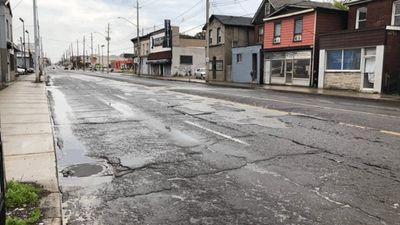
User-submitted photo of Barton Street in Hamilton, which placed second on Ontario’s 2025 top ten list. Concern about road conditions continues to be top of mind for Ontarians, with eight in 10 CAA members worried about the state of the province’s roads, according to new survey data released as CAA South Central Ontario (CAA SCO) launches the 2026 CAA Worst Roads campaign. The survey also found that nearly 70 per cent of CAA members don’t believe enough is being done to maintain Ontario’s roads, up five per cent from last year, reinforcing what many road users experience daily. Cracks in pavement remain the most common issue (88 per cent) identified by respondents, followed closely by potholes (87 per cent), uneven or bumpy road surfaces (81 per cent) and congestion (80 per cent). “Ontarians are telling us loud and clear that road conditions are not keeping pace with expectations,” says Teresa Di Felice, Assistant Vice President, Government and Community Relations for CAA South Central Ontario. “The Worst Roads campaign gives Ontarians a direct way to raise their concerns and helps decision-makers understand what roads need attention according to their constituents.” Despite widespread frustration, the survey suggests most concerns are not reaching decision-makers. It found that nearly 80 per cent of Ontarians commonly complain about road conditions to a spouse, co-worker or mechanic rather than to the governments responsible for road maintenance. CAA calls on Ontarians to nominate roads in urgent need of repair “We know this campaign works,” says Di Felice. “When Ontarians speak up and nominate roads they want to see repaired, we consistently see action.” Many nominated roads are critical trade and supply‑chain corridors, linking the CAA Worst Roads campaign to community growth and economic strength. “Growing population pressures in Ontario, particularly in the GTA, are driving the need for improved infrastructure to mitigate congestion issues, and the rapid wear and tear of our roads,” adds Di Felice. Poor road conditions contribute to vehicle damage, congestion, and safety risks for all road users, including pedestrians and cyclists. With the cost of living already high, the added expense of repairs caused by potholes and deteriorating roads is placing further strain on household budgets. The survey found that 80 per cent of Ontarians are paying out of pocket for those repairs, while ten per cent are forgoing repairs altogether. For more than two decades, the CAA Worst Roads campaign has influenced infrastructure decisions across the province. Roads that appear on the annual Worst Roads list often see repairs prioritized or moved up, as governments respond to public feedback. In the last five campaigns, over 10 roads have received attention due to their appearance on the CAA Worst Roads list. Most recently, County Road 49 in Prince Edward County received a large provincial investment supporting the repair of over 18 kilometres of the road. County Road 49 has been a popular road on the CAA Worst Roads Campaign’s top 10 list for some time. Ontarians can nominate any road for issues, including potholes, congestion, faded road markings, poor signage, traffic light timing, and pedestrian or cycling infrastructure. CAA SCO is encouraging all road users to participate. Nominations for the 2026 CAA Worst Roads campaign are open now and can be submitted online at www.caaworstroads.com until April 17. Once nominations close, CAA will compile and release Ontario’s Top 10 Worst Roads later this year, as well as regional top five lists. CAA conducted an online survey with 2,718 CAA SCO Members between January 6 to 14, 2026. Based on the sample size and the confidence level (95 per cent), the margin of error for this study was +/- 2 per cent.




Delaware emerges as a test bed for the future of AI in health care
Delaware is positioning itself as a “living lab” where academia, health systems and government collaborate to shape the future of artificial-intelligence-enabled health care. The latest issue of the Delaware Journal of Public Health, guest edited by University of Delaware computer scientists Weisong Shi and Yixiang Deng, brings together 16 articles from researchers, clinicians, policymakers and industry leaders examining how AI and big data are reshaping health care. The issue, debuting this month, balances Delaware-specific topics with broader perspectives, highlighting three levels of impact: what Delaware can expect in the coming years, what other states can learn from Delaware’s approach and how UD research is advancing AI for health through collaborations. “At UD, we don’t work in isolation. We’re working closely with health care systems so that innovation happens together from the beginning,” says Shi, Alumni Distinguished Professor and Chair of UD’s Department of Computer and Information Sciences. Highlights from the issue include: The nation’s first nursing fellowship in robotics – ChristianaCare, Delaware’s largest health system, created an eight-month fellowship to train bedside nurses to conduct applied robotics research. Nurses who completed the program reported higher job satisfaction, improved well-being and greater professional confidence, suggesting programs like this may help retain the bedside workforce and reduce nationwide staffing shortages. Wheelchairs that navigate hospitals on their own – UD researchers developed a prototype autonomous wheelchair that combines onboard sensors and computing with software that interprets spoken directions from users, a step toward moving beyond systems that only work in controlled environments. To operate effectively in health care settings, the researchers say, wheelchairs must be able to navigate crowded hallways, interact with doors and elevators and recover safely when sensors or navigation systems fail. Smarter insulin dosing for type 1 diabetes – Researchers are developing computer models to predict blood sugar (glucose) trends and guide insulin delivery, but must address issues such as noisy data, reliable real-time prediction and the computational limits of wearable devices. A review by UD researchers and colleagues emphasizes the importance of interdisciplinary collaboration, standardized datasets, advances in computational infrastructure and clinical validation to turn these models into practical tools that improve patient care. To interview Shi about AI in health care and the new DJPH issue, click his profile or email MediaRelations@udel.edu. ABOUT WEISONG SHI Weisong Shi is an Alumni Distinguished Professor and Chair of the Department of Computer and Information Sciences at the University of Delaware. He leads the Connected and Autonomous Research Laboratory. He is an internationally renowned expert in edge computing, autonomous driving and connected health. His pioneering paper, “Edge Computing: Vision and Challenges,” has been cited over 10,000 times.


MEDIA RELEASE: Manitobans paying more for vehicle repairs as CAA Worst Roads campaign launches
Submitted photo of Saskatchewan Avenue, Winnipeg’s Worst Road in 2025. Manitobans are paying more out of pocket to fix their vehicles as concerns about road conditions continue to grow, according to new survey data released as CAA Manitoba launches its annual CAA Worst Roads Campaign. The survey found 92 per cent of Manitobans are concerned about the state of roads in the province and are spending an average of $944 to repair vehicle damage caused by poor road conditions. This is $122 more than last year, when the average repair cost was $882. As Winnipeg grows and congestion worsens, fixing key trade and connector routes isn’t just about road conditions; it’s about protecting the economy, keeping our city moving, and prioritizing affordability. “Most of the roads people flag as priorities are the same routes our supply chain depends on, they’re how goods get in, out, and across the province,” says Ewald Friesen, manager, government and community relations for CAA Manitoba. “With Manitoba’s growing population, especially in Winnipeg, there is a need for improved infrastructure.” At the same time, the rising cost of living has made consumers more mindful of their spending, and people are opting to keep their cars longer rather than buy a new one. Poor roads increase the wear and tear of tires, lead to higher fuel consumption, and increase the risk of other costly repairs. Nearly half of drivers (45 per cent) reported experiencing vehicle damage due to poor road conditions, with potholes cited as the leading cause, accounting for 86 per cent of damage. Most drivers (75 per cent) are paying for repairs out of pocket; 12 per cent filed a claim with Manitoba Public Insurance. Another 14 per cent said they chose not to repair the damage, up six per cent from last year. Despite widespread frustration, the survey suggests most concerns are not reaching decision-makers. It found that 85 per cent of Manitobans commonly complain about road conditions to a spouse, coworker or mechanic rather than to the governments responsible for road maintenance. Manitobans encouraged to nominate roads most in need of repair “The Worst Roads campaign is a proven platform that gives Manitobans a voice and helps governments identify the roads causing the most frustration,” says Friesen. “We know it works because we see governments prioritize budgets and move up road repairs every year after appearing on the list.” Manitobans can nominate any road for issues, including potholes, congestion, faded road markings, poor signage, traffic light timing, and pedestrian or cycling infrastructure. CAA Manitoba is encouraging all road users to participate. Nominations are open at www.caaworstroads.com from March 17 to April 10. Once nominations close, CAA Manitoba will release a list of the top 10 worst roads in the province, along with regional lists. CAA conducted an online survey with 649 CAA Manitoba Members between January 6 to 14, 2026. Based on the sample size and the confidence level (95 per cent), the margin of error for this study was +/-3 per cent.


Georgia Southern University expert available to provide geopolitical analysis on the Iran war
The Middle East has entered an active state of war marked by a cycle of retaliatory strikes across Iran and the Persian Gulf. Three major uncertainties now dominate the global outlook: the long-term survival of the Iranian government, the fate of Iran’s nuclear infrastructure, and the security of critical oil transit routes. Georgia Southern University Professor of Political Science and International Studies Jacek Lubecki, Ph.D., is available to speak about the military operation in Iran and its implications for regional stability and global security. Lubecki is an expert in comparative politics and military security studies, with a focus on the Middle East and Eastern Europe, particularly Poland. His research examines terrorism, counterinsurgency and military strategy. His work has been published in journals including Europe-Asia Studies, East European Politics and Societies, The Polish Review, The New Ukraine and The Armchair General. He has co-authored several books, including Globalization, Nationalism, and Imperialism: A New History of Eastern Europe (2023), which examines domestic and global security challenges, and Defending Eastern Europe: The Defense Policies of New NATO and EU Member States (2021). Lubecki speaks Polish, English, French, Russian, Spanish, Italian, German and Arabic with varying levels of fluency. Lubecki is available for interviews in person at Georgia Southern’s Statesboro Campus or virtually.



With lasers, smoke and a wind tunnel, UF helps federal agency investigate deadly Hurricane Maria
As Floridians brace for hurricanes amid the wild weather of 2025, some University of Florida researchers have their eyes on 2017’s Hurricane Maria, the deadly Category 4 storm that pummeled Puerto Rico. Engineering professor and natural hazards researcher Brian Phillips, Ph.D., is leading UF’s efforts in a Hurricane Maria investigation conducted by the National Institute of Standards and Technology, known as NIST. The goal is increased safety and resilience amid deadly conditions. Maria killed nearly 3,000 people and caused more than $90 billion in damage. Most of the island’s wind sensors and weather stations failed as the storm raged, leaving responders and investigators with few reliable weather measurements. What went wrong? Phillips and UF storm researchers are helping answer that question — and provide safety and structural recommendations — as part of NIST’s Hurricane Maria investigation. The full report will be released in 2026, but NIST recently published preliminary findings; some of the hazard and structural load data was derived from wind tunnel tests at UF's NHERI Experimental Facility in the Powell Family Structure and Materials Laboratory on UF’s East Campus in Gainesville. “Our wind tunnel has a strong reputation in the wind-engineering community for its unique flow control and measurement capabilities We worked with NIST to develop a test campaign to study the wind conditions Puerto Rico’s mountainous terrain and the resulting loads of critical infrastructure,” said Phillips, a civil and coastal engineering professor with UF’s Engineering School of Sustainable Infrastructure & Environment. “UF,” he added, “has one of the premier research wind tunnels in the country and it enables us to pursue impactful research like this.” As part of the NIST investigation, Phillips and his team created 1-to-3100 scale topographic models of regions in Puerto Rico — about 12 kilometers shrunk down to four meters, Phillips said. They set up those models in the wind tunnel and replicated wind flow over the topography. “These initial tests were designed to understand the influence of the complex topography had on the wind,” Phillips said. Flow was measured using velocity probes and particle image velocimetry (PIV). These topographic model tests were followed by 1-to-100 scale tests on models of two hospitals in Puerto Rico. In addition to surface pressure measurements, the team conducted qualitative flow visualization tests using smoke, lasers, and high-speed cameras. “The capabilities of the UF wind tunnel enabled us to investigate the hurricane winds at two different scales,” said NIST’s lead Hurricane Maria investigator, Joseph Main, “so we could measure how the winds were accelerated by Puerto Rico’s mountainous topography and then how those winds translated into loads on critical buildings.” Maria’s flooding blocked roads to hospitals and shelters. The hospitals themselves were heavily damaged by the storm, NIST reported. Reduced access to healthcare was a major factor in the death toll. “It's good to take a step back,” Phillips said about the overall investigation. “Researchers are approaching the disaster from multiple angles, including the better understanding of the hazard, the performance of critical infrastructure, public response and recovery. “This holistic approach is needed to capture the complete picture and maximize what we can learn from the event. UF's primary contribution was understanding the hurricane wind field and the resulting structural loads, which is a critical piece of that puzzle.” In finding infrastructure vulnerabilities, researchers contend the goal is integrating their findings into design standards for Puerto Rico’s unique topography and building codes. The findings also could be valuable to other storm-prone regions with complex topography. NIST launched the investigation in 2018, noting Hurricane Maria “set off a cascade of building and infrastructure failures across Puerto Rico that had lasting impacts on society, including health care, business and education.” “Our goal is to learn from that event to recommend improvements to building codes, standards and practices that will make communities more resilient to hurricanes and other hazards, not just in Puerto Rico but across the United States,” Main said. The complete report is scheduled to be released in 2026, and NIST noted some findings may change before its release. But in July, NIST released some preliminary findings. They include: Peak wind speeds over flat terrain reached 140 mph. They accelerated to over 200 mph in some areas due to the steep hills and mountains. The mountains also intensified the rainfall, which reached 30 inches in some areas. Only three out of 22 weather stations were fully functional during the hurricane. 95.3% of schools on the island lost power for an average of over 100 days. “One important preliminary finding from the study is that emergency preparations work,” NIST reported. “Businesses, schools and hospitals that took specific measures to prepare before Hurricane Maria were able to resume operations more quickly” said Maria Dillard, NIST’s associate lead Hurricane Maria investigator. Preparations included pre-established emergency plans, designated risk mitigation funds and backup power sources.



Oil Shock: How the War in Iran Could Send Global Fuel Prices Soaring
The ongoing war involving Iran has rapidly become one of the most consequential energy stories in the world. Oil markets have reacted sharply as military escalation threatens critical energy infrastructure and shipping routes in the Persian Gulf. Brent crude prices have surged past $100 per barrel as traders react to supply disruptions and the growing risk that the conflict could persist or expand across the region. At the heart of the concern is the Strait of Hormuz, a narrow but vital shipping corridor through which roughly one-fifth of the world’s oil and liquefied natural gas flows. Any disruption to this route has immediate ripple effects across global energy markets, transportation costs, supply chains, and ultimately consumer fuel prices. Analysts warn that if disruptions continue, the world could face sustained higher oil prices, tighter energy supply, and inflationary pressure across multiple sectors including transportation, manufacturing, and food production. In some scenarios, oil prices could climb significantly higher if shipping through the region remains restricted or if energy infrastructure becomes a sustained target in the conflict. For journalists covering the evolving situation, the energy implications of this conflict are complex and rapidly changing. From geopolitical strategy and energy security to economic ripple effects and consumer fuel prices, reporters need credible expert voices who can explain what’s happening and what comes next. ExpertFile connects journalists with leading experts across energy economics, geopolitics, global supply chains, and international security who can provide timely analysis on questions such as: Why the Strait of Hormuz is so critical to global oil markets How war in the Middle East impacts gasoline and diesel prices worldwide Whether oil prices could spike to $120 or higher The economic ripple effects of energy shocks on inflation and global markets How governments and energy companies respond to supply disruptions What the conflict could mean for long-term energy security and global trade Journalists covering the global energy story can connect with the many experts available through ExpertFile to provide context, analysis, and insight as this rapidly evolving crisis unfolds. Our experts can help! Connect with more experts here: www.expertfile.com

VCU College of Engineering receives $600,000 for AI-driven cybersecurity research
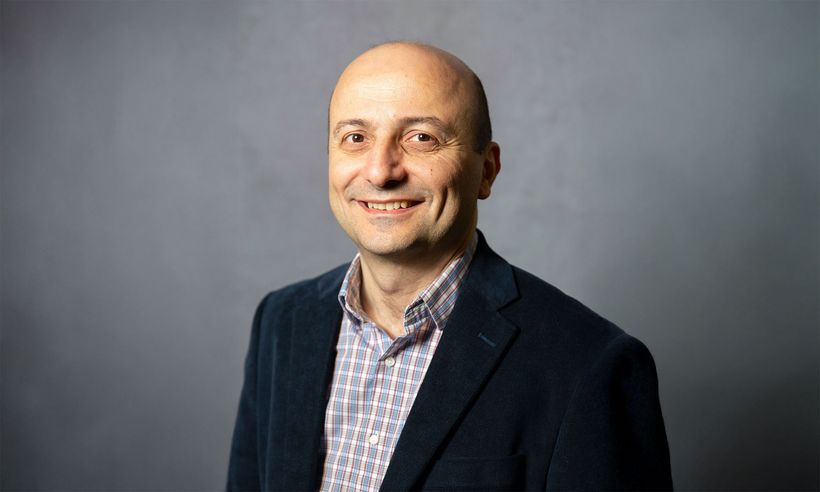
To advance AI-enabled cybersecurity research, the National Science Foundation (NSF) presented Kemal Akkaya, Ph.D., professor and chair of the Department of Computer Science, with a $600,000 grant through the organization’s Cybersecurity Innovation for Cyberinfrastructure program. Akkaya’s three-year project will explore how large language models (LLMs) can automate packet labeling for intrusion detection systems. “From transportation and healthcare to finance, improving the accuracy of machine learning algorithms used to defend the networks that underpin these sectors’ cyberinfrastructure is critical for protecting them from cyberattacks. Strengthening these defenses helps ensure the reliability and security of the essential services people rely on every day,” said Akkaya. Intrusion detection systems monitor network traffic to identify suspicious or malicious activity. These systems rely on machine learning models trained on large volumes of accurately labeled data. Producing those datasets, however, is time intensive and often requires expert cybersecurity knowledge. As digital systems increasingly power transportation, health care, finance and communication, the volume and sophistication of cyber attacks continue to grow. At the same time, artificial intelligence is reshaping how both attackers and defenders operate. Improving how quickly and accurately security systems can be trained is critical to protecting the infrastructure that supports daily life. Akkaya’s project will investigate how generative AI can help address this challenge. The team will fine tune open-source large language models using network data, threat signatures and expert annotations. Model accuracy will be strengthened through retrieval-augmented refinement, ensemble modeling and human-in-the-loop verification. Labeled datasets will be released in stages to support the development and evaluation of cybersecurity models. Using data from AmLight, an international research and education network operated by Florida International University (FIU), the project includes collaboration with researchers from FIU. The award strengthens VCU’s growing leadership in AI-enabled cybersecurity research and provides hands-on research training for graduate students. Resulting datasets from this work will support machine learning education for undergraduate students.


Need a tourism expert? Connect with Florida Atlantic today
Tourism is a cornerstone of both Florida’s and America’s economy. In Florida alone, visitor spending exceeds $100 billion annually and supports roughly one in every ten jobs statewide, making it one of the state’s largest industries. The ripple effect extends far beyond hotels and attractions, fueling restaurants, retail, transportation, construction, real estate, and public tax revenues that help fund infrastructure and services. Nationally, tourism contributes hundreds of billions to U.S. GDP each year and serves as a key indicator of consumer confidence and economic momentum. When travel demand rises or falls, it signals broader shifts in spending behavior, business investment, and workforce stability , which is why tourism remains a critical economic beat for journalists. Peter Ricci is Clinical Associate Professor & Director, Hospitality Management Programs at Florida Atlantic University. He is a hospitality industry veteran with over 20 years of managerial experience in segments including: food service, lodging, incentive travel, and destination marketing and is considered an expert in food service, lodging, incentive travel, and destination marketing. View his profile Peter offers research-based insight into visitor trends, workforce dynamics, and destination strategy. His expertise helps media connect travel patterns to economic impact, providing clear analysis of how tourism shapes Florida’s economy and influences broader industry trends across the United States. Recent media coverage: South Florida Sun Sentinel Peter Ricci, director of the hospitality and tourism management program at Florida Atlantic University’s College of Business, cited the openings of the 801-room Omni Hotel next to the county convention center in Fort Lauderdale, the revamped Pier Sixty-Six Resort nearby and a variety of high-profile events as reasons for promising visitor traffic this year. “South Florida should expect to have a relatively strong 2026 with major events in the area [PGA Tournament, Formula 1, et al] and the Southern White House of Mar-a-Lago enhancing higher average daily rates in The Palm Beaches,” he said by email. “Broward is perfectly positioned to capture demand both to its south and north and I expect that hotels and restaurants will have a good year ahead,” he added. Newsweek "The tariffs, staffing shortage, perception of it being difficult to emigrate to the USA, and any possible anti-USA sentiment all go into the 'ingredients of the soup' as I call it," Peter Ricci, Director of Florida Atlantic University's Hospitality and Tourism program, told Newsweek. South Florida Sun Sentinel This is actually a complicated process behind the scenes, said Peter Ricci, director of the hospitality and tourism management program at Florida Atlantic University in Boca Raton. “Restaurant profit margins are slim, so training and development are often not a part of the process,” he said. “Also, one must recognize that restaurant front-of-house roles are somewhat high-turnover compared to other industries. With higher turnover, there is less likelihood for development of training, knowledge of all the systems (which can lead to dissatisfaction among guests), and a ‘new face’ every time regular guests return to the venue.” The Daytona Beach News-Journal When asked if Florida is experiencing a "restaurant apocalypse," Ricci said, "I don't see that as the case. I don't see it like a disaster, but I have seen more (restaurant) closures the past six months. The reasons include operating costs that are higher than ever in an industry with low (profit) margins to begin with." "Closures are being driven by rising rent, rising costs of labor, rising costs of goods (food, glassware, supplies, cleaning services, deep cleaning surcharges, et al.), and changing consumer habits." Orlando Sentinel Peter Ricci, director of the hospitality and management program at Florida Atlantic University’s College of Business, said he has not heard of hoteliers suddenly losing foreign nationals from their staff. But it’s the confusion that is perplexing many. “I hear frustration and confusion of what changes will occur on a regular basis for owners, operators and managers,” Ricci said. “It’s more of the unknown that’s disconcerting than, ‘I’m now worried about losing workers in my hotel or restaurant.’”



Brian Levine, M.D., Named Chief Academic Officer and Intellectual Property Administrator
ChristianaCare announced Feb. 12 the promotion of Brian Levine, M.D., to chief academic officer, along with his appointment as intellectual property administrator. He will also continue in his role as designated institutional official. As chief academic officer and leader of ChristianaCare’s Department of Academic Affairs, Levine oversees 38 residency and fellowship programs encompassing 315 residents and fellows, along with the education and training of students across the continuum of medical education. He leads the continued growth and strengthening of ChristianaCare’s undergraduate and graduate medical education infrastructure, ensuring that ChristianaCare continues to prepare physicians to care for our community well into the future. In addition, Levine oversees physician assistant education and allied health educational programming, supporting workforce development and long-term community health needs. As the largest academic medical center between Philadelphia and Baltimore, ChristianaCare has been a hub of academic excellence for over a century. ChristianaCare is one of the largest community-based teaching hospital systems in the United States. ChristianaCare also serves as the Delaware Branch Campus for Sidney Kimmel Medical College and the Philadelphia College of Osteopathic Medicine. This unique program allows medical students to complete their third and fourth years of clinical rotations exclusively at ChristianaCare, providing a clear pathway to launch their medical careers in Delaware. Each year, 55 students participate in the Branch Campus program, with many continuing into ChristianaCare’s highly sought-after residency programs and remaining in Delaware to serve local communities. ChristianaCare is a destination of choice for medical students and residents because of its strong patient-centered culture, reputation for excellence, and diversity of clinical experiences that include urban and suburban campuses with a wide range of pathologies. In his newly expanded role as intellectual property administrator, Levine manages and enforces ChristianaCare’s intellectual property policy, ensuring fair and consistent application in alignment with applicable laws and regulations. He also leads the multidisciplinary committee responsible for guiding organizational decisions related to intellectual property valuation, commercialization strategies and revenue distribution. Levine brings deep experience in academic medicine, health system education and scholarly publishing to these responsibilities. An emergency physician, he led the development of widely used clinical reference guides published by the Emergency Medicine Residents’ Association. These pocket-sized tools — covering topics such as antibiotic stewardship, orthopedic injury management, and EKG interpretation — are used by thousands of emergency medicine residents worldwide. Levine has held leadership roles at ChristianaCare for nearly two decades. Since 2018, he has served as associate chief academic officer and designated institutional official. Previously, he was program director of the Emergency Medicine Residency program from 2012 to 2018 and associate program director from 2006 to 2012. Levine is a clinical professor of Emergency Medicine at Sidney Kimmel Medical College at Thomas Jefferson University and previously served as associate medical director for the LifeNet aeromedical transport program. He earned his medical degree from the University of Vermont Larner College of Medicine and completed his emergency medicine residency at ChristianaCare.