Experts Matter. Find Yours.
Connect for media, speaking, professional opportunities & more.

Survey says: Senior leaders are using AI, but they could use more direction
Over the years, study upon study has shown that senior leaders are slower to adapt to new technology – email, the Internet and social media – than younger employees. That’s not necessarily so with AI, according to the University of Delaware’s Saleem Mistry. Mistry, associate professor of management at UD's Alfred Lerner College of Business & Economics, recently conducted a survey of more than 200 university alumni, 75% of which had more than 16 years of professional experience. He found that senior leaders are actively adopting AI to solve their biggest challenges. However, they are doing so largely without structured support or guidance. Here are four findings from Mistry's survey that shows how AI is actually being used at the top. Senior Leaders Are Overwhelmingly Self-Taught Mistry said his most glaring finding is the gap between high AI adoption among senior leaders and the near-total absence of formal corporate support. Although a majority use these tools, they are almost entirely self-taught, which highlights visible opportunity that organizations aren’t really steering the AI conversation for leaders: • High usage. 62% of all senior leaders surveyed use AI tools "regularly" or "occasionally" in their work. • Training gap. Of those users, an overwhelming 80% report their organization provides "Never" or only "Sometimes" (mostly never) adequate training. Mistry said this shows that leaders from VP level down are using tools like ChatGPT and Copilot informally to keep up with heavy workloads, without any real organizational guidance. The stakes are high. In the survey, a vice president of legal was using AI for compliance tasks and a manager of three was using it for performance reviews, both with no formal training. “These are senior leaders handling sensitive work while essentially figuring it out on their own,” Mistry said. There is a clear ladder of AI use Leaders are not using AI randomly. There is a clear progression in how they use it, moving through three levels. • Tier 1 (The Drafters) This is the most common starting point. Leaders use AI to improve writing and communication. They draft emails, shape documents, and refine tone. As one Director of Product put it, it helps him "polish phrasing" and adjust tone and voice. • Tier 2 (The Synthesizers) At this stage, leaders use AI to manage information overload. They summarize meetings, condense documents, and pull together research so they can keep up with large volumes of input. As one leader managing a team of 200 said, "Being a leader requires attention in a variety of areas. AI helps me manage the vast amounts of information I need to consume." • Tier 3 (The Architects) Here, leaders move beyond writing and summarizing. They use AI to automate parts of their work. This includes building agents, creating custom GPTs, or designing tools that track work and performance. One leader managing 300 people said, "It will eliminate half or more of my overhead." Managers and individual contributors use AI for different reasons People managers and individual contributors (IC) are using AI for very different reasons based on their roles. • For people managers, their main challenge is scale. They are overloaded with communication and administration, so they use AI to reduce noise and keep up. They lean heavily on summarization and tone adjustment tools. • For project leads and ICs, their focus is output. They use AI to produce work faster, including drafting content, building decks, writing code, or generating ideas. This difference reflects their jobs. One group is trying to keep up, the other is trying to produce more. It also shows that AI is not a single-use tool. Its value depends on the problem it is being used to solve. This difference reflects their jobs. One group is trying to keep up, the other is trying to produce more. It also shows that AI is not a single-use tool. Its value depends on the problem it is being used to solve. Resistance to AI is mostly intentional Among the 38 percent of leaders who do not use AI, resistance is usually not based on lack of awareness. It falls into three groups: • The Ethical Objectors. Some avoid AI due to concerns about its broader impact. • The Quality Skeptics. Some do not trust the output and feel it is not reliable enough for important work. • The Blocked. Some are not allowed to use AI due to company policy. Mistry concludes that there is a clear overall pattern: Leaders are using AI in practical ways, but mostly without structured support or guidance. “If it feels like you are figuring this out as you go without much help from your organization, that is consistent with what most leaders are experiencing,” Mistry said. To connect directly with Mistry and arrange an interview, visit his profile page and click on the "connect" button. Interested reporters can also email MediaRelations@udel.edu.



From “Covfefe” to commanding the algorithm: How Trump turned memes into political power
A recent analysis by CNN traces how Donald Trump’s relationship with internet culture has evolved from accidental viral moments into a deliberate, highly effective communications strategy. The article highlights how memes, once unpredictable and grassroots, have become a central tool in shaping political narratives, driving engagement and bypassing traditional media channels. Some of the great insight and perspective in the article comes from Dannagal Young, whose insights help explain why this strategy resonates so strongly. Young emphasizes that memes act as powerful emotional and cultural signals, allowing political messages to travel quickly while reinforcing identity and belief among audiences. What began with moments of internet spontaneity has matured into a calculated approach that blends humor, provocation and simplicity to dominate attention in a crowded digital landscape. “The entire ethos and aesthetic of this administration is spectacle and subversion of norms,” Young said. “You don’t do that through deliberation or argument, but through symbols.” Her perspective, as presented in the CNN article, underscores a broader shift: political influence is increasingly shaped by content that feels native to the internet, where relatability, repetition and shareability often matter more than traditional policy-driven messaging. ABOUT DANNAGAL G. YOUNG Dannagal G. Young is a Professor of Communication and Political Science at the University of Delaware where she studies the content, audience and effects of nontraditional political information. She has published over sixty academic articles and book chapters on the content, psychology and effects of political information, satire and misinformation.


Ninety-three percent of patients with a new cancer diagnosis were exposed to at least one type of misinformation about cancer treatments, a UF Health Cancer Center study has found. Most patients encountered the misinformation — defined as unproven or disproven cancer treatments and myths or misconceptions — even when they weren’t looking for it. The findings have major implications for cancer treatment decision-making. Specifically, doctors should assume the patient has seen or heard misinformation. “Clinicians should assume when their patients are coming to them for a treatment discussion that they have been exposed to different types of information about cancer treatment, whether or not they went online and looked it up themselves,” said senior author Carma Bylund, Ph.D., a professor and associate chair of education in the UF Department of Health Outcomes and Biomedical Informatics. “One way or another, people are being exposed to a lot of misinformation.” Working with oncologists, Bylund and study first author Naomi Parker, Ph.D., an assistant scientist in the UF Department of Health Outcomes and Biomedical Informatics, are piloting an “information prescription” to steer patients to sources of evidence-based information like the American Cancer Society. The study paves the way for other similar strategies. Most notably, the study found the most common way patients were exposed to misinformation was second hand. “Your algorithms pick up on your diagnosis, your friends and family pick up on it, and then you’re on Facebook and you become exposed to this media,” Parker said. “You’re not necessarily seeking out if vitamin C may be a cure for cancer, but you start being fed that content.” And no, vitamin C does not cure cancer. Health misinformation can prevent people from getting treatment that has evidence behind it, negatively affect relationships between patients and physicians, and increase the risk of death, research has shown. People with cancer are particularly vulnerable to misinformation because of the anxiety and fear that comes with a serious diagnosis, not to mention the overwhelming amount of new information they have to suddenly absorb. While past research has studied misinformation by going directly to the source — for instance, studying what percentage of content on a platform like TikTok is nonsense — little research has looked at its prevalence or how it affects people. The team first developed a way to identify the percentage of cancer patients exposed to misinformation. UF researchers collaborated with Skyler Johnson, M.D., at Huntsman Cancer Institute, an internationally known researcher in the field. The survey questions were based on five categories of unproven or disproven cancer treatments — vitamins and minerals, herbs and supplements, special diets, mind-body interventions and miscellaneous treatments — and treatment misconceptions. The myths and misconceptions were adapted from National Cancer Institute materials and included statements like “Will eating sugar make my cancer worse?” The team surveyed 110 UF Health patients diagnosed with prostate, breast, colorectal or lung cancer within the past six months, a time when patients typically make initial treatment decisions. Most had heard of a potential cancer treatment beyond the standard of care, and most reported they had heard of at least one myth or misconception. The most common sources were close friends or family and websites, distant friends/associates or relatives, social media and news media. The findings mark a shift in misinformation research, with major implications for the doctor-patient relationship, said Bylund, a member of the Cancer Control and Population Sciences research program at the UF Health Cancer Center. “I still think media and the internet are the source and why misinformation can spread so rapidly, but it might come to a cancer patient interpersonally, from family or friends,” she said. Most patients rarely discussed the potential cancer treatments they had heard about with an oncologist, the study also found. Next, the researchers plan to survey a wider pool of patients, then study the outcomes of interventions designed to decrease misinformation exposure, like the information prescription.


Seniors and AI: What Could Possibly Go Wrong?
Let’s be honest: we’ve weathered every tech wave they’ve thrown our way. Rotary phones. Dial-up internet. The BlackBerry. And somehow, we’ve made it to AI. The robots know more about our shopping habits than our spouses do—and honestly, they’re better listeners. We’ve Survived Every Tech Wave. AI Is Just the Next One. Remember when the internet first emerged, and everyone claimed it would never take off? Shopping online was considered silly ("Who would buy shoes without trying them on?"), And email sounded like something only NASA engineers would use. Fast forward a few decades, and now you can't even renew a driver's licence without the internet. So much for "it'll never last." It all began innocently enough. The first cordless phone was freedom on a frequency—you could step outside, yell "Can you hear me now?" and feel unstoppable. Then came remote controls, launching the golden era of couch-based cardio: jumping up every five minutes to find the one that actually worked. (Still missing: one VCR remote, circa 1987.) Next came AOL. "You've got mail!" was our first digital dopamine hit. Then the BlackBerry arrived—part phone, part pager, part fashion statement. It was heavy, expensive, and glorious. Until, like a hot potato, we all dropped it for the iPhone—sleeker, lighter, and small enough to fit in yoga pants. The iPod Nano followed. Goodbye radios, hello playlists! From there came Google, streaming, apps, and clouds (the digital kind, not the ones that ruin golf). And now… drumroll, please… Artificial Intelligence. The "It'll Never Last" File: Greatest Misses Edition We've encountered the skeptics before: • The Internet: "No one will use it." • Online Shopping: "People won't buy shoes sight unseen." • Email: "Who needs digital letters?" • Voice Assistants: "Talking to a speaker will freak people out." • AI: "It's just hype—like the Segway for brains." Well, the Segway is still technically around, but you're not riding one to the golf course. Meanwhile, AI is everywhere—and yes, seniors are joining the party. AI: The Latest "Fad" That Isn't If you think AI is a passing craze, you probably also dismissed online shopping and email. (Confession: I once thought, "Who would ever enter their credit card number online?") But AI isn't a gadget—it's the next era. As permanent as gravity, and just as invisible until it knocks something over. Use of generative AI among older adults throughout North America is growing. A Leger Research study revealed that 1 in 3 Canadians 55+ have tried an AI tool. We can ignore it, "poo-poo" it, or embrace it. But always remember: Resisting progress will not slow it down one byte. Why This Time Is Different Here's the twist: today's seniors aren't like our parents' generation. We're Boomers with bandwidth. We were the first to type with our thumbs, track our steps before it was trendy, and FaceTime the grandkids instead of mailing Polaroids. We've earned our tech credentials. Now it's time to flex them in the AI era. Seniors Meet AI: A Beautiful Disaster AI promised to make life easier. Instead, for many seniors, it's like adopting a mischievous grandchild who never listens and occasionally orders you twelve pineapples by accident. Let's be honest—we've all had those moments. Voice Assistants: The Frenemies "Alexa, play Staying Alive." "Calling 911. You appear to be in distress." "Siri, remind me to take my pill at 8." "Texting Phil at 8." "Hey Siri, stop listening." Silence. "Hey Siri, play jazz music." Still silence. (Give it a minute… you'll get it.) These so-called "assistants" are like toddlers with Wi-Fi—they only hear half of what you say, and always the half that causes chaos. The Sitcom Nobody Asked For Seniors using AI might just be the world's best sitcom waiting to happen: • Episode 1: ChatGPT Writes My Will (and Leaves Everything to Wi-Fi) • Episode 2: Siri Joins My Book Club and Never Stops Talking • Episode 3: I Asked Alexa to Play Jazz, and She Ordered a Jacuzzi Coming soon to streaming services everywhere—as soon as we find the remote. Texting While Senior: A New Dialect Emerges If you think AI is confusing, try texting with seniors. Somewhere between autocorrect and abbreviations, a new language has evolved—part English, part comedy special: BTW – Bring The Wheelchair ROFL... CGU – Rolling On The Floor Laughing... Can't Get Up LOL – Living On Lipitor BYOT – Bring Your Own Teeth TGIF – Thank Goodness It's Four (Early Bird Special) FWB – Friend With Beta-Blockers TTYL – Talk To You Louder LMDO – Laughing My Dentures Out GOML – Get Off My Lawn Honestly, AI could spend years decoding that list and still ask, "Did you mean BYOB?" "But What About Privacy?" (Spoiler: That Ship Has Sailed) Ah yes, the Privacy Protectors—those well-meaning friends who whisper, "Don't use AI, they're stealing your identity!" Spoiler alert: that ship already sailed. Siri and Alexa have been eavesdropping for years. Google knows where you've been, what you've read, and that you googled "how to delete Google history." Uber keeps a record of every trip you've ever taken—yes, even that midnight McDonald's run—and there's no "forget" button. Most of us have already traded privacy for utility. And honestly? It's not always a bad deal. I'm happy to share a few megabytes of data if Apple can tell me where I parked in the underground garage with seventeen identical "P2" levels. That's not a conspiracy—that's a lifesaver. AI saves time, surfaces better options we didn't know existed, and delivers instant answers. No more hunting for the manual to your smoke detector—just snap a photo, and AI tells you exactly which button to push (and which one to avoid). We're not losing control; we're gaining convenience. And at this stage of life, that's worth more than a few anonymous data points. Ways Seniors Can Actually Use AI (and Enjoy It) AI tools are making daily life easier for older adults in practical, accessible ways. Here's how you can put them to work: The “Start Here” Ladder: Build Your AI Confidence One Rung at a Time Nobody learns to swim by jumping into the deep end. AI is the same. The trick isn’t to master everything at once—it’s to start somewhere low-stakes, build a little confidence, and move up when you’re ready. Here’s a simple progression that works: Level 1: Voice Assistants Risk Level: Minimal Fun Level: Surprisingly High ------------------- Start here if you haven’t already. Ask Alexa or Siri to set a timer, play music, check the weather, or settle a dinner-table argument. No typing required. Level 2: AI Chat Tools Risk Level: Low (with privacy settings activated) Usefulness Level: Eye-Opening ------------------- This is the “brilliant friend who knows everything” rung. Tools like ChatGPT or Google Gemini are free to use and can answer any question—no judgment, no wait times, no office hours. Try drafting a birthday message. Ask it to explain a medical term your doctor used. Get it to suggest a one-week meal plan. You type, it answers. Think of it as Google, but one that actually understands your question. A Note of Caution (Read This): Before you type anything personal into an AI app, go into the app’s privacy settings and switch off chat history/training so you don’t expose personal information. ChatGPT users can navigate to Settings > Data Controls and turn off "Improve the model for everyone". This prevents your conversations from being used to train future models. For extra privacy, disable "Chat History & Training," turn off memory features, or use the temporary chat feature. Level 3: Health and Wellness Wearables Risk Level: Low Payoff : Potentially Life-Saving ------------------- An Apple Watch or Fitbit isn’t simply a fancy step counter. These devices now detect irregular heart rhythms, monitor blood oxygen levels, track sleep quality, and—crucially—detect falls and automatically alert emergency contacts. For anyone living independently, that last feature alone makes it a worthwhile investment. You don’t need to know exactly how it works; just wear it. Level 4: Smart Home Tools Risk Level: Medium Payoff: You’ll Wonder How You Managed ------------------- Smart thermostats, video doorbells, voice-controlled lighting—these are AI tools you set up once and forget. The real win here is independence. Being able to control your home environment with your voice, check who’s at the door from your phone, or have the heat adjust automatically before you wake up: these aren’t luxuries. For many of us, they’re what make staying in our own homes longer a real and practical option. Level 5: AI-Assisted Financial Tools Risk Level: Higher. Stakes Level: Real. So Tread Carefully and Deliberately ------------------- This level is for when you’re comfortable and curious—not before. AI can now help you understand tax documents, summarize financial statements, compare mortgage products, and even flag unusual account activity. These tools are genuinely powerful. But they work best alongside a trusted human advisor, not instead of one. Think of AI as the research assistant who preps the questions. Your financial advisor is still the one who answers them. The key is this: you don’t have to climb the whole ladder today. Pick one level. Try it for a week. Laugh when it goes sideways. Then decide if you want to go higher. Writing & Editing: Draft emails, thank-you notes, or letters with the right tone—ChatGPT handles over 1 million daily health-related queries from seniors, including help preparing questions for doctor visits Travel Planning: Find flights, plan itineraries, and even pack your suitcase virtually Financial Education: Ask about investments or taxes—AI explains without the jargon Health & Fitness: Wearable devices like Apple Watch and Fitbit track exercise, monitor heart rate, detect falls, and can notify help if you're in an accident Smart Home Control: Voice-activated systems can adjust temperature, turn lights on and off, unlock doors, and control security—all with simple voice commands Cooking: "AI, make a meal with tuna, yogurt, and hope" Entertainment: Jokes, playlists, stories, or party ideas Learning: Teach yourself a language, an instrument, or how to fix the Wi-Fi (again) Want to get started? OATS published "AI for Older Adults," a comprehensive guide covering health, finance, and lifestyle applications specifically for seniors. It's available at oats.org. The Serious Bit: AI and Your Portfolio Here’s where I put on my serious hat for a moment. The U.S. stock market is currently top-heavy with AI darlings—Nvidia, Microsoft, Alphabet, and Meta. Great companies. Exciting times. But retirement portfolios are not the place for a single-themed bet. If your retirement savings are overloaded with AI stocks, a correction could make your portfolio look like your Fitbit step count on a February long weekend. Diversify. Always. Love tech. Just don’t go steady with it. For more on this topic, check out Part 1 of my post: The Retirees' Guide to Market Volatility: Building Your Financial Safety Net Embrace AI, Don't Fear It AI is here to stay. Think of it as your digital assistant, not your replacement. Our generation has lived through it all: dial-up, disco, dot-com booms, and Bitcoin. If anyone can handle the rise of the machines, it's us. We figured out VCRs (eventually), navigated online banking, and mastered Zoom backgrounds (some better than others). And no, blurred does not count as a background. So fire up your curiosity. Try ChatGPT to plan your next vacation, use Google Gemini to get thoughtful answers to complex questions, or tell Alexa to crack a joke. (She's still learning… but she's improving.) We’ve adapted before. We’ll adapt again. That’s actually what we do. One baffling software update at a time. And here’s what no algorithm will ever replicate: Us. Our humour. Our resilience. The comedy gold of a pocket-dial to our X at 1am. The triumph of finding our reading glasses—while wearing them. AI is smart. But we’re wiser. And that still counts for a lot. So, here's the deal: AI can predict the stock market, diagnose your rash, and write a sonnet in seventeen seconds. But It still can't find your car keys, remember why it walked into the kitchen, or laugh until it snorts at its own joke. We've survived disco, dial-up, the dot-com crash, and that one Zoom call where someone didn't realize their camera was on in the bathroom. We will absolutely survive this, too. AI isn’t here to replace us; it’s here to keep up with us. And frankly, after decades of dealing with actual humans, a very smart, endlessly patient, never-hangry assistant sounds like an upgrade. So, when the robots eventually do take over, they'll need someone to tell them to slow down, dress properly, and call their mother. That's where we come in. Same as it ever was. One baffling software update at a time. Need more guidance? Here are some helpful resources: • AARP's 2025 Tech Trends Report – Research on how older adults are using technology • Bethesda Health Group's AI Guide for Seniors – Practical everyday applications • Ultimate Senior Resource: Top 10 AI Tools – Detailed reviews of the best AI tools for older adults Don't Retire...ReWire! Sue Want more of this? Subscribe for weekly doses of retirement reality—no golf-cart clichés, no sunset stock photos, just straight talk about staying Hip, Fit & Financially Free.

Expert Q and A: Understanding "Punch," The Baby Monkey That Captured The World's Heart
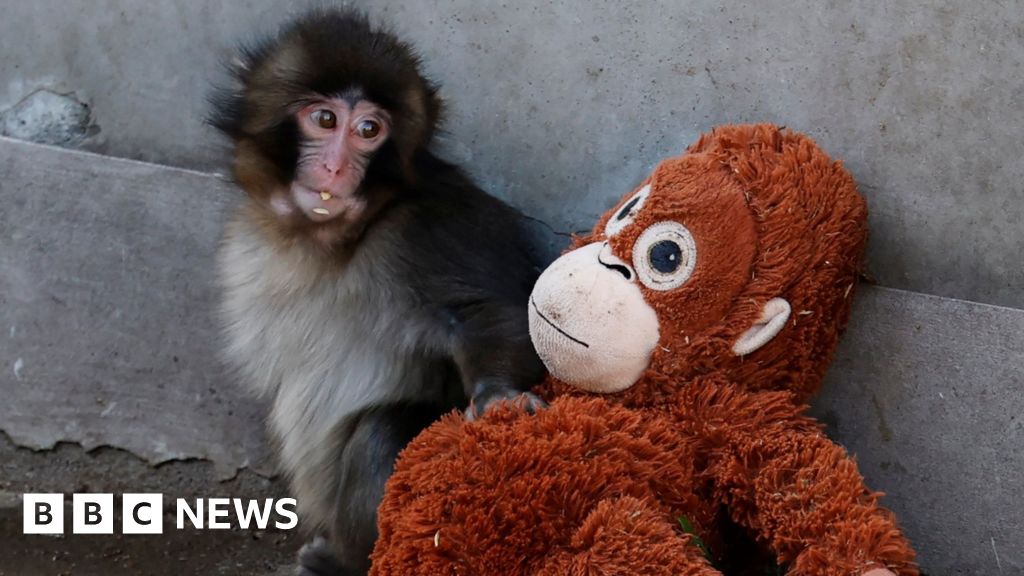
A tiny Japanese macaque named Punch has unexpectedly become one of the internet’s most talked-about animals. Born at a zoo in Japan and rejected by his mother shortly after birth, the young monkey was hand-raised by staff and given a stuffed toy for comfort—an image that quickly ricocheted across social media worldwide. Videos showing Punch tentatively approaching other macaques, sometimes being pushed away or corrected as he tried to socialize, struck an emotional chord. What began as a local zoo update rapidly turned into international headlines, with audiences from North America to Europe weighing in on what they saw as loneliness, resilience and the universal need for belonging. But experts say the story is more nuanced than a viral clip suggests. The interactions that many viewers interpreted as bullying are, in fact, typical components of macaque social development, part of how young primates learn boundaries, hierarchy and group norms. While Punch’s early maternal separation makes his integration more delicate, gradual acceptance into the troop is a positive sign. As internet users continue to share and comment, the moment has sparked broader conversations about animal emotion, anthropomorphism and the realities of wildlife behavior in managed care settings. Florida Tech's Catherine Talbot offered insight into the complexities of animal behavior. Catherine F. Talbot is an assistant professor in the School of Psychology at Florida Tech and co-director of the Animal Cognitive Research Center at Brevard Zoo. Her overarching research goal has been to study the ultimate (evolutionary) and proximate (behavioral, biological, and developmental) mechanisms underlying sociality. Q: Is it normal for mother macaques to abandon their babies, or is this an unusual occurrence? What circumstances can cause this to happen? It’s not necessarily normal, but also not that uncommon in primates, unfortunately. It’s more common in first time mothers that are inexperienced and sometimes lower ranking mothers. A number of factors can increase the likelihood of abandonment including stress on the mother and unfavorable conditions such as limited resources. Q: How does abandonment affect development in young macaques? Early maternal contact is critical for normal behavioral and emotional development. Infants rely on their mothers for nutrition, warmth, protection and learning how to navigate social dynamics. When infants do not have their mothers during critical developmental periods like infancy, in the short term, they tend to have elevated stress responses and difficulty with emotional regulation. In the long-term, it depends on whether the infant is able to form other types of attachment. In the worst-case scenario, they may have increased aggression, abnormal and/or self-injurious behavior, digestive issues and may lack social skills. But primates are resilient, and with social support and gradual integration into a troop, Punch can form new attachments, learn socially appropriate behavior and ultimately live a fairly normal monkey life. Q: Is it obvious to the rest of the troop when a young macaque has no mother? How does this affect integration? Japanese macaques have really complex social worlds, so they are really in tune with the relationships they have with one another and recognize the relationships between other individuals. That can certainly make it more difficult for Punch to be accepted back into the troop – he needs to find some friends and possibly even a surrogate parent. With social support, he should be able to recover from the absence of a mother. It’s really great to see that the care staff stepped in to support Punch as he begins to recovery from the stress of this experience. It’s even more important that Punch is around other monkeys of the same species so that he can continue to learn from them and respond appropriately to social communication cues. I’m thrilled to see that Punch is now making friends. Q: Punch is obviously attached to his stuffed orangutan. We can understand how this happens from our own human experience, but can you explain, on a biological level, how he bonded with this stuffed animal? Primates, including humans, are neurobiologically wired to form strong social bonds with a caregiver very early in life. In many primate species, infants are born highly dependent on their mother. Punch’s attachment to the stuffed orangutan reflects this need for attachment. That physical touch – warmth, softness, graspable limbs, a stable physical presence – can partially activate those same calming biological pathways, including the release of oxytocin which regulates stress and promotes feelings of safety. Without activation in those pathways, Punch would likely experience stronger feelings of separation or loneliness and ultimately social withdrawal. These biological pathways are crucial to proper social and emotional development of any primate species. Any way we can help mitigate those effects for Punch is crucial for successful integration back into his troop. Q: How does sociality among Japanese macaques compare to that of similar species? Japanese macaques live in large multi-male, multi-female social groups that can range from roughly 50 to 150 individuals. Like many macaques species, they form stable, female-bonded societies. Females remain in their natal group (or the group they were born into) for life, inherit their mother’s rank, and form strong kin- based alliances whereas males emigrate to a new group at adolescence. Their societies are organized around matrilines or extended female family lines in which rank is very important. They have strong dominance hierarchies and generally high levels of aggression, but levels of aggression and tolerance can vary a good amount from group to group. Entire matrilines can outrank others, which dictates access to food, grooming partners, and coalitions. Within a single troop, you often see multiple matrilines with long-standing dominance competitions. I sometimes compare it to a Romeo and Juliet-style Montague and Capulet dynamic, where beneath the surface of daily grooming and foraging is a complex political landscape structured by kinship and status. Q: What behaviors can Punch expect from the rest of the monkeys as he continues to integrate with the troop? What behaviors can the troop expect to see from him? As Punch continues to integrate into his troop, I would expect to see some social testing by other members of the group to see how Punch responds- they may use mild aggression like open mouth threats or direct stares (which arethreatening is macaques), brief chases, and displacement from resources like food/resting spots. These will help clarify Punch’s rank and help form and maintain a stable hierarchy. Therefore, I hope to see Punch make at least a few strong social bonds (friends), to help defend him against more intense aggression. As long as he makes a few friends, he should begin to receive more affiliative behavior. Integration is usually gradual as these bonds form and strengthen and these skills develop. I would expect to see more play and grooming with conspecifics and less reliance on his stuffed orangutan as real social bonds start to form. Grooming is especially important for forming and maintaining social bonds and there are already videos showing Punch receiving some grooming from older monkeys, which bodes well for him. He also needs to respond in socially appropriate ways, like grooming others and showing submission to higher ranking individuals. Essentially, he needs to understand and follow the rules of Japanese macaque society. Q: What message do you have as people continue to root for Punch? It's uplifting to see how much support Punch has gained across the world. And while Punch is clearly adorable and so vulnerable that you just want to love him and give him (or other monkeys like him) a home, it’s important to remember that more than anything else, he needs to live with other monkeys so that he can live a life that is true to his species and nature. Unfortunately, many people still have monkeys as pets. The illegal wildlife trade is a multi-billion-dollar industry, ranking as the fourth largest illegal trade after drugs, arms, and human trafficking. Within the United States, it is estimated that there are more than 15,000 nonhuman primates living in unsuitable conditions. Primates are intelligent, sentient beings that need complex communities and relationships to thrive. There currently is no federal legislation that protects primates from private ownership, but the Captive Primate Safety Act (H.R.3199/ S.1594) has been proposed to prohibit the private possession of nonhuman primates and the sale or transportation of nonhuman primates for the wild pet trade. If you're interested in connecting with Catherine and learning more about animal behavior, let us help. Contact Adam Lowenstein, Assistant Vice President for External Affairs at Florida Institute of Technology, at adam@fit.edu to arrange an interview today.

The AI Journal: UF and other research universities will fuel AI. Here’s why
In the global AI race between small and major competitors, established companies versus new players, and ubiquitous versus niche uses, the next giant leap isn’t about faster chips or improved algorithms. Where AI agents have already vacuumed up so much of the information on the internet, the next great uncertainty is where they’ll find the next trove of big data. The answer is not in Silicon Valley. It’s all across the nation at our major research universities, which are key to maintaining global competitiveness against China. To teach an AI system to “think” requires it to draw on massive amounts of data to build models. At a recent conference, Ilya Sutskever, the former chief scientist at OpenAI — the creator of ChatGPT — called data the “fossil fuel of AI.” Just as we will use up fossil fuels because they are not renewable, he said we are running out of new data to mine to keep fueling the gains in AI. However, so much of this thinking assumes AI was created by private Silicon Valley start-ups and the like. AI’s history is actually deeply rooted in U.S. universities dating back to the 1940s, when early research laid the groundwork for the algorithms and tools used today. While the computing power to use those tools was created only recently, the foundation was laid after World War II, not in the private sector but at our universities. Contrary to a “fossil fuel problem,” I believe AI has its own renewable fuel source: the data and expertise generated from our comprehensive public academic institutions. In fact, at the major AI conferences driving the field, most papers come from academic institutions. Our AI systems learn about our world only from the data we offer them. Current AI models like ChatGPT are scraping information from some academic journal articles in open-access repositories, but there are enormous troves of untapped academic data that could be used to make all these models more meaningful. A way past data scarcity is to develop new AI methods that leverage all of our knowledge in all of its forms. Our research institutions have the varied expertise in all aspects of our society to do this. Here’s just one example: We are creating the next generation of “digital twin” technology. Digital twins are virtual recreations of places or systems in our world. Using AI, we can develop digital twins that gather all of our data and knowledge about a system — whether a city, a community or even a person — in one place and allow users to ask “what if” questions. The University of Florida, for example, is building a digital twin for the city of Jacksonville, which contains the profile of each building, elevation data throughout the city and even septic tank locations. The twin also embeds detailed state-of-the-art waterflow models. In that virtual world, we can test all sorts of ideas for improving Jacksonville’s hurricane evacuation planning and water quality before implementing them in the actual city. As we continue to layer more data into the twin — real-time traffic information, scans of road conditions and more — our ability to deploy city resources will be more informed and driven by real-time actionable data and modeling. Using an AI system backed by this digital twin, city leaders could ask, “How would a new road in downtown Jacksonville impact evacuation times? How would the added road modify water runoff?” and so on. The possibilities for this emerging area of AI are endless. We could create digital twins of humans to layer human biology knowledge with personalized medical histories and imaging scans to understand how individuals may respond to particular treatments. Universities are also acquiring increasingly powerful supercomputers that are supercharging their innovations, such as the University of Florida’s HiPerGator, recently acquired from NVIDIA, which is being used for problems across all disciplines. Oregon State University and the University of Missouri, for example, are using their own access to supercomputers to advance marine science discoveries and improve elder care. In short, to see the next big leap in AI, don’t immediately look to Silicon Valley. Start scanning the horizon for those research universities that have the computing horsepower and the unique ability to continually renew the data and knowledge that will supercharge the next big thing in AI. Read more...


One year ago, after a campaign that toppled Bashar al-Assad's repressive dictatorship, Ahmed al-Sharaa assumed the Syrian presidency. Since then, the former rebel commander has worked to establish his credentials as a statesman, winning the support of regional powers like Türkiye, Saudi Arabia and Qatar—as well as recognition from the White House. Yet al-Sharaa and his transitional government have not been immune from criticism, particularly over their handling of domestic affairs. Samer Abboud, PhD, director of the Center for Arab and Islamic Studies at Villanova University, is an expert on modern Syria and the wider Middle East. A year into al-Sharaa's presidency, he believes the provisional government has made incredible strides in some areas, like international diplomacy, while struggling to find its footing in others. "There's no doubt that Syria's external image is becoming more positive. We see this kind of charm offensive, with President al-Sharaa taking to the world stage," says Dr. Abboud. "Also, most of the regional actors are very fond of al-Sharaa and were very happy for the Assad regime to have fallen. So, there's this external presentation of a transition government that is legitimate and has support, and I think that's largely true. "The problem in Syria right now, of course, is what's happening internally. To begin, across the country, you have completely collapsed infrastructure—limited electricity, restricted access to running water and unreliable internet." Much has been made of economic sanctions' role in contributing to these internal issues, with Western governments having historically limited the amount of aid and investment that could enter Syria. However, while Dr. Abboud sees these measures' elimination as crucial to the nation's progress, he also contends that ending restrictions alone is not enough to ensure the country's long-term stability and prosperity. Of particular concern, according to the professor, is the al-Sharaa administration's persistent claim "that 'free markets' could and would be a cure-all." As he explains, "The problem is that there's literally no evidence to demonstrate that private enterprise is interested in social betterment in reconstruction cases. You can't rebuild a state and a society on the profit logic. When you look at Lebanon, after all the wars Lebanon endured, what did free markets—without a strong public sector—do for that country? Roughly 80 percent of Lebanese people live in poverty." Beyond the troubles surrounding economic growth and infrastructural development, there also exist a series of fractures along ethnic and ideological lines. Wide swaths of Syria are currently controlled by militias with agendas at odds with that of the provisional government, and despite making inroads with one significant bloc of dissent (the Kurdish-led Syrian Democratic Forces), tensions are exceedingly high. Furthermore, a number of groups remain suspicious of the president and his intentions due to his past affiliation with Hayat Tahrir al-Sham, a Sunni Islamist group that traces its roots to al-Qaeda. Navigating this delicate situation with poise and precision is something that al-Sharaa needs to master, contends Dr. Abboud. And, over the course of the past several months, it seems Syria's new leader has started to refine the skill. "To illustrate, last year, at least 25 people were killed in a bombing at the Mar Elias Church in Damascus, and President al-Sharaa did not go to the site. In addressing the incident, he also didn't use the language of martyrdom, which is what you would typically do for any person—Christian or Muslim—who died in this context," says Dr. Abboud. "In June, however, they arrested the culprits, and he went and met the patriarch and went inside the church, and they publicized it. "The first time, he was too worried about these internal influences—of being perceived by his base as having moderated his views. Right now, he very much finds himself caught in a balancing act, working to temper the forces that are compelling him to possibly do something that could worsen an unstable situation. But I do think that the two contrasts [represented in the Mar Elias Church episode] suggest that the president is learning and gradually figuring out how to do politics a bit differently." In this vein, Dr. Abboud feels the next phase in al-Sharaa's evolution should center on reckoning with the history of the country's late civil war and encouraging a dialogue between those who supported the Assad regime and those who sought to overthrow it. In the professor's estimation, this step is essential to achieving a lasting peace in Syria. "Currently, there are some memory projects and knowledge projects that are happening, but those are not led or facilitated by the state. And that's troublesome, given what we've seen in other conflict contexts," he says. "In Lebanon, for instance, the state has amnesia. The civil war is not in the textbooks, officials don't talk about it, and it's not commemorated nationally. But then, in many ways, the narrative of how it happened—who are the victims, who are the perpetrators—can totally shape people's lives." Still, while much economic, social and humanitarian work remains to be done, Syria today finds itself in a position unlike any it's occupied in decades' time: one marked by possibility. "In general, I envision an extended period of grace for the government and an extended period of hope," concludes Dr. Abboud. "Syria did not have a future under the Assad regime. Or it had a future, but one characterized by generations of isolation. Today, people, both inside and outside Syria, have an entirely different outlook."


Kamran Kardel, Ph.D., associate professor of manufacturing engineering in the Allen E. Paulson College of Engineering and Computing, is leading a multidisciplinary research team to help regional logistics companies increase efficiency. Funded through the college’s Remotely Operated Warehouse Services (ROWS) Laboratory, with seed money from Crider Foods Inc., the team is composed of Kardel, Ryan Florin, Ph.D, assistant professor of computer science and students. Kardel and his team are using the software to build simulations, known as “digital twins,” that replicate warehouse operations like picking, packing and shipping. The ROWS Laboratory will serve as a development site, allowing the simulations to be thoroughly tested and validated before being presented to third parties. The ultimate goal is to provide industry partners with simulation capabilities using AnyLogic Software and Internet of Things (IoT) integration. The IoT refers to a network of physical devices located within and around the warehouse, such as mobile robots, sensors and cameras, that collect and share real-time data over the internet. That ensures optimal accuracy and responsiveness. The ultimate goal is to provide industry partners with simulation capabilities using AnyLogic Software and Internet of Things (IoT) integration. This industry collaboration also provides important professional development for the students working on the project. “I have a few students, both undergraduate and graduate, who are going to be involved in this project from beginning to end,” said Kardel. “Several of them have mentioned to me that this is their first time with direct access to the industry and potential employers.” Continuing the theme of collaboration, the project could result in shared postdoctoral positions with Ireland’s South East Technological University in its Lean Industry 4.0 Lab. While still in its early stages, Kardel hopes this partnership will give this research an even larger scope. “The Lean Industry 4.0 Lab has a lot of experience in IoT,” Kardel explained. “By joining Ph.D. programs, hopefully we can work together and improve logistics here in our region and in Ireland.” Ultimately, Kardel says this research can give companies a leg up in an increasingly digitized world. “As far as automation, for companies in southeast Georgia and South Carolina, I would say it’s becoming more common,” he said. “It’s still a mixed bag, though some warehouses are fully automated, some are not. The work we are doing can help companies remain competitive.” Looking to know more about Georgia Southern University or connect with Kamran Kardel? Simply contact Georgia Southern's Director of Communications Jennifer Wise at jwise@georgiasouthern.edu to arrange an interview today.


Australia’s Under-16 Social Media Ban Isn’t a Finish Line - It’s a Reality Check
Australia’s move to restrict social media accounts for kids under 16 has become a global lightning rod - and it’s forcing the right conversation: what do we do when a technology is too powerful for a developing brain? But here’s what I think journalists should focus on next: “A ban is a speed bump, not a seatbelt. It might slow kids down - but it won’t teach them how to drive their attention.” That’s the part that gets lost in the headlines. Because even if you can reduce access, you still have to deal with the why behind the behavior: boredom, social pressure, loneliness, stress, sleep debt. “The headlines make it sound like the problem is solved. But the real question is: what happens in the living room on day three?” Offline.now’s early data shows something important: most people genuinely want to change their screen habits, but many feel overwhelmed and don’t know where to start. That’s why we begin with a quick self-assessment and map people into four Types - Overwhelmed, Ready, Stuck, Unconcerned - so the advice matches the person. “We keep treating social media like a self-control test. It’s not. It’s a confidence problem - people don’t know where to start, so they start with shame.” What I’d tell policymakers considering similar bans 1. Pair friction with skills. “If the only plan is ‘block the app,’ you’re betting against the internet. Workarounds aren’t a bug - they’re the default.” 2. Don’t outsource responsibility entirely to families. “If policy turns parents into full-time bouncers and kids into part-time hackers, we’ve built a system that’s guaranteed to fail.” 3. Ask what gets protected, not just what gets restricted. “The real target isn’t ‘screen time.’ It’s the moments screens replace.” What parents need to know that headlines aren't telling them This is a process, not a switch. The best “first phone / first social” plans are adjustable. Modeling beats monitoring. The rules collapse if adults don’t follow them too. Have a handoff plan. If a child’s mood, sleep, school performance, or withdrawal is deteriorating, it may be bigger than habits. Why this is a late December / January story “The holidays are the perfect storm: more free time, more family friction, more devices, less sleep. January is when the bill comes due.” Journalist angles Bans vs. behavior change: what policy can’t solve The workarounds economy: age gates, bypass culture, privacy tension The four Types: why one-size fits all screen-time advice fails families New Year resets for families: simple, shame-free agreements that stick Available for interviews Eli Singer - CEO of Offline.now; author of Offline.now: A Practical Guide to Healthy Digital Balance. I speak about practical behavior change, non-judgmental family agreements, and confidence-based starting points - and I can direct people to licensed professionals via the Offline.now Directory when needs go beyond coaching.



Creepy, crawly, and totally cool: Florida’s “spooktacular” spiders aren’t so scary after all
As Halloween approaches, it’s the perfect time to spotlight some of Florida’s coolest and spookiest spiders —that aren’t so scary after all. Spiders are often misunderstood, but many are shy, harmless and downright fascinating. Lisa Anne Taylor, assistant research scientist at the University of Florida Institute of Food and Agricultural Sciences (UF/IFAS), said that spiders “get a bad rap and aren’t so frightening.” Here are 10 standout species that bring both cool, spooky vibes and ecological value to the Sunshine State. This Halloween, instead of fearing spiders, celebrate their mysterious style and ecological superpowers. They’re nature’s pest control, silk engineers and stealthy hunters. As Taylor puts it, “No one should be afraid of them.” For even more spider fun, check out Taylor’s kid-friendly coloring book, “Coloring with Spiders: Our favorites from Florida.” Black Widow The black widow is perhaps the most iconic Halloween spider, the OG creepy crawly, instantly recognizable by the red hourglass on its jet-black abdomen. Despite its reputation, black widows are shy and rarely bite unless provoked — like when someone slips on a shoe that the spider was hiding in. “Nobody should be scared of them; they should just not hold them. They should keep a respectful distance,” said Taylor, who works for the Department of Entomology and Nematology. Florida is home to both native southern and northern black widows. Brown Recluse The brown recluse is feared but is actually very uncommon in Florida. Most “sightings” in Florida are misidentifications, and bites are rare. “They get blamed for a lot of things, but it’s rarely actually a brown recluse bite,” Taylor explained. Red Widow The red widow is a stunning native Florida spider with a black body with red and white splotches and bright red legs. Found only in Florida’s scrub habitats, this spider is rarely seen and even more rarely bites. Its vivid, spotted red-and-black patterns and elusive nature make it a mysterious and beautiful part of Florida’s spider diversity. Brown Widow The brown widow, an invasive species in Florida, is a close relative of the other widows but their venom seems to be less potent for humans. It has a dark-orange hourglass marking on its brown abdomen and is often identified by its spiky egg sacs. While it may look spooky, the brown widow is not aggressive and prefers to stay hidden in quiet corners. Like the black widow, it’s best to check shoes and outdoor gear before use for these stowaways. Golden Silk Orb Weaver The golden silk orb weaver, also known as the banana spider, adds dramatic flair to Florida’s landscapes with its large, golden webs that shimmer in the sunlight. Females can grow impressively large and display vibrant colors of gold, white and black. Their webs often span several feet, serving as natural Halloween decorations in gardens and forests. Ogre-faced Spider The ogre-faced spider is one of the more bizarre-looking and captivating spiders. With enormous eyes and a unique net-casting hunting style, it can see in near-total darkness and uses a silk net to snatch prey mid-air. During the day, it hangs motionless, resembling a twig. At night, it becomes a stealthy predator, making it a true Halloween terror to its prey. Regal Jumping Spider The regal jumping spider is a fan favorite, known for its iridescent green or pink jaws and bold, colorful patterns. These spiders are curious and often seem to watch humans with interest. “They’ve become internet famous,” said Taylor, noting that influencers even keep them as pets. They tend to be larger than other spiders, making them easy to hold, and they do well in a small terrarium. Green Lynx Spider The green lynx spider blends perfectly into Florida’s foliage with its bright green body and long, spiny legs. It’s a master of camouflage and a skilled hunter, often found on flowers and shrubs. Though it looks fierce, it poses no threat to humans and helps control garden pests. Taylor noted they’re common in gardens and flowerbeds and are great for natural pest control. Twin-flagged Jumping Spider The twin-flagged jumping spider is a tiny acrobat with oversized eyes and a curious nature. These spiders are known for their impressive leaps and use silk safety lines like bungee cords. Their bold movements and alien-like appearance make them a fun and fascinating species to watch. Though they may look intimidating, they’re completely safe for people – but horrifying to ants. “If you’re an ant, these are ferocious predators,” Taylor said. “They’re completely harmless to people, but they’re ant specialists.” Spitting Spider The spitting spider brings a comic-book twist to the mix. It spits sticky glue to trap prey, à la Spiderman, using a rapid-fire technique that’s highly effective against insects. These spiders are small and secretive, but their hunting method is one of the most unique in the arachnid world. For even more spider fun, check out Taylor’s kid-friendly coloring book, “Coloring with Spiders: Our favorites from Florida.”