
Experts Matter. Find Yours.
Connect for media, speaking, professional opportunities & more.

Exploring the Link Between Student Engagement and Deeper Learning
When students are engaged in their learning, they are more likely to dive deeper into the material. This is because they are actively participating in the process, asking questions, and seeking out answers. This is a concept that was recently explored by Amanda Jansen, a University of Delaware professor in the College of Education and Human Development. With attention to teachers’ first-person narratives and reflections, her study offers educators a model for understanding student engagement so that they can better facilitate deeper learning in their classrooms. Funded by the National Science Foundation (NSF), it was found that the majority of the teachers in Jansen’s study understood the primary function of student engagement to be deeper learning about a mathematics concept rather than classroom performance. These teachers talked more about engagement in terms of cognitive, affective and social processes, and they often spoke about more than one dimension. Jansen also emphasizes that how educators ask students to be engaged often reveals helpful information about educators’ instructional practices and their own assumptions. It can also send a message to students about their role in the learning process. These more engaged students are more likely to analyze and evaluate information, rather than just passively accepting it. This higher level of thinking leads to a deeper understanding of the material and allows students to apply their knowledge in real-world situations. To speak to Jansen about the study and its impact, click her "View Profile" button.


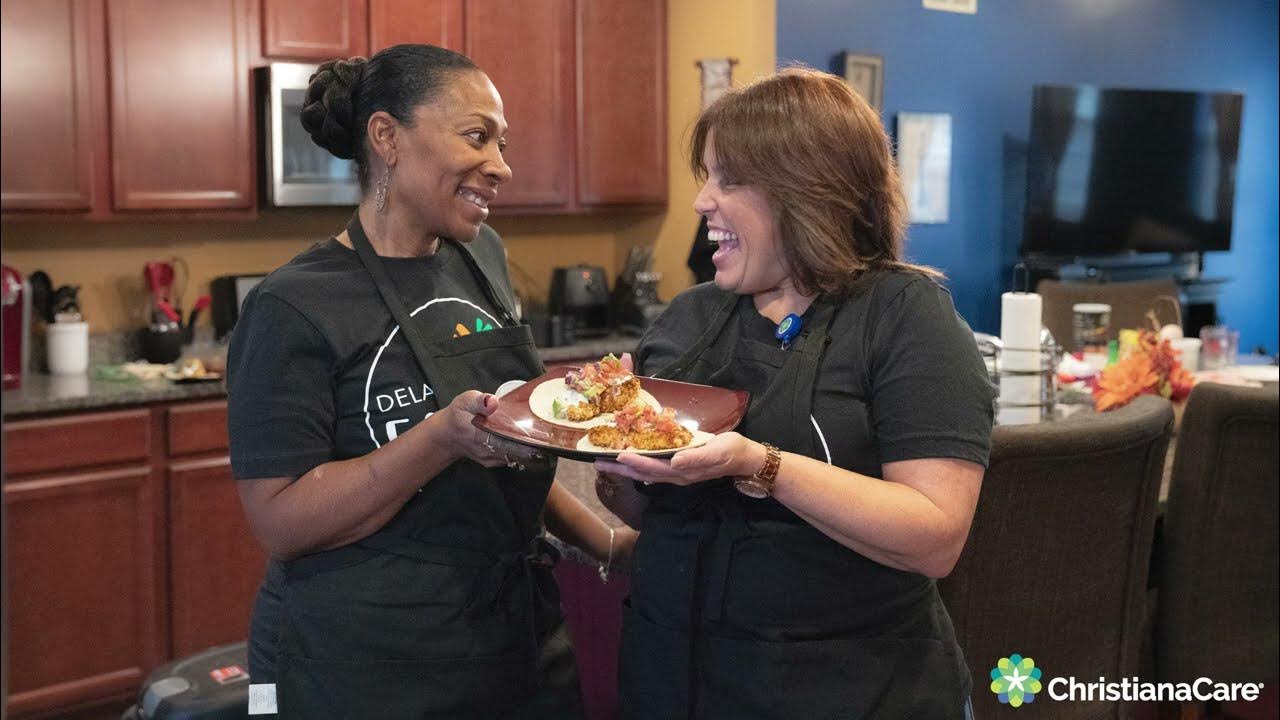
Food is Medicine: ‘It’s Not Just About Food–It’s About Friendship
Kim Solomon’s kitchen showed all the signs of a good lunch in the making – chopped veggies on the counter, a few dirty dishes in the sink and two people laughing as they cooked. “Don’t worry, we’re going to clean all this up,” ChristianaCare community health worker Michelle Torres, BBA-HM, said as she sliced tilapia for the heart-healthy fish tacos she was making with Solomon. “I’m not worried about the mess, especially when it tastes this yummy,” Solomon said as she watched Torres place the raw fish – coated with panko crumbs, spices and an egg wash – into the air fryer. A few years earlier, Solomon’s lunch would have been something quick from the pantry after cooking for her sons or helping a neighbor. But after dealing with the life-threatening effects of high blood pressure, she is learning – with Torres’ help – how to prioritize her own nutrition and health. Solomon is one of more than 225 patients enrolled in the Delaware Food Farmacy, a ChristianaCare partnership with Lutheran Community Services that provides weekly deliveries of locally sourced produce, meat and other foods, along with one-on-one support from a community health worker. Delaware Food Farmacy participants report lower A1C blood glucose levels, healthier blood pressure readings and reduced body mass index. Dishing out good health “It took me getting very sick to finally make my own health a priority in my life, and that’s a humbling experience,” said Solomon, who lives in Bear, Delaware. “This is not just about food – it is about friendship, and Michelle’s support really gives me motivation. It keeps me excited to hear her voice and know that she’s there for me.” Kim Solomon (left) finds prioritizing her own nutrition and health can be delicious, as she prepares panko-crusted tilapia for fish tacos with community health worker Michelle Torres. ChristianaCare is expanding efforts to reduce food insecurity among patients in an ongoing commitment to ending disparities and in recognition that access to nutritious food is critical to overall health. In addition to the Delaware Food Farmacy, over 100 Maryland Primary Care Program (MDPCP) patients are participating in Healthy Food, Healthy Hearts, a 12-week program that delivers fresh groceries to under-resourced Medicare patients with complex health needs. “Our focus is empowering people to maintain their health by giving them the resources they need for whole-person care, including healthy food and education related to meal preparation and living with a chronic health condition,” said Erin Booker, LPC, chief biopsychosocial officer for ChristianaCare. “Through our work with our community partners in the Food Farmacy program in Delaware and our Healthy Food, Healthy Hearts program in Maryland, we are acknowledging the intersection of nutrition and health care and the importance of creating a more equitable food system.” Food is Medicine Both programs operate on the Food Is Medicine model, which recognizes that nutritious foods are essential for good health – and they must be accessible in the community, particularly in under-resourced areas. Studies have shown that evidence-based, tailored food interventions can lead to improved health outcomes and better use of health care services among participants while also reducing food insecurity, said Michelle Axe, MS, CHES, program manager of Food and Social Care Initiatives for ChristianaCare. The Centers for Disease Control and Prevention estimated in 2023 that food insecurity results in nearly $77 billion in excess health care spending. Veggie power: Much of the food in the Food Farmacy is sourced locally through a cooperative agreement with Delaware’s Department of Agriculture and the Farm-to-Community Program, which connects local farms with organizations distributing food to the community. Among Food Farmacy graduates, 26% report a decrease in food insecurity and 18% said they experience less anxiety. “With these programs, we’re offering participants an opportunity to make a change in their life, not only for them as individuals, but for the entire family,” Axe said. “This is about more than food.” From farm to table Getting health care professionals to prescribe healthier food options – and then making it possible for the patients to obtain them – helps close the gap between medical nutrition and financial health, said Rob Gurnee, executive director of Lutheran Community Services. “Providing food – that’s our core competency,” Gurnee said. “What really makes this program different and incredibly valuable is that ChristianaCare can funnel the right people into the program and then maintain these relationships to help patients make changes that are sustainable. Together, we utilize the strengths of our organizations with the goal of improving health outcomes.” Each week, Delaware Food Farmacy participants select from a menu of fresh produce, lean meats and fish, whole grains, low-fat dairy, snacks and other healthy items, all of which fall under the Dietary Approach to Stop Hypertension (DASH) diet. Fresh-picked: With Delaware Food Farmacy, patients are getting local produce that is typically picked within 24 to 48 hours. Much of the food distributed through Delaware Food Farmacy is sourced locally through a cooperative agreement with Delaware’s Department of Agriculture and the Farm-to-Community Program, which connects local farms with organizations distributing food to the community. Solomon’s refrigerator is filled with local produce, eggs and lean meats from the Food Farmacy program, but it’s Torres who keeps Solomon on the path to good health with her encouraging personality and a tasty supply of easy-to-make recipes. A recipe for healthy eating: Air Fryer Fish Tacos. Kim Solomon’s review? “Yummy.” “She’s there to support you and help you understand it’s going to be OK,” Solomon said. “She goes above and beyond every time. We need more Michelles in our world.”



New research shines a light on how expert mapmakers at Ordnance Survey see the world differently
OS Remote Sensing Services survey team updating OS MasterMap using the latest aerial imagery (Image credit: OS) Aston University psychologists worked with Ordnance Survey to assess how surveyors use 3D aerial images when making maps Humans naturally assume light comes from above, but experienced surveyors can interpret visual cues to assess topography regardless of the light direction It is the first time it has been shown that experience can radically alter natural human assumptions about lighting and could improve surveyor training. Researchers at Aston University have found differences between experienced Ordnance Survey (OS) mapmakers and novices in the way that they interpret aerial images for mapmaking, which could lead to improved training processes for new recruits. OS is well known for its travel and walking maps, but is also responsible for maintaining Great Britain’s national geographic database. Every time a building is demolished or developed, or a new road and path built, the map must be updated. Aerial photographs are taken of the area that has changed, either from a plane or using drones, and expert mapmakers, known as remote sensing surveyors, will examine the images to identify change and accurately redraw the map of the area. Image pairs are presented stereoscopically, one to each eye, allowing the remote sensing surveyors to see in 3D and correctly assess the topography, such as ditches, hills and hedges. Led by Professor Andrew Schofield, a team from Aston University’s College of Health and Life Sciences, together with Dr Isabel Sargent, previously at OS, carried out a study to understand how remote sensing surveyors interpret the shadows and highlights in images. The researchers asked six trained remote sensing surveyors and six novices to assess 10,000 stereoscopic aerial images of hedges and ditches, which had been heavily masked with image distortions. The stereoscopic images the aerial surveyors use for mapmaking are usually taken on sunny days. The human brain is naturally wired to interpret light as coming from above. However, the light does not come from above in the OS aerial images, it depends on the position of the sun. In the UK, north of the equator, light comes slightly from the south, thus appearing to come from below in images viewed by the surveyors. The researchers wanted to see how manipulating the direction of the light would affect the surveyors. Professor Schofield and the team swapped the image pairs between the eyes in half of the trials, so that hedges might look like ditches, and ditches look like hedges. The images were also flipped vertically on half the trials, changing the direction of the light source. Expert surveyors were found to rely on the stereoscopic cues – the difference in images seen by the two eyes – when performing the task. Novices were more likely to rely on lighting cues – highlights and shadows – to judge the shape and relief of an object, and assumed, as is natural, that the lighting came from above. With the manipulated images, this meant that novices frequently made mistakes. Experts were more accurate, even when the images had been turned upside down, and some had learnt to assume that the light source came from the south, or below. This is the first time anyone has shown that the natural assumption that light comes from above, which is common amongst many animal species, can be changed through long term experience. The researchers say that it could be used to develop new visual training techniques for remote sensing surveyors. For example, intensive exposure to repeated, difficult images can improve performance via a process called perceptual learning. Professor Schofield said: “This is a very exciting result. Others have shown that the light-from-above assumption can be altered by a few degrees, but no one has ever found complete reversals following long term experience. Dr Sargent said: “This result will help Ordnance Survey to understand the expertise of their staff and improve surveyor training and procedures.” Remote sensing surveyor Andy Ormerod, who worked on the study, said: “This research proves that experienced remote sensing surveyors can see the world differently. Whereas non-surveyors are used to seeing the world from one perspective, our brains have learned to view the world as seen from aerial imagery.” Journal of Vision DOI:10.1167/jov.24.4.11


Professor Roslyn Bill discusses her research into brain cell membranes with Dr Matt Derry Serious brain injuries and dementia are affected by the flow of water through a protein called aquaporin-4 in brain cell membranes Aquaporins are responsible for clearing the build-up of waste products in brain cells in a process Professor Bill likens to a ‘dishwasher for your brain’. Professor Roslyn Bill, co-founder of Aston Institute for Membrane Excellence (AIME), joins Dr Matt Derry to discuss her research into brain cell membranes in the latest Aston Originals podcast. Water moves in and out of brain cells through tiny protein channels in the cell membrane called aquaporins. One in particular, aquaporin-4, is the focus of Professor Bill’s research. In 2020, she was lead author on a paper published in prestigious journal Cell on how the channels open and close and how this can be controlled. Uncontrolled water entry into brain cells can occur after head trauma, causing swelling which leads to severe brain injuries of the type suffered by racing driver Michael Schumacher after a skiing accident. Finding drugs to control this water movement could lead to treatments to prevent brain swelling in the first place. This research into brain swelling and the contribution of aquaporins led Professor Bill to research into Alzheimer’s, a common form of dementia, which is also related to the action of aquaporins. Alzheimer’s is caused by a build-up of waste products in brain cells. In a process Professor Bill likened to a ‘dishwasher for your brain’, aquaporins are responsible for clearing this waste as we sleep. Professor Bill was selected for an Advanced Grant by the European Research Council (ERC) in 2023, which is being funded by UK Research and Innovation (UKRI). The funded project will further investigate the process, and whether it might be possible to develop a drug to boost the ‘brain dishwasher’, which could be taken to slow or even prevent cognitive decline due to ageing. Bringing together this biological research with the polymer research of AIME, chemists like Dr Derry will help in the drug development and could also lead to totally different applications. Professor Bill said in the podcast to Dr Derry: “We can take the knowledge that we have of how these proteins work in cells and try and apply them to interesting applications in biotechnology. And this is where the sort of work that you (Dr Derry) do comes in, where you can develop plastic membranes, polymer membranes, and then take learning from the biology and try and make really, really good ways of purifying water, for example.” For more information about AIME, visit the webpage. The website also includes links to the previous AIME podcast and details about open positions.


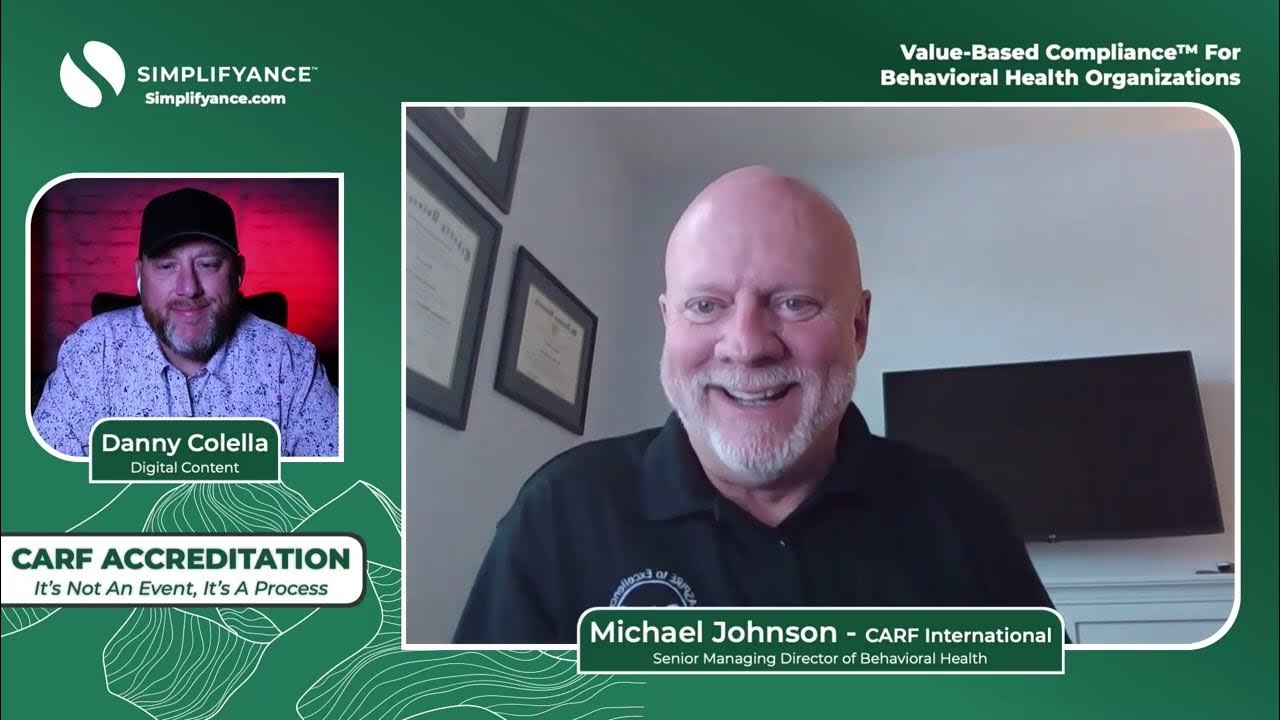
#Expert Podcasts: CARF Accreditation is a process, not an event
Recently, CARF International's Michael Johnson sat down with Simplifyance™ for a great conversation of all things accreditation. The podcast link is provided below. Simplifyance™ had the privilege of speaking with Michael Johnson, Senior Managing Director of Behavioral Health for CARF International. We delved into the world of accreditation, discussing its immense value, the supportive process for organizations during surveys, and uncovering key best practices. CARF is renowned for its commitment to ensuring excellence in healthcare delivery and service outcomes. Michael shared valuable insights into the accreditation process and shed light on how CARF assists organizations in achieving survey success. Michael emphasized the importance of person-centered care, evidence-based practices, and fostering a culture of accountability and learning. These elements are crucial in driving positive outcomes and delivering compassionate, effective care to those in need. And if you're a interested in knowing more about accreditation or the work CARF International does — let us help with your questions. Michael Johnson is Senior Managing Director of Behavioral Health at CARF and is an expert in treatment strategies for mental health and substance use disorder. View his profile below to arrange an interview today.


Rethinking Caregiving Support for the Sandwich Generation
The "sandwich generation" refers to adults who are simultaneously caring for their children as well as older parents or relatives. This places unique strains on caregivers, who must balance their family responsibilities with work and their own self-care. As Guy Weissinger, PhD, MPhil, RN, the Diane Foley Parrett Endowed Assistant Professor at Villanova University's M. Louise Fitzpatrick College of Nursing, notes, many feel like they are being "shortchanged" on both sides—unable to fully support their children or their aging relatives. The result is stress, guilt and difficult decisions about how to allocate limited time and resources. "Hard decisions are also a psychological tax," Dr. Weissinger says. "You have to use the resource of time and brain energy to weigh the options, so it compounds on itself every time they intersect. And that's complicated and hard." These challenges have only increased due to larger societal shifts, according to Melissa O'Connor, PhD, MBA, RN, FGSA, FAAN, the M. Louise Fitzpatrick Endowed Professor in Community and Home Health Nursing in the College of Nursing. "For the first time in the history of the world, older adults will outnumber children in the United States by 2035," said Dr. O'Connor. This rise in numbers of older adults foreshadows a looming caregiving crisis, as more seniors will require care without enough nurses and family caregivers to meet the need. The sandwich generation can also feel overwhelmed due to lack of training in managing complex care needs. As Dr. O'Connor states, there is "no caregiver school"—instead it's "baptism by fire." Learning wound care, managing feeding tubes, giving medications and handling dementia behaviors on the fly can take an emotional toll. Caregiver stress and burnout have also been linked to declines in physical and mental health, and financial strain, as well as increased elder abuse (though unintentional), she says. Dr. O'Connor believes that home health services can serve as a critical resource for supporting overwhelmed sandwich generation caregivers. Home health nurses, aides, therapists and social workers can provide skilled care, educate family members, assess safety and coordinate services. "Home health can make or break someone's success at staying home,” Dr. O'Connor says. "It can also make or break the stress levels of patients and caregivers. If caregivers have support, they can do a really good job." However, misconceptions about home health care persist. Many do not understand what home health services entail or worry about strangers entering their home. Although refusing home health may seem like the safer option to some, the consequences of caregivers trying to provide care without assistance can be dire. Isolated and overwhelmed caregivers who don't have support oftentimes end up seeing their older adult parents experience health declines that necessitate nursing home placement, which takes a financial toll on families as well. From Dr. Weissinger's perspective, the caregiving crisis is a "family and a systems issue." "This is a systematic problem, so we need policy changes at the state, national and organizational levels to address it. We can't solve society-level problems through individual responses," he says. Supporting caregivers and easing this crisis will require policy changes at the highest levels along with a societal shift in how we view and assist caregivers. Though individual families feel the squeeze, truly addressing the caregiving crisis demands broad, systemic solutions. With an aging population, the need for action in the form of policy change is more urgent than ever.


Research finds video games improve mobility for children with autism
University of Delaware professor Anjana Bhat has a long history of finding creative ways to keep autistic children engaged with the added benefit of improving their flexibility and gross motor skills. She’s used dance and play in the past but is now testing video games to see if they’re a viable intervention to promote movement in this population. Bhat and her team in the Move to 2 Learn Innovation Lab at UD's STAR Campus have been using Ring Fit on Nintendo Switch to help children with autism get their daily dose of exercise. “Children love video games, and they’re fun,” said Bhat, professor of physical therapy in UD's College of Health Sciences. “But there’s also a lot of evidence that video games with an exercise component have positive effects on cognition, social interactions and general physical activity levels.” She added that children with autism have a predilection for technology with a love of computers and robots, but exergaming hasn’t been studied in this population. “Technologies that have been tested and studied in children with autism mainly target sedentary functions that look at improvement in executive function and decision-making, but not necessarily exergaming,” Bhat said. “Exergaming has been studied in older populations and healthy children, but not so much in children with autism, so this study is unique.” After testing the intervention on a dozen children with autism over eight weeks, the consensus is that it works. “I’ve never seen anything grab their attention so much. Across the board, this tool is far more engaging than any other tool we’ve used before, including music and movement, yoga, general exercise, and outdoor play, which do not always work for every child,” Bhat said. “With exergaming and the variety of content that exists, most children remain engaged, and that’s what’s so unusual about this intervention compared to past interventions.” Games like tennis, volleyball, badminton, golf, sword fighting and bowling focus on the upper extremities, while soccer focuses on the lower extremities. Bhat receives accurate measures of improvement in a child’s ability through accelerometers in the video game controllers. “This is one place where children with autism shine,” Bhat said. “Their visual learning and sensory enhancements help them excel. This gives them a sense of self-efficacy and self-assurance that — they’re good at this,” she said. “It also gives them a sense of connection to the community because they can make friends and feel empowered. Video games are a great equalizer.” Bhat’s innovative pilot study was funded through a $50,000 award from the donor-created Maggie E. Neumann Health Sciences Research Fund, which targets research and innovation that aims to improve the lives of people with disabilities. Equipped with data from this study, Bhat hopes to expand access to the intervention and test it in the community. It’s already available at D-Fit Plus, an inclusive fitness center in New Castle that aims to help those with special needs explore fitness to build social skills and confidence, grow cognition, and manage stress. “It’s relatively low cost,” Bhat said. “Another advantage of this intervention is that you don’t need a highly skilled person present to work the intervention because the game leads the activity, making it accessible if embedded in the community.” This also provides a social outlet for the child’s parents. “Community settings bring a sense of connection for the child’s parents, who are always looking for community-based activities, and many environments aren’t suitable for children with autism,” Bhat said. “Many environments are too noisy or distracting. Exergaming removes those barriers and allows the child to engage with the game and maybe another partner.” Bhat’s previously published research has shown that 80% of people with autism face motor challenges. Her research is so compelling that she’s made a case to change the definition of autism to include motor impairments so those on the spectrum can get the proper physical therapy or gross motor interventions that could dramatically improve their quality of life.

#Expert Q&A: NJIT’s David Bader on AI, Data Science, Quantum Computing
Artificial intelligence, data science and the emerging field of quantum computing are among the hottest research topics in computing today. David Bader, a distinguished professor at New Jersey Institute of Technology’s Ying Wu College of Computing and the director of the university’s Institute for Data Science, offers his take on each. The Computer History Museum has recognized you for developing a Linux supercomputer using commodity hardware. Was that a life-shaping lesson? It was a venture into the unknown, leveraging the emerging potential of Linux and commodity hardware to build something that was both accessible and powerful. This experience taught me the importance of embracing risk and the value of resilience. There were technical hurdles, skepticism from peers and the daunting task of venturing beyond established norms. Also, the Linux supercomputer project was not just about the technology. It was about building a community around an idea. How do user-friendly AI systems like ChatGPT impact your work? It enriches the palette of methodologies and technologies at our disposal, enabling us to tackle more ambitious projects with greater efficiency and creativity. By integrating these AI systems into our research and educational programs, we're not just enhancing our ability to process and analyze data. We're also empowering students and researchers with the means to innovate and explore new horizons in data science without being hindered by the technical complexities that once acted as barriers. Some information workers fear that AI will make their careers obsolete. But tech progress can’t be stopped, so how should people adapt? By embracing these technologies, learning to work alongside them and leveraging their capabilities to enhance our own skill sets and productivity. Also, it's important to focus on the uniquely human skills that AI cannot replicate, such as creativity, emotional intelligence and critical thinking. By honing these abilities, workers can ensure they remain irreplaceable components of the workforce, capable of tasks that require a human touch — from complex decision-making to empathetic interactions with customers or clients. What should non-programmers learn about AI? It’s important to be aware of how AI decisions are made, the potential biases in AI systems and the ethical considerations of AI use. Additionally, developing data literacy is crucial, as it enables individuals to evaluate AI outputs and understand the importance of data quality and biases. A basic grasp of AI and machine learning concepts — even without programming skills — can demystify AI technologies and reveal their potential applications. Staying informed about AI advancements across various sectors can also inspire innovative ideas and foster interdisciplinary collaborations. There’s a sci-fi plot where computers get so smart that people lose control. The new class of user-friendly AI is making people excited but also nervous. Should we be afraid? While it’s natural to harbor concerns about the rapid progression of AI, allowing fear to dominate the discourse would be a disservice to the potential benefits these technologies can offer. Instead, this moment calls for proactive engagement with AI and an investment in understanding its inner workings, limitations and the ethical dilemmas it presents. By advocating for responsible AI development, emphasizing education and promoting transparency, we can foster an environment where AI serves as a tool for societal advancement. This approach ensures that we remain at the helm of AI's trajectory, steering it toward outcomes that uplift humanity rather than scenarios that fuel dystopian fears. What other emerging technologies excite you in their potential to transform computing? Quantum computing. This technology, with its potential to solve complex problems exponentially faster than classical computers, could revolutionize fields ranging from cryptography to drug discovery, climate modeling and beyond. Quantum computing's promise to tackle challenges currently beyond our reach, due to its fundamentally different approach to processing information, represents a leap forward in our computational capabilities. Its convergence with AI could lead to unprecedented advancements, making this era an incredibly thrilling time to be at the forefront of computing and data science. Looking to know more? We can help. David Bader is available to discuss AI, quantum computing and data science with media. Simply click on his icon to arrange an interview.



The countdown is on for the total solar eclipse on April 8 and Adam Frank, professor of astrophysics, science commentator, and popular author, is available to comment on: Earth's eclipses are the result of a cosmic accident! No other world has such a relatively large moon. Our Moon is the result of a titanic collision with a Mars sized planet more than 4 billion years ago. Earth is likely the only planet that experiences a solar corona/ring of fire during a total eclipse. That's because the size of the moon and the size of the sun appear to be roughly the same from Earth. The moon is slowly drifting away from the Earth so the kind of eclipses we experience are also an accident in time. Were not possible before, won't be possible later. Eclipses must have been terrifying for early humans. Learning to predict them helped establish the possibility for science. Today eclipses can be a way to help people understand and appreciate the sciences. The science surrounding the eclipse is the same science that gives us vaccines and helps us understand climate change (science is science). The "devil comet" may be visible during the eclipse. The comet passes by Earth every 71 years. The comet, which glows green and red, gets its nickname from outbursts that take on the shape of horns. Adam Frank is a frequent on-air commentator for live interviews and segments in national media outlets. He also regularly contributes to written publications, including The Washington Post, The Atlantic, The New York Times, and Scientific American. In 2021 he received the Carl Sagan Medal, which recognizes and honors outstanding communication by an active planetary scientist to the general public. It is awarded to scientists whose efforts have significantly contributed to a public understanding of, and enthusiasm for, planetary science. His most recent book is The Little Book of Aliens (Harper Collins, 2023).



Municipalities around the world have invested significant resources to develop connected smart cities that use the Internet of Things (IoT) to improve sustainability, safety and efficiency. With this increased demand for IoT experience, the VCU College of Engineering formed the OpenCyberCity testbed in 2022. The 1:12 scale model city provides a realistic, small-scale cityscape where students and researchers can experiment with new and existing smart city technology. Sherif Abdelwahed, Ph.D., electrical and computer engineering professor, is director of OpenCyberCity. He recently answered some questions about new developments within the testbed. The OpenCyberCity is a smart city testbed, but are there any real-life cities that one could call a smart city? Several real-life locales are considered smart cities due to their extensive use of technology and data-driven initiatives to optimize infrastructure and services. Dubai is one of the most notable. They have implemented smart transportation systems, buildings and artificial intelligence to transform the city’s operations and make them more efficient. Other reputable smart cities include Singapore and Seoul, which utilize smart energy management, smart transportation and comprehensive data analytics for improved urban planning and services. Seoul, in particular, has an initiative with smart grids and connected street lights, which VCU Engineering’s own OpenCyberCity test bed is working to implement. How does the OpenCyberCity address privacy? With so much technology related to monitoring, how are individual citizens protected from these technologies? Privacy is a major concern for smart cities and it is one of the main research directions for VCU Engineering’s OpenCyberCity. We are developing several techniques to prevent unwanted surveillance of personal information. Sensitive data is protected by solid protocols and access restrictions that only allow authorized users to view the data. Our aim is to find a reasonable middle ground between technological progress and privacy rights, staying within legal and ethical bounds. Some techniques to address privacy concerns include: Data Anonymization: This makes it difficult to trace back information to individual identities. Within the testbed, we will evaluate how to protect individual privacy while maintaining data utility and assess the impact on data quality. Secure Data Storage and Transmission: Encrypt data to protect it from unauthorized access. In the smart city testbed, these access control mechanisms will be implemented within the testbed’s infrastructure. We will also test different data handling processes and access control models to determine their ability to safeguard sensitive data. Privacy Impact Assessments: Regularly evaluate potential privacy risks of new smart city projects in order to mitigate them and ensure the ethical handling of data by those with access. Policy and Regulation Development: Data and insights generated from OpenCyberCity experiments can inform the development of cybersecurity policies and regulations for smart cities. How is the College of Engineering’s OpenCyberCity test bed different from similar programs at other institutions? While other universities have similar smart-city-style programs, each has their own specialty. The VCU College of Engineering’s OpenCyberCity test bed focuses on real-world contexts, creating a physical space where new technologies, infrastructure, energy-efficient transportation and other smart city services can be tested in a controlled environment. Our lab monitors real-time data and develops smart buildings, smart hospitals and smart manufacturing buildings to enhance the city’s technologies. Recent additions to the OpenCyberCity allow for expanded research opportunities like: Advanced Manufacturing: Students can apply advanced manufacturing techniques in a controlled environment. They can also test new materials, processes and automation technologies to improve efficiency and product quality. Energy Efficiency Testing: Environmental engineers and sustainability experts can evaluate energy consumption patterns within the smart manufacturing unit to implement energy-saving measures and assess their impact on sustainability. Production Optimization: Manufacturers can use real-time data from the smart manufacturing unit to optimize production schedules, minimize downtime and reduce waste. Predictive maintenance algorithms also help prevent equipment breakdowns. Education and Training: Hands-on experience with state-of-the-art manufacturing technologies helps train the workforce of the future. Integration with Smart City Services: Data generated by the manufacturing unit can be integrated with smart city services. For example, production data can inform supply chain management and energy consumption data can contribute to overall city energy efficiency initiatives. How has the OpenCyberCity changed in the last year? Is the main focus still data security? What started with research examining, analyzing and evaluating the security of next-generation (NextG) applications, smart city operations and medical devices has expanded. Data security is now only one aspect of OpenCyberCity. Its scope has grown to encompass more expansive facets of cybersecurity like automation and data analytics in the domain of smart manufacturing systems. The implementation of a smart manufacturing system in 2023 is something students really enjoy. Thanks to the vendor we used, undergraduate students had the option to develop functionality for various features of the manufacturing plant. Graduate students were also able to research communications protocols and cybersecurity within the smart manufacturing system. What does the smart manufacturing system entail and what kind of work is occurring within that system? An automated system is there for students to work with. Robot arms, microcontrollers, conveyor belts, ramps, cameras and blocks to represent cargo form an environment that emulates a real manufacturing setting. We’re currently brainstorming an expansion of the smart manufacturing system in collaboration with the Commonwealth Cyber Initiative (CCI). We plan to set up two building models, one for manufacturing and one for distribution, linked by a sky bridge conveyor system that moves items between the locations. Students work to leverage convolutional neural networks that use images to facilitate machine learning. When paired with the advanced cameras, it forms a computer vision system that can accurately place blocks in a variety of lighting conditions, which can be a challenge for other systems. By having to optimize the communication protocols that command the smart manufacturing system’s robotic arms, students also get a sense for real-world constraints . The Raspberry Pi that functions as the controller for the system is limited in power, so finding efficiencies that also enable stability and precision with the arms is key. Is there an aspect of cybersecurity for these automated systems? Yes. Devices, sensors and communication networks integral to the IoT found in smart manufacturing systems and smart cities generate and share vast amounts of data. This makes them vulnerable to cybersecurity threats. Some of the issues we look to address include: Data Privacy: Smart systems collect and process vast amounts of data, including personal and sensitive information. Protecting this data from unauthorized access and breaches is a top priority. Device Vulnerabilities: Many IoT devices used in smart systems have limited computational resources and may not receive regular security updates, making them vulnerable to exploitation. Interconnectedness: The interconnected nature of smart city components increases the attack surface. A breach in one system can potentially compromise the entire network. Malware and Ransomware: Smart systems are susceptible to malware and ransomware attacks, which can disrupt services and extort organizations for financial gain. Insider Threats: Employees with malicious intent or negligence can pose significant risks to cybersecurity. Potential solutions to these problems include data encryption, frequent software updates, network segmentation with strict access controls, real-time intrusion detection (with automated responses to detected threats), strong user authentication methods, security training for users and the development of well-designed incident response plans.

