
Experts Matter. Find Yours.
Connect for media, speaking, professional opportunities & more.
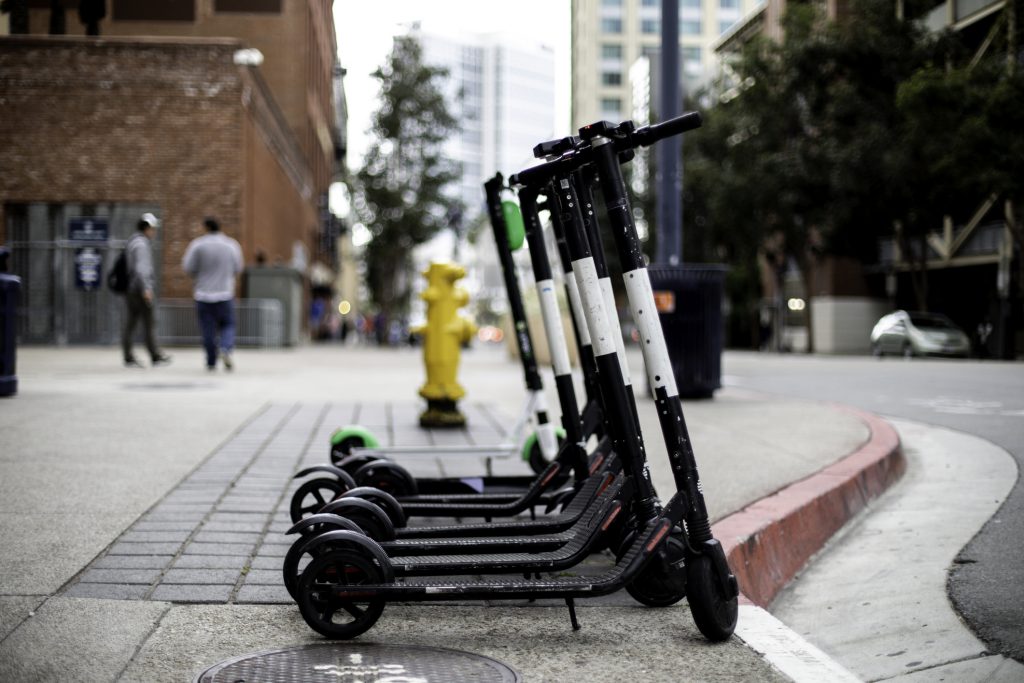
New research examining the economic impact of micromobility on local economies found shared e-scooter systems created an estimated $13.8 million in additional sales across 370 food and beverage companies in four cities over six months in 2019, as compared to four similar cities over the same time period without e-scooter programs. The study compared consumer purchase patterns in four cities that allowed operation of shared e-scooter systems – Atlanta, Austin, San Francisco, and Washington, D.C. – to similar cities that did not at the time – Boston, Houston, Phoenix, and Seattle. The study used extensive econometric methods to uncover purchasing that was caused by e-scooter rides, which would not have occurred otherwise. “The post-COVID economic recovery remains slow, but this research shows we shouldn’t ignore the positive impact of micromobility on small businesses,” said Dan McCarthy, senior author of the study and assistant professor of marketing at Emory University’s Goizueta Business School. “This is especially relevant for the food and beverage sector, a significant source of jobs, which is suffering sales declines larger than most other sectors of the economy.” The study uncovered e-scooter usage generated significant positive economic spillovers for the food and beverage industry purchasing in a similar way that consumers make impulse purchases at grocery stores – its effects are larger for businesses where the consumption happens more quickly, and businesses selling at lower prices. Across the cities studied with e-scooter programs, total sales in the food and beverage category increased by an estimated 0.6 percent on average, or approximately $921 in incremental spending per available e-scooter for the food and beverage companies over the six-month period studied in the analysis. “Since these companies represent approximately 15 percent of the overall food and beverage market in these cities, the actual impact could be much larger,” said McCarthy. “If, for instance, subsequent research confirmed a similar level of uptick across all food and beverage companies in these markets driven by micromobility, the overall full-year economic impact could be close to $200 million.” If you're interested in learning more - there's a full article published by Emory Business attached. And, if you're a journalist looking to cover this exciting and emerging topic - then let us help. Dan McCarthy is an Assistant Professor of Marketing at Emory University's Goizueta School of Business. His research specialty is the application of leading-edge statistical methodology to contemporary empirical marketing problems. Dan is available to speak with media - simply click on his icon now to arrange an intwrview today.


Why online recommendations make it easier to hit “buy”
When it is time to buy something online, perhaps a coffee maker, you might head to Amazon and browse items for sale. One particular model might spark interest. The product page may contain recommendations for other goods: complementary products such as coffee filters; or recommendations for different, competitor coffee maker brands offering unique features and prices. E-commerce websites commonly use product recommendations — called co-purchase and co-view recommendations — to keep users locked into the sales funnel and increase customer retention. But what impact do these types of recommendations actually have on consumers? How do they influence one’s willingness to pay for the original product searched? In fact, the level of influence depends on how close a consumer is to making that purchase, says Jesse Bockstedt, associate professor of information systems & operations management at Emory’s Goizueta Business School. In addition, what type of recommendation the consumer sees plays a role in purchasing as well. To shed empirical light on this, Bockstedt teamed with Mingyue Zhang from the Shanghai International Studies University. “We were curious. We knew that recommendation systems are integral to how consumers discover products online – a good 35 percent of Amazon sales can be attributed to recommendations, for instance,” Bockstedt says. “But we knew a lot less about how recommendations change consumer behavior in relation to a focal product.” Specifically, the researchers were interested in looking at the effect of complementary versus substitutable products, and what impact the price of these types of products had on consumer behavior. They also wanted to know whether these effects were more or less amplified depending on whether consumers were at the exploratory phase in the buying process or ready to go ahead and make the purchase. To unpack the dynamics at play, Bockstedt and Zhang ran two experiments that simulated the online purchasing experience. The researchers had volunteers go through the process of evaluating different products and then report back on how much they were willing to pay for each. “We asked volunteers to look at a product page for a computer mouse, and we randomly assigned different recommendations to that page – some that were for other mice, and others that were for goods and products that would complement the original mouse. Going through the experiment, we also manipulated the price that volunteers saw on different pages, both for the recommended substitute and complementary products,” he says. “Finally, we looked at the effect of timing and the sales funnel. In one case we had volunteers look for a highly specific mouse and recommended a particular product page to them. To simulate the more exploratory phase, we gave them many pages and asked them to click on the one they found most interesting.” In total, Bockstedt and Zhang put 200+ volunteers through the replica virtual purchasing experience and recorded their willingness to pay the advertised price for the focal product on scale of 0 to 100, depending on what they had seen and the point in the sales funnel they had seen the recommendations. If you are looking to learn more about this research and the results, Emory has a full article published for reading and review. If you are a journalist looking to cover this topic or if you are simply interested in learning more, then let us help. Jesse Bockstedt, associate professor of information systems and operations management at Emory’s Goizueta Business School. He is available to speak with media, simply click on his icon now – to book an interview today.


Online ratings systems shouldn’t just be a numbers game
When you’re browsing the internet for something to buy, watch, listen, or rent, chances are that you will scan online recommendations before you make your purchase. It makes sense. With an overabundance of options in front of you, it can be difficult to know exactly which movie or garment or holiday gift is the best fit. Personalized recommendation systems help users navigate the often-confusing labyrinth of online content. They take a lot of the legwork out of decision-making. And they are an increasingly commonplace function of our online behavior. All of which is in your best interest as a consumer, right? Yes and no, says Jesse Bockstedt, associate professor of information systems and operations management at Emory’s Goizueta Business School. Bockstedt has produced a body of research in recent years that reveals a number of issues with recommendation systems that should be on the radar of organizations and users alike. While user ratings, often shown as stars on a five- or ten-point scale, can help you decide whether or not to go ahead and make a selection, online recommendations can also create a bias towards a product or experience that might have little or nothing to do with your actual preferences, Bockstedt says. Simply put, you’re more likely to watch, listen to, or buy something because it’s been recommended. And, when it comes to recommending the thing you’ve just watched, listened to, or bought yourself, your own rating might also be heavily influenced by the way it was recommended to you in the first place. “Our research has shown that when a consumer is presented with a product recommendation that has a predicted preference rating—for example, we think you’ll like this movie or it has four and a half out of five stars—this information creates a bias in their preferences,” Bockstedt says. “The user will report liking the item more after they consume it if the system’s initial recommendation was high, and they say they like it less post-consumption, if the system’s recommendation was low. This holds even if the system recommendations are completely made up and random. So the information presented to the user in the recommendation creates a bias in how they perceive the item even after they’ve actually consumed or used it.” This in turn creates a feedback loop which can reflect authentic preference, but this preference is very likely to be contaminated by bias. And that’s a problem, Bockstedt says. “Once you have error baked into your recommendation system via this biased feedback loop, it’s going to reproduce and reproduce so that as an organization you’re pushing your customers towards certain types of products or content and not others—albeit unintentionally,” Bockstedt explains. “And for users or consumers, it’s also problematic in the sense that you’re taking the recommendations at face value, trusting them to be accurate while in fact they may not be. So there’s a trust issue right there.” Online recommendation systems can also potentially open the door to less than scrupulous behaviors, Bockstedt adds. Because ratings can anchor user preferences and choices to one product over another, who’s to say organizations might not actually leverage the effect to promote more expensive options to their users? In other words, systems have the potential to be manipulated such that customers pay more—and pay more for something that they may not in fact have chosen in the first place. Addressing recommendation system-induced bias is imperative, Bockstedt says, because these systems are essentially here to stay. So how do you go about attenuating the effect? His latest paper sheds new and critical light on this. Together with Gediminas Adomavicius and Shawn P. Curley of the University of Minnesota and Indiana University’s Jingjing Zhang, Bockstedt ran a series of lab experiments to determine whether user bias could be eliminated or mitigated by showing users different types of recommendations or rating systems. Specifically they wanted to see if different formats or interface displays could diminish the bias effect on users. And what they found is highly significant. Emory has published a full article on this topic – and its available for reading here: If you are a journalist looking to cover this topic or if you are simply interested in learning more, then let us help. Jesse Bockstedt, associate professor of information systems and operations management at Emory’s Goizueta Business School. He is available to speak with media, simply click on his icon now – to book an interview today.

Survival analysis: Forecasting lifespans of patients and products
How long will you live? Should you spring for that AppleCare+ warranty for your iPhone? When will your buddy pay you back for that lunch? For centuries, soothsayers have striven to understand the lifespan of things – be they patient longevity, product lifecycles, or even time to loan default. Nowadays, scientists have turned away from reading tea leaves and toward survival analysis – a complex data science method for predicting not only whether an event will happen (the death of a patient, the failure of a product or machine, default on a payment, and so on) but when this event is likely to occur. But it’s problematic. Until now, the tools of survival analysis have only been applicable in certain settings. This is due to the inherent heterogeneity of what is being analyzed: differences in patient lifestyles, demographics, product usage patterns, and so on. New research by Goizueta Business School’s Donald Lee, associate professor of information systems and operations management and of biostatistics and bioinformatics, has yielded a new tool that greatly extends survival analysis to broader use cases. “Historically, scientists have used classic survival analysis tools to predict the lifespan of different things in different fields, from products to patients,” Lee said. “Since the 1950s, the Kaplan-Meier estimator has been the benchmark for analyzing lifetime data, particularly in clinical trials. The next breakthrough came in the 1970s when the Cox proportional hazards model was introduced, which allows researchers to incorporate variables that can affect the predictability of things like patient mortality.” The problem with the existing survival analysis tools, Lee said, is that they make certain assumptions that can skew the predictions if the assumptions are not met. “There are very few existing tools that can incorporate variables without imposing assumptions on how they affect survival, let alone when there are a lot of variables that can also change over time. For example, two iPhones will have different lifespans depending on the temperature at which they are stored, amongst many other factors. But it’s unlikely that storing your phone at 30 degrees will halve its lifespan compared to storing it at 60 degrees. This sort of linear relationship is commonly assumed by existing tools.” Lee’s team developed a new survival methodology based on something called gradient boosting: a machine learning technique that combines decision trees to yield predictions. The method, Lee said, is totally assumption-free (or nonparametric in technical parlance) and can deal with a large number of variables that can change continuously over time, making it significantly more general than existing methods. Nothing like it has been seen until now, he noted. “Calculating the survival rate of anything is super complex because of the variables. Say you want to create an app for a smart watch that monitors the wearer’s vitals and use this information to create a real-time warning indicator for stroke. Doing this accurately is difficult for two reasons,” Lee explained. “First, a large number of variables may be relevant to stroke risk, and the variables can interact in ways that break the assumptions central to existing survival analysis methods. And second, variables like blood pressure vary over time, and it is the recent measurements that are most informative. This introduces an additional time dimension that further complicates things.” The software implementation of Lee’s method, BoXHED, overcomes both issues and allows scientists to develop real-time predictive models for conditions like stroke. The trained model can then be ported to a watch app to tell its wearer if and when they’re likely to have a stroke, a process known as inferencing in machine learning lingo. The implications, Lee said, are huge. “BoXHED now opens the door for modern applications of survival analysis. In previous research, I have looked at the design of early warning mortality indicators for patients with advanced cancer and also for patients in the ICU. These use other methods to make predictions at fixed points in time, but now they can be transformed into real-time warning indicators using BoXHED.” He cited the case of end-stage cancer patients who are often better served by hospice care than by aggressive therapy. “Accurate predictions of survival are absolutely critical for care planning. In previous analyses, we have seen that using existing predictive models to inform end-of-life care planning can potentially avert $1.9 million in medical costs and 1,600 days of unnecessary inpatient care per 1,000 patient visits in the United States. BoXHED is likely to lead to even better results.” Lee’s research paper is forthcoming in the Annals of Statistics. He has also created an open-source software implementation of BoXHED, which can radically improve the accuracy of survival analysis across a breadth of applications. The paper describing BoXHED was published in the International Conference on Machine Learning, and the latest version of the BoXHED software can be found online. If you are a journalist or looking to speak with Donald Lee – simply click on his icon now to arrange an interview or appointment today.


COVID-9 is changing. With variants from places like Britain, Brazil, and South Africa surfacing and presenting in patients around the globe, the virus that scientists are trying to trap seems to be finding ways to wiggle free. The topic has many in the scientific and health care communities concerned, and recently, the New York Times featured leading experts to help explain what is happening and what American’s need to know to stay safe and healthy. Now, Dr. Denison and Sandra Weller, a virologist at the University of Connecticut School of Medicine, are investigating whether this insight could treat people with Covid. Certain antiviral drugs such as remdesivir fight infections by serving as RNA decoys that gum up the viral replication process. But these medications don’t work as well as some had hoped for coronaviruses. One theory is that the nsp14-ExoN enzyme chucks out the errors caused by these drugs, thereby rescuing the virus. Dr. Denison and Dr. Weller, among others, are looking for drugs that would block the activity of nsp14-ExoN, allowing remdesivir and other antivirals to work more effectively. Dr. Weller likens this approach to the cocktail therapies for H.I.V., which combine molecules that act on different aspects of the virus’s replication. “We need combination therapy for coronaviruses,” she said. Dr. Weller notes that nsp14-ExoN is shared across coronaviruses, so a drug that successfully suppresses it could act against more than just SARS-CoV-2. She and Dr. Denison are still at the early stages of drug discovery, testing different molecules in cells. February 05 – New York Times The ongoing COVID-19 pandemic is seeing many different twists in turns as scientists are learning more about the virus and how we can contain its spread – and if you are a journalist looking to speak with an expert on the topic, then let us help. Sandra K. Weller is Professor and Chair in the Department of Molecular Biology and Biophysics at the University of Connecticut and is a world-renowned expert in the spread of viruses. Dr. Weller is available to speak with media – simply click on her icon now to arrange an interview today.


Japan Society Presents When Practice Becomes Form: Carpentry Tools from Japan
Installation view at the Takenaka Carpentry Tools Museum, Kobe, Japan. On the occasion of the 50th anniversary of Japan Society’s landmark building, the institution is pleased to present the new exhibition, When Practice Becomes Form: Carpentry Tools from Japan. The exhibition celebrates the spirit of architecture and craftsmanship through Japanese woodworking tools as well as architectural patterns and various models. The site-specific installation, conceived by the esteemed contemporary architect Sou Fujimoto in collaboration with Brooklyn-based Popular Architecture, reinterprets major themes from the exhibition and is in dialogue with the gallery’s spaces, highlighting an enduring connection between traditional Japanese wooden construction and modern architecture. Featuring hand tools and joinery techniques that have been used for hundreds of years to build Japan’s wooden architectural masterpieces (from temples and shrines to teahouses and bridges), the exhibition unpacks how the intangible qualities of craftsmanship, such as consummate experience, knowledge, and the honed skills of master carpenters, have been transformed into significant forms of architecture. A diverse array of tools—planes, chisels, saws—have played an important role in the development of architecture in Japan’s history, and this philosophy extends to Japan’s cultural heritage today. Integral to the process of making by master carpenters (tōryo) is their extensive knowledge of the local environment and of wood as a material. Using natural resources and learning from their predecessors’ practices, they construct buildings using a refined methodology. Their philosophy of sustainability—for example, joinery can be restored or repaired as needed by future craftspeople—has been handed down over generations. Themes emerging from the exhibition have been interpreted by the internationally acclaimed architect Sou Fujimoto. His firm, Sou Fujimoto Architects, is based in Paris and Tokyo, and has been selected as site design producer for the 2025 World Exposition in Osaka, Japan. Fujimoto has designed the Serpentine Gallery pavilion in London (2013) among other internationally recognized projects. For this exhibition, Fujimoto has worked with Popular Architecture to explore the coexistence of nature and architecture. “Japan Society has been a home of cultural exchange, and a meeting place of past and present. In this exhibition, traditional Japanese craftsmanship is revealed in a new light by the design of contemporary architect Sou Fujimoto, and it becomes a precious educational opportunity to learn from this history,” says Yukie Kamiya, Japan Society Gallery Director. The building of Japan Society’s headquarters, designed by the architect Junzo Yoshimura (1908–1997), a major figure in 20th century Japanese architecture, opened to the public in 1971, becoming New York City’s first permanent structure designed by a Japanese citizen. It will commemorate its 50th anniversary in 2021. The building resides on land donated by John D. Rockefeller 3rd (1906–1978), former President and Chairman of Japan Society, who sought to revitalize the organization’s activities after World War II. Rockefeller 3rd and Yoshimura first met in Japan in 1951, and their friendship for over two decades resulted in Japan Society’s current building in Manhattan. Since its opening, the building has continued to serve as the central platform for the interexchange of ideas, knowledge, and innovation between the U.S. and Japan within a global context. In 2011, the building was designated landmark status by the New York City Landmarks Preservation Commission. When Practice Becomes Form: Carpentry Tools from Japan explores the connections between techniques, tools, and forms from traditional practices in Japanese carpentry and contemporary design perspectives. Paying homage to Japan Society’s building, where the arts and cultures of Japan and the United States intersect, this exhibition delves into the artistry and craftsmanship of architectural practice. Complementing the exhibition is a series of related public programs, including lectures, a hands-on workshop, and gallery tours. A digital publication illustrated and designed by Nathan Antolik further expands upon the exhibition. This exhibition is organized by Japan Society in collaboration with Takenaka Carpentry Tools Museum, Japan. The exhibition design is by Sou Fujimoto, in collaboration with Popular Architecture as local architect. About Sou Fujimoto Born in Hokkaido in 1971, Sou Fujimoto graduated from the Department of Architecture, Faculty of Engineering at Tokyo University and established Sou Fujimoto Architects in 2000. He has won several international competitions, including his recent 1st prize for the 2014 International Competition for the Second Folly of Montpellier, France ("L'Arbre Blanc"). In 2019, he was selected as the master architect for the Tsuda University Kodaira Campus Master Plan development. Among his notable projects are the annual summer pavilion for the Serpentine Gallery in London (2013)—the youngest architect to receive the commission; House NA in Tokyo (2012); Musashino Art University Museum & Library (2010); and House N (2008). In 2012, he was part of the Japanese team that won a Golden Lion award for Best National Participation at the Venice Architecture Biennale for their design of alternative housing concepts for homes destroyed by the 2011 tsunami. Most recently, he was selected as site producer for the 2025 World Exposition in Osaka, Japan. About Popular Architecture Brooklyn-based Popular Architecture combines simplicity with innovation across multiple scales ranging from master plans to buildings, interiors, and products. The firm is directed by Casey Mack, RA, LEED AP. After completing his M.Arch at Columbia, Mack worked with the Office for Metropolitan Architecture in Hong Kong and New York. He has taught urban design at the New York Institute of Technology and Passivhaus housing at Parsons School of Constructed Environments. Currently, with the support of the Graham Foundation for Advanced Studies in the Fine Arts, he is writing the book Digesting Metabolism: Artificial Land in Japan 1954-2202 (Hatje Cantz Verlag, 2021).


A Free App Can Help School and College Administrators Contain COVID-19
With COVID-19 infection rates rising across the country as students return to school for the spring semester, how will schools and colleges control the spread? COVID Back-to-School can help. It’s a free online tool that predicts the outcome of taking specific measures to curtail the spread of the virus. The algorithm powering the app was developed by Rensselaer Polytechnic Institute computer science professor Malik Magdon-Ismail and builds upon the success of COVID War Room, an algorithm that can predict the spread of COVID-19 in smaller cities and counties across the United States and select international locations. Administrators at Rensselaer consulted COVID Back-to-School when devising a COVID-19 management plan that successfully kept the infection rate on campus well below 0.5% during the fall 2020 semester, even with most students attending in-person classes. Magdon-Ismail, an expert in machine learning, designed the algorithm to allow administrators at schools of all levels, as well as ordinary citizens, to quantitatively analyze various strategies for containing the virus. Users can enter details about their institution — like the zip codes students come from, the size of the school, how often students are tested, the number of expected interactions during a class or meal — and COVID Back-to-School will project outcomes like the proportion of students likely to arrive infected, the proportion of students likely to be infected over time, and the number of likely new infections every 14 days. “This is a publicly available tool that we’re hoping schools can use to quantitatively analyze re-opening strategies,” Magdon-Ismail said. “Schools can use it, at least, to evaluate how their current strategy will play out assuming an infection on campus. Better still, COVID Back-to-School allows schools to try out various strategies before actually implementing them, to see what works and what doesn’t.” Magdon-Ismail is available to discuss how the algorithm works and the utility it may provide to colleges and universities across the country in the spring semester.


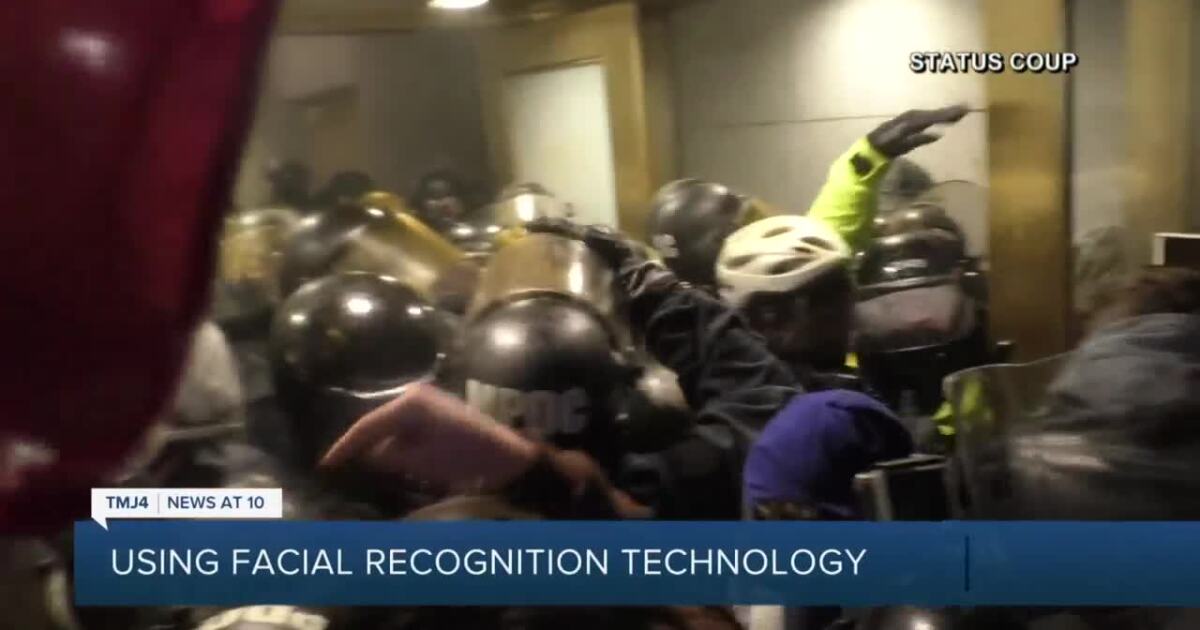
On January 06, America watched with shock as a mob of protesters stormed the gates in Washington, D.C. and invaded the Capitol buildings. For hours, the rioters looted and occupied America’s halls of power and though some were apprehended, many found a way to get out and get back home avoiding arrest. However, media coverage was substantial and some of the protesters were even bold enough to be caught posing for social media. Slowly, authorities are tracking them down, and Dr. Derek Riley, an expert at Milwaukee School of Engineering (MSOE) in the areas of computer science and deep learning, has been explaining how artificial intelligence (AI) technology that’s taught at MSOE is capable of enabling law enforcement's efforts to identify individuals from pictures. "With these AI systems, we’ll show it example photos and we’ll say, 'OK, this is a nose, this is an ear, this is Billy, this is Susie,'" Riley said. "And over lots and lots of examples and a kind of understanding if they guess right or wrong, the algorithm actually tunes itself to get better and better at recognizing certain things." Dr. Riley says this takes huge amounts of data and often needs a supercomputer—like MSOE's "Rosie"— to process it. To get a computer or software to recognize a specific person takes more fine-tuning, Riley says. He says your smartphone may already do this. "If you have a fingerprint scan or facial recognition to open up your phone, that’s exactly what’s happening," Riley said. "So, they’ve already trained a really large model to do all the basic recognition, and then you provide a device with a fingerprint scanning or pictures of your face at the end to be able to fine-tune that model to recognize exactly who you are." Riley says this technology isn't foolproof—he says human intelligence is needed at every step. He added we might be contributing to the data sources some of the technology needs by posting our pictures to social media. "Folks are uploading their own images constantly and that often is the source of the data that is used to train these really, really large systems," Riley said. January 14 – WTMJ, Ch. 4, NBC News The concept of facial recognition and the use of this technology in law enforcement (and several other applications) is an emerging topic – and if you are a reporter looking to cover this topic or speak with an expert, then let us help. Dr. Derek Riley is an expert in big data, artificial intelligence, computer modeling and simulation, and mobile computing/programming. He’s available to speak with media about facial recognition technology and its many uses. Simply click on his icon now to arrange an interview today.



Trump’s reaction to defeat further confirms urgency for school focus on social-emotional skills
Sandra Chafouleas, psychologist and behavioral health expert from the University of Connecticut, weighs in: Imagine what would happen if a preschooler didn’t “use their words” when they got upset about sharing, instead stomping around yelling while adults simply observed in silence. Think about what the school climate would feel like if a student punched another during recess while others watched without seeking help. Now consider the actions – and inactions – by Donald Trump on January 6 as the electoral vote counts occurred at the U.S. Capitol. Those behaviors show a desperate need for social emotional learning. According to the Collaborative for Academic, Social, and Emotional Learning (CASEL), social emotional learning involves five core competencies: self-awareness, self-management, social awareness, relationship skills, and responsible decision-making. Trump did not demonstrate these competencies when the election didn’t go the way he wanted. Connecting these school scenarios and Trump’s behaviors is not intended to contribute to the ever-mounting list of recommended consequences that could result from his fueling the insurrection that our nation has just experienced. It does bear noting, however, that if Trump were a Black teenager, he most certainly would have received exclusionary disciplinary action such as suspension and perhaps even expulsion from school. The purpose in connecting the two scenarios is to draw energies toward actions that propel us forward in bridging a divided nation. The responsibility for forward movement falls to future generations, which means it is critical that we pay attention to what happens in schools right now. We need to demand that policies and practice — and necessary resources — are put in place to strengthen school capacity to support students on their path to holding responsibility for democracy. Many excellent resources have quickly appeared to assist educators in teaching about the insurrection. Discussion guides are available to facilitate defining key terms, contrasting events through a social justice lens, and comparing justifications for action using fact checking. Other resources have been released that help adults talk about violence and support emotional safety of kids. What seems to be less prominent, however, is a direct connection to the social, emotional, and behavioral skills that we have just witnessed are missing. Education systems have begun the work of acknowledging their historic roles in contributing to exclusion, inequity, and intolerance of differences. Educators are working hard to turn the tide toward promising alternative approaches. Prominent among those approaches is a focus on social emotional skills. In either classroom scenario above, educators would be jumping into discussion about what supports are needed to address student needs. Social and emotional well-being fulfills us throughout every stage of life – integrating those skills should be in all that we do as adults to model, teach, and give feedback to our children. Of course schools must teach academic content areas and have high expectations, but there is tremendous potential to increase capacity to embed exploration, active practice, and positive feedback about social and emotional skills within each corner of the day. As one example, history professor Kellie Carter Jackson writes about challenges in teaching violence in political history. The author describes the need to question how political violence should be labeled, which could reveal an expression of unmet need by marginalized people. Learning through this analysis offers social and emotional parallels, such as examining biases, recognizing emotions, and examining integrity. As another, Facing History and Ourselves offers a classroom resource specific to the insurrection. Activities reference principles of social and emotional learning, such as steps for educators to practice self-awareness and relationship skills by examining their own emotions and perspectives. Student self-management and social awareness builds through reflection activity that builds civic agency. All of these examples offer incredible opportunity in social and emotional learning that could be advanced with more explicit connection. Entrenching social and emotional learning within the school day beyond this immediate teachable moment also is needed to enable sustained effort. CASEL identifies adults as key to social emotional strategies that will maintain safe, supportive, and equitable learning environments for this moment in history. To do so requires a strong collection of social, emotional, and behavioral education policies and practices. Responsibility for urgently resourcing this collection rests within each of us, right now, to ensure future generations who can and do take part in a resilient democratic nation. Dr. Chafouleas is licensed psychologist and Distinguished Professor, with expertise in school psychology and school mental health at the University of Connecticut’s Neag School of Education. If you’re a reporter looking to speak with Dr. Chafouleas about this topic – let us help. Simply click on her icon to arrange an interview today.

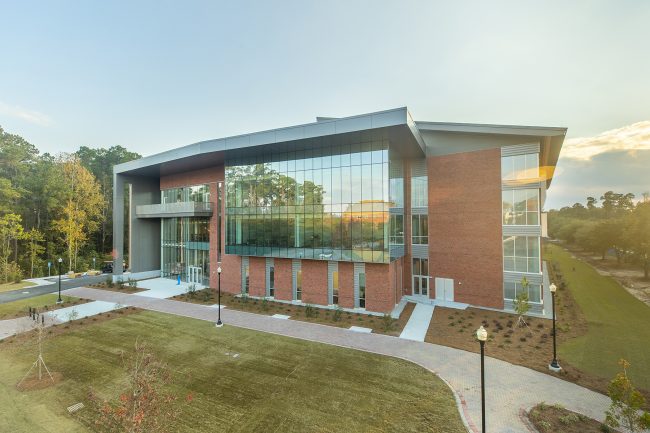
Last Friday, Georgia Southern officially opened its new Engineering and Research Building for students and researchers, a facility that will serve as the epicenter for engineering excellence and innovation in southeast Georgia. The building is designed to facilitate academic and institutional partnerships, inspire creative engineering and accelerate academic success for students in the College of Engineering and Computing. Through the instructional research labs and academic spaces that bridge theory and practice, students will be prepared to solve today’s challenges and to make tomorrow’s discoveries. “Today marks the culmination of years of forethought and investment from a number of state leaders, industry leaders and local advocates, who paved the way for us to be here,” said Georgia Southern President Kyle Marrero. “Leaders who, dating back to the 90s, could see the future of a growing industry, a state on the precipice of being a national leader in technology and innovation, and a critical need to develop talent in applied engineering across south Georgia.” The Engineering and Research Building’s sleek, contemporary environment defined by glass and natural light, soaring high-bay ceilings and modern, industrial feel is strengthened by new, industry-relevant equipment, instrumentation and technology that encourage active learning and sustainability. The highly efficient facility includes sustainable features that complements existing spaces on campus. The three-story building houses applied research spaces with a strong focus on manufacturing engineering, civil engineering, electrical and computer engineering, and mechanical engineering. The workspaces can be easily reconfigured for various uses, projects and applications and provide students with access to industry-grade equipment as well as expanded opportunities for undergraduate research. “The investment of the Engineering and Research Building solidifies Georgia Southern University’s commitment to students in providing a world-class education in the engineering field, while providing the space and resources necessary to facilitate such,” said student Kristifer Bell. “I am enthusiastic to continue my research work and look forward to the interdepartmental collaboration that will be encouraged through the housing of new student and faculty labs under one roof.” The full media release about this historic occasion is attached – and if you are a journalist looking to know more about this facility or Southern Georgia University -- simply reach out to Georgia Southern Director of Communications Jennifer Wise at jwise@georgiasouthern.edu to set and time and date.
