
Experts Matter. Find Yours.
Connect for media, speaking, professional opportunities & more.

Are GCSEs delivering for students and society?
Ahead of the GCSEs results being released on Thursday 21 August Aston University work psychologist, Dr Paul Jones, discusses whether the exams are fit for purpose. He believes that our exam system narrows thinking, and GCSEs emphasise “right answers” and rote recall, creating risk-averse learners who are afraid to fail or think differently. Exams are harming wellbeing GCSEs were designed in the 1980s, when many left education at 16. Today, almost all young people continue to 18, yet they still face a stressful halfway checkpoint that often does more harm than good. Research shows GCSEs are linked to anxiety, sleeplessness and even self-harm. This isn’t about students being “less resilient”, t’s about a system that has prioritised bureaucracy, league tables, and exam statistics over wellbeing. GCSEs don’t prepare students for life Exams reward the ability to memorise and recall under pressure, but the world beyond school demands much more. Employers and universities want young people who can think critically, manage their own learning, collaborate, and adapt. By the time many reach university, students are burnt out from years of high-stakes testing. They often struggle with independence, risk-taking, and curiosity, the very qualities they need to succeed. Over-assessment stifles innovation Our exam system narrows thinking. GCSEs emphasise “right answers” and rote recall, creating risk-averse learners who are afraid to fail or think differently. Innovation, however, requires psychological safety: the freedom to explore, experiment, and make mistakes. In a world where AI can already handle routine tasks like recall and pattern analysis, the human edge lies in breaking moulds, challenging assumptions, and combining knowledge in new ways. Our current system suppresses exactly those skills. Moving GCSEs into the future We need fewer, smarter assessments and a curriculum that builds creativity, resilience, and innovation. Other countries use project-based learning, portfolios, and sampling tests to capture what young people can really do. Wales is already embedding wellbeing and digital skills into its new curriculum. England risks being left behind if it continues to cling to an exam-heavy model designed for a different era. The bottom line Our young people deserve an education that prepares them for life, not just for exams. We should be measuring what really matters: wellbeing, creativity, and the ability to thrive in a fast-changing, AI-driven world. To speak to Dr Jones or for any media inquiries in relation to this please contact Nicola Jones, Press and Communications Manager, Aston University on (+44) 7825 342091 or email: n.jones6@aston.ac.uk


Keep kids reading all summer: Expert tips to make it fun
As July winds down, those summer reading lists might still be sitting – unopened – on nightstands. But it’s not too late to spark a love of reading that lasts well beyond the school year. University of Delaware experts Roberta Michnick Golinkoff and Rebecca Joella specialize in early childhood literacy and know how to make reading feel less like homework and more like play. “We want to make reading fun, instead of a drag or something we have to push kids to do,” says Golinkoff. “Reading with the family totally normalizes it, and if kids think their family is excited about reading, they are more likely to be excited too.” She recommends turning reading into a screen-free family ritual or reading aloud together – even for kids who already know how to read. Joella agrees. "Visiting a local library is an excellent summer activity. Many libraries have summer reading programs for children that encourage reading, so participating in one of those is a lot of fun." Books like "Llama Llama Loves Camping" can lead to a backyard campout – tent, picnic and all. Some summer favorites include "Pete the Cat: Pete at the Beach," "Summer" by Alice Low and "Beach Day" by Karen Roosa – lighthearted stories that celebrate the season and build early literacy skills along the way. Worried about the “summer slide”? Golinkoff notes the impact is often greater for children from under-resourced families. That’s why she helped create Playful Learning Landscapes, transforming everyday public spaces into interactive learning hubs. She’s also leading a global effort to provide free bilingual e-books through the Stories with Clever Hedgehog project – originally launched to support Ukrainian children displaced by war. Golinkoff is available to share insights on early literacy, summer learning and why playful education works.


First AI-powered Smart Care Home system to improve quality of residential care
Partnership between Lee Mount Healthcare and Aston University will develop and integrate a bespoke AI system into a care home setting to elevate the quality of care for residents By automating administrative tasks and monitoring health metrics in real time, the smart system will support decision making and empower care workers to focus more on people The project will position Lee Mount Healthcare as a pioneer of AI in the care sector and opening the door for more care homes to embrace technology. Aston University is partnering with dementia care provider Lee Mount Healthcare to create the first ‘Smart Care Home’ system incorporating artificial intelligence. The project will use machine learning to develop an intelligent system that can automate routine tasks and compliance reporting. It will also draw on multiple sources of resident data – including health metrics, care needs and personal preferences – to inform high-quality care decisions, create individualised care plans and provide easy access to updates for residents’ next of kin. There are nearly 17,000 care homes in the UK looking after just under half a million residents, and these numbers are expected to rise in the next two decades. Over half of social care providers still retain manual and paper-based approaches to care management, offering significant opportunity to harness the benefits of AI to enhance efficiency and care quality. The Smart Care Home system will allow for better care to be provided at lower cost, freeing up staff from administrative tasks so they can spend more time with residents. Manjinder Boo Dhiman, director of Lee Mount Healthcare, said: “As a company, we’ve always focused on innovation and breaking barriers, and this KTP builds on many years of progress towards digitisation. We hope by taking the next step into AI, we’ll also help to improve the image of the care sector and overcome stereotypes, to show that we are forward thinking and can attract the best talent.” Dr Roberto Alamino, lecturer in Applied AI & Robotics with the School of Computer Science and Digital Technologies at Aston University said: “The challenges of this KTP are both technical and human in nature. For practical applications of machine learning, it’s important to establish a common language between us as researchers and the users of the technology we are developing. We need to fully understand the problems they face so we can find feasible, practical solutions. For specialist AI expertise to develop the smart system, LMH is partnering with the Aston Centre for Artificial Intelligence Research and Application (ACAIRA) at Aston University, of which Dr Alamino is a member. ACAIRA is recognised internationally for high-quality research and teaching in computer science and artificial intelligence (AI) and is part of the College of Engineering and Physical Sciences. The Centre’s aim is to develop AI-based solutions to address critical social, health, and environmental challenges, delivering transformational change with industry partners at regional, national and international levels. The project is a Knowledge Transfer Partnership. (KTP). Funded by Innovate UK, KTPs are collaborations between a business, a university and a highly qualified research associate. The UK-wide programme helps businesses to improve their competitiveness and productivity through the better use of knowledge, technology and skills. Aston University is a sector leading KTP provider, ranked first for project quality, and joint first for the volume of active projects. For more information on the KTP visit the webpage.

Georgia Southern professor receives national faculty mentor award
The Council on Undergraduate Research (CUR) named Georgia Southern University English Professor Olivia Carr Edenfield, Ph.D., the winner of the 2025 Arts and Humanities Faculty Mentor Award. The award recognizes faculty who go above and beyond to nurture undergraduate research, scholarship and creative work. Edenfield’s record of taking student research to new heights set her apart from a nationwide field of candidates. After joining Eagle Nation as a professor in 1986, Edenfield has helped her students become published researchers and presenters at local and national conferences. She said seeing those hardworking students excel has been her real reward. “Receiving this award is deeply personal,” Edenfield wrote in her CUR nomination statement. “My greatest joy in teaching has come from my students’ successes.” During her time as associate dean for Student Affairs in the former College of Liberal Arts and Social Sciences (CLASS), she launched the college’s undergraduate research symposium, now known as CURIO. She also helped establish a Center for Undergraduate Research for CLASS and set up residential interest groups to encourage students to share their love of different subjects with each other. Edenfield has helped her students achieve access to opportunities on a national level. She has served as director of the American Literature Association (ALA) since 2019, where she started a unique program that places Georgia Southern English majors in high-level administrative roles for ALA conferences. Seven of Edenfield’s students have had their work published in The Richard Macksey Journal at Johns Hopkins University. Many of her students have also presented their research at national and international conferences. Georgia Southern student Maegan Bishop’s presentation at the 2023 American Literature Association Annual Conference, based on research from Edenfield’s undergraduate class, was so impressive that she was invited to present her work at a conference on the short story at the University of Mainz, which covered all of her expenses. “My own experiences with Dr. Edenfield are only a small example of the work she has done to mentor undergraduates at Georgia Southern,” said Bishop. “She is constantly doing everything in her power to assist her students with whatever they need, extending every opportunity to those who express interest in becoming more involved in literary scholarship and campus activities.” David Owen, Ph.D., dean of the College of Arts and Humanities, emphasized how much Edenfield cares for her students, noting that her passion to help them succeed is second to none. “Mentoring is not a side note to Edenfield’s career, it is the throughline,” said Owen. “Her students succeed not just because of her guidance, but because she teaches them how to believe in their own voices.” The Faculty Mentor Award is the latest in a distinguished line of recognition for Edenfield. In 2016, she was named both the CURIO Mentor of the Year and the Wells-Warren Professor of the Year at Georgia Southern. She is a three-time recipient of her college’s Award for Distinction in Teaching, winning in 2016, 2020 and 2024. Edenfield was also a member of the inaugural class of the Governor’s Teaching Fellows program in 1995. ___ If you're interested in learning more about Georgia Southern's College of Arts and Humanities and want to book time to talk or interview, let us help - simply contact Georgia Southern's Director of Communications Jennifer Wise at jwise@georgiasouthern.edu to arrange an interview today.


Disaster Reduction: Key Insights for Risk Managers & Corporate Executives
The need for comprehensive disaster risk management has never been more evident. In recent years, major storms, earthquakes, wildfires, tornados, derechos, and other destructive large-scale events have been significant. According to the United Nations Office for Disaster Risk Reduction (UNDRR) 2025 Global Assessment Report, disaster costs now exceed over $2.3 trillion annually when cascading and ecosystem costs are taken into account. What can be done to minimize both the damaging effects and significant costs associated with these types of events? In this article, J.S. Held EHS experts John Dulude and Bill Zoeller examine the critical components of disaster resilience – preparedness, mitigation, and resilience – and delve into the insights that can empower risk managers and corporate executives to safeguard their organizations. What’s covered : • Proactive Disaster Planning and Preparedness • Case Study: Hurricane Hilary 2023 | Western United States • Tailoring Resilience to Geographic Risks • Learning from Disaster for Continuous Improvement The insights shared in this article underscore the critical importance of proactive planning, meticulous preparation, and resilience in the face of inevitable disasters. For media inquiries, contact : Kristi L. Stathis, J.S. Held +1 786 833 4864 Kristi.Stathis@JSHeld.com


Yes, Ringo Starr just turned 85. Let that sink in. I read this in the Washington Post and felt like a bag of Beatles vinyl had walloped me. How is this possible? How can the mop-top drummer be 85 when I was dancing to “Yellow Submarine” in bell-bottoms with a brush for a microphone? More urgently: how old does this make me?! Ringo isn’t slowing down. He’s still touring with two bands, making music, flashing that cheeky Liverpudlian smile, and preaching peace and love as if he’s got nowhere else to be. No plans to retire. No plans to fade away. Just a rockstar with a great attitude... and maybe a titanium hip (unconfirmed). This made me realize that, as the birthday candles on my cake now need a fire permit, “attitude” plays a huge role in how we age. Based on the feedback I received from my last post, “What’s Your Brand, Boomer?”, it’s clear that many people are genuinely interested in managing their personal brand as they age. This week, I want to go deeper—because whether you’re 45 or 85, you are Old People in Training. That’s right. Every one of us is aging in real-time, and understanding the stages ahead—either for ourselves or our aging loved ones—helps us walk this path with humour, grace, and fewer surprises. So, here they are: The 8 (Unofficial but Uncannily Accurate) Stages of Aging 1. The Stand-Up-and-Forget-Why Stage (Kicks in around mid-to-late 50s) You walk into a room with purpose, then wonder: was I here to fold laundry, pay a bill, or practice my slow blink? Bonus points if you’re already wearing the glasses you’re hunting for. How it helps: Eases forgetfulness. It’s not early dementia; it’s early distraction. Keep a notebook or use Voice Memos. Or do what I do: shrug, laugh, and keep walking until something jogs the memory (usually coffee). 2. The “Senior? Not Unless There’s a Discount” Stage (Hits in your early 60s) You bristle at the word “senior,” unless it saves you $2.50 at the movies or 15% at Shoppers. Suddenly, age becomes a tool, not a label. How it helps: Celebrate the advantages! You’ve earned them. And remember: owning your age is the new anti-aging remedy. Confidence looks good on everyone. Remember, you are still that age, whether you admit it or not. You might as well save some money! 3. The “Yes, I Really Am That Age” Reminder Stage (Kicks in around 65) You find yourself saying your age out loud like it’s a riddle. "I’m 65. Sixty-five! Isn’t that wild?" You’re still trying to catch up with the numbers, or maybe you’re worried you’ll forget your age. How it helps: Accept the number without letting it define you. It’s not a limit — it’s a launchpad. Bonus: Use it as an excuse to do something you’ve always put off. 4. The Replacement Parts Stage (Hits in the early to mid-70s) Welcome to orthopedic roulette: knees, hips, maybe a shoulder. You collect joint replacements like frequent-flyer miles. Fortunately, modern medicine allows for joint replacements to be performed more quickly than ordering takeout. Still waiting for Staples to offer 3D-printed hips. How it helps: Embrace science instead of fighting it. Biology always prevails! Mobility equals independence. And nothing embodies “active aging” like beating your grandkids at pickleball with a shiny new titanium knee. 5. The “I’ve Run Out of F*cks to Give” Stage (Kicked in the late 70s into the early 80’s) You’ve earned the right to speak your mind—and wear socks with sandals. You say what you want, mean what you say, and anyone who doesn’t like it can take a number. Opinions? Too many! Filters? Deleted. Freedom? Glorious. Friends? Running for cover! How it helps: This is peak freedom. Use it wisely. Advocate, participate, mentor, and model what unapologetic living looks like. You’re the elder statesperson now—be bold, not bitter. 6. The Cataract Conspiracy Stage (Kicks in mid-to-late 70s) Lights appear like halos, and reading menus becomes an Olympic event. But don’t worry—cataract surgery is so common it’s practically an oil change. And voilà: brighter colours, more precise lines, less squinting. Spoiler Alert: You will now be able to see how poor your housekeeping skills are! How it helps: Get your eyes checked. Don’t delay. Seeing clearly again can literally brighten your outlook—and maybe even your attitude. 7. The “Say What?” Stage – The Hard-of-Hearing Stage (Late 70’s+) This one sneaks up like a whisper… which is ironic, because you probably won’t hear it. At some point, for most of us, hearing begins to decline like old payphones and eight-track tapes. It might start with missing parts of conversations in noisy restaurants or asking people to repeat themselves (just once… or five times). Eventually, it’s full-blown “Say what?” territory. Many avoid wearing hearing aids because—let’s face it—they feel like a flashing neon sign that says, "I’m old!" But here’s the real issue: pretending to hear is much worse. It can lead to social withdrawal, isolation, and even strained relationships. And we’re not just making this up for dramatic effect—studies at John Hopkins School of Medicine show that untreated hearing loss is linked to a higher risk of dementia, depression, and cognitive decline. There’s also the loud TV effect—when your neighbours across the street can hear your Netflix queue, it’s time to see an audiologist, not to mention the safety concern: driving with impaired hearing is risky; sirens, honking horns, or even a warning from a passenger might go unnoticed. So, if your “What?” count is rising and your TV volume is climbing towards aircraft-engine decibels, take action. Getting your hearing tested doesn’t mean you’re old—it means you’re informed (and honestly, more enjoyable to be around). Because nothing celebrates “vibrant aging” more than staying connected to the world—and actually hearing it. Stage 8: The Long Goodbye – When Friends Start to Leave the Stage I’ve heard from seniors about Stage 8… and without exception, they say it’s one of the toughest parts of aging. This is the stage when the long goodbye starts—quietly at first, then with increasingly frequent moments. Your phone rings less often. The chairs at the coffee group gradually empty. One day, you realize you’re not just losing friends—you’re outliving them. It’s part of the circle of life, for sure—but no Lion King soundtrack can ease the heartbreak. This stage exposes some of our deepest fears: Will I be next? Who will mourn me? Does anyone even know I’m still here? It’s a time of grief, loneliness, and silent despair. And while you can’t fast-forward through it, you don’t have to walk it alone. If you’re an “Old Person in Training” (which, reminder: we all are), listen up. This stage isn’t just something that happens to others—it’s your future self, waving from down the road. Learning about it now prepares you to guide others through it with grace and to soften your own landing when the time arrives. And if someone you love is already there? This is your cue. Show up. Don’t wait to be invited—grief rarely sends formal RSVPs. Phrases or clichés like “they’re in a better place” won’t suffice here. These are nothing burgers—all bun, no meat—empty calories in a moment that needs nourishment. Show up. Stay steady. Be the evidence that they are still recognized, still cared for, still part of something meaningful. What they truly need is presence, not presents. Time, not timelines. They need to feel they are not alone. Sit with them. Walk with them. Watch Jeopardy in silence if that’s what the day calls for. But whatever you do, don’t disappear. Because one of the most profound gifts we can give in this stage isn’t a cure—it’s companionship. Science Confirms It: Attitude Is a Lifespan Strategy Tongue-in-cheek aside, these aging observations are backed by science: Positive beliefs about aging can extend life by 7–8.5 years. (Source: PubMed – Levy et al.) Optimism correlates with lower heart disease, stroke, and a 70% greater likelihood of reaching age 85. (Source: Harvard Health) Positive mindset boosts recovery, brain health, and resilience after illness. (Source: Harvard Health) So, what can we learn from Ringo? Keep creating – Music, art, businesses, bad poetry. It keeps the brain limber and the soul alight. Stay curious – Sign up for that course. Take the trip. Ask questions. Enrol in the MBA. (Looking at you, 69-year-old rockstars.) Lean into joy – Laugh like nobody’s judging. Dance like your knees aren’t watching. Surround yourself with good vibes – Optimism costs nothing and glows brighter than Botox. Remember, it’s not your age—it’s your outlook. So next time you stand up and forget why you did, just grin and say: ‘I’m aging like a Beatle. Still standing. Still grooving. Still fabulous.” And if you ever need a pep talk, ask yourself: “What would Ringo do?” Don’t’ Retire Re-wire Sue


Picture this: a group of women in their 50s and 60s who've collectively decided to stop caring about chin hairs, laundry schedules, and everyone else's opinions. Sound liberating? It should. The New York Times recently profiled Melani Sanders, founder of the "We Do Not Care Club"—a crew of perimenopausal and menopausal women living by one fabulous rule: NO RULES! Their motto might as well be "Chin Hair, Laundry, Your Opinion: We Don't Care." While targeted at a younger demographic, the spirit of this movement resonates loudly among retirees, especially those dancing into their 70s and 80s, with less concern for public opinion and a greater commitment to living life to the fullest. But here's the thing—this "liberation" isn't just about attitude. There's actual neuroscience behind why we become more authentic versions of ourselves (and sometimes more blunt) as we age. Brain Aging & Inhibitory Control Let’s start with the science before we move into sass. Frontal lobe shrinkage: Researchers, including Stephanie Wong, a Research Fellow and Clinical Neuropsychologist, are studying how changes in the brain impact inhibitory control and social cognition as we age. Research shows that as we age, the prefrontal cortex—the brain’s internal social bouncer—begins to shrink. That means less inhibition, more "Oops, did I say that out loud?" moments. Inhibition deficits: Research published in the APA Journal of Neuropsychology shows that older adults find it more challenging to ignore distractions or hold back their impulses. Tasks like "stop-signal" tests reveal a clear decline in impulse control. Disinhibition causes behaviour shifts. Sometimes charming, sometimes awkward. If it's just being unusually honest, that’s one thing. If it's full-on undressing in the produce aisle, it might be time to see a doctor. Particularly with frontotemporal dementia, disinhibition can be a serious warning sign. Emotional Wisdom: Who Cares? Here’s the upgrade part of aging: • Less shame, more self-acceptance. Turns out, as you get older, you care less if Karen from yoga thinks you talk too much. • Socioemotional selectivity theory. As we become aware that time is limited, we stop pretending. Why waste valuable hours pretending to enjoy kale chips or dull book clubs? When to Be Concerned • Normal aging: Some verbal slips, occasional public flatulence, and quirky jokes. • Red flags: Rude outbursts, memory lapses, risky behaviour, and dramatic personality shifts. That might signal more than "aging into your truth." • Impulsivity warning: High impulsivity in older adults can sometimes be associated with early-stage cognitive decline. When uncertain, discuss it—preferably with a professional. TL;DR • Physical: Brain shrinkage leads to fewer filters. • Emotional: Less time means less pretending. • Caution: Disinhibition and cognitive issues suggest it's time for a check-up. Crafting Your Identity After 60 (Before Someone Else Does It for You) Let’s be honest: You already have a brand. Even if you never wrote a tagline or hired a designer, your brand is what people whisper (or shout) about you when you leave the room. It’s how you show up, how you age, and whether you become known as: "The Cranky Codger Complaining About the Price of Lettuce" or "The Glamorous Grandma with a TikTok Following." If you don’t brand yourself, trust me—someone else will. And they might not be as flattering. The Branding Trap of Aging Aging often loosens the filter and tightens the waistband. That’s just biology. But if we’re going to become more blunt, forgetful, and comfortable saying whatever pops into our head, shouldn’t we decide who we want to be first? Instead of becoming The Know-It-All, The Debbie Downer, or The Hovering Grandparent, why not become: • The Mentor • The Lifelong Learner • The Sexy Sensei with Killer Dance Moves And let’s not forget: most of us swore we’d never become our parents. Spoiler alert: unless you act intentionally, you’re heading in that direction, with even worse tech skills. Timing Is Everything (And Also Totally Forgiving) The best time to plant a tree? 30 years ago. The second best? Right after you finish this blog, brush Dorito dust off your fingers, and take action. It’s never too early or too late to develop your personal brand. Think of it as building compound interest, but for your character. Start now before you need a doctor’s note for skinny jeans. Build a Brand That Outlasts Your Wi-Fi Password The goal? Shape a brand that becomes your legacy. Something grandkids remember, communities admire, and mirrors reflect with pride. I’m aiming for Hip, Fit & Financially Free. That means: • Eating like I care • Moving daily • Sleeping like it’s my side hustle • Managing money like I want it to stick around • And fiercely guarding my energy from sugar crashes and toxic people Avoid These Unintentional "Elder Brands" • The Cranky Codger: Complains constantly, hates oat milk, gives paper cuts with sarcasm. • The Sweet Old Lady: Harmless and charming—and almost invisible. So sweet, she could give you cavities. Stands for nothing, falls for everything. • The Know-It-All: Believes Google exists solely to confirm their opinions. • The Nona/Nono: Helicopter grandparenting, over-involved, uses spit to clean your face in public. Attract These Brands Instead: 1. Glammy or Glampa 2. Wise Old Owl 3. Sexy Sensei 4. Unstoppable Opa Tips for Maintaining Youth in Mind, Body & Spirit 1. Hang out with younger people—use their slang, apps, and playlists. 2. Volunteer—Gratitude is more effective than Botox. 3. Mentor—your wisdom is not meant for hoarding. 4. Move every day—your joints might protest now, but they'll thank you later. 5. Protect your energy—eat healthy, sleep well, say no to nonsense. 6. Be mindful of your screen time—doomscrolling drains your spirit. 7. Keep learning—new languages, new tech, and new ways to be awesome. Legacy is the Long Game You don’t need to run marathons at 85 (though if you do, I’ll cheer wildly). But you should ask: "How do I want to be remembered?" Learn Italian at age 70. Take a gap year at 65. Get an MBA at 69 (worked for me!). Write your eulogy and then live it. Age isn’t a liability. It’s your proof of resilience. Now’s your opportunity to demonstrate that to the world. So, what’s your brand, Boomer? Because like it or not, you’ve got one. It’s showing up in every family dinner, work Zoom, golf game, and passive-aggressive Facebook post. The only question is — did you choose it… or did you just inherit the ‘We Do Not Care Club’ starter pack? Maybe we don't care about chin hair, laundry, or your opinion — but we do care about how we’re remembered. That’s your real brand, Boomer. So, you can either define it — or let your grandkids do it for you… and trust me, they’ve already got the group chat ready! So go ahead. Print those business cards that say something fabulous. Brand Strategy at Any Age: Intend it. Live it. Leave it behind. Stay hip. Stay fit. Stay financially free. And stay tuned. There’s more coming next week. Spoiler: There will be laugh lines and a squat rack. Don’t Retire … Re-Wire! Sue

Artificial Intelligence Makes Energy Demand More Complex — And More Achievable
In a 2024 paper, researchers from Carnegie Mellon University and machine learning development corporation Hugging Face found that generative AI systems could use as much as 33 times more energy to complete a task than task-specific software would. “The climate and sustainability challenge can be overwhelming in the amount of new clean technology that we have to deploy and develop, and the ways that the energy system has to evolve,” said Costa Samaras, head of the university-wide Wilton E. Scott Institute for Energy Innovation. “The scale of the challenge alone can be overwhelming to folks.” However, Carnegie Mellon University’s standing commitment to the United Nations' Sustainable Development Goals and its position as a nationally recognized leader in technologies like artificial intelligence mean that it is uniquely positioned to address growing concerns around energy demand, climate resilience and social good.


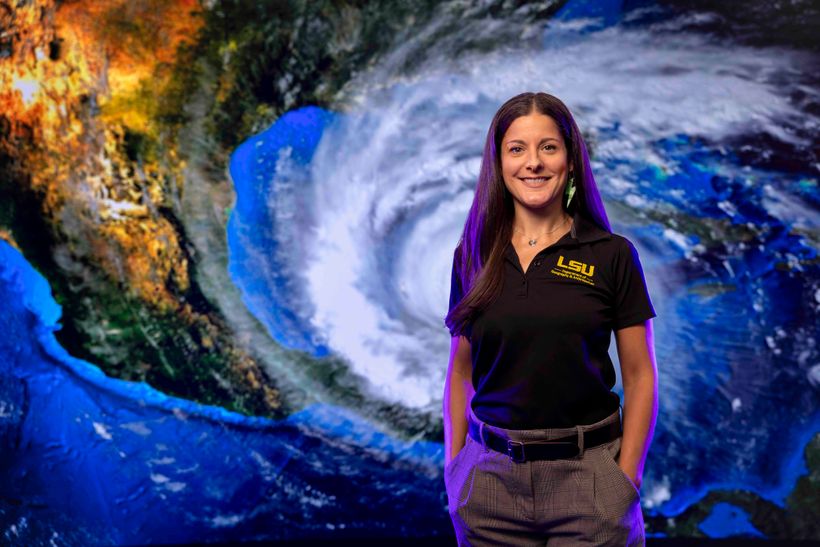
LSU’s Jill Trepanier Educating K-12 Louisiana Students About the Environment
What began in 2018 as a single rooftop weather station on LSU’s campus as a tool to help freshmen connect to the science happening around them, has grown into an educational network in the southern part of the state, connecting K-12 students with the sky through real-time data, interactive technology, and hands-on learning. Trepanier, a professor and department chair in LSU’s Department of Geography & Anthropology, leads a project that now includes 10 weather stations installed at or near K–12 schools from Lake Charles to Grand Isle. “The environment is harsh in Louisiana. Beautiful, but harsh,” Trepanier said. “The more students know about it, the better they can protect themselves and their families. For me, that’s what it is all about.” The project all started to help college students in Trepanier’s meteorology and physical geography classes connect more deeply with the material by using weather data collected from the air around them. “These were 400 freshmen every semester who were not geography majors, so they didn't really love the science of the atmosphere. But they were able to connect with the information because they could see the data on an app on their phone as they were living in it.” Installed across South Louisiana, each weather station is solar-powered and connected to a console that uploads data to an online web platform and displays it on a dashboard. Then an app shows the local students the current conditions and records for the day. “When we look at data from the community, it might be many miles from where you are. And most people live within a few miles or less of their schools. It allows them a close-up view of what is happening, instead of relying on something miles away,” she said. Teachers can use the data with certain lessons or during a passing storm. But the available data also educates them on things like solar radiation, “It also helps aid things like seasonality and our relationship with the sun. It extends well beyond just rain.” The material is also aligned with the Louisiana Student Science Standards for environmental and Earth sciences. “By allowing students to compare real data across space and time, it helps them to understand how systems are connected. And most of these science standards have them focusing on system theory, in one way or another,” Trepanier said. Read the full story here.


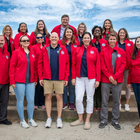
AU research team awarded $4.4 million American Heart Association grant
A research team at Augusta University, led by Jennifer C. Sullivan, PhD, has secured a $4.4 million grant from the American Heart Association to study the risk factors for cardiovascular and kidney diseases and how they impact women. Sullivan’s research center, “Disruptions in cardiorenal free fatty acid metabolism in Cardiovascular Kidney Metabolic Syndrome,” is part of a larger $15 million project titled “Strategically Focused Research Network on Cardiovascular Kidney Metabolic Syndrome: Heterogeneity in Women.” The overarching AHA project is aimed at learning why women may be more likely to develop cardiovascular and kidney diseases due to certain unique risk factors and life stages. Research teams from Massachusetts General Hospital and The Ohio State University were also chosen. “I think this is a huge step for Augusta University as we continue to distinguish ourselves and the research that we have here focused on the health of women,” said Sullivan, dean of The Graduate School. “This grant is particularly impactful as we look to advance and improve the health of women, not just in Georgia, but for the entire country.” According to the Healthy Georgia Report, produced by AU’s School of Public Health, Georgia has the 23rd highest rate of obesity in the United States. Among the women living in the state, 38.3% of them, as well as 37.5% of people living in rural areas, suffer from obesity. “It’s great that we are able to represent the state of Georgia because our state has such a high prevalence for obesity rates,” said Sullivan, who is the director of AU’s SCORE project “Improving awareness of women with hypertension: ROAR (Rural, Obese, At Risk).” “It’s important for us to understand that different populations have distinct needs. You can’t talk about a one-size-fits-all approach to health. This is really about trying to understand how different groups are impacted.” Each center is comprised of three teams, as well as a training component and an area partner. Together, they will explore obesity’s lifetime impact on CKM syndrome through three projects. CKM syndrome is a clinical term that describes the combined health effects of heart disease, kidney disease, diabetes and obesity, which puts people at high risk for heart attack, stroke and heart failure. According to the American Heart Association’s 2025 Heart Disease and Stroke Statistics, about 1 in 3 U.S. adults has at least three components of CKM syndrome, which include high blood pressure, abnormal cholesterol, high blood glucose (sugar), impaired kidney function and excess body weight. The first project is led by Daria Ilatovskaya, PhD, and Justine Abais-Battad, PhD, and will look at aging and Western diet-induced CKMS mechanisms in obesity. Ilatovskaya is an associate professor and the graduate program director for the Doctor of Philosophy in Physiology program, and Abais-Battad is an assistant professor in the Department of Physiology with the Medical College of Georgia at Augusta University. The second component, led by Jessica Faulkner, PhD, an assistant professor in MCG’s Physiology department, will study obesity-associated mechanisms of CKMS in pregnancy. The third project, led by Stephen Coughlin, PhD, with Marlo Vernon, PhD, is looking at CKMS epidemiology, associations with obesity, CVD/CKD. Coughlin is the program director for the Master of Science in Epidemiology and professor of epidemiology in the School of Public Health’s Department of Biostatistics, Data Science, and Epidemiology, while Vernon is an associate professor with MCG’s Georgia Prevention Institute and SPH’s Department of Community and Behavioral Health Sciences. Additionally, the team will talk to women and health care providers from a variety of backgrounds and experiences to assess current knowledge and interest levels in heart health and use that information to develop programs that may help treat and prevent disease. There is also a training director, Alison Kriegel, PhD, a professor in the Department of Physiology, and a core director, Guido Verbeck, PhD, chair and professor of the Department of Chemistry and Biochemistry in the College of Science and Mathematics. “We have a strong blend of clinical epidemiology and basic science, as well as a training component, which we will fill with post-doctoral fellows,” Sullivan said. “Dr. Ilatovskaya, Dr. Faulkner, Dr. Abais-Battad and Dr. Vernon are all a part of our ROAR grant, and, while this isn’t directly related to that program, it allowed us to demonstrate how we are already well positioned to work together to amplify our ability and increase awareness about the importance of the health of women.” The team has over 50 collaborative papers and has secured more than $13 million in collaborative funding to advance the health of women. They also all have experience training fellows and students to continue to expand their reach. “We already have a lot of the infrastructure in place for this kind of cross-disciplinary project, so we leaned very heavily into our connections and the expertise we have here at Augusta University. It’s set up very similar to our ROAR program, so this is something that was really organic in nature,” Sullivan said. The American Heart Association has invested almost $300 million to establish 18 Strategically Focused Research Networks, each aimed at addressing a key strategic issue identified by the association’s volunteer Board of Directors. Prior networks have been studying a wide variety of important topics including, but not limited to, prevention, hypertension, the health of women, heart failure, obesity, vascular disease, atrial fibrillation, arrhythmias/sudden cardiac death, cardiometabolic health/type 2 diabetes, health technology, cardio-oncology, the biological impact of chronic psychosocial stress and the role of inflammation in cardiovascular health. Each network centers around scientific knowledge and knowledge gaps, prevention, diagnosis and treatment of the key research topic. Three to six research centers make up each network, bringing together investigators with expertise in basic, clinical and population/behavioral health science to find new ways to diagnose, treat and prevent heart disease and stroke. Funding scientific research and discovery through initiatives like these awards is a cornerstone of the century-old American Heart Association’s lifesaving mission. The association has now funded more than $5.9 billion in cardiovascular, cerebrovascular and brain health research since 1949, making it the single largest non-government supporter of heart and brain health research in the United States. New knowledge resulting from this funding continues to save lives and directly impact millions of people in every corner of the U.S. and around the world. Looking to know more about the amazing research happening at Augusta? To connect with Dr. Sullivan, simply click on her icon to arrange an interview today.


