
Experts Matter. Find Yours.
Connect for media, speaking, professional opportunities & more.

Finding joy in learning: How lighthearted moments transform English as a Foreign Language classrooms
In classrooms, not every meaningful learning moment can be planned. At the University of Delaware, educator and researcher Chad Davidson is exploring how spontaneous, lighthearted interactions between teachers and students can open the door to deeper understanding in real time. His recent paper in Language Teaching and Educational Research, "Exploring Spontaneous Acts of Lightheartedness in EFL Classrooms: A Reflective Duoethnography", examines how these unscripted moments – rooted in trust, positivity and a willingness to embrace the unexpected – help create environments where students feel comfortable taking the risks essential to learning. In this Q&A, Davidson discusses the inspiration behind his research, what he’s discovered about these classroom dynamics and how they could shape teaching practices moving forward. Q: What is the focus of this research, and why is it important? Davidson: Spontaneous acts of lightheartedness promote real-time learning because it's being open to the unknown in positive ways since the true dynamic of every classroom brings continuous unknowns: A teacher never knows 100% how the students will react (these students, in these moods, on this day, etc.), how quickly they will learn or pick up on something or not. A teacher, hence, spontaneously responds in real-time to the until-then-unknown student reactions in order for those particular students best to then grasp the concept or skill that is the present goal (or “learning objective”) that those students grasp. The hope is that the teacher's spontaneous response (as it often is with many teachers) is positive and lighthearted in order to foster students to also be open to such unpredictability in the classroom and to foster students' comfortability with the vulnerability to be open to taking spontaneous risks that are necessary for that transformation that we call learning – transforming from lack of knowledge to knowledge, from lack of understanding to understanding, from lack of mastery to further mastery. Q: What are some key findings or developments? Davidson: Realizing the essential features that make up spontaneous lighthearted classroom acts; for example, these acts must include trust of the student(s) and from the student(s), and the acts must have good-intentions of creating or maintaining a relaxed environment conducive to safely taking risks for potential learning. Q: How could this work potentially impact the field or the wider public? Davidson: This could foster this act type in classrooms. That is, hopefully more teacher-practitioners will allow themselves and their students to freely enact these in their daily in-class teaching/learning-attempts. Q: What are the next steps or upcoming milestones in your research? Davidson: We incorporated some valuable insights of Mexican philosopher Jorge Portilla. While there is a glut of usage of German, French, British and American philosophers, there is almost no usage of Hispanic or Latin American philosophers in education literature. It would be great to do more work that makes use of the profound thought in the works of Latin/Hispanic philosophers. For me, this would be continuing to go more deeply in applying Jorge Portilla's thought to philosophy of education, such as to classroom management. ABOUT CHAD DAVIDSON Instructor Chad C. Davidson has a Ph.D. in curriculum and instruction with an emphasis in philosophy of language education. He has 17 years of language teaching experience, primarily in teaching and curriculum creation for English for Academic Purposes at various colleges and universities across America (University of Delaware, Kansas State University, Georgia Tech, North Orange County Community College, Johnson County Community College), in Russia (Udmurt State University), and in Turkey (Mus Alparslan University). Moreover, he has studied languages at the following universities abroad: Universidad Autónoma de Guadalajara in Mexico, Universidade do Porto in Portugal, and Aristotle University of Thessaloniki in Greece. To speak with Davidson about his work and the importance of spontaneous acts of lightheartedness, reach out to MediaRelations@udel.edu.

Exploring everyday finance, gender, and the future of pensions
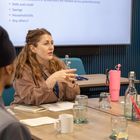
Money in everyday life For Dr Hayley James, finance isn’t just numbers on a balance sheet - it’s woven into the realities of everyday life. From saving and borrowing to the challenge of long-term pension planning, her work at Aston University’s Centre for Personal Financial Wellbeing (CPFW) explores how financial decisions are shaped by family, gender, life stage, and stability of income. Her research stems from her PhD, which examined how people make decisions after being automatically enrolled into workplace pensions - a starting point that sparked her continuing focus on pensions and everyday financial behaviour. “Finance is often portrayed as objective, but in reality, our money decisions are tied up with all the other meaningful factors in our lives.” – Hayley James At CPFW, Dr. James and her colleagues have observed a shift in policy and industry thinking. Where once the focus was on pushing people to act in “rational” financial ways, attention is now turning to redesigning systems that reflect how people actually manage money. Gender and the pension gap A key focus of Dr. James’ research has been pensions, particularly how gender and life events shape saving habits. She has found that parenthood has very different impacts on men and women’s retirement planning: Motherhood often discourages pension saving - reducing both capacity and perceived importance. Fatherhood often encourages saving - reinforcing traditional financial roles. While many assume household specialisation balances out, reality shows otherwise: separation or divorce often leaves women financially disadvantaged. These insights underpin her book Pension Saving in a Gendered Lifecourse (2025), which argues for pension systems that move beyond gender neutral models to become gender friendly - systems that acknowledge the very different realities men and women face across their life course. Tracking real lives: the “Real Accounts” project Beyond pensions, Dr James has led research into how people actually manage day-to-day finances. In the Real Accounts project, she and colleagues followed UK households for 10 months, recording income and spending in real time. The findings reveal how income volatility — sudden drops, irregular hours, unexpected bills — creates stress and undermines financial stability. These insights are helping policymakers and providers rethink how products like pensions, credit, and debt advice are designed. Collaboration and impact Dr. James’ work bridges academia, policy, and practice. Partnerships include: Nest Insight – public-benefit research centre, co-leads on Real Accounts. Glasgow Caledonian University – joint research on household finances. Christians Against Poverty – literature review on measuring the impact of debt advice, aimed at improving frontline support for the most vulnerable. Through these collaborations, her findings are already shaping practical change in how organisations design support for households under financial strain. Looking ahead With her British Academy Innovation Fellowship concluding, Dr. James is turning to new questions: How do diverse households — across sexuality, ability, ethnicity, and household structure — navigate finance? How can financial systems evolve to reflect real lives, not abstract models? Her book sets out a roadmap for rethinking pensions through a gendered lens — offering policymakers, providers, and households a new way to understand and prepare for later life. Selected publications For readers who want to explore her research in more depth, here are a few recent publications: • James, H. (2022). Everyday finance and the politics of financial subjectivity. Review of International Political Economy. • James, H. (2022). Financial wellbeing and the lived experience of income volatility. New Political Economy. • James, H. (2023). Household finance and the gendered lifecourse: Reframing pensions research. In Handbook on Everyday Finance (Edward Elgar). Available via RePEc. ⸻ About Dr. Hayley James Dr. Hayley James is a Senior Research Fellow at Aston University’s Centre for Personal Financial Wellbeing. Her research spans pensions, household finance, and the social context of money. She has published widely and works closely with policy and community partners to translate research into action. To explore more of the Centre’s work and access project reports, visit the CPFW Projects page at Aston University. Connect with Hayley by clicking the profile icon below.



Ape Ancestors and Neanderthals Likely Kissed, New Analysis Finds
Kissing occurs in a variety of animals but presents an evolutionary puzzle: it appears to carry high risks, such as disease transmission, while offering no obvious reproductive or survival advantage. Despite kissing carrying cultural and emotional significance in many human societies, up to now researchers have paid little attention to its evolutionary history. In the new study, “A comparative approach to the evolution of kissing,” published this week in the journal Evolution and Human Behavior, the researchers carried out the first attempt to reconstruct the evolutionary history of kissing using a cross-species approach based on the primate family tree. The results indicate that kissing is an ancient trait in the large apes, evolving in the ancestor to that group 21.5 – 16.9 million years ago. Kissing was retained over the course of evolution and is still present in most of the large apes. The team also found that our extinct human relatives, Neanderthals, were likely to have engaged in kissing too. This finding, together with previous studies showing that humans and Neanderthals shared oral microbes (via saliva transfer) and genetic material (via interbreeding), strongly suggests that humans and Neanderthals kissed one another. “While kissing may seem like an ordinary or universal behavior, it is only documented in 46% of human cultures,” said Catherine Talbot, co-author and assistant professor in the College of Psychology at Florida Tech. “The social norms and context vary widely across societies, raising the question of whether kissing is an evolved behavior or cultural invention. This is the first step in addressing that question.” Matilda Brindle, lead author and evolutionary biologist at Oxford’s Department of Biology, said: “This is the first time anyone has taken a broad evolutionary lens to examine kissing. Our findings add to a growing body of work highlighting the remarkable diversity of sexual behaviors exhibited by our primate cousins.” To run the analyses, the team first defined what constitutes a kiss. This was challenging because many mouth-to-mouth behaviours look like kissing. Since the researchers were exploring kissing across different species, the definition also needed to be applicable to a wide range of animals. They therefore defined kissing as non-aggressive, mouth-to-mouth contact that did not involve food transfer. Having established this definition, the researchers collected data from the literature on which modern primate species have been observed kissing, focusing on the group of monkeys and apes that evolved in Africa, Europe and Asia. This included chimpanzees, bonobos, and orangutans, all of which have been observed kissing. They then ran a phylogenetic analysis, treating kissing as a ‘trait’ and mapping this to the family tree of primates. They used a statistical approach (called Bayesian modelling) to simulate different evolution scenarios along the branches of the tree, to estimate the probability that different ancestors also engaged in kissing. The model was run 10 million times to give robust statistical estimates. Stuart West, co-author and professor of evolutionary biology at Oxford, said, “By integrating evolutionary biology with behavioral data, we’re able to make informed inferences about traits that don’t fossilise – like kissing. This lets us study social behaviour in both modern and extinct species.” While the researchers caution that existing data are limited – particularly outside the large apes – the study offers a framework for future work and provides a way for primatologists to record kissing behaviors in nonhuman animals using a consistent definition.

Life-changing study abroad experiences help students find themselves, UF research shows
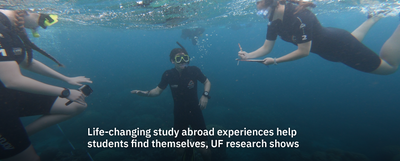
Studying abroad is about more than just enrichment for college students; it’s often about personal transformation, UF researchers have found. Every year, UF sends nearly 2,600 students overseas to become immersed in diverse cultures, gain international perspectives, and create social bonds with fellow Gators – experiences so profound that UF researchers recently published a study about their long-term impact in Leisure Sciences. And this week, the UF International Center is hosting a Study Abroad Fair from 10 a.m. to 3 p.m. Wednesday, Jan. 29 on the Reitz North Lawn to generate even more interest in these life-changing programs. “You’ve got to look at travel as not a frivolous thing because it’s part of your life story,” said Heather Gibson, Ph.D., a professor in the UF College of Health & Human Performance’s Department of Tourism, Hospitality & Event Management, who co-authored the study. “The impact isn’t just for the semester when they return; it’s now shown to be over 20 years or more. Very few studies focus on this formative phase of adult development, and these emerging adults are very malleable to be shaped. They’re searching for different sources of identity and different directions.” Conducting this research with Gibson was Hongping (HP) Zhang, Ph.D., a UF graduate of 2020 and clinical assistant professor at the University of Tennessee, Knoxville’s Department of Retail, Hospitality, and Tourism Management. Zhang said that, in 2019, tourism literature began focusing on memory theories, but research primarily looked at memorable tourism experiences and how to better attract tourists. Zhang wanted to dive deeper into how travel memories affect a person’s development and identity. This retrospective longitudinal study examined 115 alumni who traveled as part of the College of Health & Human Performance’s South Pacific program, or the Florida Down Under Program, from 2007 to 2019. The program, led by Gibson, brings students to Australia for four weeks, New Zealand for four weeks, and/or Fiji for 10 days to study sustainability, with trips including a snorkeling expedition to the Great Barrier Reef and to Mungalla Station (a land occupied by the Nywaigi Aboriginal Land Corporation). These students’ memories of studying abroad proved to be positive and an “important building block to enhance the existing feeling of self,” Zhang said. For example, one study participant shared that reflecting on her experience in Australia was a conversation starter that sparked an initial social connection with her now husband, who had also traveled to Australia on a separate trip. Other students said the program impacted their travel behaviors such as spending money, as well as their eco-conscious behaviors like using coral-reef-friendly sunscreen. Overall, Gibson believes that experiential learning like studying abroad plays a significant role in helping students find themselves at pivotal times in their lives. In fact, research from the Consortium for Analysis of Student Success through International Education shows that students who participate in study abroad programs may earn higher grades, be more likely to graduate, and be better positioned for the global workforce. “Getting students out of the classroom and pushing them out of their comfort zone is where they learn,” Gibson said. “We need to think about the undergraduate experience as more than earning credits for a degree. Study abroad provides students with friends, experience, and direction, and that’s very crucial, especially at a large university. Study abroad allows students to find their tribe.”


The Thrill of Fear: The History and Cultural Significance of Horror Movies
From flickering silent films to today’s big-budget blockbusters, horror movies have always tapped into humanity’s oldest emotion: fear. Across decades, they’ve reflected social anxieties, moral questions, and shifting definitions of what scares us. Yet behind every scream lies a story about culture, creativity, and the psychology of thrill. The Origins of On-Screen Fear Horror cinema began in the early 1900s with short silent films inspired by literature and folklore. One of the earliest, Le Manoir du Diable (1896), often considered the first horror film, introduced audiences to bats, ghosts, and the Devil himself. By the 1920s, German Expressionist films like Nosferatu and The Cabinet of Dr. Caligari used shadow and distortion to create unease, shaping the language of horror still used today. Hollywood’s Golden Age of Horror in the 1930s brought monsters to life — Dracula, Frankenstein, and The Mummy — giving audiences both fright and fascination during a time of global economic depression. These films helped people confront real-world fears symbolically, offering escape through imagination. Fear Evolves with the Times Each generation has reinvented horror to reflect its cultural moment. The 1950s’ atomic-age fears spawned giant monsters and alien invasions. The 1960s and ’70s shifted toward psychological and supernatural horror with classics like Psycho, The Exorcist, and The Texas Chain Saw Massacre — films that exposed anxieties about social change, faith, and violence. The 1980s and ’90s introduced slasher icons such as Halloween’s Michael Myers and A Nightmare on Elm Street’s Freddy Krueger, mixing terror with pop-culture spectacle. By the 2000s, horror had splintered into subgenres — from found-footage realism (The Blair Witch Project, Paranormal Activity) to elevated art-house films like Get Out and Hereditary, which use fear to explore race, grief, and identity. Why We Like to Be Scared Psychologists suggest people enjoy horror because it offers safe danger — a way to experience fear, adrenaline, and relief without real threat. Watching horror triggers the body’s fight-or-flight response, followed by catharsis once the tension resolves. Culturally, it provides a mirror to our collective psyche: what we fear, we face, and what we face, we sometimes conquer. Horror also brings people together — in theaters, at home, or online — to share an intense emotional experience. Whether screaming, laughing, or peeking through fingers, audiences participate in a ritual as old as storytelling itself. The Icons of the Genre Among the most popular and influential horror films of all time: Psycho (1960) The Exorcist (1973) Halloween (1978) A Nightmare on Elm Street (1984) The Silence of the Lambs (1991) The Ring (2002) Get Out (2017) Hereditary (2018) Each left a lasting mark on both cinema and culture — showing that horror, far from being niche, remains one of the most expressive and enduring genres in film history. Connect with our experts about the history and popularity of scary movies and horror flicks: Check out our experts here : www.expertfile.com


Georgia Southern professor receives national faculty mentor award
The Council on Undergraduate Research (CUR) named Georgia Southern University English Professor Olivia Carr Edenfield, Ph.D., the winner of the 2025 Arts and Humanities Faculty Mentor Award. The award recognizes faculty who go above and beyond to nurture undergraduate research, scholarship and creative work. Edenfield’s record of taking student research to new heights set her apart from a nationwide field of candidates. After joining Eagle Nation as a professor in 1986, Edenfield has helped her students become published researchers and presenters at local and national conferences. She said seeing those hardworking students excel has been her real reward. “Receiving this award is deeply personal,” Edenfield wrote in her CUR nomination statement. “My greatest joy in teaching has come from my students’ successes.” During her time as associate dean for Student Affairs in the former College of Liberal Arts and Social Sciences (CLASS), she launched the college’s undergraduate research symposium, now known as CURIO. She also helped establish a Center for Undergraduate Research for CLASS and set up residential interest groups to encourage students to share their love of different subjects with each other. Edenfield has helped her students achieve access to opportunities on a national level. She has served as director of the American Literature Association (ALA) since 2019, where she started a unique program that places Georgia Southern English majors in high-level administrative roles for ALA conferences. Seven of Edenfield’s students have had their work published in The Richard Macksey Journal at Johns Hopkins University. Many of her students have also presented their research at national and international conferences. Georgia Southern student Maegan Bishop’s presentation at the 2023 American Literature Association Annual Conference, based on research from Edenfield’s undergraduate class, was so impressive that she was invited to present her work at a conference on the short story at the University of Mainz, which covered all of her expenses. “My own experiences with Dr. Edenfield are only a small example of the work she has done to mentor undergraduates at Georgia Southern,” said Bishop. “She is constantly doing everything in her power to assist her students with whatever they need, extending every opportunity to those who express interest in becoming more involved in literary scholarship and campus activities.” David Owen, Ph.D., dean of the College of Arts and Humanities, emphasized how much Edenfield cares for her students, noting that her passion to help them succeed is second to none. “Mentoring is not a side note to Edenfield’s career, it is the throughline,” said Owen. “Her students succeed not just because of her guidance, but because she teaches them how to believe in their own voices.” The Faculty Mentor Award is the latest in a distinguished line of recognition for Edenfield. In 2016, she was named both the CURIO Mentor of the Year and the Wells-Warren Professor of the Year at Georgia Southern. She is a three-time recipient of her college’s Award for Distinction in Teaching, winning in 2016, 2020 and 2024. Edenfield was also a member of the inaugural class of the Governor’s Teaching Fellows program in 1995. ___ If you're interested in learning more about Georgia Southern's College of Arts and Humanities and want to book time to talk or interview, let us help - simply contact Georgia Southern's Director of Communications Jennifer Wise at jwise@georgiasouthern.edu to arrange an interview today.


ChristianaCare Charts New Course With Nurse Robotics Research Fellowship
ChristianaCare, the first hospital system in the region to deploy collaborative robots, has once again broken new ground, this time with a nationally unique initiative that puts bedside nurses at the helm of robotics research and innovation. At a graduation ceremony April 30, ChristianaCare celebrated the first four clinical nurses completing the Nursing Research Fellowship in Robotics and Innovation — the first program of its kind in the nation. The fellowship was part of a larger three-year, $1.5 million grant from the American Nurses Foundation’s Reimagining Nursing Initiative. The grant supports ChristianaCare’s broader study on how collaborative robots impact nursing practice. Over eight months, nurses from different units and specialties participated in immersive research training and lectures designed to expand their knowledge, curiosity and professional growth. Their work culminated in national conference presentations and preparations for journal submissions. The inaugural Nursing Research Fellows in Robotics and Innovation are: Briana Abernathy, BSN, RN, CEN – case management, Christiana Hospital emergency department Elizabeth Mitchell, BSN, RN-BC – Christiana Hospital surgical stepdown unit Hannah Rackie, BSN, RN, C-EFM – Union Hospital maternity unit Morgan Tallo, BSN, RN, CCRN – Christiana Hospital cardiovascular critical care unit A ‘real seat at the table’ “When you create programs that empower nurses to lead, innovate and tackle meaningful challenges, you see real impact — not just in new skills and knowledge, but in job satisfaction, well-being and retention,” said Susan Smith Birkhoff, Ph.D., RN, program director of Technology Research & Education at ChristianaCare. “This fellowship is built on the belief that when nurses are given the space to learn and lead, they bring fresh ideas and collaborative solutions back to their clinical practice areas.” Created and led by Smith Birkhoff, the fellowship is a standout in the U.S. health care landscape: It gives bedside nurses the chance to step away from their daily routines and gain advanced research experience, an opportunity rarely available at the clinical level. While the fellowship directly trained four nurses, its reach extended well beyond thazt. Fellows shared what they were learning along the way, sparking wider interest in research across the health system. The research program was highlighted as a new knowledge and innovation exemplar in the latest evaluation by the American Nurses Credentialing Center, which in March awarded ChristianaCare its fourth Magnet designation — the gold standard for nursing excellence. Adriane Griffen, DrPH, MPH, MCHES, vice president of programs at the American Nurses Foundation, praised ChristianaCare’s responsiveness in shaping the program around nurses’ needs and building a model for future innovation. “What makes this fellowship stand out is its focus on giving bedside nurses a real seat at the table,” Griffen said. “When nurses are trusted to lead and have the right support, they develop solutions that are practical, sustainable and transformative. This fellowship shows how nurse-led innovation can grow from a local pilot into a model for improving care across the country.” Through the fellowship, nurses gained a deeper understanding of applying research methodology to advance robotics science at the intersection of nursing and hospital operations, which is groundbreaking and novel. “This is such an exciting and important moment for our profession,” said Danielle Weber, DNP, RN, NEA-BC, chief nurse executive at ChristianaCare. “Innovation is about improving care, easing the burdens on our teams and finding smarter ways to meet the complex needs of our patients. Tools like collaborative robots don’t replace the human touch, they help protect and elevate it.” Mitchell said she was initially intimidated when she saw the fellowship application because it had been years since she last engaged in formal research. Learning everything from literature reviews to abstract writing pushed her outside her comfort zone and gave her practical tools to take new ideas forward. The experience inspired her to return to school this fall to pursue a graduate degree. A ‘ripple effect’ “This fellowship reignited my enthusiasm for learning and gave me the skills and confidence to keep growing,” Mitchell said. “It’s been amazing to collaborate with other fellows and mentors, and I’m excited to apply what I’ve learned to improve patient care and strengthen our teams.” In addition to Smith Birkhoff, Kate Shady, Ph.D., RN, OCN, RN IV, served as a mentor to the fellows, bringing expertise from her hematology/oncology background. Kati Patel, MPH, provided key administrative coordination and support throughout the program. ChristianaCare continues its broader research into robotics integration, with findings from the multi-year collaborative robot study expected to be shared later this year. Shady said the fellowship is already influencing ChristianaCare’s nursing culture by expanding interest in research and evidence-based practice well beyond the initial group. The program’s ripple effect is helping build lasting infrastructure for nurse-led innovation across departments. “One of the most rewarding parts of this fellowship has been seeing these nurses step into new confidence and capability,” Shady said. “They began unsure about research, but by the end, they were reading studies, writing abstracts and mentoring peers — laying the groundwork for bigger change in how we advance nursing practice.” Learn more about nursing at ChristianaCare.



Alcatraz Island, once home to America’s most infamous prison, remains a powerful symbol in the nation’s historical, cultural, and political landscape. Originally a military fortification before becoming a federal penitentiary, Alcatraz gained notoriety for housing high-profile criminals like Al Capone and “Machine Gun” Kelly. Yet its legacy extends far beyond crime and punishment—it was also the site of a landmark Indigenous occupation that helped spark a national conversation about Native rights. Today, Alcatraz continues to fascinate as a tourist destination, a case study in penal reform, and a platform for telling underrepresented stories. Journalists looking to explore the island’s rich past and present may consider: The transformation of Alcatraz from military post to maximum-security prison Daily life behind bars and profiles of the prison’s most infamous inmates The 1969–1971 Indigenous occupation and its impact on Native American activism Alcatraz’s role in shaping modern conversations about incarceration and justice reform The cultural legacy of Alcatraz in film, literature, and popular imagination How the National Park Service is preserving and interpreting the island’s layered history Alcatraz offers more than just a tale of escape—it’s a gateway into deeper stories of resistance, rehabilitation, and remembrance. Connect with an expert about Alcatraz: To search our full list of experts visit www.expertfile.com

Taking ACT-ion for Quality Improvement
“Learning is a journey. It is continuous,” said nurse Hellen Okoth, MSN, CCRN, RN-BC, of the Transitional Surgical Unit. She was one of the learners on that journey through ChristianaCare’s professional development program Achieving Competency Today (ACT). ACT, a 12-week graduate-level program dedicated to health care improvement, will celebrate its 40th session in 2025. Some 1,000 caregivers have graduated from ACT and have tested some 140 innovative project ideas since the program’s launch in 2003. On April 9, three ACT teams presented their quality improvement projects at the John H. Ammon Medical Education Center on ChristianaCare’s Newark campus. Interdisciplinary, experiential learning programs like ACT create a rich and dynamic learning environment,” said Tabassum Salam, M.D., MBA, FACP, chief learning officer for ChristianaCare. “The emphasis on continuous improvement and real-world applications of the educational content sets our ACT graduates up for lifelong learning and repeated application of these new skills.” The ACT course is a collaborative experience that brings together learners from diverse disciplines to tackle real-world health care challenges. Participants learn from health system leaders and gain a broad perspective on health care through coursework. They work in teams to complete problem-solving projects from start to finish using the Plan-Do-Check-Act (PCDA) model of continuous improvement. Facilitators, who are experts in improvement science and team effectiveness, guide the teams through the process, ensuring that each project is meticulously planned and executed. ChristianaCare offers many professional development opportunities. Click here for careers and benefits. “The hands-on projects in ACT enable learners to innovate and test out solutions in settings that directly benefit patients, leading to better outcomes and a higher quality of care,” Salam said. The three most recent teams presented improvement research that has the potential to expand beyond their pilot stage to other areas of the health system. ‘Hush! For the Love of Health’ In “Hush! For the Love of Health,” an interdisciplinary team worked to reduce noise levels on the Cardiovascular Critical Care Unit (CVCCC) at Christiana Hospital. Their goal was to decrease ambient noise levels by 10 decibels during the study period. Intensive care units often experience noise levels that can exceed 80 decibels. A quiet environment is 30 to 40 decibels. Members of the “Hush” project found creative ways to reduce noise on an intensive care unit. Ambient noise refers to all sounds present in the background, which research shows can interfere with communication, concentration and comfort. In a hospital setting, these sounds may include alarms, conversations, announcement and pages and carts moving by. The team looked for opportunities to safely reduce the number of alarms sounding. By collaborating with Philips technology company to lower alarm volumes and eliminate redundant alarms, they reduced the number of alarms sounding from 10,000 to 3,000 daily and successfully decreased noise levels by 13 decibels, exceeding their goal. “It’s good for patients to have a quiet environment and it fights alarm fatigue for caregivers,” said Dylan Norris, a pre-medical student from the University of Delaware and participant in the ACT course. ‘Show Up and Show Out’ Reducing the no-show rate among patients in primary care practices improves health outcomes and conserves resources. In “Show Up and Show Out: Boosting Patient Attendance in Primary Care,” the project team aimed to reduce the incidence of no-show appointments at the Wilmington Adult Medicine (WAM) practice by 10%. The “Show Up and Show Out” project team used personalized communication outreach to patients to encourage keeping their primary care appointments. “Our literature review showed that personal relationships with providers are one thing that can encourage people to attend appointments,” said team member Christi Karawan, MS, BSN, CCRN-CSC. The key to their problem-solving strategy was using a secure messaging platform for automatic appointment reminders specifically for WAM that were personalized with the provider’s name and thanking the patients for letting WAM be a part of their healthcare team. Other steps on the road to success were signage around the practice encouraging patients to update their contact information and calls from office assistants and medical assistants to unconfirmed patients the day prior to their appointments. The team achieved a 9.5% reduction in no-shows, just shy of their goal, over a two-week period. An office assistant who participated in the pilot said, “Outreach has been helpful not only in getting people in but in getting people to reschedule or cancel. We can catch it before it becomes a no-show.” ‘Magnetic Efficiency’ To address delays in patient transport from MRI testing at Newark campus, an ACT team created a new communication workflow to directly connect patient escort dispatch to the MRI charge technician. The ACT team aimed to decrease patient wait times following MRI completion for stretcher transport back to patients rooms by 25% — and “a bold goal,” said one colleague — during the study period. The “Magnetic Efficiency” team identified a new workflow to get patients back to their hospital rooms faster after MRI testing. Using Vocera wearable communications tools, the team created a thread for direct communication between Escort Dispatch caregivers and MRI charge technicians. Also, when an Escort transporter dropped off a patient for an MRI, the transporter asked MRI staff if any patients were ready to go back to their rooms. These changes in communication and empowerment consolidated transports and led to a 17% reduction in wait time during the two-week pilot. “We don’t want people to work harder,” said team member Tim Kane, BSN, RN. “We wanted to avoid preventable delays.” Both teams expressed satisfaction and improved communication with the new process and they expressed interest in continuing the process after the pilot ended. Future forward The ACT course has a rich history, originating from a specific initiative piloted by the Robert Wood Johnson Foundation with ChristianaCare among the early adopters along with Harvard University, the University of Pennsylvania, Johns Hopkins University and Beth Israel Deaconess Medical Center. Through the years, ChristianaCare ACT team members have seen their projects live on both as permanent changes throughout the health system and, more personally, in their professional growth. “I was able to enhance my creativity, organizational and problem-solving skills,” said Starr Lumpkin, a staff assistant who was on the “Hush” team. “This was a pivotal journey for me.” ChristianaCare is growing its program to develop a pipeline for the next generation of health professionals, said Safety and Quality Education Specialist Claire Rudolph, MSM, CPHQ. “We have a varied group of learners and facilitators who are making an impact on health care quality, cost and safety.” Dylan Norris was the first participant from a new partnership with the University of Delaware for pre-med students to get quality improvement experience. “I have learned so much about what goes into a quality improvement project. Buy-in from the stakeholders is key in implementing any new project successfully,” she said. “I have also learned about the importance of the initial research that goes into creating a new project and how much pre-planning goes into it.” Closing the event, Clinical Effectiveness Officer Christian Coletti, M.D., MHCDS, FACEP, FACP, called on the ACT graduates to use their newfound “superpowers” — “vision, seeing the future, catching something before it breaks. “It’s not a glitch in the matrix,” he said. “You are the most important people at the bedside – hearing the alarms going off or the stretchers piling up. Work to identify problems and move toward solutions in your own microenvironments. Pass on your powers with reckless abandon.”


The Staff Wellbeing (SWell) project was carried out in conjunction with Birmingham Children’s Hospital and NHS England Paediatric critical care (PCC) staff experience high levels of moral distress, post-traumatic stress disorder and burnout Two simple, low-resource wellbeing sessions can be delivered by staff for staff without specialist training. The Staff Wellbeing (SWell) project, led by Aston University researchers in collaboration with Birmingham Children’s Hospital and NHS England, has developed two simple, easy-to-deliver sessions to improve the wellbeing of staff in paediatric critical care (PCC) units in UK hospitals. PCC staff are known to experience high levels of moral distress, symptoms of post-traumatic stress disorder (PTSD) and burnout, but often feel little is offered to help them with their mental health. The SWell team at Aston University, led by Professor Rachel Shaw from the Institute of Health and Neurodevelopment, realised following a literature review that there are no existing, evidence-based interventions specifically designed to improve PCC staff wellbeing. Initial work by SWell identified the ‘active ingredients’ likely to create successful intervention designs. Together with a team from NHS England, the Aston University researchers set up the SWell Collaborative Project: Interventions for Staff Wellbeing in Paediatric Critical Care, in PCC units across England and Scotland. The aim of the project was to determine the feasibility and acceptability of implementing wellbeing interventions for staff working in PCC in UK hospitals. In total, 14 of the 28 UK PCC units were involved. One hundred and four intervention sessions were run, attended by 573 individuals. Professor Shaw said: “The significance of healthcare staff wellbeing was brought to the surface during the COVID-19 pandemic, but it’s a problem that has existed far longer than that. As far as we could see researchers had focused on measuring the extent of the problem rather than coming up with possible solutions. The SWell project was initiated to understand the challenges to wellbeing when working in paediatric critical care, to determine what staff in that high-pressure environment need, and what could actually work day-to-day to make a difference. Seeing PCC staff across half the paediatric critical care units in the UK show such enthusiasm and commitment to make the SWell interventions a success has been one of the proudest experiences in my academic career to date.” The two wellbeing sessions tested are low-resource and low-intensity, and can be delivered by staff for staff without any specialist qualifications. In the session ‘Wellbeing Images’, a small group of staff is shown images representing wellbeing, with a facilitated discussion using appreciative inquiry - a way of structuring discussions to create positive change in a system or situation by focusing on what works well, rather than what is wrong. In the ‘Mad-Sad-Glad’ session, another small group reflective session, participants explore what makes them feel mad, sad and glad, and identify positive actions to resolve any issues raised. The key ingredients in both sessions are social support – providing a psychologically safe space where staff can share their sensitive experiences and emotions without judgement, providing support for each other; self-belief – boosting staff’s self-confidence and ability to identify and express their emotions in response to work; and feedback and monitoring – encouraging staff to monitor what increases their stress, when they experience challenging emotions, and what might help boost their wellbeing in those scenarios. Feedback from staff both running and participating in the SWell interventions was very positive, with high satisfaction and feasibility ratings. Participants like that the session facilitated open and honest discussions, provided opportunities to connect with colleagues and offered opportunities for generating solutions and support. One hospital staff member responsible for delivering the sessions said: “Our staff engaged really well, and it created a buzz around the unit with members of the team asking if they could be ‘swelled' on shift. A really positive experience and we are keeping it as part of our staff wellbeing package.” The team concluded that even on busy PCC units, it is feasible to deliver SWell sessions. In addition, following the sessions, staff wellbeing and depression scores improved, indicating their likely positive impact on staff. Further evaluations are needed to determine whether positive changes can be sustained over time following the SWell sessions. The work was funded by Aston University Proof of Concept Fund and NHS England. Donna Austin, an advanced critical care practitioner at University Hospital Southampton paediatric intensive care unit, said: “We were relatively new to implementing wellbeing initiatives, but we recognised the need for measures to be put in place for an improvement in staff wellbeing, as staff had described burnout, stress and poor mood. SWell has enabled our unit to become more acutely aware of the needs of the workforce and adapt what we deliver to suit the needs of the staff where possible. Staff morale and retention has been the greatest outcomes from us participating in the SWell study and ongoing SWell related interventions.” Read the paper about the SWell interventions in the journal Nursing in Critical Care at https://onlinelibrary.wiley.com/doi/10.1111/nicc.13228. For more information about SWell, visit the website.
