
Experts Matter. Find Yours.
Connect for media, speaking, professional opportunities & more.

Reading for pleasure in free fall: New study finds 40% drop over two decades
A sweeping new study from the University of Florida and University College London has found that daily reading for pleasure in the United States has declined by more than 40% over the last 20 years — raising urgent questions about the cultural, educational and health consequences of a nation reading less. Published today in the journal iScience, the study analyzed data from over 236,000 Americans who participated in the American Time Use Survey between 2003 and 2023. The findings suggest a fundamental cultural shift: fewer people are carving out time in their day to read for enjoyment. “This is not just a small dip — it’s a sustained, steady decline of about 3% per year,” said Jill Sonke, Ph.D., director of research initiatives at the UF Center for Arts in Medicine and co-director of the EpiArts Lab, a National Endowment for the Arts research lab at UF in partnership with University College London. “It’s significant, and it’s deeply concerning.” Who’s reading and who isn’t The decline wasn’t evenly spread across the population. Researchers found steeper drops among Black Americans than white Americans, people with lower income or educational attainment, and those in rural (versus metropolitan) areas — highlighting deepening disparities in reading access and habits. “While people with higher education levels and women are still more likely to read, even among these groups, we’re seeing shifts,” said Jessica Bone, Ph.D., senior research fellow in statistics and epidemiology at University College London. “And among those who do read, the time spent reading has increased slightly, which may suggest a polarization, where some people are reading more while many have stopped reading altogether.” The researchers also noted some more promising findings, including that reading with children did not change over the last 20 years. However, reading with children was a lot less common than reading for pleasure, which is concerning given that this activity is tied to early literacy development, academic success and family bonding, Bone said. Why it matters Reading for pleasure has long been recognized not just as a tool for education, but as a means of supporting mental health, empathy, creativity and lifelong learning. The EpiArts Lab, which uses large data sets to examine links between the arts and health, has previously identified clear associations between creative engagement and well-being. “Reading has historically been a low-barrier, high-impact way to engage creatively and improve quality of life,” Sonke said. “When we lose one of the simplest tools in our public health toolkit, it’s a serious loss.” The American Time Use Survey offers a unique window into these trends. “We’re working with incredibly detailed data about how people spend their days,” Bone said. “And because it’s a representative sample of U.S. residents in private households, we can look not just at the national trend, but at how it plays out across different communities.” Why are Americans reading less? While causes were not part of the study, the researchers point to multiple potential factors, including the rise of digital media, growing economic pressures, shrinking leisure time and uneven access to books and libraries. “Our digital culture is certainly part of the story,” Sonke said. “But there are also structural issues — limited access to reading materials, economic insecurity and a national decline in leisure time. If you’re working multiple jobs or dealing with transportation barriers in a rural area, a trip to the library may just not be feasible.” What can be done? The study’s authors say that interventions could help slow or reverse the trend, but they need to be strategic. “Reading with children is one of the most promising avenues,” said Daisy Fancourt, Ph.D., a professor of psychology and epidemiology at University College London and co-director of the EpiArts Lab. “It supports not only language and literacy, but empathy, social bonding, emotional development and school readiness.” Bone added that creating more community-centered reading opportunities could also help: “Ideally, we’d make local libraries more accessible and attractive, encourage book groups, and make reading a more social and supported activity — not just something done in isolation.” The study underscores the importance of valuing and protecting access to the arts — not only as a matter of culture, but as a matter of public health. “Reading has always been one of the more accessible ways to support well-being,” Fancourt said. “To see this kind of decline is concerning because the research is clear: reading is a vital health-enhancing behavior for every group within society, with benefits across the life-course.”



Long proclaimed Italy’s “moral capital,” Milan is renowned worldwide for its significant contributions to fashion, design and the arts. Soon, another point of pride will be added to the city’s storied history, when the regional hub—and partnering town Cortina d’Ampezzo—plays host to the 2026 Winter Olympics in February. Luca Cottini, PhD, is a professor of Italian Studies and an expert on the evolution of Italian culture, particularly through the 19th and 20th centuries. Recently, he shared some thoughts concerning Milan and Cortina’s successful joint bid for the Olympics, the themes and iconography expected to define this year’s opening ceremony and the symbolic significance of Italy’s selection as a host nation. Question: What was the role of past major events in Milan and Cortina—like the 2015 World’s Fair and the 1956 Winter Olympics—in helping to elevate their appeal for these games? Luca Cottini: I’ll start by saying that although people notice world’s fairs less than the Olympics, they are more impactful to a city and country because they generate more revenue, business, political relationships and positive reputation. They are events in which all the world comes together and each country exposes its excellence, while the host nation brings a visibility that it would not carry otherwise. In 2015, Milan hosted the world’s fair, which generated a completely new fairgrounds area and a visibility of politics, industry, technology and modernity in a way that brings the city to a global stage. I would say that is when the ascent of Milan really started, especially as a desirable destination. With Cortina, after the 2015 World’s Fair—and especially after the COVID-19 pandemic—the Dolomites became really a popular region for travelers to visit. Cortina is also symbolic to Olympic history, because it's the site of the first Olympics that took place in Italy, in 1956 during the reconstruction era. That was the Dolce Vita period, in the middle of the 1950s economic boom, and those games were followed by Rome’s Summer Olympics in 1960. They both represented a way in which Italy, coming out of the war destroyed, was reaffirming its rebirth. Over the years, fewer cities have wanted to host the Olympics because they tend to carry a lot of economic burden, financial debt and little return on investment. In this sense, Milan and Cortina, helped by increased popularity after the world’s fair, sold themselves as a sustainable Olympics. Ninety percent of the buildings were refurbished from older buildings, and they will serve purposes after the Olympics. It’s difficult to tell whether it’s economically sound or not, but it is a way to promote two cities that are in big moments of growth. Q: These Olympic Games will be celebrating Milan’s contributions to fashion. What is the city’s significance to the fashion world? LC: Milan is certainly the capital of fashion in Italy, and is one of the capitals of fashion in the world, along with Paris, New York and London. The fashion heritage that the city carries now in iconic brands like Armani, Versace, Moschino and Dolce & Gabbana is the outcome of a process that took shape in the late 1970s. Until then, fashion in Italy was mainly related to Rome, through cinema, and Florence, as that city represented a new Renaissance in the postwar years. But in the 1970s, much of this fashion world moved from those cities to Milan, because there was a conglomeration of labor, skills, capital and creativity that generated a complex productive and cultural system, or the so-called “Sistema Moda.” This is a particular approach to the industry in Italy that coordinates management and creativity around the figures of a big creative director and a big manager who work together in creating not just nice styles, but also sustainable outlets and markets in and outside Italy. In turn, with its reputation, Milan gives the Olympics that seal of grandeur and coolness. The connection with fashion and promotion of uniqueness is part of the national rhetoric that surrounds what we call “Made in Italy,” this idea of luxury, styling, beauty, order and measure that is endowed in the Italian DNA. Q: Andrea Bocelli—who also appeared in Torino’s 2006 closing ceremony—is supposed to sing once again in this year’s opening ceremony. Aside from his popularity, what is the symbolic significance of his selection as a performer? LC: Bocelli is an interesting case. He is a prototypical Italian success story, which is born in the peninsula but is then ratified outside of Italy. As Bocelli became a global sensation in the U.S., he then came back to his roots in Italy, where his voice has become a symbol of national unity, as epitomized in his solo concerto of Milan, during the pandemic, when he sang in front of the empty Piazza del Duomo, facing the city’s cathedral. In his Catholic faith and secular operatic repertoire, he symbolizes Italian culture as a similar piazza or open space where different voices can converge in a temperate balance. When you put together Bocelli, Mariah Carey and whoever else will be part of the ceremony, that same Italian identity will give rise to a new synthesis, as the encounter of tradition and novelty, grounded-ness and openness. Q: The Olympic flames are supposed to be lit in two cauldrons—one in Milan and one in Cortina—each with a design inspired by Leonardo da Vinci. What was da Vinci’s importance to Milan, specifically? LC: Da Vinci is part of the fabric of Milan. He spent 20 years in the city, painting “The Last Supper” and working at Castello Sforzesco, as well as many other places. His footprint is all over Milan, in its design, walls, canal system and more. He is an archetype of the Italian mind in as much as it represents the combination of engineering and beauty. The word Ingenium in Latin, meaning “genius,” overflows in English into the word “engineering” and also “ingenuity,” which reflects the creative mind. Da Vinci represents the synthesis of Italian Ingenium as a combination of aesthetics and problem solving, which you still see in the city today.


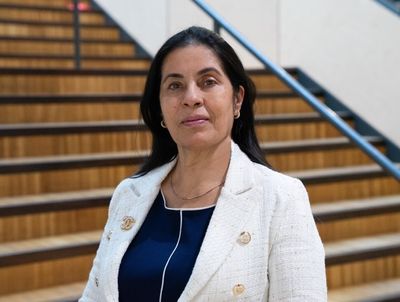
Professor Sangeeta Khorana made a Fellow of the Academy of Social Sciences
Professor Sangeeta Khorana, professor of international trade policy at Aston University, has been made a Fellow of the Academy of Social Sciences Fellows are elected for their contributions to social science, including in economic development, human rights and welfare reform The 2025 cohort of 63 Fellows will join a 1,700-strong Fellowship with members from academia, the public, private and third sectors. Professor Sangeeta Khorana, professor of international trade policy at Aston University, has been made a Fellow of the Academy of Social Sciences as part of the Autumn 2025 cohort. The 63 new Fellows have been elected from 39 UK organisations, comprising 29 higher education institutions, as well as think tanks, non-profits, business, and from countries beyond the UK including Australia and China. The Academy of Social Science’s Fellowship comprises 1,700 leading social scientists from academia, the public, private and third sectors. Selection is through an independent peer review which recognises their excellence and impact. Professor Khorana has more than 25 years of academic, government and management consulting experience in international trade. She has worked for the Indian government as a civil servant and on secondment to the UK Department for Business and Trade. Her expertise includes free trade agreement (FTA) negotiations and World Trade Organization (WTO) issues. As well as sitting on various expert committees, Professor Khorana is an advisor on gender and trade to the Commonwealth Businesswomen’s Network in London and serves on Foreign Investment Committee of the PHD Chambers of Commerce and Industry, India. The Autumn 2025 cohort of Fellows have expertise in a range of areas including educational inequalities, place-based economic development, human rights protection, the regulation of new technologies, and welfare reform, highlighting the importance, breadth and relevance of the social sciences to tackling the varied challenges facing society today. As well as excellence in research and professional applications of social science, the new Fellows have also made significant contributions beyond the academy, including to industry, policy and higher education. Professor Khorana said: “I am deeply honoured to be elected a Fellow of the Academy of Social Sciences. This recognition underscores not only the importance of international trade policy as a driver of inclusive and sustainable growth, but also the role of social sciences in shaping fairer and more resilient societies. At Aston University, my research seeks to bridge academia, government and industry to inform evidence-based trade policy for global cooperation. I am proud to contribute to the Academy’s mission of demonstrating how social science knowledge and practice can address some of the most pressing challenges of our time.” President of the Academy, Will Hutton FAcSS, said: “It’s a pleasure to welcome these 63 leading social scientists to the Academy’s Fellowship. Their research and practical applications have made substantial contributions to social science and wider society in a range of areas from international trade policy and inclusive planning systems through to innovative entrepreneurship and governing digital technologies. We look forward to working with them to promote further the vital role the social sciences play in all areas of our lives.”



Ontarians have spoken, and the results are in. For a second consecutive year, the 2025 CAA Worst Road in Ontario is Aberdeen Avenue in Hamilton. Frustrations with potholes and poor road maintenance have kept this road in the number one spot. It first debuted on the top regional list for Hamilton in 2021 and moved onto the provincial list in 2023. In second and third place are Barton Street East in Hamilton and County Road 49 in Prince Edward County, two roads that have previously appeared on the CAA Worst Roads top 10 list six and seven times, respectively. Both roads are expected to receive significant upgrades and are in the planning stages. "Timely repairs, better communication, quick fixes, pothole funds, and using recycled aggregates are just some solutions to fix unsafe roads," says Teresa Di Felice, assistant vice president of government and community relations, CAA South Central Ontario. "CAA continues to urge all levels of government to prioritize road safety with stable funding to do so." This year, participants nominated over 2,400 different roads from 208 municipalities, up respectively from 2,000 roads from 145 municipalities in 2024 – a 20 per cent increase in roads nominated and a 42 per cent increase in the number of municipalities with roads nominated. Municipalities are responsible for approximately 140,000 kilometres of roads across the province. "For over two decades, the CAA Worst Roads campaign has given Ontarians a voice to spotlight unsafe roads in their communities and push for much-needed repairs,” says Di Felice. "This list provides a powerful snapshot to governments on where to prioritize budgets and move up road repairs, and we know that the public supports these efforts." CAA research shows that 26 per cent of survey respondents expressed dissatisfaction with road work projects, stating that they take multiple seasons to complete. However, 85 per cent are willing to put up with the inconvenience of construction in exchange for long-term improvements. Ontarians shared their primary reasons for selecting a road, with 84 per cent citing potholes, followed by poor road maintenance (77 per cent) and traffic congestion (15 per cent). Ontario's Top 10 Worst Roads for 2025 1. Aberdeen Avenue, Hamilton 2. Barton Street East, Hamilton 3. County Road 49, Prince Edward County 4. Eglinton Avenue West, Toronto 5. Hurontario Street, Mississauga 6. Leveque Road, South Frontenac 7. Highway 50, Caledon 8. Sider Road, Fort Erie 9. Gardiner Expressway, Toronto 10. Sheppard Avenue West, Toronto Worst Roads by Region Toronto – Eglinton Avenue West Hamilton – Aberdeen Avenue Halton-Peel-York-Durham— Hurontario Street, Mississauga Central—7th Line, Innisfil Eastern— County Road 49, Prince Edward County Niagara— Sider Road, Fort Erie North— Panache Lake Road, Greater Sudbury Southwest— Banwell Road, Windsor Western— Dundas Street, London Ottawa— Carling Avenue For the complete list of the 2025 Worst Roads, please visit www.caasco.com/worstroads The Residential and Civil Construction Alliance of Ontario (RCCAO) has verified Ontario's top 10 list. CAA is proud to have RCCAO as a technical partner in the CAA Worst Roads advocacy campaign.



Researchers to explore how AI can help urban mobility planners They are to investigate AI-driven policy tools’ potential to create greener cities Project to benefit from expertise of five European universities. A European group of researchers led by Aston University is taking the first steps to explore how AI can help urban mobility planners. As city populations grow causing strain on resources, the experts are to investigate AI-driven policy tools’ potential to create greener cities. The team have received £10,000 in funding from the British Academy which they hope will set them on the road to further research. Taking part in the project will be experts from University College London, Ruralis University in Norway, the University of Turin, Italy and Lisbon University Institute, Portugal. Dr Dalila Ribaudo from the Centre for Business Prosperity at Aston Business School and Dr Alina Patelli from the Aston Centre for Artificial Intelligence Research and Application will co-lead a UK-EU consortium consolidation project. The interdisciplinary project will benefit from expertise in applied business and specialist insight into global economics, policymaking and urban transport planning. Dr Patelli said “Policymakers and society could all benefit from our research into innovative ways of managing the strain on urban infrastructures and resources. "The AI-powered policy tools we are developing are meant to support decision managers at all levels of urban governance with reducing emissions, optimising transportation as well as predicting and preventing environmental hazards. Such changes would improve the quality of life for the millions of people living in towns and cities across the UK, Europe and, in the long term, the entire world.” Following the successful bid for the British Academy pump priming grant the team will apply for Horizon Europe funding to continue developing impactful AI-driven policy tools for greener cities.

Aston University researcher to help uncover hidden impact of painkiller overuse among older people
The HOPE-AO project led by the University of Plymouth will look at the potential harms of overprescribed pain medication in older people in the UK Aston University’s Professor Ian Maidment will bring his expertise in pharmacy and work with patient groups on medicine optimisation The project has been funded by the National Institute for Health and Care Research (NIHR) A new study led by the University of Plymouth will explore chronic pain prescribing in older adults across the UK, with the aim of understanding whether current treatments and processes meet their needs. The HOPE-AO: Helping to Optimise Pain control in the Elderly experiencing Analgesic Overprescribing project is being supported by the National Institute for Health and Care Research (NIHR) and includes Aston University’s Professor Ian Maidment. It will investigate whether certain groups of the older population are more likely to have analgesic (pain relief) medication overprescribed to them, and any side effects or other harms these medications can pose if taken for long periods. It aims to identify alternative treatment solutions to reduce the use of unnecessary pain medicines, working with patients to develop a list of acceptable strategies that could be tested and implemented across the UK. Around 4m older people across the UK live with varying degrees of chronic pain as a result of conditions including arthritis, diabetes or frailty. While some people benefit from pain relief medicines, many end up receiving long-term repeated prescriptions – for medications ranging from paracetamol and ibuprofen to opioids and antidepressants – for weeks, months or years at a time. The project is being led by researchers from the University of Plymouth, working with colleagues at the University of Exeter, Aston University, University of Aberdeen and the North East London Foundation NHS Trust. It is funded by through a Programme Development Grant from the National Institute for Health and Care Research (NIHR). The project team comprises experts in the care of older people – including healthcare researchers, nurses, consultants, GPs, pharmacists and psychiatrists working across the UK – as well as medical statisticians and health economists. It also involves an advisory group of patients with lived experience of receiving repeat prescriptions for pain medication. During the project, the team will speak to patients aged 65 and over with a history of chronic pain for which they are taking, or have taken, medication and families who cared for and supported relatives with chronic pain. They will also speak to healthcare professionals who are either prescribing or supporting older adults taking medication for chronic pain management. Alongside this work, the team will analyse anonymised healthcare data to understand more about older adults who are prescribed medication for chronic pain. This includes patterns in prescribing, health and demographic factors associated with pain medication use, and potential health outcomes, and will help identify those likely to benefit most from support. Professor Maidment, from Aston Pharmacy School, will bring his expertise in pharmacy, medication use in day-to-day clinical practice and working with diverse groups of patients to support medication optimisation. He said: “From my experience in community pharmacy, the use of pain medicines is very common in older people. We need to work with older people to understand how we can help older people to use other potentially safer approaches.” Patricia Schofield, professor of clinical nursing at the University of Plymouth and one of the study’s chief investigators, said: “Very often, older people are told by a doctor that the most effective means of treating a health condition is through some form of pain relief. But they often don’t get any form of follow-up appointment and, as a generation, are less likely to seek one as they either feel pain is part of the ageing process or they don’t wish to be seen as a burden. The result is that they end up getting repeat prescriptions, potentially for pain medications they no longer need and also at significant cost to the NHS. “This study will give us a clearer understanding of the scale of the issue which we can use to develop ways of benefitting patients and their families, and the healthcare professionals working to treat and support them.” Victoria Abbott-Fleming MBE, founder of the charity Burning Nights CRPS Support, is the chair of the Patient and Public Involvement and Engagement group for the HOPE-AO study. It will be made up of several adults over the age of 65 who live with chronic pain and have received repeat prescriptions for pain medication. Victoria has herself lived for more than 20 years with a chronic pain condition, Complex Regional Pain Syndrome (CRPS), and set up Burning Nights to support those affected by it on a day-to-day basis and their families. She is also chair of the Expert Patient and Carer Committee at the British Pain Society. She said: “I’m excited to support this study that places the voices of older adults and their carers at the heart of pain management. All too often, those living with chronic pain – especially older adults – are prescribed medication without regular review or consideration of alternative approaches. This study is a vital step towards more informed and balanced care, helping ensure that older people living with chronic pain are not just treated, but truly heard and supported.”


New true crime podcast Writing Wrongs launches with a chilling case of miscarriage of justice
True crime enthusiasts and forensic linguistics fans have a gripping new podcast to add to their playlists. Writing Wrongs, an original podcast from the Aston Institute for Forensic Linguistics (AIFL) at Aston University, provides a deep dive into how forensic language analysis plays a crucial role in solving crimes and improving the delivery of justice. Hosts Professor Tim Grant and Dr Nicci MacLeod, leading experts in forensic linguistics, explore how police interviews and linguistic evidence played a key role in one of Britain’s most infamous miscarriages of justice. Throughout the series, they’ll explore real-life cases where forensic linguistics has played a pivotal role in solving crimes, joined by expert guests who reveal the fascinating - and sometimes chilling - ways language can expose the truth. The first episode, Timothy Evans: A Case for Forensic Linguistics, launched on 7 March 2025, 75 years after Timothy Evans’ wrongful conviction and subsequent execution (9 March 1950). The Timothy Evans case was instrumental in the UK’s decision to abolish the death penalty, raising critical questions about police interviewing techniques, false confessions and linguistic analysis in legal proceedings. In 1950, Evans was convicted and later hanged for the murder of his baby daughter, Geraldine, while his wife, Beryl Evans, was also presumed to be his victim. However, three years later, his neighbour at 10 Rillington Place, London, John ‘Reg’ Christie, a former police officer, was exposed as a serial killer, responsible for at least eight murders – and almost certainly including Geraldine and Beryl Evans. Despite evidence casting doubt on Evans’ guilt, he was executed before Christie’s crimes came to light. This case was instrumental in the early development of forensic linguistics, as experts later analysed Evans’ police confessions to expose inconsistencies. Tim Grant, professor of forensic linguistics at Aston University, said: “We are delighted to launch Writing Wrongs with this episode focussing on the wrongful conviction and execution of Timothy Evans. This episode clearly shows how language analysis can provide evidence to help resolve one of the most controversial cases in British legal history. “In other episodes we show how contemporary forensic linguists are making contributions to the delivery of justice in cases of murder, rape and terrorism. In each case we discuss with a linguist how they assisted, and demonstrate how providing linguistic evidence to the courts can exonerate or incriminate and change the outcome of cases.” Dr Nicci MacLeod, deputy director of the Aston Institute for Forensic Linguistics, said: “This is the origin story for forensic linguistics, a phrase first coined by Jan Svartvik in his 1968 publication analysing the Evans statements. “Svartvik was able to show that there were clear differences in the language style of the incriminating sections of Evans’ ‘confession’, and other parts of the statements he gave to police. “One feature Svartvik focused on was the use of the word ‘then’ positioned after the subject of a clause, as in “I then came upstairs”, as opposed to what we might consider the more usual ordering of “then I came upstairs”. This is a feature of ‘policespeak’, and was also identified in the infamous Derek Bentley confession by Malcolm Coulthard some years later.” The first three episodes of the eight-part series of Writing Wrongs are available now on Spotify, Apple Podcasts and all major podcast platforms. They include a bonus episode with the author, Kate Summerscale ('The Suspicions of Mr Whicher' and 'The Queen of Whale Cay'), about her latest book ‘The Peepshow: The Murders at 10 Rillington Place’ and an episode featuring Dr Isobelle Clarke, which shows how a series of forensic authorship analyses assisted in the investigation and conviction of a terrorist who planted a pipe bomb in Edinburgh in 2018. Listeners are encouraged to follow, share and engage with the hosts by submitting their forensic linguistics questions. Whether it’s about the cases covered or broader issues in forensic linguistics, Professor Grant and Dr MacLeod welcome enquiries from listeners. Future episodes will be released on the first Friday of the month with episode four, Foreygensic Lingeyguistics: Cracking the Killer’s Code, dropping on 4 April 2025.


Industry and researchers call for action to tackle climate impact of organic, carbon-based chemicals
Call led by members of Supergen Bioenergy Hub, based at Aston University They highlight that carbon-based chemicals cannot be decarbonised but can be defossilised They want a transition to renewable carbon sources such as biomass, recycled carbon, and carbon dioxide. Director of Supergen Bioenergy Hub, Professor Patricia Thornley Industry experts and university researchers have joined together to ask the government to address the climate impact of organic, carbon-based chemicals. While demand for fossil fuels as energy is expected to fall in the coming decades, the petrochemicals sector is set to grow significantly according to experts and is set out in a 2018 report by the International Energy Agency. Members of the Supergen Bioenergy Hub which is based at Aston University and the Biomass Biorefinery Network believe the issue has yet to receive proper attention and is calling for a strategy that addresses this key component of our greenhouse gas emissions. They want a move to a more circular economy, managing supply and demand levels and transitioning away from fossil feedstocks which are raw materials required for some industrial processes. In their paper Carbon for chemicals How can biomass contribute to the defossilisation of the chemicals sector? they highlight that carbon-based chemicals cannot be decarbonised but can be defossilised through a transition to renewable carbon sources such as biomass, recycled carbon and carbon dioxide. Many products in modern society contain carbon such as pharmaceuticals, plastics, textiles, food additives, cosmetics, and cleaning products. These chemicals are derived from fossil feedstocks, so they are classed as petrochemicals. As a result, they contribute to global greenhouse gas emissions and climate change. Carbon is embedded in organic chemical products and released when they break down at end-of-life, for example through incineration. To address the emissions from carbon in chemicals and accelerate the development of bio-based chemicals, the group want a cross-party consensus to support a sustainable chemical system. Director of Supergen Bioenergy Hub, Professor Patricia Thornley, said: “We need to consider the UK’s future feedstock and chemicals production and use, and how it relates to net zero, agriculture, environment, economy, trade, and just transition policy objectives. There are opportunities here for the UK to lead the way on sustainable chemical production, but we need to carefully plan a roadmap for the transition, that delivers opportunities around jobs and the economy as well as sustainable greenhouse gas reductions. “There is a definite role for biomass here. But it is essential that any future use of biomass in the chemicals sector is underpinned by rigorous, trusted, and enforceable sustainability governance to build confidence, deliver sustainability benefits, and minimise negative impacts. That requires improvements in sustainability governance and regulation. “We think there are real economic and trade opportunities by the UK accelerating sustainable chemicals. At the moment bio-based chemicals, and chemicals derived from other renewable carbon sources, are not being expanded in the UK because there are no explicit incentives that prioritise them over fossil-based production.” The group argues that the UK has significant academic and industrial research expertise to underpin the development of sustainable bio-based products and could be a global leader in bio-based products and sustainability governance. They believe that to date little of this has manifested as UK-based scale-up and manufacturing, whilst there are numerous examples of UK-led research being scaled up elsewhere. The paper was delivered at a webinar on 7 August. Notes to Editors Carbon for chemicals How can biomass contribute to the defossilisation of the chemicals sector? https://www.supergen-bioenergy.net/output/carbon-for-chemicals-how-can-biomass-contribute-to-the-defossilisation-of-the-chemicals-sector-policy-briefing/ Author: Joanna Sparks (formerly Aston University) With contributions from: Cristiane Scaldaferri (formerly Aston University), Andrew Welfle (University of Manchester), Patricia Thornley (Aston University), Ashley Victoria (University of Leeds), Caspar Donnison (Lawrence Livermore National Laboratory), Jason Hallett (Imperial College London), Nilay Shah (Imperial College London), Mirjam Rӧder (Aston University), Paul Mines (Biome Bioplastics), David Bott (Society of Chemical Industry), Adrian Higson (NNFCC), Neil Bruce (University of York) 2018 International Energy Agency report https://www.iea.org/reports/the-future-of-petrochemicals https://www.supergen-bioenergy.net/ The Supergen Bioenergy Hub works with academia, industry, government, and societal stakeholders to develop sustainable bioenergy systems that support the UK’s transition to an affordable, resilient, low-carbon energy future. The Hub is funded jointly by the Engineering and Physical Sciences Research Council (EPSRC) and the Biotechnology and Biological Sciences Research Council (BBSRC) under grant EP/Y016300/1 and is part of the wider Supergen Programme. www.bbnet-nibb.co.uk The Biomass Biorefinery Network (BBNet), a phase II Network in Industrial Biotechnology & Bioenergy funded by the Biotechnology and Biological Sciences Research Council (BBSRC-NIBB) under grant BB/S009779/1. The aim of the Biomass Biorefinery Network is to act as a focal point to build and sustain a dynamic community of industrial and academic practitioners who work together to develop new and improved processes for the conversion of non-food biomass into sustainable fuels, chemicals and materials. About Aston University For over a century, Aston University’s enduring purpose has been to make our world a better place through education, research and innovation, by enabling our students to succeed in work and life, and by supporting our communities to thrive economically, socially and culturally. Aston University’s history has been intertwined with the history of Birmingham, a remarkable city that once was the heartland of the Industrial Revolution and the manufacturing powerhouse of the world. Born out of the First Industrial Revolution, Aston University has a proud and distinct heritage dating back to our formation as the School of Metallurgy in 1875, the first UK College of Technology in 1951, gaining university status by Royal Charter in 1966, and becoming the Guardian University of the Year in 2020. Building on our outstanding past, we are now defining our place and role in the Fourth Industrial Revolution (and beyond) within a rapidly changing world. For media inquiries in relation to this release, contact Nicola Jones, Press and Communications Manager, on (+44) 7825 342091 or email: n.jones6@aston.ac.uk


Aston University researcher takes on leadership role within biomedical engineering
Dr Antonio Fratini is the new chair of the Institute of Mechanical Engineers Biomedical Engineering Division It is one of the largest group of professional biomedical engineers in the UK The specialism merges professional engineering with medical knowledge of the human body, such as artificial limbs and robotic surgery. An Aston University researcher has been given a leading role within the biomedical engineering sector. Dr Antonio Fratini CEng MIMechE has been elected as the new chair of the Biomedical Engineering Division (BmED) of the Institution of Mechanical Engineers (IMechE), one of the largest groups of professional biomedical engineers in the UK. The IMechE has around 115,000 members in 140 countries and has been active since 1847. Biomedical engineering, also known as medical engineering or bioengineering, is the integration of engineering with medical knowledge to help tackle clinical problems and improve healthcare outcomes. Dr Fratini previously served as chair of the Birmingham centre of the division for five years and as vice-chair of the division for one year. His research includes responsible use of AI, 3D segmentation and anatomical modelling to improve surgical training and planning, motor functions and balance rehabilitation. He leads Aston University’s Engineering for Health Research Centre within the College of Engineering and Physical Sciences and has vast experience in the design, development and testing of new medical devices. Currently he is the University’s principal investigator for the West Midlands Health Tech Innovation Accelerator and he has a growing reputation in the UK and internationally within the biomedical engineering profession. He said: “Biomedical engineering is continuously evolving and our graduates will create the future of health tech and med tech for more effective, sustainable, responsible and personalised healthcare. “I am very honoured of this appointment. This three-year post will be a great opportunity to further develop the biomedical engineering profession worldwide and to show Aston University’s commitment to an inclusive, entrepreneurial and transformational impact within the field.” Professor Helen Meese, outgoing chair of the division, said: “I am delighted to see Antonio take on the chair’s position. He has, over the years, contributed significantly to the growth of the Birmingham regional centre and has actively supported me throughout my tenure as chair. I know how passionate he is about our profession and will undoubtedly continue to drive the division forward over the next three years.” Dr Frattini was presented with his new title on 20 June at the IMECHE HQ at 1 Birdcage Walk, London during the Institution’s technology strategy board meeting. For media inquiries in relation to this release, contact Nicola Jones, Press and Communications Manager, on (+44) 7825 342091 or email: n.jones6@aston.ac.uk


MESOX, a spin-out from the pharmaceutics group at Aston Pharmacy School, develops drug carrier technology to improve medicine formulations The company won the Start-Up prize at the Medilink Midlands Awards 2024 The prize is awarded to a new company that shows a promising future. A spin-out company from Aston University’s pharmaceutics research group has won a medical technology and life sciences industry award. MESOX, which was founded by Aston University pharmaceutics lecturer Dr Ali Al-Khattawi, won the Medilink Midlands Start-Up Award, which is presented to a newly established company that shows a promising future. The Medilink Midlands Business Awards showcase the best collaborations between industry, academia and the NHS across the Midlands. This year’s ceremony was held at the Athena in Leicester on 9 May. The awards were established by Medilink Midlands, which provides specialist business support to boost the region’s economic output from the life sciences industry. Working alongside the Midlands Engine and other strategic alliances, it helps stimulate additional and value-added growth of the Midlands as a prosperous community for life sciences. With in-depth expertise in particle engineering for drug delivery and pharmaceutical spray drying, MESOX uses IP-protected carriers to improve the bioavailability and efficacy of pharmaceuticals, partnering with pharmaceutical and biotechnology companies to bring challenging therapeutics to market. In its citation, Medilink Midlands described MESOX as “transforming pharmaceutical formulation with its game-changing carrier technologies.” As a winner of a Medilink Midlands award, MESOX will now be entered into the UK National Awards, the ceremony of which takes place on 11 July 2024 in London. Dr Al-Khattawi said: “We are delighted to have won this prestigious award, which highlights the outstanding research and development work being done by the MESOX team and the immense potential of our company to transform the medicine formulation development landscape. Through collaboration with other pharmaceutical companies, clinicians, academic researchers, and by engaging directly with patients to understand their needs, we aim to innovate and advance drug delivery science into life-saving therapeutics. “At MESOX, our ambition is to be a global, research-based pharmaceutical company rooted in the Midlands, dedicated to developing life-saving therapeutics at speed and resource-efficiency. Our ultimate goal is to enable healthier lives for patients worldwide and ensure better global access to essential medicines.”
