
Experts Matter. Find Yours.
Connect for media, speaking, professional opportunities & more.

Baylor Professors Use Whale Earwax to Reconstruct Whale Stress Levels Spanning More Than a Century
In a follow-up to their groundbreaking study, Baylor researchers were able to reconstruct baleen whales’ lifetime stress response to whaling and other manmade and environmental factors spanning nearly 150 years. Using a technique they pioneered six years ago, Stephen J. Trumble, Ph.D., associate professor of biology, and Sascha Usenko, Ph.D., associate professor of environmental science, both in Baylor University’s College of Arts & Sciences, analyzed earplug laminae, a growth layer representing six months found in whale earwax, as part of their recent study published in Nature Communications this month. Using earplugs taken from fin, humpback and blue whales originating in the Pacific and Atlantic Oceans from 1870 to 2016, Trumble and Usenko were able to determine the whales’ cortisol levels, a stress-response hormone, to industrial whaling, World War II wartime activities and sea-surface temperature. “This is the first-ever study to quantify temporal stress patterns in baleen whales,” Trumble said. “While the generated stress profile spans nearly 150 years, we show that these whales experienced survivor stress, meaning the exposure to the indirect effects of whaling, including ship noise, ship proximity and constant harassment, results in elevated stress hormones in whales spanning vast distances.” Whaling had a significant impact on whales’ cortisol levels. During the 1960s when whaling was at its peak with 150,000 whales harvested, cortisol peaked to a maximum and was the highest average in whales in the 20th century, according to the study’s findings. Second in a three-part exclusive online look at content from the Natural History Museum's Whales: Beneath the surface exhibition featuring Dr. Stephen J. Trumble and Dr. Sascha Usenko. During World War II when whaling declined, whales still showed an increase in cortisol levels. Trumble and Usenko suggest the impact of the theater of war. “The stressors associated with activities specific to WWII may supplant the stressors associated with industrial whaling for baleen whales,” Usenko said. “We surmised that wartime activities such as under water detonation, naval battles including ships, planes and submarines, as well as increased vessel numbers, contributed to increase cortisol concentrations during this period of reduced whaling.” When whaling moratoriums were introduced in the mid-1970s, whaling decreased as well as cortisol levels—reaching their lowest concentrations. “From the 1970s through the 2010s whaling counts were reportedly zero in the Northern Hemisphere, but mean cortisol levels steadily increased, with recent peaks reaching near the maximum levels observed before whaling moratoriums,” Usenko said. The impact of stress on whales could have larger implications for baleen whales, which are “considered sentinels of their environment and indicators of anthropogenic or manmade stressors,” Usenko said. “This study shows that anthropogenic stressors results in a physiological response in large whales. These chronic stressors may impact life history events such as reproductive parameters,” Trumble said. “Lastly, human-based stressors such as warming sea surface temperatures may also result in elevated stress in these whales.” The research pair has expanded the number of museums they partner with and currently have more than 100 additional earplugs to process. Earplugs were provided through a collaboration between the investigators and the Smithsonian Museum of Natural History and the Museum of Natural History London. ABOUT BAYLOR UNIVERSITY Baylor University is a private Christian University and a nationally ranked research institution, characterized as having “high research activity” by the Carnegie Foundation for the Advancement of Teaching. The University provides a vibrant campus community for approximately 15,000 students by blending interdisciplinary research with an international reputation for educational excellence and a faculty commitment to teaching and scholarship. Chartered in 1845 by the Republic of Texas through the efforts of Baptist pioneers, Baylor is the oldest continually operating University in Texas. Located in Waco, Baylor welcomes students from all 50 states and more than 80 countries to study a broad range of degrees among its 11 nationally recognized academic divisions. Baylor sponsors 19 varsity athletic teams and is a founding member of the Big 12 Conference. ABOUT BAYLOR COLLEGE OF ARTS & SCIENCES The College of Arts & Sciences is Baylor University's oldest and largest academic division, consisting of 26 academic departments and 13 academic centers and institutes. The more than 5,000 courses taught in the College span topics from art and theatre to religion, philosophy, sociology and the natural sciences. Faculty conduct research around the world, and research on the undergraduate and graduate level is prevalent throughout all disciplines.


MEDIA RELEASE: CAA rolling out new predictive technology
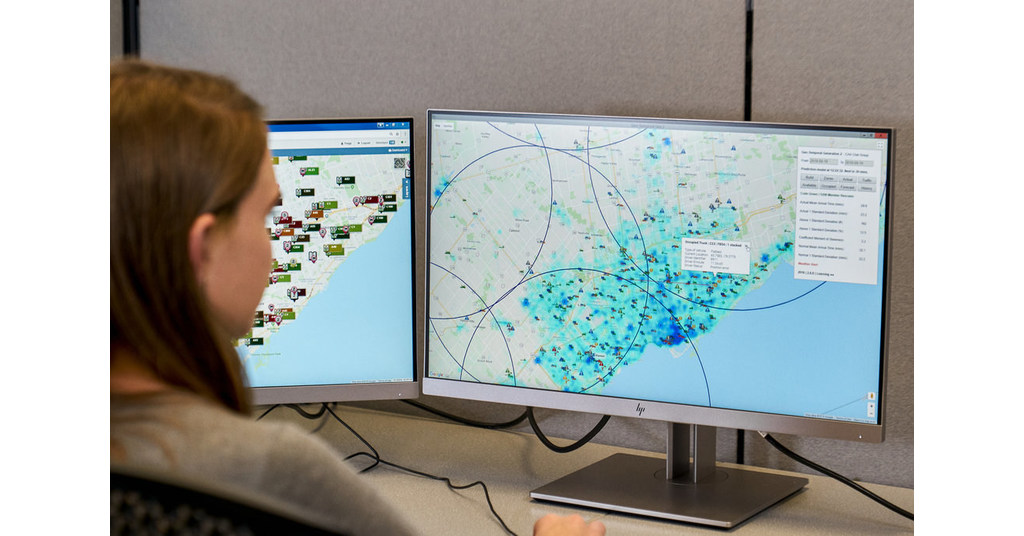
New predictive technology, created in-house at CAA South Central Ontario (CAA SCO) can now predict the likelihood of a roadside event occurring in a specific geographic area, and send a truck to that area before a breakdown occurs. CAA's new Gen 2 predictive technology gets the right truck, to the right place, at the right time. Gen 2 is a proprietary machine-learning algorithm that leverages data from 115 years of roadside assistance service. It layers on weather and humidity indicators, along with real-time traffic and GPS information to predict roadside needs. Gen 2 was developed in-house by CAA in late 2017 and piloted in the London area in January 2018. Initial results during the pilot period showed a promising reduction in the average time of arrival for roadside service vehicles. CAA SCO was able to rescue members an average of 11 minutes faster during the summer of 2018, when compared to the summer months of 2017. The service improvement is directly tied to the roll out of CAA's new predictive technology. The system learns over time, so CAA SCO expects average wait times will continue to improve. The technology has already garnered interest from roadside assistance clubs from around the world. CAA Gen 2 is currently being operationalized across CAA SCO's territory. Source:



The impact of economic prosperity on CEO ethics
Prior research suggests that economic booms are associated with overconfidence and risk-taking. In a new paper, Emily Bianchi, assistant professor of organization & management, and coauthor Aharon Mohliver (London Business School) build on that research by showing that prosperous times are also associated with more ethical lapses. The authors examined whether CEOs were more likely to backdate their stock options during prosperous economic times. Backdating stock options was relatively common during the late 1990s to early 2000s. It was also unethical. A backdating CEO would receive a stock option grant on one day but report that the options were assigned on an earlier date when the stock price was lower. This would allow the CEO to realize greater gains when he or she sold the stock. Also, it required lying to the SEC and came at the expense of company profits. To test their theory, Bianchi and Mohliver looked at the backdating patterns of 2,139 CEOs of US publically traded companies between 1996 and 2005. They found that CEOs were more likely to backdate in good economic times. They also found that “CEOs who began their careers in prosperous times were more likely to backdate stock option grants later in their careers.” The findings indicate that economic prosperity influences the likelihood of corporate misconduct. Source:



Populations at risk – how the whole planet is feeling and affected by climate change
The pounding heat of this summer seems like an anomaly, but according to experts, extreme heat waves may be a new reality. The global temperature is rising and the impact of that is being felt on every continent on earth. From Pakistan, to Japan to Mexico to Paris – the rolling waves of summer heat saw temperatures soar. While for some it’s a matter of comfort, the world’s poor and vulnerable populations are going to face serious risk and consequences. For instance, high heat and erratic rainfall can exacerbate drought, and prolonged drought can lead to severe food insecurity and in some cases, famine. Desperation can lead to conflict and worse. The global threat of climate change is very real and will touch every corner of the planet. There are a lot of questions to be answered and that’s where the experts from Catholic Relief Services can help. Lori Pearson leads Catholic Relief Services’ response to the massive impact climate change is having on global agriculture and especially on the lives of smallholder farmers in Africa, Asia and Latin America. She also crafts policy and advocacy recommendations to climate change challenges and global hunger. Lori is available to speak with media regarding this topic – simply click on her icon to arrange an interview. Source:


Integrating knowledge in outsourced software development
Despite the prevalence of using outside vendors to handle a company’s software development, little is known about the best way to effectively share the knowledge critical to a project’s success among the client and vendor software team members. In research from Anandhi Bharadwaj, professor of information systems & operations management (ISOM) and Goizueta Term Chair in ISOM, and coauthor Nikhil Mehta (U of Northern Iowa), the duo determined that knowledge integration on outsourced projects is further complicated by the uncertainty often inherent in software development. Bharadwaj and Mehta analyzed 139 vendor development teams taken from sixteen Indian software companies for their research. The authors found that the manner in which software teams share and protect the information resources they have impacts the knowledge integration ability of the team. Since software teams operate under conditions of resource scarcity and dependence, team leaders need to ensure that their software development teams have not only the requisite technical skills but also the ability to import needed skills and knowledge from external sources and share it effectively within the team. An important implication of Bharadwaj and Mehta’s research is that organizations should develop holistic performance appraisal policies that assess software developers for both intergroup and within-group activities. Source:
