
Experts Matter. Find Yours.
Connect for media, speaking, professional opportunities & more.
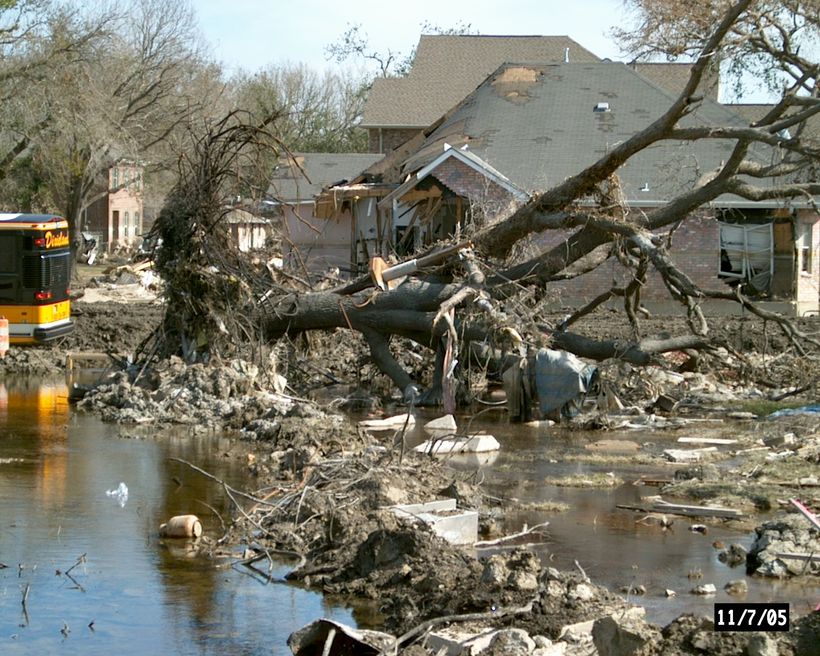
Twenty years ago, Hurricane Katrina hit the southeastern coast of the United States, devastating cities and towns across Louisiana, Florida, Mississippi, Alabama and beyond. The storm caused nearly 1,400 fatalities, displaced more than 1 million people and generated over $125 billion in damages. Rob Traver, PhD, P.E., D. WRE, F.EWRI, F.ASCE, professor of Civil and Environmental Engineering at Villanova University, assisted in the U.S. Army Corps of Engineers' (USACE) investigation of the failure of the New Orleans Hurricane Protection System during Hurricane Katrina, and earned an Outstanding Civilian Service Medal from the Commanding General of USACE for his efforts. Dr. Traver reflected on his experience working in the aftermath of Katrina, and how the findings from the investigation have impacted U.S. hurricane responses in the past 20 years. Q: What was your role in the investigation of the failure of the New Orleans Hurricane Protection System? Dr. Traver: Immediately after Hurricane Katrina, USACE wanted to assess what went wrong with flood protections that had failed during the storm in New Orleans, but they needed qualified researchers on their team who could oversee their investigation. The American Society of Civil Engineers (ASCE), an organization I have been a part of for many years, was hired for this purpose. Our job was to make sure that USACE was asking the right questions during the investigation that would lead to concrete answers about the causes of the failure of the hurricane protection system. My team was focused on analyzing the risk and reliability of the water resource system in New Orleans, and we worked alongside the USACE team, starting with revising the investigation questions in order to get answers about why these water systems failed during the storm. Q: What was your experience like in New Orleans in the aftermath of the hurricane? DT: My team went down to New Orleans a few weeks after the hurricane, visited all the sites we were reviewing and met with infrastructure experts along the way as progress was being made on the investigation. As we were flying overhead and looking at the devastated areas, seeing all the homes that were washed away, it was hard to believe that this level of destruction could happen in a city in the United States. As we started to realize the errors that were made and the things that went wrong leading up to the storm, it was heartbreaking to think about how lives could have been saved if the infrastructure in place had been treated as one system and undergone a critical review. Q: What were the findings of the ASCE and USACE investigation team? DT: USACE focused on New Orleans because they wanted to figure out why the city’s levee system—a human-made barrier that protects land from flooding by holding back water—failed during the hurricane. The city manages pump stations that are designed to remove water after a rainfall event, but they were not well connected to the levee system and not built to handle major storms. So, one of the main reasons for the levee system failure was that the pump stations and levees were not treated as one system, which was one of the causes of the mass flooding we saw in New Orleans. Another issue we found was that the designers of the levee system never factored in a failsafe for what would happen if a bigger storm occurred and the levee overflowed. They had the right idea by building flood protection systems, but they didn’t think that a larger storm the size of Katrina could occur and never updated the design to bring in new meteorological knowledge on size of potential storms. Since then, the city has completely rebuilt the levees using these lessons learned. Q: What did researchers, scientists and the general population learn from Katrina? DT: In areas that have had major hurricanes over the past 20 years, it’s easy to find what went wrong and fix it for the future, so we don’t necessarily worry as much about having a hurricane in the same place as we’ve had one before. What I worry about is if a hurricane hits a new town or city that has not experienced one and we have no idea what the potential frailties of the prevention systems there could be. Scientists and researchers also need to make high-risk areas for hurricane activity in the United States known for those who live there. People need to know what their risk is if they are in areas where there is increased risk of storms and flooding, and what they should do when a storm hits, especially now with the changes we are seeing in storm size.


Are raw oysters safe to eat? A seafood expert has answers
Two people recently died in Louisiana after eating raw Gulf oysters contaminated with the flesh-eating bacteria Vibrio vulnificus. Now that we have returned to the “r” months of autumn, a period historically considered safer to consume the mollusks on the half shell, seafood lovers are rightfully on edge about enjoying what many consider a saltwater delicacy. Evelyn Watts, a seafood extension specialist with the LSU AgCenter and Louisiana Sea Grant, has spent the better part of her adult life working with the seafood industry on the best ways to process and work through regulations about their catches. She wants to set the record straight about the safety of eating Gulf oysters throughout the year. According to the U.S. Centers for Disease Control and Prevention, vibrio is a type of bacteria that thrives in warm, brackish waters, especially between May and October. Watts said that while Louisiana is observing some above-average cases, it is important to remember that vibrio is a seasonal pathogen with most infection cases linked to wound exposure or ingestion. On July 31, the Louisiana Department of Health reported four deaths and 17 hospitalizations from vibrio infections this year. The number of hospitalizations had risen to 22 as of the last week of August. Watts emphasized safe handling and cooking of all Louisiana seafood. Thoroughly cooking oysters and other shellfish eliminates any vibrio risk, she said. “The Louisiana seafood industry follows strict safety protocols, including cold-chain management and traceability systems, which includes the use of tags,” she said. “The tag color indicates if harvest refrigeration times have been followed.” Watts said white-tagged oysters may be consumed raw while those with green tags must be sold for processing and cannot be purchased for raw consumption. “Restaurants are required to post consumer advisories about raw shellfish risks, especially for those with liver disease or weakened immune systems,” she said. “Consumers may purchase oysters either as shellstock — live molluscan shellfish still in the shell — or shucked, where the meat has been removed from the shell.” Watts explained that if consumers intend to purchase shellstock oysters for raw consumption, they must look for the white tag, which confirms the product has followed proper refrigeration protocols. This tag includes key information such as the harvester’s name, the dealer’s name and address, certification number, date of harvest and harvest location. Conversely, pre-shucked oysters or half-shell oysters sold in tubs, bags or trays — whether refrigerated or frozen — are not intended for raw consumption unless the label explicitly states otherwise. “While vibrio is more common in warmer months, it’s important to remember that it can be present year-round," Watts said. "The good news is that by staying informed and choosing properly cooked oysters, consumers can enjoy seafood safely in any season.” According to LSU AgCenter and Louisiana Sea Grant economist Rex Caffey, oysters are the third-most lucrative seafood commodity in the state, behind shrimp and crab. Thus, the recent uptick in illnesses could adversely affect the state’s economy if the public isn’t properly informed on how to mitigate potential infections. “Louisiana is the national leader in oyster production and accounts for more than 75% of Gulf oyster landings,” Caffey said. “The value of Louisiana’s oyster crop has varied in recent years, with an average of $65 million annually from 2022 to 2024.” For additional information about oysters as it relates to handling and production, Watts suggests visiting https://louisianadirectseafood.com/oyster/. Article originally posted here



Behind the image of a horse brain cell infected with Eastern Equine Encephalitis (EEE) lies a sobering truth: this mosquito-borne virus is far more lethal than commonly understood, and pathologists, virologists, and researchers at LSU Diagnostics are working to better understand and fight it. EEE is found in the eastern, Gulf Coast and north-central regions of the United States, as well as parts of Central and South America and the Caribbean. Horses in areas with dense mosquito populations—such as swamps, coastal marshes, and coves—are at greater risk of contracting the virus. The sedentary “black tail mosquito” (Culiseta melanura) primarily transmits the virus to birds. However, other very active common mosquito species, referred to as "bridge vectors," can transmit the virus from birds to mammals such as humans and horses. "As the summer goes on, we typically have more positive cases as the temperature goes up," says Alma Roy, Ph.D. (LSU 2000), interim director of LSU Diagnostics. Louisiana is no stranger to West Nile virus, but Roy says LSU Diagnostics is seeing an unusual uptick in EEE this year. Though most common in horses, the disease can also strike humans, leading to deadly brain inflammation. In horses, it may cause inflammation of both the brain and the heart. "Necropsy and serological testing at LSU Diagnostics have confirmed at least fourteen positive cases in horses thus far. It's early in the year to see this many. We're seeing some West Nile, but more EEE than West Nile," Roy said. Horses are especially vulnerable to EEE, with mortality rates ranging from 75% to 90%. Survivors frequently suffer lasting neurological damage. Humans fare somewhat better, but the disease remains serious—about 30% of people who develop severe EEE die from the infection. "Many survive a West Nile virus infection, but EEE can be unforgiving. Be careful," warns Dr. Fabio Del Piero, pathologist at LSU Diagnostics and professor at LSU Vet Med. Since treatment is limited and mostly supportive, prevention is critical. Every day, LSU Diagnostics works to make that prevention possible. Roy reminds the public that vaccination and mosquito bite prevention are key: "Horses can be vaccinated. We encourage animals to be vaccinated for EEE and West Nile virus. And for humans, of course, it's the prevention of mosquito bites.” EEE is one of several life-threatening diseases diagnosed by LSU Diagnostics. Our team provides rapid, accurate disease detection through tissue and fluid testing as well as post-mortem diagnostics. LSU Diagnostics also supports statewide mosquito-virus surveillance to protect both animals and people. Together, LSU Diagnostics and LSU Vet Med play a critical role in diagnosing and responding to threats like EEE and West Nile virus — for the health of horses, livestock, wildlife, and the people who care for them. Original article posted here.


This strategic move aligns with LSU’s Scholarship First Agenda, where energy is one of five core focus areas for research critical to the future of Louisiana and the nation. It also builds on the successes of LSU’s Institute for Energy Innovation, Center for Energy Studies, Louisiana Geological Survey, and the LSU-led FUEL team while assuming a leadership role in how the university engages with its partners—industry, communities, donors, and state and federal agencies—through collaboration and service. “As Louisiana’s flagship research university, LSU is committed to organizing our efforts in ways that maximize impact and reflect institutional priorities,” said Robert Twilley, LSU vice president of research and economic development. “The LSU Energy Institute will provide a platform for faculty across multiple colleges and disciplines to collaborate on solutions to Louisiana’s most pressing energy and environmental challenges.” The LSU Energy Institute will unify and expand several longstanding programs, chiefly the Center for Energy Studies, the Louisiana Geological Survey, and a range of externally funded initiatives, including cutting-edge energy research catalyzed by the LSU Institute for Energy Innovation through a dedicated $25 million investment from Shell. This results-focused realignment reflects a broader effort across LSU to improve coordination between strategic research projects and teams with increased support from research centers, institutes, and core facilities. As LSU’s flagship unit in the energy domain, the Energy Institute will enhance the university’s ability to align interdisciplinary research and policy with Louisiana’s energy economy and environmental stewardship goals. “The reorganization of LSU energy efforts into this institute reflects both a long-standing legacy of service and a renewed vision for the future of energy research in Louisiana. It’s about building on 40 years of trusted work while expanding our capacity to innovate, support decisionmakers, and serve the people of our state, said Greg Upton, interim director of the LSU Energy Institute and executive director of the LSU Center for Energy Studies. The LSU Energy Institute will serve as a central hub for faculty, students, industry, and public agencies working at the intersection of energy technology, resource economics, environmental protection, and policy. The integration of the Louisiana Geological Survey will further reinforce the university’s role in providing critical data and analysis to support state planning and hazard assessment. The institute will also continue to seed competitive, high-quality research focused on energy systems resilience, carbon management, and economic opportunity. These investments reflect LSU’s broader vision to translate research into impact and fuel new jobs and technologies to power Louisiana’s future. Original article posted here.


LSU Expert Carol Friedland on Katrina’s Legacy: What’s Changed, What Still Needs to Be Done
After Hurricanes Katrina and Rita devastated Louisiana and brought billions of dollars of damage to the state, lawmakers worked with researchers, engineers and others to create and implement new codes and laws in an attempt to prevent such serious damage happening again. On Aug. 29, LSU and the LSU AgCenter hosted an event at the Energy, Coast and Environment Building in honor of the 20th anniversary of Hurricane Katrina, which made landfall in Louisiana on the same date in 2005. The daylong conference featured leading voices from LSU and government officials, who spoke about the impacts that hurricanes Katrina and Rita had on Louisiana and how policies and research have changed since those storms. As a part of the program, Carol Friedland, the director of the AgCenter LaHouse Research and Education Center, spoke alongside Brad Hassert, executive director of the Louisiana State Licensing Board for Contractors, for a seminar called “Innovating Resilience: Solutions Inspired by Katrina.” The two discussed recent developments in building materials and building codes that showed the changes, or lack thereof, since the two devastating hurricanes. At the time of the storms, building codes were not uniform in the state, and some parishes had almost no building codes at all. After Katrina and Rita, however, officials pushed for a unified code that better protected Louisiana residents from dangerous storms and weather events. “After Hurricane Katrina, we actually enacted very strong legislation to adopt the model code,” Friedland said. “Also, at the same time, the FEMA mitigation assessment team went out and documented a lot of the failures from Katrina. This program really helps us learn around the country what are the practices that are working and what are the practices that are not working and then getting those integrated into the code process.” Friedland went on to talk about some developments for houses that she has been working on, like “fortified roofs,” which are new roofs that will protect residents more efficiently than the codes required in Louisiana. Friedland also talked about the process of implementing new codes. Researchers must find agreement with governmental entities and other parties, like insurance adjusters and contractors, to succeed, she said. Hassert spoke about the importance for homeowners to find a licensed contractor after a weather event causes damage to their house. This is mostly to ensure that the house will be repaired to code and so the homeowners will not be scammed or stolen from. Hassert, who was recently appointed executive director of the Louisiana State Uniform Construction Code Council, urged researchers and other stakeholders to come together and participate in council meetings so they can make the most informed and beneficial decisions that they can. Both Hassert and Friedland believe there is work to do to improve the codes and building standards in Louisiana houses, but with communication and more involved research, enhancements can be made. “One of the ways I like to frame this is to think about are we happy with the level of losses that we have?” Friedland said. “Do we think that we’re doing well? Who is happy with the level of loss that we see? I think we can still do better.” Original article posted by the LSU AgCenter here.


LSU Expert Christine Navarre on the Threat of New World Screwworms
The New World screwworm (NWS), also known as the primary screwworm, is the larvae of the fly Cochliomyia hominivorax. Unlike the larvae (maggots) of other flies that only feed on dead tissue, the NWS feeds on live tissue. This leads to more severe and potentially deadly consequences which threatens livestock and wildlife populations. Prior to their eradication form the United States, NWS were a major economic burden to the production of livestock, especially in the in the southwestern U.S. and Florida. The U.S. Department of Agriculture estimates that the U.S. livestock industry saves approximately $900 million a year as a result of NWS eradication. Other benefits of eradication and control are enhanced human and animal health and welfare and increased survival of endangered wild animal species. The NWS fly was eradicated from the U.S. in 1966 with the release of sterile male flies to control the population. This status is maintained through the Panama-U.S. Commission for the Eradication and Prevention of the Cattle Borer Worm (COPEG) which releases millions of sterile flies weekly along the Panama-Colombia border to create a barrier preventing the northward spread of screwworms. Due to these efforts, it is now found primarily in tropical areas of South America and some Caribbean Islands, including Cuba. In 2016 NWS were found in Key Deer in the Florida Keys. The source of the outbreak was never determined. Rapid recognition of the problem and response with the release of sterile flies quickly eradicated the problem but this incident illustrates the importance of remaining vigilant. In November, NWS was detected in Mexico near the Guatemala border. The USDA Animal and Plant Health Inspection Service (APHIS) has imposed immediate import restrictions on animal commodities from Mexico. They are also intensifying efforts to prevent the northward spread of NWS by collaborating with Mexican and Central American authorities and urging livestock producers along the southern U.S. border to monitor their livestock and pets for signs of NWS. Any suspected cases should be reported immediately. Clinical Signs NWS can infest any warm-blooded animal including livestock, pets, wildlife, birds and occasionally humans. Common sites of infestation are any fresh or old wounds, warts, tumors, tick bites and antlers in shedding. Wounds left from management procedures, such as dehorning, branding, ear tagging, tail docking and shearing, can become infested. The eyes, nose, vulva and prepuce are also vulnerable, as well as the umbilicus in newborn mammals. Animals infested with NWS may show the following signs: Presence of maggots in wounds or body openings Wounds with a foul odor, bloody drainage or white/cream-colored drainage (eggs) Depression, reduced appetite, weight loss Isolation and/or signs of discomfort, head shaking Fever and other signs of secondary infection Diagnosis and Reporting Maggots found on animals showing the above clinical signs should be sent to a veterinarian or veterinary diagnostic lab for identification to distinguish NWS larvae from other more common fly larvae. In Louisiana larvae can be sent to the Louisiana Animal Disease Diagnostic Laboratory (www.lsu.edu/vetmed/laddl). Larvae should be placed in 70% alcohol for submission to the diagnostic laboratory. It is very important to immediately report any NWS infestations to the Louisiana Department of Agriculture and Forestry. A reported case will not result in herd depopulation but will allow animal health officials to take steps to help you manage your animals and prevent spread. Early detection and rapid response are critical to controlling this parasite. Treatment Immediate veterinary care should be sought to remove larvae and properly treat with insecticides. Wound care is also important to speed healing and prevent reinfestation. Prevention Treatment of NWS can be difficult, and eradication is very costly, so prevention of infestations is essential. Adult NWS flies can travel up to 12 miles to lay eggs, and eggs can be transported by animals and people traveling from infested areas. This necessitates constant vigilance to ensure that reintroduction into the U.S. does not occur. Preventative steps include: Regularly inspect livestock and pets for cuts, wounds, scabs and tick infestations. Closely monitor the umbilicus of newborn livestock, vulva of females and prepuce of males. Use insect repellant and wound dressings to prevent fly strike. Report any unusual wildlife or bird deaths to the Louisiana Wildlife and Fisheries. Pay close attention to nasal passages and eyes for signs of larvae (maggot) infestation. Seek veterinary advice for immediate treatment of open wounds, including dehorning and castration sites and preventive use of topical and systemic insecticides. Review biosecurity plans with the farm or ranch veterinarian. Original article by the LSU AgCenter here.
LSU Veterinary Teams Recall Courage, Loss, and Lasting Change from Hurricane Katrina Animal Rescues
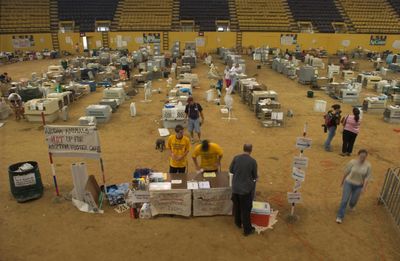
From that tragedy came transformative change, with new animal evacuation protocols and policies, including the creation of the federal Pet Evacuation and Transportation Standards (PETS) Act, which requires state and local disaster plans to include provisions for pets and service animals. LSU School of Veterinary Medicine played a pivotal role in this evolution. In the days and months after Katrina, LSU Vet Med faculty, staff, and students worked alongside state officials, military units, and volunteers from across the nation to rescue, treat, and shelter thousands of animals. Two decades later, Katrina’s scars remain, but so does the resilience of the people and animals who lived through it. Their stories serve as a reminder that in even the darkest moments, compassion can spark lasting change. Rescue in a War Zone Dr. Jenny Sones (then veterinary student): I had been working at LSU Vet Med for five years when Katrina hit. LSU Vet Med put out an ‘all hands on deck’ call to employees. All of our hospital wards were turned into an ER. We opened our homes to complete strangers who came to help. It was organized chaos. Many animals came to us looking like corpses with a heartbeat because they’d been in the flood waters so long. I worked all day at LSU Vet Med, where we saw the sickest, most injured patients, and worked at Lamar Dixon evenings and weekends. Twenty years later, the images are so vivid in my mind. I took a horse trailer on a rescue mission into New Orleans with two students and a state veterinarian escort one week after Katrina hit. The scene looked like a war zone, helicopters everywhere, buildings burning, gunshot sounds. Every area we saw was looted. The stench was awful. There were people on the overpasses who had been there for a week. We were there to rescue animals. Military, Louisiana National Guard, and police brought the animals to us where our trailer was parked on an overpass. We picked up a few strays on our way out. The animals we rescued were so scared. Some had been in the flood waters a long time and were soaking wet and foul smelling. Their skin was sloughing off and they were emaciated. Amazingly, none of the dogs, cats, or horses were aggressive—maybe because they were in shock or they were grateful. We treated them all at Lamar Dixon, washed them with Dawn dishwashing soap and applied betadine. Sick ones were transported by trailer to LSU Vet Med. They were very dark times and very good times too. We were able to get the New Orleans French Quarter mules out to Lamar Dixon. Their caretaker crew stayed with them. They hooked up the mules, still in good shape because they weren’t in the flood waters, and they gave workers short rides around the Lamar Dixon grounds. It was such rewarding work. We were exhausted but in the best way. It would have been easy to get caught up in the devastation if we didn’t focus on our purpose to help animals. You can’t fix everything, but you can fix what’s in front of you. If you can survive the devastation of Katrina, you can survive anything. From Classroom to Crisis Dr. Jenny Sones (then veterinary student): In August 2005, I was starting my second year of veterinary school at LSU. I had no idea that life was about to change so drastically. School was cancelled, and electricity was out most places except at the vet school. My colleagues set up temporary housing in our study rooms and other places throughout the vet school. We then began to learn of the effects of Katrina on our veterinary species—dogs, cats, horses, and more. These precious creatures were the reason why we studied, crammed, and signed up to endure the rigors of veterinary school. It was time to close the books and help! Although we were not licensed veterinarians yet, we were keen to provide aid in any way we could. I, along with lots of my classmates, volunteered at Parker Coliseum on the LSU campus, where displaced small animals were seeking refuge, and at Lamar Dixon, which became the shelter for large animals and small animals. We spend many hours doing anything we could, cleaning litter boxes, refilling water bowls, changing bedding, administering medications, and assisting the heroic volunteer veterinarians working tirelessly to treat the injured, sick, and rescued. Lots of important lessons were learned during Katrina. Many animals were not reunited with their owners. That's when I learned the value of microchipping to permanently identify animals, gained an appreciation for animal search and rescue, and the value of quick response. (Sones is now CSU Equine Reproduction Laboratory reproduction specialist.) Mapping Rescues by Hand Ashley Stokes (former faculty member): It was unlike anything I’ve ever experienced. I was researching and teaching at LSU Vet Med in 2005. LSU Vet Med stepped up in so many ways. We started receiving calls from citizens and local authorities at the vet school almost immediately after the storm. They needed help with resources—animal rescue, food, and water. They had to leave New Orleans quickly. I particularly remember a call from someone from south of Belle Chase, La., who had left horses, cattle, and two dogs in the house and needed help. It was surreal to see the devastation, houses floating, there in the Delta. We were making real-time decisions to help their animals. They’d lost so much, and for some, their animals were all they had left. We put a paper map of Louisiana on the wall and put pins in the locations that called for assistance. We covered all of New Orleans and surrounding areas, including the north shore and extending west to Baton Rouge. We took the callers’ information and sent teams of staff, students, and volunteers to different locations with donated trailers, hay, water, and other resources for rescue. We continued rescues for months after the storm. We were there for people for the long haul. The whole experience was transformational in my life. What I learned from Katrina became part of my own career and what I continue to do. There were beautiful moments, especially seeing how resilient and helpful people could be. I saw every day how the community came together and were absolute bright lights. Positive came from tragedy. (Stokes is now dean of UC Davis College of Agricultural & Environmental Sciences.) The Boxer on the Third Floor Dr. Neil Henderson (alumnus): When Katrina hit, the Louisiana Veterinary Medical Association sent out a request for help from veterinarians. I got to the Lamar Dixon Center on Day 5 after Katrina hit. St. Bernard Parish was where I spent most of my time helping. It was literally destroyed. One day, while we were making our rounds, a man came running up to me and said that he just remembered that while the storm was coming through—he was on the third story of a building looking out of the window—he noticed a dog swimming around frantically with nowhere to go. He opened a window for it with the hopes that it would swim inside the building to safety. Seven or eight days later, with the temperature well into the upper 90s, the man came up to me and asked me to go into the building to see if I could find the dog. I did not have much hope but went anyway. There, on the third floor of the building, I found the dog, a boxer, alive. She was in surprisingly good shape. The man was ecstatic to see the dog and could not believe that it made it inside the building to safety. I stayed for five days helping animals, and my late father (Dr. Robert Henderson, class of 1977) came after that for five more days. (Henderson is the owner of the Pine Ridge Veterinary Center in Stonewall, La.) Article originally posted here.
LSU Lab Helps Louisiana Prepare for Hurricanes, Drought, even Saharan Dust
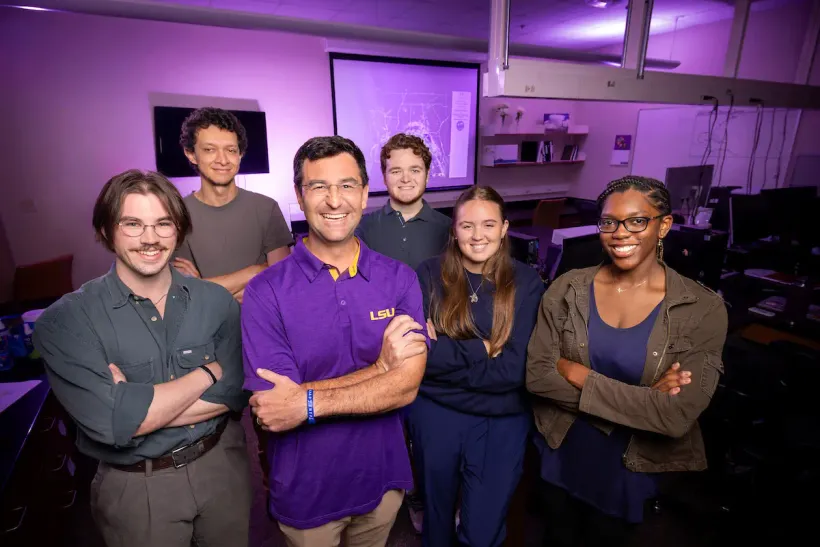
Any hurricane that forms in the Gulf of America is a direct threat to Louisiana and its neighboring states. But most seasonal forecasts focus on the entire North Atlantic Basin, including areas where storms may never come close to any land, much less the U.S. Gulf Coast. A Gulf-specific forecast developed at LSU’s Coastal Meteorology (COMET) Lab addresses that issue by providing storm information specifically geared toward the Gulf region. The lab is run by Paul Miller, an associate professor at LSU who founded it in 2019. “We decided that a Gulf-specific forecast could help state officials and Gulf-area residents better understand how active the upcoming season might be in their part of the Atlantic,” said Miller, who teaches in the Department of Oceanography & Coastal Sciences in the College of the Coast & Environment. Miller said the LSU-Velocity Risk Gulf Hurricane Outlook is one example of how the COMET Lab delivers real benefits to Louisiana. “A lot of forecasts tend to align with each other each year. But ours works a lot differently than some of the other forecasts that are geared towards larger areas of the ocean,” he said. “We’re not the world’s leading hurricane research lab—and we don’t try to be. Instead, we prioritize meeting the largest research gaps relevant to Louisiana residents, spanning a wide variety of weather hazards. “We want to make sure Louisianans experience a clear return-on-investment from our lab’s activities.” Ways the lab supports the state also include: Helping forecast storm surge in real time and informing the decision on when to close flood barriers before a tropical system hits land. Developing rainfall models to support flood prevention efforts. Studying weather patterns that cause drought and low coastal water levels that can lead to marsh loss during dry spells on the Gulf Coast. Saharan Dust Research One area of study that incorporates both air quality and tropical weather is the lab’s research on Saharan dust clouds, which are blown across the Atlantic in an air mass called the Saharan Air Layer, or SAL. “So, this sort of far-off distant concept of Saharan dust is actually something that is kind of important to folks here in Louisiana,” Miller said. This dust can shut down thunderstorm activity in the U.S. Caribbean territories, a key area of research in the COMET Lab, and cause respiratory problems when it reaches the Southeast U.S. The SAL can also suppress hurricane activity in the Atlantic. “Our lab just launched a new project with the Office of Naval Research to determine how dust-dimmed sunlight can affect ocean temperatures in the Atlantic’s most active hurricane breeding grounds,” Miller said. Read the full story here.
LSU’s Jill Trepanier Educating K-12 Louisiana Students About the Environment
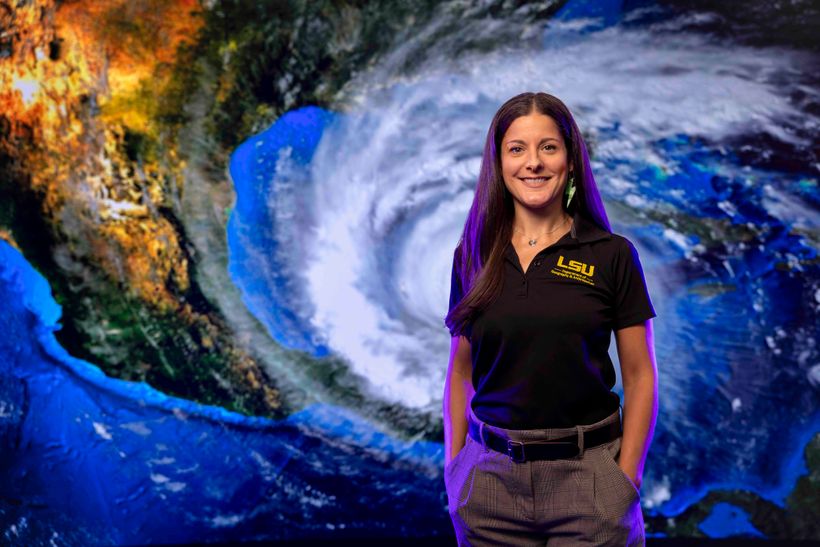
What began in 2018 as a single rooftop weather station on LSU’s campus as a tool to help freshmen connect to the science happening around them, has grown into an educational network in the southern part of the state, connecting K-12 students with the sky through real-time data, interactive technology, and hands-on learning. Trepanier, a professor and department chair in LSU’s Department of Geography & Anthropology, leads a project that now includes 10 weather stations installed at or near K–12 schools from Lake Charles to Grand Isle. “The environment is harsh in Louisiana. Beautiful, but harsh,” Trepanier said. “The more students know about it, the better they can protect themselves and their families. For me, that’s what it is all about.” The project all started to help college students in Trepanier’s meteorology and physical geography classes connect more deeply with the material by using weather data collected from the air around them. “These were 400 freshmen every semester who were not geography majors, so they didn't really love the science of the atmosphere. But they were able to connect with the information because they could see the data on an app on their phone as they were living in it.” Installed across South Louisiana, each weather station is solar-powered and connected to a console that uploads data to an online web platform and displays it on a dashboard. Then an app shows the local students the current conditions and records for the day. “When we look at data from the community, it might be many miles from where you are. And most people live within a few miles or less of their schools. It allows them a close-up view of what is happening, instead of relying on something miles away,” she said. Teachers can use the data with certain lessons or during a passing storm. But the available data also educates them on things like solar radiation, “It also helps aid things like seasonality and our relationship with the sun. It extends well beyond just rain.” The material is also aligned with the Louisiana Student Science Standards for environmental and Earth sciences. “By allowing students to compare real data across space and time, it helps them to understand how systems are connected. And most of these science standards have them focusing on system theory, in one way or another,” Trepanier said. Read the full story here.

LSU AgCenter Research Enables Better Flood Protection for Homes
The American Society of Civil Engineers (ASCE) recently released its new standard for flood-resistant design and construction, ASCE/SEI 24-24, which provides new minimum requirements that can be adopted for all structures subject to building codes and floodplain management regulations. The new elevation standard was directly supported by LSU research and should help reduce flood risk and make flood insurance more affordable. “Without the research by the LSU AgCenter, the advancements made to the elevation requirements would not have been possible,” said Manny Perotin, co-chair of the Association of State Floodplain Managers’ Nonstructural Floodproofing Committee, who helped update the standard. “Dr. Carol Friedland’s research shows there are better ways to protect communities from flooding than adding one foot of additional freeboard.” The research team, led by Friedland, an engineer, professor, and director of LSU AgCenter’s LaHouse, showed how previous standards were failing to protect some homeowners. They mapped the impact of moving from a standard based on a fixed freeboard amount to being based on real risk in every census tract in the U.S. In response to these findings, they developed a free online tool to help builders, planners, managers, and engineers calculate the elevation required under the new standards. “Many on the committee said it would be too hard to do these complex calculations,” said Adam Reeder, principal at the engineering and construction firm CDMSmith, who helped lead the elevation working group for the new ASCE 24 elevation standards. “But the LSU AgCenter’s years of research in this area and the development of the tool makes calculations and implementation simple. This allowed the new elevation standard to get passed.” Flooding, the biggest risk to homes in Louisiana, continues to threaten investments and opportunities to build generational wealth. On top of flood losses, residents see insurance premiums increase without resources to help them make informed decisions and potentially lower costs. In response to this problem, Friedland is working on developing a whole suite of tools together with more than 130 partners as part of a statewide Disaster Resilience Initiative. When presenting to policy makers and various organizations, Friedland often starts by asking what percentage of buildings they want to flood in their community in the next 50 years. “Of course, we all want this number to be zero,” Friedland said. “But we have been building and designing so 40% will flood. People have a hard time believing this, but it’s the reality of how past standards did not adequately address flood risk.” Designing to the 100-year elevation means a building has a 0.99 chance of not flooding in any given year. But when you run that probability over a period of 50 years (0.99 x 0.99 x 0.99… 50 times, or 0.99 ^ 50), the number you end up with is a 60.5% chance of not flooding in 50 years. This means a 39.5% chance of flooding at least once. “We’ve been building to the 100-year elevation while wanting the protection of building to the 500-year elevation, which is a 10% chance of flooding in 50 years,” Friedland said. “Now, with the higher ASCE standard, we can finally get to 10% instead of 40%.” As the AgCenter’s research led to guidelines, then to this new standard, Friedland has also been providing testimony to the International Code Council to turn the stronger standard into code. In May, Friedland helped lead a workshop at the Association of State Floodplain Managers’ national conference, held in New Orleans. There, she educated floodplain managers about the new standard while demonstrating LSU’s web-based calculation tool, which was designed for professionals, while her team also develops personalized decision-making tools such as Flood Safe Home for residents. At the conference, Friedland received the 2025 John R. Sheaffer Award for Excellence in Floodproofing. More than two-thirds of the cost of natural hazards in Louisiana comes from flooding, according to LSU AgCenter research in partnership with the Governor’s Office of Homeland Security and Emergency Preparedness for the State Hazard Mitigation Plan. That cost was recently estimated to rise to $3.6 billion by 2050. “Historically, we have lived with almost a 40% chance of flooding over 50 years, which in most people’s opinion is too high—and the number could be even higher,” Reeder said. “Most building owners don’t understand the risk they are living with, and it only becomes apparent after a flood. The work done by the LSU AgCenter is critical in improving resilience in communities that can’t afford to be devastated by flooding.” “This may be the most significant upgrade in the nation’s flood loss reduction standards since the creation of the National Flood Insurance Program minimums in 1973, and it could not come at a better time as annual flood losses in the country now average more than $45 billion per year,” said Chad Berginnis, executive director of the Association of State Floodplain Managers. In addition to LaHouse’s work to prevent flooding, Friedland’s team is also working to increase energy efficiency in homes to help residents save money on utility bills. Their HEROES program, an acronym for home energy resilience outreach, education, and support, is funded by the U.S. Department of Agriculture and has already reached 140,000 people in Louisiana. Article originally posted here.