
Experts Matter. Find Yours.
Connect for media, speaking, professional opportunities & more.
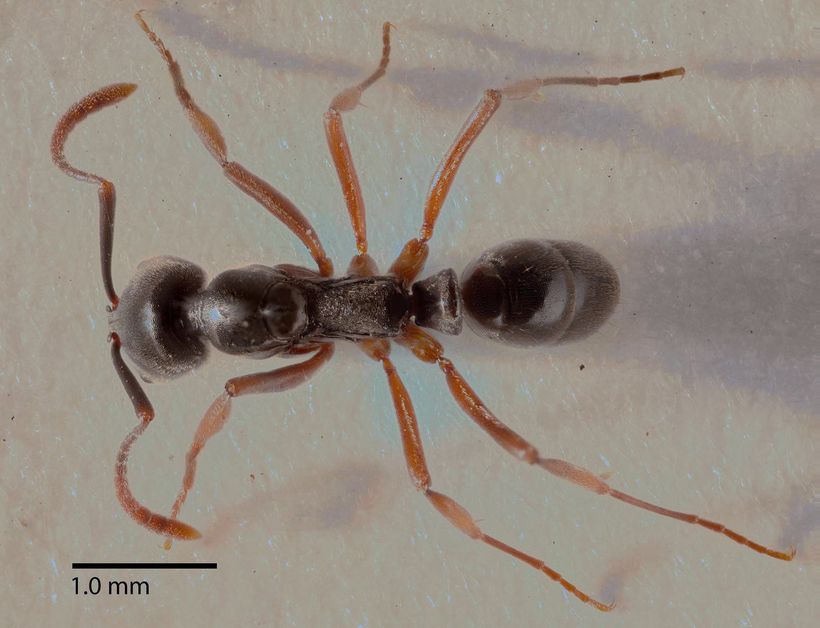
The Asian Needle Ant (Brachyponera chinensis) Found in Southern Louisiana
In Louisiana, there are several ant species that are capable of stinging besides the red imported fire ant (Solenopsis invicta), such as the elongate twig ant (Pseudomyrmex gracilis), Comanche harvester ant (Pogonomyrmex comanche) and several species in the subfamily Ponerinae. The Asian needle ant (ANA) (Brachyponera chinensis) joins the list and has been confirmed in the state. Recent reports on the Asian needle ant by Mississippi State University extension entomologist, Santos J. Portugal and other urban entomologists in the region spurred the authors at Louisiana State University to investigate the presence of ANA in their state. By happenstance, two citizen scientists had reported sightings of the ant on iNaturalist at two Louisiana parks in August 2024 and June 2025. Therefore, on June 17, 2025, an LSU entomologist visited one of the parks to ground-truth the citing by collecting the ant, as he had prior experience with it. The Asian needle ant is a termite specialist, preferentially feeding on them, often living in close proximity with termite colonies and inside damp wood. To collect the ants, water-soaked wood was located in a forested area, broken open, revealing ANA, and they did not react aggressively to the disturbance. The ants immediately grabbed immature larva and retreated into crevices, not bothering the collectors at all. Upon retrieval, an LSU entomologist used a microscope at 40x to 60x magnification and the dichotomous key authored by MacGown (2003) to confirm that the collected specimens were ANA. It is important to verify the identity of invasive species submitted on citizen scientist projects as the images may not be of sufficient quality to get a positive identification. The ANA was discovered in the U.S. in 1934 while individuals were researching Argentine ants (Linepithema humile). Since the introduction of the ANA, it has spread to many states within the U.S., ranging from Wisconsin to Texas to the east coast. ANAs are medium sized (about 5 mm long) and slender. The species originated from Asia. Queens are slightly larger (6.5 mm) and look similar in appearance to workers. ANAs are black to dark brown in coloration, with light brown legs, mandibles and antennae. To distinguish the ant from other look-alikes, ANA has a large single petiole node that extends above the thorax or alitrunk, and a shiny mesopluron on the side of the thorax. ANA colonies are typically small in numbers, up to a few thousand individuals in large colonies. They are polygynous, meaning they have multiple queens. ANAs use a unique foraging behavior, where the worker carries another worker to a food resource, then drops off the worker to assist in food transport. ANAs do not form mounds, but instead nest in damp, high humidity areas, such as rotting logs, void spaces, under rocks and in leaf litter. They are typically found in forested areas. They also form multiple colonies within an area, which is called polydomy. ANAs swarm during the spring and early summer, although this time range may vary for Louisiana. People typically encounter the ants when they are working with wet wood or digging in moist soil. This is when someone may potentially be stung, although they are not aggressive. The sting is reported similar to that of a honeybee. Individuals who are allergic to stings may have a life-threatening anaphylactic response if stung by the ant, which requires medical attention. Wearing gloves is adequate protection from ANA stings while working with rotten wood or soil in infested areas. People who are sensitive to other insect stings should be aware of the potential for ANA stings and carry an approved rescue device for severe allergenic responses. In addition to feeding on termites, the Asian needle ant will feed upon beetles, craneflies, springtails and native ants found in their preferred habitats. Because of their ability to prey upon native ants, they can impact native species that deposit seeds in the soil, thus reducing floral diversity. Therefore, ANA is capable of reducing both native animal and plant diversity in infested areas. Article originally posted here.


Springtime swarms: What you need to know about termite alates
As temperatures warm up across Louisiana, so does termite activity. Homeowners may soon begin to notice large swarms of winged insects in and around their homes. These are termite alates, also known as swarming termites. “Swarming is how termites establish new colonies,” said LSU AgCenter entomologist Aaron Ashbrook. “Seeing swarms around your home doesn’t necessarily mean you have an infestation, but it does mean termites are nearby.” Alates are the reproductive members of a future termite colony if they can successfully establish. Each spring, usually following a warm rain, these termites leave their established colonies to find new places to nest. Many alates are produced because a low percentage of them are able to establish a colony. After swarming, they shed their wings and pair off to begin new colonies, which is how they end up in homes. Louisiana’s warm, humid climate makes it an ideal environment for termites, especially the Formosan subterranean termite, one of the most destructive species in the United States. Termites can silently cause thousands of dollars in damage before homeowners know they’re there. Tips for homeowners: Don’t panic, but don’t ignore it. Seeing swarms outside is common, but if they're inside your home, call a licensed pest control professional. Look for signs. Discarded wings, mud tubes, water stains, moisture buildup, and soft or hollow-sounding wood can all indicate a problem. Reduce moisture. Termites thrive in damp environments and require moist wood to attack structures. Fix leaks and ensure proper drainage around your home. Schedule regular inspections. Annual termite inspections are recommended, especially in high-risk areas like Louisiana. “Termites can cause extensive structural damage to your home that may go unnoticed,” said Carol Friedland, director of LaHouse Research and Education Center. “Early detection and prevention can save homeowners a lot of stress and money.” The LSU AgCenter’s Department of Entomology and LaHouse Research and Education Center provide research-based guidance to help Louisiana residents protect their homes from termites and other structural pests. Learn more by searching for “termites” at www.LSUAgCenter.com. Article by Shelly Kleinpeter, originally posted here.


Hurricane Preparedness Week reminds everyone to plan ahead
Hurricane season officially begins June 1, and now is the time to get ready for potential storms. Hurricane Preparedness Week, observed May 4 to 10, is a reminder for Louisiana residents to review their emergency plans, strengthen their homes, and prepare their families before a major storm arrives. “Preparedness saves lives, protects property and reduces recovery time,” said Carol Friedland, director of the LSU AgCenter LaHouse Research and Education Center. “By taking a few proactive steps now, families can be better protected during hurricane season.” Even though hurricane season does not begin for another month, starting your preparation now can save time and hassle later. The following are good projects you can start in the coming weeks to prepare for severe weather: Create and practice a family emergency plan and make sure it has updated contact information and evacuation information. Assemble an emergency supply kit or go through your existing kit to make sure nothing is expired or missing. Update it to make sure your entire family, including your pets, will have supplies during an evacuation. Review insurance coverage and understand flood risks. Some companies or policies have a waiting period before your coverage begins, so contact your agent or representative now. Strengthen your home against high winds and flooding. Do an overview of your home’s exterior and note any areas that look like they need repairs, like patches of missing shingles. Repairing these smaller problems now can reduce the likelihood of your home experiencing more severe damage during a storm. “Taking the time to check your home and yard early and getting bigger projects or repairs started ahead of hurricane season can save you a lot of stress later, especially when materials become harder to find right before a storm,” said Rubayet Bin Mostafiz, assistant director of research at LaHouse. Don’t wait until a storm is in the forecast. Start preparing today. Visit www.LSUAgCenter.com/LaHouse for more information, downloadable preparedness publications, and guidance tailored to Louisiana homes and families. The LaHouse Research and Education Center is dedicated to providing science-based solutions to improve home resilience, sustainability, and health. Through research, extension and education, LaHouse seeks to address the challenges of severe weather, with a particular focus on helping Louisiana residents protect their homes and communities from natural disasters. Article originally posted here.

BATON ROUGE – Since the Big Bang, the early universe had hydrogen, helium, and a scant amount of lithium. Later, some heavier elements, including iron, were forged in stars. But one of the biggest mysteries in astrophysics is: How did the first elements heavier than iron, such as gold, get created and distributed throughout the universe? A new answer has come from an unexpected place – magnetars. Neutron stars are the collapsed cores of stars that have exploded. They are so dense that one teaspoon of neutron star material, on Earth, would weigh as much as a billion tons. A magnetar is a neutron star with an extremely powerful magnetic field. On rare occasions, magnetars release an enormous amount of high-energy radiation when they undergo “starquakes,” which, like earthquakes, fracture the neutron star’s crust. Starquakes may also be associated with powerful bursts of radiation called magnetar giant flares, which can even affect Earth’s atmosphere. Only three magnetar giant flares have been observed in the Milky Way and the nearby Large Magellanic Cloud, and seven from other nearby galaxies. Astrophysicist Eric Burns and his team of researchers at Louisiana State University in Baton Rouge study magnetars extensively through the observation of gamma-rays. These are the most energetic photons, most famous for turning Bruce Banner into the Incredible Hulk. Burns joined with researchers at Columbia University and other institutions to see if we could use gamma-rays to understand if magnetar giant flares forge the heaviest elements, and unexpectedly found the smoking-gun signature in decades-old data. The study, led by Anirudh Patel, a doctoral student at Columbia University in New York, is published in The Astrophysical Journal Letters. “It’s answering one of the questions of the century and solving a mystery using archival data that people had just forgotten about, demonstrating something that occurred when the Universe was younger,” said Burns. “Giant flares should occur just after the first stars died, meaning we have identified what could be the origin of the first gold in the universe.” How could gold be made at a magnetar? Patel and colleagues, including his advisor Brian Metzger, Professor at Columbia University and senior research scientist at the Flatiron Institute in New York, have been thinking about how radiation from giant flares could correspond to heavy elements forming there. This would happen through a “rapid process” of neutrons forging lighter atomic nuclei into heavier ones. Protons define the element’s identity on the periodic table: hydrogen has 1 proton, helium has 2, lithium has 3, and so on. Atoms also have neutrons which do not affect identity, but do add mass. Sometimes when an atom captures an extra neutron the atom becomes unstable and a nuclear decay process happens that converts a neutron into a proton, moving the atom forward on the periodic table. This is how, for example, a gold atom could take on an extra neutron and then transform into mercury. In the unique environment of a disrupted neutron star, in which the density of neutrons is extremely high, something even stranger happens: single atoms can rapidly capture so many neutrons that they undergo multiple decays, leading to the creation of a much heavier element like uranium. When astronomers observed the collision of two neutron stars in 2017 using NASA telescopes and the gravitational wave observatory LIGO, they confirmed that this event could have created gold, platinum, and other heavy elements. “LIGO tells us there was a merger of compact objects, and Fermi tells us there was a short gamma-ray burst. Together, we know that what we observed was the merging of two neutron stars, dramatically confirming the relationship,” said Burns. But neutron star mergers happen too late in the universe’s history to explain the earliest gold and other heavy elements. Finding secrets in old data At first, Metzger and colleagues thought that the easiest signature to study from the creation and distribution of heavy elements at a magnetar would appear in the visible and ultraviolet light, and published their predictions. But Burns in Louisiana wondered if there could be a gamma ray signal bright enough to be detected, too. He asked Metzger and Patel to work out what that signal could look like. Burns looked up the gamma ray data from the last giant flare that was observed, which was in December 2004. He realized that while scientists had explained the beginning of the outburst, they had also identified a smaller signal from the magnetar, in data from ESA (European Space Agency)’s INTEGRAL, a retired mission with NASA contributions. “It was noted at the time, but nobody had any conception of what it could be,” Burns said. Metzger remembers that Burns thought he and Patel were “pulling his leg” because the prediction from their team’s model so closely matched the mystery signal in the 2004 data. In other words, the gamma ray signal detected over 20 years ago corresponded to what thought it should look like when heavy elements are created and then distributed in a magnetar giant flare. "This is my favorite discovery I've contributed to,” said Burns. “My colleagues found this signal in the past, but nobody knew what it could be at the time. Once these models were ready, everything fit like a perfect puzzle, which is extremely rare in science." Researchers supported their conclusion using data from two NASA heliophysics missions: the retired RHESSI (Reuven Ramaty High Energy Solar Spectroscopic Imager) and the ongoing NASA Wind satellite, which had also observed the magnetar giant flare. Other collaborators on the new study included Jared Goldberg at the Flatiron Institute. Next steps in the magnetar gold rush Patel’s study estimates that magnetar giant flares could contribute about 10% of the total abundance of elements heavier than iron in the galaxy. Since magnetars existed relatively early in the history of the universe, the first gold could have been created this way. LSU PhD candidate Aaron Trigg, a NASA FINESST (Future Investigators in NASA Earth and Space Science and Technology) fellow, who works with Burns, is responsible for finding more magnetar giant flares to study. “These are gargantuan outbursts of energy from the strongest magnets in the Universe, which are powerful enough to affect Earth’s atmosphere,” said Burns. Trigg’s work will help us better understand these sources.” NASA’s forthcoming COSI (Compton Spectrometer and Imager) mission can follow up on these results. COSI, a wide-field gamma ray telescope, is expected to launch in 2027 and will study energetic phenomena in the cosmos, such as magnetar giant flares. COSI will be able to identify individual elements created in these events, providing a new advancement in understanding the origin of the elements. LSU is one of the lead science institutes for COSI. Burns and LSU Assistant Professor Michela Negro have key responsibilities in the mission, and Trigg is working through how best to study giant flares with COSI. These LSU astrophysicists will be growing their research group as they approach launch in 2027. “I have so many questions about the cosmos and our place in it,” said Trigg. “This research allows me to explore those questions and share the answers with the world.”


Annual Healthy Georgia Report looks at public health in the Peach State
The fourth edition of the “Healthy Georgia: Our State of Public Health” report has been released by the Institute of Public and Preventive Health in Augusta University’s School of Public Health. Within the 64 pages of the report is a snapshot of how healthy Georgians are compared to citizens across the 12 states that make up the Southeastern Region (Alabama, Arkansas, Florida, Georgia, Kentucky, Louisiana, Mississippi, North Carolina, South Carolina, Tennessee, Virginia and West Virginia) and the entire United States. The 2025 edition addresses 31 health topics and has been expanded this year to include multimorbidity; long COVID-19; HIV, chlamydia, gonorrhea and syphilis infection rates; opioid and methamphetamine drug use; suicides; and vaping. Biplab Datta, PhD, assistant professor in the Department of Health Management, Economics, and Policy in SPH, heads up the team of IPPH faculty and staff who create the report each year. Datta credits Jen Jaremski, research associate, and Kit Wooten, public health analyst, with handling much of the work of bringing the report to life. Together, Jaremski and Wooten collected and organized all of the needed assets and organized the 64-page document, preparing it for print and the web. “Every year we strive to present data in a way that policymakers may find helpful in making policy choices,” Datta said. “There are several new topics that were added to this year’s report and some of those are concerning for the state of Georgia, particularly the communicable diseases like HIV, chlamydia, gonorrhea and syphilis. High prevalence rates of these conditions in Georgia, compared to the rest of the U.S. and the Southeastern Region, warrant attention of the public health community.” Georgia has the second-highest rate of HIV infections in the U.S., fourth-highest rates of gonorrhea, sixth-highest for chlamydia and 13th for syphilis. Something that is also new in this year’s report is a comparison of numbers from 2019, or before the COVID-19 pandemic began, compared to after the pandemic for certain conditions. Also coming out of the pandemic, the report looks at how long COVID has affected Georgians, with the state ranking 24th in the nation for rates of long COVID. According to the U.S. Centers for Disease Control and Prevention, long COVID is defined as a chronic condition that occurs after COVID-19 infection and is present for at least three months. On top of looking at comparisons between Georgia and the Southeast and the nation, Datta noted a clearer picture is starting to emerge concerning the difference in urban and rural areas within the state. “For several chronic conditions, like hypertension, diabetes and multimorbidity, we clearly see a striking difference between rural and urban residents of Georgia,” Datta said. Hypertension affects 44.1% of adults in rural Georgia compared to 35% in urban areas, while diabetes affects 17.5% of adults in rural Georgia compared to 12.3% of those in urban areas. Hypertension and diabetes are major risk factors for cardiovascular disease, which affects 12.2% of adults in rural areas compared to 8.3% of adults in urban areas of Georgia. “Hypertension and diabetes are the major risk factors for heart disease, which is the leading cause of death in the U.S. and worldwide, so these are some concerning numbers to see,” Datta said. Multimorbidity, which is when a person has multiple chronic conditions, including obesity, asthma, chronic obstructive pulmonary disease, depression, kidney disease, diabetes, hypertension, high cholesterol, cardiovascular disease, cancer, skin cancer and arthritis, affects 57.4% of adults in rural Georgia compared to 49% of adults in urban areas of the state. These rates are significantly lower than the rest of the Southeast but on par with the rest of the country. When comparing Georgia to the U.S. national average, adults in Georgia have lower rates of cancer and methamphetamine use but higher rates of childhood asthma and adult obesity. At the same time, rates of adult asthma and adult obesity among Georgians were comparable to the averages seen in the Southeast. Interestingly, while adult health insurance coverage was significantly lower than the U.S. national and Southeast Regional averages, the child health insurance coverage in Georgia was comparable to both national and regional averages. The Healthy Georgia Report is the only report of its kind in the state Looking to know more or connect with Biplab Datta, PhD? Then let us help. Dr. Datta is available to speak with media regarding this important topic. Simply click on his icon now to arrange an interview today.



National Science Foundation Confirms Record Research Growth at LSU
The National Science Foundation confirmed LSU’s record research expenditures of $488 million in fiscal year 2023. This historic growth of 14% compared to 2022 was previously announced by LSU and represents top performance alongside research university peers such as the University of Kentucky and the University of Tennessee. The growth reflects increased research activity across the LSU Family—especially on the flagship campus and at LSU Health New Orleans and LSU Health Shreveport. The national ranking of LSU’s five research campuses—the flagship in Baton Rouge, the LSU AgCenter, Pennington Biomedical Research Center, and the two LSU Health campuses—increased from 71 to 69, a rise moderated by the average growth of U.S. research universities around 11%. Compared to its peers, LSU is a leader in win-win partnerships with state and local government, with strong and continued investment in research. LSU research adds an estimated $1.3 billion to the Louisiana economy each year. The numbers that were just confirmed by the National Science Foundation recognize LSU as especially strong in federally grant-funded research in life sciences, geosciences, math and statistics, and computer and information sciences. These strengths align with the data-driven research priorities of the LSU Scholarship First Agenda to create new solutions for agriculture, biomedicine, coast, defense, and energy. “This NSF report confirms our focus on research growth to meet the needs of the state as well as our dedication to LSU’s Scholarship First Agenda,” said Robert Twilley, LSU vice president of research and economic development. “The significant increase in federal grants to LSU and Louisiana represents growing investment in our competitiveness and capacity to solve problems for the state and nation.” Read the full NSF report: https://ncses.nsf.gov/surveys/higher-education-research-development/2023

Employers who don’t step up to help with workplace supports may make informal caregiving ‘an even tougher role,’ Baylor University researcher says (Image credit: iStockphoto) People who care for their parents outside of their full-time jobs — and are unpaid for their help — experience considerable disruption of their workplace routines. Many are not getting employer support because it is not offered or because they do not feel able to use it, even if it is available, according to a Baylor University researcher. “A big and overwhelming consequence of America’s aging population is that so-called sandwiched caregivers, typically middle-aged, are caring for ailing parents while trying to work full-time and raise their own children,” said Matthew A. Andersson, Ph.D., assistant professor of sociology in Baylor University’s College of Arts & Sciences. “It’s no wonder we see such high rates of work interruption among caregivers. “But what’s particularly troubling — and what’s new in this study — is that employees who are experiencing work interruption are much more likely to say they have unmet need for workplace support than those who manage to keep working at the same pace,” he said. “This tells us that employers may not be stepping up to connect informal caregivers with workplace supports they need. That makes informal caregiving an even tougher role.” About three fourths of informal (unpaid) caregivers have at least a mild interference, such as working partial rather than full days, and about one quarter express an unmet need for workplace support, Andersson said. “That means they need help from one of six potentially useful workplace programs we looked into — such as eldercare referral or financial counseling. Yet they’re still not getting that help, even if their employer provides access to it.” The study — “Strapped for Time or Stressed Out? Predictors of Work Interruption and Unmet Need for Workplace Support Among Informal Elder Caregivers” — is published in the Journal of Aging and Health. About one in four employed U.S. adults provides informal care for a parent, in-law or other family member older than 65, according to the United States Census Bureau. This number is projected to grow as the population continues to age and as many continue to live into their 80s or beyond. Researchers from Baylor, Louisiana State University and the University of Iowa analyzed data from 642 individuals at a large public university who were informal caregivers for anyone 65 or older, often parents, spouses or friends. Unmet needs for caregiving support are about twice as common among employees whose work is interrupted, suggesting a strong link between unmet needs and lapsed work performance, researchers said. Those interruptions ranged from mild ones, such as adjusting work hours, to more severe ones, such as moving from a full- to a part-time job position to taking a leave of absence or even early retirement. While the study focused on the association between unmet needs for workplace support and work disruption among informal elder caregivers, researchers also examined how much unmet needs and work interruptions are linked to such factors as caregivers’ personal or job characteristics; their physical and psychological well-being; and the caregiving particular situations, including time weekly, necessary travel, number of individuals assisted and their health conditions — among them physical limitations, independence issues, chronic conditions and mental illness or cognitive impairment. Among their findings: Nearly three-fourths of the informal caregivers experience mild or severe work interruption. More than half of those who serve as caregivers 10 or more hours weekly reported severe interruption of work. More than 40 percent of caregivers reported being involved in caregiving 10 or more hours weekly; most care-providing (60 percent) took place within the household or less than 30 minutes away. While caring for one family member was most common (68 percent), a sizeable number oversaw two or three. Most (70 percent) assisted individuals with chronic health conditions; 80 percent cared for people with physical limitations. Caregivers with several work interruptions were especially likely to care for those with mental illness or cognitive impairment. “We know that informal caregiving is becoming more common and more complicated due to the multiple health conditions of care recipients and the all-too-familiar work-family conflict,” Andersson said. “First, we need to do more research not just on individual caregivers but on caregiving networks,” he said. “Because informal caregiving can be so difficult and time-consuming, it’s usually too much to ask of one person. It’s not uncommon for multiple family members to get involved. “Second, we need to get employers more involved in the reality of this pressing situation. This study examined the unmet needs of caregivers in a large workplace where these supports are, in theory, available to everyone. Yet, caregivers weren’t taking advantage — even when they thought they should be.” To combat that, “supervisors should see their power for what it is: they shape culture more than they realize,” Andersson said. “Work teams should be structured so that absences can be taken in stride when family duties are pressing. This places a burden on supervisors to model how long-term success involves, first and foremost, taking care of yourself and your family.” Employee training should involve clarity and communication about available supports and how to use them. “Using them should not be a source of guilt,” Andersson said. “And it definitely does not mean an employee is not valuable or productive.” Previous research has found that workers who care for the elderly have more stress, decreased health, more work-family conflict, greater financial burdens, strained relations with co-workers and diminished self-esteem. Additional duties may lead to lost productivity as well as missed training opportunities or diminished job skills. All those issues are concerns for employers wanting to retain and invest in employees. *The study was supported by the TIAA-CREF Institute. The University of Iowa, Iowa Center on Aging and Iowa Social Science Research Center provided additional support. Program on Aging seminar participants at Yale School of Medicine provided feedback. Co-researchers were Mark H. Walker, Ph.D., Louisiana State University; and Brian P. Kaskie, Ph.D., The University of Iowa College of Public Health.*


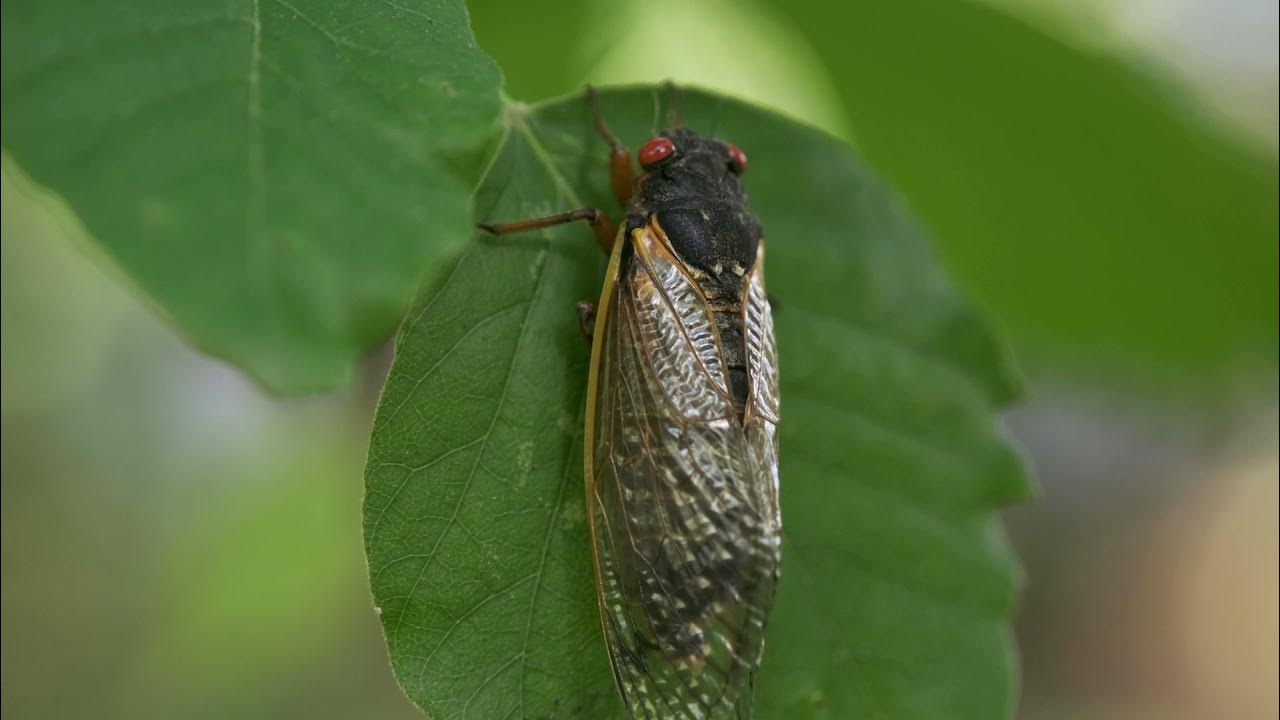
It's coming this summer -- and it'll be twice as big! Two broods of cicadas are set to emerge this year, an event that last occurred more than 200 years ago and now has scientists, bug watchers, and fans of the loud and noisy (yet harmless) insects buzzing with anticipation. Media coverage of this popular event put on by nature is also starting, and John R. Cooley, a cicada expert at UConn, offered his expertise on the impending emergence to MassLive: This summer, some will get a chance to witness a phenomenon rarer — and probably louder — than Halley’s comet. For the first time in more than two centuries, two big groups of cicadas in the United States will emerge simultaneously from the ground. Cicadas, often called “heat bugs,” make their presence known throughout the country every summer by “singing” their loud song. But some of these large, flying insects only emerge from underground every so often, depending on their group, or brood. These “periodical” cicadas bury themselves in soil, where they spend most of their lives. This summer, millions of cicadas from broods XIX (emerging every 13 years) and XIII (every 17 years) will both crawl out from underground and fly across the south and Midwest looking for a mate, according to Cicadamania, a website dedicated to tracking the insects. The last time these two broods popped out of the ground at the same time was in 1803, Cicadamania reported – when the U.S. bought the Louisiana Territory from France. “You cannot possibly be unaware that periodical cicadas are out, because they’re out by the millions and millions, and they’re noisy, charismatic, active insects that are just everywhere,” John R. Cooley, an entomologist who studies cicadas at the University of Connecticut, told MassLive. “When you got them, you know it. And that’s what you can expect to see. That’s what any normal emergence looks like,” he continued. What folks will see are a whole lot of bugs that all look the same, as the ones that come out every decade-plus look the same as the ones that come out every year, Cooley said. Researchers are still exploring why some cicadas emerge periodically. One common theory is that their infrequent appearance helps them avoid predators and prevents enemies from synchronizing on their life cycle. But, Cooley said this theory is flawed since all cicadas have predators, but fewer than 10 species are periodical. Some of the cicada’s natural enemies include birds, moles and Cicada killer wasps, according to the University of California Integrated Pest Management Program. Another theory suggests the last ice age forced cicadas to evolve to have longer periodical life cycles. But, that theory is limited as many cicadas live near glacial areas – few of which are periodical, according to nature.com. “Science isn’t all about having the explanations,” Cooley said. “We just test hypotheses and there are a lot of hypotheses as to why these cicadas are the way they are, but none really stand up so far.” The emerging of cicadas is always a popular and trending topic, and if you have questions or are looking to cover, then let us help. John R. Cooley is an Associate Professor in Residence at the University of Connecticut. He is an entomologist, author, and leading authority when it comes to cicadas. Simply click on his icon now to arrange a time to talk today.


Nicholas Petrelli, M.D., Receives Lifetime Achievement Award
Nicholas Petrelli, M.D., Bank of America Endowed Medical Director of ChristianaCare’s Helen F. Graham Cancer Center & Research Institute, has received the Lifetime Achievement Award from Tulane University School of Medicine in New Orleans, Louisiana. Petrelli is a 1973 graduate of the school. Dr. Petrelli, center, receives the Lifetime Achievement Award from Julius L. Levy, Jr., M.D., past president, Tulane Medical Alumni Association, left, and Lee Hamm, M.D., senior vice president & dean of the School of Medicine, and the James R. Doty Distinguished Professor and Chair, Tulane University School of Medicine, New Orleans, Louisiana. The award recognizes an alumnus of the school who has made significant contributions to the field of medicine and has offered outstanding leadership in the community. Under Petrelli’s leadership at ChristianaCare since 2001, the Helen F. Graham Cancer Center & Research Institute has become a national model for multidisciplinary cancer care and a top enroller in U.S. clinical research trials. The Graham Cancer Center is a National Cancer Institute Community Oncology Research Program and one of only five hybrid academic community cancer centers in the nation. Through the work of the Graham Cancer Center and partnerships with health care providers, community organizations and the state to improve the prevention, diagnosis and treatment of cancer, Delaware’s cancer mortality rate has dropped twice as fast as the national rate. In addition, the state is outpacing the nation in reducing deaths from a number of cancers. Delaware has gone from number one in cancer mortality 22 years ago to number 17 today. Petrelli has numerous achievements in cancer care and research. He has established several firsts for Delaware, including a multidisciplinary disease center site, the Cawley Center for Translational Cancer Research, a tissue procurement center, an adult genetic counseling program, a statewide high-risk family cancer registry consisting of more than 500,000 individuals and an innovative oncology express unit to provide patients with cancer a way to address urgent care needs without having to go to the emergency department. Among his accomplishments on the national level are the first primary care practice established at a cancer center and the first gene editing research program integrated into a community cancer center. Through a unique research partnership with the Ellen and Ronald Caplan Cancer Center of The Wistar Institute, he has brought cutting-edge cancer treatments and diagnostics to Delawareans. And in a ground-breaking collaboration among the government, community organizations and the Graham Cancer Center nearly 10 years ago, Delaware ended the disparity between Black and white people for colorectal cancer screenings and mortality, which continues to this day. Petrelli has received numerous awards and has authored 360 peer-reviewed manuscripts and 31 book chapters. He has served on advisory panels of the National Cancer Institute, the American Society of Clinical Oncology, the American Cancer Society and the Society of Surgical Oncology. He was president of the Society of Surgical Oncology from 2007 to 2008. In 2013 he received the Order of the First State Award, the highest honor in the state, from Delaware Gov. Jack Markell. In 2019 he received the James Tilton award (named for the first U.S. Army Surgeon General) from the Medical Society of Delaware.



Craig M. Harvey, Ph.D., has been selected to serve as the new dean of the Allen E. Paulson College of Engineering and Computing beginning July 1. “I am excited to welcome Dean Craig Harvey to Georgia Southern University as the next generation of leadership for the College of Engineering and Computing,” said Carl L. Reiber, Ph.D., provost and vice president for academic affairs. “Dean Harvey brings with him an understanding of what a vibrant and growing research university will need to move to the next level as our region expands in its engineering and computing needs.” Harvey comes to Georgia Southern University from Louisiana State University, where he serves as the associate dean for academic affairs of the College of Engineering, professor of Industrial Engineering and is the holder of the Donald W. Clayton University Professorship. He brings to Georgia Southern a wealth of knowledge in leadership, student growth and expansion and advanced engineering studies. “It will be a great honor to serve as the next dean of the Allen E. Paulson College of Engineering and Computing, a college that prepares graduates in engineering, construction and computing to be ready to take on the challenges facing Georgia and the country in the 21st century,” Harvey said. “I look forward to working with faculty, staff, students, alumni and industry to position the college to meet the future demands in both education and research in the state where my engineering career began.” His research interests include human computer interaction, usability engineering, human collaboration within complex environments, human factors engineering and safety engineering. Harvey worked full time as a maintenance engineer and captain at Grand Forks Air Base in North Dakota and served in the United States Air Force Reserves while earning a Ph.D. in industrial engineering from Purdue University. He holds a bachelor's in industrial engineering from Georgia Institute of Technology and a master's in industrial engineering degree from Purdue University in West Lafayette, Indiana. For more information — simply reach out to Georgia Southern Director of Communications Jennifer Wise at jwise@georgiasouthern.edu to arrange an interview today.
