
Experts Matter. Find Yours.
Connect for media, speaking, professional opportunities & more.

Expert Q&A: What is Soft Diplomacy and how does it impact classrooms?
"Right now, storytelling is critical. Language learning is highly personal, and it’s the person-to-person relationships that grease the wheels," says Cheryl Ernst, director of the English Language Institute at the University of Delaware. She recently published English Language Programs as Facilitators of Soft Diplomacy in Innovations in Star Scholars Press. Here's how she's discussing this important topic. Q: What is the focus of this research, and why is it important? Ernst: ELI and other English language programs provide the ideal space for communication development, cross cultural appreciation, gaining life skills, and raising awareness about people beyond the media. Post pandemic, we’re hearing across campus how individuals feel less connected, and in English language classrooms, connection is critical. Language is only learned through production and practice since it’s a skill that needs to be honed. In language, there is no such thing as perfect. In our classrooms, English is the common goal, and everyone comes to that space at their own levels and overflowing with imperfection. Our students learn to use their vulnerability as a tool. They learn the value of a growth mindset living in a culture that is different from their own, and with that comes an appreciation for difference, respect for others, trust, human-to-human communication. Q: What inspired this research? Ernst: More than 30 years of observation, conversations, experiences, and personal relationships. There was no term to describe the skills English language programs teach beyond grammar (what’s perceived, anyway). Terms like personal diplomacy, person-to-person diplomacy, civic diplomacy, and the like happens all the time and oversimplifies what we do. In my readings, I started to see overlaps between soft power and diplomacy, which led to the concept of Soft Diplomacy. Then what distinguishes Soft Diplomacy from other more common monikers are the variety of skills that happen organically in our classrooms that we rarely acknowledge and students may not recognize. Q: What are some key findings or developments? Ernst: Institutionally, ELPs can do better highlighting the skills beyond English that we teach organically or deliberately. Q: How could this work potentially impact the field or the wider public? Ernst: Respecting ELPs for the space they provide and the skills they offer. It’s not “just English,” rather is learning to communicate in a common language and with people from around the globe. I’d like people to realize that relationships are foundational, that there are common values across nations and that differences are not bad. What version of English is “correct” British or American dialects (the New York? Wisconsin? Alabama? Iowa?). Q: What are the next steps or upcoming milestones in your research? Ernst: A former student and I have launched a podcast series called Soft Diplomacy in Action that focuses on personal stories from those who work in international education. We’ve interviewed an ELI associate professor from Morocco, the UD coordinator of the Mandela Fellows program, a professor who sees (and lives) the diplomatic value of sports, and a retired English language professional. We’re looking forward to continuing these conversations with individuals from a variety of disciplines that also work in this space but through different lenses. ABOUT CHERYL ERNST Cheryl Ernst is the director of the English Language Institute at the University of Delaware where she and her colleagues and students practice Soft Diplomacy every day. Her professional areas of interest include program administration and international marketing, teacher training and working with international teaching assistants, curriculum design, and advanced level academic English (graduate levels). To speak with Ernst her work and the importance of Soft Diplomacy, reach out to MediaRelations@udel.edu.


My MBA at 69: Q1 Results Are In. And Nobody Is More Surprised Than Me
When I wrote my first post about starting an MBA at 69, I was running on caffeine, stubbornness, and a mild identity crisis. I was drowning in software platforms, APA formatting, and the humbling reality that open-book quizzes could still make me sweat. Fast forward to today. I am now 25% complete. Even typing that makes me sit up straighter. More surprising? I am maintaining an A average. Yes. An A. Let that land for a moment. Before anyone faints, let me be clear. I am not retiring my original mantra. "Even C's Get Degrees" still lives on a sticky note in my brain. I repeat it whenever the ego starts strutting around like it owns the place. The goal was never perfection. The goal was sustainable progress and full nights of sleep. The A average is delightful. The mantra is protective. My dog Dottie approves of both. She now perches on the back of the couch while I work, casting supervisory glances in my direction like a very small, very opinionated board member. We are in a much better place emotionally. The household has stabilized. What I did not anticipate was how much this experience would reveal about me. Lesson #1: Experience Is the Assignment Nobody Grades The content is strong. The business frameworks and systems I am learning are elegant. But the real gift has been realizing that my decades of experience give depth to everything I read. When the textbook discusses competitive positioning or industry cycles, I do not see abstract diagrams. I see real businesses. I hear boardroom conversations. I remember decisions that worked beautifully — and others that required creative explanations and, occasionally, some very careful walking back. The theories have texture because I have lived them. This MBA is not separate from my work. It is sharpening it. Every case study filters through the same question: How does this apply to retirees? I cannot turn that lens off. Frankly, I would not want to. At the same time, not every concept survives intact outside the classroom. We are taught that firms must choose clearly between cost leadership and differentiation. Tidy in theory. Messier in practice, where most organizations stumble through imperfect hybrids while real-world pressures refuse to behave according to the textbook. I learn the models thoroughly. I cite them properly. I demonstrate mastery. And yes, after nearly losing my mind over whether a journal article published in 2019 requires a DOI or a retrieved-from URL, I can now format an APA 7th edition reference in my sleep. Whether I want to is another conversation entirely. But maturity lets me see where the models bend. Lesson #2: Selective Excellence Is Not Laziness. It's Wisdom. One of the biggest lessons this term has been prioritization. At 29, I wanted to prove myself. At 69, I want to improve myself. Earlier in life I would have tried to ace everything equally. Today, I allocate energy strategically. Marketing excites me. Strategy energizes me. Organizational behaviour feels like coming home. Those subjects get my full intellectual investment. Accounting gets solid, disciplined, B-minus effort. I say that proudly. Retirement is also selective excellence. You do not need to be good at everything anymore. You get to double down on what lights you up. Coursework. Careers. Life. All of it. But growth is not without discomfort. Lesson #3: The Classroom Has No Hallways Anymore My program is entirely virtual. No hallway conversations. No accidental coffee chats that turn into the best part of your week. Everything happens on screens, and group projects test my patience more than any midterm ever could. I even considered removing my photo from my profile to avoid immediate age assumptions. Then I took a breath and remembered who I am. If someone sees my age and quietly categorizes me as someone's grandmother, so be it. They have never met Aunt Equity when she puts her purse down. For the record: I do not own a purse. In one recent group assignment, a teammate gently pointed out that I had used an em dash in a formal case report. A rookie mistake, apparently. Instead of bristling, I thanked them for the compliment. If I am still making rookie mistakes, I am still capable of growth. That exchange meant more to me than the grade. Lesson #4: The Advantage of Having Nothing Left to Prove Age has given me something powerful: detachment. I am not chasing internships. I am not competing for promotions. I am here because I want to be here, and that freedom changes everything. I can question thoughtfully. I can log off at a reasonable hour. I can engage with students young enough to be my grandchildren without an ounce of ego about it. Mostly. And still, whenever I feel the ego creeping back in about that A average, I whisper: "Even C's Get Degrees." It works every time. Lesson #5: Curiosity Does Not Come With an Expiry Date The deeper curriculum of this MBA has little to do with GPA. It has taught me that humility sharpens thinking. That curiosity does not expire. That stretching intellectually at 69 feels remarkably similar to climbing toward Everest Base Camp at 60. You question your sanity. You adapt. You keep moving. When I look at my latest grades, I do not feel relief. I feel possibility. If I can adapt to new technology, academic writing standards, and Zoom calls at 7 AM, then reinvention is not reserved for youth. It is available to anyone willing to risk being a beginner again. Are You Putting Your Experience To Work? If you are over 60 and thinking about taking a course, writing a book, starting a business, or learning something that scares you a little — here is the truth: Your experience is not a liability. It is leverage. Your decades are not dead weight. They are the whole point. And if you are willing to risk being a beginner again, reinvention will meet you exactly where you are. I am 25% done. Seventy is approaching. The mantra still stands. Remember, even C's Get Degrees. But when you bring seven decades of lived experience into the classroom, the curve has a way of bending in your favour. Now, if you will excuse me, Dottie has just planted herself directly on my laptop and is staring at me with the quiet authority of someone who has already read the syllabus on Google Scholar. Eighteen courses to go. Multiple pots of extra-strong coffee. A carefully curated cocktail of patience, tolerance, and self-care. The honeymoon is officially over. What lies ahead is a full marathon: War and Peace-length reading lists, spreadsheets that test the limits of human endurance, and enough group projects to make a grown woman question everything she knows about herself. Dottie remains unbothered. She has seen me do hard things. She knows I finish what I start. She also knows the whining, complaining, and pleading will eventually stop. (insert slow, world-weary head shake from a very wise ten-pound dog who has heard it all before). Don’t Retire… ReWire! Sue Want to become an expert on serving the senior demographic? Just message me to be notified about the next opportunity to become a "Certified Equity Advocate" — mastering solution-based advising that transforms how you work with Canada's fastest-growing client segment. Here's the link to sign up.



Target Market: Who Are They, What Do They Value, and Where Are They?
In last week’s column on Super Bowl ads, I stressed the importance of providing a value proposition when you are advertising or marketing your goods and services. As a reminder, a value proposition is a promise that you make to potential customers that provides them a compelling reason why they should buy your product rather than a product from one of your competitors. Prior to developing a value proposition, you first need to understand who you are trying to sell to and what product characteristics they value. This will ensure that your value proposition will be more likely convince these buyers (your target market) to buy from you. The most effective Super Bowl ads from last week did this important work well. Once the company has a good, valuable proposition, it then needs to communicate that valuable proposition to its target market. Fortunately for companies with Super Bowl ads, just about all target markets are watching the game. However, for pretty much all other advertising and marketing, it must communicate where the target market will see or hear it. In today’s column, I will walk you through how to determine who your target market is, what they value, and finally, where to distribute your marketing messages. You are probably asking yourself, why is a guy who teaches Operations and Supply Chain Management (O&SCM) writing about Marketing? The answer is simple, really. It is the job of the O&SCM function of the company to deliver on the value proposition. So, as marketing develops its value proposition, it must confer with O&SCM to determine if the firm can deliver on that value proposition. If marketing communicates a value proposition it cannot meet, the company will likely be unsuccessful. With that in mind, let us examine the target market/value proposition development process. As a firm begins to identify its target market for a particular product, it must first determine the various potential customers who might buy that product and attempt to partition those customers into groups who value similar things. For instance, looking at the automobile market, there are some customers who value low price most, some who value performance and aesthetics most, and others who value reliability, durability, and consistency. If we are either in the automobile market or thinking about entering the automobile market, we need to find a group that values some characteristics that we think we can provide better than other market entrants. As you can see, the identification of a target market and the development of a value proposition that will appeal to that target market are done concurrently and iteratively. As noted above, the O&SCM function of the company is also brought in during these iterations to determine if the physical good can be manufactured or a service can be delivered in such a way that it can meet the value proposition. One important thing to remember is that in most cases, you are not your target market. What I mean by that is that you are often biased by your own knowledge and taste/preferences, and this may differ significantly from what your target market values. Remember that you are a unique individual whose preferences for a price point and evaluation of other characteristics might differ from your target market. Be sure to develop a value proposition that reflects the buying habits of your target market customers. Once you have developed a strong value proposition that you know your O&SCM can deliver upon, it is time to message that value proposition in places where your target market is present. As noted above, this aspect of our process is like “shooting fish in a barrel” for Super Bowl advertisers because all target markets are typically watching the Super Bowl. It is not so trivial for the rest of us. We need to understand what forms of media our target markets consume (e.g., television, radio, social media), but also, with each of these media, which applications or types of shows do they frequent. While most think social media skews young, and that is true for the most part, Facebook skews older, while Instagram, Snapchat, and TikTok skew much younger. On television, much of network television skew older, but there are shows like “Dancing with the Stars” and The “Bachelor” that do particularly well with younger women. Many mornings when I am getting ready for the day, I listen to “Augusta’s Morning News” on WGAC radio, and it is clear that my fellow listeners are primarily in my age demographic. My advice is to do your homework and find out where your target market is consuming media. All the work above is not very easy, but doing it right will lead to big returns. If you can identify who you want to target, based on what they value, and then be sure they get the marketing message that you have what they value, your business will succeed!



Labubu success demonstrates the benefits of the ‘blind box’ business strategy
Labubu dolls have taken the world by storm. The viral collectable keychains that feature plush monster-like figurines, sold by the Chinese company Pop Mart, have been compared to other toys like Beanie Babies or the more recent Sonny Angels. Labubus come in a variety of colors and outfits, and they are sold in “blind boxes” — so customers never know which collectibles they will get when they buy them. The meteoric ascent of these toys raises the question: What exactly is the appeal of Labubus? According to Tianxin Zou, Ph.D., an assistant professor of marketing in the University of Florida Warrington College of Business, there are a few reasons behind Pop Mart’s success. “It’s a little bit like buying a lottery ticket,” Zou said about the blind box concept. “The uncertainty is giving another layer of enjoyment.” Zou compares the psychological experience of blind boxes to gambling, stating that some customers buy hundreds of boxes for the chance at winning big. Customers aren’t just buying the products; they’re buying the experience. Each Labubu release features 12 figurine designs, as well as a much rarer secret design, so customers are enticed by the possibility of getting that one rare doll. This can also come with monetary value, as Labubus have been resold for thousands of dollars on platforms like eBay. Recently, a first-generation Labubu toy sold for $150,000 in a Labubu-specific auction. The unboxing experience can also trigger social interaction. People often film themselves unboxing the products and posting the experiences online for millions to see, or they gather in person to open boxes with their friends. This brings people together, forming a sense of community and identity around Labubu ownership. “Unboxing the blind box together can become a joyful event,” Zou said. “It makes it so Labubu has a social value and can help form friendships.” The rarity of certain designs is also a key factor in the social aspect of Labubus. Within these communities, especially online, owning rare designs can become a form of social capital. This has contributed to the rise of “Lafufus,” or fake Labubu dolls sold by retailers separate from Pop Mart. The craze has become less about the item itself and more about what it represents socially. Even if a keychain is fake, it still shows that the owner is socially in the know. Pop Mart also aligns itself with well-known franchises, such as Star Wars and Marvel, for branded blind box designs. And celebrity interest has helped the popularity of Labubus skyrocket. The toy first gained momentum after it was seen on the bag of Lisa, a member of the K-pop group Blackpink. Since then, Labubus have been spotted on the bags and belt loops of public figures ranging from Rihanna to Tom Brady. Zou explains that this furthers the social impact of the toys, as people aim to replicate celebrities’ style. “This collaboration with celebrities gives Pop Mart synergy, which gives it this stronger social effect,” Zou said. While the success of Labubus may seem spontaneous, it is actually the result of highly strategic business strategies. However, other retailers are catching on, providing competition for Pop Mart as more companies enter the blind box game. The retailer also faces new challenges, with countries like China and Singapore creating regulations for the sale of blind boxes, especially to children. But for now, the monsters continue to dominate the market, giving the company time to formulate new strategies. And because the company’s strength lies in its research and planning, it likely will not be going into its next phase blind.



Beyond the field: New research highlights how NIL is reshaping college athlete identity
In an era of name, image and likeness, or NIL, many college athletes are thinking differently about who they are — seeing themselves not just as competitors or students, but also as influencers with distinct voices and causes, according to a new study from the University of Florida. Molly Harry, Ph.D., an assistant professor in the Department of Sport Management at the UF College of Health and Human Performance, surveyed 200 athletes from 21 Power Four universities to better understand how NIL, which refers to the rights of college athletes to earn money through endorsements, sponsorships, social media promotions and other commercial opportunities, has impacted the way athletes perceive their roles and identities. “Historically, we’ve viewed them (college athletes) through the lens of athletics or academics, but they’re daughters, brothers, role models, and increasingly, they’re now cultivating public personas and marketing skills.” —Molly Harry, Ph.D., an assistant professor in the Department of Sport Management The findings, published Friday in the Sociology of Sport Journal, reveal a growing recognition among athletes that they are more than the two-dimensional “student-athlete” model that is traditionally used in research and policy. “With the shift in NIL policies, athletes are starting to develop roles and identities related to that of the influencer,” Harry said. “Historically, we’ve viewed them through the lens of athletics or academics, but they’re daughters, brothers, role models, and increasingly, they’re now cultivating public personas and marketing skills.” Through survey responses across seven major sports — football, baseball, men’s and women’s basketball, gymnastics, volleyball and softball — Harry and UF doctoral student Hannah Kloetzer examined athletes' engagement with NIL opportunities, as well as the personal sacrifices they made to pursue them. They found that many athletes now view NIL as a platform to promote causes they care about, build connections with their communities and explore career pathways after college. One softball player described the value of NIL in a way that highlights the broader impact: “It’s been great to feel seen and have your hard work in a sport help in other parts of life. It’s really nice to use NIL on a resume as marketing experience.” Athletes surveyed said they found deals not just with big-name brands, but more often with local businesses like restaurants, boutiques and community partners. This entrepreneurial approach often required initiative and personal outreach, something many athletes had to learn on their own. “Some athletes told us they felt lost when trying to navigate NIL,” Harry said. “Others shared how they reached out to local businesses or organized their own camps.” One particularly striking finding, Harry said, was that some athletes were making athletic sacrifices — like spending less time training — to pursue NIL work, a shift that underscores the importance of these opportunities. Harry stressed that while no one reported skipping practices, athletes did acknowledge shifting their priorities to make room for NIL-related endeavors. “If you’re willing to give up something in your athletic routine, that speaks volumes about how central NIL — and influencer identities — could become for some athletes,” she said. Another key insight: football players of color from low socioeconomic backgrounds were most likely to self-identify as influencers. This emerging pattern stands in contrast to perceived broader trends in the social media world. “That was one of the most fascinating takeaways,” Harry said. “We have this unique subset of influencers — college football athletes — that are starting to enter this space.” Harry’s research builds on a growing conversation in the academic community about the evolving identity of college athletes. A few conceptual pieces have previously proposed the idea of a “student-athlete-influencer,” but Harry’s team is one of the first to gather empirical data to back it up. This new perspective has broad implications for how universities and organizations like the NCAA support college athletes, both during their playing years and as they prepare for life after sport. “As fans, we often see athletes as commodities on the field,” Harry said. “But they’re humans first, and they’re starting to recognize their own value and tap into their potential beyond the playing field.” In addition to academic and athletic support, Harry believes universities should invest in more targeted resources tailored to influencer pressures, like mentorship opportunities and training that goes beyond basic social media etiquette. “Athletes who take on influencer roles may deal with unique stressors, whether it’s comparing engagement numbers or coping with public scrutiny,” she said. “It would be valuable to provide opportunities where athlete-influencers can support each other, share strategies and protect their mental health.” A football player who participated in the study summed up the broader potential of NIL: “I’m very appreciative of NIL opportunities and the ability to continue to grow my camp and greater brand outside of my football program.” Looking ahead, Harry plans to explore this evolving identity through more qualitative research, with a focus on what it truly means to be an “influencer” in the context of college athletics. “Athletes are more than football players. They are more than swimmers,” she said. “They are people who we walk with on our college campuses, and they are people who bring value to our society in a host of ways.”


Need a tourism expert? Connect with Florida Atlantic today
Tourism is a cornerstone of both Florida’s and America’s economy. In Florida alone, visitor spending exceeds $100 billion annually and supports roughly one in every ten jobs statewide, making it one of the state’s largest industries. The ripple effect extends far beyond hotels and attractions, fueling restaurants, retail, transportation, construction, real estate, and public tax revenues that help fund infrastructure and services. Nationally, tourism contributes hundreds of billions to U.S. GDP each year and serves as a key indicator of consumer confidence and economic momentum. When travel demand rises or falls, it signals broader shifts in spending behavior, business investment, and workforce stability , which is why tourism remains a critical economic beat for journalists. Peter Ricci is Clinical Associate Professor & Director, Hospitality Management Programs at Florida Atlantic University. He is a hospitality industry veteran with over 20 years of managerial experience in segments including: food service, lodging, incentive travel, and destination marketing and is considered an expert in food service, lodging, incentive travel, and destination marketing. View his profile Peter offers research-based insight into visitor trends, workforce dynamics, and destination strategy. His expertise helps media connect travel patterns to economic impact, providing clear analysis of how tourism shapes Florida’s economy and influences broader industry trends across the United States. Recent media coverage: South Florida Sun Sentinel Peter Ricci, director of the hospitality and tourism management program at Florida Atlantic University’s College of Business, cited the openings of the 801-room Omni Hotel next to the county convention center in Fort Lauderdale, the revamped Pier Sixty-Six Resort nearby and a variety of high-profile events as reasons for promising visitor traffic this year. “South Florida should expect to have a relatively strong 2026 with major events in the area [PGA Tournament, Formula 1, et al] and the Southern White House of Mar-a-Lago enhancing higher average daily rates in The Palm Beaches,” he said by email. “Broward is perfectly positioned to capture demand both to its south and north and I expect that hotels and restaurants will have a good year ahead,” he added. Newsweek "The tariffs, staffing shortage, perception of it being difficult to emigrate to the USA, and any possible anti-USA sentiment all go into the 'ingredients of the soup' as I call it," Peter Ricci, Director of Florida Atlantic University's Hospitality and Tourism program, told Newsweek. South Florida Sun Sentinel This is actually a complicated process behind the scenes, said Peter Ricci, director of the hospitality and tourism management program at Florida Atlantic University in Boca Raton. “Restaurant profit margins are slim, so training and development are often not a part of the process,” he said. “Also, one must recognize that restaurant front-of-house roles are somewhat high-turnover compared to other industries. With higher turnover, there is less likelihood for development of training, knowledge of all the systems (which can lead to dissatisfaction among guests), and a ‘new face’ every time regular guests return to the venue.” The Daytona Beach News-Journal When asked if Florida is experiencing a "restaurant apocalypse," Ricci said, "I don't see that as the case. I don't see it like a disaster, but I have seen more (restaurant) closures the past six months. The reasons include operating costs that are higher than ever in an industry with low (profit) margins to begin with." "Closures are being driven by rising rent, rising costs of labor, rising costs of goods (food, glassware, supplies, cleaning services, deep cleaning surcharges, et al.), and changing consumer habits." Orlando Sentinel Peter Ricci, director of the hospitality and management program at Florida Atlantic University’s College of Business, said he has not heard of hoteliers suddenly losing foreign nationals from their staff. But it’s the confusion that is perplexing many. “I hear frustration and confusion of what changes will occur on a regular basis for owners, operators and managers,” Ricci said. “It’s more of the unknown that’s disconcerting than, ‘I’m now worried about losing workers in my hotel or restaurant.’”



When you are first introduced to expertise marketing it can be hard to imagine that there are experts hiding within your organization. We tend to think of experts as a small group at the top but in reality that is just the tip of the iceberg. Across teams and departments there are people with the knowledge, skills and experience to contribute to meaningful conversations with your audiences. These individuals may not always carry the title of expert but their perspectives can help explain complex issues, contribute to research and shape the content your organization produces. When their expertise is recognized and supported it can help build trust with key audiences including media, industry partners and prospective clients. The challenge many organizations face is knowing how to assess expertise in the first place. To identify these hidden experts and understand the role they can play in an expertise marketing program it helps to start with a simple question. What actually makes someone an expert? The 7 Attributes of Expertise By definition an expert is someone with comprehensive or authoritative knowledge in a particular area of study. While formal education and certifications can be important starting points many fields do not have a clear set of criteria that determines expertise. In practice expertise develops through a combination of training, research, professional experience and real-world application. It is also shaped by the level of trust and recognition someone has earned within their profession or community. When evaluating expertise across your organization it is important to consider the different roles people can play. Many individuals have invested years developing deep knowledge in their fields but not everyone is interested in speaking at conferences or appearing in the media. That does not reduce the value of their expertise. Many contribute through research, insights and content development that support broader visibility for the organization. Here are several attributes that help define expertise and the roles people can play within an expertise marketing strategy. Authority: Has a reputation with an audience as a trusted source of insight and perspective. Advocate: Demonstrates a commitment to advancing a professional community or area of practice. Educator: Teaches and inspires others through lectures, presentations or classroom instruction. Author: Develops articles, commentary or thought leadership that expands their reach and influence. Researcher: Generates new insights through research, analysis or field work. Practitioner: Applies specialized knowledge in a professional setting by delivering services or solutions. Graduate: Has formal education or professional training that demonstrates proficiency in a subject area. Understanding these attributes helps organizations see that expertise exists across many roles. Once those individuals are identified the next step is determining how their expertise can contribute to broader visibility and engagement. The 4 Levels of Expertise Understanding how to promote expertise is an emerging discipline for many organizations. Unlike traditional career paths expertise does not always follow a predictable hierarchy. When we consider which experts are most visible to audiences it becomes clear that visibility is not always tied to seniority or authority within an organization. Professionals at many stages of their careers are now sharing insights through social networks, industry publications and personal platforms. This means that a senior researcher with decades of experience and a younger professional actively sharing insights online could have a similar level of visibility. Because visibility is influenced by personal motivation and interest in public engagement many organizations recognize the need to better identify and support experts across their teams. Doing so helps ensure that valuable knowledge is not overlooked and that more voices can contribute to meaningful conversations. The framework below can help organizations take inventory of their expertise and develop a path for individuals who are interested in contributing content and building visibility with key audiences. Now that we’ve provided a broader picture of what expertise looks like, it’s time for you to ask, “How does my organization stack up?” Bench Strength: Taking Stock of Expertise Across Your Organization Expertise is in high demand. Audiences are looking for credible voices who can provide context and insight on complex issues. For organizations, this means it is critical to understand how their collective expertise can be channeled into meaningful conversations with their audiences. As you review the attributes and levels of expertise outlined above you may begin to recognize individuals within your organization who have valuable knowledge but may not have been considered visible experts before. Identifying these individuals is an important first step but recognition alone is not enough. Mobilizing expertise marketing requires support and investment from leadership across the organization. Senior leaders will want to understand the value of elevating internal expertise and how it contributes to reputation, visibility and opportunity. The organizations that succeed are those that recognize expertise as a strategic asset and take deliberate steps to surface it, support it and share it with the audiences who are actively searching for it. The Complete Guide to Expertise Marketing For a comprehensive look at how expertise marketing benefits the entire organization and drives measurable return on investment, follow the link below to download an industry-focussed copy of ExpertFile’s Complete Guide to Expertise Marketing: The Next Wave in Digital Strategy



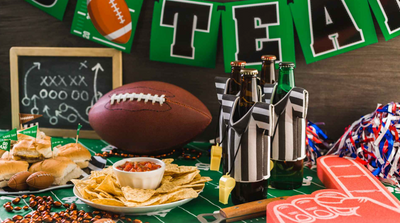
What makes the NFL's biggest game so Super?
Why would someone pay $10,000 for a Super Bowl ticket? Why does the big game serve as a reason for a party – perhaps the only event to do so on a national level? How do teams lock in and play their best while the whole world is watching? University of Delaware experts can deliver answers to those and other questions long before the first chip hits the dip. Amit Kumar, an assistant professor of marketing and expert on happiness, said that part of the reason people derive hedonic benefits from buying tickets to sporting events like the Super Bowl is because of the memories they provide and the conversational value they generate. He pointed to his study on consuming experiences, which found that consumers derive more happiness from purchasing experiences than from buying possessions. Kumar can also talk about the benefits of Super Bowl parties and the psychology behind the social connections that take place at sports-related gatherings. Other UD experts who can comment on the Super Bowl include: • Kyle Emich, professor of management: The inner-working of teams, decision-making and how emotions influence cognitive processing. • John Allgood, instructor of sport management: Fan engagement and the economics of sports. • Nataliya Bredikhina, assistant professor of sport management: Athlete branding and event sponsorships. • Tim Deschriver, associate professor of sport management: Topics related to sports economics, finance and marketing. • Karin Sabernagel, professor of physical therapy: Specializes in lower extremity musculoskeletal injuries, sports medicine and tendon injuries (ankle, knee). To reach these experts directly and arrange interviews, visit their profiles and click on the "contact" button. Interested reporters can also contact MediaRelations@udel.edu.





When Betting Goes Mobile: The Hidden Cost to Young Adults’ Finances
As online gambling and sports betting surge across the United States, concerns are mounting about the financial and social consequences—particularly for young people. Dr. Jared Pincin, Associate Professor of Economics at Cedarville University, offers journalists a data-driven economic lens on how the rapid expansion of digital gambling is reshaping personal finances and increasing financial risk among younger Americans. What's Happening Mobile betting apps have transformed gambling into an always-available activity, accessible anywhere and at any time. With aggressive marketing tied to professional and collegiate sports, online gambling has become normalized—especially among young adults. As participation rises, so do reports of debt, financial instability, and problem gambling, raising questions about consumer protection, regulation, and long-term economic impact. Dr. Jared Pincin primary research interests explore the intersection of public choice economics with foreign aid as well as issues in sports economics. Pincin has published in popular publications such as The Hill, Real Clear Markets, Foxnews.com, and USA Today and scholarly journals such as Oxford Development Studies, Applied Economic Letters, and the Journal of Sport and Social Issues. View his profile here Key Insights Online Gambling Is Built for Continuous Spending Modern gambling platforms are designed to encourage repeated engagement. Gamified interfaces, instant wagers, and constant prompts make it easy for users to lose track of spending, increasing the likelihood of financial loss over time. Young Adults Face Elevated Risk Young people, particularly college-age students and adults in their twenties, are among the fastest-growing users of online betting platforms. Limited financial experience, combined with easy credit access and social pressure, makes this group especially vulnerable to poor financial outcomes. Personal Finances Are Directly Impacted Gambling losses often come at the expense of savings, rent, tuition, and long-term financial planning. Dr. Pincin emphasizes that gambling platforms generate profit only when users lose, making sustained participation a negative-sum financial activity for individuals. Economic Incentives Drive Expansion From an economic standpoint, gambling growth is fueled by state revenue incentives and private profit motives. Dr. Pincin helps explain how these incentives can conflict with consumer well-being, particularly when regulatory safeguards lag behind technological innovation. About Jared Pincin Dr. Jared Pincin is an Associate Professor of Economics at Cedarville University. He holds a Ph.D. in economics and specializes in public choice, behavioral economics, and sports economics. His work examines how incentives shape individual decision-making and how policy choices affect financial outcomes at both the personal and societal levels. Let Us Help with Your Coverage Jared Pincin can assist reporters by: Explaining why online gambling participation has risen so quickly among young people Breaking down the economic mechanics of betting platforms and personal financial risk Providing context on the long-term financial consequences of habitual gambling Contributing expert insight to stories on regulation, advertising, and consumer protection Why This Matters As gambling becomes increasingly embedded in American culture, its financial consequences are no longer limited to isolated cases. Understanding how online gambling affects young people’s financial stability is essential for informed public reporting. Dr. Pincin offers clear, accessible analysis that helps audiences understand the economic realities behind the headlines.



The Ads are Coming ! OpenAI is testing ads inside ChatGPT starting this month.
But there's a catch: You can’t just buy your way in ChatGPT will soon include “clearly labeled sponsored listings” at the bottom of AI-generated responses. And while the mock-ups don't appear all that sophisticated, it's important to focus on the bigger picture. We're about to see a new wave of 'high-intent advertising' that combines the targeting sophistication of social media with the purchase-intent clarity of search advertising. More on that in a moment. How Do ChatGPT Ads Work? Starting later this month, free users of the ChatGPT platform and those under 18 will begin receiving Ads at the bottom of their screens. First, they will see ChatGPT's answer to their question, which provides a comprehensive, relevant response that builds trust. Then they will see an ad for a sponsored product/service below. An ad that suddenly doesn't feel like a blunt interruption. It feels like a natural next step. This is premium placement. The user has already received value. They've been educated. And now there's a clear call to action (CTA) that's in context. Open AI has stated that their new Ads “support a broader effort to make powerful AI accessible to more people.” Translation: As they approach 1 billion weekly users across 171 countries using ChatGPT for free, OpenAI needs to offset its astronomical burn rate with ads. Makes sense. This New Era of Conversational Ads Will be Complicated But there's a structural difference with these new ads. OpenAI has stated that ads will only appear when they're relevant to that exact conversation. This means you can't just buy your way into ChatGPT Ads. In fact, with ChatGPT you are being selected because you're the right answer the user needs at that time. Put another way: When ChatGPT evaluates which sponsored products to show, it will favor brands with demonstrated authority on the topic. So unlike traditional paid search, where a higher bid gets you ranked in sponsored results, ChatGPT Ads will reward the brands whose content has already been recognized as authoritative by the AI model. Brands with strong organic visibility, topical expertise, and content that aligns with user intent will have a distinct competitive advantage from day one. Brands without that foundation will be paying premium rates to compete with established authorities. How ChatGPT's Ad Strategy is Set to Change Digital Marketing For years, CMOs have treated organic search and paid search as separate budget lines, often managed by different teams. I saw this firsthand, as I helped my client DoubleClick launch it’s first Ad Exchange network in the US market. Programmatic exchanges brought a new efficiency to digital ad buying. It was a very groovy time. This feels very different. Why? Because, the conventional wisdom has always been that paid search and ads drive immediate results while organic search plays the long game. In 2026, that strategy isn’t completely obsolete. But that type of thinking is about to get a lot more expensive for clients if they don't start to appreciate quality "organic" content and its ability to improve their paid advertising ROI. Now organic and paid need to get along, to get ahead. ChatGPT Ads Are Looking for Topical Authority that Experts Can Demonstrate When ChatGPT evaluates which sponsored products to show, it will favor brands with demonstrated authority on the topic. Brands won't simply be able to "buy" visibility. OpenAI in its announcements, has been explicit: ads must be relevant to the conversation. Relevance is determined by topical alignment, not budget. A brand spending millions on generic bidding will lose to a smaller competitor whose product is more precisely aligned with what the user actually asked. The ads aren't live yet. But the infrastructure supporting them is. Open AI, Google and many of the other generative search platforms are building very sophisticated systems that track topical authority and content quality signals. They're already reshaping how organic search, AI recommendations, and paid advertising work together. Topical Relevance + Expert Authority is the Path to Visibility in Search Investing in well-developed thought leadership programs generates compound returns. You get the organic search results plus an improvement in your paid search metrics in Generative AI search platforms. When done right, you build authority for AI citations, which then positions you better for ChatGPT ads. Remember, your organic traffic gains are built on authoritative content. They're built on being the answer that search engines and AI systems select. And once you've built that authority, it works everywhere—traditional search, AI Overviews, ChatGPT, and soon… ChatGPT ads. What To Do Before AI Ad Networks Start to Scale The early advantage will go to brands that invest in quality content right now. Organizations that invest in expert-authored, intent-aligned content over the next six months will have more AI citation visibility from Google Overviews and similar LLM's like ChatGPT. That means more trust signals, making paid ads more effective when they run. Content that is aligned with user intent: Answers a specific question. Not tangentially, not after 2,000 words of context. The answer appears in the opening paragraph, structured for AI extraction. Includes expert perspective. Generic information that could come from anywhere doesn't differentiate you. Expert insight, original research, or proprietary frameworks do. Demonstrates topical authority. A single authoritative article matters less than a cluster of related content that shows comprehensive expertise on a topic. Is structured for scanning. Clear headings (H2, H3), bullet points, tables, Q&A blocks. This structure helps both human readers and AI systems parse meaning. Remember, the brands that get the most value out of ChatGPT Ads will be the ones that built intent-aligned content years before the ads launched. They'll have topical clusters, expert perspectives, and the authority signals that make them the natural choice for sponsorship. Questions CMO’s Should Be Asking their Teams Now to Prepare for ChatGPT Ads Q. Can I pre-purchase Chat GPT Ads? As of today, there are currently no ads in ChatGPT. Open AI has announced that they will begin internal testing ads in ChatGPT later this month for Free users in the US market. Q. Do Ads influence the answers ChatGPT gives you? What about privacy? Open AI in their release states that answers are optimized based on what's most helpful to you. Ads are always separated and clearly labeled from Answers. They also state that they keep your conversations private from advertisers and will never sell your data to advertisers. Q. How do we audit our site content to ensure we're aligned with user intent? For your top 20-30 decision-stage queries (the ones that drive revenue), here's a quick test. Does the content directly answer the question in the opening paragraph? Are you including question-and-answer formats in your content? If you're burying the answer in a 3,000-word article full of tangents, you're losing visibility in organic search, and you're already failing in ChatGPT's environment. Restructure. Q. How do we prepare for ChatGPT Advertising Opportunities? Build topical authority through content clusters. Don't publish isolated blog posts. Organize your content around core topics your audience cares about. Create a long-form hub article that comprehensively covers the topic, then develop additional linked articles that dive into sub-topics and questions. Link them together. This structure helps AI systems over time, recognize your brand as authoritative on that topic, which improves both organic rankings and AI citation rates. Q. Can we still get traction with content that is not authored by experts? Generic AI-written content won't differentiate you. Get expert voices into your content. Feature your subject-matter experts, partner with practitioners, and customers to contribute original insights, case studies, or frameworks. AI systems can detect authenticity, and original expert perspectives is now a ranking signal. This is especially critical as you prepare for ChatGPT ads. OpenAI has prioritized conversations that cite authoritative sources. Q. How does content need to be structured for citations? Implement proper schema markup and structured data. AI systems extract information by parsing content structure. If your pages include proper schema markup (FAQPage, HowTo, Review, Product schema), you're making it easier for AI to pull your content into answers. This increases citation rates, which builds authority before ChatGPT ads scale. Q. How do we allocate our organic and paid programs? Own the organic + paid intersection. For your highest-intent topics, if you have a budget, invest in both organic visibility and paid campaigns. Run ads targeting the same keywords where you rank organically. This takes up more real estate on the results page and signals authority. It also gives you direct feedback on keyword performance, messaging, and landing page effectiveness—data that informs your organic content strategy and drives more citations - a virtuous cycle. Q. What types of creative will work best in these new Ad products? Until they roll out, it's unwise to make too many predictions. The safe bet here is to prepare your team for conversational advertising. ChatGPT ads won't reward traditional ad copy. They'll reward clarity, specificity, and direct value messaging. If you're used to brand-heavy, aspirational creative, this will feel foreign. Start testing conversationally-appropriate messaging now. Short, clear, problem-focused. Test on existing paid channels and refine before ChatGPT ads launch. Our Prediction When ChatGPT ads fully launch and scale, many brands that have invested in organic visibility and content quality will start to pull away from the pack. Remember…The brands that win won't be the ones with the biggest ad budgets. They'll be the ones whose content has already proven they're the right answer. They'll be the ones users already trust, already cite, and already know. The ads are coming. Are you ready?