
Experts Matter. Find Yours.
Connect for media, speaking, professional opportunities & more.

AU scientists advance understanding of Nobel-winning immunology research
The 2025 Nobel Prize in Physiology or Medicine recognized the discovery of regulatory T cells, which are immune cells that maintain tolerance and prevent autoimmunity. At Augusta University, scientists have built upon that foundational work, uncovering how these cells function, fail and evolve across diseases like cancer and atherosclerosis. Regulatory T cells, or Tregs, are essential for controlling immune responses and preventing the body from attacking its own tissues. Early discoveries by Shimon Sakaguchi, MD, PhD, who identified the CD25 marker and later the transcription factor FoxP3, revealed how Tregs suppress immune activation. Sakaguchi, a distinguished professor at Osaka University in Japan, shared the Nobel Prize with Mary E. Brunkow, PhD, Princeton University, and Fred Ramsdell, PhD, University of California, Los Angeles. Sakaguchi once shared lab space with Nicholas Gascoigne, PhD, now a professor at AU’s Immunology Center of Georgia, where he studies T-cell signaling and differentiation — a connection that ties the global history of Treg research to the university’s ongoing expertise. Gascoigne’s research continues to illuminate how Tregs differentiate and signal, critical steps in ensuring immune tolerance to self. “Drs. Sakaguchi, Brunkow and Ramsdell have made enormous contributions to our understanding of how immunological tolerance works, so this prize is very well deserved,” Gascoigne said. “I was happy I could help Drs. Shimon and Noriko Sakaguchi when they needed lab space back in the early ‘90s. They were wonderful to work with.” At Augusta University, David Munn, MD, co-director of the Pediatric Immunotherapy Program of the Medical College of Georgia at Augusta University, made seminal discoveries showing that Tregs are not always stable. Munn’s team demonstrated that these cells could lose their suppressive identity and become “exTregs,” adopting pro-inflammatory characteristics under certain conditions. Munn also uncovered an entirely distinct tolerance mechanism through indoleamine 2,3-dioxygenase, a pathway independent of FoxP3 that regulates immune balance through tryptophan metabolism. “In particular, the work of Shimon Sakaguchi and Fred Ramsdell was profoundly influential on our early work, as we were just starting out to explore how the immune system is regulated in pediatric cancers,” Munn said. “The work of these Nobel laureates helped transform the scientific understanding of how the immune system responds — or fails to respond — in the setting of tumors.” Catherine “Lynn” Hedrick, PhD, co-director of the Immunology Center of Georgia, further expanded this understanding by showing that Tregs can convert into follicular helper T cells, offering new insight into how immune regulation can shift toward antibody production in chronic inflammatory diseases such as atherosclerosis. “Understanding how regulatory T cells can shift identities helps explain why the immune system sometimes loses balance in chronic disease,” Hedrick said. “By tracing how Tregs convert into other helper cells, we’re uncovering new therapeutic targets to restore immune harmony in conditions like atherosclerosis.” Building on these advances, Klaus Ley, MD, co-director of IMMCG, and his team have investigated how exTregs contribute to cardiovascular inflammation, identifying them in human tissues and clarifying their role in atherosclerosis. His lab also recently discovered human exTregs, providing the first direct evidence of these cells in people. Two postdoctoral fellows in Ley’s lab, Qingkang Lyu, PhD, and Smriti Parashar, PhD, continue this work, exploring how regulatory and ex-regulatory T cells influence chronic disease progression. Additionally, Dimitrios Moskofidis, MD, PhD, a professor based in the Georgia Cancer Center, contributed key early insights into immune tolerance and memory, defining how effector T cells persist or are deleted following infection. “Together, these discoveries place Augusta University and the Immunology Center of Georgia at the forefront of modern immunology, connecting molecular mechanisms of tolerance to real-world diseases and therapies,” Ley said. To connect with any of the experts or researchers in this article - simply contact AU's External Communications Team mediarelations@augusta.edu to arrange an interview today.

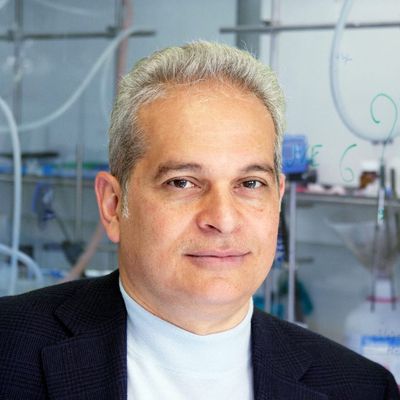
UC Irvine’s Daniele Piomelli provides expert view on federal reclassification of cannabis
As the White House moves to reclassify cannabis under federal law from a schedule I to a schedule III, questions remain about how the change could affect medical use, public health, research, and regulation. UC Irvine’s Daniele Piomelli, PhD, an internationally recognized cannabis researcher, is available to comment on the implications of the policy shift. Piomelli is a distinguished professor of anatomy and neurobiology at the University of California, Irvine, the Louise Turner Arnold Chair in the neurosciences, and director of the UCI Center for the Study of Cannabis. Piomelli has more than 30 years of experience studying cannabis, THC and the endocannabinoid system, with research spanning basic neuroscience, pharmacology and translational science. He is editor in chief of Cannabis and Cannabinoid Research and has testified before the U.S. Senate on cannabis-related research and policy. He can provide perspective on: • What federal reclassification may change for medical cannabis and scientific research • Differences between THC, CBD and other cannabinoids • Potential public health benefits and risks of cannabis legalization • Cannabis exposure and the developing brain, including adolescence • Regulatory and research challenges tied to cannabis policy Piomelli is available for interviews or background conversations. Email: piomelli@hs.uci.edu

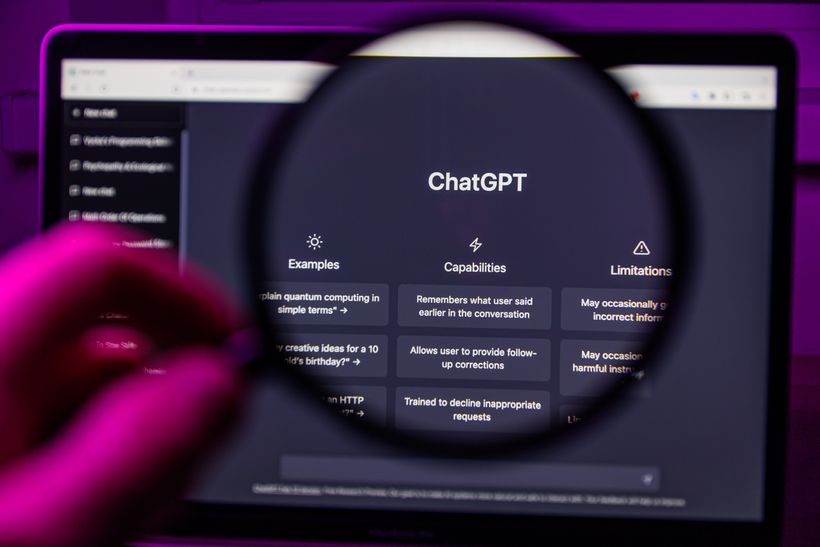
With OpenAI’s latest release, GPT-5.2, AI has crossed an important threshold in performance on professional knowledge-work benchmarks. Peter Evans, Co-Founder & CEO of ExpertFile, outlines how these technologies will fundamentally improve research communications and shares tips and prompts for PR pros. OpenAI has just launched GPT-5.2, describing it as its most capable AI model yet for professional knowledge work — with significantly improved accuracy on tasks like creating spreadsheets, building presentations, interpreting images, and handling complex multistep workflows. And based on our internal testing, we're really impressed. For communications professionals in higher education, non-profits, and R&D-focused industries, this isn’t just another tech upgrade — it’s a meaningful step forward in addressing the “research translation gap” that can slow storytelling and media outreach. According to OpenAI, GPT-5.2 represents measurable gains on benchmarks designed to mirror real work tasks. In many evaluations, it matches or exceeds the performance of human professionals. Also, before you hit reply with “Actually, the best model is…” — yes, we know. ChatGPT-5.2 isn’t the only game in town, and it’s definitely not the only tool we use. Our ExpertFile platform uses AI throughout, and I personally bounce between Claude 4.5, Gemini, Perplexity, NotebookLM, and more specialized models depending on the job to be done. LLM performance right now is a full-contact horserace — today’s winner can be tomorrow’s “remember when,” so we’re not trying to boil the ocean with endless comparisons. We’re spotlighting GPT-5.2 because it marks a meaningful step forward in the exact areas research comms teams care about: reliability, long-document work, multi-step tasks, and interpreting visuals and data. Most importantly, we want this info in your hands because a surprising number of comms pros we meet still carry real fear about AI — and long term, that’s not a good thing. Used responsibly, these tools can help you translate research faster, find stronger story angles, and ship more high-quality work without burning out. When "Too Much" AI Power Might Be Exactly What You Need AI expert Allie K. Miller's candid but positive review of an early testing version of ChatGPT 5.2 highlights what she sees as drawbacks for casual users: "outputs that are too long, too structured, and too exhaustive." She goes on to say that in her tests, she observed that ChatGPT-5,2 "stays with a line of thought longer and pushes into edge cases instead of skating on the surface." Fair enough. All good points that Allie Miller makes (see above). However, for communications professionals, these so-called "downsides" for casual users are precisely the capabilities we need. When you're assessing complex research and developing strategic messaging for a variety of important audiences, you want an AI that fits Miller's observation that GPT-5.2 feels like "AI as a serious analyst" rather than "a friendly companion." That's not a critique of our world—it's a job description for comms pros working in sectors like higher education and healthcare. Deep research tools that refuse to take shortcuts are exactly what research communicators need. So let's talk more specifically about how comms pros can think about these new capabilities: 1. AI is Your New Speed-Reading Superpower for Research That means you can upload an entire NIH grant, a full clinical trial protocol, or a complex environmental impact study and ask the model to highlight where key insights — like an unexpected finding — are discussed. It can do this in a fraction of the time it would take a human reader. This isn’t about being lazy. It’s about using AI to assemble a lot of tedious information you need to craft compelling stories while teams still parse dense text manually. 2. The Chart Whisperer You’ve Been Waiting For We’ve all been there — squinting at a graph of scientific data that looks like abstract art, waiting for the lead researcher to clarify what those error bars actually mean. Recent improvements in how GPT-5.2 handles scientific figures and charts show stronger performance on multimodal reasoning tasks, indicating better ability to interpret and describe visual information like graphs and diagrams. With these capabilities, you can unlock the data behind visuals and turn them into narrative elements that resonate with audiences. 3. A Connection Machine That Finds Stories Where Others See Statistics Great science communication isn’t about dumbing things down — it’s about building bridges between technical ideas and the broader public. GPT-5.2 shows notable improvements in abstract reasoning compared with earlier versions, based on internal evaluations on academic reasoning benchmarks. For example, teams working on novel materials science or emerging health technologies can use this reasoning capability to highlight connections between technical results and real-world impact — something that previously required hours of interpretive work. These gains help the AI spot patterns and relationships that can form the basis of compelling storytelling. 4. Accuracy That Gives You More Peace of Mind...When Coupled With Human Oversight Let’s address the elephant in the room: AI hallucinations. You’ve probably heard the horror stories — press releases that cited a study that didn’t exist, or a “quote” that was never said by an expert. GPT-5.2 has meaningfully reduced error rates compared with its predecessor, by a substantial margin, according to OpenAI Even with all these improvements, human review with your experts and careful editing remain essential, especially for anything that will be published or shared externally. 5. The Speed Factor: When “Urgent” Actually Means Urgent With the speed of media today, being second often means being irrelevant. GPT-5.2’s performance on workflow-oriented evaluations suggests it can synthesize information far more quickly than manual review, freeing up a lot more time for strategic work. While deeper reasoning and longer contexts — the kinds of tasks that matter most in research translation — require more processing time and costs continue to improve. Savvy communications teams will adopt a tiered approach: using faster models of AI for simple tasks such as social posts and routine responses, and using reasoning-optimized settings for deep research. Your Action Plan: The GPT-5.2 Playbook for Comms Pros Here’s a tactical checklist to help your team capitalize on these advances. #1 Select the Right AI Model for the Job: Lowers time and costs • Use fast, general configurations for routine content • Use reasoning-optimized configurations for complex synthesis and deep document understanding • Use higher-accuracy configurations for high-stakes projects #2 Find Hidden Ideas Beyond the Abstract: Deeper Reasoning Models do the Heavy Work • Upload complete PDFs — not just the 2-page summary you were given • Use deeper reasoning configurations to let the model work through the material Try these prompts in ChatGPT5.2 “What exactly did the researchers say about this unexpected discovery that would be of interest to my <target audience>? Provide quotes and page references where possible.” “Identify and explain the research methodology used in this study, with references to specific sections.” “Identify where the authors discuss limitations of the study.” “Explain how this research may lead to further studies or real-world benefits, in terms relatable to a general audience.” #3 Unlock Your Story Leverage improvements in pattern recognition and reasoning. Try these prompts: “Using abstract reasoning, find three unexpected analogies that explain this complex concept to a general audience.” “What questions could the researchers answer in an interview that would help us develop richer story angles?” #4 Change the Way You Write Captions Take advantage of the way ChatGPT-5.2 translates processes and reasons about images, charts, diagrams, and other visuals far more effectively. Try these prompts: Clinical Trial Graphs: “Analyze this uploaded trial results graph upload image. Identify key trends, and comparisons to controls, then draft a 150-word donor summary with plain-language explanations and suggested captions suitable for donor communications.” Medical Diagrams: “Interpret these uploaded images. Extract diagnostic insights, highlight innovations, and generate a patient-friendly explainer: bullet points plus one visual caption.” A Word of Caution: Keep Experts in the Loop to Verify Information Even with improved reliability, outputs should be treated as drafts. If your team does not yet have formal AI use policies, it's time to get started, because governance will be critical as AI use scales in 2026 and beyond. A trust-but-verify policy with experts treats AI as a co-pilot — helpful for heavy lifting — while humans remain accountable for approval and publication. The Importance of Humans (aka The Good News) Remember: the future of research communication isn’t about AI taking over — it’s about AI empowering us to do the strategic, human work that machines cannot. That includes: • Building relationships across your institution • Engaging researchers in storytelling • Discovering narrative opportunities • Turning discoveries into compelling narratives that influence audiences With improvements in speed, reasoning, and reliability, the question isn’t whether AI can help — it’s what research stories you’ll uncover next to shape public understanding and impact. FAQ How is AI changing expectations for accuracy in research and institutional communications? AI is shifting expectations from “fast output” to defensible accuracy. Better reasoning means fewer errors in research summaries, policy briefs, and expert content—especially when you’re working from long PDFs, complex methods, or dense results. The new baseline is: clear claims, traceable sources, and human review before publishing. ⸻ Why does deeper AI reasoning matter for communications teams working with experts and research content? Comms teams translate multi-disciplinary research into messaging that must withstand scrutiny. Deeper reasoning helps AI connect findings to real-world relevance, flag uncertainty, and maintain nuance instead of flattening meaning. The result is work that’s easier to defend with media, leadership, donors, and the public—when paired with expert verification. ⸻ When should communications professionals use advanced AI instead of lightweight AI tools? Use lightweight tools for brainstorming, social drafts, headlines, and quick rewrites. Use advanced, reasoning-optimized AI for high-stakes deliverables: executive briefings, research positioning, policy-sensitive messaging, media statements, and anything where a mistake could create reputational, compliance, or scientific credibility risk. Treat advanced AI as your “analyst,” not your autopilot. ⸻ How can media relations teams use AI to find stronger story angles beyond the abstract? AI can scan full papers, grants, protocols, and appendices to surface where the real story lives: unexpected findings, practical implications, limitations, and unanswered questions that prompt great interviews. Ask it to map angles by audience (public, policy, donors, clinicians) and to point to the exact sections that support each angle. ⸻ How should higher-ed comms teams use AI without breaking embargoes or media timing? AI can speed prep work—backgrounders, Q&A, lay summaries, caption drafts—before embargo lifts. The rule is simple: treat embargoed material like any sensitive document. Use approved tools, restrict sharing, and avoid pasting embargoed text into unapproved systems. Use AI to build assets early, then finalize post-approval at release time. ⸻ What’s the best way to keep faculty “in the loop” while still moving fast with AI? Use AI to produce review-friendly drafts that reduce load on researchers: short summaries, suggested quotes clearly marked as drafts, and a checklist of claims needing verification (numbers, methods, limitations). Then route to the expert with specific questions, not a wall of text. This keeps approvals faster while protecting scientific accuracy and trust. ⸻ How should teams handle charts, figures, and visual data in research communications? AI can turn “chart confusion” into narrative—if you prompt for precision. Ask it to identify trends, group comparisons, and what the figure does not show (limitations, missing context). Then verify with the researcher, especially anything involving significance, controls, effect size, or causality. Use the output to write captions that are accurate and accessible. ⸻ Do we need an AI Use policy in comms and media relations—and what should it include? Yes—because adoption scales faster than risk awareness. A practical policy should define: approved tools, what data is restricted, required human review steps, standards for citing sources/page references, rules for drafting quotes, and escalation paths for sensitive topics (health, legal, crisis). Clear guardrails reduce fear and prevent preventable reputational mistakes. If you’re using AI to move faster on research translation, the next bottleneck is usually the same one for many PR and Comm Pros: making your experts more discoverable in Generative Search, your website, and other media. ExpertFile helps media relations and digital teams organize their expert content by topics, keep detailed profiles current, and respond faster to source requests—so you can boost your AI citations and land more coverage with less work. For more information visit us at www.expertfile.com



Study: Lessons learned from 20 years of snakebites
The best way to avoid getting bitten by a venomous snake is to not go looking for one in the first place. Like eating well and exercising to feel better, the avoidance approach is fully backed by science. A new study from University of Florida Health researchers analyzed 20 years of snakebites cases seen at UF Health Shands Hospital in Gainesville. “This is the first time we’ve evaluated two decades of venomous snakebites here,” said senior author and assistant professor of medicine Norman L. Beatty, M.D., FACP. Researchers analyzed 546 de-identified patient records from 2002 to 2022 and highlighted notable conclusions — for instance, that a third of the snakebites analyzed were preventable and caused by people intentionally engaging with wild snakes. “Typically, people’s experiences with getting bitten are due to an interaction that was inadvertent — they stumble upon a snake or reach for something without seeing one camouflaged,” Beatty said. “In this case, people were seeking them out. There were a few individuals who were bitten on more than one occasion.” Most (77.8%) of the snakebites occurred in adult men while they were handling wild snakes, and most of the bites were perpetrated by the diminutive pygmy rattlesnake and the cottonmouth. The latter is named for the white lining of its mouth, which it displays when threatened. “I was less surprised to see those species emerge as some of the most common ones people were bitten by, but the robust presence of other, less common species in the data — like the eastern coral snake, southern copperhead, timber rattlesnake and the eastern diamondback rattlesnake, was interesting,” Beatty said. The eastern diamondback rattlesnake is one of the most venomous snakes in North America. Most patients were bitten on their hands and fingers and around 10% of them attempted outdated self-treatments no longer recommended by doctors — like sucking out the venom. Initially, the study began as a medical student research project, thanks to a handful of medical students who worked with Beatty to review the cases. The intention was to dive deep into the circumstances of each encounter and learn more about the treatment given, as well as the outcomes. Fourth-year medical student River Grace, the paper’s first author, said the work struck a personal note. “My dad is a reptile biologist, so I’ve grown up around snakes my whole life,” Grace said. “He was bitten by a venomous snake many years ago and ended up hospitalized for multiple weeks, so it was interesting to keep that experience in mind while going over the data.” Grace noted that it typically took those bitten over an hour on average to travel from where the bite occurred to the hospital. “It seems like the reason for that was people not knowing exactly what to do once they’d been bitten, or underestimating the severity of the bite,” he said. “Some would just sit at home for hours.” Floridians share their home with a variety of scaly neighbors who don’t always welcome visitors — accidental or not. Ultimately, thanks to the timely care of providers, only three snake bites were fatal. However, antivenom is no panacea. Those who are lucky enough to receive it in time can still incur complications from the original snake bites, like tissue damage, or even a fatal allergic reaction to the antivenom itself. Consequently, researchers look toward improving the processes used to triage snake bites in the emergency room, ensuring that providers are equipped with the knowledge and the know-how to shorten time to treatment. “In the future, we think we’d love to get involved in enhancing provider education so everyone in the health care setting is confident in being able to identify and administer antivenom as quickly and safely as possible,” Grace said.


UF team develops AI tool to make genetic research more comprehensive
University of Florida researchers are addressing a critical gap in medical genetic research — ensuring it better represents and benefits people of all backgrounds. Their work, led by Kiley Graim, Ph.D., an assistant professor in the Department of Computer & Information Science & Engineering, focuses on improving human health by addressing "ancestral bias" in genetic data, a problem that arises when most research is based on data from a single ancestral group. This bias limits advancements in precision medicine, Graim said, and leaves large portions of the global population underserved when it comes to disease treatment and prevention. To solve this, the team developed PhyloFrame, a machine-learning tool that uses artificial intelligence to account for ancestral diversity in genetic data. With funding support from the National Institutes of Health, the goal is to improve how diseases are predicted, diagnosed, and treated for everyone, regardless of their ancestry. A paper describing the PhyloFrame method and how it showed marked improvements in precision medicine outcomes was published Monday in Nature Communications. Graim, a member of the UF Health Cancer Center, said her inspiration to focus on ancestral bias in genomic data evolved from a conversation with a doctor who was frustrated by a study's limited relevance to his diverse patient population. This encounter led her to explore how AI could help bridge the gap in genetic research. “If our training data doesn’t match our real-world data, we have ways to deal with that using machine learning. They’re not perfect, but they can do a lot to address the issue.” —Kiley Graim, Ph.D., an assistant professor in the Department of Computer & Information Science & Engineering and a member of the UF Health Cancer Center “I thought to myself, ‘I can fix that problem,’” said Graim, whose research centers around machine learning and precision medicine and who is trained in population genomics. “If our training data doesn’t match our real-world data, we have ways to deal with that using machine learning. They’re not perfect, but they can do a lot to address the issue.” By leveraging data from population genomics database gnomAD, PhyloFrame integrates massive databases of healthy human genomes with the smaller datasets specific to diseases used to train precision medicine models. The models it creates are better equipped to handle diverse genetic backgrounds. For example, it can predict the differences between subtypes of diseases like breast cancer and suggest the best treatment for each patient, regardless of patient ancestry. Processing such massive amounts of data is no small feat. The team uses UF’s HiPerGator, one of the most powerful supercomputers in the country, to analyze genomic information from millions of people. For each person, that means processing 3 billion base pairs of DNA. “I didn’t think it would work as well as it did,” said Graim, noting that her doctoral student, Leslie Smith, contributed significantly to the study. “What started as a small project using a simple model to demonstrate the impact of incorporating population genomics data has evolved into securing funds to develop more sophisticated models and to refine how populations are defined.” What sets PhyloFrame apart is its ability to ensure predictions remain accurate across populations by considering genetic differences linked to ancestry. This is crucial because most current models are built using data that does not fully represent the world’s population. Much of the existing data comes from research hospitals and patients who trust the health care system. This means populations in small towns or those who distrust medical systems are often left out, making it harder to develop treatments that work well for everyone. She also estimated 97% of the sequenced samples are from people of European ancestry, due, largely, to national and state level funding and priorities, but also due to socioeconomic factors that snowball at different levels – insurance impacts whether people get treated, for example, which impacts how likely they are to be sequenced. “Some other countries, notably China and Japan, have recently been trying to close this gap, and so there is more data from these countries than there had been previously but still nothing like the European data," she said. “Poorer populations are generally excluded entirely.” Thus, diversity in training data is essential, Graim said. "We want these models to work for any patient, not just the ones in our studies," she said. “Having diverse training data makes models better for Europeans, too. Having the population genomics data helps prevent models from overfitting, which means that they'll work better for everyone, including Europeans.” Graim believes tools like PhyloFrame will eventually be used in the clinical setting, replacing traditional models to develop treatment plans tailored to individuals based on their genetic makeup. The team’s next steps include refining PhyloFrame and expanding its applications to more diseases. “My dream is to help advance precision medicine through this kind of machine learning method, so people can get diagnosed early and are treated with what works specifically for them and with the fewest side effects,” she said. “Getting the right treatment to the right person at the right time is what we’re striving for.” Graim’s project received funding from the UF College of Medicine Office of Research’s AI2 Datathon grant award, which is designed to help researchers and clinicians harness AI tools to improve human health.

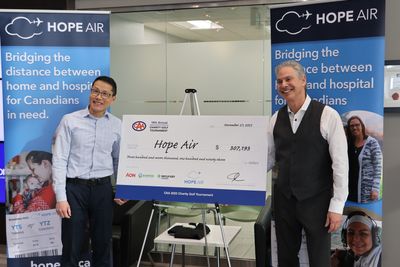
STORY: CCG Raises Over $300,000 in Support of Hope
Pictured above, from left to right: Jay Woo, President and CEO of CAA Club Group of Companies & Mark Rubinstein, Chief Hope Officer of Hope Air. CAA Club Group of Companies President and CEO Jay Woo made a cheque presentation of over $300,000 to Hope Air on Thursday, November 27, 2025. The cheque presentation, which included funds raised from two golf events, the first-ever Jaunt for Hope Air and a handful of other initiatives, took place at the CAA offices in Thornhill with volunteers, board members, and several senior leaders from CCG, as well as representatives from Hope Air. "The success of these events highlights the power of collaboration,” says Jay Woo, President and CEO of CAA Club Group of Companies. "Thanks to the unwavering support of our associates and sponsors, we’re able to raise substantial funds that go directly to Hope Air, helping provide vital travel assistance to Canadians in need of medical care. This is what happens when a community unites for a common cause: we create hope, foster change, and build a legacy of compassion." CCG's support for Hope Air began when Jay started volunteering his personal time to fly patients from northern Ontario into Toronto for medical treatment. Since then, CCG has rallied behind Hope Air's lifesaving work by raising over $2.2 million, which provides direct support to over 22,000 patient families.

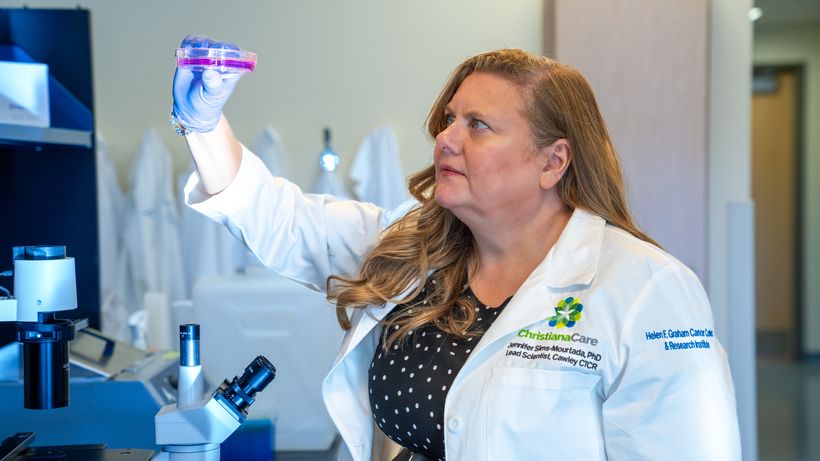
The National Cancer Institute (NCI) has renewed the Cancer Center Support Grant (CCSG) for The Wistar Institute and ChristianaCare’s Helen F. Graham Cancer Center & Research Institute, awarding $16.3 million over the next five years. The renewal received an “exceptional” rating — the highest possible — recognizing the strength and impact of a partnership that combines world-class basic science with leading community-based cancer care. A One-of-a-Kind National Model This collaboration is the only one of its kind in the nation, joining Wistar, an NCI-Designated Basic Cancer Center, with ChristianaCare, one of the country’s premier academic community cancer centers and a National Cancer Institute Community Oncology Research Program. Together, they focus on driving advances against some of the most challenging cancers, including pancreatic, melanoma, breast, lung and ovarian cancers. The grant supports shared infrastructure, scientific resources and programs that enable researchers and clinicians to work seamlessly across both institutions. By connecting laboratory breakthroughs at Wistar with ChristianaCare’s ability to rapidly apply new approaches in a diverse patient population, the partnership accelerates the path from discovery to care. NCI highlighted the collaboration’s effectiveness, noting that “the ongoing alliance with the Helen F. Graham Cancer Center & Research Institute is where most clinical translation into active oncology trials is occurring, supported by productive collaboration between Wistar investigators and Graham Cancer Center oncologists.” Impact on Patients and Community “At ChristianaCare, we are committed to bringing innovation directly to the people we serve. Our collaboration with Wistar connects the best of basic science with the realities of patient care,” said Thomas Schwaab, M.D., Ph.D., Bank of America Endowed Medical Director of the Helen F. Graham Cancer Center & Research Institute. “The NCI’s exceptional score recognizes the promise of this work and the progress we are making together. It is a powerful affirmation that our patients are benefiting from research at the highest level.” “This renewal from the NCI is proof that we are building a model for how cancer research and community care can come together,” said Nicholas J. Petrelli, M.D., director of the Cawley Center for Translational Cancer Research at the Helen F. Graham Cancer Center & Research Institute and associate director of Translational Research at The Wistar Institute Cancer Center. “Through our partnership with Wistar, patients in Delaware and beyond are gaining access to cutting-edge research and therapies for some of the toughest cancers we face.” Dario Altieri, M.D., president and CEO of The Wistar Institute and director of its Ellen and Ronald Caplan Cancer Center, added: “An exceptional rating from the NCI is a reflection of the scientific excellence and real-world impact of this partnership. What makes this collaboration unique is its ability to take discoveries in areas such as melanoma and ovarian cancer and bring them rapidly into clinical practice through ChristianaCare.” NCI underscored the alliance’s reach, noting that “the partnership with the Graham Cancer Center brought cutting-edge cancer research to the community and advanced groundbreaking discoveries to first-in-human oncology clinical trials.” A Pipeline of Research Advancing Faster Than Ever Research achievements supported by the Wistar—ChristianaCare partnership include: Advancing multiple Wistar discoveries into investigator-initiated, first-in-human oncology clinical trials, including studies in pancreatic, melanoma, lung, breast and ovarian cancers. Launching joint research programs across several cancer types, with expanding efforts in cancer risk and population health. Increasing access to high-quality biospecimens — including tumor tissue, biopsies and blood samples — that fuel translational research. Strengthening shared scientific infrastructure supporting immunotherapy research, organoid development, xenograft models and molecular profiling. The Wistar—ChristianaCare partnership, established in 2011, has grown into a nationally recognized alliance that bridges science and medicine. With this CCSG renewal, the collaboration will expand research in pancreatic, melanoma, breast, lung and ovarian cancers and continue advancing prevention, early detection and training programs for the next generation of physician—scientists. The Helen F. Graham Cancer Center & Research Institute depends on grants and community support to keep this work moving forward. To learn more or make a gift, visit Support the Helen F. Graham Cancer Center & Research Institute.


The University of Florida’s ‘AI Queen’ is using AI technology to help prevent dementia
To help the 50 million people globally who live with dementia, the National Institute on Aging is finding researchers to develop tech-based breakthroughs that target the disease — researchers like the University of Florida’s “AI Queen.” It’s a fitting nickname for Aprinda Indahlastari Queen, Ph.D., who is applying artificial intelligence technology to study transcranial direct current stimulation, or tDCS — a technique that involves placing electrodes on the scalp to deliver a weak electrical current to the brain — as a possible way to prevent dementia. The assistant professor in the UF College of Public Health and Health Professions’ Department of Clinical and Health Psychology is using UF’s supercomputer, HiPerGator, to perform neuroimaging and machine learning analyses to study how anatomical differences may affect tDCS outcomes. “Investigating working memory in patients with mild cognitive impairment offers an opportunity to understand how cognitive processes are disrupted in the early stages of Alzheimer’s disease,” said Queen, whose study — funded by a National Institute on Aging research career development grant — integrates neuroimaging with information on brain structure that is unique to older adults and those with mild cognitive impairment. Refining the treatment with AI Using neuroimaging, Queen captures real-time changes during tDCS to the parts of the brain associated with working memory, which is the type of memory that allows humans to temporarily keep track of small amounts of information. Think of this as a mental “scratchpad.” Her study includes older adults with mild cognitive impairment as well as individuals who are cognitively healthy. In tDCS, a safe, weak electrical current passes through electrodes placed on a person’s head. The stimulation is being used in research and clinical settings for a variety of conditions and has shown partial success as a nonpharmaceutical intervention that can improve cognitive and mental health in older adults. But tDCS results can vary across individuals, and the suspected cause is both simple and complex: Everyone’s head is different. “One potential reason tDCS may not work for some individuals is the variation in head tissue anatomy, including differences in brain structure,” Queen said. “Since electrical stimulation must travel through multiple layers of tissue to reach the brain, and every individual’s anatomy is unique, these differences likely affect outcomes.” To address this further, Queen is using AI. “Artificial intelligence will play a major role in the modeling pipeline, including constructing individualized head models, conducting predictive analyses to identify which participants will respond to the stimulation, and disentangling multiple individual factors that may contribute to these outcomes,” Queen said. An estimated 10 to 20% of adults over age 65 have memory or thinking problems characterized as mild cognitive impairment. Their symptoms are not as severe as Alzheimer’s disease and other dementias, but they may be at increased risk for developing dementia. “The fact that not all individuals with mild cognitive impairment progress to Alzheimer’s disease emphasizes the need to identify effective interventions that can slow the progression to dementia,” Queen said. “This project presents an opportunity to differentiate between multiple types of mild cognitive impairment and investigate how tDCS affects the brain across these subtypes.” An AI visionary Queen, who joined the UF faculty under the university’s AI hiring initiative, is an instructor in the College of Public Health and Health Professions’ undergraduate certificate program in AI and public health and health care, and the co-chair of the college’s AI Workgroup. She is also the assistant director for computing and informatics at the UF Center for Cognitive Aging and Memory Clinical Translational Research and a member of UF’s McKnight Brain Institute. Queen received her Ph.D. training in engineering with a focus on building and running computational models to investigate medical devices. She experienced a career “a-ha” moment as a postdoc, when she was a co-investigator on a large clinical trial that paired brain stimulation with cognitive training to enhance cognition in older adults. “This experience was transformative for me. I had the chance to interact directly with participants, which was both fulfilling and eye-opening. These interactions allowed me to see the immediate, real-world implications of my work and sparked a passion for pursuing aging research,” Queen said. “I realized that, through this type of research, I could have a more direct impact on addressing age-related challenges, which prompted a shift in my career plans.” The new grant will help Queen further improve her understanding of the neurobiology and progression of Alzheimer’s disease and other dementias. “These experiences will ultimately prepare me to become a well-rounded aging investigator, capable of making meaningful contributions to the field of aging research,” Queen said. She also credits her mentors and collaborators — Ronald Cohen, Ph.D.; Adam Woods, Ph.D.; Steven DeKosky, M.D.; Ruogu Fang, Ph.D.; Joseph Gullett, Ph.D.; and Glenn Smith, Ph.D. — with supporting her as an early career scientist. “It really takes a village to get here!” Queen said.


How UF researchers are helping Floridians to build resilience
When Hurricane Idalia hit the Big Bend region of Florida in 2023, Jeff Carney and his team were watching. A coalition of architects, planners, and landscape architects led by Carney worked closely with the tiny Gulf island of Cedar Key, which is particularly vulnerable to hurricanes, to prepare for this moment. The researchers had modeled for city officials how a major storm would flood the city’s core services. “Idalia caused flooding exactly where the maps said it would, including city hall, the historic downtown, older homes, and many streets,” Carney said. After the storm, Cedar Key moved city hall to higher ground, as outlined in the plan. And just in time. Barely a year later, Cedar Key was hit even harder by Hurricane Helene. Between the storms, Carney’s group had worked with the city to refine their storm preparation. The new plan focused more on resilience-boosting projects, like improving drainage around the city. Cedar Key finalized their plans just weeks before Helene. “A lot of the projects we put forward in this plan are in the process of seeking additional funding after Helene,” Carney said. A professor of architecture at the University of Florida, Carney directs the Florida Institute for Built Environment Resilience, or FIBER. A research institute in UF’s College of Design, Construction and Planning, FIBER engages with communities to understand how the designs of buildings and cities expose Floridians to risks — not just storms, but also excessive heat, poor air quality, even a lack of health care. FIBER faculty then work with cities to mitigate these hazards. By preparing for emergencies, upgrading buildings, and providing targeted services, communities across Florida are bolstering the resilience of their residents, all with expert help from UF researchers. Preparing to weather big storms That kind of resilience is especially important for some of Florida’s most vulnerable residents. Older and poorer Floridians face higher-than-average risks from natural disasters and other environmental hazards. That vulnerability was apparent in Cedar Key as it weathered the last two hurricane seasons. Centered around aquaculture and tourism, Cedar Key seems in many ways to be thriving. Yet, with the feel of a small fishing village, roughly 13% of its nearly 1,000 full-time residents are considered to be financially disadvantaged, according to U.S. Census data. Poorer residents may also have a harder time walking away from coastal communities devastated by storms. With savings invested into damaged homes and jobs tied to the local area, less-wealthy residents often have no choice but to stay and rebuild. Carney’s team helps people see the opportunities for rebuilding with a clearer vision of a future where rising sea levels are a reality. “You capture people’s attention and excitement when you can offer them options that are not doomsday,” said Carney, who has been working in Pine Island and Matlacha in Southwest Florida’s Lee County to help residents affected by recent storms prepare for the future. “There’s a lot of opportunity for rebuilding as long as you don’t try to have it be business as usual. We help people see how redevelopment can provide a community asset for the future,” he added. “We try to paint the picture of all the possible scenarios so people can find their own comfort level. It puts them in the driver’s seat.” Aging with fewer choices While that kind of agency is empowering, it can be harder to come by as people retire and find themselves facing tough decisions on fixed incomes. That’s a common experience in Florida, which has a larger proportion of seniors than any other state, due in part to its popularity as a retirement destination. More than 10% of Americans over the age of 65 live below the federal poverty line. This population often finds themselves moving to less safe places as they age. “Older people with more social vulnerability — such as low income or poor health — have a tendency to move to worse places,” said Yan Wang, Ph.D., a professor of urban and regional planning in the UF College of Design, Construction and Planning. “They are more likely to move to places with less economic stability, with less access to health care, and with more exposure to extreme weather.” Wang and postdoctoral researcher Shangde Gao, Ph.D., recently published a study that uncovered the risks low-income seniors face when moving. Compared to their peers with higher incomes, poorer seniors were more likely to end up in neighborhoods lacking access to health care facilities. To address these kinds of disparities, UF Health has launched mobile health units that can reach people who have trouble traveling to health centers, including low-income seniors. The Mobile Outreach Clinic provides primary care and referrals for specialists. And the newly launched cancer screening vehicle, which serves all of North Central Florida, can help catch the disease in the early stages when it is easiest to treat. It’s not just finding health care that’s a struggle. Older adults from minority racial groups were also more likely to increase their exposure to poor air quality and to natural disasters like flooding and hurricanes when they moved, Wang and Gao discovered. “If we understand the trend and causes of these income disparities better, we could better prepare some places with more health care resources or better hurricane preparation for these older populations,” Wang said. Building safer, healthier homes That preparation is happening right now in Jacksonville, not just for big storms but for the everyday nuisances and hazards — even the ones people are exposed to in their own homes — that threaten people’s lives and health. The Jacksonville Restore and Repair for Resiliency research initiative was founded to address these kinds of risks while improving energy efficiency. The R3 initiative, as it’s known, is a home remodeling program organized by a slew of community partners and supported by FIBER research on the impact of housing quality on health. The project aims to keep longtime residents of the Historic Eastside in their homes while addressing the home hazards that put people at risk for medical complications like asthma attacks and emergency room visits. “The designs of buildings impact human health and well-being,” said Lisa Platt, Ph.D., the lead researcher with the Jacksonville program and an assistant professor of interior design with FIBER. “Our research is helping the team prioritize the home improvements that will benefit residents’ health the most.” Jacksonville’s Eastside faces a lot of challenges. The population is older than the city as a whole. Roughly three-quarters of residents are over the age of 60, and the poverty rate is over 40%. Yet more than a third of residents own their own homes. Often passed down from previous generations, some of the houses are now over a century old and struggle to keep the intense Florida heat and humidity out. Platt’s research has modeled how things like high heat days — only growing more common in a warming world —are associated with increased emergency room use and poor perceived physical and mental health. That science helps guide the community partners to prioritize providing air conditioning and better insulation to protect Historic Eastside residents. To date, the Jacksonville program is targeting up to 70 homes for renovation. Builders have fixed holes in roofs, replaced drafty windows, and hooked up air conditioning for the first time, keeping the heat and humidity at bay and protecting residents’ health. Now the R3 initiative is applying for federal grants to expand the program. “I think the best way to approach this kind of community action research is with humility and outreach. Community members have amazing expertise. I always say, ‘I can build models to analyze the problem, but you are the ones that are the experts,’” Platt said. “That’s where UF can be most useful, is coming in from a perspective of service.”

New AI model predicts harmful videos before they go viral
Certain short-form videos on major social media platforms can trigger suicidal thoughts among vulnerable viewers, according to new research led by the University of Delaware's Jiaheng Xie. His team developed an AI model that can predict and flag these videos. In the study, published Nov. 17 in Information Systems Research, UD professor Jiaheng Xie and his co-authors showed how AI can assist with safety by predicting high-risk videos before they go viral by looking through both the content and what people write in the comments. • Distinguish what creators choose to post from what viewers think or feel after watching. • Separate known medical risk factors from emerging social media trends, such as viral heartbreak clips or challenges that may influence teens. • This system is especially novel because it predicts the high-risk videos before they reach large audiences. Xie is available for a Zoom interview to share how the model was developed and how it could potentially change the way platforms such as TikTok moderate.
