
Experts Matter. Find Yours.
Connect for media, speaking, professional opportunities & more.
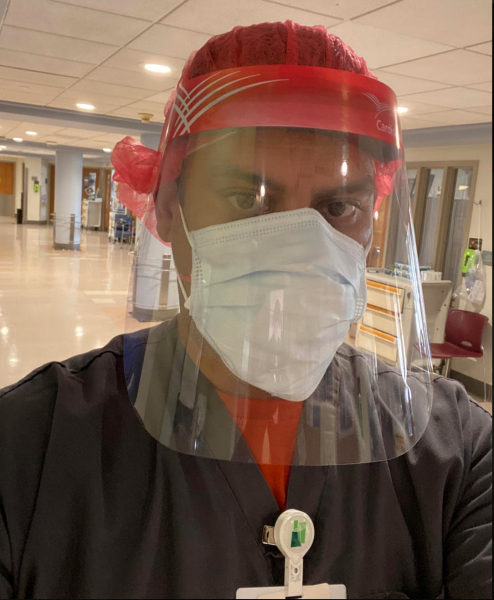
When the first cases of the novel coronavirus arrived in Chatham County, Georgia, Rafael Agosto, who has been a respiratory therapist at St. Joseph’s/Candler Hospital in Savannah for 17 years, had to recalibrate his approach to lung care. “Initially, it was kind of wild because we didn’t know what to expect and how to manage any of these patients,” said Agosto. “What are we looking for, and how do we treat this?” The primary role of a respiratory therapist is to assist patients who have trouble breathing by administering oxygen, managing ventilators and measuring lung function, among other methods. COVID-19 symptoms include fatigue, fever, cough and shortness of breath, and at the onset, Agosto and his colleagues raced to stabilize patients who tested positive for the precarious disease. “We were trying to keep them oxygenated,” he said. “It was sort of like pneumonia, but we wouldn’t treat it like a normal pneumonia because it’s like a deadly pneumonia. Patients were declining very fast so you didn’t have time like you normally would with other patients. And they were of all ages. That’s what was so scary.” While grappling with patient care, Agosto and his co-workers were also dealing with fear for their own safety with exposure to the virus in such close proximity. St. Joseph’s/Candler, Agosto’s employer since he graduated with a B.S. in respiratory care from Georgia Southern University’s Armstrong Campus in 2003, made it a priority to outfit the health care workers with proper personal protection equipment (PPE), Agosto said. “That was scary but they made sure we had what we needed,” he explained. “Safety was the number one key. So the proper PPE, it was everything. We had all of it. A face shield, goggles, scrub cap and masks. They were not comfortable at all. At least here when I wore them I had downtime, but in Boston, holy moly, my face was bruised.” Agosto registered for a four-week rotation with a crisis nurse staffing company that placed him at Good Samaritan Medical Center in Brockton, Massachusetts, a suburb of Boston. COVID-19-related deaths in Massachusetts were outpaced only by New York and California, and Brockton was the second hardest-hit community in the state. “The reason I went was the opportunity to help patients, number one, and to learn how they were managing their ventilator patients there so it could help here,” he explained. On April 19, Agosto reported to the facility, suited up for his first 12-hour shift. “I was in complete shock when I got in there,” Agosto said. “The ICU was full. Every single floor was possible for COVID.” The hospital averaged 80 to 90 cases throughout his stay, and the intensive care unit remained full. Days were hectic and taxing; lunch was an afterthought. His focus was on keeping patients off of ventilators, as global reports show that more than half of ventilated coronavirus patients don’t survive. Yet, “it started becoming hard to get them off ventilators,” and his group often didn’t have a choice but to put patients on 100% oxygen. Stress didn’t let up, but Agosto found moments of solace in interactions with patients. “I would walk into patients’ rooms and they all kept telling me the same thing — they’re scared,” he said. “Because they don’t know anything. It’s like a ghost town because the nurses are running around. Patients felt they weren’t being seen much.” In response, Agosto offered his undivided attention. “That’s one thing that made me feel really good,” Agosto continued. “Just to sit there and talk with them for a few minutes. Or just listening to them. That’s what we’re here for, and they were appreciative.” Agosto returned to Savannah healthy and with a new oxygen delivery device to share with his co-workers at St. Joseph’s/Candler. His manager ordered the devices to serve local patients. “The most important thing I took out of this is that it’s serious, and people are doing everything they can,” Agosto said. “They’re putting their lives in jeopardy for the patients, and I’m glad I had the opportunity to do that.” The accomplishment of his goals in a time of crisis and his continued dedication as a respiratory therapist leave Agosto fulfilled. “I didn’t get sick,” he said. “I helped as much as I possibly could. I did what I wanted to achieve. I’m so happy and blessed because I still love my job.” If you’re a journalist covering COVID-19 and how Georgia Southern University is helping mitigate the spread of this virus – then let us help. Barry Joyner, Ph.D., is the dean of Georgia Southern University’s Waters College of Health Professions - simply click on his icon to arrange an interview today.


Orion Travel Insurance, a CAA-owned company, is now the first travel insurer to offer in-province Virtual Emergency Medical Assistance, to provide easier access to emergency medical assistance while on the road. Orion Travel Insurance is enhancing its Multi-Trip Annual Plans and Multi-Trip Annual Vacation Package Plans with Virtual Emergency Medical Assistance that can be used while travellers are in their home province. “We felt it was important to add Virtual Emergency Medical Assistance to in-province travel, to help travellers preserve as much of their vacation as possible if faced with a medical emergency,” said Kellee Irwin, vice president, Orion Travel Insurance. “As COVID related restrictions begin to ease, we anticipate more people will be staying closer to home and choosing travel options within their home province. This will provide additional peace of mind to those who venture out.” Virtual Emergency Medical Assistance is already included as part of Orion’s out-of-province emergency medical coverage and will now extend to travellers within province. The new service is free of charge and is automatically embedded into Multi-Trip Annual Plans and Multi-Trip Annual Vacation Package Plans starting June 8. “Travellers have benefited from Virtual Emergency Medical Assistance while travelling abroad and between provinces for many years, but this same convenience has not been available for in-province travel,” continued Irwin. “Travel restrictions during the COVID-19 pandemic have highlighted this gap that has been previously overlooked by travel insurers. We are happy to respond and give travellers this added protection.” Existing and new annual plans will include up to four virtual visits through CAA Assistance that will be provided by licensed doctors within Canada. Travellers with Orion’s Annual Travel Plan can access this new feature by contacting CAA Assistance, as you normally would if you experienced a medical emergency while travelling. They will triage your situation and connect you with a Canadian doctor.



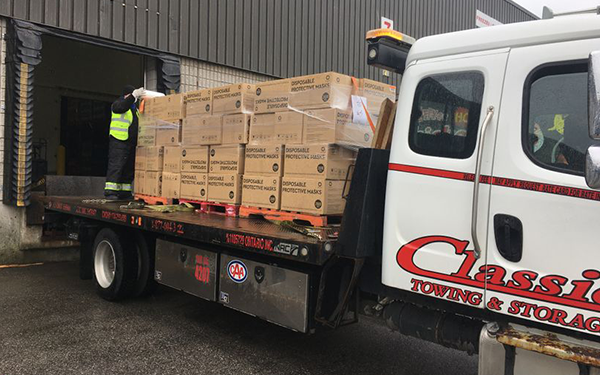
STORY: CAA Volunteers to deliver another BIG shipment of PPE to help Frontline workers.
CAA has once again partnered up with Mobilizing Masks for Health Care workers to deliver a large donation of 120,000 Personal Protective Equipment masks. Mobilizing Masks is a grassroots organization of physicians and advocates, that is facilitating a large-scale mask donation drive, to bring masks to hospitals most in need of PPE and to units where medical staff have high exposure to COVID-19 positive patients. While CAA has been helping the organization with the delivery of PPE’s since April 6th, this donation is one of the largest to date. The masks were donated by T & T Supermarket and delivered by CAA to 105 Gibson, a community centre in Markham. There they were sorted and distributed to long term care residences in the GTA. Since April 6th CAA South Central Ontario has helped to distribute: Surgical Masks - 570,805 N95 masks - 3,810 Face Shields - 2,900 Thank you to all the Associates and Network Providers who have contributed to getting this initiative off the ground and who continue to ensure that those on the frontline of our healthcare network are supported.

As the COVID-19 pandemic unfolded and healthcare organizations began experiencing shortages of personal protective equipment (PPE), faculty, staff and students at Georgia Southern University stepped up to fulfill a need. Making use of the 3D printers on the Statesboro and Armstrong campuses, as well as at the FabLab at the Business Innovation Group’s (BIG) downtown Statesboro location, the campus communities quickly began production of protective face shields and respirators. “We can’t afford to sit back and wait for things to happen,” said Dominique Halaby, DPA, director of the BIG. “We have to make them happen. We have this responsibility to make a difference, to be a part of that front line, whether it’s immediately in our community, our state or our respective area.” To date, the Department of Manufacturing Engineering has sent 200 3D-printed protective face shields with headbands to Augusta, Georgia, for healthcare workers at Augusta Medical Center, while the BIG has sent 100 face shields and 10 “Montana Masks,” a 3D-printable respirator filtration mask that can be fitted to a healthcare provider’s face and sanitized between uses, to Atlanta-area hospitals. The Department of Mechanical Engineering on the Armstrong Campus has also printed Montana Masks that will be delivered to workers in the St. Joseph’s/Candler Hospital System (SJCHS) in Savannah, Georgia, while the Respiratory Therapy Program in the Waters College of Health Professions donated 10 ventilators to the Georgia Emergency Management Agency. “I am unbelievably proud of our faculty, staff and students who have their own families to take care of, but are putting themselves on the line to help our medical professionals in this time of critical need,” said Mohammad Davoud, Ph.D., dean of the Allen E. Paulson College of Engineering and Computing. Wayne Johnson, Ph.D., professor of mechanical engineering, believes providing these materials to the Savannah community during a time of critical need is reinforcing a longtime commitment to the region. “The Armstrong Campus of Georgia Southern has a long history of working within the Savannah community, and during this pandemic, it was especially important for mechanical engineering faculty and students at the Armstrong Campus to step up during a time of great need,” said Johnson. “ Our work with SJCHS to develop, test and donate 3D-printed respirators may also lead to other research and development collaborations in the post-COVID-19 future.” In addition to benefiting area healthcare workers, Johnson believes this project is a great way for students to put their classroom skills into practice. If you would like to learn more about how the students, staff and faculty at Georgia Southern University are helping out during the COVID-19 crisis – the let our experts help. Wayne Johnson is an expert in additive manufacturing, mechatronics, biomechanics and engineering education. He is available to speak with media about this great initiative, simply click on his icon to arrange an interview today.

Voice teachers and singers are facing an avalanche of questions while planning how to return to “normal operations” as restrictions ease from the COVID-19 pandemic. Singers generally expel more breath and saliva than normal talkers, so are their social distancing requirements different than most? If public health officials require six feet of separation at all times, how does a choir practice and perform? If voice lessons have to be done remotely, how can tone and pitch be properly evaluated via an internet connection? These are just some of the dilemmas facing voice teachers and music professors. “We are highly concerned in the arts related to how we deal with teaching when we return to campuses, classrooms and studios, particularly with singing,” said Allen Henderson, executive director of National Association of Teachers of Singing (NATS) and professor of voice at Georgia Southern University. “Singers are what we might call super-emitters — in terms of what is expelled in a breath. What kind of precautions do we need to take?” To help start answering such questions, Henderson and NATS organized a webinar called “A Conversation: What Do Science and Data Say About the Near-Term Future of Singing?” It is scheduled for Tuesday, May 5, at 5 p.m. He said within 24 hours of the webinar’s announcement, more than 2,000 people had signed up. “I was able to secure one of the major researchers on aerosolization of viruses,” Henderson said. “I suspect there will be a lot of higher education arts administrators in attendance and the information shared will be used widely in formulating responses to the unique problems of teaching music when reopening occurs.” Henderson noted that when the country shut down, the process was fairly quick and uniform. As organizations such as universities make plans to return to ‘normal’ operations, leaders will likely have to develop their own plans unique to their settings. “It will be complicated, and it’s about what protocols institutions and individuals have in place in regard to testing and contact tracing so that there’s a sense that we are creating as safe an environment as possible,” Henderson said. “Our job is to arm our colleagues with the best possible science-based information we can.” To learn more about the upcoming webinar, simply visit the story attached:

Does gender matter when it comes to COVID-19?
As America begins to adapt and adjust to the COVID-19 pandemic, details are emerging about who is more susceptible to the virus and why. The latest is gender. In fact, as some are observing, it seems men are more likely to fall victim to COVID-19 than women. A report published by the New England Journal of Medicine showed men not only made up 60% of the first 393 COVID-19 patients admitted in two New York City hospitals, but they were the highest group placed on ventilators. Another study of people hospitalized in the United States for COVID-19 in March similarly found that “males may be disproportionately affected by COVID-19 compared with females.” “The higher risk of COVID-19 among men we are seeing in New York City may be consistent in other US regions, including the southwestern Georgia area that has been disproportionately affected by COVID-19,” says Dr. Justin Moore, an assistant professor in the Department of Population Health Sciences in the Medical College of Georgia at Augusta University. “Researchers are still looking into why men, specifically African American men, are seemingly more susceptible to the virus. However, we know this may be due to underlying health issues, including hypertension, obesity and diabetes.” It’s a startling detail and one that needs to be communicated. If you are a journalist covering COVID-19 and how men may be more vulnerable than women during this crisis – then let our experts help. Dr. Justin Moore is an expert in spatial epidemiology and an associate professor at the Institute of Public and Preventive Health at Augusta University. He is available to speak with media regarding this topic – simply click on his icon to arrange an interview.


The forgotten crisis – are opioids and overdoses being overlooked during the COVID-19 outbreak?
As one crisis overcomes another in the spectrum of news coverage and public health messaging, there’s a serious concern that drug users are particularly vulnerable and potentially being forgotten in the wake of COVID-19. With millions of Americans forced into weeks of extended isolation, several communities have reported a spike in drug overdose deaths, prompting health officials to raise concerns about the safety of those suffering from substance use disorders amid the COVID-19 pandemic. In Jacksonville, Florida, the fire and rescue department reported a 20% increase in overdose emergency calls in March. In Columbus, Ohio, the county coroner’s office saw a surge in overdose deaths, including 12 in a 24-hour period the first week of April. And in New York State, at least four counties have acknowledged an increase in reported overdoses, including Erie County, where officials saw at least 110 drug overdoses, including 36 deaths, reported since the beginning of March. “The opposite of addiction is not sobriety but connectedness,” said Dr. Joseph Hernandez, an associate professor in the Department of Psychiatry and Health Behavior at the Medical College of Georgia at Augusta University. “As we practice social distancing to control the spread of COVID-19, many addicts have lost their traditional in-person meetups, which may explain the jump in overdose deaths.” Despite these challenges, Hernandez says the addiction recovery community is working to maintain connections by switching to online or virtual formats. Additionally, most rehabilitation centers for substance abuse have remained open and are screening their residents to prevent the spread of COVID-19. It’s unclear whether the reports from local officials reflects a broader trend nationwide. The Centers for Disease Control was unable to provide national data on overdose deaths during the coronavirus crisis, but a spokesperson says its officials are “aware of the concerns involving COVID-19 and drug overdoses and that it could affect some populations with substance use disorders.” If you are a journalist covering topics like overdoses and how drug abusers are being cared for or potentially forgotten during this crisis, then let our experts help. Hernandez is a leading expert in addiction medicine and is available to speak with media regarding this topic — simply click on his name to arrange an interview. Also, check out the Augusta University Expert Center to view a complete list of our experts and get the latest on COVID-19 on our dedicated resource page.
Are African Americans more at risk from COVID-19 than other Americans? Let our experts explain.
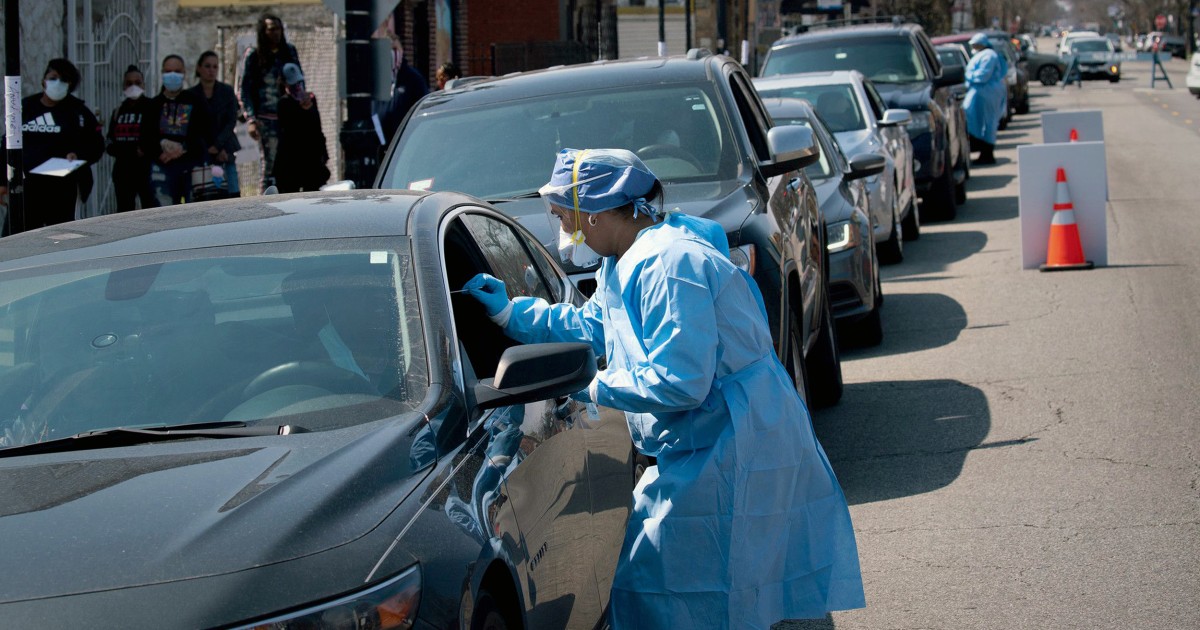
It’s a startling piece of evidence, but it appears that a disproportionate number of African Americans are dying due to the COVID-19 outbreak. On Tuesday, President Donald Trump called the impact of the coronavirus on African Americans a "real problem" that was showing up "strongly" in the data. Dr. Anthony Fauci, director of the National Institute of Allergy and Infectious Diseases, added that pre-existing conditions that are more prevalent among African Americans, including asthma and diabetes, are a factor. “We’re very concerned about that,” he said. Low-income people of color are also more likely to have jobs that can't be done remotely, meaning they're more likely to be exposed to the virus while more affluent professionals are able to stay at home. And they're less likely to have access to high-quality private testing or medical care. "I'm concerned this will be yet another case where there's a huge difference between people who are more wealthy and people who are poor, and there's going to be a difference between people of color and how much they suffer," Dr. Marcus Plescia, the chief medical officer for the Association of State and Territorial Health Officials, said. “We have a longstanding legacy of bias and racism in our country and we’re not going to get beyond that quickly.” NBC News – April 07 But as health officials and experts further examine the data – there are a lot of questions to be asked? What can African Americans do to further prevent the risk of infection? Do government officials need to allocate more resources to areas with a higher population of African Americans? Are African Americans being tested or have access to tests in the same manner as the rest of America? When we African Americans informed of this unique vulnerability and was anything put in place to inform to properly inform them? If you are a journalist covering this topic – then let our experts help. Dr. Tiffany G. Townsend is a widely recognized leader in diversity and psychology. She is an expert in the areas of health equity and serves as the chief diversity officer for Augusta University. Dr. Joseph Hobbs is an award-winning physician and a notable leader in the research of racial disparities in health care. He also serves as the chairman of the Department of Family Medicine at the Medical College of Georgia at Augusta University. Dr. Joseph Hobbs is an award-winning physician and a notable leader in the research of racial disparities in health care. He also serves as the chairman of the Department of Family Medicine at the Medical College of Georgia at Augusta University. Townsend and Hobbs are both available to speak with media regarding this topic– simply call 706-522-3023 to arrange an interview or simply click on Dr. Townsend's icon to book a time.

Drinking alcoholic beverages may be more appealing amid unease about the coronavirus, as people deal with shelter-at-home orders, fears about the economy and boredom, says a Baylor University researcher who studies alcohol use and misuse. But with regulations providing less access to alcohol, this may be a good time for individuals struggling with alcohol use to begin recovery and for others to guard against over-relying on alcohol or other substances. When bars and restaurants began closing — other than for such options as pickup, delivery or drive-through — liquor stores saw a surge in business, according to news reports. But Pennsylvania closed its liquor stores — some people defied stay-at-home orders and drove to liquor stores in neighboring states — and New Hampshire recently closed some of its liquor stores, according to reports. Other states who deemed the businesses “essential” also may take another look at the issue. How to grapple with the risks of substance use and misuse during this stressful time is the subject of this Q&A with Sara Dolan, Ph.D., associate professor of psychology and neuroscience at Baylor University, who has done extensive research on substance use and misuse. Q: There are memes — some of them humorous — going around about heavy alcohol use during quarantine. Why might people be drinking more than usual? DOLAN: People have many different motivations for drinking, and I think self-isolation amplifies some of those. First, people drink to feel good. For some, being out of the normal work routine may feel like a time to let loose. People also drink to feel less bad. It would be normal to feel out of sorts now that we are social distancing. It also would be normal to feel some boredom, and certainly we feel anxiety and uneasiness about our current circumstances. Alcohol may be seen by some as a way to cope with those negative feelings. Q: How might the “new normal” be especially hard for alcoholics? Could this be a time to begin recovery? Some may be social distancing from drinking buddies, although that wouldn’t stop drinking alone. DOLAN: A forced lack of access to alcohol through social distancing and bars being closed can be a great jumping-off point for someone to begin recovery, especially when people are physically distancing from the people they drink or use with. But this can be an especially tough time for people because they may not be able to cope with all the new stressors, especially if they don’t have access to their typical means of coping. For example, for someone who usually relies on friends and family for support, social distancing can cause more stress. And loneliness is especially difficult when it is stacked on top of economic, illness and other anxieties we are experiencing. It is important for us to reach out, from a distance, to family and friends and other resources to help us cope positively so we don’t turn to drinking or other drug use to help us cope. I worry about people who are very heavy drinkers who suddenly stop drinking. Alcohol withdrawal, which can happen when a very heavy drinker stops drinking suddenly, can be very dangerous. Symptoms include anxiety, shakiness, sweatiness, headaches, nausea and even hallucinations – seeing and hearing things others don’t see or hear — and seizures. If someone who usually drinks very heavily and suddenly stops drinking experiences these symptoms, immediate medical attention is necessary. Q: What strategies would you suggest as far as dealing with heavy drinking during this time – both for drinkers and for those who love them? DOLAN: We really all need to be compassionate toward one another, regardless of our individual struggles. This is a difficult time for everyone – it is normal during a crisis like this to feel anxious and even depressed. Support is very important, both for those who are struggling and for those who seem like they are doing fine. This support can take a lot of different forms, from offering an ear to listen to offering specific strategies, such as mutual recovery groups (such as Alcoholics Anonymous, offered online) and other coping resources, like apps. Here is a list of just a few of the apps that may help people cope with stress: Breathe2Relax iChill Personal Zen Self-Help for Anxiety Management T2Mood Tracker The Mindfulness App - meditate Q: What about groups like Alcoholics Anonymous during this time, who because of guidelines against large gatherings may miss in-person support? DOLAN: There are quite a few digital resources to support recovery from alcohol and substance abuse. Here are just a few: Alcoholics Anonymous Narcotics Anonymous Smart Recovery Groups Al-Anon Recovery Groups for loved ones of those struggling with problematic alcohol use Q: Is there anything else you would like to add? DOLAN: We know that during times of crisis, rates of anxiety, depression and suicidal behaviors increase, and those feelings and behaviors can be exacerbated by heavier alcohol or drug use. Let’s do all that we can to care for those around us. ABOUT BAYLOR UNIVERSITY Baylor University is a private Christian University and a nationally ranked research institution. The University provides a vibrant campus community for more than 18,000 students by blending interdisciplinary research with an international reputation for educational excellence and a faculty commitment to teaching and scholarship. Chartered in 1845 by the Republic of Texas through efforts of Baptist pioneers, Baylor is the oldest continually operating University in Texas. Located in Waco, Baylor welcomes students from all 50 states and more than 90 countries to study a broad range of degrees among its 12 nationally recognized academic divisions. ABOUT THE COLLEGE OF ARTS & SCIENCES AT BAYLOR UNIVERSITY The College of Arts & Sciences is Baylor University’s oldest and largest academic division, consisting of 25 academic departments and seven academic centers and institutes. The more than 5,000 courses taught in the College span topics from art and theatre to religion, philosophy, sociology and the natural sciences. Faculty conduct research around the world, and research on the undergraduate and graduate level is prevalent throughout all disciplines. Visit www.baylor.edu/artsandsciences.


The consequences of ending early - Is a second wave of COVID-19 inevitable?
America is in lockdown. As the COVID-19 virus spreads to just about every corner of America and the planet for that matter, extreme measures are being brought in by various levels of local, state and the federal government to help contain the spread of this virus that is growing in near exponential numbers daily. Despite the White House advising all Americans to practice social distancing, the number of coronavirus cases in the US continues to rise. So, governors across the nation are taking stronger action by issuing stay-at-home orders in their states. By March 30, at least 27 states will have those orders in effect. Those states contain more than 225 million people -- more than two-thirds of the country's population. CNN - March 28 And as Americans comply with these orders, there’s a growing anticipation about when people will be able to return to work and resume a semi-normal routine. Some are saying weeks, others indicating months. But the reality is, as much as many yearn for normalcy, going back too early could come with even steeper consequences than waiting the epidemic out. If there is a second wave of COVID-19 infections – it could be disastrous. What would a second wave look like and how would it spread? Can people be re-infected? Does America have the front-line capacity to take on another fresh round of infections? Can the country’s stretched medical system handle more patients? And how much longer would it take to try and contain the spread of COVID-19 for a second time? There are a lot of questions to be answered, and that’s where our experts can help. Dr. Zach Jenkins is an infectious disease expert at Cedarville University. He is available to speak with media about this topic – simply click on his icon to arrange an interview.

