
Experts Matter. Find Yours.
Connect for media, speaking, professional opportunities & more.

Why not make Don’t Fry Day…every day the sun is shining?
Looking to get the long weekend started right? Well then before you head out, lather up and apply that sunblock. The National Council on Skin Cancer Prevention has designated the Friday before Memorial Day as “Don’t Fry Day” to encourage sun safety awareness and to remind everyone to protect their skin while enjoying the outdoors. The American Cancer Society estimates there will be more than 73,870 new cases of malignant melanoma, the most serious form of skin cancer, and more than 2 million new cases of basal cell and squamous cell skin cancers in the U.S. Fortunately, skin cancer is highly curable if found early and can be prevented. Remember to “Slip! Slop! Slap!...and Wrap” when you’re outdoors. Slip on a shirt Slop on broad spectrum sunscreen of SPF 30 or higher Slap on a wide-brimmed hat And wrap on sunglasses. The best way to detect skin cancer early is to examine your skin regularly and recognize changes in moles and skin growths. There’s a lot to know and we have an obligation to ourselves and our loved ones to make them sun-safe and cancer free. If you are covering this topic or need to know more, let one of our experts help. Dr. Jigarkumar Parikh is a medical oncologist specializing in kidney cancer, prostate cancer, bladder cancer and melanoma at the Georgia Cancer Center at Augusta University. He is available to speak with media regarding skin cancer – simply click on his icon to arrange an interview.


Musculoskeletal disorders are the number one reason for soldier evacuation and account for almost 25 percent of all military injuries compared to combat injuries, which account for 14 percent in the armed forces. It was with that knowledge that students from Georgia Southern University’s Department of Rehabilitation Sciences met up with soldiers from the Army’s 3rd Infantry Division at Fort Stewart-Hunter Army Airfield in Georgia to gear up and better understand soldiers’ unique physical challenges and how they can help better prepare them for combat. “The event provided our students with a much better insight as to the physical demands of soldiers at Fort Stewart,” said Nancy Henderson, DPT, assistant professor of rehabilitation sciences on Georgia Southern’s Armstrong Campus in Savannah . “This added knowledge will help them to better tailor their education while working with soldiers.” As technology and equipment change and adjust between each theatre of operation it is imperative that the America’s soldiers stay fit and have all the knowledge and resources, they require to achieve their assigned task. But why were so many soldiers suffering from musculoskeletal disorders? Is the issue easily solved? And how can every branch of the armed forces adopt and adapt how they’re operating on the ground to avoid these issues? There are a lot of questions to be answered and that’s where our experts can help. Dr. Nancy Henderson is an assistant professor in the Department of Rehabilitation Sciences at Georgia Southern University. She is an expert in injury prevention, running form and assessing meaningful change of interventions. Nancy is available to speak with media regarding this topic – simply click on her icon to arrange an interview.


Do the religious really have a right NOT to vaccinate? Contact our experts to find out.
As measles, mumps and other once easily controlled and previously eradicated diseases are now spreading across states and communities in America – the great vaccination debate is once again in full swing. The fact is – vaccinations work. The world’s leading health organizations have proven that beyond a shadow of a doubt. But these days, more and more people are opting out of vaccinating themselves and their children – for a variety of reasons. The most recent is in Florida where children can opt out for necessary medical or religious reasons. This year, more than 25,000 students have claimed religion as their reason not to be inoculated. And, it’s a number that’s increasing every year. There are concerns among public health experts in Florida that this decision-making is being empowered by the online and well funded anti-vaccination groups who can reach massive amounts of people with its misinformation. And outbreaks are occurring as a result. Medically compromised people are at risk. So, is it time for states to reconsider religion when allowing children not to be vaccinated? Is there a way to prevent the system from further abuse? And what are the consequences to the greater population if this continues to grow at the near exponential pace it is? Or … is this a right that is protected and beyond question? There are a lot of questions and that’s where the experts from Cedarville University can help with multiple angles regarding this topic. Dr. Marc Sweeney is the Founding Dean of the School of Pharmacy at Cedarville University. Dan DeWitt, Ph. D. is the Director of the Center for Biblical Apologetics and Public Christianity at Cedarville University. Both experts are available to speak with media regarding this growing issue – simply click on either of their icons to arrange an interview.


Turning disability into accessibility
As communities grow and modernize – are we making the proper accommodations for those with disabilities to live a fulfilling, productive, and independent life? It’s a popular topic and one that we are now seeing being advocated more in many areas of everyday life. Accessibility laws and expectations are now ensuring that all aspects of education, business, transit, and health care are made available to everyone. The concept is sound – but how are we as a community developing reasonable accommodations and community resources that allow all people to participate in the community and successfully live their life? Often, it’s not a matter of intentional exclusion, rather the issue simply hasn’t been considered and no plan exists. And there are costs to not having a plan in place. Not addressing these “social determinants of health” (housing, transportation, etc.) affect healthcare outcomes and raise costs of hospitals, social services, and health care. Addressing these issues and improving accessibility may actually increase societal health, decrease long-term societal healthcare costs, and bolster the tax base. But as we move forward there are a lot of questions in the community about how to approach accessibility: What mechanisms are in place to gather input on needs, identify barriers, and consider requests for accommodation? What types of accessibility needs exist of the people who will use different community settings? (Physical, cognitive, sensory, emotional, developmental, etc.)? What types of accessibility barriers exist (architectural, environmental, attitudinal, financial, transportation, etc.)? How much do different accommodations cost? How can community settings partner with people with disabilities and/or health and human service providers? What specific ways can accessibility improve societal health? And that’s where the experts from CARF can help. Christine M. MacDonell is the Managing Director of Medical Rehabilitation and International Aging Services/Medical Rehabilitation at CARF International. She can address the issue of accessibility as it relates to people who have experienced brain injury, stroke, cancer, amputation, and spinal cord injury. Christine is available to speak with media regarding this topic – simply click on her icon to arrange an interview.


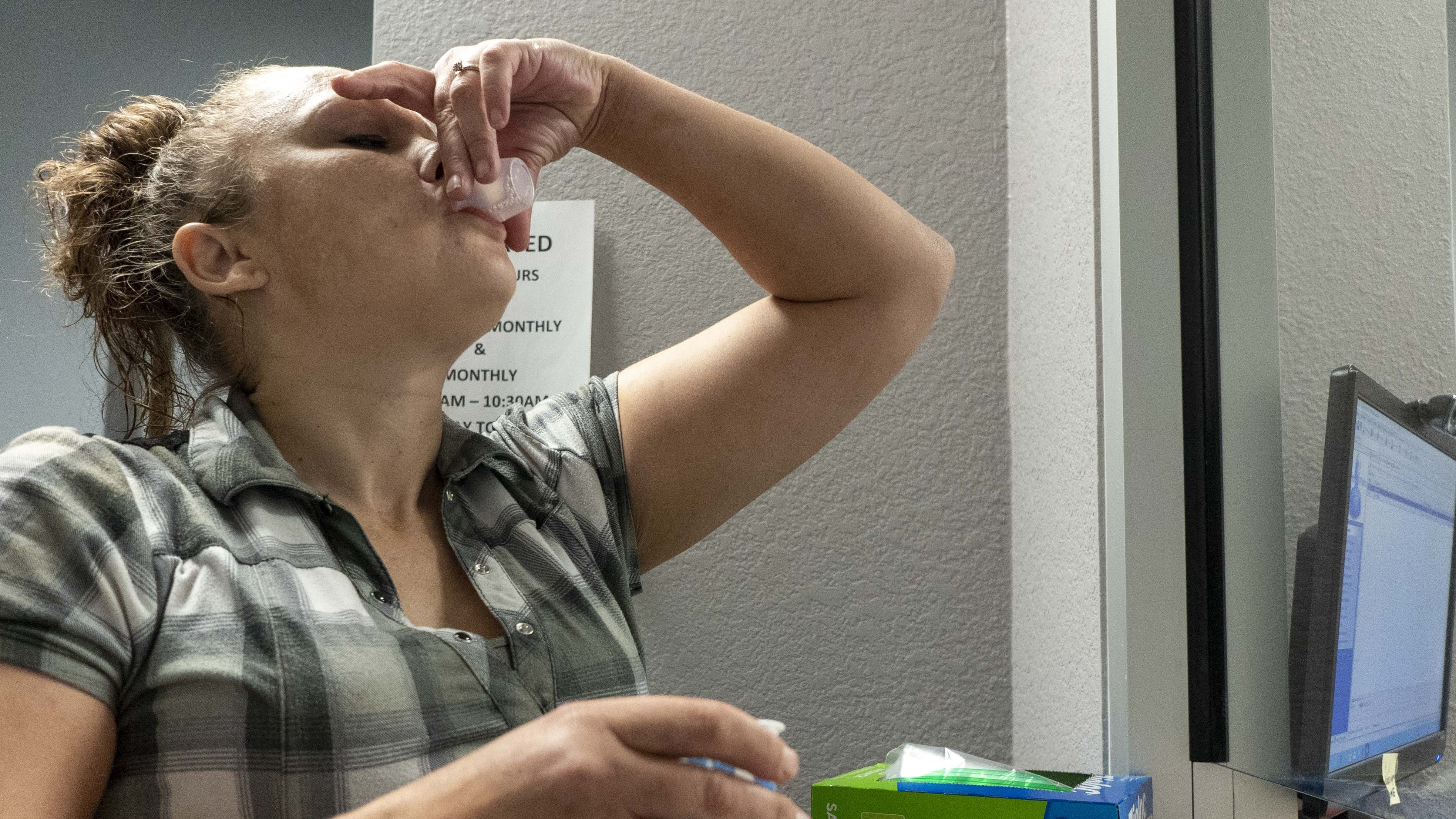
Opioid addiction is gripping America. It’s destroying lives, tearing apart families and devouring resources in policing and healthcare. As medical, mental health and addictions professionals look for solutions, often times accessible and public Opioid Treatment Programs, often known as a Methadone Clinic will open in communities. These clinics bring relief, treatment and support – but they also bring crowds, increased traffic and concern from local residents and the community. These concerns usually find their way to the media, where the attention can quickly turn negative. The solution to avoiding this scrutiny and making sure residents, business owners and community leaders are fully informed about the process, operation and security measures at these clinics are key to their success and integration. Questions such as: How was the site selected? How do you plan to control traffic flow and overcrowding? How will you manage parking and wait times? What are your measures to prevent diversion? Who can I speak to if I have questions or concerns about operations? CARF can speak to best practices, expectations, and requirements for when an opioid treatment program opens. Debbi Witham, Managing Director of Public Policy and is an expert in opioid treatment programs. Debbi is available to speak with media regarding this issue – simply click on her icon to arrange an interview.

There were only two things happening this past weekend: The Super Bowl and what appears to be the downward spiral of the once prominent and popular Virginia Governor Ralph Northam. It was news that had pundits, journalists and political junkies glued to their televisions and smart phones as the story progressed and played out. As the Governor fought to hold on to his office and career by a string, media from across the country were contacting the University of Mary Washington’s Dr. Stephen Farnsworth to find out what was going on and what would happen next. Here are a few samples and snippets from some of the media that Dr. Farnsworth spoke to over the weekend. “Northam's appeal to the voters was that he wasn't an ordinary politician. But if he had been more of an ordinary politician, that press conference probably wouldn't have gone as badly as it did," said University of Mary Washington political science professor Stephen Farnsworth. Chicago Daily Herald and the San Francisco Chronicle Stephen J. Farnsworth, a political scientist at the University of Mary Washington, said the Northam controversy may trigger more revelations of racial misconduct, the same way that the #MeToo movement emboldened women to come forward after years of silence. “Other politicians who have similar controversies in their past have to be prepared for them to be disclosed,” Farnsworth said. “And there may be additional pressure on Virginia government to deal with legacies of the Confederacy and Jim Crow in terms of statues and renaming of public parks.” Washington Post “Ralph Northam’s time as governor is hanging by a thread,” University of Mary Washington political science professor Stephen Farnsworth said earlier in the day. “The forward movement of any agenda items that the governor has, has stopped.” ABC News, Washington When news was breaking – media knew who to call and how to reach them. When you have breaking news any day of the week, let an expert from the University of Mary Washington help. Dr. Stephen Farnsworth is professor of political science and international affairs at the University of Mary Washington. A published author and a media ‘go-to’ on U.S. politics, he is available to speak with media regarding this issue. Simply click on his icon to arrange an interview.



Declaring a New Year's Resolution for 2019? Baylor Experts Can Help
WACO, Texas (Dec. 17, 2018) – As 2019 approaches, many Americans are considering ways to improve themselves via New Year’s resolutions. Whether it’s personal, like losing weight or clearing clutter, or it’s professional, such as being a better manager or breaking away from smartphones, the options are wide-ranging. Here is a listing of Baylor University research that might help advise those seeking positive change in the coming year. First and Foremost, Resolve not to Over-resolve Only 10 to 20 percent of people keep their resolutions, says Sara Dolan, Ph.D., associate professor and graduate program director of clinical psychology. She advises setting “bite-sized goals instead of a massive behavior change.” Rather than giving up sugar completely or going all out at the gym, she advises achieving small successes before moving on. Ask Yourself: “Do I really want to work from home?” Many U.S. employees believe working from home – or at least away from the office – can bring freedom and stress-free job satisfaction. A 2018 Baylor University study says, “Not so fast.” The research, led by Sara Perry, Ph.D., assistant professor of management in Baylor University’s Hankamer School of Business, found that: Autonomy is critical to protecting remote employees’ well-being and helping them avoid strain. Employees reporting high levels of autonomy and emotional stability appear to be the most able to thrive in remote-work positions. Employees reporting high levels of job autonomy with lower levels of emotional stability appear to be more susceptible to strain. “Any organization, regardless of the extent to which people work remotely, needs to consider well-being of their employees as they implement more flexible working practices,” the researchers wrote. Read more here. Save Money by being a Better Negotiator In today’s retail climate, where stores struggle to keep up with online competition and customers can compare prices with the ease of their smartphones, the price tag is just a starting point for negotiations, said negotiation expert Emily Hunter, Ph.D., associate professor of management in Baylor’s Hankamer School of Business. “No longer do you need to pay sticker price for everything you buy. The customer is now empowered to have a say in pricing, and even hourly retail workers are often empowered to give price discounts when requested,” Hunter said. Hunter said negotiations – whether in a retail setting or in the workplace – require confidence. “Many people are hesitant to negotiate because they don’t know how or they are worried about the other person’s reaction (Will they think I’m greedy?),” she said. “But practice can increase your confidence in your ability to negotiate. Rejection is less common than you fear, and retail stores especially are often willing to work with you.” She offered the following tips to increase the chances of greater deals at the check-out counter. Resolving to Be More Generous in the New Year Many Americans already have enough “stuff,” and the gift-giving season sometimes adds to that collection of things we really don’t need. Instead of always receiving, how can we resolve to be more generous in the New Year? “Whatever our station, however much money or resources we have, we all have something to share and something to give,” says Andy Hogue, Ph.D., senior lecturer in Baylor’s Honors College who teaches a course on philanthropy and the public good. “I like the idea of thinking in terms of a New Year’s resolution, sort of resolving to be more generous and helping people to think in those ways.” Hogue offers individuals and families four ways to develop a spirit of generosity in the New Year. Home Cooking Saves Money, Encourages Better Diet The more home-prepared foods used, the less risk there is of eating too many calories and fat calories, says Baylor University nutrition expert Janelle Walter, Ph.D., professor of family and consumer sciences and Nutrition Sciences Program coordinator. Home cooking also saves money and allows for more fruits, vegetables and dairy products — which often are missing when pre-prepared products are used — as well as less fat, sugar and salt. Some tips for prepping at home are making a precise list, lining up recipes and lists of ingredients, shopping when you aren’t hungry and preparing five main dishes at a time to see you through a few days. Involve your family in choosing foods, shopping and preparing foods, Walter says. Many simple and quick recipes are on online sites, she said, referencing these from Southern Living. Consider a New Approach to Dieting Meredith David, Ph.D., assistant professor of marketing in Baylor’s Hankamer School of Business, researched successful dieters and how they were different from others. Her research results have received national attention. “Our research shows that instead of creating rules to avoid one’s favorite treats, dieters should focus on eating healthy foods that they enjoy,” David said. “Dieters who restrict themselves from consuming the foods they love most may be setting themselves up for failure. Instead, they may be better off by allowing occasional ‘treats’ and focusing attention on healthy foods that they enjoy and making it a point to include those tasty but healthy foods in their diet.” Read the full article. Be Humble and Helpful In hard times, you know how much a helping hand means — and how humbling those times can be. So it might be good to resolve to look for opportunities to assist in 2019, while remembering not to pat yourself on the back for doing so. A decision to help someone else is influenced by time pressure, number of bystanders, empathy or a person's own distress — but that’s not all, says Baylor researcher Wade Rowatt, Ph.D., professor of psychology and neuroscience. “While several factors influence whether people will volunteer to help, it appears that humble people, on average, are more helpful than individuals who are egotistical or conceited.” Cultivate Patience — and Better Mental Health People who are more patient toward others also tend to be more hopeful, grateful and satisfied with life, says Sara Schnitker, Ph.D., associate professor of psychology and neuroscience. And there is more than one type of patience, including interpersonal patience — dealing with annoying people without losing your cool; handling life hardships — such as illness or unemployment — without frustration or despair; and coping with such daily hassles as traffic jams, computer woes and long lines. In her research, Schnitker invited undergraduates to two weeks of patience training, where they learned to identify feelings and their triggers, regulate their emotions, empathize and meditate. If you want to build your own patience, she recommends following three steps: identify, imagine and sync. First, take a moment to slow down an identify how you are feeling and why you might be feeling that way. Second, try to imagine or reappraise the situation from a different perspective or in a new way that helps you to be calm. Finally, sync with your purpose. Try to connect how what you are doing or enduring helps you pursue larger goals or your life purpose. When Ailing, Talk to A Doctor Instead of Searching the Internet for Answers Rather than heading to the doctor — or even the medicine cabinet — some people turn first to the Internet when they are ailing , according to a Baylor University researcher. Especially for folks who have trouble handling uncertainty, "cyberchondria" — the online counterpart to hypochondria — worsens as they seek answers, says Thomas Fergus, Ph.D., an associate professor of psychology and neuroscience in Baylor's College of Arts & Sciences. “They may become more anxious. And the more they search, the more they consider the possibilities,” he says. Doubts about health also can trigger worries about medical bills, disability and job loss, he said. And that can lead to a Catch-22 of more Googling (sometimes of questionable sources). Rather than giving in to cyberchondria, resolve to call your doctor — and take what you read with a grain of salt. In Conflicts with your Significant Other, Relinquish Power During spats with your spouse or significant other, the most common thing people want is not an apology, but a willingness to relinquish power, says Keith Sanford, Ph.D., professor of psychology and neuroscience in Baylor University's College of Arts & Sciences. That comes in many forms, among them giving a partner more independence, admitting faults, showing respect and being willing to compromise. Following closely behind the desire for shared control was the wish for the partner to show more of an investment in the relationship by such ways as sharing intimate thoughts or feelings, listening and sharing chores and activities, Sanford said. Sleep Better in the New Year Writing a “to-do” list at bedtime may aid in falling asleep, according to a Baylor University study by Michael K. Scullin, Ph.D., director of Baylor’s Sleep Neuroscience and Cognition Laboratory and assistant professor of psychology and neuroscience. Scullin's 2018 research compared sleep patterns of participants who took five minutes to write down upcoming duties versus participants who chronicled completed activities. Scullin suggests that writing a list may allow the brain to “offload” them instead of cycling through them repeatedly. Other hints: Use the bed for sleep rather than studying or entertainment; keep a regular sleep schedule; avoid electronics near bedtime; don’t take long day naps; and stay away from stimulants at least six hours before bedtime. Clear Out Clutter Without Getting Frazzled “Don’t try to organize the entire house in one weekend,” said Elise King, assistant professor in the department of family and consumer sciences. “You are much more likely to complete a task, especially one that you’ve probably been avoiding, if you break it into small goals. Don’t try to clean out an entire room over a weekend; instead, focus on the desk one week, the closet the next, and so forth.” Finally, involve your family, strive to make organization a routine — and reward yourself for your efforts. Break Away from the Smartphone Baylor marketing researchers James Roberts and Meredith David, Ph.D. have conducted numerous studies on the effects of smartphone technology on relationships. Their studies on “phubbing” – phone snubbing – have garnered national and international interest, given the pervasiveness of smartphone technology and its impact on relationships. Their studies have found: Bosses Who “Phone Snub” Their Employees Risk Losing Trust and Engagement “Phubbing” can damage romantic relationships and lead to higher levels of depression People who are phone snubbed by others are, themselves, often turning to their smartphones and social media to find acceptance “Although the stated purpose of technology like smartphones is to help us connect with others, in this particular instance, it does not,” David said. “Ironically, the very technology that was designed to bring humans closer together has isolated us from these very same people.”


Overhaul of FDA's approval process for medical devices overdue, but balanced approached needed
The Food and Drug Administration has announced plans to overhaul its system for approving a certain category of medical devices, which critics have said fails to protect consumers from risky implants and medical instruments. George Ball, assistant professor of operations and decision technologies and the ArcelorMittal Supply Chain Faculty Fellow, at the Indiana University Kelley School of Business, studies the medical device industry, in particular medical device recalls. There are two primary approval pathways for medical devices. “510(k)” clearances are reserved for products that demonstrate substantial equivalence to a previously approved device. Clinical trials are normally not required and this method is much faster and cheaper than the other pathway, a “Pre-Market Approval (PMA).” PMA new product submissions are reserved for those products that are new or substantially modified from previously approved devices. Clinical trials in humans and laboratory study data are normally required to demonstrate safety and efficacy. In comparison to 510(k) clearances, PMA approval pathways are time-consuming and expensive. “The FDA’s announcement regarding an overhaul of the 510(k) approval process seems to be warranted, as medical device product approvals are currently on two ends of an extreme spectrum,” Ball said. “New PMA products can require years and millions of dollars to successfully obtain approval by the FDA. Conversely, 510(k) clearances are significantly faster and cheaper, as the manufacturer has to simply demonstrate equivalence with similar, already approved products. “As 510(k) products represent the bulk of new product approvals, they also represent the bulk of medical device recalls, unsurprisingly,” Ball said. “In the last decade, 510(k) products were recalled at a ratio of 17-to-1, compared to PMA products.” “However, the method of approval currently practiced for 510(k) products has many benefits for manufacturers as well,” he said. “Demonstrating equivalence with prior approved similar devices makes the development time exponentially faster compared to PMA product approval times. “A middle-ground here seems logical and advisable. For example, the FDA approves products using a two-pronged approach: safety and efficacy. While efficacy may be easily established by demonstrating similarity to prior products, evidence of safety for 510(k) products may require additional verifications and tests. Doing so may help ensure that new 510(k) products, which are often much more technologically advanced than the ones they are compared against for approval purposes, are also safe for patients.” Ball can be reached at 812-856-0625 or gpball@indiana.edu


Chinese scientists are creating CRISPR babies
A daring effort is under way to create the first children whose DNA has been tailored using gene editing. When Chinese researchers first edited the genes of a human embryo in a lab dish in 2015, it sparked global outcry and pleas from scientists not to make a baby using the technology, at least for the present. It was the invention of a powerful gene-editing tool, CRISPR, which is cheap and easy to deploy, that made the birth of humans genetically modified in an in vitro fertilization (IVF) center a theoretical possibility. Now, it appears it may already be happening. According to Chinese medical documents posted online this month, a team at the Southern University of Science and Technology, in Shenzhen, has been recruiting couples in an effort to create the first gene-edited babies. They planned to eliminate a gene called CCR5 in hopes of rendering the offspring resistant to HIV, smallpox, and cholera. He Jiankui leads a team using the gene-editing technology CRISPR in an effort to prevent disease in newborns. The clinical trial documents describe a study in which CRISPR is employed to modify human embryos before they are transferred into women’s uteruses. The scientist behind the effort, He Jiankui, did not reply to a list of questions about whether the undertaking had produced a live birth. Reached by telephone, he declined to comment. However, data submitted as part of the trial listing shows that genetic tests have been carried out on fetuses as late as 24 weeks, or six months. It’s not known if those pregnancies were terminated, carried to term, or are ongoing. [After this story was published, the Associated Press reported that according to He, one couple in the trial gave birth to twin girls this month, though the agency wasn't able to confirm his claim independently. He also released a promotional video about his project.] The birth of the first genetically tailored humans would be a stunning medical achievement, for both He and China. But it will prove controversial, too. Where some see a new form of medicine that eliminates genetic disease, others see a slippery slope to enhancements, designer babies, and a new form of eugenics. Dr. Sullivan serves as professor of pharmacy practice and director of the Center for Bioethics. His research and writing interests include biomedical ethics, moral philosophy, and reproductive ethics. Contact him today for your story! Simply click on his icon to arrange an interview.

Baylor Gerontology Expert: Signs that Your Loved One is Suffering Elder Abuse
Each year, an estimated 5 million older adults are abused, neglected or exploited, according to the Administration for Community Living. Gerontology expert James Ellor, Ph.D., M.Div., professor in Baylor University’s Diana R. Garland School of Social Work, shares what elder abuse looks like and how people can respond if they see the signs. Reports of abuse are most often submitted by family members, hospital staff and law enforcement. But churches and other organizations should also be diligent, Ellor said, adding that clergy are considered mandatory reporters in many states. “No one group of caring persons can solve this problem alone; it takes a community of caring lay and professional leaders to even try to start to make a difference,” Ellor said. “If signs are noticeable, the next steps will depend on the type of abuse. In most cases, counseling support is critical, but often the need for medical help or legal help is also very important.” Elder abuse – intentional or negligent acts by a caregiver or trusted individual – comes in many forms: neglect or isolation, physical abuse, sexual abuse, exploitation or financial abuse, emotional and psychological abuse, verbal abuse and threats. Physical Abuse Like any other form of physical abuse, physical abuse incudes odd bruising, broken bones or contusions that are not easily explained, Ellor said. One sign that quickly raises suspicion is when broken bones or bruises happen repeatedly. Drug overdoses or the withholding of drugs are also challenging. Emotional abuse Ellor said this could include yelling at the senior, humiliating him or her, blaming and/or scapegoating. Sexual abuse “This is contact without consent,” Ellor said. “We see this often between spouses, particularly when one spouse has dementia.” Neglect “Possibly one of the most common categories, it simply means not taking the time to respond to a wide variety of needs when one is the designated caregiver,” Ellor said. Financial exploitation “Laws governing guardianship and power of attorney try to address this, but family members who take money from seniors as cash or property are the most common culprits,” Ellor explained. Fraud This can involve financial exploitation or even heath care fraud, but it generally involves either over-charging, selling unnecessary benefits of something, or it may include trying to sell something that would benefit one’s children, Ellor said. Self-Neglect “Some seniors simply choose to not help themselves, often in the name of leaving money or property to family members,” Ellor said. “Evidence of this could be that they don’t purchase needed medications or other resources.” Report suspected mistreatment to local adult protective services, long-term care ombudsman or law enforcement agencies that can investigate the situation. ALSO READ: "Gerontology Expert: Six Questions You Should Ask Before Choosing a Nursing Home" SEE: Baylor University's Directory of Faculty Experts ABOUT JAMES ELLOR, PH.D. James Ellor, Ph.D., M.Div., is a professor in Baylor University’s Diana R. Garland School of Social Work. Ellor works with older adults around issues of mental and spiritual health. He has served on the executive committee of the Midwestern Geriatric Education Center and provided education, counseling and planning for individuals and groups who work with seniors. His research includes work in entrostomal therapy, hunger, the church as service provider, spiritual assessment and intervention techniques with cognitively impaired older adults. ABOUT BAYLOR UNIVERSITY Baylor University is a private Christian University and a nationally ranked research institution. The University provides a vibrant campus community for more than 17,000 students by blending interdisciplinary research with an international reputation for educational excellence and a faculty commitment to teaching and scholarship. Chartered in 1845 by the Republic of Texas through the efforts of Baptist pioneers, Baylor is the oldest continually operating University in Texas. Located in Waco, Baylor welcomes students from all 50 states and more than 80 countries to study a broad range of degrees among its 12 nationally recognized academic divisions. ABOUT DIANA R. GARLAND SCHOOL OF SOCIAL WORK Baylor University’s Diana R. Garland School of Social Work is home to one of the leading graduate social work programs in the nation with a research agenda focused on the integration of faith and practice. Upholding its mission of preparing social workers in a Christian context for worldwide service and leadership, the School offers a baccalaureate degree (B.S.W.), a Master of Social Work (M.S.W.) degree and three joint-degree options, M.S.W./M.B.A., M.S.W./M.Div. and M.S.W./M.T.S., through a partnership with Baylor’s Hankamer School of Business and George W. Truett Theological Seminary, and a Ph.D. program. Visit www.baylor.edu/social_work to learn more.