Experts Matter. Find Yours.
Connect for media, speaking, professional opportunities & more.

Seventy There it is. Just sitting there. A number that tends to land somewhere between “good for you” and “are you feeling alright?” And before you answer that, let me tell you I am more than alright. I am thriving. Loudly. Definitely with dancing. And with just enough attitude to make a few people slightly uncomfortable, which I have decided is a sign of a life extremely well lived. But first, let me tell you about the plan. ⁂ The Plan Was Magnificent. It Lasted Eleven Minutes The plan was to retire gracefully. Ease into a slower pace. Read more. Maybe garden. Drink better wine. Finally, work through all those documentaries piling up in my queue with the quiet confidence of someone who had absolutely earned the right to nothing. Here is what actually happened. The documentaries stayed in the queue, and the garden did not get planted. I did, however, read one book. Just one. But it turned out to be exactly the right one. David Brooks wrote The Second Mountain: The Quest for a Moral Life, and I picked it up the way you pick up something that does not look urgent, only to find you cannot put it down. Brooks argues that we spend the first part of our lives climbing what he calls the first mountain: the career, the credentials, the identity, the whole elaborate structure of proving ourselves. And then something happens. You reach the top, or you fall off, or the mountain turns out to be considerably smaller than it looked from the bottom. Either way, you end up in a valley, slightly winded, wondering what comes next. And that, Brooks says, is where real life begins. The second mountain. The one you climb not for yourself but for something greater. The one where the question shifts from “what do I want?” to “what does the world need from me?” I read that while sitting in my living room and thought: that is the whole story, right there. There is a phrase I use throughout this blog: try to keep up. I say it because seventy feels faster and fuller than I ever expected, and because it is an invitation, not a taunt. You still have tread on your tires. I mean that warmly. Try to keep up. ⁂ The Valley Was Not Optional My valley arrived without warning or invitation: I lost my job unexpectedly. No graceful wind-down. No farewell luncheon with a tasteful card, no parade! Just the particular silence that follows the end of something you had not quite finished. Nobody glides gracefully from mountain one to mountain two, no matter how it looks on social media. What nobody tells you about retirement, voluntary or otherwise, is that stopping is quite difficult. Not the logistics. The identity. You spend thirty years answering the question “What do you do?” and then one day no one asks anymore. We carefully plan the money. We almost never plan for the morning when your calendar is empty, your inbox is quiet, and no one expects you anywhere. That morning is its own kind of reckoning. Brooks calls this the valley experience, and he is right that it is unavoidable. It is where you shed the old self so a new one can emerge. There are no shortcuts. I tried several. But then I hired a coach. Not just any coach. A thought leadership coach, which sounds very impressive but turns out to involve a great deal of uncomfortable self-reflection and at least one conversation in which the coach tells you to write a blog. “Do your research,” he said. “Find your niche. Share what you know. And honestly, you should probably write a book.” (Thank you, Peter!) I nodded. I smiled. I thanked him warmly. Then I went home, sat down, and had a completely private, entirely dignified meltdown that I will describe only as spirited. Action absorbs anxiety, so once the spirited moment passed, I got to work. Try to keep up. ⁂ The Second Mountain Has a Name. It Is Retire with Equity I started writing. Article after article, something unexpected happened: I found my voice. It turns out my voice is part educator, part agitator, and part hilarious, where kitchen-table logic meets a spreadsheet. I began calling her Aunt Equity, and she has been absolutely delightful company ever since. A word on naming your alter ego after a financial product: no one recommends it. No self-help book has a chapter that says ‘step three, create a persona rooted in home equity solutions and give her a sassy name.’ And yet Aunt Equity arrived fully formed, with opinions, a logo, and an inexplicable amount of charisma. She is part brand, part character, and entirely my fault. I am keeping her. For Brooks, the second mountain is a calling, not a career move. For me, it is a community. The Canadian retirement community. The people who built this country, paid into it, raised children in it, and are now quietly panicking about whether they have enough to keep going. That community. They are my people, and this is my mountain and I have built my company, Retire with Equity to support it. And I will be honest: this mountain is considerably steeper and way more fun. Try to keep up. ⁂ What Is Your Second Mountain? Here is where this stops being about me and starts being about you. The second mountain is not one thing. It is not a prescription. It is not reserved for people who write blogs, build platforms, or have particularly spirited meltdowns. It is waiting for you, wherever you are, whatever you are carrying, whether you are fifty or seventy or somewhere in between and still not entirely sure you are allowed to want something new. The second mountain looks different for everyone, and that is entirely the point. Also, a feature, not a bug. For some people, it is family. Really showing up for grandchildren in ways that a demanding career never allowed. Being present, not just present-ish. Taking the grandkids to school on Tuesdays because Tuesday is your day now and the best day of the week. Becoming the person in the family who holds things together, not because you have to, but because you finally have the time and the wisdom to do it right. For others, it is community. A neighbourhood organization, a cause that has been pulling at you for years, or a faith community that needs exactly the skills you spent a career building. Brooks tells the story of a woman who was moving out of a rough Chicago neighbourhood, looked out the window, saw little girls playing with broken bottles in an empty lot, turned to her husband, and said: we are not leaving. She ended up running a major community organization. She did not set out to build a movement. She just decided not to look away. And then there are the callings that have been patiently waiting in the back of a drawer since approximately 1987. This is my personal favourite category because it is full of people who surprise themselves completely. Andrea, whom I see every week at the gym, spent her late fifties doing something most people her age were emphatically not doing: she went to law school. In London, England. A yearning carried for decades, quietly set aside while she built a career and raised a family. Then one day she stopped being polite about it and went. She is one of the most alive people I know. David discovered painting. Not dabbling. Painting. He picked up a brush at a class a friend dragged him to, and something clicked open that had apparently been waiting for that exact moment. He paints almost every day now, and the look on his face when he talks about it is that of someone who found something he did not know he had lost. If you are sitting there thinking you have left it too long, or that your moment has passed, that is a you problem, and I say that with complete affection. The door is still open. Walk through it. Brooks calls it the place where your deep gladness meets a deep hunger in the world. I think of it as the morning when you wake up and you are not just filling time. You are fulfilling a purpose. Try to keep up. ⁂ What Actually Works (And What Dottie Has to Do With It) I have a ten-pound dog named Dottie. She is the canine embodiment of purposeful living and, frankly, an unsolicited life coach. Full speed, tail up, no apologies. I take notes. The retirements that work, the ones people describe as genuinely meaningful rather than merely solvent, share a few things in common. They move. Consistently, enjoyably, sustainably. The body is not a liability to be managed in retirement. It is an asset, and it responds remarkably well to being treated like one. For me, part of that meant I needed a break from drinking, and the origin story is not glamorous: I woke up one morning and could not remember how the movie I watched the night before ended. That was the moment. What began as a one-month experiment quietly became almost two years. I sleep better, think more clearly, and no longer find myself wide awake at 2 am doing mental arithmetic about nothing. I feel sharper and more energized at seventy than I did a decade ago. The fifties, it turns out, were not the peak. They were the warm-up act. And for the record, I still cannot remember how that movie ended some mornings. Some things are beyond even sobriety. Physical vitality expands your options. Financial clarity reduces your dread. Purpose gives both of those things a reason to matter. Tend to all three. Not perfectly. Just intentionally. Dottie, for what it is worth, nails all three before anyone else in the house has had coffee. If she is the bar, she is not wrong to set it there. Try to keep up. ⁂ A Confession. Then a Celebration Almost five years into this accidental, exhilarating, occasionally terrifying reinvention, I still do not have it entirely figured out. The documentaries remain unwatched. I still cannot tell you how they end. What I do have is this: evidence, personal and otherwise, that the second mountain is real and better. Not easier. Better. Because when you are climbing toward something that matters beyond your own resume, the climb itself changes. The effort feels different. The setbacks feel survivable. And the view, when you get there, means something. You do not need to have it figured out before you start. You just need to take a step. Then another. Then hire a coach, have your spirited moment, and remember: action absorbs anxiety. Say the number out loud, whatever it is. Forty, fifty, sixty, seventy. Say it. Then decide what it means, because that part is entirely up to you. The first mountain shows you what you are capable of. The second one shows you who you actually are. If you have not read David Brooks’ The Second Mountain, put it at the top of the list. The documentaries can wait. I have confirmed this from personal experience. The Friday night of my birthday week, there was an epic dance party at a local brewery, organized by my wife Bonnie, the woman I met on a dance floor thirty-three years ago and have been dancing with ever since. Bonnie deserves more than a shout-out here. She deserves a medal, a monument, and honestly, serious consideration for sainthood. For over three decades, she has lived with my schemes, my pivots, and my absolute certainty that each new thing is the thing. She has never once wavered. Bonnie is the reason any of this works, and the reason that dance floor was full of people who love me. I am, by any objective measure, an extremely lucky person. I am also aware that she will read this, so I want to be clear: yes, I mean every word, and no, this does not get me out of whatever I am currently scheming. The glow of that party remains, and I know I have truly arrived because there was even a party crasher. I named her Mona. Mona could not resist the pull of that much joy and some absolutely kickin’ eighties music. The story of Mona, the early thirties party crasher, is being reserved for another time, but know this: if your birthday celebration attracts a stranger named Mona, you are doing seventy exactly right. The second mountain, it turns out, has a very good playlist. And if you are worried you are not quite ready for it, or that the moment may have passed, I want to leave you with this: you still have tread on your tires. So does everyone in this community. And if you cannot keep up, at least come dance. You might surprise yourself. Just ask Mona. I am seventy. I am on my second mountain. Come find yours. Try to keep up. ⁂ Sue Don't Retire...Re-Wire! My Book is Now Available for Pre-Order I hope you will consider pre-ordering a copy of Your Retirement Reset for you, a friend or loved one. It's available September 8, 2026 - You can now order on the ECW Press site here. And if you love supporting Canadian booksellers, please also check with your local independent bookstore. Most can easily order it for you.



Expert Insights: Want More Engagement? Eliminate the Barriers.
Anyone born in the 70’s or earlier will probably remember it well. Time was when playing any kind of video game meant physically disporting yourself to the local arcade—a twilight zone of flashing neon, electronic beeps and bops, and the clink of quarters hitting the slot. As technology advanced, the videogame came to you. Home consoles and TV stations rigged with joysticks duly became the mainstay of gaming. The Atari 2600 brought the arcade experience into dens all over the US; Pac-Man, Space Invaders, and Asteroids now at the fingertips of a generation of games who no longer needed to leave home to play. Fast forward to the era of smart phones and hi-tech, and gaming has evolved again. Today, Fortnite, Minecraft, and The Legend of Zelda can accompany you pretty much anywhere—onto a train or a bus, into the canteen at work or school, or under the covers at 2am. In our always-on, on-demand world, video gaming increasingly meets players where they are; a play-anywhere, digital user experience that empowers individuals to engage with their game of choice wherever they are, whenever it suits, and via whatever platform they prefer, desktop or mobile. For users, the benefits seem clear. But what about game producers? As availability expands to new channels and platforms, how does it change user behavior? Does it deepen engagement or does cross-platform continuity simply end up redistributing play—the addition of each new platform shifting players away from, and effectively cannibalizing, existing channels? It’s a conundrum, and not just for video game producers. Retailers, bankers, insurance firms, media, and hospitality providers—anyone with an online-first approach looking to meet their customers wherever they are—should also be cognizant of the potential downsides of channel expansion in the digital space. Weighing in here is research by Professor of Marketing and expert in the intersection of sports and cultural analytics and marketing Michael Lewis. Together with Wooyong Jo of Purdue, Lewis looks at the impact of omni-channel strategy on videogames—a proxy, he says, for other sectors and industries. What they find is critical for marketers and decision-makers in any context or business setting. Increasing the digital touchpoints between your product and customers does impact behavior—but the net results are overwhelmingly positive. Video game players play more, they spend more frequently, and they integrate gameplay more deeply into their everyday lives. In other words, the investment pays off. And the dividends in customer engagement are serious. Switching to the Switch To unpack all of this, Lewis and Jo partnered with a large US video game publisher to analyze player-level behavioral data for one its major titles in the Multiplayer Online Battle Arena, or MOBA genre. Players form teams and compete to destroy opposing team’s bases, selecting a character from a set of 100+ options. Revenue for the publisher comes from a “freemium” business model—users can make voluntary purchases to unlock new characters or buy cosmetic enhancements. These purchases are geared toward enhancing the gaming experience but don’t affect competitive outcomes, making them a critical measure of engagement. In 2019, the game was released for the Nintendo Switch, which can be docked in home consoles but is most commonly used as a mobile, hand-held device. PC players were given the option to download this new version and continue gameplay seamlessly using their existing accounts. Analyzing player behavior before and after the adoption of the new Switch platform, Lewis and Jo were able to zoom in on some critical measures of user engagement including game usage or the total number of matches played, in-game spending—what, when and how much players spent—and player inactivity or churn. “We were able to really get into player behavior over time, and what happens when you introduce the Switch option and remove the constraints of having to play in one place—the home or gaming PC,” says Lewis. “What happens when you make it possible for players to access the game they love while they’re commuting or on their lunchbreak?” Plenty, it turns out. Mobile access: gameplay, spending and churn Crunching the data, Lewis and Jo find that mobile access dramatically increases gameplay. Players who adopted the Switch version played approximately 31% more games than before—a dramatic uptick that underscores how flexibility gains translate into new opportunities to play and engage. And that’s not all. Lewis and Jo also find that gameplay becomes less concentrated within narrow windows—after school or work, say—and is now more spread out across the day, the result of the “ubiquity effect,” says Lewis. “Take away the constraints of having to be in a fixed location and you see players adding additional play sessions. Interestingly though, we don’t find any adverse effect on PC gaming. Players are simply playing more, and playing longer, rather than replacing PC time.” Then there’s in-game purchasing. MOBA-type games typically give players the option to voluntarily buy modifications for characters, known as “skins.” These skins are cosmetic enhancements: new armor, costumes, skill animations or effects. Crucially, these kinds of purchases don’t advance players to new levels of success in the game. Instead, they are used for personalization—to demonstrate status or to celebrate an in-game event. Lewis and Jo find that mobile adopters make more frequent in-game purchases. While the overall total doesn’t increase materially, these players are spending small amounts, more often—almost 7% more frequently than before. This makes intuitive sense, says Lewis. If players are logging in more often, they have more opportunities to feel inspired to want to spend on skins. But there’s another factor that may be at work. “With this kind of in-game purchasing, it’s likely that a lot of it is about credibility. When you buy a skin or a character pack, it’s like you have more aura within the game; you want to signal something to other players and let yourself be known. And this is more than just monetary, it’s about a deeper kind of engagement,” says Lewis. “It’s possible that as mobile access makes the game more of a frequent companion, as the rate of play increases, there’s this effect that players fall deeper into the community—their engagement deepens even more.” Interestingly, the shift to mobile access had the most significant impact precisely on those players whose pre-Switch in-game purchasing was lowest. These users, who were arguably most likely to disengage and drift away from the game, became significantly more active once the hand-held option became available. “If you have players spending less and less inside the game, the intuition is that these are the customers you are most at risk of losing,” says Lewis. “Bringing in the Switch has seen these customers—those more prone to churn—actively reengage with the game, maybe because they have greater propensity for the mobile version.” Either way, this should be a particularly interesting finding for marketers, he adds; retaining existing users is typically cheaper than attracting new ones. “The evidence suggests that mobile access can serve not only as a growth strategy, but also a defensive one if it helps keep marginal users engaged; those who might otherwise have detached from the product altogether.” Help Them Switch So far, so encouraging. There is one potential downside to porting a game or online product to a new channel, however, and that is usability. Lewis and Jo find that players who switched between platforms experience a slight, initial decline in in-game performance—likely because of differences in the control systems between devices. Players who’ve been using keyboard and mouse controls may need time to adapt to hand-held controllers. To mitigate this, he and Jo suggest that producers could offer tutorials or introductory gameplay modes that accelerate the learning curve as users adjust to the new interface. In most cases, usability should be factored in as an additional, hidden cost, when developers and organizations are contemplating investing in more online customer touchpoints. “Expanding your online channels will always have some cost. Taking a game from one platform and porting it to another one isn’t free, so you will want to anticipate the hurdles, even as you weigh up the clear benefits,” says Lewis. “The key is to make sure you protect your users. With things like video games, you want to think about how to guide or upskill your players, maybe have them play bots at first to ramp up their capabilities. Whenever you create a new channel that has a different operating system from the user’s perspective, you’re probably going to want to provide some aid to your fan community.” The benefits of omni-channel access should always be weighted against the costs involved, counsels Lewis. Even so, today’s competitive pressures—the seemingly inexorable march of technological innovation and evolving user expectations—are likely to make platform expansion unavoidable for most online businesses. In the world of video gaming, as major franchises release new products across multiple platforms, and player preferences become more sophisticated, companies may simply have to adopt similar strategies to remain competitive. “As everyone else invests in the same new technologies, you almost have to do the same—just as a matter of doing business,” says Lewis. “If you are launching a video game, you’ve got to compete with whatever Call of Duty or Grand Theft Auto are doing. You can’t just tell your players they can only engage on one platform. The competition is continuously raising the stakes just in terms of the bare minimum.” Building Fandom: the Connective Cultural Tissue More broadly, Lewis and Jo’s findings speak to how human beings form communities of shared passion around business entities and, perhaps more compellingly, around cultural phenomena: video games, for sure, but also sports teams, music, films, comic books, fashion, and more. Understanding the mechanisms that drive and deepen engagement sheds more light on what Lewis calls the “connective cultural tissue of fandom: ”the powerful social bonds, camaraderie, and shared identity that connect people to cultural entities and to each other. Fandom, he argues, is the “key to our world.” Understanding fan behavior is critical to understanding how it is that games, brands, sporting teams, or politics forge communities built on shared passion. “Whatever your organization or business is, you are going to be interested in driving passion. You want people to engage and love what you do. What we’re looking at in this study is a building block towards understanding how cultural entities fit into consumers’ lives, and how eliminating barriers helps to expand communities and drive relationships—extending reach and engagement by weaving cultural experiences more deeply into everyday life.” The real challenge in front of organizations, be they video game producers or online retailers, says Lewis, is to give their product the kind of “cultural meaning” that creates fans—and not just users. “When you think about the behavior of fans, the level of passion and engagement that exists around cultural phenomena—whatever they are from video games to FIFA, the English Football League to the Super Bowl, Taylor Swift to the Republican Party—that’s where you see the passion that really drives the world. And that to me, is critical in understanding how business works, how societies function, and how our world evolves.”



Energy Shocks, Consumer Pullback, and the Long Road Back
As Americans scale back spending on luxuries and some necessities — from dining out and live entertainment to home and auto maintenance — the ripple effects are being felt across the broader economy. Daniel Burnside, clinical professor of finance at the Simon Business School, says the trend reflects more than just belt-tightening and signals deeper structural pressures tied to energy markets. “Higher energy prices push inflation up and growth down, putting monetary policymakers in a bind,” Burnside says, explaining the current situation as being beyond a typical price spike. “This isn’t just a price shock, it’s a capacity shock,” he says. “You can’t just flip a switch back to normal because a lot of energy infrastructure has been destroyed. That distinction matters. Because energy costs are embedded in nearly every good and service, rising prices squeeze consumers beyond the gas pump. The result is reduced discretionary spending at venues like sporting and live music events, restaurants, and leisure destinations. Looking ahead, Burnside says a rapid rebound in discretionary spending is possible but unlikely. “If, by some miracle, energy prices quickly return to prewar levels, you would see a sharp run-up in discretionary stocks,” he says. “But that’s precisely because expectations are so low.” For now, markets are signaling that a swift return to pre-crisis conditions isn’t on its way, Burnside says. Until energy supply stabilizes, the pressure on both consumers and the businesses that rely on it is likely to persist. Burnside regularly fields inquiries from journalists looking for his insight on personal money matters and investing. Contact him by clicking on his profile.



From Saint to Shamrocks: How St. Patrick’s Day Became the World’s Biggest Irish Party
Every March 17, cities around the world turn green as millions celebrate St. Patrick’s Day with parades, music, traditional foods, and a strong dose of Irish pride. But the origins of the holiday trace back more than 1,500 years to St. Patrick, the 5th-century missionary credited with bringing Christianity to Ireland. Over time, the feast day commemorating Ireland’s patron saint evolved into a broader celebration of Irish heritage, folklore, and culture. Many of today’s traditions, wearing green, shamrocks, lively parades, and even the association with leprechauns — developed centuries later, particularly as Irish immigrants in North America began celebrating their heritage publicly. In fact, some of the world’s biggest St. Patrick’s Day traditions, including massive parades and even dyeing rivers green, originated in the United States and Canada rather than Ireland itself. From the real history of St. Patrick to the myths, symbols, and global traditions that followed, historians and cultural experts can help unpack how this ancient religious observance transformed into one of the world’s most recognizable cultural celebrations. ExpertFile connects journalists with historians, cultural scholars, and experts in Irish heritage who can provide insight on topics including: The real story of St. Patrick and his mission in Ireland How shamrocks, leprechauns, and the color green became iconic symbols Why parades and public celebrations grew in North America How Irish immigration shaped the modern holiday The cultural and economic impact of St. Patrick’s Day celebrations worldwide Journalists looking for fresh angles on the history, traditions, and cultural significance of St. Patrick’s Day can connect with experts available through the ExpertFile platform. Our experts can help! Connect with more experts here: www.expertfile.com

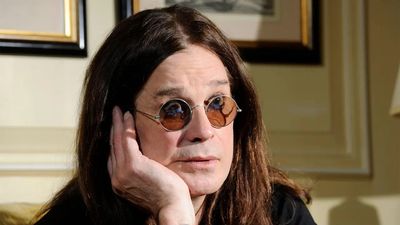
MedPage Today: Ozzy Osbourne shined a light on Parkinson’s stigma
Ozzy Osbourne was best known for two things: his shape-shifting resilience as a pioneer of heavy metal music and, most recently, his remarkable authenticity during his public journey with Parkinson's disease. Osbourne, who passed away on July 22, possessed a unique ability to connect directly with people who were suffering. He was an honest and transparent voice for what it was like to live with a neurodegenerative disease. He was willing to go where others would not, and he took on the stigma of a Parkinson's diagnosis. Stigma remains one of the most underrecognized yet pervasive challenges in Parkinson's disease. Far too often, individuals are made to feel ashamed of their visible symptoms like tremors, facial masking, or soft speech. This reality can lead to social withdrawal, depression, and even delayed medical care. Research has shown that perceived stigma is not only linked to reduced quality of life, but it also correlates with worse outcomes. That's why, when someone like Osbourne rises up and speaks out, it matters. It sends a powerful message that Parkinson's does not define a person, and that no one should suffer in silence. Many people with Parkinson's disease choose to conceal their diagnosis from those closest to them. A recent study published in Scientific Reports found that nearly 23% of participants kept their condition hidden, even from family members. Broader surveys have suggested that more than half of individuals with Parkinson's disease may conceal symptoms, mask tremors, or avoid public situations due to stigma and fear of judgment. People who hide their diagnosis frequently report lower social support, reduced engagement in physical activity, and significantly worse emotional well-being. These findings underscore how pervasive and harmful disclosure avoidance can be.



Why Nick Cave’s First Public Outdoor Sculpture Found Its Home at Meijer Gardens
The permanent installation of Amalgam (Origin), Nick Cave’s first public outdoor sculpture in the world, marks a major moment for contemporary art in the Midwest and a defining milestone for Frederik Meijer Gardens & Sculpture Park. As the curator who guided the project from concept to completion, Suzanne Ramljak offers essential insight into why this work matters now, how it fits within Cave’s evolving career, and what it signals about the growing role of public art in shaping cultural identity. The sculpture’s installation in October coincides with a pivotal period in Nick Cave’s career. On Feb. 13, he debuted “Nick Cave: Mammoth,” a monumental new body of work on view at the Smithsonian American Art Museum through Jan. 3, 2027. Not only is it Cave's first solo exhibition in Washington, D.C., but it is the museum’s largest ever single-artist commission. And this spring, the Obama Presidential Center in Chicago opens with a major, immersive installation by Cave, placing his work at the center of a national cultural moment. Against this timely backdrop, Meijer Gardens’ installation stands as a quiet but powerful first: the artist’s inaugural permanent outdoor public sculpture. Understanding the Significance of Nick Cave's Work The sculpture reflects the evolution of Nick Cave’s artistic practice, rooted in his groundbreaking Soundsuits series, a body of work first developed in response in the wake of Rodney King’s 1991 assault by police and designed to challenge viewers’ perceptions of identity, race, and community. Over decades, Cave’s work has moved from wearable performance art into public sculpture, allowing his socially engaged visual language to occupy shared civic space. The permanent presence of Amalgam (Origin) at Meijer Gardens highlights the institution’s commitment to showcasing art that resonates with broader cultural dialogues about resilience, protection, and collective identity. “Nick Cave’s art is deeply rooted - in his family, in community, in craft, and in nature. His work is also grounded in concerns of social justice. The power of Amalgam (Origin) stems from this fertile mix; a blend of the personal and communal, exceptional and traditional.” Suzanne Ramljak, Vice President of Collections & Curatorial Affairs, Frederik Meijer Gardens & Sculpture Park Suzanne Ramljak is Vice President of Collections & Curatorial Affairs at Frederik Meijer Gardens & Sculpture Park where she oversees the acquisition, siting and curation of engaging sculptural exhibitions. View her profile The timing also highlights Cave’s deep Midwest ties. He lives and works in Chicago and earned his master's degree at Cranbrook Academy of Art in Bloomfield Hills, Michigan. The Meijer Gardens installation connects those regional roots to a global artistic trajectory, reinforcing the Midwest’s influence on contemporary art at the highest level. Media Attention, Coverage and Cultural Momentum Since the installation was announced and unveiled, the sculpture has drawn significant regional, national and arts-focused media attention, underscoring its cultural weight and public resonance. Coverage has highlighted the work’s monumental scale, its distinction as Nick Cave’s first permanent outdoor public sculpture, and Meijer Gardens’ role as a national destination capable of supporting ambitious and timely contemporary art. Media narratives consistently framed the installation as both a major moment for Grand Rapids’ cultural landscape and a signal of Meijer Gardens’ growing influence within the national arts conversation. The range of coverage points to interest from music, arts, lifestyle, and cultural outlets, suggesting the installation’s appeal to a variety of audiences. That level of attention reflects not only the significance of the work itself, but also the curatorial vision guiding its placement and permanence, a process led by Suzanne Ramljak. Expert Insight: As Curator of Collections and Senior Curator of Sculpture, Ramljak brings expert perspective on: Why Meijer Gardens was the right home for Cave’s first outdoor public sculpture How this work fits within Cave’s broader artistic practice, particularly his engagement with performance, movement, and public space What permanence means in contemporary art, especially for works often associated with temporality and performance How landscape, scale, and audience interaction shape the experience of outdoor sculpture Her expertise situates the installation within both Cave’s career arc and Meijer Gardens’ long-standing commitment to presenting ambitious contemporary sculpture in dialogue with nature.


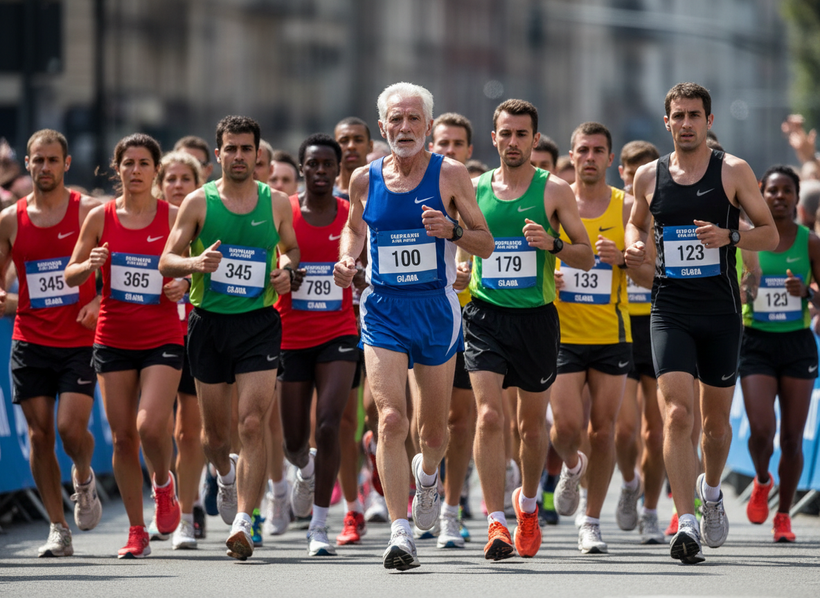
What "Super Agers" Are Teaching Us About Growing Older
When I think about aging well, I don't see a number on a birthday cake. I see capacity. The ability to think clearly. To move with confidence. To stay curious. To laugh easily. To remember where I put my keys. (Okay, that last one is still aspirational.) That's why I teach 4 fitness classes a week and pay close attention to how I fuel my body. Not because I'm chasing youth, but because I've learned, both personally and professionally, that the way we move, eat, sleep, and cope influences how we feel... and how we show up for the people we care about. I don't want to live forever. I just want to live well while I'm here. Like many Boomers, I've been interested in the growing research on longevity. And let's be honest: Boomers have never been good at accepting "no" for an answer. Why would we start now, just because it's mortality asking? We're the generation that refused to compromise. Retirement? Optional. Slowing down? Negotiable. Death? We'd like to speak to the manager. This leads us to a fascinating group of scientists known as "Super Agers." Who Are Super Agers, Really? In research terms, Super Agers are adults over 80 whose cognitive abilities, especially memory, perform at levels expected of people in their 50s or 60s (Rogalski et al., 2013). But here's what I love most: they aren't superhuman. They're not top athletes. They're not biohackers living on kale foam and cold plunges at dawn. (Though if that's your thing, carry on.). They're everyday people who never disconnected from life. A striking Canadian example is Morry Kernerman, a Toronto violinist who kept on learning, hiking, and performing well into the ripe age of 101. His story embodies the spirit of Super Aging: it's not about dodging age, it's about refusing to stop living. In a CBC interview, Maury Kernerman doesn't sound like someone "trying to live longer." He talks like someone who's still interested in living, fascinated by the world, hungry for learning, and unwilling to stand still just because he might do something imperfectly. He also admits something that matters to a lot of readers: he wasn't always an exercise person. He started taking it seriously later in life and describes it as a "rear guard action" that hasn't stopped aging, but has helped him keep his capacity. One of the most poignant lessons: when we're afraid of doing the wrong thing, afraid of failing or being embarrassed, we stop. And standing still is what really costs us. Haven't you heard? Sitting is the new Smoking!! What the Science Is Showing Us Canadian and U.S. researchers, at Western University and Northwestern University, are discovering something significant. Not a pill. Not a quick fix. A system. Angela Roberts (Western University) explained that the Canadian arm of the research isn't relying only on lab snapshots. Participants are sent home with wearable devices so researchers can monitor real-world activity patterns continuously (24 hours a day) over multi-week periods (CBC News, 2024 - https://www.cbc.ca/news/health/superager-centenarians-brain-second-opinion-9.7049411). That design matters because it turns "healthy aging" from a vague concept into measurable behaviours: how much movement you get, how intense it is, how consistent it is, and how it fits into the rhythm of normal life. Super Agers typically stay active, remain mentally sharp, maintain close relationships, handle stress effectively, sleep well, and keep a generally positive attitude (Rogalski et al., 2013 - https://doi.org/10.1162/jocn_a_00300; Sun et al., 2016 - https://doi.org/10.1523/JNEUROSCI.1492-16.2016) Their brains display thicker cortical areas linked to attention and memory, experience slower atrophy rates, have fewer Alzheimer's markers, and show stronger neuronal connections (Gefen et al., 2015 - https://doi.org/10.1523/JNEUROSCI.2998-14.2015; Harrison et al., 2012 - https://doi.org/10.1017/S1355617712000847) A Data Point Worth Remembering When It Comes to Longevity From the wearables, the research study observed that many 80-year-olds in the study, both "super agers" and the control group, were averaging about 25 to 30 minutes of exercise a day (roughly aligned with Canadian movement guidelines). The difference wasn't that super agers moved a little more. The study showed that they got about 30% more of the kind of movement that raises heart rate, what researchers call moderate-to-vigorous physical activity In plain language: it's not just steps. It's getting your engine up into that slightly breathy zone on purpose, most days. There's no single longevity switch. It's a belt-and-suspenders approach: multiple protective habits working together over decades. Let's Talk About Weight (Without Losing Our Minds) People often ask: Should Super Agers be skinny? Or a little plump? The research answer is surprisingly dull (and comforting): Neither. Super Agers come in all sizes. There is no evidence that they share a specific body weight or BMI. What matters much more than the scale is stability, strength, and body composition (Stenholm et al., 2008). Obesity Shows Up Consistently in the Research Midlife obesity is associated with an increased risk of dementia later in life. Several large studies indicate that obesity (BMI ≥30) during midlife raises dementia risk by 33 to 91% compared to individuals of normal weight (Kivipelto et al., 2005; Qizilbash et al., 2015) However, in older age, unintentional weight loss often signals frailty or illness. Weight loss in later life is linked to faster cognitive decline and higher risk of death (Diehr et al., 2008) Being underweight increases the risk of death. Studies consistently indicate that underweight older adults (BMI <20) have 2 to 3 times the all-cause mortality risk compared to those with a normal weight, with one study reporting a 34% higher risk of dementia (Diehr et al., 2008). A slightly higher BMI in later life may actually be protective, especially if muscle mass is maintained. The "obesity paradox" demonstrates that overweight and mild obesity in older adults (ages 65+) are often linked to a lower risk of mortality, particularly from non-cardiovascular diseases (Natale et al., 2023). So, the prescription is clear: avoid extremes. Not so skinny you could use a Cheerio as a hula hoop, and not so plump that tying your shoes feels like a full-contact sport. Here's What Truly Matters: Muscle Mass Strength defends the brain, maintains balance, boosts metabolism, and offers resilience during illness or stress (Peterson & Gordon, 2011) "Skinny-fat", low muscle, higher fat, is actually worse for aging than carrying a bit more weight with muscle beneath (Prado et al., 2012). Super Aging isn't about shrinking yourself. It's about supporting the structure you live in. Sleep: The Quiet Superpower If movement is the main act, sleep is the stage crew ensuring the entire show runs smoothly. Sleep isn't just one thing. It's a cycle (Walker, 2017). The Stages of Sleep (a quick, non-boring tour) Light sleep: The warm-up. Easy to wake from. Necessary, but not enough by itself. Deep sleep: The body's main repair mode. This is where physical repair occurs: muscle recovery, immune support, hormone regulation (Scullin & Bliwise, 2015) (Walker, 2017). REM sleep: The brain's spa. Memory consolidation, emotional regulation, creativity, and learning all occur here (Scullin & Bliwise, 2015) (Walker, 2017). Missing deep sleep leaves your body feeling exhausted. Missing REM causes your brain to become fragile and foggy (Mander et al., 2017). Super Agers tend to guard their sleep, though not perfectly, deliberately (Mander et al., 2016). Consistent bedtimes, morning sunlight, daily activity, and relaxing evenings appear repeatedly. For some people, slow-release melatonin or magnesium can help improve sleep maintenance (Ferracioli-Oda et al., 2013). However, the greatest benefits often come from simple routines: consistency, darkness, cooler rooms, and avoiding phone use at 10 p.m. Sleep isn't a luxury. It's essential brain maintenance (Mander et al., 2017). Stress: The Real Villain Chronic stress is like kryptonite for cognitive health (McEwen & Sapolsky, 1995). The main source of stress is not accepting what is. We argue with reality, and we lose every time. We revisit conversations. We resist change. We attempt to control others. Super Agers appear more accepting, not resignation, but realism (Sun et al., 2016) Here are some practical strategies to consider: Let them. (Thank you, Mel Robbins.) People will be people. You don't need to manage them. Save your energy for what truly matters. And remember: what people think of you... is none of your business. Calm isn't passive. Calm is protective. Gratitude also plays a role. Many Super Agers exhibit a distinct emotional tone: more grateful, less gripeful (Hill & Allemand, 2011) Life wasn't simpler; they simply didn't let bitterness steer the way. Relationships and Quality of Life: The Real Gold Standard Super Agers don't have more friends; they have deeper ones. Strong relationships are linked to better emotional regulation and preserved brain regions. (Cacioppo & Cacioppo, 2014) (Holt-Lunstad et al., 2010) And this isn't about extending life. It's about quality of life: cognitive, physical, and emotional well-being. Because no one wants a farewell-to-life party where nobody shows up because you've been miserable, bitter, or exhausting to be around (thank you, BR). Strong body. Clear mind. Warm relationships. A sense of humour that endures gravity. That's the win. 3 Practical Takeaways to Steal this Week If you want the super-ager approach without turning your life into a science experiment, here are three low-drama moves: Add intensity, not just activity. Keep your regular walk, but pick one segment to walk faster, take a hill, or add short brisk bursts. Your heart rate is the clue. Keep a learning thread running. Music, audiobooks, a class, a museum habit, a book club, anything that keeps your mind taxed in a good way and makes you feel curious again. Make "don't stand still" a rule. If you're avoiding something because you might look silly (a dance class, a new hobby, a new friend group), that's exactly the place to lean in, gently, but on purpose. Super Agers aren't chasing youth. (No one needs to see me in low-rise jeans again.) They're cultivating engagement. (Do you want to dance?) They move. They learn. They sleep well. They stay positive. They accept what is. They remain connected. They rely on the belt and suspenders. And most importantly, they don't wait for permission to live life to the fullest at any age. Yes, biology will win eventually. None of us gets out of this alive. But the real victory isn't in defeating what we can't control. It's in mastering what we can, for as long as we can, and living fully right up until biology takes its final bow. Don't Retire...ReWire! Sue Want more of this? Subscribe for weekly doses of retirement reality—no golf-cart clichés, no sunset stock photos, just straight talk about staying Hip, Fit & Financially Free.

Psychologists introduce third path to a ‘good life’ — one full of curiosity and challenge
For centuries, scholars and scientists have defined the “good life” in one of two ways: a life that is rooted in happiness, characterized by positive emotions, or one that is centered on meaning, guided by purpose and personal fulfillment. But what if there is another, equally valuable path — one that prioritizes challenge, change and curiosity? “We found that what was missing was psychological richness — experiences that challenge you, change your perspective and satisfy your curiosity.” — Erin Westgate, Ph.D., assistant professor psychology, director of the Florida Social Cognition and Emotion Lab This third dimension, which may result in a more psychologically rich life for some, is being explored in a new study — led by University of Florida psychologist Erin Westgate, Ph.D., in collaboration with Shigehiro Oishi, Ph.D., of the University of Chicago. According to their research, some people prioritize variety, novelty and intellectually stimulating experiences, even when those experiences are difficult, unpleasant or lack clear meaning. “This idea came from the question: Why do some people feel unfulfilled even when they have happy and meaningful lives?” Westgate said. “We found that what was missing was psychological richness — experiences that challenge you, change your perspective and satisfy your curiosity.” Westgate and Oishi’s research shows that a psychologically rich life is distinct from lives defined by happiness or meaning. While happiness focuses on feeling good, and meaning is about doing good, richness is about thinking deeply and seeing the world differently. And for a significant minority of people around the world, that third path is the one they would choose — even if it means giving up happiness or meaning. A new way to think about the ‘good life’ According to Westgate and Oishi, psychological richness is defined as a life filled with diverse, perspective-changing experiences — whether these are external, such as traveling or undertaking new challenges, or internal, like absorbing powerful books or pieces of music. “A psychologically rich life can come from something as simple as reading a great novel or hearing a haunting song,” Westgate said. “It doesn’t have to be about dramatic events, but it can shift the way you see the world.” Unlike happy or meaningful experiences, rich experiences are not always pleasant or purposeful. “College is a good example. It’s not always fun, and you might not always feel a deep sense of meaning, but it changes how you think,” Westgate said. “The same goes for experiences like living through a hurricane. You wouldn’t call it happy or even meaningful, but it shakes up your perspective.” Researchers in Westgate’s lab at UF have been studying how people respond to events like hurricanes, tracking students’ emotions and reactions as storms approach. The results show that many people have viewed these challenging experiences as psychologically rich — altering how they saw the world, even if they didn’t enjoy them. The roots of the idea While the study is new, the concept has been years in the making. Westgate and Oishi first introduced the term “psychologically rich life” in 2022, building on earlier research and scale development around 2015. Their latest paper expands the idea, showing that the concept resonates with people across cultures and fills a gap in how people define well-being. “In psychology and philosophy, dating back to Aristotle, there’s been a focus on hedonic versus eudaimonic well-being — happiness versus meaning,” Westgate said. “What we’re doing is saying, there’s another path that’s just as important. And for some people, it’s the one they value most.” While many people ideally want all three — happiness, meaning and richness — there are trade-offs. Rich experiences often come at the cost of comfort or clarity. “Interesting experiences aren’t always pleasant experiences,” Westgate said. “But they’re the ones that help us grow and see the world in new ways.” Westgate hopes the study will broaden how psychologists and the public think about what it means to live well. “We’re not saying happiness and meaning aren’t important,” Westgate said. “They are. But we’re also saying don’t forget about richness. Some of the most important experiences in life are the ones that challenge us, that surprise us and that make us see the world differently.”


What Time Should You Actually Turn Off Your Phone at Night?
Everyone’s heard you’re “not supposed to be on your phone before bed” but what does that actually mean in 2026? Most major sleep organizations now recommend putting devices away at least 30–60 minutes before bedtime to protect melatonin and help the brain wind down. The National Sleep Foundation and the American Academy of Sleep Medicine both advise turning off screens about an hour before bed; other experts say a 30–60 minute window is the minimum. (Advisory) Research on blue light shows that evening screen exposure suppresses melatonin and delays sleep, especially when you’re scrolling something stimulating. (Sutter Health) Psychotherapist Harshi Sritharan, MSW, RSW, who specializes in ADHD and digital dependency, puts it bluntly: “To ensure quality sleep and peak performance—whether in sports, work, or school—avoid using your phone after 11 p.m.” For teens and adults with ADHD or anxiety, she says, late-night doomscrolling is especially brutal: screens keep dopamine and stress high at exactly the time the nervous system should be powering down. Harshi says: "The quality of sleep determines your level of executive functioning the next day" She also makes an important distinction: if you are on a device in the evening, active use (choosing a show, talking to friends, looking up something specific) is less harmful than passive use: “Don’t do passive tech use — that doom scrolling, content just being thrown at you,” Sritharan says. “Be more active about your tech use.” That kind of passive feed is more likely to serve up emotionally intense content kids didn’t ask for and aren’t ready to process. You Don’t Need a Perfect Curfew to See Results The good news: the science suggests you don’t have to quit completely at night to feel a difference. A JAMA Network Open study on young adults found that reducing social media use for just one week — not going cold turkey — led to about a 24.8% drop in depression, 16.1% drop in anxiety and 14.5% improvement in insomnia symptoms. Offline.now founder Eli Singer argues that the real challenge is confidence, not willpower. Their data show 8 in 10 people want a healthier relationship with tech, but more than half feel too overwhelmed to know where to start. The platform’s behavior data also show that late afternoons and evenings are when phones dominate use and when people are actually most motivated to make changes. We have less in the tank at night, don't trust willpower to transition off. Have a system/routine of pre-decided of low-effort (potentially fun) activities to help the transition off phones. “We tell people: don’t start with a perfect 8 p.m. curfew,” Singer says. “Start with one realistic phone-off window — even 30 minutes before bed — and prove to yourself you can protect that. That first win matters more than an ideal schedule you’ll never keep.” A Simple, Science-Aligned Answer For most people, Offline.now’s experts land on a practical, high-compliance answer to the question “What time should I turn off my phone?” Aim to put your phone away 30–60 minutes before your target bedtime Make everything after that screen-free by default (books, stretching, music, talking, journaling) If you must be on a device late, keep it brief, low-drama and intentional — no infinite feeds, no emotionally loaded content It’s a small change, but in the context of a day where we’re already on screens for roughly 10 of our 16 waking hours, that last hour matters. Featured Experts Harshi Sritharan, MSW, RSW – Psychotherapist specializing in ADHD, anxiety, insomnia and digital dependency. She explains how late-night and early-morning phone use hijack dopamine, disrupt sleep and make it harder for kids and adults to function the next day. Eli Singer – Founder of Offline.now and author of Offline.now: A Practical Guide to Healthy Digital Balance. He speaks to the platform’s behavioral data on when people are most ready to change, and how 20-minute micro-experiments (like one phone-off window at night) build real confidence over time. Expert interviews can be arranged through the Offline.now media team.



Do Teens Secretly Want Phone Boundaries More Than Adults Think?
Ask a parent about phones and teens, and you’ll hear the same story: “They’re glued to that thing and don’t care.” But when you ask teens themselves, a different picture emerges. A recent Pew Research Center study found that about 95% of U.S. teens have access to a smartphone — and around 4 in 10 say they spend too much time on it. (Pew Research Center) Coverage of the same data notes that over 70% of teens say they feel happiness or peace when they’re not tethered to their device, even as they rely on it for social life. (KTUL) Psychotherapist Harshi Sritharan, MSW, RSW, who works with teens and young adults on digital dependency, sees that ambivalence every day. “I have 12- to 15-year-olds who come in and say, ‘I know I’m kind of addicted to my phone,’” she says. “When a teenager says that, I’m relieved — it means we have something to work with.” She stresses that most young people don’t actually want to be left alone with endless scrolling — they want help making sense of it. Teen Limits Work Better Than Parents Think New data suggests that reasonable limits can help and that many teens benefit when parents set them thoughtfully. A tool parents can use is collaborative problem solving. This involves parents and teens working together to come up with a plan for the best strategies that combat everyone’s concerns while compromising. A 2024 Springtide Research Institute survey of 1,112 13-year-olds found that teens whose parents limit their screen time are less likely to be heavy users: only 32% of those with limits use their phone 5+ hours a day, compared with 55%of those with unlimited time. Just 24% of teens with limits said they’d felt like they had a mental health problem, versus 32% with no limits.(Springtide Research Institute) In other words, boundaries are mildly protective, not cruel, especially when they’re explained instead of imposed. Sritharan cautions against “no phones ever” rules that ignore school and social realities: “We can’t make blanket statements of ‘no screens’,” she says. “We shape how kids use devices so they can still get things done and spend more time engaging with their family.” That might mean agreeing on tech-free windows (like family dinners or the hour before bed) and tech-friendly ones (like a 45-minute bus ride where a teen can listen to music or message friends). Teens Are Leading a Quiet “Cutback” Movement Parents often feel like the only ones craving less screen time, but surveys show Gen Z is already trying to dial things down. A global survey cited by Tech Times and ExpressVPN found that about 46% of Gen Z are actively taking steps to limit their screen time, more than older generations.(Tech Times) Another U.S. poll commissioned by ThriftBooks found half of respondents are cutting back on screens, with Gen Z and millennials leading — and 84% adopting analog habits like printed books, paper planners and board games.(New York Post) Reporting on the “board game revival” among Gen Z echoes the same trend: young people are consciously seeking offline, face-to-face ways to connect.(Woke Waves) For Offline.now experts, this adds up to a simple message: teens aren’t fighting all boundaries — they’re fighting feeling controlled or misunderstood. Parents as Co-Pilots, Not Phone Police Executive Function Coach Craig Selinger, M.S., CCC-SLP says the real leverage point isn’t just new rules; it’s how parents model and co-create them. “If you want behavior change in kids, start with the parent model,” he says. “A 12-year-old will not put their phone away at dinner if their parents won’t.” He encourages families to focus on “little moments” where phones quietly block connection — especially car rides and in-between times when kids might naturally open up: “In the car, your kid is trapped with you,” Selinger says. “That’s when they start talking. If they’re on their phone the whole time, you lose those big conversations hiding in the boring moments.” Both experts emphasize co-designing boundaries with teens: agreeing together on tech-free times and how late-night scrolling affects mood and school performance. When teens feel heard — and see adults following the same rules — boundaries feel less like punishment and more like shared protection. For journalists, the story isn’t “teens vs phones” or “parents vs teens.” It’s that both sides are quietly overwhelmed, and many young people are more open to limits than adults realize — if those limits are built with them, not against them. Featured Experts Harshi Sritharan, MSW, RSW – Psychotherapist specializing in ADHD, anxiety, insomnia and digital dependency. She helps teens and young adults understand dopamine cycles, distinguish passive vs active tech use, and build realistic phone boundaries that support sleep, school and mental health. Craig Selinger, M.S., CCC-SLP – Executive Function Coach and child development specialist (Brooklyn Letters). He focuses on how tech use shapes learning, attention and family dynamics, and how parents can model healthy habits and co-create screen rules that actually stick. (Expert interviews can be arranged through the Offline.now media team.)