
Experts Matter. Find Yours.
Connect for media, speaking, professional opportunities & more.

Online extremism and hate groups
A recent episode of the Reveal podcast from The Center for Investigative Reporting and PRX titled "Hate in the homeland" features insights from Megan Squire, professor of computing sciences. Squire, who has conducted research into online networks of hate groups, participated in the discussion about how those groups are managing to remain online despite efforts to silence extreme sites. Squire recounts hearing the news about a gunman killing dozens of Muslim worshipers in Christchurch, New Zealand, and the discovery that he had posted a manifesto online. "I had already been collecting these hate manifestos from different killers, trying to do some text mining on them to see what themes they were taking from on another, to see if they were radicalizing one another," Squire told the podcast host. Squire collected what ended up being multiple versions of the shooter's manifesto posted online, but that there were only slight variations. "They were treating the manifesto as an artifact, almost a holy artifact," Squire said. She found something different with the livestreamed video of the attack, which others were changing significantly — creating memes, adding soundtracks, adding clips and artwork. That made it significantly harder to remove from the internet, she said. Source: If Dr. Squire can assist with your reporting about online extremism, please reach out to News Bureau Director Owen Covington at ocovington@elon.edu or (336) 278-7413. Dr. Squire is available for phone, email and broadcast interviews.


Democratic Presidential Debates
Jason Husser, director of the Elon University Poll and associate professor of political science, recently offered his thoughts about the crowded field of contenders for the Democratic presidential nomination, and how viewers can assess the performance of the host of candidates during televised debates. "It's easy to think about these debates in terms of a sports metaphor — who won?" Husser says. "If we think about these debates as a game, that would mean you have 20 teams on the field, you have an unclear set of rules that change depending upon who you're talking to about how you score points and what it takes to win. And you have refs that are biased ... . When we think about these debates, especially about who won and who lost, we miss a real opportunity to learn about the candidates." The Elon University Poll will be offering valuable insight into what's on the mind of N.C. voters leading up to the 2020 elections, with North Carolina to host the GOP Convention in August 2020 and sure to be a battleground state again. If Dr. Husser can assist with your reporting about the 2020 presidential election and N.C. politics, please reach out to Owen Covington, director of the Elon University News Bureau, at ocovington@elon.edu or (336) 278-7413. Dr. Husser is available for phone, email and broadcast interviews.

Trained and happy - are you investing in your staff?
A new report released this June overwhelmingly shows that Canadian companies need to invest in their employees if they want to grow. The Navigator: Made for the Future Report surveyed 2,500 businesses in 14 countries and territories - 200 of them in Canada. The survey found that in Canada: Nearly half of those surveyed plan to boost spending on skills training for their staff in the next two years. 47% said their companies planned to spend more on training employees. 42% said they'd spend more on employee satisfaction and well-being. While 54% of the surveyed Canadian business leaders said their companies would make investments that fall under the category of research, innovation and technology, Dan Leslie, deputy head of commercial banking for HSBC Bank Canada, said the results show that technology is only half the story. "Tech adoption brings improvements but also creates the need for new skills," Dan said. "The priorities have shifted since some of our last surveys away from trade or capital investment and more toward investment around the well-being of their workforce." "Given labour market experts predict that many of the jobs people will hold in the future haven't even been invented yet, investing in adaptable employees is good business sense", Dan said. CBC June 26 How much should businesses be investing? What's the cost of programs and training? Is there a tax benefit or assistance small companies can access to assist with costs? Does location play a factor? There are many questions to be answered, and that's where our experts can help. Andrea Bruley, Senior Manager at Freelandt Caldwell Reilly LLP, is an expert in the areas of owner managed business, mentorship, accounting and not-for-profit accounting. You can contact Andrea regarding this topic by clicking the contact button below. Sources:


A closer look at deepfakes. Let our experts explain if there’s a reason to worry.
Deepfakes…they’re eerie, entertaining and getting a lot of attention. Deepfake videos are made using artificial intelligence technology which can manipulate someone's face in a video to make it look like they are saying something that they didn't. It's one level up from dubbing, or lip syncing, and can appear very convincing. One example is a video that was made using footage of Mark Zuckerburg in 2017; it was doctored and falsely portrays the Facebook CEO discussing how he had stolen data. – The Sun, June 26 The new concept is all the rage and has seen people spoofed, mocked and tricked. But as once again technology outpaces legislation and with an election approaching, deepfakes have some people going off the deep end. Every day, thousands of videos are posted online, which means that any potential filtering program would need to be able to quickly and efficiently detect fake content. Even then, such media would likely be removed only after being published, meaning that the video would likely have already had an impact. For these reasons, deepfakes are expected to contribute to the upcoming 2020 election in the United States, likely acting as an agent of spreading fake news. However, Edward Delp, a Purdue University professor who developed a computer program to help detect these videos, believes deepfakes pose a bigger threat. “Deepfakes pose a threat to more than just political videos,” he said. “It can be used in making fake child pornography, revenge porn and financial bribes. Just general criminal behavior.” – The Exponent (Purdue University), June 21 As deepfakes become more common on social media and the internet, odds are they will make their way – accidentally or not – into the actual media. And as America still battles with the fake news phenomenon, will Deepfakes further erode our trust in media and our leaders? As deepfakes become more common on social media and the internet, odds are they will make their way into the actual media. So, what can be done? How will these deepfakes affect the perception of news media? What simple advice can we apply to verify if something is real or fake? And do these videos represent a threat to democracy, as some experts are saying? Dr. Gregg R. Murray, professor of political science at Augusta University, is available to talk about the implications of this new threat. Murray’s research focuses on political behavior and psychology with specific interests in voter mobilization and turnout. He is also executive director of the Association for Politics and the Life Sciences.


Experts in the media - Will Facebook, Google take over blockchain?
Banking and big tech are going ‘all-in’ on blockchain initiatives – and it is getting a lot of attention from investors, regulators and the industry. In an announcement this week, Facebook stated it was moving full speed ahead with its cryptocurrency ‘Libra”. With this announcement, Facebook isn’t just moving into the cryptocurrency space—it’s also setting itself up as a financial services company. Unlike many other cryptocurrencies, Libra will be specifically designed for use as a payment medium, rather than a speculative asset. Bitcoin, Ethereum, and other digital currencies are generally difficult to transfer back and forth for everyday payments, partly because the price of the tokens is based primarily on market demand. The value thus fluctuates dramatically. If it works, Libra should be much less volatile since it will be pegged to traditional financial assets, including a raft of government-issued currencies. Slate, June 18, 2019 Recently, Dr. Eric Overby, associate professor of information technology at Georgia Tech's Scheller College of Business was interviewed by Blockchain Tech News to get his perspective on what to expect now that Google and Facebook are adopting blockchain as part of their platforms. The interview is attached below. Eric Overby's research focuses on the transition from physical to electronic modes of interaction and its effect on market efficiency. Eric is available to speak to media regarding blockchain or any other technology related topics – simply click on his icon to arrange an interview.


Otterbein’s engineering program focuses on adding diversity to the profession
In April, Otterbein granted degrees to its first class of engineering graduates. While it’s a historic moment for the school, the class is important for another reason: it exceeds the national graduation rate for women in engineering. Otterbein is working in an intentional way to recruit a diverse class of engineers in a field that is increasingly looking for well-trained professionals who bring diverse opinions and ideas to the table. According to the American Society of Engineering Education, the national average for females earning bachelor’s degrees in engineering is 19.9%. The average for minority students graduating with engineering degrees is just 7%. Amongst the 21 students graduating from Otterbein, 29% are female and 29% are minority students. The inaugural class was also the first class to study in The Point at Otterbein University, an experiential learning facility focused on collaboration with businesses, community makers and academics. At The Point, students have opportunities to pursue industry projects and on-campus internships with resident professionals from some of the country’s largest and most respected businesses, like JPMorgan Chase and Nestle, and locally based companies, like Worthington Industries, Nikola Labs and edgeThingZ. Of the 21 graduating students, several are pursuing graduate studies at The Ohio State University and Santa Clara University, while others have already accepted full-time jobs at companies like Honda and Williams-Sonoma. “The students in this class helped us develop a strong program and accomplished a lot during their four years,” said Mike Hudoba, assistant professor of engineering. “Looking back on what they started with, it’s such a neat legacy they get to leave behind. They’re all hardworking students who entered into this new program with us.” Are you covering or would you like to learn more about Otterbein University and its engineering program? Let our experts help. Michael Hudoba is an assistant professor of engineering at Otterbein University and he is available to speak to media regarding this historic time at the school. Simply click on his icon to arrange an interview. To learn more, click on the link below: https://www.otterbein.edu/news/first-engineering-class-a-highlight-of-otterbein-universitys-commencement-weekend/

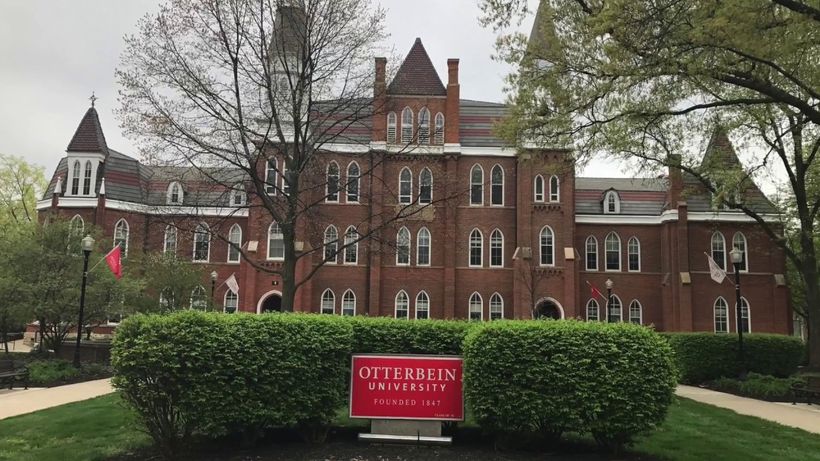
This year, 26 students from Columbus (Ohio) City Schools (CCS) walked across the stage to receive their Otterbein degrees as part of the Class of 2019. It was a result of a partnership between two great educational institutions that is ensuring post-secondary education is accessible to students in central Ohio. “(The event) was a great example of how two educational institutions can come together and make an impact on the lives of young people and the larger community,” said Tanya L. McClanahan, supervisor of higher education partnerships for CCS. For some time now, Otterbein and CCS have been working together to provide several academic options and initiatives to students from Ohio’s largest school district. Since 2014 the Urban Districts Initiative has been working with Columbus City Schools, as well as South-Western City Schools, Westerville City Schools, Whitehall City Schools and Cristo Rey, all districts with more than 35%of students living in poverty. The Initiative is an enhanced need-based aid model that reduces the gap between aid and expected family contribution to the smallest amount possible and has driven significant increases in enrollment of low-income students at Otterbein, as well as sparking a significant increase in student success. The Seniors-to-Sophomores program, where Otterbein offers a summer College Credit Plus course for CCS students that pairs an academic course with a for-credit study skills course. The University also has a STEM skills refresher course for entering students funded through a grant from Nationwide. Otterbein offers Professional Learning Communities (PLCs) for district teachers and Otterbein faculty. In PLCs, teachers and faculty come together to discuss issues related to pedagogy and serving students to enhance the work of both institutions. Recently, Otterbein introduced a scholarship for the dependent children of CCS district (benefits eligible) employees that reduces the cost of an Otterbein education to the average of the state supported universities in Ohio. There are a lot of great things happening in Otterbein’s financial aid and recruitment models that are seeing positive outcomes in the Otterbein and central Ohio communities - and if you need to know more, that’s where our experts can help. Jefferson Blackburn Smith is the Vice President for Enrollment Management and is an expert in financial aid, scholarships, politics, and higher education. He is available to speak to media regarding these topics – simply click on his icon to arrange an interview. To learn more, click the link below: https://www.otterbein.edu/news/cohort-of-columbus-city-schools-alumni-to-graduate-from-otterbein-university-sunday/

What will a ban on single-use plastic mean for small businesses in Canada?
Being environmentally friendly has become a popular trend. Climate change is occurring, and news stories of wasteful plastics clogging our waterways are becoming more frequent, making the battle against plastic waste an election issue. Earlier this month, Prime Minister Trudeau announced a ban on single-use plastics by 2021 that will likely include straws, plastic cups, food wrapping and grocery bags. It's evident, being environmentally friendly is in everyone's best interest, but business owners are concerned about what costs will arise as a result. Companies use plastics cups, lids and straws for take-out, plastic wrap as a significant part in food safety and freshness, and plastic bags for clients to transport purchases home. Even though these plastics are environmentally harming, some still see them as essential. There are more than 1.1 million small businesses in Canada, and most of them will have to adapt or adjust to: How will this impact their bottom-line? How slim are the margins already for most small retailers? Are incentives for businesses required before implementing this new policy? These are some of the critical questions to ask. If your small business will be affected, contact one of our experts to help. James Brutto, Manager at Freelandt Caldwell Reilly LLP, is an expert in the areas of accounting, auditing, finance and entrepreneurship. Contact James to arrange an appointment regarding this topic by clicking the contact button below. Sources:

It’s been 50 years since Stonewall…but has America really accepted gay rights?
It’s been a half-century since the Stonewall Uprising and the emergence of the gay pride movement. As cities across the world celebrate this month, it might also be time to look at where America stands today when it comes to gay rights. “From the perspective of veteran activists, the progress has been astounding. In 1969, every state but Illinois outlawed gay sex, psychiatric experts classified homosexuality as a mental disorder, and most gays stayed in the closet for fear of losing jobs and friends. “Today, same-sex marriage is the law of the land in the U.S. and at least 25 other countries. LGBT Americans serve as governors, big-city mayors and members of Congress, and one — Pete Buttigieg — is waging a spirited campaign for president.” June 17, ABC News But there is still a lot of work to do. LGBTQ people not only face discrimination in the workplace, in health care settings and even public restrooms, but can also suffer threats of violence. Just last month, the nation was shocked to learn of the chilling attack of an American woman and her partner overseas in London. The lesbian couple was violently assaulted by teens on a double-decker bus, leaving one of the women with a broken jaw, after they refused to publicly kiss one another in front of the group of young men who were harassing them. Are you covering this topic? There are a lot of questions about what needs to be done and that’s where our experts can help. Todd Powell-Williams, associate professor of Sociology at Augusta University, is an expert in social movements, social control, religion, police science and symbolic interactionism. Dr. Powell-Williams is available to speak with media about gay rights and where America stands 50 years after Stonewall. Simply click on her icon to arrange an interview.


Learn the facts – and falsehoods -- about ‘curing’ cancer
When it comes to cancer awareness, any news, promotion and exposure is good news. The goal of those on the frontlines of the battle against this disease is to inform the public, every message encouraging healthier living, prevention methods and hopefully, inspiring more people to support cancer research. Doctors can successfully treat cancer. However, there is no cure. Just this month, as the political rhetoric continues ramping up for the 2020 election, former Vice President Joe Biden used cancer as a platform. "A lot of you understand what loss is and when loss occurs, you know that people come up to you and tell you 'I understand' if you lose a husband, a wife, a son, a daughter, a family member," he said. "That's why I've worked so hard in my career to make sure that — I promise you if I'm elected president, you're going to see the single most important thing that changes America, we're gonna cure cancer." – USA Today, June 12 For Biden, cancer is an issue that is close to him. He lost his son to brain cancer in 2015. He’s passionate and deeply invested in those who have also lost a loved one to the disease. But his messaging was not accurate. If you are covering cancer research, prevention and the quest for the best possible outcomes for those diagnosed and being treated for the disease, the Georgia Cancer Center at Augusta University has experts who can help with your stories. Dr. Daniel Albo is able to discuss the fact that yes, there are highly successful treatments for a variety of different cancers. But, there is no “single bullet” that will cure every kind of cancer there is. This is the mistake Biden made during his speech. For some cancer patients, it’s about working with their doctor to find ways to manage their disease during the entirety of their life, similar to high blood pressure, diabetes, etc. To find new treatment options and therapies for all kinds of cancer, it will take investment from multiple levels of government. But money is not all that is needed. It will take basic science researchers working with clinicians to make new “bench-to-bedside” treatment discoveries. Also, public health and prevention, as well as improving access to health care, are essential to ending the burden cancer puts on patients, their family and their friends. Dr. Albo serves as Chair in the Department of Surgery for the Medical College of Georgia, the Surgeon-in-Chief for Augusta University Health System and associate director of surgical services for the Georgia Cancer Center. He is available to speak with media – simply click on his icon to arrange an interview.