
Experts Matter. Find Yours.
Connect for media, speaking, professional opportunities & more.

Understanding the meaning of America’s monuments
As the debate continues with what to do with Confederate monuments that dot America’s landscape, the experts from the University of Mary Washington have been lending perspective, knowledge and opinion to the conversation. Professor of Geography Stephen P. Hanna is part of a team of scholars from universities across the South who are investigating how enslavement is incorporated in the landscape and narratives of Southern plantation museums. A key part of this work is to suggest ways these museums can rework their tours and exhibits to help the public understand that slavery was central to both the lives of everybody who lived at these sites and to the development of American political and economic systems. Says Hanna: “A year after white supremacists rioted in Charlottesville, it is clear that the underlying issues related to racial justice have not gone away. African-Americans face arrest for simply being in places where whites suspect they don’t belong. Police are more likely to escalate their use of force more quickly when dealing with black Americans. In addition, both Blacks and Latinos are fighting efforts to make it harder for them to vote while Latino Immigrants have to fear deportation and family separation.” He continues: “The struggle over Confederate Memorials and the narratives presented as “history” at southern plantation museums must be seen within this context. The good news is that more people understand that statues of Robert E. Lee and costumed tour guides at plantation museums describing a romanticized version of the antebellum South don’t represent our shared past. Instead they are efforts to write a particular history that denies that our nation’s roots include enslavement of African-Americans and that slavery’s legacy includes the injustices non-whites endure today.” Dr. Hanna is available to speak with media regarding this topic. Simply click on his icon to arrange an interview. Source:



We Need to Normalize Mental Health Care in the Black Community
I am a PhD, a book author, a professor at USC. I work with organizations to create healthier and happier workplaces by reducing stress and building emotional resilience. And yet, until very recently, I have been reluctant to share my own story. It is a story of mental illness, recovery and resilience, a story of bipolar disorder. And I have been hesitant to share it because I did not want to experience the stigma associated with mental illness. I used to joke that I didn’t want to be the embodiment of “the nutty professor,” but the joke stopped being funny when the stigma against mental illness -- particularly in the black community -- negatively impacted my professional and personal life. In previous roles, I learned that it wasn’t acceptable for me to have a mental illness in my professional setting, and that it definitely was not okay to talk about it. My competence was questioned, even though I no longer had symptoms and was given a clean bill of health from my psychiatrist, and I was asked to not ‘out’ myself as having bipolar disorder to my students. That is why I’m sharing my story publicly: I hope to inspire my students to fight their way through their own mental health challenges. Even with all my degrees, even with my understanding of the healthcare system, finding affordable and accessible mental health services has often been a challenge for me. Even though I know what it’s like to have supportive family, friends and colleagues, and a fantastic healthcare team, I have struggled. These experiences have inspired my activism and advocacy for a world where using mental health services is no different than getting care for any other illness. Let me start with a little-known statistic: African Americans are 20 percent more likely to experience serious mental health problems than the general population, according to the Office of Minority Health. And yet: only about 25 percent of African Americans seek mental health care as compared to 40 percent of whites, according to the National Alliance on Mental Illness. The reasons for this discrepancy are plentiful: lack of health insurance, distrust of mental health care system, misdiagnosis of symptoms, lack of cultural competence, and stigma. Addressing these challenges for African Americans entails three parts: taking care of our mental health should be acceptable, accessible and affordable. Allow me to explain. Click the news article to read more. Source:


The impact of behavioral bias on decision-making
For business leaders, the ability to make critical decisions in a dynamic work and industry environment is essential to the success of an organization. However, Diwas KC, associate professor of information systems & operations management, and coauthors Francesca Gino (Harvard U) and Bradley R. Staats (UNC) note that behavioral traits can sometimes impact the ability to weigh new information and make a logical decision, even in the face of negative news. KC, Gino, and Staats analyze 147,000 choices made by cardiologists during a six-year period when they were presented with negative news from the FDA about drug-eluting stents used in angioplasty. The experienced cardiologists were more likely to continue using the questionable stents than their less-experienced peers, even after being informed of the problem. The role of influence also played a factor in the decision-making. They add, “Given that those who feel they are expert are less likely to react to negative news, those around them show the same tendency, thus making worse decisions than those in groups with less perceived expertise.” The seasoned cardiologists were better able to “generate counterexamples to the negative news and thus be susceptible to confirmation bias.” The authors note managers should be aware that more experience and the perception of expertise may bias decision-making. Source:



Baylor Media Expert Shares Thoughts Re: Charges of Biased Media Coverage of Minorities
Early this week, 18-year-old Nia Wilson was stabbed to death on a platform while transferring trains in Oakland, California. Authorities said the attack was unprovoked. Media coverage of Wilson's death included photos from her social media accounts. One California television station chose to share a photo of Wilson, who was African American, holding what appeared to be a gun. The decision to run that particular photo sparked outrage, with many saying the photo added to a trend of a biased media portrayal of minorities. Mia Moody-Ramirez, Ph.D., professor of journalism, public relations and new media at Baylor University, is an expert on mass media representations of women, minorities and other underrepresented groups. "This incident brings back memories of the shooting deaths of Trayvon Martin and Michael Brown. Media outlets used various photos to portray them as menacing. It also brings to mind the hashtag: #IfTheyGunnedMeDown, which asks the question: 'If they gunned me down, what photo would media use?'" Moody Ramirez said. "Historically, media outlets have used such photos to: 1) frame the individuals a certain way, 2) add interest to the story, 3) stir up conflict. Awareness that this is happening is the best way to stop it in the future. Black Twitter has taken on this cause. In the 'clap back' culture of Black Twitter, news outlets are very likely to get called out for such behavior." Moody-Ramirez is the co-author of the new book "From Blackface to Black Twitter: Reflections on Black Humor, Race, Politics, & Gender." In 2013, she co-authored "The Obamas and Mass Media: Race, Gender, Religion, and Politics." She also authored "Black and Mainstream Press’ Framing of Racial Profiling: A Historical Perspective." Source:


Are alternative investments right for the average person?
Given the risk, alternative investments were once considered only appropriate for the affluent and institutional investors. However, investment firms increasingly are offering alternative investment products, including mutual funds, ETFs, and private equity funds with strategies similar to hedge funds, to less affluent people. While average investors are responding eagerly to the move and forking over billions for alternative offerings, there are critics who argue that nontraditional assets are simply too risky for them. In a news article, Klaas Baks, associate professor in the practice of finance and executive director of the Center for Alternative Investment at Goizueta, offered his support of the investment strategy, while George Papadopoulos, a fee-only wealth manager, cautioned against it. Baks noted that alternative vehicles allow less affluent individuals to diversify their portfolios. Alternative investments also require minimal initial investment. Papadopoulos wrote that the risk and fees, as well as a lack of transparency and liquidity, were reasons to avoid nontraditional assets. In the article, Baks contended that all investments offer some risk but that alternative investments, when used correctly, also provide critical access to leverage. Source:


The brain, human behavior, and accounting
Accounting is essential to market economies, setting up what is basically a moral code for financial transactions. Drawing from new and related research, Gregory B. Waymire, Asa Griggs Candler professor of accounting, argues that accounting does have a moral basis because it is designed to encourage and promote ethical behavior. To support the point, he used existing functional MRI research showing how the brain responds to accounting information. Studies show a clear link between earnings news and increased brain activity, as well as accounting information and changes in human behavior. Waymire notes that accounting has the ability to create trust in economic exchange and establishes a way to benefit from it. Additional neuroscience research will play a critical role in furthering our understanding of the relationship between accounting and human behavior. The research is particularly salient for auditors as they work to improve investor trust. Source:


Today, US President Donald Trump and Russian President Vladimir Putin met at the presidential palace in Helsinki to discuss the relationship between their respective countries. Prior to the meeting, Trump cited national security concerns and trade as agenda items. Since the start of the meeting, the two presidents have also discussed the tension between the two countries and accused election meddling. At Augusta University, our experts have been following the historic meeting, and made the following observations: • Trump is correct in asserting the importance of having Russia as an ally. • The US is currently facing Russian cyberaggression, so how Trump addresses this issue has immediate concerns. • US posture in Syria is at stake. • It is important to keep this meeting in the context of “America First.” Trump will push messages at the summit that fall in line with his national security interests. What are the implications of this summit for every-day Americans? Will this meeting improve the relationship between the United States and Russia? How will this meeting effect the United States’ relationship with other European allies? There are a lot of questions to answer – and that’s where our experts can help. Dr. Craig Albert is an expert on American politics and political philosophy. He was recently appointed director of Augusta University’s new Masters of Arts in Intelligence and Security Studies. Dr. Albert has experience with all forms of national and local news organizations and is available to speak to media regarding the Helsinki Summit. Simply click on his icon to arrange an interview. Source:


6 Facts We Learned Working with Migrants and Refugees Around the World Working with migrants and refugees is our business at Catholic Relief Services. CRS was founded in 1943 to assist refugees during World War II. Seventy-five years later, we are still coming to the aid of people escaping conflict, violence and natural disasters. While CRS doesn’t resettle refugees in the United States (these programs are run by the Catholic Church’s Migration and Refugee Service and Catholic Charities), our rich history has taught us valuable lessons on how to best help families fleeing crisis. 5. Adults Need Work and Income. We know from experience that people find pride and purpose in helping earn an income for their families, no matter how small. Refugees and migrants are looking for a hand-up, not a handout and being integrated with their host communities benefits everyone. Caroline Brennan is the Emergency Communications Director for Catholic Relief Services. In her role, she travels to and/or works in areas facing natural or man-made emergencies. See her contact information at the bottom. 6. The Poorest Countries House the Most Refugees and Migrants. Although media stories can give the impression that the U.S. is swamped with migrants, the reality is that 85% of the world’s refugees are in the developing world. The country with the largest refugee population is Turkey, with almost 3 million. One in 3 people in Lebanon is a refugee. The Bidi Bidi Refugee Camp in Uganda alone is home to 229,000 South Sudanese who have fled civil unrest. Richer nations like the U.S. should look at the lessons of how these countries with far fewer resources welcome and host refugees. Caroline Brennan is the Emergency Communications Director for Catholic Relief Services. In her role, she travels to and/or works in areas facing natural or man-made emergencies. See her contact information at the bottom. The experts at Catholic Relief Services are available to help with any media coverage or insight that is required regarding this ongoing news story and issue that is continuing in America. Simply click on any of their icons to arrange a time for an interview. Source:

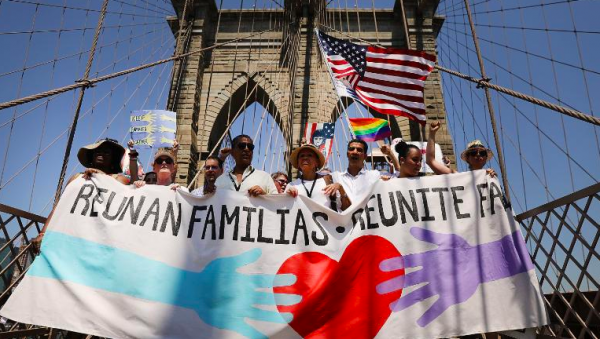
6 Facts We Learned Working with Migrants and Refugees Around the World - Facts 3 and 4 Working with migrants and refugees is our business at Catholic Relief Services. CRS was founded in 1943 to assist refugees during World War II. Seventy-five years later, we are still coming to the aid of people escaping conflict, violence and natural disasters. While CRS doesn’t resettle refugees in the United States (these programs are run by the Catholic Church’s Migration and Refugee Service and Catholic Charities), our rich history has taught us valuable lessons on how to best help families fleeing crisis. 3. Support the Family. The family unit provides the primary support for children during the traumatic refugee experience -- whether it is witnessing violence or crossing a desert on foot. CRS focuses on keeping families together. This means housing a family together and using any services provided – from trauma counseling to income generation – to boost family cohesion. Shannon Senefeld is a global development expert at CRS. She has published and presented extensively on international children’s issues and the importance of strengthened family care for children’s development. See her contact information at the bottom. 4. Kids Need School and Play. CRS is dedicated to keeping up children’s education, to provide stability and normality and give them hope for the future so they can be productive citizens wherever they end up. Kids need to be kids, too. Whether they are in a camp or any sort of migrant or refugee holding center they need a space to play. Caroline Brennan is the Emergency Communications Director for Catholic Relief Services. In her role, she travels to and/or works in areas facing natural or man-made emergencies. See her contact information at the bottom. The experts at Catholic Relief Services are available to help with any media coverage or insight that is required regarding this ongoing news story and issue that is continuing in America. Simply click on any of their icons to arrange a time for an interview. Source:
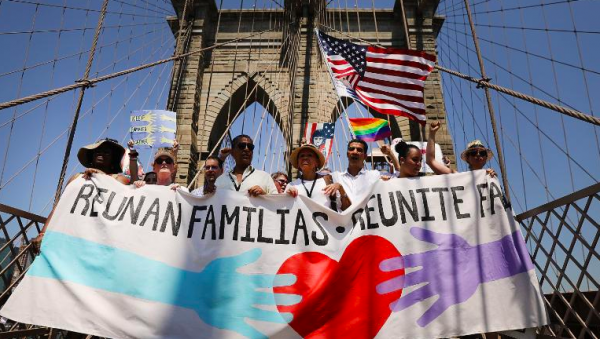
6 Facts We Learned Working with Migrants and Refugees Around the World: Facts 1 and 2 Working with migrants and refugees is our business at Catholic Relief Services. CRS was founded in 1943 to assist refugees during World War II. Seventy-five years later, we are still coming to the aid of people escaping conflict, violence and natural disasters. While CRS doesn’t resettle refugees in the United States (these programs are run by the Catholic Church’s Migration and Refugee Service and Catholic Charities), our rich history has taught us valuable lessons on how to best help families fleeing crisis. 1. People Do Not Want to Leave Their Homes. An astonishing 1 in 110 people have been forced to flee their home (UNHCR). They only do that when they feel they have no other choice. Most people the world over give the same reason for starting their perilous journey across borders -- violence. That’s true for millions fleeing conflict in South Sudan and for tens of thousands fleeing gang violence in Central America. Most often, people flee to other parts within their country first. Only when they see no other option do people leave their country. Rick Jones is the agency's Youth and Migration Advisor in Latin America and the Caribbean. He also specializes in issues affecting Central American migration, including gang violence, poverty, and internal displacement. See his contact information at the bottom. 2. Don’t Separate Families. Based on extensive experience with refugees and migrants, CRS agrees with the criticism of the former U.S. policy of separating children from their parents. Decades of research shows that this is so traumatic for children it can lead to long-term psychological, and even physical damage. Shannon Senefeld is a global development expert at CRS. She has published and presented extensively on international children’s issues and the importance of strengthened family care for children’s development. See her contact information at the bottom. The experts at Catholic Relief Services are available to help with any media coverage or insight that is required regarding this ongoing news story and issue that is continuing in America. Simply click on any of their icons to arrange a time for an interview. Source: