
Experts Matter. Find Yours.
Connect for media, speaking, professional opportunities & more.

Award jointly given to President and CEO Dr. Janice Nevin and Chief Digital and Information Officer Randy Gaboriault ChristianaCare has earned the Transformational Leadership Award for excelling in its development and deployment of transformational information technology that improves the delivery of care and streamlines administrative services. Presented by the College of Healthcare Information Management Executives (CHIME) and the American Hospital Association, the award is jointly bestowed to Janice Nevin, M.D., MPH, ChristianaCare’s president and CEO, and Randy Gaboriault, MS, MBA, ChristianaCare’s chief digital and information officer and senior vice president. “Their trailblazing commitment to rapid transformation has set an example for the entire industry in how to pursue a leadership vision with determination, brilliant planning and courage to overcome all challenges,” said CHIME President and CEO Russell P. Branzell. Under the leadership of Nevin and Gaboriault, ChristianaCare has created and deployed new organizational, digital capabilities for both patient and caregiver. Using voice-enabled technology, ChristianaCare HomeHealth patients can interact with an internally developed Alexa capability to guide them through their personalized daily therapy regimens. Similarly, ChristianaCare recently launched the ability for in-house postpartum patients to use an Amazon Echo device to ask questions, request help or communicate with their care team. Taking voice and digital capabilities further, in February 2022, ChristianaCare deployed an innovative tool called Moxi, a collaborative robot – or “cobot” – that can assist in the hospital by making deliveries and performing other non-clinical tasks so that nurses and other clinical caregivers can spend more time focused on what they do best: caring for patients. “Randy is a phenomenal leader, with a relentless focus on creating a culture of innovation for impact, solving for the most complex problems and delivering significantly improved outcomes,” Nevin said. “His work has made ChristianaCare a model for how transformative technology can help to create health so that every person can flourish.” ChristianaCare continues to be recognized for leading innovation in the health care industry. The organization was recently recognized by CHIME’s Most Wired program with Performance Excellence Awards in its acute and ambulatory categories. That level is reserved only for organizations that are considered leaders in health care technology who “actively push the industry forward” and are “realizing meaningful outcomes, including improved quality of care, improved patient experience, reduced costs and broader patient access to healthcare services.” “Under Dr. Nevin’s extraordinary leadership, we have made an intentional commitment to placing technology at the center of all our initiatives to enable our caregivers to best serve our patients,” Gaboriault said. “That commitment, reinforced by our organization’s core behavior to continuously look for new ways to innovate, means that we are able to introduce and leverage robotic nursing assistants in a way that drives meaningful value for both patients and providers. And because our caregivers embrace change, we are confident that we will be using our cobots to assume more tasks in the future, and enable our nurses to devote even more of their precious time to direct patient care.”



Aston University launches degree in nursing starting in 2023
Nursing Studies BSc (Hons) will specialise in nursing adults Students will spend 50% of their time in work placements in the West Midlands region The nursing programme is based in Aston Medical School Aston University has launched a degree in nursing with its first intake starting its three-year course in September 2023. Approved by the Nursing and Midwifery Council (NMC), the Nursing Studies BSc (Hons) will specialise in nursing adults with a focus on community nursing, with work placements offered in hospital and community settings to best reflect where the NHS most urgently needs nurses. According to NHS Digital there are around 47,000 UK vacancies, that is a vacancy rate of 11.8% and in the Midlands region, in the first quarter of 2022 there were 9,336 nursing vacancies – making the West Midlands a hot spot for vacancies. The University is now taking applications for its first cohort of up to 40 students who will be based in Aston Medical School. They will be due to graduate in 2026, eligible to register with the Nursing and Midwifery Council as a Registered Nurse (Adult). Professor Anthony Hilton, pro-vice-chancellor and executive dean of the College of Health and Life Sciences, said: “I am delighted we now offer Nursing Studies which comes at a time when we are seeing a national shortage of nurses in the NHS and more locally in Birmingham we are seeing a significant gap in nurses trained in adult and community care settings. Nursing will be co-located within Aston Medical School to provide opportunity for truly interprofessional learning with our medical, pharmacy and wider groups of healthcare students. “We are excited to work with our local NHS Trusts to offer clinical practice education, in combination with our new state of the art health simulation facilities. We look forward to launching in 2023 and developing high quality nursing graduates to support the NHS workforce of the future.” Students will spend 50% of their time on work placements at various local hospital trusts including Sandwell and West Birmingham (with its new hospital opening in 2024), The Royal Orthopaedic Hospital NHS Foundation Trust, University Hospitals Birmingham – this includes The Queen Elizabeth Hospital, Solihull Hospital, Birmingham Heartlands and Good Hope Hospital, as well as Birmingham Community Healthcare Trust. There will also be opportunities for placements within various nursing homes, hospices and GP practices. There are significant opportunities for interprofessional learning with other healthcare students - because the nursing cohort will study some taught sessions alongside students in Aston Medical School, Pharmacy, Optometry and Audiology. New state-of-the-art healthcare simulation facilities will be used to support practical and clinical skills training. The simulation suite includes two hospital wards, a residential flat, an immersive room and high-fidelity mannequins. Jayne Murphy, programme lead adult nursing, Aston University: “Nursing is dynamic and challenging and requires a huge skill-set from specialist clinical skills to essential skills of communication, problem-solving and professionalism.” “There is no better time to start a career in nursing. The opportunities post-qualifying are endless and our students will have the potential to make a significant difference to people’s lives when they are often at their most vulnerable.” “Our nursing students will work with some truly inspirational people who will support them to be the best nurse they can be. The small cohort sizes at Aston University mean they will have a personalised experience in a supportive environment to help our students flourish during their studies and in their first post as a registered nurse.” Dr Alexander Rhys, NMC Assistant Director of Professional Practice, said: “Congratulations to Aston University which has become one of the latest education institutions approved against our standards to deliver a pre-registration nursing programme. It's vital that nursing and midwifery students receive the high-quality education they need to join our register and deliver the safe, effective and kind of care that people have the right to expect. We look forward to supporting Aston University as it educates the nurses of the future”. We are now taking applications for BA (Hons) Nursing Studies (Registered Nurse Adult Nursing) starting in September 2023. To find out more about the course or how to apply, please visit the course pages on our website. Deadline for applications is 25 January 2023.


Birmingham MP officially opens £1.5 million healthcare simulation facilities at Aston University
Paulette Hamilton MP officially opens healthcare simulation facilities at Aston Medical School and School of Optometry State-of-the-art facilities including medical simulation room with high fidelity manikins for students to practise real life scenarios opens The first in Europe ocular simulation suite allows students to refine skills in examining the health of the eyes and experience a wide range of eye disease. New £1.5 million healthcare simulation facilities have officially opened at Aston Medical School and in the School of Optometry at Aston University. The state-of-the-art facilities were formally opened by Paulette Hamilton, member of parliament for Birmingham Erdington, on Friday 2 December at a ribbon cutting ceremony that was attended by Aston University Vice-Chancellor Professor Aleks Subic as well as other members of the University executive and staff from the College of Health and Life Sciences. Commenting on the new facilities Paulette Hamilton MP said: “It’s been brilliant to visit and officially open the new healthcare simulation facilities at Aston University. “I know from my time as a nurse how important it is to have access to good training and the latest equipment. These fantastic facilities will give students the best possible learning experience as they prepare to enter their profession, providing healthcare in Birmingham and beyond.” Hosted by Professor Anthony Hilton, Pro-Vice-Chancellor and Executive Dean of the College of Health and Life Sciences, guests were invited to take a tour of the new facilities including a clinical skills simulation room which allows students to practise in emergency settings and an ocular simulation unit facility, the only one in Europe. Professor Hilton said: "We are delighted these new facilities have opened in time for the start of the new term and that students can benefit from practising their clinical skills in a variety of scenarios. “The acute care simulation room will allow for simulated emergency resuscitation scenarios that are very difficult to teach in real life situations, such as heart attacks, acute breathlessness and severe allergic reaction and will be of great value in training students of medicine, pharmacy and optometry.” The healthcare simulation facilities will be used by students studying medicine, pharmacy and optometry, where they will be able to practise in emergency settings using high quality manikins where they will simulate treating patients for acute conditions such as a heart attack or learning how to intubate a patient onto a ventilator. Professor Aleks Subic, Vice-Chancellor, Aston University said: “The launch of the Aston University healthcare simulation facilities marks an important milestone in the development of our digital health precinct within the Birmingham Knowledge Quarter. By establishing world-class medical imaging, advanced visualisation, and digital diagnostics capabilities we are in fact bringing Industry 4.0 to healthcare. “Our students from the Aston Medical School and School of Optometry in particular, will benefit immensely from this development as they will be able to detect a wide range of clinical conditions and diseases and explore different interventions and scenarios, safely within a simulated environment.” The high-fidelity acute care simulation room will also be equipped with recording facilities, a debrief room and control room. The funding has allowed for the purchase of other training equipment such as a hospital grade bed and single task trainer simulation equipment. For example, male and female catheterisation models, pelvic and rectal trainers, venepuncture arms, breast trainers and abdominal trainers. The facilities were part funded by the Office for Students which awarded the University £806,226 to set up the ‘high fidelity’ simulation A&E room with further expenditure by Aston University on the ocular simulation unit. The ocular simulation facility is unique in Europe. It allows students to refine their skills in examining the health of the front and back of the eyes and to experience a wide range of eye disease. One of the simulators allows students to utilise their smartphones to practise at home. They can gain direct feedback and be assessed by the simulators, allowing more flexible, diverse and intensive learning than can be achieve with clinical practice placements. Professor Liz Moores, deputy dean of the College of Health and Life Sciences, said: “The College of Health and Life Sciences is thrilled with this investment. The enhanced facilities will help to support many of our healthcare students, including those now applying for our new nursing degree. It will also support us with the introduction of the new pharmacy and optometry education standards, providing a step change in our ability to simulate a wide range of clinical scenarios.” For more information about studying in the College of Health and Life Sciences please visit our website.

Students studying medicine, pharmacy, nursing, optometry and audiology to benefit from the investment in a new simulation facility over the next three years The Office for Students has granted Aston University £4.8 million to develop future healthcare professionals The investment in digital clinical equipment and health simulation facility will better prepare students for the future of work. Students in the College of Health and Life Sciences at Aston University are to benefit from a major £4.8 million investment in new facilities funded by the Office for Students to further expand and develop the University’s suite of state-of-the-art healthcare simulation and laboratory facilities. Students studying medicine, pharmacy, nursing, optometry and audiology will benefit from capital funding to support new equipment and facilities over the next three years. This latest funding follows on from an initial £1.5 million investment into healthcare simulation facilities on the University campus which were officially opened in December 2022 by Paulette Hamilton MP. The funds will be used to create and equip a simulated hospital ward facility and a simulated patient home environment for healthcare students. Nursing Studies is now recruiting for its first intake of students in September 2023. Pharmacy students will also gain a new wet lab and asepsis suite. The optometry simulation suite, unique in Europe, will be further enhanced with augmented reality simulation, allowing students to learn and refine their skills in a realistic instrument environment, with simulated patients with a wide range of eye conditions. Investment in other additional optometry equipment, including an additional optomap retinal screening device, will also allow the eye clinic to triage patients for the eye hospital, reducing patient waiting times, particularly in assessing conditions such as macular degeneration. Aston Medical School will be equipped with the creation of an immersive room and an anatomy and physiology teaching facility. Professor Liz Moores, Deputy Dean of the College of Health and Life Sciences, said: “The College of Health and Life Sciences is thrilled with this investment. The enhanced facilities will help to support many of our healthcare students, including those now applying for our new nursing degree. It will also support us with the introduction of the new pharmacy and optometry education standards, providing a step change in our ability to simulate a wide range of clinical scenarios.” Professor Aleks Subic, Vice-Chancellor at Aston University, said: “This strategic investment will ensure that our students are learning in the very best facilities with access to state-of-the-art digital technologies. The new facilities will enable us to prepare students fully for future careers that are strategically important to the healthcare sector and society. This is about bringing Industry 4.0 to healthcare.” Professor James Wolffsohn, Head of the School of Optometry and Audiology at Aston University, said: “With the huge hospital waiting lists, particularly post-COVID, with those in ophthalmology being the highest, it is essential that primary care can take more of the patient load to allow hospitals to focus on surgery and complex cases. This investment will allow us to better train our optometry and audiology students to be able to triage patients and to manage more conditions within community practice.” Jiteen Ahmed, Head of Technical Services in the College of Health and Life Sciences at Aston University, said: “It is fantastic to see such a large investment in our facilities to support many of our healthcare programmes. Technical staff at Aston University will be playing a key role in the design of the facilities, ensuring that we provide the most up to date and innovative technologies to meet the needs of the programmes. “I am very excited to see the involvement of technical staff as they will play a significant role in ensuring our students meet key learning outcomes in our facilities at the University.” For more information about studying in the College of Health and Life Sciences please visit our website.

Preterm Birth and Lifelong Health
November is Prematurity Awareness Month—a month that places a spotlight on the current state of maternal and infant health in the United States and globally. According to the nonprofit March of Dimes, one in 10 babies is born preterm each year in the U.S. But what does that mean, and why do we need to consider gestation period post-birth? We sat down with Michelle Kelly, PhD, CRNP, CNE, FAANP, associate professor of nursing at Villanova University's M. Louise Fitzpatrick College of Nursing, to discuss and explain the importance of preterm education for lifelong health. Q: To begin, what qualifies as preterm birth? Dr. Kelly: A full-term pregnancy lasts 40 weeks. Infants born before the completion of 37 weeks of gestation are preterm. And there are levels of prematurity: Extremely preterm: Infants born before the completion of 25 weeks of gestation. Very preterm: Infants born before the completion of 32 weeks of gestation. Moderately preterm: Infants born between 32-34 weeks of gestation. Late preterm: Infants born between 34-36 weeks of gestation. Q: Why do health practitioners need to be aware of gestation history? DK: Understanding the potential long-term physical and mental health implications is essential to mitigating the risks. Clinicians cannot change the reality that someone was born early. However, clinicians can utilize that information in treatment decisions. Instituting treatment or therapies early can help minimize the expression of that risk and improve future health. Q: What are the health risks for children born prematurely? DK: The earlier an infant is born, the greater the risk to their overall health and development. And while it is much better to be born at 35 weeks instead of 25 weeks, it does not mean that those born closer to term escape all risks. During infancy and childhood, a preterm birth can cause difficulty with breathing, feeding, gaining weight appropriately and achieving important developmental milestones. Research suggests that children and adolescents born at any level of prematurity are at risk for challenges in school, conditions that require physical or behavioral therapy as well as conditions typically associated with immature body systems, such as respiratory issues like asthma. Additionally, long-term follow-up studies indicate that risk continues into adolescence and adulthood. Q: What are some long-term issues that stem from being born preterm? DK: Adolescents and adults born preterm continue to be at risk for reduced lung function, wheezing and asthma. Research findings suggest that there are also cardiovascular risks, particularly an increased incidence of hypertension (high blood pressure). Additionally, an increased incidence of mental health conditions, specifically anxiety and depression, are associated with preterm birth. All these increased risks are modifiable with early recognition and treatment. Q: What recent research has been conducted and what strides have been made to improve the lives of those born preterm? Is the prognosis for those born preterm positive? DK: Today's NICU environment is vastly different from the NICU of the past. Premature babies born in the last 20 years have survival rates that exceed 95 percent for all but the earliest of gestational ages. Increased attention to developmentally supportive care, breastfeeding, kangaroo care and the recognized importance of family presence in the NICU is now the standard of care. Research and advocacy aimed at supporting families touched by prematurity and raising awareness of healthcare providers and K-12 educators are gaining international attention. While being born preterm presents lifelong risks, identifying and communicating one's status with health practitioners early and often allows for effective treatment and positive outcomes.


Assessing and Treating Heat-Related Illness in Children
Dangerously high global temperatures require an abundance of caution and preparation, especially when it comes to protecting the littlest members of society. Villanova University associate professor of nursing Michelle Kelly, PhD, CRNP, CNE, is an expert in pediatric healthcare, and she recently shared some tips for preventing and treating heat-related illness in children. Q: First, what is heat exhaustion? Dr. Kelly: Heat exhaustion is a slowly progressing condition that begins as one is exposed to increased temperatures for extended periods of time without the proper precautions. Ultimately, heat exhaustion can become heatstroke, which always requires immediate intervention. Q: What are the signs of heat exhaustion? DK: Signs of heat exhaustion include increased thirst, nausea, vomiting, irritability, headache, increased sweating, fainting, weakness, extreme tiredness and muscle cramps. The child will have cool and clammy feeling skin, with an elevated body temperature, but it will be below 105 degrees Fahrenheit (40.5 degrees Celsius). Q: When does heat exhaustion become heatstroke? DK: With heatstroke, the above symptoms progress to severe headache, weakness, dizziness, confusion, fast breathing and increased heart rate. The child will feel flushed—hot, with dry skin, little to no sweating—and may pass out or have a seizure, due to the body temperature exceeding 105 degrees Fahrenheit. This child needs immediate intervention aimed at decreasing the child’s body temperature. Q: What should caregivers do when a child experiences heat-related illness? DK: Interventions that a family can begin while getting the child emergency treatment include getting the child to lie down with feet elevated indoors or in shade. Remove excess clothing. Apply lukewarm water to the skin either with a wet cloth or spray bottle. If the child is awake, give sips of cool clear fluids. If the child is vomiting, keep the child on their side to prevent choking. Emergency treatment will include continuing to decrease the child’s body temperature, giving fluids (by mouth or with intravenous fluids), and monitoring for seizures. Q: Any tips for prevention? DK: Plan ahead if you and your children will be outside during this extreme heat. Wear light colors and plan for some sort of shade if possible. Try to arrange outdoor activities to take place in the early morning or evening, not during the heat of the day. Or better yet, spend time in a pool or indoors in air conditioning. If your child will be participating in sports during a heatwave, start hydrating 24 hours before to prevent the risk of dehydration. This means making sure they have had adequate fluids before competing, during the competition and afterward to recover. Water is the best liquid, but an alternative would be low-sugar-containing electrolyte solutions designed for children (such as Pedialyte). Stay safe!

Looking for a 'real' expert to explain the latest advances in virtual reality? We're here to help!
Virtual reality is quickly becoming an actual necessity in all facets of technology, education, entertainment and the workplace. It's a popular topic, and Augusta University's Lynsey Steinberg sat down to answer a few questions about how far VR has come and where it's going. VR is changing everyday life for many. What are the biggest advances you've seen in VR use? Virtual reality is rapidly evolving and expanding. It wasn’t too long ago we were excited for the idea of a wireless head set. Now there are companies such as Virtuix creating 360-degree treadmills to interact with your experience in VR and Hypnos VR (a product which releases scents in the air based on the experience in VR). There have been advances of adaptive and stress response simulations based on pupillometry measurements or even integration of physiological sensors for behavioral research. The biggest advancements are solutions that have been unimaginable before that are now entirely possible. It seems the medical field has been a big benefactor of VR. Is this giving students a better way to "learn" about anatomy and other aspects of the field? I believe all experience is valuable to learning. VR is unique in allowing an individual to view as if from their own perspective for virtual experiential learning. We often hear the phrase, “If you could imagine walking a mile in someone else’s shoes,” and now we can provide perspective, allowing another person to view the world as someone with a particular disease or simulate training in a low-risk environment. One example, Fire in the OR, is a VR simulation allowing medical professionals to train safely on how to remove fire danger in the operating room. I believe simulations like these are remarkable examples of how valuable VR can be in education, to remove elements of danger in everyday life. Their research showed 250% improvement rate on fire safety in the OR. A huge industry leader in surgical simulations is Osso VR, creating surgical training procedures for surgeons and hiring some of our Augusta University medical illustration graduates. How is this being applied at Augusta University? The Center for Instructional Innovation created modules with the Medical College of Georgia on handwashing hygiene health and end-of-life care scenarios with the College of Nursing. We encourage faculty to develop multiple methods of interactive modules for the benefit of all learning styles. VR certainly provides engaging and enriching materials for a low-risk environment in instruction. The Center for Instructional Innovation is currently working with the Academic Student Success Center to implement Oculus Quest head sets for anatomy and physiology students to benefit from application use in VR. Augusta University student Henry Oh and his 3D printed pottery from VR sculpture. How else has VR and its use changed the way we go about our daily lives? VR head sets are known in robotics, manufacturing, therapeutic modalities, gaming capabilities, technology in research and education. Any scene you can film in 360 degrees you can now watch in a headset and be fully immersed in the scene (ie: a theater production, a museum tour, an art exhibit, a temple historically preserved, etc). We have gone from telling a story to being immersed in a story. We have been able to utilize VR technology integration and innovation on campus to create enriching learning experiences. We collaborated with our Ceramics department (with Brian McGrath and Raoul Pachecho) to support students in virtual clay sculpting with Adobe Medium. Students 3D printed their works of art after exporting the files from the VR simulation. Where do you see the future of VR? The future developments for integrating systems for haptic feedback will be remarkable integrations. The continued development of behavioral research and integration of gamification is an exciting opportunity in VR as well as the continued development for protocols and appropriate safety procedures. The cross-platform and cross-disciplinary possibilities will allow for creativity to blossom in new world solutions. It is clear, the ongoing need for technical workforce required to create and support more VR and other high-impact technology is rapidly growing. VR is a fascinating topic and if you're a journalist looking to know more by speaking with Steinberg, then let us help. Steinberg is one of the 300 board-certified medical illustrators with experience in hands-on surgery in the operating room, utilizing development in virtual reality, 3D printing, animation, gamification and graphic design while working directly with students, faculty and physicians. Steinberg is available to speak with media -- simply click on her icon now to arrange an interview today.


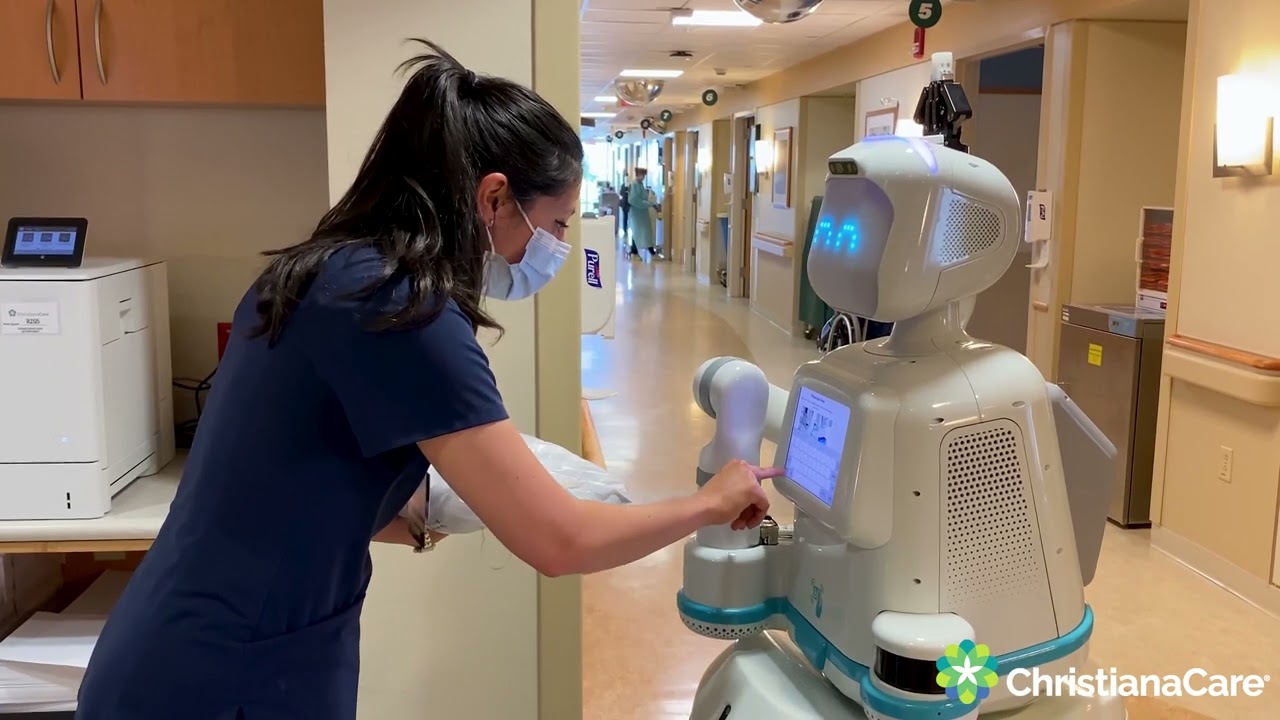
ChristianaCare is the first health system in the Philadelphia region piloting an innovative tool called Moxi, a collaborative robot — or “cobot”— that can assist in the hospital by making deliveries and performing other non-clinical tasks so that nurses and other clinical staff can spend more time focused on what they do best—caring for patients. With a landmark $1.5 million grant from the American Nurses Foundation, ChristianaCare will deploy a total of five Moxi cobots at Christiana Hospital. It is the largest single grant in the history of Nursing at ChristianaCare. Research published in the Journal of Nursing Management shows that nurses spend a significant amount of time — up to 33% of their shifts — on time-consuming but simple tasks such as dropping off lab specimens, collecting supplies or picking up medications from the pharmacy. By taking over these time-consuming but simple tasks, Moxi enables nurses to focus on patient care, where their skills are most needed. “Nurses need the time and space to deliver care and patient education at the top of their license,” said Ric Cuming, Ed.D., MSN, RN, NEA-BC, FAAN, chief nurse executive and president, ChristianaCare HomeHealth. “Moxi will be doing those hunting and gathering tasks such as getting equipment and supplies, which nurses are doing today but don’t need to be doing.” Cobots are designed to share workspace and interact directly with people. In ChristianaCare’s initiative, the Moxi cobots will be integrated with the Cerner Corporation electronic health record (EHR) platform and use artificial intelligence to proactively identify when nurses will need equipment, supplies, medications and lab tests. The Moxi cobots will be deployed to 11 inpatient units, partnering with more than 400 nurses. The American Nurses Foundation grant will enable ChristianaCare to evaluate the impact of cobots on nursing practice with the goal of scaling the technology if successful. “Moxi is not a replacement for a nurse or nursing position — or any position,” Cuming said. “It is an additional resource for nurses and their teams. “With robotic technology, we are using resources wisely and effectively, creating more efficient workflows, reducing repetitive tasks and freeing up nurses’ time for the complex clinical work that they excel at doing.” Reimagining Nursing ChristianaCare is one of 10 grant recipients from the American Nurses Foundation Reimagining Nursing (RN) Initiative. “We are proud that the American Nurses Foundation has the confidence in bold nurse-led ideas that will lead to large-scale, replicable change,” said Katherine Collard, MS, RN-BC, chief nursing informatics officer at ChristianaCare. “This grant will support nurses at ChristianaCare and our nursing colleagues across the nation in realizing their full potential, giving them the tools, resources and power to improve health care now and in the future.” With the American Nurses Foundation grant, ChristianaCare will conduct research on driving nursing outcomes through robotics. “We have a transformative opportunity to generate new knowledge and to move the science forward around robotics in nursing and in health care,” said Susan Birkhoff, Ph.D., RN, nurse scientist at ChristianaCare. “Through research, we will study Moxi’s impact to nursing caregivers that will have broad implications for nursing practice, workforce and education,” she said. ChristianaCare began exploring the potential of robotics to support Nursing with two Moxi cobots acquired in February, funded through the generosity of donors including Good Samaritan, Inc. and E.J. “Woody” Rice. With the grant, said Birkhoff, ChristianaCare will take Moxi to the next “bold frontier,” adding three more cobots with the goal of automating and optimizing nurses’ workflow without interrupting care. With five total cobots, ChristianaCare will be home to the largest number of Moxi robots in health care. The Little Bot That Can Before Moxi can become fully part of the care team, it must learn to navigate the hospital and respond to the nurses’ needs. Using artificial intelligence, Moxi is mapping out Christiana Hospital through sensors and other machine-learning technology so that the cobots can ultimately navigate and work autonomously. “When the Moxi cobots are fully integrated, we anticipate that they will complete up to 200 delivery tasks a day,” Collard said. “By making point-to-point deliveries, Moxi can save nurses hours of time and thousands of steps.” Designed to be compatible with the busy environments of hospitals, Moxi’s features include: Social intelligence: Moxi won’t bump into people or objects in hallways, waves when it sees someone new and happily poses for selfies. Mobile manipulation: Moxi can learn to use its robotic arm to operate existing automatic doors and elevator panels. Human-guided learning: The more Moxi is used, the more Moxi learns and adapts to the environment and specific ways of doing things. Friendly and safe design: With heart-shaped eyes and a friendly appearance, Moxi is designed to navigate safely and get the job done so nurses can focus on patient care. “What Moxi is doing in health systems like ChristianaCare is really transforming the way we think about health care and allowing staff to focus on the people in the hospital as opposed to the tasks,” said Dr. Andrea Thomaz, CEO and co-founder of Diligent Robotics, which created Moxi. “Robots are not something way in the future. Our robots work side-by-side with humans to ease the stress and workload of one of the most demanding jobs in society, nursing. The partnership between Diligent and ChristianaCare shows that the future is now.” Hospital Helper Directly from the Cerner EHR, Moxi will be able to anticipate clinician and patient needs and perform tasks without human involvement. Examples could include: Delivering items to patients based on nurses’ order requests. Making rounds across units to deliver lab samples on collections completed in the electronic health record. Making just-in-time deliveries of pharmaceuticals not stocked on the floor. Prioritizing tasks based on the nursing workload in a unit, so that the busiest nurses will get help first. “Connecting Moxi to the existing technology that clinicians use on a daily basis is key to making it easier to anticipate needs so clinicians can spend more time on patient care,” says Eva Karp, DHA, MBA, RN-BC, senior vice president, chief clinical and patient safety, Cerner. “Moxi could make a real difference in a nurse’s day — alleviating burnout and staffing shortages, which have become especially prevalent since the pandemic.” Incorporating the electronic health record into Moxi is part of the study funded by the American Nurses Foundation. “It’s absolutely in the best interest of our patients that Moxi can work alongside nurses so we can spend more time working directly with our patients to do what we do best,” said Pam Owen, MSN, RN-BC, nurse manager on 7E, one of the pilot units. “And Moxi brings a smile to people’s faces.” Fast Facts About Moxi Works in 22-hour shifts. Needs only two hours of charging time. Weighs about 300 pounds. Can carry a total weight of 70 pounds. Gender-neutral. Pronouns are “it” for a single Moxi cobot and “they” for more than one. Named one of America’s Greatest Disruptors in 2021 by Newsweek and one of the Best Inventions of 2019 by Time Magazine. About ChristianaCare Headquartered in Wilmington, Delaware, ChristianaCare is one of the country’s most dynamic health care organizations, centered on improving health outcomes, making high-quality care more accessible and lowering health care costs. ChristianaCare includes an extensive network of primary care and outpatient services, home health care, urgent care centers, three hospitals (1,299 beds), a freestanding emergency department, a Level I trauma center and a Level III neonatal intensive care unit, a comprehensive stroke center and regional centers of excellence in heart and vascular care, cancer care and women’s health. It also includes the pioneering Gene Editing Institute. ChristianaCare is nationally recognized as a great place to work, rated by Forbes as the 2nd best health system for diversity and inclusion, and the 29th best health system to work for in the United States, and by IDG Computerworld as one of the nation’s Best Places to Work in IT. ChristianaCare is rated by Healthgrades as one of America’s 50 Best Hospitals and continually ranked among the nation’s best by U.S. News & World Report, Newsweek and other national quality ratings. ChristianaCare is a nonprofit teaching health system with more than 260 residents and fellows. With its groundbreaking Center for Virtual Health and a focus on population health and value-based care, ChristianaCare is shaping the future of health care.


IMPROVING PATIENT CARE, ONE COMMUNITY AT THE TIME
The Deep River and District Hospital shared updates in the November 2021 Newsletter The Zinger. RealTime Medical’s platform now supports their radiology department. “On Tuesday, November 9, 2021, the organization transitioned our Diagnostic Imaging Radiology services to a third-party service provider, RealTime Medical (RTM) to support our X-ray and Ultrasound reading. Thank you to everyone who helped make the transition go smoothly. The turnaround time for reports has significantly improved from previous services. At times, patients are still in the Emergency Department when reports are received, which is a significant improvement and benefit to patient care! RTM provides 24-hours a day/ 7 days a week remote Radiology coverage, and a Radiologist is available 24/7. Posters with contact information for RTM have been posted on the Medical and Emergency Department nursing stations, as well as in the Physician room on medical.” Link to the original source.


What the CDC's Updated Developmental Guidelines Mean for Parents
The Centers for Disease Control and Prevention (CDC) recently revamped their developmental guidelines for children for the first time in years, allowing parents to know earlier if their kids may be experiencing any delays. Villanova University nursing professor Michelle Kelly, PhD, CRNP, CNE, recently commented on the new guidelines: "The CDC and American Academy of Pediatrics (AAP), in response to birth provider and parent input, took a critical look at existing developmental milestones tools and handouts. Surveillance and handouts are typically parent facing items that can be used to determine if a child is meeting age-expected developmental targets." "That is in contrast to screening which is more structured, based on the surveillance but done by a primary care provider and used for referral for services, and evaluation which is done by a developmental specialist with the intent to diagnosis." "The CDC and AAP have done a thorough overhaul of developmental milestone surveillance (as opposed to screening and evaluation) to attempt to make the milestones 'evidence-based' and where possible norm-referenced." "Another major change is that the milestones are set for greater than 75%, rather than 50%. This means they are targets that 75% of children that age would have met. This eliminates phrases in the previous milestones that were confusing, such as a child 'may begin' a task at one age, but also should be doing it at the next age." "Perhaps the biggest win for children born preterm and others at risk for developmental delays is the 75% expectation virtually eliminates the 'wait and see' that occurred when the expectation was that 50% of children would exhibit a skill at that age. This means that families who have concerns, or whose children are not meeting the age-appropriate milestones, should be more readily referred for evaluation and intervention." "Additionally, an increased emphasis is placed, compared to the previous version, on open-ended questions to elicit parent concerns and ways for families to promote age-appropriate development."