
Experts Matter. Find Yours.
Connect for media, speaking, professional opportunities & more.

Epidemiologist: Winter Olympics fortunate to dodge norovirus outbreak
Finland's Olympic women's hockey team overcame a norovirus scare last week, but they couldn't get past Team USA, who shut them out 5-0 Saturday in Milan. The University of Delaware's Jennifer Horney can discuss the difficult-to-contain virus, which also hit the Winter Games in 2018. - Horney, a professor of epidemiology at UD, said that the outbreak – which forced Finland to cancel its first game after 13 players had either been infected or quarantined – is not surprising. Norovirus spreads rapidly in crowded environments through direct contact with surfaces or airborne droplets. - It is difficult to limit the spread of norovirus, as witnessed by the major outbreak that spread at the 2018 Winter Olympics in South Korea. - Consideration is often given for the potential of these types of outbreaks being intentional, which requires public health to work closely with law enforcement. To reach Horney directly and arrange an interview, visit her profile and click on the "contact" button. Interested journalists can also send an email to MediaRelations@udel.edu.



How ACL injury derailed Lindsey Vonn's heroic return to Olympic competition
An ACL rupture couldn't keep skiier Lindsey Vonn off the slopes to start this week's Olympics. But according to the University of Delaware's Dr. Karin Silbernagel, the injury likely contributed to her inability to land safely Sunday on the downhill course in Cortina d’Ampezzo, Italy. The crash ended her heroic return to competition Dr. Silbernagel, a professor of physical therapy, studies tendon injuries in the ankle and knee in elite athletes, especially Achilles ruptures and ankle function. She was quoted in an ESPN story about the rash of such injuries in the NBA and can specifically address the impact they could have on competition now and for the rest of an athlete's career. Her research shows that even after successful surgery, many athletes return to competition but not many among them return to peak explosiveness or durability. The impact a major injury would have on a fresh injury like Vonn's is obvious, she said. Dr. Silbernagel's research on ankle and knee injuries dates back to the early 2000s. She consults with professional sports teams relating to tendon injuries and is a consultant to the NFL's Musculoskeletal Committee. To connect directly with Dr. Silbernagel and arrange an interview, visit her profile and click the "contact" button. Interested members of the media can also send an email to MediaRelatons@udel.edu.


Training champions: University of Delaware experts prepares students Olympic success
University of Delaware students, alumni and experts are very involved with this year's Olympics. The following are available for interview. Alumni Attending Olympic Games Shannon Colleton is a 2022 graduate of UD's Physical Therapy Sports Residency Program heading to the Winter Olympics with the U.S. Ski and Snowboard Team. She's specifically working as a PT for the women's speed skiing team (Super G and the downhill competitions). Students Covering Olympics Cris Granada, a senior communication major and member of UD's soccer team, has parlayed a summer internship with NBC Sports into a position as a production assistant with the network at the Winter Olympics. Professors with Olympic Expertise Matthew Robinson, professor of sport management in Lerner, is an all-around Olympics expert. He can talk about the host city, Milan, and the IOC's evolving model of hosting games in multiple locations. He can also talk about the idea of sport as a unifier despite what's going on in the world around us. Robinson can also talk about the burden the NHL faces, having to pause its season so players can compete on the world stage. While it's an honor to have an athlete represent their country on the world stage, it's also a risk to the professional team if they get hurt. The NBA feels similarly about the Summer Games. Soccer also pauses for the World Cup. Jeffrey Schneider, clinical instructor of kinesiology and applied physiology, has worked with Olympic figure skaters in the past and can speak as an expert on this sport. Thomas Buckley, professor of kinesiology and applied physiology, is an expert in ice hockey and bobsledding. He can talk about common injuries, risks/benefits. He noted that bobsledding has a surprisingly high rate of concussion and repetitive head trauma due to the speed of the sport. To contact Robinson and Buckley directly, visit their profile pages and click the "contact" button. Interviews for all the experts featured here can also be arranged by contacting mediarelations@udel.edu.

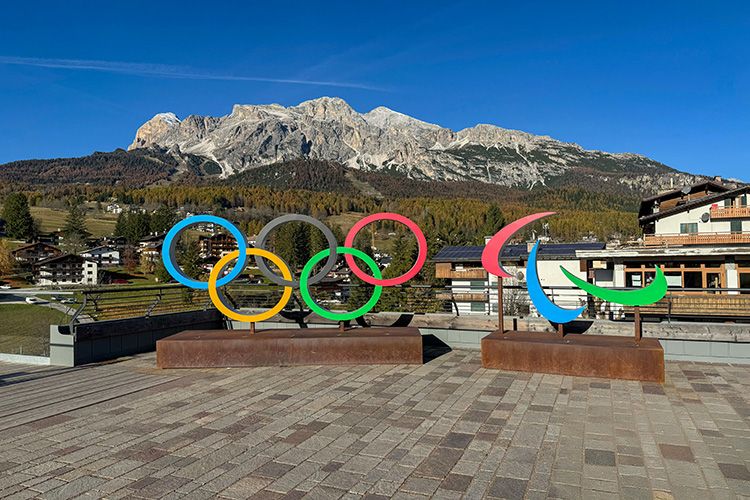
Long proclaimed Italy’s “moral capital,” Milan is renowned worldwide for its significant contributions to fashion, design and the arts. Soon, another point of pride will be added to the city’s storied history, when the regional hub—and partnering town Cortina d’Ampezzo—plays host to the 2026 Winter Olympics in February. Luca Cottini, PhD, is a professor of Italian Studies and an expert on the evolution of Italian culture, particularly through the 19th and 20th centuries. Recently, he shared some thoughts concerning Milan and Cortina’s successful joint bid for the Olympics, the themes and iconography expected to define this year’s opening ceremony and the symbolic significance of Italy’s selection as a host nation. Question: What was the role of past major events in Milan and Cortina—like the 2015 World’s Fair and the 1956 Winter Olympics—in helping to elevate their appeal for these games? Luca Cottini: I’ll start by saying that although people notice world’s fairs less than the Olympics, they are more impactful to a city and country because they generate more revenue, business, political relationships and positive reputation. They are events in which all the world comes together and each country exposes its excellence, while the host nation brings a visibility that it would not carry otherwise. In 2015, Milan hosted the world’s fair, which generated a completely new fairgrounds area and a visibility of politics, industry, technology and modernity in a way that brings the city to a global stage. I would say that is when the ascent of Milan really started, especially as a desirable destination. With Cortina, after the 2015 World’s Fair—and especially after the COVID-19 pandemic—the Dolomites became really a popular region for travelers to visit. Cortina is also symbolic to Olympic history, because it's the site of the first Olympics that took place in Italy, in 1956 during the reconstruction era. That was the Dolce Vita period, in the middle of the 1950s economic boom, and those games were followed by Rome’s Summer Olympics in 1960. They both represented a way in which Italy, coming out of the war destroyed, was reaffirming its rebirth. Over the years, fewer cities have wanted to host the Olympics because they tend to carry a lot of economic burden, financial debt and little return on investment. In this sense, Milan and Cortina, helped by increased popularity after the world’s fair, sold themselves as a sustainable Olympics. Ninety percent of the buildings were refurbished from older buildings, and they will serve purposes after the Olympics. It’s difficult to tell whether it’s economically sound or not, but it is a way to promote two cities that are in big moments of growth. Q: These Olympic Games will be celebrating Milan’s contributions to fashion. What is the city’s significance to the fashion world? LC: Milan is certainly the capital of fashion in Italy, and is one of the capitals of fashion in the world, along with Paris, New York and London. The fashion heritage that the city carries now in iconic brands like Armani, Versace, Moschino and Dolce & Gabbana is the outcome of a process that took shape in the late 1970s. Until then, fashion in Italy was mainly related to Rome, through cinema, and Florence, as that city represented a new Renaissance in the postwar years. But in the 1970s, much of this fashion world moved from those cities to Milan, because there was a conglomeration of labor, skills, capital and creativity that generated a complex productive and cultural system, or the so-called “Sistema Moda.” This is a particular approach to the industry in Italy that coordinates management and creativity around the figures of a big creative director and a big manager who work together in creating not just nice styles, but also sustainable outlets and markets in and outside Italy. In turn, with its reputation, Milan gives the Olympics that seal of grandeur and coolness. The connection with fashion and promotion of uniqueness is part of the national rhetoric that surrounds what we call “Made in Italy,” this idea of luxury, styling, beauty, order and measure that is endowed in the Italian DNA. Q: Andrea Bocelli—who also appeared in Torino’s 2006 closing ceremony—is supposed to sing once again in this year’s opening ceremony. Aside from his popularity, what is the symbolic significance of his selection as a performer? LC: Bocelli is an interesting case. He is a prototypical Italian success story, which is born in the peninsula but is then ratified outside of Italy. As Bocelli became a global sensation in the U.S., he then came back to his roots in Italy, where his voice has become a symbol of national unity, as epitomized in his solo concerto of Milan, during the pandemic, when he sang in front of the empty Piazza del Duomo, facing the city’s cathedral. In his Catholic faith and secular operatic repertoire, he symbolizes Italian culture as a similar piazza or open space where different voices can converge in a temperate balance. When you put together Bocelli, Mariah Carey and whoever else will be part of the ceremony, that same Italian identity will give rise to a new synthesis, as the encounter of tradition and novelty, grounded-ness and openness. Q: The Olympic flames are supposed to be lit in two cauldrons—one in Milan and one in Cortina—each with a design inspired by Leonardo da Vinci. What was da Vinci’s importance to Milan, specifically? LC: Da Vinci is part of the fabric of Milan. He spent 20 years in the city, painting “The Last Supper” and working at Castello Sforzesco, as well as many other places. His footprint is all over Milan, in its design, walls, canal system and more. He is an archetype of the Italian mind in as much as it represents the combination of engineering and beauty. The word Ingenium in Latin, meaning “genius,” overflows in English into the word “engineering” and also “ingenuity,” which reflects the creative mind. Da Vinci represents the synthesis of Italian Ingenium as a combination of aesthetics and problem solving, which you still see in the city today.


Success stories: How Team USA racked up so many medals
Team USA took home 120 medals from the 2024 Paris Olympics – the highest total of any nation. This didn’t come as a big surprise to Matt Robinson, professor of sport management at the University of Delaware. Robinson says the U.S. is an example of a trend in Olympic success: Nations perform better when they are hosting the next Olympics. "With the 2028 L.A. Olympics on the horizon, Team USA performed as expected for a nation that is next in line for hosting the games," he said. Robinson, who was in Paris to watch the Summer Games, has researched and published text about the Olympics and can give the backstory on The International Coaching Enrichment Certificate Program (ICECP). Robinson is the author of a number of highly successful sport management texts: Profiles of Sport Industry Professionals: The People Who Make the Games Happen and Sport Club Management and has authored over 25 articles and has made over 100 national and international scholarly and professional presentations. He can be contacted by clicking his profile.

Olympics 2024: Expert details the danger of headings in soccer
One of the most popular Olympic sports is soccer, and one of its most exciting plays – headers – is more commonly deployed by international teams. Given the risk of concussions during that play, experts like the University of Delaware's Thomas Kaminski will be watching the event closely during the 2024 Summer Games. Kaminski, professor of kinesiology and applied physiology in UD's College of Health Sciences, is a leading expert on concussions in soccer and serves as the sole U.S. representative on the FIFA Heading Expert Group. “FIFA is concerned about the disparity in concussions between men and women,” Kaminski said. “Women are at a higher risk of concussion due to a variety of reasons, including neck strength and overall body strength.” Concussions often occur during aerial challenges. “When players compete for the ball at the same time, they need to use their body to protect their head space, taking the strain off the head,” Kaminski said. Expect the ball to be in the air quite a bit in Olympic competition. “Many international teams tend to play the ball in the air more, but the USA will be ready for that. They know what to do,” Kaminski said. What to keep an eye out for: “Anytime a ball is scored from a header, it’s a picture of beauty in the game,” Kaminski said.


Sport and Study: Villanova University Faculty Offer Academic Lens to Paris Olympics Storylines
All eyes are on Paris: more than 10,000 athletes from 206 nations are set to compete in the Games of the XXXIII Olympiad, the third Olympics in the City of Love and the first since 1924. Below, Villanova University faculty members provide their academic expertise on the unique storylines and narratives already taking place as Paris 2024 gets underway. Portraying a National Image in the Opening Ceremony Étienne Achille, PhD Director of French and Francophone Studies After months of speculation, the daily Le Parisien has officially confirmed that renowned French-Malian singer Aya Nakamura will lend her vocals to an opening ceremony featuring an iconic backdrop steeped in history. “Nakamura is the most-streamed Francophone singer in the world, embodying France’s culture on a global stage, and she’ll be paying homage to one of the most cherished representatives of the chanson française,” said Dr. Achille, referring to reports she will sing one of beloved French crooner Charles Aznavour’s greatest hits. According to Dr. Achille, the pop star’s presence is significant and symbolic. “A performer, or even a flagbearer, can easily become the face of a global event like the Olympics,” he said. The details of the setting for the ceremony – in the heart of Paris, along the Seine – are just as intentionally symbolic. “Not only will this be the first opening ceremony to take place entirely outside of a stadium; its location along the river and the fact the delegations will be on boats are key. “It represents movement and connection to the world,” Dr. Achille said. “And Nakamura’s performance projects the image of a modern, multi-ethnic nation building on tradition while proudly marching into the future.” Swimming in the Seine: Safe or Not? Metin Duran, PhD Professor of Civil and Environmental Engineering It is, perhaps, the most-asked question of the last few weeks. Is the Seine River, set to host multiple swimming events, safe? The river has been illegal to swim in for a century due to the presence of harmful bacteria such as E. Coli, and recent testing has reaffirmed this concern. The Seine, which had undergone an expensive cleaning to mitigate this issue, received the endorsement of Paris Mayor Ann Hidalgo, who personally took a dip in the water herself to attest to its safety. The stunt did little to convince experts such as Dr. Duran, who studies wastewater, to abandon concern about the potential health risks of athletes being exposed to pathogens in the water. “When we have fecal pollution, there is a high likelihood of pathogens being present,” Dr. Duran said. “Those could be viral, like a norovirus, or protozoan. “If you’re swimming in that water, you run the risk of ingesting it. Once you ingest that polluted water, you’re likely to contract some of those disease-causing pathogens. Ingesting this water doesn’t mean you’re necessarily going to get sick, but based on the number of people in a big city like Paris, there is a very high likelihood of some of these pathogens existing now in the river.” Accommodations for Breastfeeding Athletes Sunny Hallowell, PhD, APRN, PPCNP-BC Associate Professor of Nursing The IOC and Paris 2024 Organizing Committee is providing support to all breastfeeding athletes competing in the Games. A few national governing bodies, like the French Olympic Committee, are going a step further and offering hotel rooms near the Village for their country’s breastfeeding athletes to share with their children and spouses. “A few decades ago, the idea of a female athlete who also wanted to breastfeed their child was so taboo it may have prevented an athlete from competing,” said Dr. Hallowell. “Now, many female athletes who choose to breastfeed their newborns or toddlers conceptualize breastfeeding as another normal function of their remarkably athletic bodies.” Accommodation for breastfeeding athletes and increased awareness are needed more than ever. Dr. Hallowell notes that in addition to changing views on breastfeeding, the needs for such accommodations are increasing as the age of peak athletic performance also increases. “Advances in sports nutrition, wellness and lifestyle have extended the longevity and performance of many athletes into adulthood,” she said. And while some athletes with rigorous training regimens might feel “frustrated incorporating breastfeeding into the routine,” Dr. Hallowell says that for others, “breastfeeding provides both physical and socio-emotional benefits for the mother and the infant that allow the athlete to focus on the job of competition.” Protecting Against the Parisian Heat Ruth McDermott-Levy, PhD, MPH, RN, FAAN Professor of Nursing The potential for extreme heat in Paris has been a topic of concern for athletes and organizers, prompting certain outdoor events to be proactively scheduled at times to avoid the day’s worst heat. Current forecasts predict temperatures in the 90s for several days early on in the Games, which could be exacerbated by Paris’ reputation as an urban heat island, unable to cool due to lack of green space and building density. Dr. McDermott-Levy says the athletes are inherently vulnerable, because “the added stress of physical exertion during their events puts them at greater risk of heat-related illness.” But she also notes that many of the athletes have likely undergone pre-competition training in extreme heat conditions to acclimate and will have trainers and health professionals monitoring them frequently. “The group of concern are the workers at the stadiums, outdoor workers and spectators who are there to enjoy or work at the events and may have had little to no acclimation,” Dr. McDermott-Levy said. “They need to follow local instructions and take frequent breaks from the heat, seek shade and maintain hydration by avoiding alcohol and sugary drinks and drinking water.” How Nature Can Inspire Future Use of Olympic Infrastructure Alyssa Stark, PhD Assistant Professor of Biology Gone, hopefully, are the days of abandoned Olympic Villages and venues, overrun with weeds and rendered useless soon after the Games conclude. The IOC’s commitment to sustainability has been transparently relayed ahead of the 2024 Games, featuring a robust range of initiatives and programs. Dr. Stark is particularly interested in one aspect of ensuring a sustainable Olympics. “How will the structures, materials and systems they developed for the Olympics be re-used, re-shaped or re-worked afterward?” she posed. “This could include re-using buildings to larger scale or re-working transportation systems set in place for the Games that could then integrate into day-to-day life post Olympics.” At the root of her interest is the concept of biomimicry. “A lot of the way we think about designing, if we’re using this biomimicry lens, is how do we learn from nature to solve problems that we have in a sustainable way, keeping in mind the environment we are in?” Dr. Stark said. In this case, consider how something like a dwelling of a living creature might be repurposed to fit the needs of another creature, or serve another natural purpose, without harming the ecosystem. Could that inspire a way to re-use the Olympic infrastructure? “There are a ton of examples of [biomimicry] being used and working in products,” Dr. Stark said. “But I would say the next step is looking at the social levels of these big ecosystems – building architecture, city planning, flow of information and, in this instance, repurposing what was created for the Olympics.” Paris Could Be a Transportation Model for Major City Events in the United States Arash Tavakoli, PhD Professor of Civil and Environmental Engineering Paris has invested 250 million Euro the last several years to transform the city to a 100% cycling city, making it one of the most bike-friendly municipalities in the world. Currently, more trips are being made by bicycles in Paris than by cars (11% vs. 4%), a trend that has permeated to the surrounding suburbs as well. With an influx of travelers in Paris for the Games, Dr. Tavakoli, an expert in human transportation, said, “The Olympics will be a test for how well these kinds of systems respond to high fluctuations in the population as compared to vehicle-centric systems.” While Paris is thousands of miles away from the United States, how bicycle, pedestrian and vehicle systems work during the Games could provide helpful insight ahead of major events in American cities. “With the World Cup coming to the U.S. in a few years, it will be interesting to compare [Paris] with how our own system responds to people’s needs,” Dr. Tavakoli said. “Not just based on traffic data and congestion, but also considering factors like how comfortable the transportation system is, how much it affects our well-being and how much it attracts a nonresident to enjoy the U.S. when their only option, for the most part, is a vehicle.”


Expert Q&A: Ralph Carter Speaks on the Politics of the Olympic Games
The 2024 Summer Olympics in France are a celebratory time for many – including a record nine Horned Frogs competing – but the Games are against the backdrop of dynamic circumstances throughout the globe. TCU News spoke to Ralph Carter, Piper Professor of political science, about viewing the Olympics through the lens of current affairs. Q: Between the Russia/Ukraine conflict, the Israel/Palestine conflict and more, the Olympics are occurring during a tumultuous time in our world. Would you share your observations on that as a political scientist? The Olympics always take place against a backdrop of international politics. They often generate a surge in nationalism on the part of participating countries. There could be demonstrations for or against certain countries or their athletes that get the attention of the media, but the conflicts currently underway in the world will be largely unaffected. Q: This is not new. Do any other Games stick out in your mind that occurred during disruption? The 1980 Olympics were held in Moscow less than a year after the Soviet Union’s invasion of Afghanistan. As a result, many countries boycotted participating in those games, including the United States. Ultimately, 67 countries chose not to participate in 1980. In retaliation, the Soviet Union boycotted the 1984 Olympics held in Los Angeles along with a handful of pro-Soviet or anti-US countries. Nonetheless, 140 countries participated in 1984, making it the largest number of participating countries up to that point. Q: Do you feel the Olympic Games happening during times like these helps or hurts? Do you feel it brings a respite or instead makes things more uncomfortable? It magnifies both the good and bad emotions that arise with heightened nationalism. However, this is usually short-lived, and relationships return to their prior state pretty quickly. Q: For years the Olympics have looked past differences in governments, societies, politics, even human rights. From a historical and political standpoint, what do you think the impact of the Games has been? The Olympics are a mirror of current realities in international politics. The fact that in 1936 four Olympic gold medals were won in Berlin by a Black American – Jesse Owens – did not change Adolf Hitler’s racism. The 1980 boycott of the Moscow games did not result in a Soviet withdrawal from Afghanistan. In short, the Olympics have minimal impact on global politics, if that. Q: Anything else you would like to add? In the past, many countries have gone on spending sprees to host an Olympics, building arenas and sporting facilities, “Olympic villages” of apartments, etc. Many of those countries have failed to recoup any meaningful return on their investments. Oftentimes, those facilities fall into disrepair and lead one to wonder how those financial resources could be better invested for the people of that country. Only a limited number of countries have the in-place sporting facilities and hospitality infrastructure to host such events. It’s long past time, in my opinion, for there to be some changes in the decision-making process regarding host countries. Ralph Carter is available to speak with media about the upcoming Olympic Games - simply click on his icon now to arrange an interview today.



ExpertSpotlight: History of the Ancient Olympics
The Ancient Olympics, originating in Olympia, Greece, over 2,700 years ago, hold profound significance not only as a cornerstone of ancient Greek culture but also as a foundation for the modern Olympic Games. This topic matters to the public because it provides insights into the origins of organized sports, the cultural values of ancient civilizations, and the historical continuity that connects past traditions to contemporary global events. Understanding the history of the Ancient Olympics offers a unique perspective on the evolution of sportsmanship, competition, and international unity. Key story angles for journalists could include: Origins and Cultural Significance: Exploring the roots of the Ancient Olympics, their role in Greek society, and the religious and cultural rituals that accompanied the games. Athletic Events and Competitors: Delving into the various sports and athletic competitions that were part of the Ancient Olympics, and highlighting notable athletes and their achievements. Political and Social Impact: Investigating how the Ancient Olympics influenced political dynamics and social structures within ancient Greece, including the games' role in fostering unity and diplomacy among city-states. Religious and Mythological Connections: Examining the religious significance of the games, including their dedication to Zeus and the mythological stories associated with Olympia and the origins of the games. Legacy and Evolution: Analyzing how the traditions and values of the Ancient Olympics have shaped the modern Olympic movement, including the continuity and changes over millennia. Archaeological Discoveries: Reporting on recent archaeological findings and research that shed new light on the Ancient Olympics, including discoveries of artifacts, structures, and inscriptions. By focusing on the history of the Ancient Olympics, journalists can provide the public with a richer understanding of how these early games laid the groundwork for modern sporting events, offering diverse and compelling angles for coverage. Connect with an expert about the History of the Ancient Olympics: To search our full list of experts visit www.expertfile.com Photo credit: Chris Karidis


Gold medal-worthy experts for Olympic Summer Games coverage
The University of Delaware boasts several experts who can comment on health-related topics such as injuries and training and business-focused areas like marketing and team behavior as they relate to the 2024 Olympic Games in Paris. Matt Robinson Professor, sport management Relevant expertise: Will be in Paris and can discuss the Olympics from an onsite perspective; can give the backstory on The International Coaching Enrichment Certificate Program (ICECP) and what’s new in the Paris Olympics. Link to profile and contact Tom Kaminski Professor, kinesiology and applied physiology Relevant expertise: Can comment on the impact of heading in Olympic soccer and has studied the risks of concussions in sports for nearly three decades. Link to profile and contact Karin Silbernagel Professor, physical therapy Relevant expertise: Research aims to advance the understanding of tendon and ligament injuries and repair. Can also discuss sailing. Link to profile and contact Tim DeSchriver Associate professor, sport management Relevant expertise: Sport finance, economics and marketing Link to profile and contact Other experts: INJURIES: Tom Buckley Associate professor, kinesiology and applied physiology Relevant expertise: Head impacts from boxing. Stephanie Cone Assistant professor, biomedical engineering Relevant expertise: Studies the structure-function relationship that exists in tendons and ligaments with a special interest in changes in this relationship during growth and following injury. Mike Eckrich Clinical instructor, physical therapy Relevant expertise: Weightlifting; can talk about the difference between men’s and women’s injuries and form in the sport. Donald Ford Physical therapy Relevant expertise: Shoulder injuries/rehab expert Jeffrey Schneider Senior instructor, kinesiology and applied physiology Relevant expertise: Athletic training and injury prevention, with a particular interest in ice skating injuries. Worked with athletes competing in Winter Olympics (2002, 2006) as a strength and conditioning coach and athletic trainer. EVENTS: Jocelyn Hafer Assistant professor, kinesiology and applied physiology Relevant expertise: Race Walk events and how biomarkers are used in walking studies. Airelle Giordano Associate professor, physical therapy Relevant expertise: Gymnastics; she was a collegiate gymnast Kiersten McCartney Doctoral student Relevant expertise: Can chat about Paralympic Triathlon (running, hand cycling, swimming). Steve Goodwin Associate professor, health behavior and nutrition sciences Relevant expertise: He is also in Paris leading a study abroad cohort. He has been to multiple Olympics, and can also speak to on-site experience, differences in games, etc. George Edelman Adjunct professor, physical therapy Relevant expertise: How the "underwaters” technique gives Olympians an edge. BUSINESS: John Allgood II Instructor, sport management Relevant expertise: Sport business management, event management SCIENCE: Joshua Cashaback Assistant professor, biomedical engineering Relevant expertise: Specializes in neuromechanics and control of human movement. His research falls under two major themes: The neuroplasticity and adaptation research line tests how reinforcement feedback can subserve our ability to acquire new motor skills.
