
Experts Matter. Find Yours.
Connect for media, speaking, professional opportunities & more.

Myth-breaking and COVID-19 (Coronavirus) – Manhattanville Expert Answers Your Questions
Information, news stories, articles and advice are coming at Americans from all sides these days when it comes to COVID-19, its spread, prevention, those vulnerable, and whether America should continue to shut down or carry on carefully. There’s a lot to know and it is vitally important that accurate, credible and reliable information is what’s being shared. That’s where the experts from Manhattanville College can help. Orhan Hakli, RN, MS-FNP-C, is an administrator in the School of Nursing and Health Sciences at Manhattanville College. He is a certified Family Nurse Practitioner in private practice who has worked in various areas of health care including medical-surgical nursing, cardiology, geriatrics, wound care, hyperbaric medicine, and primary care. Here are a few of the questions he has been facing in recent days from patients. Below, he breaks down some of the myths that are surfacing with facts. I heard drinking alcohol- especially Vodka- decreases my risk of getting COVID-19. MYTH- There is no credible evidence to support that alcohol consumption decreases the risk of COVID-19. Using hand sanitizers that contain at least 60% alcohol to clean your hands can be helpful. So, using hand sanitizers with 60% alcohol yes, drinking to prevent COVID-19 is a hard no. I heard coronavirus comes from animals. I have a dog at home. Should I get rid of him/her? MYTH- It is true that Coronavirus is common in animals but not in household pets, so cuddle away but wash your hands afterwards for personal hygiene purposes. If I go out, I will get sick MYTH- We recommend social distance, not social isolation. As long as you keep 6 feet from people, do not touch your mouth, nose, or eyes and wash your hands frequently, you should be fine. If I was in contact with someone who had the coronavirus, I should start taking antibiotics immediately. MYTH- This is a viral disease; antibiotics have no effects on viral diseases. They are effective only on bacterial infections. Getting products in the mail from China will make people sick. MYTH- The Centers for Disease Control and Prevention (CDC) tells us that Coronavirus, like many other viruses, do not stay alive for very long especially on the product surfaces that are in transit for days. There are two major ways that the virus can spread. Either people who are in close contact (within about 6 feet) through respiratory droplets produced when an infected person coughs or sneezes (which is the main way) or touching a surface or object that is contaminated with the virus then touching your mouth, nose, or eyes. The second way is not thought to be the main way the virus spreads. Coronavirus can live up to two days on surfaces but loses its effect as time passes. Takeaway point - keep your 6-foot distance from people and do not touch your mouth, nose, or eyes after touching objects. I heard African-American people cannot get coronavirus. MYTH- The CDC clearly indicates that this is a virus that affects the respiratory system regardless of race. Everyone is at equal risk of getting COVID-19. If I have Coronavirus I will likely end up in the ICU and die. MYTH- The World Health Organization (WHO) indicates that most people- in fact up to 80%- will recover on their own having mild to no symptoms at all. How the disease will affect you depends on age and other comorbidities you may have. Orhan Hakli is available to speak with media about the virus as a contagious disease, prevention, myths, strains on the health care system and public health measures. He has recently been advising the food service industry on measures they can take to prevent the spread of Coronavirus. To book an interview – simply click on his icon to arrange a time.


Baylor Gerontology Expert Shares Tips to Care for Aging Population During Coronavirus Pandemic
“This is not a vacation from caring; it is a time when caring is needed most of all,” social work professor says The Center for Disease Control and Prevention (CDC) has announced that older adults and people who have serious chronic medical conditions such as heart disease, diabetes and lung disease are at a high risk for the coronavirus. The virus hit hard in late January at a nursing facility in the state of Washington, where a number of residents died. As a result, the CDC has recommended strong restrictions on visitors to long-term care facilities, and the health organization continues to preach limited physical contact and “social distancing” – creating intentional space of six feet or more between each person – to stem the spread of the virus. James Ellor, Ph.D., The Dorothy Barfield Kronzer Endowed Professor in Baylor University’s Diana R. Garland School of Social Work, is an expert on working with older adults as well as disaster behavioral health. He said it’s important in this time of uncertainty to continue to support and minister to those older adults who are self-isolating in their homes and those in long-term care facilities. “Remember, no one stops caring about others just because germs are in the way,” Ellor said. “Express your caring in appropriate ways. This is not a vacation from caring; it is a time when caring is needed most of all. We also know that prayer is very important. Hold the person in prayer and let them know you are doing so.” In the following Q&A, Ellor shares tips on how to care for this population during this time. Q: What are some ways we can check on older relatives and neighbors without using physical touch and interaction? A: There is a fine line in this unknown time between caution and paranoia. Respect for each other’s boundaries is the critical value. It seems very awkward to want to affirm someone, yet not shake their hand. However, we need to use our words and ask what the other person is comfortable with, and by the same measure, let them know what you are comfortable with. At this point, the most obvious ways to check on people is through social media or paper and pencil. Drop them a note, call them on a phone, use other social media devices as appropriate. I would suggest that if you normally visit them, say on Fridays, be sure to continue to do that, albeit by phone or even just drop them a card. Q: If people have chosen to self-isolate or if they’re scared to venture out due to this health crisis, what are some ways people can help? A: Be consistent. If you have a pattern, continue the pattern. Remember the principles above. If the person is feeling out of control, talk quietly with them and offer them a card or other gesture of caring. Q: Can you explain the importance of personal interaction for people who are shut in? A: People with human contact simply live longer than those completely cut off from the world, with few exceptions. While about 15 percent of older adults are “shut in,” only about 5 percent are bed bound. That means that persons who are dependent on oxygen, for example, will be in their house, but not in bed. They depend on all of their outside contacts. Keep your normal visiting pattern, albeit with a card in the mail or phone call. If you are a member of a church, have the youth group use some of their extra “stay at home” time to make greeting cards intended to cheer up a person in your church or group that is home bound. Older adults like tactile things, particularly if they are sensory-impaired. If you make a card, put a feather in it, or some other feel-good item. If you are purchasing a card, there are some that have things in them that you can feel, or even hear. Some cards will allow you to record a short message. Q: Since so many long-term care facilities now have strict rules about visitors, are there any ways that people can interact or show support to residents in a safe manner? A: Most facilities are cutting off all contact from the outside. Only their own staff, physicians and hospice nurses are being allowed in. Even social workers, chaplains and other clergy are being kept out. In the Waco area, physicians are being screened for a fever or cough and could be turned away. As such, phone calls, cards and letters are all important. Several facilities in this area have begun to put room numbers on the windows of their facility, so that family can come by and wave through the window. Persons in long-term care facilities, even those with dementia, will pick up on the anxiety of the staff and especially the TV, which is often on all the time. A person with dementia may not be able to understand the anxiety but will be anxious when others are anxious. This makes the job of staff that much harder. Q: Anything else you’d like to share? A: The workers at these homes have a much harder job now. Don’t hesitate to send them a card or a treat if it can be obtained safely. Staff, even the people at the door telling you that you can’t come in to see your loved one, have a tough job now and need extra support from everyone. ABOUT JAMES ELLOR, PH.D. James Ellor, Ph.D., serves as professor and The Dorothy Barfield Kronzer Endowed Professor in Family Studies in Baylor University’s Diana R. Garland School of Social Work. works with older adults around issues of mental and spiritual health. He has served on the executive committee of the Midwestern Geriatric Education Center and provided education, counseling, and planning for individuals and groups who work with seniors. His research includes work in entrostomal therapy, hunger, the church as service provider, spiritual assessment, and intervention techniques with cognitively impaired older adults. ABOUT BAYLOR UNIVERSITY Baylor University is a private Christian University and a nationally ranked research institution. The University provides a vibrant campus community for more than 18,000 students by blending interdisciplinary research with an international reputation for educational excellence and a faculty commitment to teaching and scholarship. Chartered in 1845 by the Republic of Texas through the efforts of Baptist pioneers, Baylor is the oldest continually operating University in Texas. Located in Waco, Baylor welcomes students from all 50 states and more than 90 countries to study a broad range of degrees among its 12 nationally recognized academic divisions. ABOUT THE DIANA R. GARLAND SCHOOL OF SOCIAL WORK AT BAYLOR UNIVERSITY Baylor University’s Diana R. Garland School of Social Work is home to one of the leading graduate social work programs in the nation with a research agenda focused on the integration of faith and practice. Upholding its mission of preparing social workers in a Christian context for worldwide service and leadership, the School offers a baccalaureate degree (B.S.W.); a Master of Social Work (M.S.W.) degree available on the Waco or Houston campuses or online; three joint-degree options, M.S.W./M.B.A., M.S.W./M.Div. and M.S.W./M.T.S., through a partnership with Baylor’s Hankamer School of Business and George W. Truett Theological Seminary; and an online Ph.D. program. Visit www.baylor.edu/social_work to learn more.


What Coronavirus Means for the Workplace
As the World Health Organization (WHO) has declared the coronavirus (COVID-19) a pandemic, organizations, schools and large public events have been scrambling in an effort to figure out what will happen next. But what if your employer doesn't have a formal work from home (or remote) policy? "Given that a high percentage of families have two working parents, managers need to understand that their usual expectations for productivity are going to have to adjust," says Narda Quigley, PhD, professor of management in the Villanova School of Business. In addition, it will be a completely different dynamic for the manager-employee relationship. Deadlines and tasks will need to be fluid in a more virtual workday, Dr. Quigley says. "It is impossible to expect that there wouldn't be an extreme impact on the processes that organizations depend on for day-to-day functioning, and so the goals have to change accordingly. Productivity goals and expectations probably need to be tabled (or at least dramatically decreased) until more about COVID-19 is understood. The organizations that are able to be nimble in the face of an unknown and developing situation, yet understanding of the urgency of public health directives and the needs of their employees, will emerge from this situation with valuable experience that may help them weather the next unexpected situation." Dr. Quigley also notes that women may be negatively impacted by an extended work from home period. "As work transitions to the home sphere, one question to consider is whether this disruption will have a longer-term adverse impact on the careers of women, rather than men. Given the continued prevalence of traditional gender roles and expectations around caretaking in many American families, women will likely be expected to focus less on work when they are working from home, particularly if they have children at home or individuals in their families who are sick. "Upon transitioning back into their regular working lives, women may find themselves further than ever from their next promotion. Organizations must be cognizant of this and understand that there are likely 'hidden' ways that women are contributing to their ongoing ability to operate—and without this activity, their ability to continue with business-as-usual would grind to a halt. However, this would require a fundamental, culture-wide rethinking of how we value what stands as work in this society, as American cultural norms are so strongly gender-specific."


Economic Impact of Macy's Closures, Sephora Openings
On February 4, Macy's announced that it will lay off 2,000 employees at corporate-level positions and close 125 stores over the next three years. They will also look to open smaller store concepts in shopping center locations, which have become more popular destinations for consumers than shopping malls. On the same day, Sephora announced it was going to open 100 stores in 2020. Villanova's David Fiorenza, an assistant professor of economics, has provided comments on both retailers' moves: "Macy's closing about 125 stores with a couple thousand jobs lost is basic economics. Supply and demand has been changing for many years, as people are shopping online, visiting boutique stores, travelling to smaller stores in strip malls, and visiting the urban-style malls that are popping up in suburban towns. These town centers, like King of Prussia Town Center, offer everything a mall or city shopping district does—but with smaller stores such as Sephora or Ulta." "Specialty stores like Sephora and Ulta will continue to see good growth in 2020 and beyond, as this is one area of retail that cannot be replaced with online shopping. The servicing of makeup, cosmetics, hair salons and fragrances needs to be experienced in a store with a knowledgeable sales representative." "The cosmetics counters in the large stores that are anchors in malls, such as Nordstrom, Neiman Marcus and Bloomingdale's, continue to show strong sales. However, in other departments within these stores, the sales are flat or declining." "Most of the smaller strip malls and suburban town centers do not have the competition you see at the larger malls." "Since the economy has been thriving for some time now, people have more discretionary income to spend. This is another bonus for Sephora and even Ulta to expand." "Macy's is a great organization but some of the stores look old and tired, similar to what happened with Toys 'R' Us' shops. I can see Macy's opening smaller boutiques, like what Best Buy has done, or discount stores, like Nordstrom Rack." "Landlords in these small strip centers and urban centers look for a certain type of business, and the large format of Macy's does not work at this point."

United Nations’ Sustainable Development Goals fall behind initial hopes, lacks needed funding
In 2000, United Nations member states adopted eight Millennium Development Goals (MDGs), which featured a number of ambitious global initiatives, such as eradicating extreme poverty and hunger, and achieving universal primary education in all countries around the world. As these goals were extremely aspirational, most were far from met by the target date. However, by 2015 significant progress was made in a few areas, such as increased official development assistance (foreign aid), reduced trade barriers for developing country exports, and new debt-reduction strategies for some of the heaviest indebted countries. By the target date of the MDGs, the most notable outcome was the number of people living in extreme poverty around the world had been reduced by 50% since 1990. To keep the sustainable development agenda moving forward, at the end of 2015, the United Nations member states adopted 17 new Sustainable Development Goals (SDGs) to be met by 2030. Since the adoption of the SDGs in 2015, some progress has been on two of the SDGs: eliminating preventable deaths among newborns and children under the age of 5, and getting children into primary schools. These are both important initiatives and progress should be celebrated, says Matt Bluem, assistant dean of graduate programs and MBA director of Saint Mary's University of Minnesota's School of Business and Technology. Unfortunately, progress on the other 15 goals has not kept pace. With just 10 years until the target date for meeting all 17 SDGs, it is becoming increasingly clear that most of these goals will not be met. According to the UN, the biggest challenge in meeting the SDGs is funding. An additional $2-3 trillion is needed to help meet funding requirements. A recent report by the Brookings Institution states that sub-Saharan Africa alone would need hundreds of billions of dollars in additional financial support every year in order to meet the SDGs by the target date of 2030, Bluem says. U.N. Secretary-General António Guterres has argued that public investment by governments is not enough, insisting that private industry is going to need to get involved. To meet the aggressive SDGs, the private and public sectors will need to work together to bring about the investment and policy change. In order to encourage governments and the private sector to put the resources and effort necessary into meeting the SDGs, it is imperative to let world leaders know that goals such as the SDGs are important to the international citizenry, Bluem says. Are you a journalist covering this topic and interested in an interview? That’s where we can help. Matt Bluem, Ph.D., assistant dean of graduate programs and MBA director, has taught business and marketing courses at Saint Mary’s University of Minnesota since 2008. Prior to Saint Mary’s, he worked in both the banking and the nonprofit sectors, most recently with a non-governmental organization (NGO) with operations in more than a dozen countries. Bluem is an expert in political and economic development and is available to speak with media. To arrange an interview with him, simply click below to access his contact information.


By early afternoon Friday, the Centers for Disease Control and Prevention had confirmed a second case of the new coronavirus on American soil. With cases now being detected in Europe and across Asia, the world is watching and worrying about the potential spread of this dangerous virus. There are 63 cases being monitored in the U.S. that stretch across 22 states, including the first patient in Washington state and the new case in Illinois, said Dr. Nancy Messonnier, director of the National Center for Immunization and Respiratory Diseases. Officials said the new patient, a woman in her 60s, is doing well and is in stable condition. She remains isolated in a hospital as a precaution, U.S. health officials said on a conference call with reporters. The Illinois patient traveled to China in late December and began experiencing symptoms when she returned to the U.S. last week, officials said. She did not have symptoms while flying, they said. “She was not symptomatic when flying. And based on what we know now about this virus, our concern for transmission before symptoms develop is low, so that is reassuring,” Dr. Allison Arwady, Chicago’s public health commissioner, said on the call. January 24 – CNBC As this story progresses – there are a lot of questions journalists are asking. How is this virus spread? How worried do Americans need to be about the coronavirus? Are there warning signs or methods to prevent the spread? And how far away are we from a vaccination? If you are a journalist covering this developing issue – let our experts help. Dr. Jian Zhang has worked with the Chinese Centers for Disease Control and Prevention, and the World Health Organization prior to moving to the United States. He obtained a Doctorate in Public Health from the Arnold School of Public Health, University of South Carolina before he joined the faculty of Jiann-Ping Hsu College of Public Health at Georgia Southern University. He is available to speak with journalists regarding the coronavirus and its origins and its potential to spread across America – simply click on his icon to arrange an interview.


Social Media Spaces Can Be Instruments of God’s Unconditional Love, Theologian Says
Being 'always on' can be a source of anxiety or sorrow, but it also can be a way to strengthen faith, Baylor author says Many of us are “always on” — scrolling through social media, checking email or searching the web, says author Angela Gorrell, Ph.D., assistant professor of practical theology at Baylor University’s George W. Truett Theological Seminary. In her book “Always On,” she writes about how social media spaces can be instruments of God’s unconditional love — but also sources of anxiety, jealousy and depression. With the arrival of 2020 — and its potential for change for the better — she discusses in this Q&A some tools for understanding social media and enabling Christian communities to address its use in constructive ways. Q: From your perspective as a practical theologian, are the social media strategies you recommend aimed solely at people of faith? Dr. Gorrell: Practical theology takes different forms. Ultimately, I aim to write about issues — like social media — that matter to people and shine the light of the Gospel on them. I also research and write about theology and faith in practice, how people express and perform their values, hopes and beliefs through practices, rituals, disciplines, activities, relationships, work—through their way of life. While I write about social media from a Christian perspective, much of what I have written about using social media mindfully and having “interested conversation” about media is applicable to people from a variety of religious and philosophical perspectives. Q: There is much talk about how people spend too much time on social media, to the point of ignoring family and friends when in their presence. How much is too much? And what problems can this create for people? Dr. Gorrell: The most important thing for people to realize is that how you spend time online is more important than how much time you spend online. There are a variety of issues that “passive,” unintentional, unregulated, time online can extend and nurture. I say extend because all of these issues can also be in-person issues. For example, empathy burnout, depression, anxiety and jealousy. We often encounter an enormous amount of suffering online. The amount of suffering and the velocity of these encounters — and rapidly seeing multiple examples back to back in articles or our newsfeeds — can nurture empathy burnout. We can become numb to the suffering we see online and take in but do nothing about it or think very little of it. Likewise, being on social media and passively scrolling through people’s status updates, tweets and stories for unbounded sets of time and looking at copious amounts of content but never replying, messaging, posting or sharing has been linked to depression and anxiety. Similarly, passive following, which is following people closely that we do not know (e.g., celebrities) or people we do not see regularly in person (e.g., high school friends) has been linked to jealousy, which can negatively impact how we perceive ourselves and our lives . . . When we see someone a lot in person or talk to them regularly by phone, we know that their lives have a lot more going on than what they are sharing online. Q: What strategies do you suggest help people use social media wisely? Dr. Gorrell: The goal is meaningful participation. I encourage people to limit passive scrolling and following as much as possible. Create something and share it online. Join conversations. Reply to people’s statuses rather than just clicking emojis. When you see that someone is celebrating, share their joy in a significant way. Share it as your status with a note of congratulations or text them or call them. When you notice someone is mourning, message them. When you encounter suffering online, stop scrolling and do something in response. Get offline, take a walk and pray about this suffering. Give money to an organization that is relieving this suffering. Find other articles and educate yourself on the issue. Learn more about how to help or how to invite other people to care. Q: Any suggestions as to how and where people might create a space to ask and answer questions about social media use? Dr. Gorrell: Asking powerful questions about people’s online experiences that encourage storytelling and helping each other think about new media can happen around the dinner table, in a church small group or on a road trip in the car. When family and friends ask each other about one another’s lives, we can include asking questions about and discussing social media experiences. We can ask curious, open-ended questions without simple yes or no answers like: 1. How do you make decisions about what to respond to online? 2. Have you ever been frustrated or sad about new forms of technology? What causes frustration or sadness for you? 3. When have you had a joyful experience online? Could you describe a time when you felt heard, affirmed or understood online? 4. How does social media help you love God and others and/or prevent you from loving God and others? 5. When have you had a painful experience online? Could you describe a time when you felt unheard, bullied, left out or misunderstood online? 6. What are the top two feelings you experience when using social media, and why do you think this is so? Q: How can we do a better job of using social media? Dr. Gorrell: Develop a rhythm for life with your friends or family that specifically addresses technology — when you will use it and for what purposes, when you will not use it, what boundaries you will have. Using social media constructively requires intentionality. I encourage people to find times in their week or month or year to not use devices and social media and to write down their plan on a calendar. A college student told me that he and his friends put all their phones in the center of the table at restaurants and say that the first person to pick up their phone during dinner pays the entire bill. Since they started this ritual, no one has picked up a phone during dinner. Practices like these help people to be present to people they are with in person. It is a great idea to put all devices away at night one to two hours before bed so minds and bodies can get prepared for sleep. I know families that have a basket for this purpose in their homes. I especially encourage parents to make sure children under 18 do not have a device in their room during sleeping hours so they can get adequate rest. I invite people to consider turning off notifications from all social media platforms and email and only check apps and email at a certain time each day. It is also important to have a plan for difficult moments and conversations online. What will you do when you get angry, disagree with someone else or feel depressed about your life or feel left out? What will you do next? It is equally important to think about what you will use social media for. How can you use social media to love people well, truly stay connected to people, expand your thinking on certain subjects, remain humble and open to being corrected, and nurture your creativity and increase your compassion? How might meaningful participation online support goals like these? ABOUT ANGELA GORRELL Angela Gorrell, Ph.D., assistant professor of practical theology at Baylor’s Truett Seminary, is the author of “Always On: Practicing Faith in a New Media Landscape,” which addresses the perils and possibilities of Christian faith in an era of massive technological change. She also is writing a book that addresses America’s crisis of despair, illuminated by its suicide rates and opioid addiction, and describes joy as the counteragent to despair. Gorrell earned a bachelor’s degree in youth ministry from Azusa Pacific University and an M.Div. and Ph.D. from Fuller Theological Seminary. She came to Baylor from the Yale Center for Faith and Culture at Yale Divinity School, where she developed relationships with more than 250 scholars from roughly 150 institutions on four continents while managing metrics and evaluation for the project. She has more than 14 years of experience in congregational and parachurch ministry, including serving as a chaplain at a women’s maximum-security prison. ABOUT BAYLOR UNIVERSITY Baylor University is a private Christian University and a nationally ranked research institution. The University provides a vibrant campus community for more than 17,000 students by blending interdisciplinary research with an international reputation for educational excellence and a faculty commitment to teaching and scholarship. Chartered in 1845 by the Republic of Texas through the efforts of Baptist pioneers, Baylor is the oldest continually operating University in Texas. Located in Waco, Baylor welcomes students from all 50 states and more than 90 countries to study a broad range of degrees among its 12 nationally recognized academic divisions. ABOUT GEORGE W. TRUETT THEOLOGICAL SEMINARY AT BAYLOR UNIVERSITY Baylor University’s George W. Truett Theological Seminary is an orthodox, evangelical school in the historic Baptist tradition that equips God-called people for gospel ministry in and alongside Christ’s Church by the power of the Holy Spirit. Accredited by the Association of Theological Schools, Truett Seminary provides theological education leading to the Master of Divinity, Master of Arts in Christian Ministry, Master of Theological Studies, Doctor of Ministry and Ph.D. in Preaching. The MACM and MTS degrees also can be completed at the seminary’s Houston campus. In addition, Truett Seminary offers joint degrees: M.Div./M.S.W. and M.T.S./M.S.W. with the Diana R. Garland School of Social Work, M.Div./M.B.A. with the Hankamer School of Business, M.Div./J.D. with Baylor Law School, M.Div./M.M. with the School of Music and M.Div./M.S.Ed. or M.Div./M.A. with the School of Education. Visit www.baylor.edu/truett to learn more.
MEDIA RELEASE: Changes to Out-of-Country Medical Coverage Now in Effect
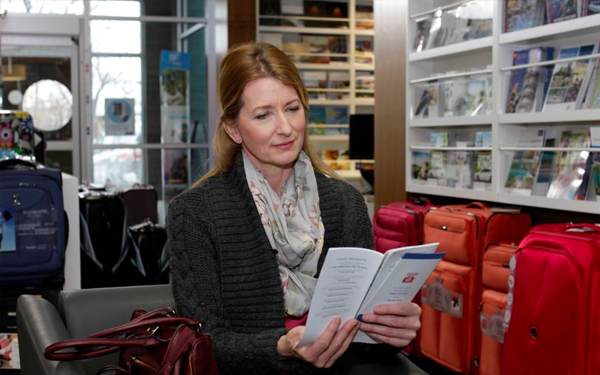
CAA South Central Ontario (CAA SCO) is reminding travellers that changes to out-of-country medical coverage in Ontario are now in effect, prompting the need to review travel insurance coverage. “We are working to educate travellers to make sure they know what they are buying. We are an organization founded to help keep our members safe, and coverage while travelling abroad is a big part of that,” said Elliott Silverstein, director, government relations, CAA Insurance. “Travel insurance protects from unexpected and costly emergencies and it’s important to evaluate available coverage, based on personal needs, to determine how to best safeguard you and your family. This is even more important now that there is no coverage through OHIP.” Some of the key things to consider when it comes to buying travel insurance are how many trips you are taking a year; if you want comprehensive coverage or medical-only insurance; and whether or not the insurance provider offers additional assistance such as interpreters, hospital recommendations and other coordination services. Additional tips to consider when buying travel insurance Ask questions. Speak to a knowledgeable travel insurance advisor that understands your needs. Be honest. It is important that you answer any questionnaire accurately to disclose any pre-existing conditions, and ensure you have the proper coverage suited specifically for you, so you can travel with peace of mind. Build travel insurance into your travel plans. Purchasing travel insurance must be done in your home province. As you begin to consider your next destination, add travel insurance to your “to do” list. Don’t base your decision on price alone. Look at what coverage is most appropriate for your circumstances and consider all different types of plans and levels of protection. Questions to ask: What are the eligibility and exclusions? What is the pre-existing and stability clause? What are the benefit limits? How many days am I covered? Is there a deductible? Do they offer upfront payment if a claim occurs? It’s important to remember that the intent of travel medical insurance is to treat emergency conditions, and return you to your home province for ongoing treatment once your medical condition is stabilized. Emergency travel medical insurance may require completion of a medical health questionnaire depending on age. Medical questionnaires determine premium, NOT coverage. Always answer questions related to your health accurately If you aren’t sure how to answer, ask your physician to help you. For more information resources on travel insurance and what you need to know before you travel, go to: https://www.caasco.com/insurance/resource-centre/travel.



There’s no Tour de France for women; it’s time to address the inequity in professional cycling
Since the Passing of Title IX, there have been many improvements in accessibility for girls and women in sports. This trend has not been as strong for some sports, like competitive cycling. “We know that when we look at numbers for licensed riders in the U.S., 15% are women, and that means 85% of competitive cyclists are men,” said Erin Ayala, Ph.D. “Because races are generally run by private organizations, they don’t fall under the Title IX umbrella. It looks very different. They can say that because only 15% of women are in the field, they think they don’t need to add more races so women can participate. This then creates concerns regarding skill development and safety while racing.” As a cyclist who races nationally, Dr. Ayala can attest that women cyclists are treated very differently than men. “I did a large national investigation on the experiences to find out what the factors are that affect participation for women in competitive cycling. A lot of women spoke of importance of creating an encouraging and supportive atmosphere. They'd say, 'If I have people on sidelines cheering me on, that means the world to me.' “Another piece was that race promoters and directors sometimes combine women with master’s men, 50-60-year-old men, to help with field sizes, but that can create a toxic environment because women are racing with older men who may not want them to be there. Women are also paired with younger junior cyclists, which can feel condescending and patronizing because it results in shorter or easier races. “In a lot of races women race shorter distances or durations than the men, which can feel insulting. There’s no Tour de France for Women. It’s a tough atmosphere. Then there are the podium girls, women in high heels and makeup whose job it is to stand next to the male racers to give them their prizes and a kiss on the cheek. The underlying assumption is those women are there to accessorize the male racers. It speaks to the gender dynamics in those sports. “Things that decrease participation are unsupportive environments where women feel they do not belong, inequitable fields, and unequal prize pools; sometimes men are paid more money to win the same race as women. We have good hard data to talk about it. We need to do better, and one of biggest themes that came out of it was ‘Build it and we will come. Invest in us, and we will start to show up more often.’ We are hoping to create some change in communities and nationally to make more room for women in a sport that does not have many women. Are you a journalist covering this topic and looking to book an interview? That’s where we can help. Dr. Erin Ayala is a licensed psychologist and core faculty member in the counseling psychology doctoral program at Saint Mary’s University of Minnesota. She is also an expert in the areas of women’s health and sports psychology. To book an interview with Dr. Ayala – simply click on her icon to arrange a time. Read more on Dr. Ayala's research: https://doi.org/10.18666/JOREL-2020-V12-I1-9912.

Is your social media ready for when the next crisis strikes? Let our experts help!
At the National Institute for Social Media, response plans are the priority. A response plan is the high-level look, or the umbrella overview, that crisis management falls under. Your response plan details how you respond to positive, negative feedback, and any neutral feedback that comes your way. Take a compliment and make the most out of it: Positive feedback feels like you’re off the hook. If feedback is all positive, you feel like you don’t have to do anything. But that’s your opportunity to nurture and strengthen those who are already your supporters. They then become your brand champions. Avoid the neutral zone traps – react and respond accordingly: Questions or posts that aren’t really positive or negative land in neutral space, and that’s really not crisis communication, responding to those is just good customer service. When crisis strikes: If you have a crisis, most people associate it with an isolated event, and sometimes you can plan for it, sometimes you can’t. A few years ago, when Nordstrom’s discontinued Ivanka Trump’s clothing line, they anticipated a negative backlash by those who would accuse them of being politically motivated. They stated sales was the reason, and 100 percent came out neutral, but they could anticipate that particular feedback. Whereas, in the viral video of a passenger being physically dragged off an airplane, the airline couldn’t have anticipated that event. However, with an online response plan, they would have been prepared to respond to the unexpected event. A quick response is important but an informed response is more important than anything else. If it fits the situation, you may buy yourself time to do a little research by commenting that you’ve passed their question on and will respond soon. If you don’t have a strategic plan to fall back on, and you respond quickly but poorly, you run the risk of doing more harm than good. With an online response plan, people understand how to assess a given situation. Respond: To show transparency, we want everyone to see we are responding to customer; we have a planned response where we acknowledge the customer. Take offline: Give them an offline option for sharing additional information. Resolve: This allows the customer to have their issue resolved and be heard but discourages them from sharing ugly details on that highly visible platform. The plan is for a social media manager to have a path when they don’t know what to do. The viral airplane video is one example because by the time their social media people saw it, it was already going viral. They had every indication they should be panicking. Did they have a person to talk to help them make the decision about how it needs to be addressed? For those crises we can’t anticipate, there needs to be a clear path to a leader who can help with this difficult situation. One of my favorite things to tell people is that you don’t have to be victimized online just because you’re a professional organization. You can set up community guidelines. Some businesses think, what if someone starts using racial slurs or inappropriate comments? You can post community guidelines that state these are our expectations of how our customers can participate respectfully, and we reserve the right to delete your content. You can set the expectation that you want people to engage respectfully. You have to get to the heart of what people are really asking or wanting. In the case of Ivanka Trump’s clothing line, nobody was upset because Nordstrom’s wasn’t carrying the clothing line; what they were really upset about was that a large organization could be taking a political stance against the at-that-time republican candidate. Are you looking to know more about how corporations and institutions need to be prepared and how they need to react when bad news goes viral? That’s where we can help. Amy Jauman is social media expert, consultant, writer, and professor at Saint Mary’s University of Minnesota. Dr. Jauman authored a (National Institute for Social Media) NISM textbook for social media strategists and is available to speak to speak with media – simply click on her icon to arrange an interview.