
Experts Matter. Find Yours.
Connect for media, speaking, professional opportunities & more.

Fighting Red Tape To Win The Media Relations Speed Game
It’s a situation that happens every day in the media relations world. A reporter calls and they need someone for an interview fast. This is how the scenario should play out: Step 1 - The media calls a communications officer with a simple request for information and an interview on a recently announced program. Step 2 – The communication officer identifies a suitable spokesperson. Step 3 – The reporter and spokesperson talk, arrange an interview -- and there is some excellent earned media and exposure for your institution. It sounds simple enough. But, not so fast. In reality, things often fall apart on step 3 and the process turns into something that borderlines on a Monty Python skit. Based on my experience and others I’ve consulted with – it often plays out something like this: The communications officer contacts the suitable spokesperson’s Manager to ensure it is okay they can speak to the expertise and subject matter they specialize in. Then, they have to loop in that manager with a Director and CEO to inform them of the media request and the plan. And then if the Director agrees, the CEO gets on board. Or perhaps the Director agrees only after checking with the CEO and agreeing to the spokesperson. Once that’s nailed down somehow…the CEO wonders if speaking points are required and will only proceed once the Manager and Director have signed off on them. After the speaking points are finally approved, speaking points and the media request are sent to the identified spokesperson. Then the communications officer (remember him or her?) responds to the media that they have found an expert and will arrange a time for interview. The communications officer has the Manager, Director, CEO and spokesperson each sign off on paper-generated Media Request Form for filing and safe records keeping. And, then…..finally……if the media hasn’t already gone elsewhere, the reporter and the spokesperson finally speak – about 18 steps later. It’s actually more steps than it takes to assemble my daughter’s bike or the average IKEA nightstand. It’s cumbersome, ineffective and costs the organization a lot of time in person power for something that doesn’t need to be this difficult. And the reality is … this spokesperson is a paid professional with a Master’s degree who was hired for the subject matter they specialize in. The media request was related to a media release issued by the organization. With a simple approval process and a pro-active approach to media, this could have been easier for everybody with an immediate turnaround and a positive outcome. Think this is a joke? It’s not. In fact, there’s a Communications Officer’s support group that meets every Thursday to share similar situations (I’m being cheeky). Media will appreciate that sensitive issues take time to respond to. In fact, a lot of media relish the thought the there are people scrambling to answer the tough questions. What drives media crazy is having to wait hours for what should be a simple, safe and low-risk reply. They likely already know the answer, they just need the expertise to lend it credibility and verification. (Photo courtesy: CBS Television Studios) So does your Communications Process need an institutional intervention? When you make it hard for media to get easy answers, they might start looking elsewhere. Odds are they will. Consider this: Do you have a grading system for media requests? Low-risk asks can be seen coming and responses pre-approved or left in the hands of your very competent staff. High risk asks mean approval and oversight. People will get that. As well, it will lend a tone of seriousness to the situation. Do you know the reporter or media outlet? A strong relationship needs faith on both sides. Known reporters and news outlets survive on reputation. Expect them to be professional and trust that they’ll get it right. Trust your Communications Team – Don’t Micro Manage Media relations isn’t a science – it’s an art where experience matters most. Communications Officers likely know the media and most come from a media background. They’ll know the angles, they scan the media and can likely predict the questions. Empower them to save you time and rely on their instincts. Too many Communications Officers ask “Why did you hire me?” when they aren’t trusted on the simplest of things. Most institutions have a rigorous vetting process – so why the worry? Didn’t you hire these people – rely on your staff and let them be accountable. Fewer steps saves time, reduces confusion and meets the need of a low-risk ask. Less micromanaging = more trust. Morale is a big deal in any workplace. So when the media calls, here’s my advice. Take a deep breath. Assess the risk. And arrange the interview as soon as possible and with as little maintenance and anxiety as possible. The media get the information they want, your institution gets the earned media and free exposure it wants and your Communications Team maintains a reputation as a group that can deliver content on deadline and ‘gets’ the information game. Remember – in today’s media – it’s all about speed. The easier you make it for media, the more the phone will ring.



Secrets to Promoting your Experts to Chase Producers: What exactly do they need from you?
Many moons ago, when I worked in a newsroom, my Executive Producer once said to me, “We only really work five days a year, the other 360 are just filler.” He was being cheeky and clearly exaggerating – but what he meant was that outside of elections, plane crashes and visits by the Pope or President, assignment editors are constantly scrambling to feed the beast and fill a newscast or a paper. It’s even worse in what we now know as the 24-hour news cycle. The news doesn’t sleep anymore. There’s no down time and a lot of time and space to fill. The reality is, with the modern news cycle now being immediate, never ending, online and everywhere the need for content is greater than ever before. From local papers, radio affiliates and even national broadcasts, the need for expertise, opinion and perspective is one of the few common denominators in journalism. And, when it comes to the 24-hour national TV news networks, the demand is even higher with reporters, researchers, technicians, assignment editors, executive producers and chase producers all hunting and scraping for issues and experts to illustrate those issues. This is great insight to be aware of if your role is to get your experts in the news. I worked with Mark Borchiver early in my career. He’s the Associate Producer, CTV National News with Lisa Laflamme which has a viewership of millions across the country. He helps put the show together every night and can tell you that the chase desk is busy all day to feed 24-hour news. They rely on a steady stream of guests and experts. On National News, CTV has a lot of go-to people who either contact CTV or CTV will call them. “The real challenge is to bring fresh talent to the newscast,” Borchiver says. “We need to bring new experts and talking heads into the news family because there’s a certain audience fatigue and predictability factor, when the same guests keep showing up. “ And with media, presentation is just as important as being primed. If you are going to be interviewed or appear on a show that has an audience of a million critical viewers, be prepared. If you are not prepared, there’s a good chance you won’t be invited back, says Borchiver. “Experts need to be media trained and ready for air. Not everyone has the same skill level and not everyone can be taught.” Every news market is different. There are different perspectives, news approaches and quite honestly finding and accessing credible and reliable expertise isn’t as easy as one would think. Even for a news giant like Al Jazeera, in Qatar, finding that ideal person to lend perspective or context isn’t easy. “Part of my job is selecting which stories deserve analysis or reaction from what we call ‘guests’,” Morgan Waters tells me. Morgan, who I also worked with back in my early TV days is now the Executive Producer, Aljazeera English Global. A big job, with high expectations and obviously little room for error. “For us this means a segment, usually live, where anchors conduct interviews for about three to five minutes on a particular subject. This is very important for our organization so I usually deal with about a dozen guest segments every day, plus next day guest planning.” At Al – Jazeera they have a team of interview producers whose job it is to find, pre interview and book these people. They usually go for people through credible organizations that the network trusts, such as NGOs, think tanks, and academic institutions although each interview producer has their own contact list which also include activists, bloggers and civil society. But that isn’t where the credibility check ends. Waters also reminds me, “An expert may work for a credible organization and appear regularly in the media but if I suspect his information is questionable then I won’t ask to book him. “ So in a nutshell, here it is plain and simple. There’s a never-ending news cycle out there. And it needs to be constantly fed. Some organizations wait to be called, while others or pro-actively building relationships with reporters and producers to get their experts seen, heard and read. Many have signed on with ExpertFile, a procured expert database full of people who want to be interviewed and are ready for it. Offering up your in-house expertise and providing someone who is credible, reliable, objective and can shed light, a unique perspective or a fresh angle on news story helps journalists deliver the content they need to the audience that wants. You win. They win. Win-Win. So go feed the beast. Have your organization seen in the news, heard by a massive audience and promoted across multiple media platforms. All for free. Well, free with the exception of some serious effort and savvy on your part. But cost-free for your organization. So what do organizations need to know? Be Fast: When news breaks be responsive. Take advantage of the moment and offer up your expert. Delays reduce your chances that you will get scooped by another organization. Be Prepared: If you offer someone up to media – make sure they have some degree of media training. Be Pro-Active: Don’t wait for media to come to you. Go to them. Be Current: Ensure your expert information such as biographies, publications, photos, videos are easy to review and up to date. Be Discoverable: Get your content outside of your own website. Often media won’t look there first. Ensure your experts can be found in other ways such as the ExpertFile database at Expertfile.com which is home to thousands of experts who are just a click away for media.

During media training sessions, I share examples of easy ways to completely tick off a reporter — not as a tutorial — but as a cheeky way to say DO NOT do these things ever if you want to maintain any kind of healthy relationship with media. Below you will find the ones that bothered me when I worked as a journalist. Do any of these things, and you’re in for a world of fun. 1. Tell a reporter how to do their job – They love that. Criticize the subjective tone or focus of a story while you’re at it. Bonus points if you can do this while never mentioning that the story was technically 100% accurate. 2. Ask them why they didn’t cover your story – Reporters love justifying how they do their job and the decisions they’ve made — to PR people. If you ask with a little bit of attitude, all the better. They dig that. 3. Only be helpful when you want something from them – Reporters can’t tell when they have an artificial one-way relationship with a PR person. No need to invest a little time in getting to know them and THEIR needs a bit better. 4. Send them a media advisory right before an event – They will never guess that you don’t really want them there so you made it logistically impossible to get there on time without being able to say they weren’t invited. 5. Only communicate with them by email or text – Reporters love nothing more than a controlled message via email with no chance to ask a question. Sometimes (legal implications) you have no choice — but we’re talking about the other 99% of the time. An email is great for communicating tone, too. 6. Send out a media release with a contact who’s not available – It’s a great tactic. Send out a media release and put the person’s name at the bottom for media to contact. But, that person is not available. This screams “credible”. 7. Promise a scoop then hold a news conference – Nothing says “I love you” like a broken promise. And, chances are they communicated the promised scoop to their editor, too, so you now have double the fans in that newsroom. 8. Ban them from anything – If there’s one thing reporters truly love, it’s being punished for doing their jobs. So, ban them from news conferences or events. Lord knows they’d never tell anyone, especially on social media. 9. Tell them how lucky they are to get what they got – It certainly works with spouses — so why wouldn’t it work with reporters, right? 10. Make them go through access to Information – They understand that there is some information that will require access to information — but the true joy comes in having to go through the red tape to get something simple and easy. 11. Ask them if they’d ever come work for you in PR – Nothing says manipulation like false flattery and dangling a carrot. You better be serious. 12. Make them watch other people eat – What is more enjoyable than attending a Chamber luncheon or keynote address and watching people eat while you stand in the corner waiting for the speaker. No need for a media table at all. 13. Hold a news conference with inadequate audio/visual facilities – Today’s reporter has to listen to the speaker, ask questions, video, tweet, etc. all at the same time. Would an audio board and camera riser help? Sure. But, what’s one more thing for them to do at this point? 14. Call their boss to complain about them – This was one of my favourites — when the PR person would go over my head. I can assure you I didn’t hold a grudge and didn’t dig into your organization with a little more rigour. 15. Return their call at 4 p.m. – You’re busy so reporters completely understand if it took you 6 hours to get back to them just to say you can’t help. I’m sure the next time YOU want something, they’ll be equally as gracious. There are others. There are many others. Feel free to share the ones you know of and perhaps we’ll compile another list in a few months.

Showcase Your Experts to Generate Media Attention and Grow Business
This blog was initially posted by our friend David Meerman Scott on his blog, read it here Some of your most important assets for securing interest in the media as well as educating your buyers are the experts who work at your organization. As a part of a virtual newsroom or other appropriate place on your site and blog, highlighting your employees is a great way to generate attention. When reporters are looking to quote someone in a story, having a name, photo, bio, and examples of content makes it much more likely they will want to conduct an interview. This is especially true when you are newsjacking. Similarly, when buyers are exposed to the smart people employed at your company, they will be more likely to trust and want to do business with you. Yet most companies feature only the senior management team on the site, not those with particular and interesting expertise. University of Ontario Institute of Technology shines spotlight on faculty researchers For example, the University of Ontario Institute of Technology (UOIT), a public research university located in Oshawa, just outside Toronto, was founded in 2002. That makes it one of Canada’s newest universities. With an enrollment of more than 10,000 students, UOIT offers a range of undergraduate programs, plus graduate programs in science, engineering, health, and information technology. But because it is such a new institution, the marketers and public affairs people at UOIT have to work extra hard to make sure that potential students, donors, partners, and other constituents know about the school. Unlike other universities, UOIT cannot rely on decades of families that send their children and grandchildren to the institution and support it with financial contributions. So one way the school reaches out to new audiences is by promoting with the media the many faculty experts who teach and do research at UOIT. “We focus on the experts within the institution,” John MacMillan, director of communications and marketing at UOIT told me. “We have very few resources, but we have a lot of really interesting people who are focused on very exciting things, like using big data and looking at issues of disability and how it relates to the insurance industry, among other things. We are able to reach the media and people who are organizing conferences or booking speaking engagements.” MacMillan uses the ExpertFile software platform as a way to easily showcase UOIT thought leaders in what they call their Expert Centre. He publishes, promotes, and measures the expert content as a tool to engage business prospects, media, and conference organizers. “We needed to have a way of getting out those important stories that we know are of interest to media, to producers, to editors, but also in many ways to partners, to institutions that might be interested in working with us,” MacMillan says. “And we needed to have a way that did a better job of telling our story to those various groups.” MacMillan started with 26 profiles for faculty in the Expert Centre, and is steadily expanding to a planned goal of 200 profiles. He says that an ideal expert is one who is already comfortable with digital technology. “We’re amplifying the presence of each of those faculty members—whether they are involved in multimedia, whether they have their own websites, or whether they have their own followings—and presenting them in a way that gets some response. Part of their success as faculty members lies in establishing their bona fides with granting authorities or with the government or with others. The Expert Centre augments their legitimacy.” Adding credibility to your newsjacking efforts Having profiles available to the media also helps your newsjacking efforts. When you comment on something that’s newsworthy and a reporter finds it via search, they often want to know biographical information on the person before they quote them. Having a link to the bio of the author of that timely blog post is a great way to add credibility and to increase the liklihood of being quoted. As an example of the action that can come from an Expert Centre profile, MacMillan cites Dr. Isabel Pedersen, an associate professor at UOIT and Canada research chair in Digital Life, Media, and Culture. “She focuses on a sociological perspective of wearable computing devices,” he says. “Her research looks into questions like: ‘When we wear gadgets on our body, how will that shift the reality for us? How will it change the way we interact with other people? How will it allow us to participate in digital culture?’ She is one of the early profiles that we created because she is one of our Canada Research chairs, a distinguished researcher who is working on an area of particular national and international importance.” Dr. Pedersen’s Expert Centre profile contains her bio, photo, links to her Twitter and Google Plus feeds, and a list of past speaking engagements, as well as video content, previews of her book Ready to Wear, and articles she has published. The profile attracted the attention of a reporter from IEEE Spectrum magazine, the publication of the world’s largest professional association dedicated to advancing technological innovation and excellence. “They were working on a story about wearable technology, and they wanted to interview her,” MacMillan says. “That’s a magazine from the U.S. that has a much broader readership than anything we’d be able to position her for, and it came along as a result of somebody seeing her profile and deciding that they wanted to speak with her. That’s an example of where we’ve been able to use our resources in a very efficient way, in a manner that gets a story out well beyond our own physical boundaries and that tells about the uniqueness of the work that’s going on at this university.” A lesson learned from the early days of the UOIT Expert Centre was the importance of having the profiles appear in a consistent voice. “When we started out, our assumption was that the individual faculty members or individual experts would develop their own profiles,” MacMillan says. “We realized that would result in a lack of consistency, so we hired a writer, and her job was specifically to interview our experts and to create a story for each of those experts so that when someone does look at this, they’re looking at a consistent story, a consistent tone, and a consistent brand for the university. I’ve learned from creating our Expert Centre that I share some one of the same challenges as faculty members: if you don’t manage your digital presence actively, someone will do it for you. I like to think that our Expert Centre has helped our faculty to curate their digital content as much as it’s helped our university to strengthen its brand.” The ExpertFile platform Your employees are a great resource for generating interest in the media as well as a way to show potential customers and partners that you are doing interesting work. Showcasing them is easier with the ExpertFile platform, a SaaS application that helps organizations make their experts more visible. In my mind, ExpertFile is to showcasing people what HubSpot is to showcasing content. What’s traditionally held many organizations back is that until now, there hasn’t been an online platform to simply organize the growing base of expert content that is being produced across organizations every day. Yet this content is what many audiences are looking for. They want to easily reference everything from biographies to speaking engagements, to social feeds and multimedia assets. “Experts are a great way to humanize an organization and make it more approachable, yet many marketers struggle with how to best showcase these people online,” notes Peter Evans, founder and CEO of ExpertFile. “Adding expert profiles to various sections of your website such as your media room is an ideal way to create more engagement on your site and drive valuable speaking, media and customer inquiries. Experts are quickly becoming the new frontier for content marketing.” Disclosure: I am on the advisory boards of both HubSpot and ExpertFile. Peter Evans, ExpertFile CEO, is a friend.

Part 2: Collaborating with Faculty Experts: A How-To Guide for Marketing Departments & Deans
In my last blog post, I shared some strategies that marketing departments can use to collaborate with their faculty experts (Read Part I). This post will reveal the final five principles that will help you collaborate with your faculty and get better results. 6. Show Quick Wins to Get Momentum As the old saying goes, “nothing succeeds like success.” We all like to back winners. So while you won’t immediately see massive changes across the board on day one, it’s important to show progress. Expert marketing programs deliver significant results over the long run but you must communicate the early wins you achieve in the first few months to create internal momentum. Remember it’s not just about the numbers. It’s just as important to provide qualitative information on the market interactions you are generating for your experts. For instance look at these early indicators: Contribution – Who’s participating in contributing content to your expert center? Look at key types of files such as publications, videos and presentations. Engagement – Also consider sending stats out to your experts showing which profiles get the most amount of web traffic. Other Results – Speak to activities where you used your expert content to do outbound story pitches to media. Also mention coverage you are getting, or speaking engagements that resulted from inquires received from your expert profiles. For instance, one of our ExpertFile clients, very soon after launching their expert center received an inquiry from a major engineering publication for one of their professors, a direct result of their participation in the Expert Center. Communicating this to other faculty drives engagement. Tip: Send out a quick “Leaderboard” email showing the top five or ten experts who rank highest in completed profiles. This public recognition will get noticed. 7. Opt-In your Experts For Various Research, Writing & Speaking Contributions The famous “help me, help you” quote from Jerry Maguire sums up the importance of collaborating effectively with your experts. They are very busy people; meeting them halfway will ensure mutual success. Get some face time: Emails with requests to send information often will go ignored. Instead invest the time to set up a quick meeting at their office to review and update their expert profile to make sure it’s up to date. Locate new projects that are in progress such as publications or speaking engagements and set a date to check-in with them. Identify Opportunities: Identify their key research interests and passions to see where they can help in contributing to the overall content mix. Organize Your Content Contributions: Build out a list of key areas for each expert where they can “opt-in” to contribute to your expert marketing programs. Think about various areas they can help as a researcher, writer, or speaker for both internal and external events. Remember, there are many jobs to be done across campus that go way beyond media interviews. Identify who can write blog posts, contribute to content in a research capacity, or even review story pitches. Track these commitments and follow up with your experts and you will see the payoff. Many experts want to help, but it’s important to approach them and organize your interactions with them in an efficient manner for success. Content planning frameworks are a great way to track this information. 8. Put Your Experts in the Spotlight Want to see better results from your media relations efforts? Organize your experts based on areas of interest. Once you’ve curated that list, you can align your experts with breaking news events and other opportunities on your editorial calendar. Here’s how it looks: Set up a “Topic Cloud”: List all the areas of interest that your faculty experts want to speak on. Make sure the terms you use are relevant to what journalists are searching for on Google. Start at a high level and then drill down for a structured taxonomy of terms. For instance if you have a medical expert who speaks about ebola you also should index them under the term “infectious disease” as journalists also use this search term when looking for sources. Align Your Experts with an Editorial Calendar: An editorial calendar allows you to plan content well ahead of time so you can promote upcoming research, publications and other announcements. Mapping experts to these events in advance will deliver better quality output and engagement. For example, there are always stories that recur every year, things like tornadoes, taxation, gas prices and the like. Preparing for these stories allows you to have your angle ready, along with creative assets such as images and videos that will engage targeted audiences. With this work already done, you will have time to attend to other pressing matters. Get Ready to Pounce on Breaking News: The benefits of real-time marketing and helping journalists write the next paragraph of a breaking story are immense, but this is a game of speed. Matching the right expert to the right media opportunity requires this type of pre-planning to identify who the go-to people are within your organization. 9. Develop a Scorecard: Identify Some The Expert Metrics You want to Measure Here are the categories you need to pay attention to as you evaluate your progress as an organization: Contribution – Show stats on how you are seeing growth in published content assets. Track the growth in areas such as the number of published expert profiles, % completion of profiles and growth of published content in categories such as videos, PowerPoint presentations, and whitepapers. Engagement – Ask your digital team to provide stats on the number of profile views each expert is receiving monthly. Try ranking some of your top experts and send out a note congratulating them. Also try to spot trends such as traffic spikes related to topics that may be of interest to the media. These metrics can help you decide what topics you focus on when producing content or promoting your experts to journalists. Inquiries – Requests to contact your experts can come from a variety of audiences, and all can be valuable for internal departments ranging from media relations and advancement to recruiting. It’s important to evaluate what types of requests you are receiving. You can sort and route these requests more efficiently with an online form. Some suggested categories you can track include: Media Inquiries Speaking Inquiries Expert Witness Inquiries Student or Parent Inquiries (classify by type i.e. Graduate Students, Foreign Students) Donor Inquiries Partner Inquiries Research Collaboration Inquiries Results – While it can be difficult to close the loop on all requests that you generate from your expert marketing efforts, try linking the source of your inquiries back to results. For instance, if you are doing clip reports, highlight specific media coverage that resulted from your efforts. You should also look at other important data such as student inquiries and donor connections that are made through your expert marketing programs. This will help you justify the return on investment and perhaps allow you to secure additional budget and resources from various groups in the organization who benefit. 10. Make Your Experts Feel Special: Don’t Forget Rewards and Incentives Anyone running a successful expert marketing program will tell you that it’s important to embrace some of the “softer” people skills to get results. It is essential to provide feedback and recognition to contributors to keep them motivated to help you. Remember that your experts are in constant demand, so you are competing for their most limited resource – their time. Here are some key things you should consider when working with your experts: Be Visible: Walk the campus and take an active interest in the work your experts are doing. Face-to-face meetings are an important part of enlisting support. Educate Them on Their Value as Experts: Help your experts understand how their contributions can impact areas related to media coverage, student enrolment, donor and alumni relations, and government and corporate sponsorships. Offer Assistance: Help them manage their online presence in your expert center. Make it as simple as possible to update content such as presentations, videos and speaking engagements. Recognize Key Contributions: Send personal notes to experts to thank them for their help. You can also do a shout out via email to a list of key contributors.


Part 1: How Duke University doubled their media hits by showcasing faculty
In the February 2015 issue of CASE Currents, Steve Hartsoe, a Senior Editor at Duke University and former Editor for the Associated Press, shares some powerful strategies for working with experts on campus. This article is a must read for any organization looking to build reputation through more focused media relations. Now you might be thinking that Duke is an already renowned university with an extensive network of media contacts so this stuff is easy for them. Not true. Doubling your media hits isn’t easy for any organization. Duke made some major improvements that set them up as a go-to destination for journalists to find credible, relevant sources. However, even implementing just a few of their ideas could drive some big results for your organization – without having to blow out the size of your marketing team or budget. Spoiler alert. The Duke strategy centers on being more strategic and collaborating better with faculty experts. The best practices that the Duke media relations team employed should inspire any organization that wants to generate more coverage. Whether you are looking for media visibility to help drive student enrolment, alumni giving, or corporate partnerships, there are valuable lessons to be found in this article. For the full article check out the January/February issue of CASE Currents at www.case.org. Please note you will need a subscription to view. So what’s going on at Duke that’s driving all this media coverage? To examine this further, our ExpertFile team weighs in below with the first five major rules of Expert Marketing for Schools and summarizes some insider tips they shared from their experience. Tune in next week for the finale! Rule #1: Organize a Team to Help Focus on Expert Marketing As with most initiatives, it’s vitally important to get the support of senior people in the organization when developing an increased focus on faculty experts. Gaining the support of a group of progressive deans within the school as well as notable faculty can be critical. Appoint a specialized team that can help you establish media visibility as a priority for your school. Build your case for an expert marketing program and ask for their support in developing your plan, then set up some regular meetings and make this team visible on the campus. It will help you develop a sense of collaboration and continuity. Insiders Tip: Duke built a “rapid response team” within their media relations department that had a clearly defined meeting schedule. They met twice a week and kept meetings to just 30 minutes in length. These regular check-ins helped identify breaking news opportunities and inspired a sense of priority and established momentum. Rule #2: Strategize with your Experts It’s amazing how many colleges and universities’ media relations departments we talk with that are disconnected from the interesting research conducted by their faculty. Ironically, it’s this research, as well the academic interests and passions of your faculty that feed the most engaging stories you can tell to the media. Make sure you have a good understanding of current and upcoming research that you can pitch. You should also identify what publications and books are being planned by faculty and see how you can collaborate with them. Insiders Tip: Duke invested the time to meet personally with faculty members to get a deeper understanding of their research and identify relevant topics that could be pitched to the media. They also invited some faculty to media meetings to brainstorm on potential news stories. It’s this kind of contact that helped make faculty more responsive to media opportunities and respond to deadlines. Rule #3: “Opt-In” your Experts for Different Types of Contributions It’s becoming more understood by faculty that media coverage can be a very good thing for their career and their organization. However, be careful of one size fits all approaches in recruiting faculty to contribute their expertise. Contribution from faculty comes in different forms. Faculty can be engaged in a broad spectrum of activities that run from broadcast TV interviews, blogging, and even helping speak at recruiting or alumni events. It’s good practice to create a master checklist of possible engagement types and to take an inventory of what your faculty experts may want to opt-in for. Having this inventory allows you to better plan for content development projects and also ensures that faculty clearly understand the duties that are expected of them in a media relations capacity. Insiders Tip: Duke’s media team recruited their experts for a range of contributions based on the level of interest and comfort level of faculty. And they made it clear that agreeing to be a media source meant responding promptly to incoming media inquiries. Rule #4: Provide Media Training and Support While every campus has it’s faculty “rockstars”, who can rise to the challenge of any breaking news opportunity, many experts on the campus can benefit from some form of media training. It’s critical to your media strategy’s success that you provide the experts with support and opportunities to practice their speaking skills in front of a camera. If you expect more experts to step up to the podium, it’s important to make the investment. However, make sure you design these programs to be engaging and don’t overwhelm your faculty by making them too exhaustive. Often they can be coordinated over lunch or in the early morning before classes start and can be focused on key areas such as: public speaking, blogging tips, video training, and social networking guidelines. Get a sense of where your key gaps are among faculty before you dive in. Also remember these sessions can provide valuable opportunities to shoot video interviews, B-Roll clips and even headshots that can be used to provide media assets for your website, alumni magazine and other properties. Insiders Tip: Duke invests in media training for its faculty experts and administrators offering a two and a half hour media training workshop each year to participating faculty, covering interview techniques via phone, video and social media. Rule #5: Meet Journalists on Their Terms Reporters appreciate media relations contacts that help them get their job done. Operating under tighter breaking news cycles they have less time to discover and research experts. In todays competitive media market what sells papers or builds ratings is often what gets covered. You have to focus your experts on helping journalists tell stories that matter to all those “eyeballs”. The best media relations professionals understand the value in building relationships with journalists. These connections are often essential in establishing your organization as a relevant, trusted source of expert commentary. Given the importance of these relationships, we’re also seeing the renewed popularity of industry conferences hosted by organizations such as the MAKI Network (www.thembasite.com) and Wynne Events – BAM Conference (www.wynneevents.com). These events give schools a unique opportunity to listen to and meet journalists from major news networks. ExpertFile sponsored both MAKI and Wynne events this past year, and we were impressed by the roster of global media attending. Insiders Tip: While Duke still distributes the requisite daily news on campus events and other university happenings, they don’t get mired in all of this content. They also focus a great deal of their activities on expert content that positions their university as a go-to source that is both credible and relevant to a variety of media audiences. READ PART II of How Duke University doubled its media hits by showcasing faculty experts.
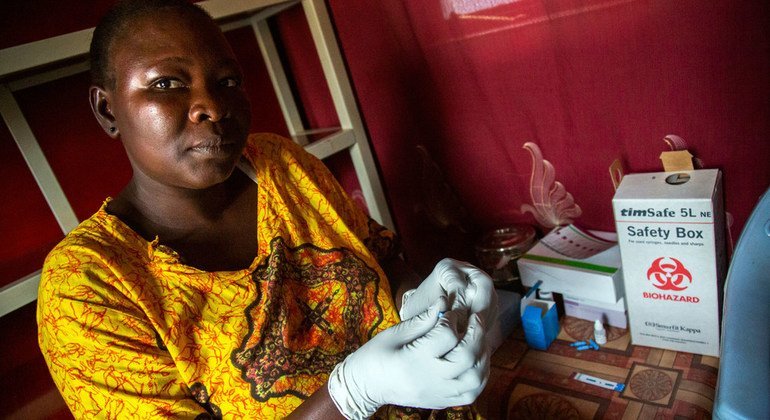
It’s all eyes on Africa as the UN looks to find ways to ensure universal health care for all
It was a historic moment earlier this month as the United Nations and African Union pledged to pursue bolds goals that will strengthen global health and provide health care to all across Africa. “The Memorandum of Understanding we have signed today is an important step towards formalizing the cooperation between WHO and the African Union and to implementing the Addis Ababa Call to Action,” said the WHO chief. “The Addis Ababa Call to Action is a powerful commitment from African Union leaders to increase domestic financing for health, and to hold themselves accountable for that commitment”, he added. Following a political declaration on universal health coverage, which was approved in September by all UN Member States, the General Assembly adopted a global resolution to translate that commitment into reality by legislators in 140 countries. November 18 - UN News It’s indeed a bold declaration and one that will require prevention, infection control and affordable delivery of care. Key UN-AU collaboration specifics Provide technical expertise to the African Medicines Agency and create an environment to foster local production of medicines. Strengthen collaboration between WHO and the Africa Centers for Disease Control and Prevention – with a particular focus on emergency preparedness, to build defenses against epidemics and other health emergencies. Support the implementation of the Addis Ababa Call to Action on universal health coverage and the AU Declaration on Domestic Financing. The prospects are positive, but delivery will be a challenge, and if you are a journalist covering this topic and need an expert source for insight and perspective – let us help. Dr. Saad Bhamla is an Assistant Professor of Chemical & Biomolecular Engineering at the Georgia Tech College of Engineering where he also runs the Bhamla Lab that develops low cost tools for science education and global health. Saad is available to speak to media regarding this topic, simply click on his icon to arrange an interview.



Sesame Street Celebrates 50 Years
Sesame Street, the longest-running children's show in American history, recently celebrated its 50th anniversary. Villanova's Emory Woodard, PhD, Dean of Graduate Studies in the College of Liberal Arts and Sciences, spent time working at Children's Television Workshop (now Sesame Workshop), the nonprofit organization that puts on Sesame Street. He reflects back on its legacy, its important focus on diversity and what lies ahead. Concerning the Program's Legacy "Sesame Street transformed the landscape for educational television at a time when very few content producers were paying attention to quality content for children. The show has effectively reduced the school readiness gap and prepared millions for scholastic success." On Special Memories "My parents could not afford to send me to preschool but used Sesame Street to reinforce the literacy and numeracy skills they taught me. I have fond memories of learning to count with Count von Count, learning the alphabet with Cookie Monster and even getting phonetics lessons with Big Bird. I cannot tell you how much of a delight it was to have Big Bird speak at one of our Commencement Ceremonies... "Perhaps more than the literacy and numeracy skills that I learned from Sesame Street, I remember the prosocial lessons of the show. At such a formative stage, I remember learning about sharing, cooperation and appreciating the differences between people." On Sesame Street and Diversity "Sesame Street has been keenly aware of the dual audiences it engages: children and their parents. At the preschool age, parents tend to be very involved in the media diet of their children. Sesame Street has taught a generation of parents to be more sensitive to issues of diversity." On the Program's Future "I think the future is bright. With the advent of increasingly diverse content distribution platforms (e.g., Netflix, Sling, Roku, Apple TV, etc.), the demand for quality content will remain strong. The makers of Sesame Street may have to be creative in figuring out how to support the production of their high-quality content while still serving their primary mission. Nonetheless, their longevity is a testament to the good thinkers they have charting the course to ongoing success. "The partnership with HBO is an industry reality. The funding for public television remains under threat and the choice is to either fold or be financially creative. I am delighted that the makers of Sesame Street have chosen to be financially creative. Moreover, they chose to partner with an outlet that has demonstrated itself to be a purveyor of high-quality content. As long as that content is shared with platforms that are more accessible to the economically disadvantaged, I do not see this much differently than the decision to use television as a distribution platform that was not universally accessible back in the late 1960s. "Sesame Street will remain relevant as long as they remain true to their original mission of bringing literacy and numeracy skills to disadvantaged populations through high-quality content. No one is and perhaps will ever be better at it than the makers of Sesame Street."


The link between veterans coming home and racial violence in America. Our expert can explain.
There is a long history of white supremacist and white-power ideology developing out of the wars the United States has fought. In Bring the War Home: The White Power Movement and Paramilitary America (Harvard University Press, 2018), Kathleen Belew shows that, beginning in the 1970s, a small but committed number of Vietnam War veterans took the racist understanding of the Vietnamese and Asians more broadly that the U.S. military taught them and became instrumental in building the current white-power movement. These vets often did not initially know each other, but they eventually built a wide variety of organizations: the White Aryan Resistance, the latest, post-Civil Rights Era iteration of the Ku Klux Klan, various Christian Identity and white skinhead organizations, and the militia movement of the 1980s and 1990s. In his forthcoming book, Guarding the Empire: Soldier Strikebreakers on the Long Road to the Ludlow Massacre, Otterbein’s Dr. Anthony DeStefanis has found that the men who fought the Plains Indians in the late nineteenth century and who served in Cuba and the Philippines during the Spanish-American-Filipino War (1898-1902) came to understand Native Americans, Cubans, and Filipinos as formidable but racially inferior enemies. When these same men joined the National Guards in states across the country and were called out on strike duty during the late nineteenth and early twentieth century, they took what they learned on the Plains and overseas to create a racist rationale for breaking the labor strikes of a working class that was increasingly made up of southern and eastern European, Mexican, and Asian immigrants. Many of these same men also joined the Second Ku Klux Klan that emerged in the late 1910s and became a nationwide organization by expanding the targets of its hatred beyond African Americans to include Jews, Catholics, and immigrants. Racism is a many-headed hydra with multiple roots in experience at home and abroad. Some white southerners who were central in the project of creating and maintaining Jim Crow white supremacy were Confederate military veterans and it is clear that wars across the twentieth century – from Cuba and the Philippines to Vietnam – pushed some veterans into the white- power movement. Today, we know that white-power organizations concentrate on recruiting military veterans and we have seen a spike in support for these organizations among current members of the military. It’s no accident that some of these active troops and veterans served in the Iraq and Afghan Wars, where they faced a Muslim enemy with unfamiliar social and cultural practices, and who did not welcome the U.S. military presence with open arms. Clearly, we must reckon with what our wars overseas have brought back to the United States. If you are a reporter covering this topic – let the experts from Otterbein University help. Dr. Anthony DeStefanis is an associate professor of history at Otterbein University. He specializes in modern U.S. history with an emphasis on labor and the working class and immigration, race, and ethnicity. Dr. DeStefanis is available to speak with media regarding the history of racial violence in America – simply click on his icon to arrange an interview.


Baylor Faculty Member Earns $5 Million Grant to Study Meal Deliveries for Rural Students
Baylor University’s Texas Hunger Initiative has taken an important step this week in helping move the University towards its Research 1/Tier 1 aspirations with the announcement of a $5 million grant to expand access to food for students living in rural Texas communities. Kathy Krey, Ph.D., assistant research professor and director of research and administration for Baylor’s Texas Hunger Initiative, has been awarded the three-year grant from the United States Department of Agriculture for a research project aimed at testing a novel approach to distributing food during the summer to rural students age 18 and under. The grant is from USDA’s Food and Nutrition Service. According to the National Center for Education Statistics, more than 3 million children in Texas receive free or reduced-price meals during the school year. During the summer when schools are not in session, food is available to eligible families through federal and state programs, but some students – particularly those who live in rural areas – may have difficulty accessing the food programs, leaving them without consistent access to nutrition. “The current solution to this problem, the federal Summer Food Service Program, doesn’t fit every scenario, because it requires that students congregate at a summer feeding site, often at a school or other central location,” Krey said. “Especially in rural areas, which Texas has a lot of, those meal sites can be less effective because there are transportation, cost or awareness barriers for students who are more broadly dispersed from schools and other potential meal sites.” Improving access to summer meals through mail delivery Krey and her colleagues at THI will be testing a program where families in selected areas of the state who don’t have access to a summer meal site can receive food deliveries through the mail. Grant funding will be used to purchase shelf-stable, nutritionally complete meals, including fruits and vegetables, which are packaged and delivered directly to families. The goal in designing this program, Krey said, is not to eliminate site-based summer feeding programs, but to supplement them with other mechanisms that can be more effective for Texas students whose food needs may not be met by the current system. “We envision a future in which summer feeding sites still exist. In communities where populations are centrally located, the site-based model can make a lot of sense, but we know that it’s going to take a lot of innovative solutions to meet the diversity of the problem especially in a state like Texas that has so many different geographies and different realities in terms of population density,” Krey said. The dual problems of hunger and poverty are closely related since students who don’t have access to healthy meals are at greater risk of low academic achievement and disciplinary problems. A failure to address nutritional deficiencies, Krey said, can contribute to a cycle of poverty that continues from generation to generation. “Research has proven that students need consistent access to healthy food to perform optimally in school,” she said. “If we think about generational poverty, education is such a key factor in students’ being able to break that cycle, and one way they can be equipped to do that learning is by having regular access to nutritious food. “In the summer, there aren’t as many resources and opportunities to get food, which is why it’s so important that we figure out innovative ways to use public and private resources to make sure that low-income kids have access to food during the summer,” she said. The grant also will provide research opportunities for undergraduate and graduate students. Andrea Skipor, graduate student in Baylor’s Diana R. Garland School of Social Work, said her work with the project provides important experiences in application of the concepts taught in class. “In social work, evidence-based practice is a huge part of what we do,” Skipor said. “We learn so much in a classroom, but we don’t always get the opportunity to use it. This project has really given me a way to use my social work and community research skills in a way that has sparked an interest in research for my future practice.” Krey credits students like Skipor with providing invaluable assistance in carrying out important research. “We’ve been really honored with the student researchers and student workers who have come alongside us and acquired great experience in designing a pilot research project. We’ve been so impressed with the Baylor University students’ talent and commitment and we’re really honored to have them as part of this project,” Krey said. The Texas Hunger Initiative is a multi-disciplinary project dedicated to ending hunger through research and innovation and committed to strengthening public policy to address domestic food insecurity. Jeremy Everett, founder and executive director of THI, said the organization was founded on a realization that complex societal problems like hunger and poverty need solutions that leverage the resources of the public and private sectors, faith-based organizations and university researchers. The initiative’s broad-based approach includes a widely-dispersed staff that can observe problems first-hand to come up with evidence-based solutions. “We have field staff throughout the state working in a learning-lab capacity. The average researcher might have their own laboratory. Our laboratory is the state of Texas,” Everett said. It’s a strategy that Everett said is fundamental to Baylor’s mission to positively impact the lives of people in need. “We want to leave society better than we found it,” Everett said. “Our faculty and students want to be engaged in research and evaluation, but they also want to see how that makes a difference in a young child getting access to food who previously wouldn’t have had it without that engagement.” ABOUT BAYLOR UNIVERSITY Baylor University is a private Christian University and a nationally ranked research institution. The University provides a vibrant campus community for more than 17,000 students by blending interdisciplinary research with an international reputation for educational excellence and a faculty commitment to teaching and scholarship. Chartered in 1845 by the Republic of Texas through the efforts of Baptist pioneers, Baylor is the oldest continually operating University in Texas. Located in Waco, Baylor welcomes students from all 50 states and more than 90 countries to study a broad range of degrees among its 12 nationally recognized academic divisions. ABOUT THE TEXAS HUNGER INITIATIVE AT BAYLOR UNIVERSITY The Texas Hunger Initiative (THI) at Baylor University is a capacity-building and collaborative project, which develops and implements strategies to end hunger through policy, education, research, community organizing and community development. THI works to make the state food secure by ensuring that every individual has access to three healthy meals a day, seven days a week. THI convenes federal, state and local government stakeholders with non-profits, faith communities and business leaders to create an efficient system of accountability that increases food security in Texas. THI’s work is supported by the Walmart Foundation, No Kid Hungry, and PepsiCo’s Food for Good. Along with its office located within the Diana R. Garland School of Social Work at Baylor, THI has offices located in Austin, Dallas, Houston, Lubbock, McAllen and San Angelo. For more information, visit www.baylor.edu/texashunger.
