
Experts Matter. Find Yours.
Connect for media, speaking, professional opportunities & more.

Modernizing rural health – what it could mean for America
For Americans living outside of cities and in rural and sometimes remote areas of the country, the concept of readily accessible health care just isn’t a reality. However, the idea of expanding broadband internet into rural communities to improve access is one that shares support from all sides of the political spectrum. Just last week, an expert from Augusta University was called up to speak before lawmakers in Congress on the need for this technology and who it could best serve. "Broadband is the gateway to rural schools, businesses and health care providers," said Rep. Angie Craig, a Democrat from Minnesota. Lawmakers raised concerns about the dwindling number of hospitals in rural areas and the need to be competitive when recruiting corporations to do business. "Just the ability in rural America for a physician to pull up an X-ray at their home instead of having to drive to the hospital to look at a patient to know if that is something that’s an emergency," said Rep. Austin Scott, a Republican from Georgia. "One of the biggest needs is tele-psychiatry and tele-mental health," said Dr. David Hess of the Medical College of Georgia. - Spectrum News 1 - July 11 It’s an interesting topic and one that is gaining a lot of attention. How many rural Americans are without access to a doctor or hospital in the country? How much money could be saved by expanding online health care? Online is a viable solution, but are there drawbacks or concerns for patients? And how could expanding broadband and digital health care support issues like mental and maternal health across rural America? If you are a reporter covering this topic – that’s where our experts can help. Dr. David Hess is dean of the Medical College of Georgia and executive vice president for Medical Affairs and Integration at Augusta University. He also helped develop the REACH telestroke network in rural Georgia that now includes about 30 hospitals. Dr. Hess is available to speak with media regarding this topic – simply click on his icon to arrange an interview.



After the admissions scandal – Otterbein’s President lends his perspective and pledge
It was a scandal that seemed to rip through some of the top-rated universities and schools in America. The very institutions that portray and image of integrity, ethics and higher expectations had failed in a very public manner. Universities and colleges are supposed to be beyond reproach and in this case some of the best-known names in higher learning were now subject to accepting bribes and admitting students who may have had wealthy parents and worthy-pocket books - but lacked the essential grades to attend. Mix in a few well-known celebrities and this allowed the story to show that America’s elite have access to the levers of academia that most do not. But out of every mistake, there comes a lesson. And ideally a way to find the right way to do things. That’s how the President of Otterbein University, John Comerford sees it. He was recently published when asked about his views on the issue as it played out. “We should use the scandal as a moment to open our eyes to this long-standing inequity, because higher education is still the best door to social mobility our nation has to offer. Some institutions, like Otterbein University, are trying to provide opportunity to all students. We are investing more in need-based aid. We are setting transparent, inflationary 2 percent increases in tuition for the next four years. We are intentionally recruiting in underserved areas, expanding the diversity of our student body and providing student support services on campus. Family income will never be considered in who gets into Otterbein.” – The Columbus Dispatch John Comerford is an expert in higher education, regional and national topics. He is the President of Otterbein University and is available to speak with media regarding this issue and how higher-education needs to be made available to everyone in America regardless of income, family name or background. Simply click on his icon to arrange an interview.

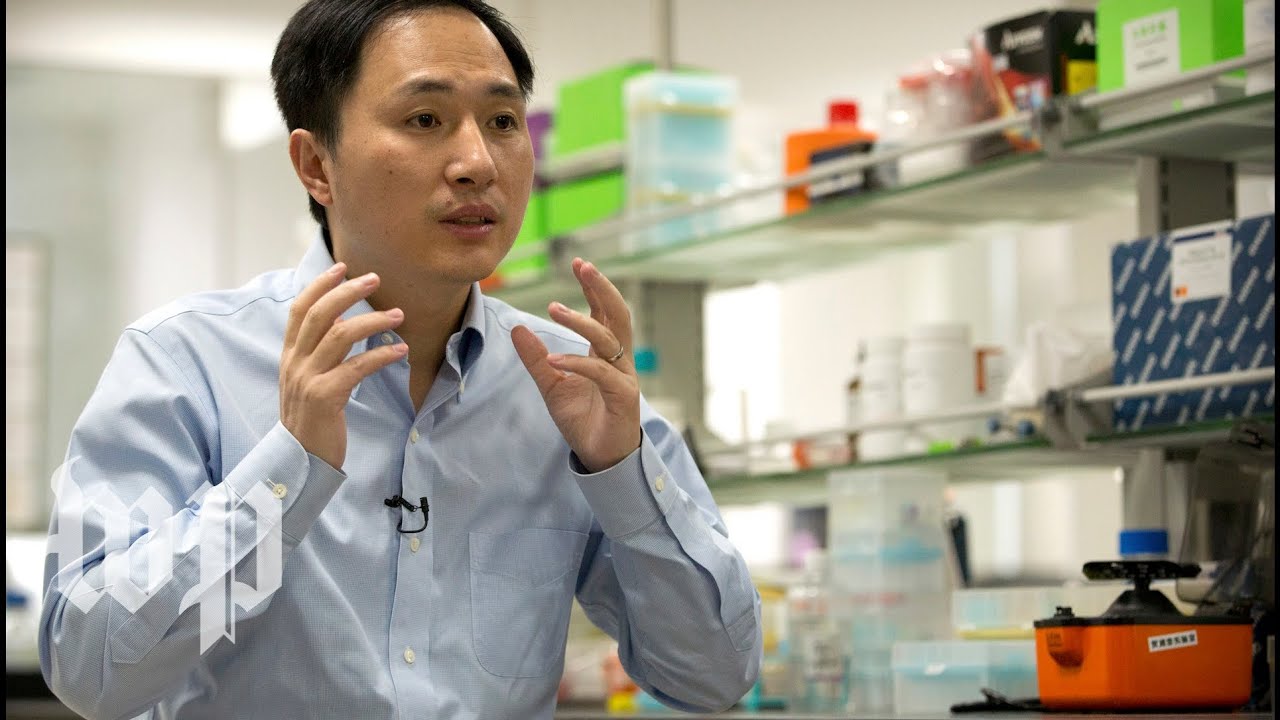
Chinese scientists are creating CRISPR babies
A daring effort is under way to create the first children whose DNA has been tailored using gene editing. When Chinese researchers first edited the genes of a human embryo in a lab dish in 2015, it sparked global outcry and pleas from scientists not to make a baby using the technology, at least for the present. It was the invention of a powerful gene-editing tool, CRISPR, which is cheap and easy to deploy, that made the birth of humans genetically modified in an in vitro fertilization (IVF) center a theoretical possibility. Now, it appears it may already be happening. According to Chinese medical documents posted online this month, a team at the Southern University of Science and Technology, in Shenzhen, has been recruiting couples in an effort to create the first gene-edited babies. They planned to eliminate a gene called CCR5 in hopes of rendering the offspring resistant to HIV, smallpox, and cholera. He Jiankui leads a team using the gene-editing technology CRISPR in an effort to prevent disease in newborns. The clinical trial documents describe a study in which CRISPR is employed to modify human embryos before they are transferred into women’s uteruses. The scientist behind the effort, He Jiankui, did not reply to a list of questions about whether the undertaking had produced a live birth. Reached by telephone, he declined to comment. However, data submitted as part of the trial listing shows that genetic tests have been carried out on fetuses as late as 24 weeks, or six months. It’s not known if those pregnancies were terminated, carried to term, or are ongoing. [After this story was published, the Associated Press reported that according to He, one couple in the trial gave birth to twin girls this month, though the agency wasn't able to confirm his claim independently. He also released a promotional video about his project.] The birth of the first genetically tailored humans would be a stunning medical achievement, for both He and China. But it will prove controversial, too. Where some see a new form of medicine that eliminates genetic disease, others see a slippery slope to enhancements, designer babies, and a new form of eugenics. Dr. Sullivan serves as professor of pharmacy practice and director of the Center for Bioethics. His research and writing interests include biomedical ethics, moral philosophy, and reproductive ethics. Contact him today for your story! Simply click on his icon to arrange an interview.


Closing the gender gap - A record number of female candidates are on the ballot this Tuesday
There’s been an enormous amount of attention put on the 2018 midterm elections. As a divided America competes for control of both Congress and the Senate – this election has seen a solid roster of candidates looking to represent both sides of the aisle in Washington. Another positive trend that has emerged has been the number of female candidates coming forward for election. In a piece written for Vox, by University of Mary Washington’s Rosalyn Cooperman – some impressive numbers were shown, however the disparity of female candidates between the two parties can not be ignored. "While women comprise 43 percent of Democratic candidates in 2018 congressional general elections, they make up only 22 percent of Republican Senate candidates and only 13 percent of Republican House candidates. While Democratic women won House primaries at rates 20 percentage points higher than Democratic men, Republican women and men won House primaries at similar rates. Currently, 73 percent of the women serving in Congress are Democrats. While 2018 may be a record-breaking year for women candidates in many ways, the midterm elections are unlikely to significantly alter the longstanding party gap among women officeholders." So, what can be done to close the gender gap among Republicans? Is it time parties considered parity or focused more on recruiting viable female candidates? Are women discouraged from running, and if so why? There are many questions to be answered here and that’s where our experts can help. Rosalyn Cooperman, associate professor of political science at the University of Mary Washington and member of Gender Watch 2018, is an expert on women in politics. Rosalyn is available to speak with media regarding this topic – simply click on her icon to arrange an interview.

