Experts Matter. Find Yours.
Connect for media, speaking, professional opportunities & more.
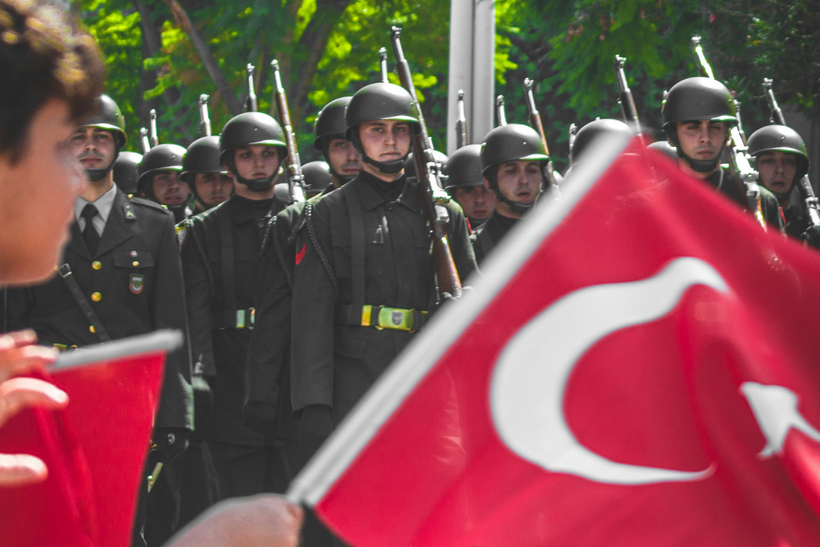
Turkey Launches Military Operation in Syria
President Donald Trump made a surprising move by pulling troops back from the Syria-Turkey border. In response, Turkey launched a military operation in northern Syria on October 9. Samer Abboud, PhD, a professor of Global Interdisciplinary Studies, says he's interested in how the Turkish offensive against the Syrian Democratic Forces (SDF) will impact the Syrian regime's campaign to resume control over all of Syria. "The Turkish decision to intervene has been effectively sanctioned by the tripartite powers (Iran, Turkey and Russia) as was the Russian-led intervention into Idlib that began earlier this year," Dr. Abboud says. "The Turkish government and the Syrian regime have a common interest in eliminating the power of the SDF and the main Kurdish political party (the Democratic Union Party, or PYD) in Syria. This eliminates the threat of a Kurdish autonomous region along Turkey's borders as well as any threats to Syria's territorial integrity. Eliminating the power of the SDF and PYD is one of the few common goals of the Turkish and Syrian governments." Dr. Abboud is able to discuss issues concerning the Syrian geopolitical situation as it relates to the United States or Syria's neighbors.


Is Washington playing Russian roulette with airline safety?
The government shutdown that is finally over had some worrying near the end and for good reason. Air traffic controllers, the very professionals who keep planes in the air and at a safe distance from each other had gone for more than four weeks without getting paid. Exhausted, demoralized and depleting ranks were probably the near-perfect storm for an imminent accident or disaster. Luckily, and thankfully, these dedicated professionals rose to the occasion and ensured safety was still the priority. Often, working even while the very equipment and technology they rely on was not being serviced. But as the shutdown takes a break for three weeks and everyone is made whole with back-wages and paychecks – does America need to rethink the potential risks and consequences to having the staff who are essential to safety across the entire country go without pay and benefits during a political dispute? The consequences of a major airline crash are huge economically and in terms of lives lost. So, can the nation’s air traffic controllers be exempt form the impacts of a government shutdown? Who would have been liable if an accident did occur? Are aviation, customs and our nation’s airports not considered essential and therefore worthy of being paid during a shutdown? And how close did we come to a disaster? While we wait and watch for a solution in Washington over the coming weeks, there are still a lot of questions to be answered, and that’s where the experts from the University of Rochester can help. David M. Primo is the Ani and Mark Gabrellian Professor and an associate professor of political science and business administration at the University of Rochester. He is an expert in airport safety and security and a professor at the University of Rochester in Rochester, New York, and can comment on airline safety and passenger impacts amid airports such as Laguardia International restricting air travel due to the government shutdown. David is available to speak with media regarding the economic effects of the shutdown – simply click on his icon to arrange an interview.


Bigly: the effect of Trump's rhetoric on national security
Going against the findings of his own intelligence community, President Donald Trump has called Russian meddling into the 2016 U.S. presidential election a “hoax.” In a recent turn of events, though, the president accused China of interfering with the midterm elections. Has President Trump’s rhetoric on the intelligence community and hesitancy to hold Russia accountable influenced countries, such as China, to also try meddling in U.S. elections? “If people and foreign officials start believing President Trump’s rhetoric, there is a possibility, that we will face issues of doubt and trust concerning U.S. policy and commitments,” said Craig Albert, an expert in U.S.-Russian security affairs, director of the master of arts in intelligence and security studies and associate professor of political science at Katherine Reese Pamplin College of Arts, Humanities and Social Sciences at Augusta University. “Also, President Trump’s rhetoric helps prop up Vladimir Putin as being equal in stature to the leader of the free world and gives Kremlin and Putin greater credibility with Russian citizens and the near abroad.” Midterm elections are on the horizon, and Putin will continue election meddling regardless of Trump’s actions or rhetoric, Albert said. “Russia, under Putin’s leadership, will continue to increase its cyber activity against all sectors of the U.S., including and especially into the cognitive hacking of our electoral process,” he said. Cognitive hacking is when fake sources are used to spread fake news on social media. The success of Russia’s meddling in the 2016 election is emboldening other actors, like China. “Non-state actors like ISIS and Al Qaeda feel empowered to engage in both cognitive and source hacking in order to shift American public opinion,” Albert said. “We already believe China and Iran have engaged in similar operations. It won’t be long before ISIS utilizes the same type of intelligence operations because they are low risk, extremely high reward operations. Albert is available to discuss: • How President Trump’s rhetoric affects the U.S. intelligence community • How Trump’s apparent support for Russia empowers Putin and the Kremlin to continue meddling into U.S. elections • How Russia’s actions are emboldening other non-state actors • Why Trump’s denial of Russian meddling into U.S. elections can further damage U.S. relations with its allies Contact us to schedule an interview with Albert or to learn more about his expertise. Source:


Latest push in fake news is pushing fake experts
During the 2016 presidential election, hundreds of fake sources used social media to spread fake news. Many of these posts were traced back to the Internet Research Agency, a Russian troll farm that used social networks to create divides among Americans and influence the election. This is known as cognitive hacking and is the real scandal of the 2016 election, said Dr. Craig Albert, director of the Master of Arts in Intelligence and Security Studies program and associate professor of political science at Katherine Reese Pamplin College of Arts, Humanities, and Social Sciences at Augusta University. Fake sources using social media to spread fake news are often able to reach a large audience who may never realize the stories are false, Albert said. In some instances, entire organizations and groups have been created under false pretenses and have had millions of social media followers. “When so many people see fake news on their newsfeeds, they become a product of their belief in a fake story,” Albert said. “So, a fake story controls their opinions.” Now, Russia is taking fake news a step farther. The newest trend is creating a false persona to push fake news on U.S. news organizations. “They will have an expert create a story, and they will create credentials and a website to give credibility to this individual,” Albert said. “When media outlets try to ascertain the credibility of a person they typically visit the individual’s website or look at their resume. It appears legitimate, so the source is validated, and news outlets run the story.” In many cases, though, these are false stories by individuals with fake credentials. Albert calls this source hacking. Dr. Albert is an expert on American politics and political philosophy. He has experience with all forms of local and national news organizations and is available to speak to media regarding cognitive and source hacking. Contact us to schedule an interview with Dr. Albert or to learn more about his expertise. Source:
The State of Georgia wants to replace its 16-year-old voting machines with paper ballots for fear of Russian election hacking, but are paper ballots safe? “Safe from hacking? Perhaps. Safe from voter error? Not so much,” said Scott Thorp, a user-centered design expert and chair of the Department of Art and Design at Augusta University. “User-centered design for paper ballots is crucial for free and fair elections. Good design should never influence how people vote. A design mistake might actually have cost Al Gore the presidency in 2000. Who is to say it couldn’t cost the governorship in Georgia this year?” Thorp, who also worked as a professor and design coordinator at the Savannah College of Art and Design, is available to discuss: • What user-centered design is • How design can influence people’s behavior • How bad design can lead to human error • Why designing paper ballots with users in mind is crucial for free and fair elections Thorp, who is also associate vice president for research at Augusta University, has worked for more than a decade as an exhibiting artist. His research interests include user-centered design, design thinking, and the psychology of creativity. Contact us to schedule an interview with Scott Thorp or learn more about his expertise. Source:


Today, US President Donald Trump and Russian President Vladimir Putin met at the presidential palace in Helsinki to discuss the relationship between their respective countries. Prior to the meeting, Trump cited national security concerns and trade as agenda items. Since the start of the meeting, the two presidents have also discussed the tension between the two countries and accused election meddling. At Augusta University, our experts have been following the historic meeting, and made the following observations: • Trump is correct in asserting the importance of having Russia as an ally. • The US is currently facing Russian cyberaggression, so how Trump addresses this issue has immediate concerns. • US posture in Syria is at stake. • It is important to keep this meeting in the context of “America First.” Trump will push messages at the summit that fall in line with his national security interests. What are the implications of this summit for every-day Americans? Will this meeting improve the relationship between the United States and Russia? How will this meeting effect the United States’ relationship with other European allies? There are a lot of questions to answer – and that’s where our experts can help. Dr. Craig Albert is an expert on American politics and political philosophy. He was recently appointed director of Augusta University’s new Masters of Arts in Intelligence and Security Studies. Dr. Albert has experience with all forms of national and local news organizations and is available to speak to media regarding the Helsinki Summit. Simply click on his icon to arrange an interview. Source:
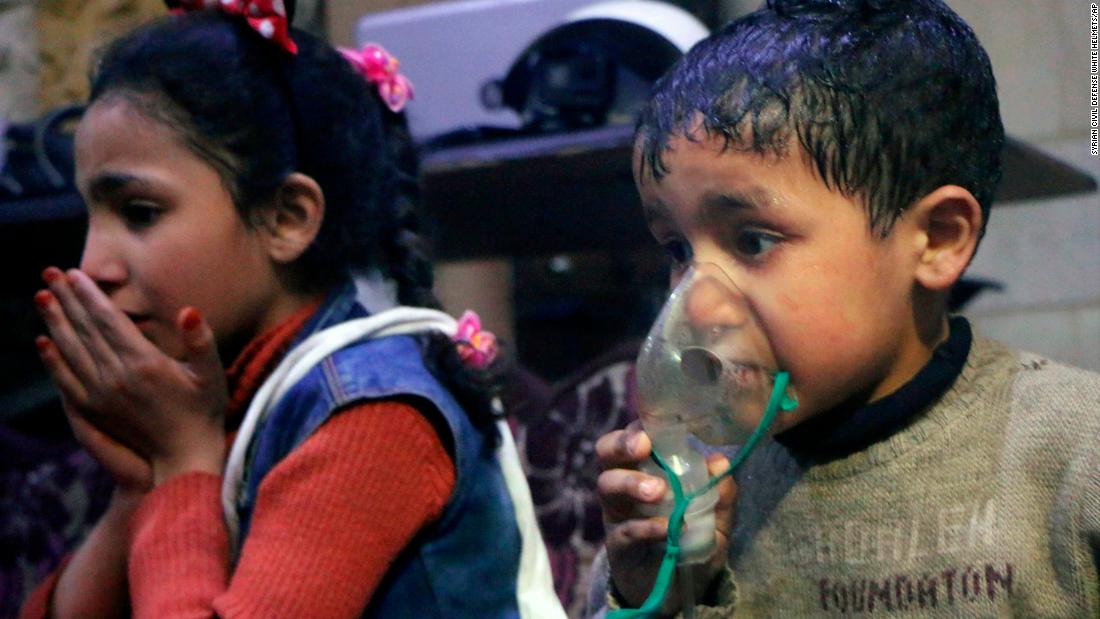
How serious is the sabre-rattling over Syria?
Last Saturday, though not ‘officially confirmed,’ a poisonous gas attack happened in the besieged Syrian town of Douma. The World Health Organization has confirmed that 500 people showed symptoms of being exposed to "toxic chemicals". This act of aggression supposedly by the Assad government has opened a Pandora’s Box. President Donald Trump is threatening missile strikes. Russian officials are threatening retaliation for any American aggression. Many world leaders are on edge and watching closely – Syria has become a powder keg and what happens next could have global implications. What are President Trump’s options? What could happen if the Russians counter? Is there a diplomatic option? There is an enormous amount at stake and a lot of scenarios to consider. That’s where experts from Missouri State University can help. Dr. David Romano, political science professor at Missouri State University, researches Middle Eastern politics and government. He's an expert in theories of peace and conflict, and foreign policy. He's available to speak about the escalating tensions, potential outcomes and consequences regarding any action in Syria. Click on his icon to arrange an interview. Source: