
Experts Matter. Find Yours.
Connect for media, speaking, professional opportunities & more.
Experts in the Media: Georgia Southern investing $1.2 million to upgrade campus security cameras
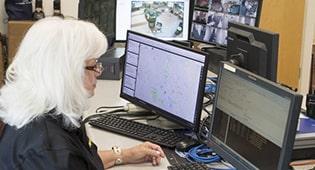
Georgia Southern University is planning a major upgrade to its campus security cameras and video technology. With approximately $1.2 million budgeted, the University will upgrade the cameras in the resident halls and other buildings in Statesboro, Savannah and Hinesville to bring the current cameras from analog to a digital platform. Additionally, new cameras will be placed at entrances to theirr campuses that can tie into those from other law enforcement agencies. The end result will be an interconnected network of cameras across the region. The new technology package includes state-of-the-art Flock cameras, which are motion-activated and record license plate numbers of any vehicle that comes into the hall parking lots. Flock Safety’s “Vehicle Fingerprint” technology lets police search the video by vehicle make, color, type, license plate, state of the license plate, missing plate, covered plate, paper plate, and unique vehicle details such as roof racks, bumper stickers, and more. The cameras can be used to look for a specific suspect or a vehicle that has been entered into law enforcement databases. Additionally, the University can use Flock for investigative purposes as well by going back and looking for any cars that fit a certain profile if it was associated with a crime or if there was a gunshot detected nearby. “This upgrade allows us to add more cameras, extend our reach, add storage and searching capabilities and better integrate our cameras into other video surveillance networks in use by local law enforcement,” said Georgia Southern University Police Chief Laura McCullough. “This is a major step forward in our ongoing work to keep our campus safe.” The new equipment will add to, and augment, Georgia Southern’s network of more than 1,800 video cameras on its three campuses. The project will begin in the coming weeks and is expected to be completed by the start of the fall 2023 semester. The announcement has garnered a lot of attention, especially with local media and publications covering security. If you're a journalist looking to know more about this announcement or speak to an expert about campus security and safety - then let us help with your coverage. Georgia Southern University Police Chief Laura McCullough is available - simply reach out to Georgia Southern Director of Communications Jennifer Wise at jwise@georgiasouthern.edu to arrange an interview today.


Approximately 30 University Police officers recognized for mental health training
Student mental health is a constant concern on a university campus. It is not uncommon for someone in distress to call 9-1-1. A police officer could be the first person to interact with a person who needs specialized attention. To help evaluate and properly handle such situations, every officer at Georgia Southern has completed Crisis Intervention Training (CIT), presented by the Georgia Public Safety Training Center in collaboration with the Georgia Department of Behavioral Health and Developmental Disabilities, and the Georgia Chapter of the National Alliance on Mental Illness. The training ensures that people with mental illnesses and other brain disorders will receive treatment in lieu of incarceration in most cases. On top of that training, the University System of Georgia offers two additional programs to law enforcement officers: QPR Suicide Prevention Training – QPR stands for Question, Persuade and Refer – the three simple steps anyone can learn to help save a life from suicide. Just as people trained in CPR and the Heimlich maneuver help save thousands of lives each year, people trained in QPR learn how to recognize the warning signs of a suicide crisis and how to question, persuade and refer someone to help. Adult Mental Health First Aid (MHFA) Training – MHFA is a skills-based training course that teaches people how to identify, understand and respond to signs of mental illness and substance use disorder. for police officers to help recognize and handle mental health issues and mental health disorders. So far, almost 30 police officers at Georgia Southern University have completed the three different training programs, earning each officer a Mental Health Initiative pin. “I am very proud of these officers, and appreciate them taking the time to better prepare for handling any situation they may encounter,” said Laura McCullough, chief of police at Georgia Southern. “The pins they now wear are a symbol of the care they invest in our community.” State and University officials lauded the officers’ achievements. “This law enforcement mental health certification program could not come at a better time for our university communities, given the state of mental health in our country and on our campuses,” said Jodi Caldwell, director of Georgia Southern’s Counseling Center. “Law enforcement personnel are increasingly the first responders to individuals experiencing mental health emergencies. It comes as no surprise to the staff of the Counseling Center that Georgia Southern’s University police department is leading the way in Georgia for law enforcement interest and willingness to become trained in recognizing and responding to individuals in mental health distress.” Caldwell spoke at a ceremony last month to present the pins and honor the officers. Also attending were Alexis Belvin, Georgia Southern’s SGA President and Chip Reese, Ed.D., former system project director for the University System of Georgia (USG) Mental Health Initiative. “The USG Mental Health Initiative was launched during COVID to allow us to focus more intentionally on the needs of our students,” Reese said. “We have expanded clinical counseling services and supported mental health and wellness resources and programming across the state. I’m particularly proud of the QPR and MHFA training and hope it will better equip the officers who are already on the first ones we call whenever someone needs help.” The following officers were awarded the Mental Health Initiative Pin: Tim Alderman, Josh Barker, Richard Bashlor, Charles Bowen, Ian Craig, Laurence Croy, Steven Cushner, Sam Derr, Christion Doyle, Bailey Dyches, Jonathan Finley, Danny Garrigus, Kenneth Glover, Clay Gracen, Sarah Grey, Lanier Griswold, Patrick Holloway, Tyrone McBride, Chris McBride, Erk McCurdy, BJ McKellar, Alex Morris, Todd Olsen, Kurt Purtee, Dexter Renfroe, Erick Riner, Lamar Stephens, and Crystal Thomas. Looking to know more - then let us help. Jodi Caldwell, director of Georgia Southern’s Counseling Center, is available to speak regarding this important topic - simply click on here icon here or simply reach out to Georgia Southern Director of Communications Jennifer Wise at jwise@georgiasouthern.edu to arrange an interview today.


What Are Cardiac Arrest and Heart Attack?
Fast Action Saves Lives. When Buffalo Bills safety Damar Hamlin collapsed during an NFL game against the Cincinnati Bengals, it brought urgency to knowing signs of a cardiac arrest and what to do in case of a medical emergency involving the heart. It’s a common misunderstanding that cardiac arrest and heart attack are the same. They are different, but both are very serious heart problems and require fast action to save lives. "I think the very best bit of news for Mr. Hamlin is that the emergency medical technicians got to him very quickly." Heart attack and other conditions, including a rare type of trauma called commotio cordis, may disrupt the heart’s rhythm and lead to cardiac arrest. Commotio cordis can occur from a severe blow to the chest as in a sports injury. What is cardiac arrest? Cardiac arrest happens when the heart malfunctions and stops beating unexpectedly. Cardiac arrest is triggered by an electrical malfunction in the heart that causes an irregular heartbeat known as arrhythmia. The heart’s cardiac conduction system – or “electrical” system – is a specialized network of heart cells that keeps it beating regularly and effectively. With the heart’s pumping action disrupted, it cannot pump blood to the brain, lungs or other organs. Cardiac arrest often happens to people who didn’t know they had a heart problem. Symptoms of cardiac arrest Seconds after a cardiac arrest, a person becomes unresponsive, is not breathing or is only gasping. Death can occur within minutes if the victim does not receive treatment. Causes of cardiac arrest Cardiac arrest can run in families. People who have a family history of sudden cardiac death have a higher risk for sudden cardiac death. Other health problems can increase the chance of a deadly heart rhythm including: Heart disease (coronary artery disease). A heart attack. Heart failure. Hypertrophic cardiomyopathy. This makes the heart thicker and larger than normal. Blow to the chest that disrupts the heart rhythm as in commotio cordis. Speak with your health care provider to learn if you have a health problem that raises your risk of cardiac arrest; treatment of that problem may help lower your risk. Medicine often can control the heart rhythm. Helping someone having a cardiac arrest Cardiac arrest can be reversible in some victims if treated within a few minutes. Health professionals, family or friends and even strangers may be able to help a person right away who has cardiac arrest. First, call 911 and start CPR right away. Click here for CPR basics, including videos. Then, if an Automated External Defibrillator (AED) is available, use it as soon as possible. AEDs are often available in airports, malls, and other public places. Click here for how to use an AED. If two people are available to help, one should begin CPR immediately while the other calls 911 and finds an AED. In the ambulance and hospital, the person will receive emergency care. This care keeps the heart and lungs working to prevent damage to the body due to lack of oxygen. Doctors will try to find the cause of the cardiac arrest to prevent another one. AEDs are portable, life-saving devices designed to treat people experiencing sudden cardiac arrest, a medical condition in which the heart stops beating suddenly and unexpectedly. What is a heart attack? A heart attack occurs when blood flow to the heart is blocked. A heart attack is a circulation problem with the heart. A heart attack occurs when part of the heart muscle does not get enough blood and oxygen. This part of the heart starts to die. Symptoms of a heart attack The most common symptom of a heart attack is chest pain or pressure. Some people describe it as discomfort, squeezing, or heaviness in the chest. Other symptoms may be immediate and may include intense discomfort in the chest or other areas of the upper body, shortness of breath, cold sweats, nausea or vomiting. Some people feel symptoms in other parts of their upper body such as: Pain or discomfort in your back, jaw, throat, upper belly or arm. Sweat, feeling sick to your stomach or vomiting. Trouble breathing. Feeling lightheaded or suddenly weak. A racing or fluttering heartbeat. More often, though, heart attack symptoms start slowly and persist for hours, days or weeks before a heart attack. Unlike with cardiac arrest, the heart usually does not stop beating during a heart attack. The longer the person goes without treatment, the greater the damage. Heart attack symptoms in women can be different than men (shortness of breath, nausea/vomiting, and back or jaw pain). Address heart attack symptoms immediately Even if you’re not sure it’s a heart attack, call 911 if you have symptoms. Every minute matters. Emergency medical services staff can begin treatment when they arrive — up to an hour sooner than if someone gets to the hospital by car. These professionals also are trained to revive someone whose heart has stopped. Patients with chest pain who arrive by ambulance usually receive faster treatment at the hospital, too. Click here for CPR training classes held by the American Heart Association in your area.



MEDIA RELEASE: CAA survey finds people who drive high on edibles continues to rise
A survey conducted by CAA South Central Ontario (CAA SCO) found that since 2019, there has been a 10 per cent increase (26 per cent in 2022 vs. 16 per cent in 2019) in cannabis impaired drivers admitting to consuming an edible before driving. With approximately 10 million Ontario drivers, that number equals about 156,000 Ontario drivers who have driven high on edibles in the last three months. “It’s shocking that we’re seeing this many people who are getting behind the wheel while high,” says Michael Stewart, community relations consultant at CAA SCO. “Our data shows an alarming trend in the use of edibles and driving. With the growing popularity of cookies, gummies, and chocolates, since legalization, the use of edibles continues to rise and so do people who drive high on edibles.” Stewart warns that edibles pose a greater risk to road safety because they are harder to detect and can take up to two hours for the effects to kick in. He underscores that people may get behind the wheel sober, only to become high mid-trip. Also, the effects can last up to 12 hours and residual effects for up to 24 hours. The survey also found that in the past three months, approximately 600,000 Ontario drivers have admitted to driving after consuming cannabis. While this number has remained the same since CAA’s survey in 2019, what continues to be of concern is the following: Almost half (about 282,000) of the cannabis impaired driving was paired with other substances such as alcohol or other drugs. More than half (about 336,000) of the cannabis-impaired drivers admitted to getting behind the wheel within three hours of consumption. A third of cannabis impaired drivers who drive the same day felt high while driving. While most Ontario drivers say that cannabis-impaired driving is a serious risk to road safety (89 per cent), only half are aware of the penalties. “Because of the novelty of edibles, there seems to be a knowledge gap surrounding the impaired-driving laws related to substances other than alcohol. However, studies show that the drug affects nearly every skill related to driving. It impairs a driver’s motor skills, making it harder to judge distances, and can slow reaction times,” says Stewart. Those caught and who fail a Drug Recognition Expert’s evaluation face an immediate 90-day licence suspension, a seven-day vehicle impoundment, and a $550 fine. If convicted in court, drivers will see their licence suspended for at least a year, along with various other mandatory stipulations including an education or treatment program, and the use of an ignition interlock device for at least a year.



MEDIA RELEASE: Motorists are urged to slow down and stay alert for trick-or-treaters this Halloween
As Halloween approaches, motorists can expect even the quietest streets becoming busy with trick-or-treaters. To ensure everyone has a safe and fang-tastic night, CAA South Central Ontario (CAA SCO) is reminding motorists to be extra vigilant while driving in areas with higher volumes of pedestrians. “In the excitement of dressing up in costume and going trick-or-treating, children may not always be looking out for oncoming traffic,” says Michael Stewart, community relations consultant, Government and Community Relations, CAA SCO. “With this in mind, it’s important for motorists to slow down, obey all traffic signs and continually scan not only the road ahead, but also driveways, front yards and the spaces between parked cars.” With the majority of trick-or-treating happening after dark, visibility is key for both motorists and pedestrians. Motorists are advised to turn their headlights on 30 minutes before sunset and keep them on when it’s dark while pedestrians should opt for makeup instead of masks to not obstruct their vision. “Trick-or-treaters can also help make themselves more visible to motorists by choosing brightly coloured costumes instead of all-black ones as well as using reflective items and accessories while trick-or-treating,” adds Stewart. CAA is offering free reflector tags at CAA Stores in south-central Ontario that can be attached to backpacks and jackets. Find your nearest CAA Store here and stop by to get up to four free tags per family. CAA is also reminding all road users to take extra caution as daylight saving time ends at 2 a.m. on Sunday, November 6. The return to standard time means fewer daylight hours and reduced visibility for both motorists and pedestrians. What motorists can do to stay safe: Always look for pedestrians crossing the road. Be alert and attentive while driving and yield to pedestrians at crosswalks, school crossings and crossovers. Mind your blind spots. Be aware of blind spots when making turns at intersections. Stay focused and vigilant behind the wheel. Put the phone away, reduce your speed and obey speed limits in residential neighbourhoods. Be cautious and considerate. Be alert around stopped transit vehicles and be courteous to pedestrians with different mobility needs that may require more time to cross. Use your lights. Motorists should use their full lighting system when it gets dark and in low visibility situations. What pedestrians can do to stay safe: Remain on the sidewalk. Sidewalks give pedestrians a designated space to keep them safe. If no sidewalk is present, you should walk on the far-left side of the road. Always be aware of your surroundings. Avoid distractions and be alert while crossing the street. Follow the flow. Follow signals and only cross at designated locations or crosswalks. Stop, look, and listen. Ensure all traffic has come to a complete stop before crossing the road. Always remember to look both ways before crossing. Be visible. Make eye contact with motorists before crossing—never assume that drivers can see you or know your intentions. Pedestrians should also wear bright or reflective clothing or accessories at night to help with visibility.

MEDIA RELEASE: CAA Manitoba, Bike Winnipeg to hold free Bike Clinic Tune Up Day Saturday
Winnipeg, MB, May 9, 2022 – Over the past two years, Manitobans have rediscovered their backyards, and bicycles have been a big part of that discovery. CAA Manitoba always puts safety first, and to that end, has partnered with Bike Winnipeg to offer a free, open-to-all Bike Clinic Tune-Up Day, this Saturday, May 28, from 10 a.m. - 3 p.m. “We hope to empower anyone who owns a bike to learn how to tune it up themselves this spring,” says Heather Mack, Manager of Government and Community Relations, CAA Manitoba. “Cycling safely on the streets, on our trails and active transportation paths starts with a properly running bicycle.” Mark Cohoe, executive director of Bike Winnipeg, says his group’s aim is to help Winnipeg’s bike culture and network to continue to grow and evolve. “There are a lot of barriers to cycling that keep people off their bicycles,” says Cohoe. “If we can help remove one of those barriers, we’re happy to do so.” This Saturday, anyone can bring their bike to 987 Milt Stegall Drive, where two CAA Manitoba Bike Assist vehicles and experts from Bike Winnipeg will be on hand to help teach people how to tune up their family bicycles. CAA Manitoba and Bike Winnipeg can provide basic tools, air compressors and more to get your bike into tip-top riding shape. Please note, however, we cannot provide parts or tire tubes. Date: Saturday, May 28, 2022 Time: 10 a.m. – 3 p.m. Location: 987 Milt Stegall Drive

Winnipeg, MB, March 16, 2022 - Longing for your next adventure? Look no further because CAA Manitoba has unveiled a new set of luxurious travel packages designed for travellers who are ready to embark on an iconic Canadian adventure. As part of each package, travellers will be flying on a CAA chartered jet with all business class seating, offered in partnership with Air Canada. They will be joined only by those travelling on a Premier Collection tour. Itineraries are curated with affordable luxury in mind. “Our research has shown us that Canadians are looking to experience travel in a more intimate setting and at this time, many are still looking to stay closer to home,” said Susan Postma, regional manager, CAA Manitoba. “By coupling the best of Canadian culture, food and heritage, with the safety and luxury of travelling on a CAA chartered plane, we are confident that these packages will give travellers a delightful option to start exploring again.” Travellers will rediscover the nation’s greatest sights, sounds and smells on one of five journeys showcasing Canada’s unforgettable wonders and hidden gems. “For many of us, travelling again for the first time is a momentous occasion and we wanted to make that extra special by cultivating a premium experience with the utmost attention to health and safety,” said Postma. “Each destination encourages travellers to immerse themselves in every moment and create lasting memories.” Packages feature everything from stargazing to whale watching; enjoying a pancake brunch on a maple farm to World Famous “Digby Scallops” in Nova Scotia; witnessing the highest tides in the world in New Brunswick to taking in Quebec’s most breathtaking waterfall and many more unique experiences in between. “We are very pleased that CAA is recognizing our superior customer service in choosing Air Canada for its unique, luxury travel packages. Our private charter service, Air Canada Jetz, is specially designed for ultra-premium customers, such as pro athletes, celebrities and music stars, ensuring CAA’s explorers will travel in extraordinary style wherever their adventure takes them,” said Eric Bordeleau, senior director, Network Scheduling and Charters at Air Canada. Tours and dates include: Glorious Lakes and Glaciers: Banff, Jasper and Beyond (August 13-20, 2022) – 8 Days Savour Quebec: A Culinary Journey Through Quebec City, Charlevoix and Montreal (August 15 – 24, 2022) – 10 Days Rich and Enticing Quebec: Explore the Spectacular Gaspé Peninsula (August 15 – 24, 2022) – 10 Days Magical Maritimes: Acadian Culture, Delicious Flavours and Historic Charms (September 10-19, 2022) – 10 Days Platinum Journey - Mountains and Memories: Wonders of the West and Rocky Mountaineer (September 13-21, 2022) – 9 Days CAA Travel has over 50 years of experience in helping members plan and book unforgettable travel excursions around the world. CAA’s new Premier Tours Collection packages are part of CAA’s Extraordinary Explorations collection and range in price starting at $6,300 CDN. Extraordinary Explorations is CAA’s collection of unique travel adventures designed for adventurous travellers looking to embark on a luxe vacation for an affordable price. Experience one-of-a-kind destinations, intriguing itineraries and exceptional excursions. Available as escorted and hosted packages, every exploration is guaranteed to create lasting memories. The 2022 Premier Collection packages can be purchased at all CAA stores or by phone at 1-844- 202-8045. Click here for more information.

MEDIA RELEASE: Voting for the CAA Manitoba Worst Roads campaign is now open to all Manitobans
Winnipeg, MB, March 9, 2022 – After a winter of straddling icy ruts, Manitobans will soon be playing ‘dodge the potholes’ this spring. Worried about your safety as a cyclist or pedestrian? Think a roadway is poorly designed? Voting is now open for the annual CAA Worst Roads campaign and CAA Manitoba is giving everyone the opportunity to voice their concerns about the bad roads in their community. “We are very proud to say that this annual advocacy campaign has influenced change for 10 years,” said Heather Mack, Manager, Government and Community Relations at CAA Manitoba. “As we kick off another year of the campaign, we are calling on all Manitobans to vote for their Worst Roads today and join the community of drivers, cyclists, transit riders and pedestrians committed to improving our roads.” The campaign informs all levels of government which roadway improvements are top of mind for Manitobans, and where improvements could be prioritized. Manitobans can vote on issues ranging from congestion, potholes, poor road signs and the timing of traffic lights to pedestrian and cycling safety. In 2021, four of the Top 5 Worst Roads were outside of Winnipeg, including Provincial Roads 307, 250, 450 and Trunk Highway 34. “The key to economic recovery is the investment in roads and supporting infrastructure because when we invest in our roads, we also create jobs,” said Mack. “Throughout the pandemic, our roads have been the arteries used every day to keep essential workers, goods and services flowing. Now more than ever, funding for roadway improvements and proper infrastructure needs to be consistent to ensure that quality and safety is maintained for everyone.” Potholes and poor road conditions are often the most common issues noted by road users and can cost motorists thousands of dollars in repairs when damage to vehicles is caused. The average cost of repairing pothole damage to a vehicle is more than $300, with some fixes topping $6,000 depending on the make and model of the car. According to the 2019 Canadian Infrastructure Report Card Spending, one dollar on pavement preservation may eliminate or delay spending $6-$10 on costly repairs later. “As the inventory of vehicles continues to remain scarce due to the global semiconductor chip shortage, more people are now trying to hold on to their cars for longer. Not only can poor roads cause damage to vehicles but they also heavily contribute to the wear and tear of tires and increased fuel consumption which is why the maintenance and quality of our roadways is even more important than ever.” Success stories over the last 10 years are a result of governments prioritizing infrastructure through multi-year capital investments. Some examples include: Empress Street, Winnipeg Empress Street was long in the top 10 for worst roads in Winnipeg, last appearing in 2019. In 2021, the City of Winnipeg’s improvements for Empress Avenue were completed, including new pedestrian ramps on Portage Avenue and Empress, and a new bi-directional bike path stemming from the Assiniboine River. St. James Coun. Scott Gillingham said he has wanted to see this project completed since he was first elected in 2014, saying “the residents told me many times that roads were the number one issue, specifically around the Polo Park area, so I'm glad to see this project completed.” St. James Street, Winnipeg St. James Street was often referred to as “driving on the moon” thanks to numerous potholes and poor patching jobs that rarely survived a season. Add general congestion due to its proximity to Polo Park, and St. James Street also appeared several times on our list, last appearing as No. 6 in 2019. Since 2017, major rehabilitation of St. James Street has been underway, including complete removal of some sections and intersections to be fully replaced. The work is expected to continue for 2022. Nominations for CAA’s Worst Roads can be cast at caaworstroads.com until April 6. To encourage participants to act on their concerns, they will be entered to win a Grand Prize of a $500 Best Western gift card and $200 Ultimate Dining card; secondary prize of a $500 Olympia Ski and Cycle gift card, along with weekly draws for $50 Ultimate Dining cards. Once voting is closed, CAA will compile a list of the 10 Worst Roads in Manitoba, along with the Worst Roads in regions across the province. The regional top five lists will help shine further light on the state of local roads in municipalities across Manitoba. CAA will present the list of 2022 Worst Roads to local and provincial officials to help inform future funding and planning decisions. The top 10 CAA Worst Roads in Manitoba in 2021 were: 1. Taylor Avenue, Winnipeg 2. Provincial Road 307 3. Provincial road 250 4. Provincial Road 450 5. Trunk Highway 34 6. Saskatchewan Avenue, Winnipeg 7. St. James Street, Winnipeg 8. Sherwin Road, Winnipeg 9. Waller Avenue, Winnipeg 10. Empress Street, Winnipeg

MEDIA RELEASE: Watch for higher traffic volume in school zones as students go back to class
WINNIPEG, MB, September 7, 2021 – After months of distance learning, many students will be excited to see their friends and classmates again as they return to the classroom. With higher traffic periods anticipated before and after school, CAA Manitoba (CAA MB) is urging all pedestrians and motorists to stay alert and take extra caution while travelling through school zones. “Pedestrian safety begins with drivers,” said Heather Mack, manager of government and community relations at CAA MB. “When you’re behind the wheel, you have the responsibility to look out for everyone else around you, including parents, guardians and children.” When COVID-19 public health orders were loosened in the province during August and September 2020, recent data reported by Manitoba Public Insurance revealed a spike in the number of fatalities and serious injuries in motor vehicle collisions. In comparison to the previous five-year average, the number of fatalities caused by distracted driving quadrupled while the number of fatalities due to not wearing a seatbelt almost tripled. Additionally, instances of speeding also significantly increased. “CAA is reminding pedestrians, cyclists and motorists to be fully aware of their surroundings by slowing down and putting away all distractions,” said Mack. “Whether you are a parent or guardian driving, or a child walking or wheeling to school, everyone plays a role in keeping school zones safe.” CAA is encouraging motorists to remember these top five school zone safety tips: 1. Make eye contact with passing pedestrians and cyclists: With the excitement of going back to school, anticipate that children may not easily see or hear your moving vehicle. Use eye contact to ensure pedestrians are aware of you driving your vehicle. 2. Help reduce traffic with active school travel: Encourage your kids to walk or ride to school to ease traffic congestion. If your school is a further distance, CAA encourages parents and guardians to park a block away and walk to school, if possible, to reduce traffic and make school zones safer. 3. Slow down: Know the speed limit in your neighbourhood’s school zones and respect them. Ensure to give yourself plenty of time to drop off your kids at school to avoid rushing. 4. Follow the rules of the road near school buses: Always stop for the buses’ flashing lights and wait for children to get safely on or off. Stay alert and watch for children or parents/guardians crossing the road when the bus moves on. 5. Choose a safe spot to drop off and pick up your children from school: Follow your school’s rules and avoid double parking or stopping on crosswalks, dropping off or picking up your kids on the opposite side of the street, and stopping in moving traffic as kids rush out. Instead, use the designated drop off areas or consider a spot a bit farther away from school that is easily accessible and safe. CAA supports safety in school zones through the CAA School Safety Patrol® program. The program was developed to protect, educate and empower elementary school children on safe road-crossing practices.

MEDIA RELEASE: Stay Alert Stay Safe: Daylight saving time ends soon
Winnipeg, MB, October 29, 2020 – CAA Manitoba (CAA MB) is reminding all motorists and pedestrians to stay alert as we turn our clocks back this weekend. Daylight saving time ends at 2 a.m. on Sunday, November 1. The return to standard time means fewer daylight hours and reduced visibility for all road users. “Road safety and pedestrian safety are a shared responsibility. Taking precautions and being aware of other road users helps us all arrive at our destinations safely,” says Heather Mack, manager of government and community relations, CAA MB. As we are navigate our new normal, working and commuting during a pandemic, we are facing additional obstructions this year. Physical distancing means pedestrians may step out onto the road to keep their distance from others or take longer to cross at intersections. It is important now more than ever to remind road users to follow the rules of the road, and be patient. What motorists can do to stay safe: Be alert to pedestrians stepping out onto the road. Physical distancing on sidewalks means pedestrians may step out onto the road at any given moment. Always look for pedestrians crossing the road. Be attentive while driving and yield to pedestrians at crosswalks, school crossings and crossovers. Mind your blind spots. Be aware of blind spots when making turns at intersections. Stay focused and vigilant behind the wheel. Avoid distractions inside and outside of your vehicle. Slow down in school zones. Reduce your speed and obey speed limits in school zones and residential neighbourhoods. Prepare for the unexpected. Residential streets and school zones have different types of obstacles, such as children playing outdoors, riding bikes, skateboarding, etc. Be cautious and considerate. Be alert around stopped transit vehicles and be courteous to pedestrians with different mobility needs that may require more time. Use your lights. Motorists should use their full lighting system at when it gets dark and in low visibility situations. What pedestrians can do to stay safe: Be careful when physical distancing on the sidewalk. Try to avoid stepping out onto road and if you end up stepping on the road, ensure there are no vehicles in the lane. Always be aware of your surroundings. Avoid distractions and be alert while crossing the street. Follow the flow. Follow signals and cross at designated locations or crosswalks. Stop, look, and listen. Ensure all traffic has come to a complete stop before crossing the road. Keep an eye out. Make eye contact with motorists—never assume that drivers can see you or know your intentions. Be visible. Pedestrians should wear bright or reflective clothing or accessories at night to help with visibility. CAA MB are providing FREE “Slow Down Please” lawn signs to anyone living in Winnipeg. When well-placed, these signs aim to make roads safer for children and those living in the community. Remember to check local bylaws before installing signs on private property. Anyone can pick up a maximum of two signs at any CAA Store, while quantities last.