
Experts Matter. Find Yours.
Connect for media, speaking, professional opportunities & more.

Paper ballots, risk-limiting audits can help defend elections and democracy, IU study finds
BLOOMINGTON, Ind. -- With just over two months before the 2020 election, three professors at the Indiana University Kelley School of Business offer a comprehensive review of how other nations are seeking to protect their democratic institutions and presents how a multifaceted, targeted approach is needed to achieve that goal in the U.S., where intelligence officials have warned that Russia and other rivals are again attempting to undermine our democracy. But these concerns over election security are not isolated to the United States and extend far beyond safeguarding insecure voting machines and questions about voting by mail. Based on an analysis of election reforms by Australia and European Union nations, they outline steps to address election infrastructure security -- such as requiring paper ballots and risk-limiting audits -- as well as deeper structural interventions to limit the spread of misinformation and combat digital repression. "In the United States, despite post-2016 funding, still more than two-thirds of U.S. counties report insufficient funding to replace outdated, vulnerable paperless voting machines; further help is needed," said Scott Shackelford, associate professor of business law and ethics in the Kelley School, executive director of the Ostrom Workshop and chair of IU's Cybersecurity Program. "No nation, however powerful, or tech firm, regardless of its ambitions, is able to safeguard democracies against the full range of threats they face in 2020 and beyond. Only a multifaceted, polycentric approach that makes necessary changes up and down the stack will be up to the task." For example, Australia -- which has faced threats from China -- has taken a distinct approach to protect its democratic institutions, including reclassifying its political parties as "critical infrastructure." This is a step that the U.S. government has yet to take despite repeated breaches at both the Democratic and Republican national committees. Based on an analysis of election reforms by Australia and European Union nations, they outline steps to address election infrastructure security -- such as requiring paper ballots and risk-limiting audits -- as well as deeper structural interventions to limit the spread of misinformation and combat digital repression. "In the United States, despite post-2016 funding, still more than two-thirds of U.S. counties report insufficient funding to replace outdated, vulnerable paperless voting machines; further help is needed," said Scott Shackelford, associate professor of business law and ethics in the Kelley School, executive director of the Ostrom Workshop and chair of IU's Cybersecurity Program. "No nation, however powerful, or tech firm, regardless of its ambitions, is able to safeguard democracies against the full range of threats they face in 2020 and beyond. Only a multifaceted, polycentric approach that makes necessary changes up and down the stack will be up to the task." For example, Australia -- which has faced threats from China -- has taken a distinct approach to protect its democratic institutions, including reclassifying its political parties as "critical infrastructure." This is a step that the U.S. government has yet to take despite repeated breaches at both the Democratic and Republican national committees. The article, "Defending Democracy: Taking Stock of the Global Fight Against Digital Repression, Disinformation and Election Insecurity," has been accepted by Washington and Lee Law Review. Other authors are Anjanette "Angie" Raymond, associate professor of business law and ethics, and Abbey Stemler, assistant professor of business law and ethics, both at Kelley; and Cyanne Loyle, associate professor of political science at Pennsylvania State University and a global fellow at the Peace Research Institute Oslo. Aside from appropriating sufficient funds to replace outdated voting machines and tabulation systems, the researchers said that Congress should encourage states to refuse to fund voting machines with paperless ballots. The researchers also suggest requiring risk-limiting audits, which use statistical samples of paper ballots to verify official election results. Other suggested steps include: Congress requiring the National Institute of Standards and Technology to update their voting machine standards, which state and county election officials rely on when deciding which machines to purchase. Australia undertook such a measure. Creating a National Cybersecurity Safety Board to investigate cyberattacks on U.S. election infrastructure and issue post-elections reports to ensure that vulnerabilities are addressed. Working with universities to develop training for election officials nationwide to prepare them for an array of possible scenarios, and creating a cybersecurity guidebook for use by newly elected and appointed election officials. "With regards to disinformation in particular, the U.S. government could work with the EU to globalize the self-regulatory Code of Practice on Disinformation for social media firms and thus avoiding thorny First Amendment concerns," Raymond said. "It could also work to create new forums for international information sharing and more effective rapid alert and joint sanctions regimes. "The international community has the tools to act and hold accountable those actors that would threaten democratic institutions," added Stemler, who also is a faculty associate at Harvard University's Berkman Klein Center for Internet and Society. "Failing the political will to act, pressure from consumer groups and civil society will continue to mount on tech firms, in particular Facebook, which may be sufficient for them to voluntarily expand their efforts in the EU globally, the same way that more firms are beginning to comply with its General Data Protection Regulation globally, as opposed to designing new information systems for each jurisdiction."


MEDIA RELEASE: Drivers asked to stay alert and slow down as students prepare to return to school
COVID-19 has changed the way we do many things and, the return to school is no different. This year, children are being encouraged to walk and bike to school to support social distancing. In some parts of Ontario, the start of school is even being staggered, and some children may be doing a combination of in-person and distance learning. In addition, many children will be using masks that may obstruct their line of sight. For these reasons, CAA South Central Ontario (CAA SCO) is reminding everyone to take extra caution this year while travelling through school zones. “As students prepare to reunite with friends and classmates after a six-month hiatus, many might forget to take the extra precautions needed to stay safe. This means there is an even bigger responsibility to watch for children travelling to and from school,” says Raymond Chan, manager of government relations for CAA SCO. Keeping our kids and neighbourhoods safe is a shared responsibility. That’s why this year, we are providing FREE “Slow Down Please” lawn signs to anyone living in South Central Ontario. When well-placed, these signs aim to make roads safer for children and those living in the community. Remember to check local bylaws before installing signs on private property. Anyone can pick up a maximum of two signs at any CAA Store, while quantities last. Drivers can also use the following CAA tips to ensure they are staying safe in school zones. Make eye contact with children: With the excitement of back to school, anticipate that children may not easily see or hear your moving vehicle. Make eye contact with passing pedestrians and cyclists. Reduce traffic by walking: Incorporate a short walk into your commute to school. CAA encourages parents to park a block away and walk to school, if possible, to reduce congestion and make school zones safer. Slow down: Know the speed limit in your neighbourhood’s school zones and respect them. Watch for more school buses: Always stop for the buses’ flashing lights and wait for children to get safely on or off. Stay alert and watch for children or parents crossing the road when the bus moves on. Choose a safe spot to drop off and pick up your children from school: Follow your school’s rules and don’t park illegally, it can put your child’s safety at risk. Instead, use the designated drop off areas or consider a spot a bit farther away from school that is easily accessible and safe. The above tips are crucial in maintaining a safe school zone. According to a CAA poll, nearly 25 per cent of drivers reported witnessing a near miss or collision in a school zone, more than half of which involved a child. The poll also revealed 70 per cent of Canadians said they have witnessed someone speeding in a school zone. CAA also supports safety in school zones through the CAA School Safety Patrol program. CAA designed this program to protect, educate, and empower elementary school children on safe road-crossing practices. Our Ontario Road Safety Resource is a toolkit for teachers to educate Ontario youth about road safety.

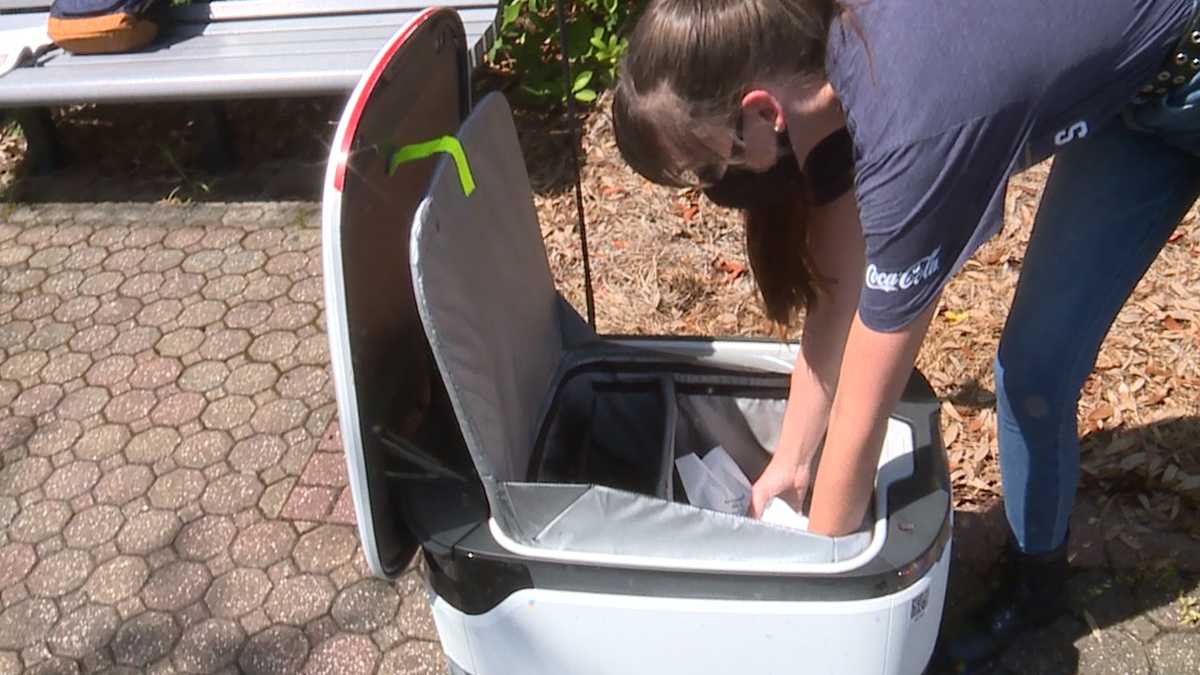
Six-wheeled robots independently navigating the streets and sidewalks on Georgia Southern’s Statesboro Campus may look a little strange. But it will soon be commonplace as these ground robots, which look like a cooler on wheels, have been mapping routes to campus locations in preparation for contactless food delivery this fall. Thanks to a partnership with Starship Technologies, Georgia Southern is the first university in the state to provide faculty, staff, and students with 20 autonomous delivery robots to deliver food from on-campus dining locations to designated pickup locations. Since August, Starship’s robots have been delivering food ordered on the Starship app from University dining facilities and places such as Starbucks, Market Street Deli and Sushi with Gusto to patrons around campus. The robots, which are energy efficient, can have their location and delivery time tracked by recipients through the app. They can also maneuver around obstacles such as pedestrians. “My hope is that it brings a sense of enhanced safety and convenience to our students,” said Clint Bridges, IT Business Owner at Georgia Southern University. “While we are all living through the COVID-19 pandemic, we are hoping that the robots will allow for easier social distancing. The fact that students can order a meal from their residence hall room and have it delivered by an automated delivery vehicle keeps them close to home where they can feel the most at ease and still enjoy a meal from one of our dining locations on campus.” Starship Technologies officials say the robots have been proven to be popular. “Students are looking for ways to get food delivered in the safest and most convenient way possible at the moment,” said Ryan Tuohy, senior vice president of Business Development at Starship Technologies. “Our robots are fast, friendly and help make life a little bit easier, especially in these challenging times.” If you are journalist and would like to know more about how Georgia Southern is constantly innovating and discovering new ways to safely enhance the on-campus experience for students - simply reach out to Georgia Southern Director of Communications Jennifer Wise at jwise@georgiasouthern.edu to learn more and arrange an interview today.

Georgia Southern University President Kyle Marrero delivered a virtual State of the University fall 2020 address to faculty and staff, broadcast live from the Performing Arts Center on the Statesboro Campus on Aug. 12. Maxing out with 1,507 viewers at one point, University members tuned in from remote locations to hear the president discuss how Georgia Southern is successfully adapting during extraordinarily difficult times and will continue to be nimble during the fall semester. “We are being asked to be innovative, flexible, nimble and willing to adapt and change,” Marrero said after welcoming all back to the three campuses. “And I want to thank you. You all have been tremendous, remarkable, heroic even, as we made it through these times and as we navigate through these uncertain times.” Marrero touted the herculean efforts of faculty and staff, who maintained the integrity of the University’s five pillars — student success, teaching and research, inclusive excellence, operational efficiency, effectiveness and sustainability, and community engagement, in the midst of a pandemic that caused the University to move fully online in March. He cited specific examples of performance excellence since March with the following collective efforts: Moved more than 5,000 classes to fully online to complete the Spring 2020 Semester; Delivered summer term fully online while seeing credit-hour generation move up by more than 4%, compared to the Summer 2019 Semester; Moved 4,600 students out of housing and provided support for more than 100 students who remained on campus; Refunded almost $11 million in housing, dining and fees to students; Held virtual Spring 2020 Commencement, viewed by more than 100,000 worldwide; Provided more than $11 million in CARES Act grant funding directly to students; Developed and began implementation of Initial Return to Campus and Return to Campus Plans, based on input from more than 130 faculty staff across campus and public health guidance from the Centers for Disease Control and Prevention and the Georgia Department of Public Health; Modeled a 14% state budget reduction for FY21, then completed a 10% realized reduction, totaling $14.2 million; Developed and implemented flexible and remote work processes; Assessed and modified almost 5,000 courses for fall 2020; Prepared campus with signage, cloth face coverings, face shields, PPE, hand sanitizer stations; Formed and implemented the CARES Service Center; Continued communication, coordination and monitoring of community health care providers, public/private schools, municipalities and agencies. Marrero also presented August figures showing that fall 2020 enrollment looks strong compared to this same time last year, however, he was quick to note that the figures may fluctuate based on various factors throughout the semester. Final fall enrollment figures will be released in October. “We can continue to move forward,” he said. “We can continue to elevate and live our mission and our vision and our values even in these times. We will adapt, we’ll be nimble and we’ll ensure that every day that the public health and safety of our faculty, staff, students and our community is of paramount importance. “I am confident that we are ready as we can be and together we’ll assess and navigate the entirety of the fall semester with the goal and outcome of our students being successful. As a whole Georgia Southern University can make it through this together.” If you are journalist and would like to know more about Georgia Southern university and how it is succeeding during COVID-19, simply reach out to Georgia Southern Director of Communications Jennifer Wise at jwise@georgiasouthern.edu to arrange an interview today.
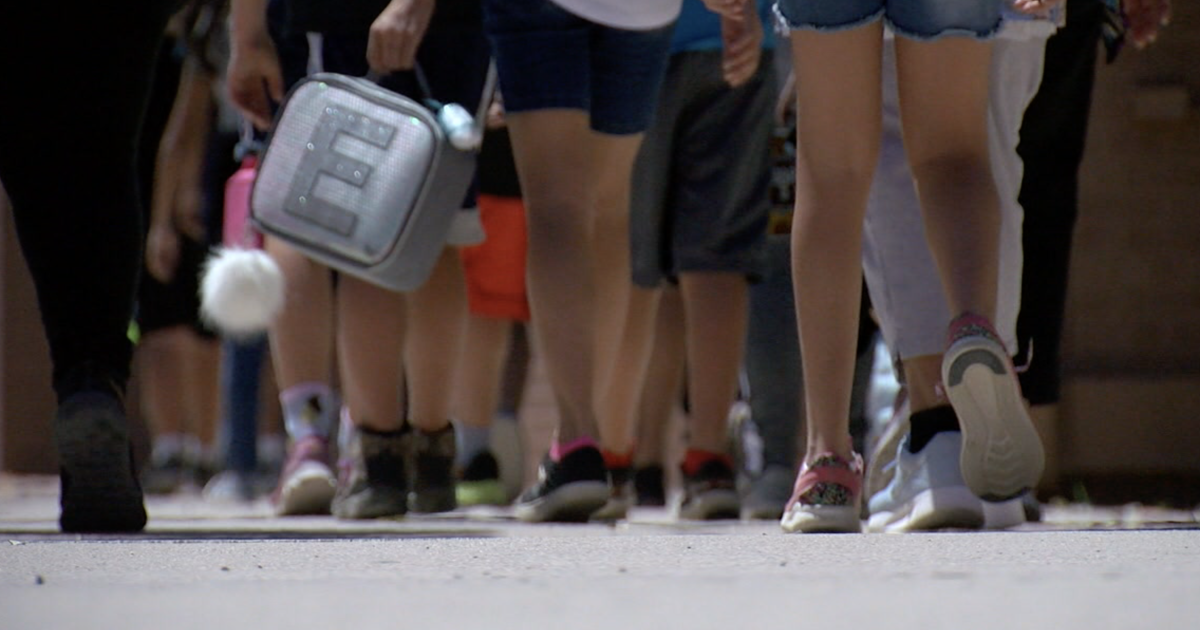
Back to school anxiety - How can parents prepare kids as the time to go back to school gets closer?
The new school year is usually an exciting time for kids and a time to celebrate for parents who have been keeping busy all summer long. A new grade and new adventures at school await. But this year, with children heading back to class in just a few short weeks, anticipation has been replaced by anxiety as a lot of kids are stressed about the idea of returning during COVID-19. For most children, predictability can play a major part in being comfortable and feeling secure. As well, with children seeing the news, having spent months in lockdown and knowing that they’ll likely be wearing a mask all day, the pressure of the ‘unknown’ may be enormous. “It is normal for kids to feel nervous about returning to school, especially if they have been learning from home for months,” said Dr. Meredith Rausch, a leading counselor education expert and associate professor in the Department of Advanced Studies and Innovation in the College of Education at Augusta University. “To help ease their anxiety, I encourage parents to reassure their children about the safety measures in place to keep them safe and remind them about the positives, such as being able to see their friends and teachers.” Rausch also recommends the following tactics parents can do at home to help ease the back-to-school anxiety. Wear a mask at home: Wear one while playing a game, reading a book or having some screen time. Normalizing life in a mask may be the new normal. Share how you feel: Parents who can share their feelings will likely prompt children to share their own. Let kids know that adults are nervous and are sometimes afraid too, and encourage young ones to open up and express any lingering or pent up emotions. This coming school year will be like no other in memory, and as parents get kids ready to head back into the classrooms – there are still a lot of questions remaining. If you’re a journalist covering this topic – then let our experts help. Dr. Meredith Rausch is a leading expert in counselor education, and her research focuses on underserved populations, particularly LGBTQ+ individuals and women. Rausch is available to speak with media regarding this important subject. Simply click on her name to arrange an interview today.


Racial and LGBT bias persists in ridesharing drivers despite mitigation efforts
Despite efforts by ridesharing companies to eliminate or reduce discrimination, research from the Indiana University Kelley School of Business finds that racial and LGBT bias persists among drivers. Platforms such as Uber, Lyft and Via responded to drivers' biased behavior by removing information that could indicate a rider's gender and race from initial ride requests. However, researchers still found that biases against underrepresented groups and those who indicate support for the LGBT community continued to exist after drivers accepted a ride request -- when the rider's picture would then be displayed. In other words, their efforts shifted some of the biased behavior until after the ride was confirmed, resulting in higher cancellation rates. Understanding whether bias has been removed also is important for ridesharing companies as they not only compete against each other but also with traditional transportation options. "Our results confirm that bias at the ride request stage has been removed. However, after ride acceptance, racial and LGBT biases are persistent, while we found no evidence of gender biases," said Jorge Mejia, assistant professor of operations and decision technologies. "We show that signaling support for a social cause -- in our case, the lesbian, gay, bisexual and transgender community -- can also impact service provision. Riders who show support for the LGBT community, regardless of race or gender, also experience significantly higher cancelation rates." Mejia and co-author Chris Parker, assistant professor in the information technology and analytics department at American University in Washington, believe they are the first to use support for social causes as a bias-enabling characteristic. Their article, "When Transparency Fails: Bias and Financial Incentives in Ridesharing Platforms," is published in Management Science. They performed a field experiment on a ridesharing platform in fall 2018 in Washington, D.C. They randomly manipulated rider names, using those traditionally perceived to be white or Black, as well as profile pictures to observe drivers' behavior patterns in accepting and canceling rides. To illustrate support for LGBT rights, the authors overlaid a rainbow filter on the rider's picture profile. "We found that underrepresented minorities are more than twice as likely to have a ride canceled than Caucasians; that's about 3 percent versus 8 percent," Mejia said. "There was no evidence of gender bias." Mejia and Parker also varied times of ride requests to study whether peak price periods affected bias. They found that higher prices associated with peak times alleviated some of the bias against riders from the underrepresented group, but not against those who signal support for the LGBT community. They believe that ridesharing companies should use other data-driven solutions to take note of rider characteristics when a driver cancels and penalize the driver for biased behavior. One possible way to punish drivers is to move them down the priority list when they exhibit biased cancellation behavior, so they have fewer ride requests. Alternatively, less-punitive measures may provide "badges" for drivers who exhibit especially low cancellation rates for minority riders. But, ultimately, policymakers may need to intervene, Mejia said. "Investments in reducing bias may not occur organically, as ridesharing platforms are trying to maximize the number of participants in the platform -- they want to attract both riders and drivers," he said. "As a result, it may be necessary for policymakers to mandate what information can be provided to a driver to ensure an unbiased experience, while maintaining the safety of everyone involved, or to create policies that require ridesharing platforms to monitor and remove drivers based on biased behavior. "Careful attention should be paid to these policies both before and after implementation, as unintended consequences are almost sure to follow any simple fix."

New System of Infrared Sensors Maintains Privacy While Keeping Patients Safe
Short of cameras, there are few tools at the disposal of health care providers or loved ones to remotely monitor patient safety within hospitals and assisted living care facilities. This challenge was on Bob Karlicek's mind when he and a team of other researchers developed a new system of infrared sensors that is able to provide real-time data about a person’s movements in a room while also maintaining their privacy. “We can thread this balance of information and privacy,” said Karlicek, the director of the Center for Lighting Enabled Systems & Applications (LESA). “It turns out that lighting and light field sensing give us a tremendously powerful tool for figuring out where people are and estimating what they are doing, but without creating an image of who they are.” The system relies on what Karlicek calls occupant-centric control. More specifically, a set of sensors uses infrared light to measure distances between sensors and objects in order to identify where someone may be in a room. This information can help determine if a person is standing, sitting, or lying down on the floor. It can also distinguish between where people are standing and how they are interacting with other people. Such measurements could alert a caregiver that someone has fallen or document the last time someone checked on their loved one. The use of infrared light to measure distance is not a new concept. What’s novel about this approach, Karlicek said, is the development of a very inexpensive sensor that has data analytics built right into it, allowing the sensors to collect data, process it, and communicate with each other in order to track movement within a room. Karlicek is available to discuss this technology and other efforts LESA is working on to make buildings more capable, efficient, and helpful to the people who use them.


STORY: By the Numbers - CAA looks back on key initiatives from the pandemic
It’s been almost five months since COVID-19 started to dominate headlines in Canada and many people and businesses had to adapt to quickly changing circumstances. As one of Canada’s largest membership organizations, with multiple areas of business, CAA had to navigate the changes in various industries in order to keep CAA members safe. The initial response As a travel company, our agents helped to rebook hundreds of passenger travel itineraries as flights were cancelled and borders closed. CAA’s travel insurance company, Orion Travel Insurance, worked with thousands of insureds to extend their trip cancellation and interruption insurance policies while offering additional protection for travel suppliers’ vouchers and credits. As the community spread of COVID-19 started to take hold, CAA had to make the difficult decision to implement contact-free service and ask members to seek alternative transportation from their breakdown location, all in the interest of keeping members and drivers safe. To help do our part to curb the spread of the virus, a decision was made in early March to close all of CAA’s retail stores across south-central Ontario. While the state of emergency had not yet been implemented by the province, we felt it was the right thing to do. All CAA associates across the company quickly adapted to work from home. Shortly after, a state of emergency went into effect in Ontario and CAA was established as an essential service both for roadside and insurance operations. A Responsibility to do something good Once the safety of CAA operations was taken care of, we quickly started looking at how else we can make a difference during this difficult time. First, we committed to supporting healthcare workers and first responders by offering free roadside assistance during this crisis. We then leveraged our network of trucks to deliver vital food and supplies to those in need. CAA worked with several large organizations in need, such as food banks, Meals on Wheels, Mobilizing Masks for Healthcare Workers and other community service groups, to assist with delivering vital supplies where they were needed urgently. CAA also felt that it was important to stay connected and check in on the vulnerable members of our community who are struggling most. We created Operation Outreach to proactively reach out to a group of CAA members who were over the age of 75. The initiative was overwhelmingly positive with members appreciating the call and opportunity to interact with someone. One member even offered to join our outbound-calling team and to help check in with others. As the pandemic continued, we noticed that another important way we could give back and help people in need was through our insurance coverage. We saw that Canadians everywhere were feeling the profound social, emotional and financial effects of COVID-19, and so CAA Insurance looked at every possible way to help people save money. We are the only insurance company offering a 10% rate reduction on both home and auto policies, as well as a $100 Auto Insurance Relief Benefit. Unlike other insurers, we made sure that the rate reduction would be valid for the duration of the 12-month policy term. By the numbers Everything that was accomplished throughout the pandemic was possible thanks to the hard work of dedicated Associates and the enduring support of our Members. While many Members may join CAA for roadside or to sign up for insurance, they are also contributing to the community. The COVID-19 pandemic presented an opportunity for us to support our Members and the communities in which they live. We are pleased to share the impact that was made throughout this time.

STORY: All CAA Stores in South Central Ontario are now open
We are excited to announce that all CAA Stores will be re-opening on Friday, June 26, with proper safety, cleaning and physical distance measures in place. This decision was made with careful consideration as we reviewed the status of reopening in the province and the health and safety of our associates and members. The safety of our members, customers and associates remains our top priority. We have put in place some changes to the store operations to ensure everyone's safety while still offering the exceptional retail experience our members expect. They include: Installation of plexiglass screens at counters and desks Providing personal protective equipment for associates and members Limiting the number of members allowed in the store at one time Signage and floor decals to encourage physical distancing Sanitizing stations for members Changes to store hours The COVID-19 pandemic is an evolving situation and we will continue to monitor as needed to maintain the health and safety of our members and associates.

MEDIA RELEASE: CAA announces the recipients of two provincial school zone safety awards
CAA South Central Ontario (CAA SCO) is proudly awarding two dedicated school zone safety volunteers with Provincial Safety awards. Tyra Sayles, 13, from Brantford has received the CAA School Safety Patroller of the Year award, and Kerri-Ann Sagert a grade 4/5 teacher at Agincourt Jr Public School in Toronto, has received the CAA School Safety Patrol Supervisor of the Year award. “For over 90 years, the CAA School Safety Patrol® program (SSP) has been advocating for the safety of children on their way to and from school, and in school zones. Sayles and Sagert are true road safety champions,” says Leslie Rocha, community relations specialist, CAA SCO. Sayles has been in the program for three years, and excels in her extracurricular activities and academically as well. “I do my best to balance everything because I take pride in making the world a better place in the things I do,” says Sayles. The CAA School Safety Patrol program is a joint effort between CAA, the police, school boards, teachers, busing consortia, parents, and approximately 20,000 dedicated student volunteers. In Brantford, there are over 800 students that participate in the program. “The students really respect and listen to Tyra. When it was discovered that students acted differently once Tyra got off the bus, she offered to stay on the bus for an extra hour of the day with no hesitation,” says Richard Melski, SSP Patrol Supervisor. Sagert, has been a part of the SSP program for 10 years. “I believe in everything the program stands for so much that I actively promote the program to younger students at the school, who will become Patrollers themselves,” says Sagert. Toronto Police constable and nominator Claudia Bednarczyk says, “She understands the value of having the CAA School Safety Patroller program at the school, and knows how to run it effectively, with little help.” Both awards were announced last night in a year-end online celebration for patrollers in Ontario and Manitoba. Patrollers, teachers and supervisors took part in the virtual celebration hosted by DJ Metime also known as Sarah Barrable-Tishauer and choreographer, Boneless. In Ontario, approximately 900 schools participate in the CAA School Safety Patrol program. CAA SCO works with over 50 partners to help deliver the program. For more information, visit https://www.caaschoolsafetypatrol.com/.