
Experts Matter. Find Yours.
Connect for media, speaking, professional opportunities & more.

Baylor Expert Shares Six Lessons We Can Learn From Mr. Rogers About Being a Good Neighbor
WACO, Texas (Nov. 14, 2019) – In this polarized time, when it requires little effort to tear a stranger apart on social media or lash out at a family member because of a difference of opinion, the gentle cadence of Fred Rogers singing a simple song about neighbors loving and helping each other is a welcome respite. The much-anticipated movie, “A Beautiful Day in the Neighborhood,” starring Academy Award-winner Tom Hanks as Rogers – known to generations simply as “Mr. Rogers,” the host of “Mister Rogers’ Neighborhood” – will be released in theaters on Nov. 22. The official movie trailer posted on YouTube has drawn nearly 12 million views. Civics education expert Brooke Blevins, Ph.D., associate professor of social studies education and chair of Baylor University’s department of curriculum and instruction, said the renewed focus on the beloved and soft-spoken TV personality, who died in 2003, might be coming at just the right time. “When you watch Mr. Rogers, time slows down, and you are able to take a deep breath as complicated issues become more understandable and the beauty of relationships is reinforced,” Blevins said. “Imagine if we all walked into the world with the belief that each person was inherently worthy. Imagine if our goal was to help each other recognize that we are worthy of being loved. Imagine if we sought to listen more than we spoke,” she said. “I imagine if this was the case, that our conversation would change, our understanding of those around us would shift, and our national conversations would be more civil.” Below, Blevins shares six lessons we can learn from Mr. Rogers about being better citizens. Each person is worthy to be loved and heard. Like Mr. Rogers, we must recognize that each person we interact with is worthy to be loved and listened to. We must recognize that each person has unique experiences, fears, losses and triumphs that shape the way they understand what’s happening around them. We need to do much more listening and far less talking. We should work together to tackle tough issues in reasoned and evidenced-based ways with civility and a genuine desire to understand those around us. Use your platform for good. Mr. Rogers was deeply committed to creating a better world. Mr. Rogers did not take his role on TV lightly. He saw it as an opportunity to help young people make sense of the world around them and to become more knowledgeable and engaged citizens. He saw television as an opportunity to create community and a shared sense of purpose. As he once noted, “The space between the television screen and whoever happens to be receiving it, I consider that holy ground. A lot happens there.” Lessons we often think are for children are for adults as well. Mr. Rogers was a teacher, a pastor and a friend. His lessons were drawn from the everyday experiences of children’s lives, from current political events to personal and emotional trials children experience. Not only were these lessons for children, but for their parents who were also watching. His lessons focused on cultivating civic discourse, reasoned judgment and evidence-based decision-making, but most importantly, his lessons cultivated understanding and empathy for one’s neighbor. In his conversations and examples, he drew on our shared humanity to help young people make sense of an ever-changing world. Slow down. In a time of fast-paced and often silly cartoons that were designed to move quickly from scene to scene, Mr. Rogers maintained a much slower and thoughtful pace. A pace that was compelling to both young and old alike. He explored issues slowly and with depth, without the silly antics that are so often used to keep children and adults’ attention. He used his time with viewers to develop a relationship that valued their experience and honored their emotional complexity. He sent the message that all people are inherently valuable and are capable of loving and being loved. It’s OK to discuss tough issues – even with children. But be civil and understanding when you do it. As an ordained minister and gifted musician, Mr. Rogers utilized his vocational skills to create a safe space in which difficult conversations could occur. He never shied away from the tough conversations. From issues such as divorce, death, assassination and even 9-11, Mr. Rogers’ helped young people navigate emotionally traumatic events with both knowledge and compassion. Mr. Rogers knew that by talking about our fears, losses and misunderstandings, we could work together to build a better future. As he wrestled with these issues, he asked questions, he inquired, he listened, and he had children do the same. He had a deep-rooted commitment to helping children navigate their world. Be a good neighbor. Being a good neighbor is caring about those around you. It’s not just about tolerance, but truly seeking to understand those in your community. Being a good neighbor means helping those around you recognize that they play an important part in making the world a better and more just place. It means working together to solve complex issues and cultivate a world in which all people can fulfill their true purpose. ABOUT DR. BROOKE BLEVINS Brooke Blevins, Ph.D., teaches both undergraduate and graduate courses in secondary education, social studies education and multicultural education. As a former secondary teacher, she has a passion for equipping teachers with the resources needed to engage in humanizing social studies education. Dr. Blevins also serves as the co-director for the iEngage Summer Civics Institute, for which she and co-founder Dr. Karon LeCompte have raised more than $250,000 in grant funding. Dr. Blevins’ research focuses on social studies education as a means to prepare active and engaged citizens. In her work, Dr. Blevins examines how to prepare teachers to develop both political clarity and pedagogical content knowledge that encourages them to engage in transformational based and humanizing social studies education. In addition, Dr. Blevins also is interested in how to educate and empower young people to become active civic participants through participation in action civics and digital technologies. ABOUT BAYLOR UNIVERSITY Baylor University is a private Christian University and a nationally ranked research institution. The University provides a vibrant campus community for more than 17,000 students by blending interdisciplinary research with an international reputation for educational excellence and a faculty commitment to teaching and scholarship. Chartered in 1845 by the Republic of Texas through the efforts of Baptist pioneers, Baylor is the oldest continually operating University in Texas. Located in Waco, Baylor welcomes students from all 50 states and more than 90 countries to study a broad range of degrees among its 12 nationally recognized academic divisions. ABOUT BAYLOR SCHOOL OF EDUCATION Founded in 1919, Baylor School of Education ranks among the nation’s top 20 education schools located at private universities. The School’s research portfolio complements its long-standing commitment to excellence in teaching and student mentoring. Baylor’s undergraduate program in teacher education has earned national distinction for innovative partnerships with local schools that provide future teachers deep clinical preparation, while graduate programs culminating in both the Ed.D. and Ph.D. prepare outstanding leaders, teachers and clinicians through an intentional blend of theory and practice. Visit www.baylor.edu/soe to learn more.


Baylor Study: What Does It Take to Be an ‘Ideal Daughter?’
Researchers say new study gives voice to daughters and value to their role in the family WACO, Texas (Nov. 11, 2019) – The roles of daughters in the family structure and in society are difficult to define and they’re rarely understood – even by daughters themselves – said Allison Alford, Ph.D., clinical assistant professor of business communication in Baylor University’s Hankamer School of Business. Alford, who served as an editor on the book “Constructing Motherhood and Daughterhood Across the Lifespan,” is the lead author on a new study, “Role Expectations and Role Evaluations in Daughtering: Constructing the Good Daughter,” published in the latest edition of the Journal of Family Communication. “Our research has found that ‘daughtering’ is invisible work that is not often credited, and it’s as unique as the individual women who are doing the work,” Alford said. “This study and subsequent conversations hopefully will bring to light the idea of daughtering. And as more people hear about it and learn about it, then we’ll start to give credit to it and notice it in our own lives.” The study centers on mother-daughter relationships, specifically, and looks at how daughters perceive and define their roles in that relationship. Researchers interviewed 33 women, ages 25-45, who have living mothers under the age of 70. Those age ranges were chosen in order to capture a time period for mothers and daughters with the greatest likelihood that neither individual was the caregiver of the other and both were in relatively good health, the researchers wrote. Expectations of the “Ideal Daughter” Alford said analysis of the interviews with the daughters revealed four themes or role expectations for an “ideal daughter” in relation to her mother: Showing respect Providing protection Eliciting mothering Making time for connection Each of those efforts requires work, and that work often goes unnoticed or is undervalued – even by daughters themselves, Alford said. The study noted that many of the women who were interviewed initially – almost naturally – anticipated talking about their mothers instead of themselves. “When asked to think about themselves as daughters and their communication in the relationship, many found themselves doing so for the very first time,” the researchers wrote. “These women noted that putting the emphasis on themselves and describing their role as adult daughters felt strange or awkward in its newness.” Showing Respect Respect, the study showed, was the most common topic addressed by the daughters. Based on the interviews, a daughter’s respect for her mother could be demonstrated by avoiding conflict, silencing one’s disagreement with her mother, reacting positively to her mother’s messages and supporting her mother’s power position. “Daughters demonstrated respect by adapting their communication to affirm their mothers’ competence or otherwise avoid offending and disregarding them,” the researchers wrote. One woman, identified as Kelsey in the study, said she listens to her mother talk about things she dislikes and sometimes apologizes to her mother even when she doesn’t feel apologetic. “I would never say, ‘Mom, I don’t want to hear it,’ because I would never say that to my mom. Ever. I would listen to her … I would listen to her tell me things I don’t wanna hear all day long, and never tell her,” Kelsey said. Providing Protection A number of the adult daughters interviewed felt there was an expectation that they would actively protect their mothers. This could be a daughter protecting her mother’s wellbeing, protecting her mother from being taken advantage of, or protecting her from the disrespectful actions of others, including siblings. One woman, Sabine, described a time when she had to stand up to her brother because she felt he was taking advantage of their mother’s goodwill. In addition, she said she had to “get after” her mother for not employing boundaries with the brother. The examples in the study illustrated that many daughters were happy to be champions for their mothers, but some noted that it was difficult to be protectors. Eliciting Mothering A number of the daughters who were interviewed said they struggle a bit with their roles as adults – or even as mothers themselves – who still need to engage with their mothers and ask for assistance. Many said they still seek interaction and approval from their mothers as a sense of pride. “When a daughter calls upon her mother for guidance or activates a need for an emotional evaluation such as pride, she is fulfilling her role expectations,” the researchers wrote. One woman, Lottie, said of her mother: “She compliments me as a mother. I think I feel like a good daughter when I feel like I am making her proud and she lets me know that she is proud of me … and I guess that makes me feel like a good daughter.” Connection In their descriptions of “good daughters,” a number of the daughters interviewed said it was important to set aside time to connect with their mothers. This, the study showed, could be anything from talking on the phone, meeting face to face, taking grandchildren to visit or even moving to a home nearby. Sometimes the expectations are stated outright by the mothers, but that’s not always the case, the researchers explained. Changing the Language Alford said her research has shown that the “language” of daughtering is almost nonexistent in social discourse as well as in scholarly or popular works. For example, she said, a daughter who is caring or supportive is often described as being “motherly.” “That’s an example of giving credit to mothers as being the only people who care for others, versus saying that the daughter is a caring person or that she’s supportive,” Alford said. “We want to think of daughtering as its own form of work and responsibility and put a value on that, so we can see the value that we’re putting into our family relationships and family systems.” One desired outcome of research into this area, Alford said, is that daughters will be given a voice and their valuable work within the family will be acknowledged. “The work that daughters do is important and valuable and the more that we talk about it and bring it to light, the more that we will understand what daughters can bring to the relationship and improve the mother-daughter relationship,” she said. ABOUT THE STUDY The study, “Role Expectations and Role Evaluations in Daughtering: Constructing the Good Daughter,” is published in the Journal of Family Communication. Authors are Allison Alford, Ph.D., clinical assistant professor of business communication in Baylor University’s Hankamer School of Business; and Meredith Marko Harrigan, Ph.D., professor of communication at SUNY Geneseo. ABOUT BAYLOR UNIVERSITY Baylor University is a private Christian University and a nationally ranked research institution. The University provides a vibrant campus community for more than 17,000 students by blending interdisciplinary research with an international reputation for educational excellence and a faculty commitment to teaching and scholarship. Chartered in 1845 by the Republic of Texas through the efforts of Baptist pioneers, Baylor is the oldest continually operating University in Texas. Located in Waco, Baylor welcomes students from all 50 states and more than 90 countries to study a broad range of degrees among its 12 nationally recognized academic divisions. ABOUT HANKAMER SCHOOL OF BUSINESS AT BAYLOR UNIVERSITY At Baylor University’s Hankamer School of Business, integrity stands shoulder-to-shoulder with analytic and strategic strengths. The School’s top-ranked programs combine rigorous classroom learning, hands-on experience in the real world, a solid foundation in Christian values and a global outlook. Making up approximately 25 percent of the University’s total enrollment, undergraduate students choose from 16 major areas of study. Graduate students choose from full-time, executive or online MBA or other specialized master’s programs, and Ph.D. programs in Information Systems, Entrepreneurship or Health Services Research. The Business School also has campuses located in Austin and Dallas, Texas. Visit www.baylor.edu/business and follow on Twitter at twitter.com/Baylor_Business.


Watching Holiday Rom-Coms Can Be a Hallmark of a Strong Relationship, Marriage
Staying in for a good holiday romance movie, or Hallmark marathon? Ronald Rogge, psychology professor from the University of Rochester, says holiday rom-coms and chill can be great for your marriage or relationship. Watching and discussing five movies about relationships over a month can cut the three-year divorce rate for newlyweds in half, according to Ronald Rogge, associate professor of clinical psychology at the University of Rochester. Rogge’s 2014 study involving 174 couples was the first long-term investigation to compare different types of early marriage intervention programs. The findings showed that an inexpensive, fun, and relatively simple movie-and-talk approach can be just as effective as other more intensive therapist-led methods—reducing the divorce or separation rate from 24 to 11 percent after three years. "We thought the movie treatment would help, but not nearly as much as the other programs in which we were teaching all of these state-of-the-art skills," said Rogge, lead author of the study. "The results suggested that husbands and wives have a pretty good sense of what they might be doing right and wrong in their relationships. Thus, you might not need to teach them a whole lot of skills to cut the divorce rate. You might just need to get them to think about how they are currently behaving. And for five movies to give us a benefit over three years—that is awesome." Overall, Rogge’s research found that couples who'd watched relationship & romance movies together and talked about what they watched, were 50 percent less likely to divorce. Other holiday-specific movies used in the original study, or that work well to watch as a couple, include “Family Man,” “Four Christmases,” “Surviving Christmas,” “When Harry Met Sally,” “Love Actually,” and, of course, “It’s a Wonderful Life.”



Coming next fall, Georgia Southern University School of Human Ecology will debut the Birth to Kindergarten Teacher Education Program. The program offers students the opportunity to apply for a Georgia teaching certificate at the completion of all program requirements. The program was designed to operate with a strong social justice lens. “We, the program developers and supporters, know how important it is to recognize the role that contextual influences like race, religion, income level and family structure play in a child’s growth and development,” said Georgia Southern Associate Professor of Child and Family Development Dina Walker-DeVose, Ph.D. “Our program seeks to cultivate cohorts of teachers who are equipped with a sound knowledge base that is grounded in research, a teaching pedagogy that is culturally responsive and flexible to the needs of diverse groups of children, and a spirit of advocacy to support and fight for each and every child, particularly those who are marginalized in our society.” Associate Dean of the College of Behavioral and Social Sciences, John Kraft, Ph.D., said the decision to house the program on the Armstrong Campus in Savannah was influenced by M. Ann Levett, Ed.D., alumna and superintendent of Savannah-Chatham County Public Schools. Levett is experienced in developing early childhood education centers. “Dr. Levett’s vision is more than childcare or pre-k in the ordinary sense,” Kraft said. “She wants these children to experience a holistic program that integrates systemic child development and educational programming and intervention. Birth to kindergarten certified teachers are the foundation for her early childhood education centers.” Walker-Devose said program graduates will have experience working with young students, and they will benefit from a financial standpoint because of the specific training. “Our students will enter the classroom feeling well-equipped for the difficult task of meeting children at their current level of mastery and moving them toward identified goals,” she said. “They will be able to do this while recognizing that certain contextual factors such as race and family income have real impacts on student outcomes. Equipped with this knowledge, skill set and a teaching license, they will be compensated at higher rates than those who are not licensed.” Walker-Devose said Southeast Georgia communities will be one of the biggest benefactors of the program. “Every community that is touched by the children who will be educated by the amazing teachers we will produce will benefit from the program,” she said. “Research shows a positive return on investment for every dollar that is invested in quality early childhood education. This body of research is another reason that society should be looking for ways to support its youngest learners and fairly compensate those trusted with their care and education.” Are you a reporter looking to learn more about Human Ecology and how it will positively impact communities not just in Georgia but potentially across America? Then let our experts help. John Kraft is the associate dean of the College of Behavioral and Social Sciences at Georgia Southern. He has written about human social behavior and is considered an expert in the field. Dr. Kraft is available to speak with media regarding this topic – simply click on his icon to arrange an interview.


Higher education must rediscover the 'service ethic' of teaching
Earlier this autumn, Otterbein University hosted the Democratic National Congress for a debate of its presidential candidates. All eyes from across America and around the world were on Otterbein and it was with that attention that the school’s president John Comerford weighed in with his thoughts on how leaders need to prioritize higher education. “Today the nation’s attention will shift to Otterbein University in Westerville, Ohio, as we host the next Democratic presidential primary debate. Questions will abound — of the candidates, between the candidates and, afterward, about who may or may not have “won” the night, all in the service of helping voters decide who might be best suited to lead. An important question that should be asked and won’t, however, isn’t for the candidates at all but for higher education: “Are you ready to lead?” Sadly, the answer is, “No.” Make no mistake, I fully expect plenty of discussion about higher education at the debate — its high costs, student debt, workforce shortages and the difficulty of change. I just hope the candidates don’t hold back in calling to account higher education itself simply because we happen to be their hosts. There is plenty of blame to go around with the challenges in higher education today, and higher education institutions themselves own a fair share of it. Perhaps no issue contributes more to higher education’s affordability problems than institutions’ — and parents’ — preoccupation with “prestige.” Exclusivity and selectivity are thought to be hallmarks of quality, which fosters a system that rewards institutions for perpetually raising admission standards and prices. The problem with this is that test scores — the most frequently-used metric for a student’s academic strength — generally track with a family’s income. Students from higher-wealth families have higher test scores and more frequently gain entrance to “selective” institutions, which steadily become less and less diverse. To essentially segregate students by their parents’ income this way, however, is un-American and does nothing to enrich an education or advance quality in research or instruction. It is the inevitable product, though, of a mindset that “selective” and high rankings are the top priorities in higher education. This is a falsehood that needs to be turned upside down…” October 15 – The Hill The rest of the op-ed is attached – and it is well worth the read. But if you are a journalist covering this topic or wish to learn more – then let us help. John Comerford is an expert in higher education, regional and national topics. He is the President of Otterbein University and is available to speak with media regarding higher education in America. Simply click on his icon to arrange an interview.

Teaching kids about addiction and the opioid epidemic
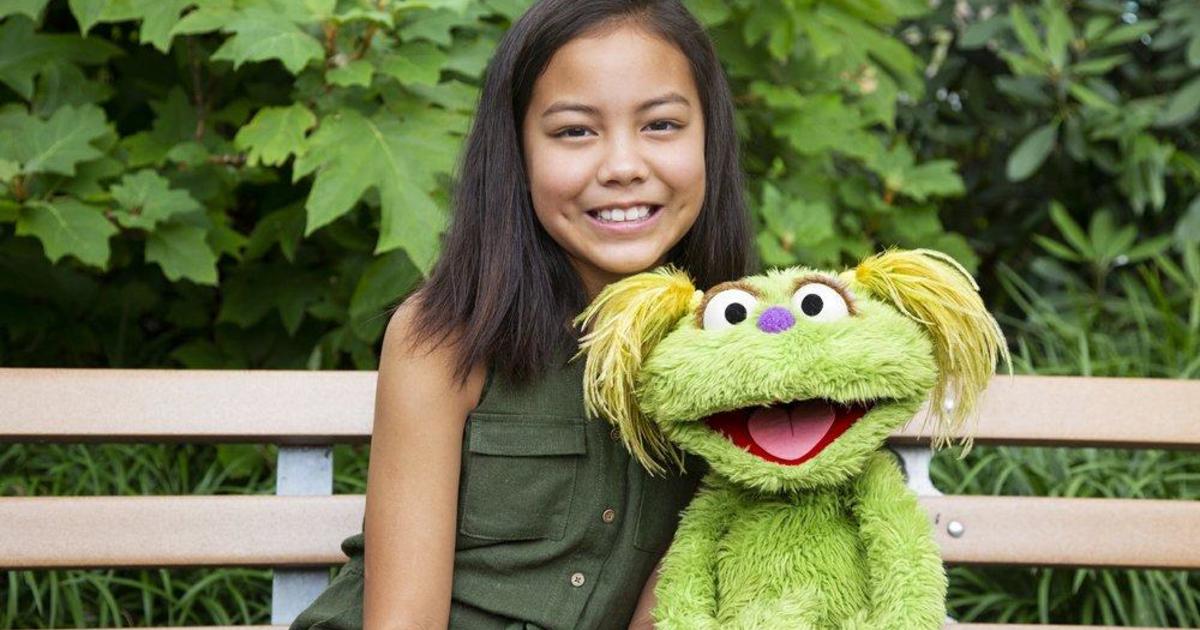
If there is one thing we all know, it is that children are resilient, aware and often impacted by the actions and environments that surround them. And as America is still in the grips of the opioid epidemic, it was only a matter of time before a traditional and respected outlet like Sesame Street took the lead on making sure children could relate. According to Sesame Workshop, 5.7 million children under the age of 11 in the U.S. live with a parent battling a substance abuse disorder. That's one in eight kids and doesn't include children who have been separated from a parent due to circumstances like divorce, incarceration or death related to their addiction. "Addiction is often seen as a 'grown-up' issue, but it impacts children in ways that aren't always visible," said Sherrie Westin, President of Social Impact and Philanthropy at Sesame Workshop. "Having a parent battling addiction can be one of the most isolating and stressful situations young children and their families face." "'Sesame Street' has always been a source of comfort to children during the toughest of times, and our new resources are designed to break down the stigma of parental addiction and help families build hope for the future." CBS NEWS, October 10 Are you a journalist covering the opioid epidemic or addiction issues in America? If so, let our expert help with your questions and coverage. There are a lot of questions and that’s where we can help. Dr. Marc Sweeney is the Founding Dean of the School of Pharmacy at Cedarville University and is an expert in the fields of drug abuse, prescription drug abuse and Opioid addiction. Marc is available to speak with media regarding this growing issue. Simply click on his icon to arrange an interview.

On August 3, 2019, a white power-inspired gunman killed 24 people and injured 22 others at a Wal-Mart in El Paso, Texas. We tend to understand mass shootings as isolated events committed by “lone wolf” gunmen who might have mental health problems, but what we know about the El Paso gunman – as well as the terrorists who carried out mass killings at the Al Noor Mosque and Linwood Islamic Center in Christchurch, New Zealand in March 2019, the Tree of Life Synagogue in Pittsburgh in 2018, and at the Emanuel African Methodist Episcopal Church in Charleston, South Carolina in 2015 – tell a different story. The evidence investigators have complied shows that these white-power terrorists had never met one another, but that they lived in an on-line world created by 4chan, 8chan, and white-power organizations’ websites, where they consumed racist ideas and propaganda that shaped their decision to kill African-Americans, Muslims, Jewish people, and Mexicans and Mexican-Americans. We also know that white-power terrorists have particular goals in mind. Message boards like 8chan reveal a competition among participants about who can top the number of people killed in the last mass shooting. There is also a strong belief expressed on-line that killing racial minorities will foment a race war and allow white-power advocates to create an all-white world. I describe these terrorists as advocates of white power because it is important to understand that “white power” and “white nationalism,” a term often used in the media to describe the perpetrators of recent mass killings and the movement that animates them, are not the same thing. White nationalism calls to mind an effort to shore up the interests of white people within the American nation as it currently exists. The white-power movement, on the other hand, imagines a transnational, Aryan nation of white people living in an all-white world after wiping out non-whites. This might sound far-fetched, but does not mean that those who carry out mass killings in pursuit of this goal are mentally ill. Rather, their actions are the result of a white-power ideology fostered and spread on-line. What is new about how white-power advocates communicate with each other is that some of it now happens on-line. Interaction between racists who never met one another, however, has a long history in the United States. Approximately 4,100 African Americans were lynched between the end of the Civil War in 1865 and the 1960s. The white perpetrators of these lynchings lived hundreds of miles apart and often did not know one another, but they were united in a collective effort to enforce Jim Crow white supremacy in the American South (I use “white supremacist” here because white southerners who carried out lynchings did not, broadly speaking, subscribe to white power as the current movement defines it: the creation of a transnational, Aryan nation of white people living in an all-white world after wiping out non-whites). Lynchings were sometimes public events that drew hundreds or thousands of people with the purpose of “teaching” southern African Americans what would happen to them if they violated the rules of Jim Crow. Southern newspapers ran stories that justified lynchings; perpetrators took pieces of flesh, body parts, and hair from lynching victims as souvenirs and passed them around; and white southerners took lynching photographs, turned them into postcards, and mailed them to friends, family, business associates, and fellow travelers in the white supremacist movement. This racist community building had the goal of creating and maintaining white supremacy and, of course, it all happened without the help of the Internet. Communication, whether on-line or through the more traditional means has played an integral role in fostering and perpetuating racial violence and hatred. If you are a reporter covering this topic – let one of our experts help. Dr. Anthony DeStefanis is an associate professor of history at Otterbein University. He specializes in modern U.S. history with an emphasis on labor and the working class and immigration, race, and ethnicity. Dr. DeStefanis is available to speak with media regarding the history of racial violence in America – simply click on his icon to arrange an interview.

How are Governments Using Artficial Intelligence? How are They Misusing AI?
There has been a lot of talk about artificial intelligence – who is using it, how it works, and what it will lead to. Rensselaer Polytechnic Institute professor James Hendler – who was recently named to the newly formed Association for Computing Machinery (ACM) Technology Policy Council – penned a piece for The Conversation outlining the danger A.I. could pose to American society if there is not enough oversight. Here are some excerpts: “Artificial intelligence systems can – if properly used – help make government more effective and responsive, improving the lives of citizens. Improperly used, however, the dystopian visions of George Orwell’s “1984” become more realistic. On their own and urged by a new presidential executive order, governments across the U.S., including state and federal agencies, are exploring ways to use AI technologies. As an AI researcher for more than 40 years, who has been a consultant or participant in many government projects, I believe it’s worth noting that sometimes they’ve done it well – and other times not quite so well. The potential harms and benefits are significant...” “...Other government uses of AI are being questioned, too – such as attempts at 'predictive policing,' setting bail amounts and criminal sentences and hiring government workers. All of these have been shown to be susceptible to technical issues and data limitations that can bias their decisions based on race, gender or cultural background. Other AI technologies such as facial recognition, automated surveillance and mass data collection are raising real concerns about security, privacy, fairness and accuracy in a democratic society....” “...As the use of AI technologies grows, whether originally well-meant or deliberately authoritarian, the potential for abuse increases as well. With no currently existing government-wide oversight in place in the U.S., the best way to avoid these abuses is teaching the public about the appropriate uses of AI by way of conversation between scientists, concerned citizens and public administrators to help determine when and where it is inappropriate to deploy these powerful new tools.” Are you a reporter covering AI? Then let us help with your stories and ongoing coverage. Professor James Hendler is the Director of the Institute for Data Exploration and Applications at Rensselaer Polytechnic Institute. He is available to speak with media – simply click on his icon to arrange an interview.



Baylor Faculty Member Earns $5 Million Grant to Study Meal Deliveries for Rural Students
Baylor University’s Texas Hunger Initiative has taken an important step this week in helping move the University towards its Research 1/Tier 1 aspirations with the announcement of a $5 million grant to expand access to food for students living in rural Texas communities. Kathy Krey, Ph.D., assistant research professor and director of research and administration for Baylor’s Texas Hunger Initiative, has been awarded the three-year grant from the United States Department of Agriculture for a research project aimed at testing a novel approach to distributing food during the summer to rural students age 18 and under. The grant is from USDA’s Food and Nutrition Service. According to the National Center for Education Statistics, more than 3 million children in Texas receive free or reduced-price meals during the school year. During the summer when schools are not in session, food is available to eligible families through federal and state programs, but some students – particularly those who live in rural areas – may have difficulty accessing the food programs, leaving them without consistent access to nutrition. “The current solution to this problem, the federal Summer Food Service Program, doesn’t fit every scenario, because it requires that students congregate at a summer feeding site, often at a school or other central location,” Krey said. “Especially in rural areas, which Texas has a lot of, those meal sites can be less effective because there are transportation, cost or awareness barriers for students who are more broadly dispersed from schools and other potential meal sites.” Improving access to summer meals through mail delivery Krey and her colleagues at THI will be testing a program where families in selected areas of the state who don’t have access to a summer meal site can receive food deliveries through the mail. Grant funding will be used to purchase shelf-stable, nutritionally complete meals, including fruits and vegetables, which are packaged and delivered directly to families. The goal in designing this program, Krey said, is not to eliminate site-based summer feeding programs, but to supplement them with other mechanisms that can be more effective for Texas students whose food needs may not be met by the current system. “We envision a future in which summer feeding sites still exist. In communities where populations are centrally located, the site-based model can make a lot of sense, but we know that it’s going to take a lot of innovative solutions to meet the diversity of the problem especially in a state like Texas that has so many different geographies and different realities in terms of population density,” Krey said. The dual problems of hunger and poverty are closely related since students who don’t have access to healthy meals are at greater risk of low academic achievement and disciplinary problems. A failure to address nutritional deficiencies, Krey said, can contribute to a cycle of poverty that continues from generation to generation. “Research has proven that students need consistent access to healthy food to perform optimally in school,” she said. “If we think about generational poverty, education is such a key factor in students’ being able to break that cycle, and one way they can be equipped to do that learning is by having regular access to nutritious food. “In the summer, there aren’t as many resources and opportunities to get food, which is why it’s so important that we figure out innovative ways to use public and private resources to make sure that low-income kids have access to food during the summer,” she said. The grant also will provide research opportunities for undergraduate and graduate students. Andrea Skipor, graduate student in Baylor’s Diana R. Garland School of Social Work, said her work with the project provides important experiences in application of the concepts taught in class. “In social work, evidence-based practice is a huge part of what we do,” Skipor said. “We learn so much in a classroom, but we don’t always get the opportunity to use it. This project has really given me a way to use my social work and community research skills in a way that has sparked an interest in research for my future practice.” Krey credits students like Skipor with providing invaluable assistance in carrying out important research. “We’ve been really honored with the student researchers and student workers who have come alongside us and acquired great experience in designing a pilot research project. We’ve been so impressed with the Baylor University students’ talent and commitment and we’re really honored to have them as part of this project,” Krey said. The Texas Hunger Initiative is a multi-disciplinary project dedicated to ending hunger through research and innovation and committed to strengthening public policy to address domestic food insecurity. Jeremy Everett, founder and executive director of THI, said the organization was founded on a realization that complex societal problems like hunger and poverty need solutions that leverage the resources of the public and private sectors, faith-based organizations and university researchers. The initiative’s broad-based approach includes a widely-dispersed staff that can observe problems first-hand to come up with evidence-based solutions. “We have field staff throughout the state working in a learning-lab capacity. The average researcher might have their own laboratory. Our laboratory is the state of Texas,” Everett said. It’s a strategy that Everett said is fundamental to Baylor’s mission to positively impact the lives of people in need. “We want to leave society better than we found it,” Everett said. “Our faculty and students want to be engaged in research and evaluation, but they also want to see how that makes a difference in a young child getting access to food who previously wouldn’t have had it without that engagement.” ABOUT BAYLOR UNIVERSITY Baylor University is a private Christian University and a nationally ranked research institution. The University provides a vibrant campus community for more than 17,000 students by blending interdisciplinary research with an international reputation for educational excellence and a faculty commitment to teaching and scholarship. Chartered in 1845 by the Republic of Texas through the efforts of Baptist pioneers, Baylor is the oldest continually operating University in Texas. Located in Waco, Baylor welcomes students from all 50 states and more than 90 countries to study a broad range of degrees among its 12 nationally recognized academic divisions. ABOUT THE TEXAS HUNGER INITIATIVE AT BAYLOR UNIVERSITY The Texas Hunger Initiative (THI) at Baylor University is a capacity-building and collaborative project, which develops and implements strategies to end hunger through policy, education, research, community organizing and community development. THI works to make the state food secure by ensuring that every individual has access to three healthy meals a day, seven days a week. THI convenes federal, state and local government stakeholders with non-profits, faith communities and business leaders to create an efficient system of accountability that increases food security in Texas. THI’s work is supported by the Walmart Foundation, No Kid Hungry, and PepsiCo’s Food for Good. Along with its office located within the Diana R. Garland School of Social Work at Baylor, THI has offices located in Austin, Dallas, Houston, Lubbock, McAllen and San Angelo. For more information, visit www.baylor.edu/texashunger.

When people hear the term “assisted living,” they might think “nursing home” or “old folks’ home.” But what people don’t know is that interior designers are working hard to ensure that these facilities provide a sense of comfort and a sense of home to their residents. “Designing for assisted living environments requires careful consideration of the needs of the residents living there. But really, in that way, it is no different from designing for any population,” said Elise King, assistant professor of interior design in Baylor University’s Robbins College of Health and Human Sciences. Baby boomers would rather live at home or in a residential setting, according to SeniorLiving.org. This will require more locations to have independent and assisted living available. With the baby boomer generation transitioning into retirement, many will require additional care but don’t want to be in nursing homes like their parents. “You should always begin by understanding the users of the space and assessing their needs and requirements,” King said. “And what you’ll find is that across the lifespan, while there are different needs which must be met by various functional requirements, our innate desires are not that different.” 1. Bring outdoors inside by incorporating nature into facility design. One way designers enhance facilities is by incorporating nature into their design and bringing the outdoors inside. At Baylor, Debra Harris, Ph.D., associate professor of interior design — who has researched the impact of health care facility design on patients, families and health care workers — teaches a sustainability course that addresses some aspects of nature in design. “We reinforce all aspects of indoor environmental quality through research activities and through the entire design process,” Harris said. “For years, architects have discussed the concept of organic architecture and more recently, the term ‘biophilic design’ has been used,” King said. “And in the past 30 or so years, we’ve seen a growing body of research that supports what we’ve assumed for a long time, essentially that humans desire a connection with nature and that nature can have a positive impact on health and well-being.” She said one way this can be accomplished is by having ample windows, particularly those that look onto greenspaces or treetops. It also is important to consider that some residents will be using walkers, canes or wheelchairs. Window height should be considered so that all residents can benefit. Another way to incorporate nature into the design is by using natural materials when possible or using materials that have textures or patterns reminiscent of nature. Harris agrees that incorporating nature into a facility’s design is important and beneficial to the residents living there. “Direct access to nature, like gardening or nature walks, and indirect access to nature, through a window, provide real tangible benefits,” Harris said. 2. Access to natural light, as well as artificial light that mimics daylight, provides benefits to seniors that are associated with well-being. Harris said having access to natural light provides benefits associated with well-being, such as reinforcing our natural clock, known as circadian rhythms, which helps with the quality of sleep and may contribute to management of chronic conditions. Designing to provide access to nature through gardening and walking also can increase physical activity and social interactions, she said. Artificial lighting is also an important factor in interior design, especially for seniors. Harris said there are lighting systems that can mimic daylight, changing over the course of the day to support our circadian rhythms, which can lead to an elevated sense of well-being. This may contribute to other aspects, such as social interactions, physical activity, and satisfaction, she said. 3. Designing for all five senses is critical for making a facility feel more like home. King said it’s important to design for all the senses, not just the visual aspect of the facility. She said sound, smell and touch are other critical aspects that need to be taken into consideration to make a facility feel more like a home. “Designers have to use research to understand how we can best address the specific needs of a mature population through design,” King said. “By creating environments that value and support these innate needs — self-actualization, esteem, love and belonging, safety needs and physiological needs — we’re reinforcing a sense of place and hopefully, a sense of home.” ABOUT BAYLOR UNIVERSITY Baylor University is a private Christian University and a nationally ranked research institution. It provides a vibrant campus community for more than 17,000 students by blending interdisciplinary research with an international reputation for educational excellence and a faculty commitment to teaching and scholarship. Chartered in 1845 by the Republic of Texas through the efforts of Baptist pioneers, Baylor is the oldest continually operating University in Texas. Located in Waco, Baylor welcomes students from all 50 states and more than 90 countries to study a broad range of degrees among 12 nationally recognized academic divisions. ABOUT ROBBINS COLLEGE OF HEALTH AND HUMAN SCIENCES AT BAYLOR UNIVERSITY The Robbins College of Health and Human Sciences at Baylor University was established in 2014, a result of identified priorities for strengthening the health sciences through Baylor’s strategic vision, Pro Futuris, and the University’s Illuminate strategic plan. The anchor academic units that form Robbins College – Communication Sciences and Disorders; Family and Consumer Sciences; Health, Human Performance and Recreation; Public Health; and Division of Health Professions – share a common purpose: improving health and the quality of life. The College’s curricula promotes a team-based approach to transformational education and research that has established interdisciplinary research collaborations to advance solutions for improving quality of life for individuals, families and communities. For more information, visit www.baylor.edu/chhs.
