
Experts Matter. Find Yours.
Connect for media, speaking, professional opportunities & more.

Van Gogh is coming to Augusta. Are you ready to immerse yourself in 300 of the artist's works?
Beyond Van Gogh — The Immersive Experience is coming to Augusta later this month. The exhibit has been getting rave reviews and has wowed more than 5 million art lovers interested in the famous Dutch painter since it began touring in 2017. It has been named 2021's best immersive experience by USA Today and was ranked among the 12 best immersive experiences in the world by CNN. But before it arrives, hear from Scott Thorp, chair of the Augusta University Pamplin College of Arts, Humanities and Social Sciences Department of Art and Design, for an expert's perspective before the exhibit opens locally. Why do you think an exhibit like this has exceeded expectations nationwide for those who've come to see it? I believe these types of exhibitions exceed expectations because they are so stimulating. They include a new type of interactive media that entirely surrounds the viewer. You are more of a participant than a viewer in these situations. It’s like Disney is coming to your hometown. People are used to craning their necks to view static art on a wall. With this, you have to keep looking around to ensure you are getting everything. The technology here is relatively novel. Plus, it’s all around you. Sometimes museums feel intimidating, stuffy, or exclusive, so not everyone feels comfortable in those environments. However, blockbuster shows for Van Gogh or Monet have historically done exceptionally well. I look back to an exhibition at the Corcoran Gallery of Art in 2003 as a precursor to exhibits that use the work of established artists to create new and interesting environments. A sculptor named Seward Johnson exhibited his sculptural interpretations of impressionist paintings at the Corcoran Gallery of Art. It was called “Beyond the Frame.” And it was a huge success. You could walk into Van Gogh’s bedroom or Renoir’s “Luncheon of the Boating Party.” Do you think we'll see more exhibits like this in the future with other artists? Yes, this is only the beginning. There are several companies like Meow Wolf that do this all the time. Meow Wolf started back in 2008 and has been creating all kinds of engaging, high-tech installations. This will spread to more permanent venues such as the Illuminarium in Atlanta. The Illuminarium currently has a Georgia O’Keefe exhibition up. Could you see permanent exhibits like this in museums to give visitors a unique experience? I actually see these popping up all over the place. As they move forward, I’m sure artists will use this medium as their own. So it won’t be just about an artist of the past; the experience will be the actual work of contemporary artists. One thing that’s also interesting is there are applications for interactive spaces in many fields. Augusta University has an interactive wall in radiology. Thorp is also associate vice president for research at Augusta University and has worked for more than a decade as an exhibiting artist. His research interests include user-centered design, design thinking, and the psychology of creativity. Scott is available to speak about Beyond Van Gogh — The Immersive Experience. Simply click on his icon now to arrange an interview today.


In High Frequency Trading, Every Nanosecond Counts!
In the financial world of high frequency trading, high-performance computers are duking it out in real time to score on instantaneous profit opportunities that appear and vanish in the blink of an eye. According to Bob Laliberte, Senior Analyst at ESG Global, "It’s critical for HFT organizations to eliminate potential network latencies from the start, by employing advanced, next-generation network platforms that leverage intent-based logic, ultra-low latency (ULL), high availability, and ease of management." Networking giants like Cisco are very aware of this need, and that knowledge fueled their 2020 acquisition of Exablaze, a company specializing in the design and manufacture of devices that can deliver ultra-low latency network performance. "Clearly, this technology infusion will enable a next-generation platform and enhance Cisco’s solid domain expertise in the financial sector", said Laliberte. Delivering near "instantaneous" trading will require a next generation physical network designed to deliver highly predictable end-to-end bandwidth featuring ultra-low latency. "Zero-hop" network designs such as AcceleRoute can achieve this through a bufferless architecture that delivers ultra-low latency approaching that of direct links while eliminating congestion in the network core.


Aston University MEG scanning facilities used by start-up to launch new brain health service
MEG scanning services at Aston Institute of Health and Neurodevelopment (IHN) have been used to launch the world’s first brain-imaging service to measure and assess brain health. Commercial brain imaging service Myndspan launched a service to assess brain health and identify concussions, with an event at Aston University. Start-up, MYndspan, was founded in 2020 by Caitlin Baltzer, former vice president of operations at functional brain imaging company Croton Healthcare and Janne Huhtala, previously chief executive of MEGIN, the global leader in functional brain imaging. The service was created to support brain health across populations, using cutting edge brain scanning technology to monitor and extend healthy cognitive lifespans. The brain imaging service is powered by a non-invasive brain scanning technology called Magnetoencephalography (MEG), which measures the electrical signals between neurons to form a highly detailed map of brain activity and function. The MEG scanner, which is located in the Aston Institute of Health and Neurodevelopment, at Aston University, identifies and observes functional ‘invisible injuries’ to the brain, such as concussion or PTSD, that can’t be seen from an MRI image of the brain. MYndspan’s service combines MEG scans with gamified tests of cognitive function, which measure a range of mental processes such as attention, memory, and visuospatial processing. Using these two measures of brain health, cognitive function and brain function, MYndspan provides a comprehensive overview, detailed in a thorough, easy-to-understand report of how a person’s brain is behaving and why. Among the service’s first customers are neuroscientist and author Dr Dean Burnett who is using MYndspan to monitor the effect increasing physical activity has on his brain over time and Vicky Macqueen former England Rugby player and chief executive of Didi Rugby, who is using the service to measure her pre-concussion baseline for playing contact sports safely. Through routine monitoring of personal brain activity, MYndspan helps people assess and understand their brain health. This helps to identify issues before symptoms emerge and supports optimal lifestyle and clinical intervention. Its first application is concussion, where the technology can support the recovery of an estimated 3.8 million athletes who experience sports-related concussion annually. Janne Huhtala, MYndspan co-founder said: “MYndspan’s technology can identify concussed brain activity and objectively identify and monitor recovery from a concussion. Currently, individuals are deciding to go back to play based on how they feel – a decision that can have life changing consequences. “We think athletes deserve to have objective information about where they are in their recovery, to make the best and most informed decisions.” MYndspan’s service will be available to the general public at Aston University’s Institute of Health and Neurodevelopment (IHN), an international leader in advanced technology to explore brains, development and healthy behaviours. IHN at Aston University is the first of many planned locations around the world where individuals will be able to access the service. MYndspan co-founder Caitlin Baltzer added: “The brain is hugely complex and exciting, and whilst there is a vast body of research and knowledge already available, there is still so much for us to learn about how it functions and changes over time. “In a world where we can track and optimise every part of our health, and our lives, the brain remains neglected. At MYndspan, we believe that every person has the right to better brain health and this begins with knowing our brains. “We are very excited to launch our brain scanning technology at Aston University as a demonstration for how digital health tools can support brain health and ultimately help more people recover and age better.” Dr Dean Burnett, neuroscientist and author, including of the Guardian blog ‘Brain Flapping’, said: “I'm a big proponent of anything that helps people understand their brains better, and MYndspan's new high-tech but easily accessible approach looks to be extremely useful in that regard.”


Aston University sets Meritics on course to become market leader in the bio-pharmaceutical sector
Aston University has completed a knowledge transfer partnership with Meritics Ltd to develop the company’s capability and underpinning knowledge to measure the size, concentration and distribution of biological entities, such as liposomes and exosomes, using proprietary particle analysers. The project will enable Meritics to enter the fast-growing biologics sector with their particle analysis instruments and services to significantly increase company turnover. It represented a significant change in direction for the company and focused on systems that would have the largest impact. Results provided Meritics with significant data and proof-of-concept applications required to widen the company’s product range into the biological market. It also broadened the company’s knowledge of biological applications and helped bridge gaps between the areas of interest and the limitations of the analysers. Meritics Ltd supplies and provides service support for a range of particle characterisation instrumentation to industrial, research and academic institutions in the UK. Additionally, it offers a range of consumables, analysis services and consultancy. A knowledge transfer partnership (KTP) is a three-way collaboration between a business, an academic partner and a highly qualified graduate, called a KTP Associate. The UK-wide programme helps businesses to improve their competitiveness and productivity through the better use of knowledge, technology and skills. Aston University is the leading KTP provider within the Midlands. The project was led by Dr Alice Rothnie and Dr Alan Goddard from Aston University’s Aston Centre for Membrane Protein & Lipid Research (AMPL), a specialist research group with a track record of biological particle characterisation. Dr Rothnie has over 14 years of experience working with liposomes, viral and cellular systems, while Dr Goddard brought over a decade of experience in biological membranes and nanoparticles ¬– mainly focusing on liposomes. Also working on this partnership as KTP Associate was Dr Megan Cox, whose proven expertise in biochemistry drove the innovation and research behind the project. Following the completion of the project, Dr Cox has been employed by Meritics as a Technical Specialist, using biological expertise to assess instrument parameters for biological entities. Brian Miller, founding managing director of Meritics, said: “The project has sped up the company’s plan to move into more biological application areas and widen our customer base. Aston University’s extensive knowledge in biology and biological entities is crucial for our wider sales and technical staff and provided invaluable visibility of the biological markets”. Dr Alan Goddard said: “Working in partnership with Meritics has allowed us to transfer our extensive experience of biological particles into industry. We have formed an exciting partnership which has continued past the end of the formal project, enabling cutting-edge research to be performed at Aston using the latest equipment.”


How to network virtually: What newcomers in Canada need to know
Newcomers to Canada already faced an uphill task of adjusting to their new life and starting a career in Canada, but COVID-related restrictions made things even harder. However, after an initial period of adjustment, virtual networking and remote job interviews have become the norm. Now, even with COVID-19 restrictions easing and people getting vaccinated, some aspects of the “new normal” are expected to continue for the foreseeable future. Due to its relative convenience, virtual networking will likely remain a popular means of building professional connections. This article covers key aspects of how to network virtually and the things you need to know about virtual networking for professional success as a newcomer in Canada. Advantages of virtual networking Start building your Canadian network before you land Before the COVID-19 pandemic, networking was mostly done in-person, which meant that newcomers to Canada could only start building their network after arriving in the country. However, with virtual networking, newcomers have the opportunity to start building their network well in advance of their arrival in Canada. You can start attending virtual networking events or meeting people for online coffee chats while preparing for your move. It can take months to cultivate meaningful professional relationships, so the sooner you start, the better prepared you’ll be to enter the Canadian job market when you land. Opportunity to look beyond your city One major disadvantage of in-person networking is that it geographically limits the people you can meet. With virtual networking, you can connect with experts or professionals, regardless of where they live. If you’re still preparing for your arrival, this gives you a chance to speak to people in different cities and figure out where the best job opportunities are for your industry in Canada. You can also learn about different job markets within Canada and plan your career path based on insights from a more geographically diverse set of people. The convenience of networking from home Attending events and networking meetings is time-consuming. By networking virtually, you can save the time it would take you to travel to the event venue or meeting place. This means that you can accommodate more coffee chats in a day and build your network faster. Many newcomers find it much easier to network from the comfort of their homes, compared to the unfamiliar and chaotic environment of a coffee shop. Since you are the person requesting the meeting, it is expected that you’ll be paying the bill for coffee during in-person meetings. These amounts can quickly add up and might impact your budget, especially if you’re meeting several people each week. In most cases, virtual meetings are also more convenient for the professionals you’re meeting, so your acceptance rate for virtual coffee chats may be higher than for in-person meetings. Easier to follow up and stay in touch Once you’ve made a connection and had an introductory meeting, it is important that you stay in touch with your new contact. However, as your network grows larger, it can become challenging to follow up with everyone on a regular basis—especially if you’re doing these meetings in-person. It’s much easier to stay connected and engage virtually over follow up coffee chats, emails, or social media. This will allow you to follow up more often and build stronger, more meaningful connections. How to build your network virtually as a newcomer in Canada Whether you’re looking to network or find a job, it is important that you keep your LinkedIn profile up-to-date. Your Linked In profile will likely be the first thing people see when they connect with you. Unlike a resume, which is customized for each job, your LinkedIn profile should be generic and should highlight all your skills, experiences, and certifications. Be sure to use a professional headshot and grab people’s attention with a compelling headline. Use LinkedIn’s advanced search filters to find new connections based on their organization, job title, and other criteria. Always personalize your LinkedIn connection request messages. You can also increase your visibility and promote your personal brand by being active on LinkedIn. Post, share, and engage with relevant content to get noticed by other professionals. Interact over social media As a newcomer, LinkedIn is not the only social network you can use to build a network. You can also find professionals you’d like to connect with on Twitter and initiate a conversation. Depending on your industry, Instagram and Facebook groups might be useful platforms for networking—but make sure your profile is professional! Clubhouse is another app where you can virtually meet and share ideas with like-minded people, listen to expert speakers, and ask questions. If your initial interactions go well, ask for a follow up coffee chat to take the conversation forward. Online networking platforms and virtual events Due to the ongoing COVID-19 pandemic, most networking events have moved to a virtual setting. Virtual networking platforms bring together people from similar industries and give you an opportunity to start making connections. Events hosted by industry associations are a great place to meet other professionals in your field. You can also find virtual networking events for different industries and interests on websites like Eventbrite and Meetup. Arrive webinars and workshops are also a great place to learn from and connect with experts. Leave a positive impression on others attending the networking session by behaving professionally and asking intelligent questions. Virtual coffee chats Online coffee chats (also called informational interviews) using tools like Zoom, Google Meet, and Webex, are a great way to build your network virtually. Once you’ve connected with someone on LinkedIn or at a virtual networking event, ask if they’d be open to a one-on-one meeting. Virtual coffee chats give you an opportunity to introduce yourself to established professionals in your industry, showcase your skills, and position yourself as an ideal candidate for future job openings. You can also seek recommendations on other people you should add to your network. If you’re looking for information about a specific organization, role, or industry, informational interviews can be particularly helpful. Be sure to do your research beforehand and have a list of questions ready. Reactivate your existing network As a newcomer, you’ll have to start building your network from scratch in Canada. However, there might be others in your network who are already in Canada. Speak with your friends and family to find out who you might already know here. You can also use LinkedIn to find alumni from your school or colleagues from your previous organizations who’ve since moved to Canada. Leverage your existing network to get introductions to other people in your industry or for job referrals. How do you effectively network virtually? Do your research. Learn what you can about the person you’re meeting beforehand and customize your questions accordingly. Going in prepared will make it more likely for you to get the information you’re looking for, and to make a good impression. Do check your technology. Make sure your internet connection, microphone and camera are in perfect working order before your virtual meeting. Take some time to familiarize yourself with the video call platform prior to your meeting. Always keep your camera on during meetings and if there’s noise in your background, put yourself on mute when the other person is talking. Do be professional. Go in with a list of topics you’d like to discuss and don’t ask personal questions. Be punctual and dress the way you would for in-person networking meetings. Create an appropriate work setting and keep your desk and background distraction-free. If you don’t have a dedicated workspace, apply a professional virtual background in your video call tool. Do be authentic and offer value. Express genuine interest in what people have to say and learn from their experience. Find ways to help the people you’re meeting—it’s a great way to demonstrate your skills in practice! Don’t skip the small talk. In Canada, small talk is a cultural practice, so make sure you allocate some time for it while creating your meeting agenda. It’s also a great way of breaking the ice and getting to know people you’re meeting and relate to them outside of their professional life. Don’t mistake your elevator pitch for a sales pitch. Your elevator pitch is a brief 30 second introduction meant to capture the other person’s interest. Highlight your skills, strengths, and achievements, but don’t oversell yourself. Don’t interrupt or multitask. Appreciate the fact that someone has taken the time to talk to you and pay attention to what they have to say. It’s rude to interrupt or check your phone when someone else is speaking. It can be very distracting, and more importantly, it gives people the impression that you aren’t interested in what they have to say. Be sure to put your phone on silent during networking meetings. There might be other distractions around you at home, such as children or pets, so find a quiet place for meetings. Don’t forget to follow up. If you’re meeting several new people every week, it can be hard to keep the conversation going with all of them. However, regular follow up is the best way to maintain professional relationships. Keep track of all your virtual meetings and create a realistic follow up schedule. Virtual networking has made it easier and more convenient for newcomers to expand their professional networks. As a newcomer to Canada, there are many online platforms and events you can leverage to start building your personal brand and growing your network virtually一even before you come to Canada. Original article located here, published by Arrive. About Arrive Arrive is powered by RBC Ventures Inc, a subsidiary of Royal Bank of Canada. In collaboration with RBC, Arrive is dedicated to helping newcomers achieve their life, career, and financial goals in Canada. An important part of establishing your financial life in Canada is finding the right partner to invest in your financial success. RBC is the largest bank in Canada* and here to be your partner in all of your financial needs.


Technical training, exposure to multiple industries and an open and inclusive culture help IT Associates innovate across CCG. They are often the quiet contributors to a project, taking a business idea from concept to delivery to allow strategic business endeavours to get off the ground. What they do and how they do it can be mysterious to many, with technical jargon, architectural details and complex processes at play. To succeed in IT requires incredible technical knowledge, a solid understanding of business processes, and innovative mindset with a natural curiosity to understand how multiple industry business systems all work together. Most importantly what’s needed is the desire for continuous learning. The IT department at CCG has enjoyed an incredible period of growth and development over recent years. In the last decade alone, CCG has undergone a major technology transformation, replacing every major business system required to support the different lines of business under the CCG umbrella including CAA Insurance, Orion Travel Insurance, CAA Travel, Membership and Emergency Roadside Services, while also implementing industry-leading innovations like CAA MyPace. We spoke to three tenured Associates to uncover their secret to success working in IT. What drives the culture of a team that often works behind the scenes but is vital to the success of all organizational projects? Lindsay Lamothe Typically, IT Associates have exposure to many business areas, giving them a well-rounded view of the various industries in which CCG operates. At first glance, one might think that this kind of exposure helps drive innovation and growth. But, while this is true for many, Lindsay Lamothe, Senior Business Systems Analyst for CCG’s Roadside Product Management, explains it’s more nuanced. “I think working in multiple lines of business at the organization led me down the path towards IT. I have no formal training in IT but having exposure to the business side of things gave me insights that continue to be valuable now that I work in a business enablement area,” shared Lamothe. “Being exposed to multiple industries while working in IT is a valuable opportunity to grow knowledge, but I think anyone who can learn more about the multiple industries we operate in would be well-positioned to do well in IT.” Lamothe started at CCG as a summer student to pay for university and eventually came on full-time working in auto travel, helping Members with TripTiks. She worked on the frontlines for ten years before shifting into IT and roadside assistance and has now been at the company full-time for 18 years. Her sense of purpose comes through very clearly when you speak to her about the impact of her work. “I am proud to work in IT at CCG because I am passionate about roadside operations. What we do saves lives,” said Lamothe. “If each code fix or enhancement that we work on gets us to the Member even five seconds sooner, that could be a matter of life or death. I know that we are making a difference in people's lives.” Voytek Bialkowski Voytek Bialkowski, just accepted a promotion to a director position in Enterprise Resource Planning. He also started his career at CCG and credits the technical learning opportunities offered for his continued success. Next month he marks the impressive milestone of 15 years with the company. “CCG is unparalleled in the marketplace in terms of professional growth and learning opportunities,” shares Bialkowski. “Our senior leaders have created a true knowledge culture by encouraging and celebrating professional development, certification, and lifelong learning. In my time with the IT department, I have earned four SAP certifications that furthered my technical skillset. I have also leveraged many of the programs available for Associates, such as the Lean Six Sigma White Belt and the Queens mental health certificate.” What truly sets CCG’s IT department apart is the emphasis on technical training that many Associates can receive right out of school or with little prior knowledge. Bialkowski explains, “CCG has provided me with multiple avenues for technological growth. Working on best-in-class systems and learning their functional and technical components has allowed me to become intimately familiar with SAP’s software suite, Greenfield SAP strategies and methodologies, data quality and data migration, application management, software development and testing lifecycle, as well as SQL and other query languages.” It's clear through the experiences of Lamothe and Bialkowski that learning opportunities and a broad array of opportunities to contribute to different areas of the business are key drivers of the success of CCG’s IT Associates. While hard skills and insights are essential, equally important is the culture of a team and the people that one works with to get things done. John Zhao John Zhao, Manager Quality Assurance in IT App Development & Architecture, shared his take on CCG’s culture and how that plays a role in delivering exceptional service to CCG’s business areas. “Collaboration and mutual respect underpin everything we do in IT. This is a big part of how we continue to learn and support each other,” shares Zhao. “Beyond these two values, we are encouraged to apply innovation to our daily process and products.” Innovation, being care-driven, leading by example, and collaboration are values that define CCG’s corporate culture across departments. Still, it is evident in speaking to Zhao that with tight deadlines and often unexpected challenges, they are especially engrained in the culture and approach of the IT department. Zhao’s experience at CCG aligns with Bialkowski and Lamothe’s, showcasing how fostering and developing technical knowledge internally and maintaining a broad perspective that can connect the dots across multiple industries are standard features of our IT approach. All three Associates underscore how the innovative and best-in-class approach of our IT department starts at the top. From Jay Woo, our CEO, to Apra Sekhon, our Chief Innovation Officer and Kin Lee-Yow, our Chief Information Officer, and their leaders. Together, they set the bar on integrating technology and innovation to ensure everyone aligns on promoting growth and knowledge to drive success for CCG’s IT Associates. As technology and innovation continue to grow, it’s valuable for all Associates to understand how this hardworking group of individuals support the essential work we do at CCG.


Major study reveals the lasting impact of Covid lockdowns
New research from the University of East Anglia reveals first-hand the lasting impact that lockdowns may have had on people’s mental and physical health. The UK’s first Covid lockdown was announced by Prime Minister Boris Johnson exactly two years ago today. Just a few days later, researchers at UEA launched a major project to track the mental and physical health of the nation through lockdowns and beyond. More than 1,000 participants carried out daily surveys – with questions on a range of lifestyle behaviours including physical activity, diet, sleep, smoking, drinking, and drug use. Some of the participants were then interviewed by the research team, to try to understand what was happening for people from their own viewpoints. Listen to what they had to say in our oral history project Lockdown Voices. New findings published today show how people responded very differently to social restrictions depending on their existing circumstances. For those who were less well-off to start with, adapting to lockdown was more difficult, and health behaviours typically worsened to a greater extent. In contrast, those who were better off at the start of the pandemic demonstrated faster adaptation and were more able to respond positively to restrictions, for example by taking to online exercise classes. It is likely that any lasting impact to mental and physical health will therefore be much greater for those who were worse off to start with. Those with good social links and healthy behaviours already in place described in their interviews how they were able to adapt to lockdown and thrive, whereas some of the more vulnerable in our communities had fallen into unhealthy spirals. Prof Caitlin Notley, from UEA's Norwich Medical School, said: “When the first lockdown was announced back in 2020, we started surveying participants from around the UK daily. Our initial results showed that people were eating less fruit and veg, getting less exercise and drinking more alcohol. “It quickly became apparent that lockdown may have lasting consequences for the physical and mental health of the nation. “We wanted to see whether people’s lifestyles changed in the long-term so we continued the study by carrying out regular surveys with the participants, and interviewing some people to find out more.” Now, two years on, the team’s results show how health inequalities are likely to have widened. Prof Notley said: “Social restrictions imposed as a result of the coronavirus pandemic have had a significant impact on health behaviours at the individual and population level. “It’s fair to say that all of our participants’ lives were disrupted by lockdown and they were forced to adapt. “But people responded to the lockdowns very differently and their experiences of social restrictions varied considerably. “Fundamentally, people were hindered or helped by their existing support structures and resources, such as access to technology to engage with the outside world, or private outdoor space. “Those people who had good friends, community links and who were already health conscious, were able to respond positively and better able to cope. “They were able to adapt to the ‘new normal’, use technology to keep in touch with friends and relatives, order veg boxes, carry on with a healthy diet and take part in healthy pursuits in new and innovative ways such as online fitness classes or ‘doing Joe Wicks’. “But lockdowns are very likely to have caused a sustained widening of social and health inequalities. “Those who remained in work outside the home, or who were retired, were the least impacted overall. But those who were unemployed, younger, on a lower income, clinically unwell or told to fully shield were particularly impacted by strict restrictions. “For these more vulnerable people, supportive social factors were taken away or severely restricted. Anxiety and depression worsened, and unhealthy behaviours like exercising less, drinking more alcohol, and eating a poor diet increased. “As we work through the ‘roadmap to recovery’, emphasis needs to be placed on a collaborative, community-based approach, with a focus on what makes us well. “Encouraging membership of community exercise groups, for example, may help those most impacted to engage again with healthy behaviours to keep them well. We also need to pay attention to how those who are less well-off responded more negatively to the policy of lockdown, so that lessons can be learnt for the future,” she added. ‘Disruption and adaptation in response to the coronavirus pandemic – assets as contextual moderators of enactment of health behaviours’ is published in the British Journal of Health Psychology.


In new study in journal Gene Therapy, researchers at ChristianaCare’s Gene Editing Institute describe how the advance is validating the safety and efficacy of their novel approach for using CRISPR to improve lung cancer treatments A new study from scientists at ChristianaCare’s Gene Editing Institute is advancing the safety and efficacy of using CRISPR gene editing in patient treatments by demonstrating how to identify and evaluate the broad-based biological impact of gene editing on targeted tissues, where the edits are designed to fully disable or “knock out” a specific sequence of genetic code. The work, published today in the Nature journal Gene Therapy, supports the Institute’s efforts to improve lung cancer treatments by using CRISPR to disable or alter a master regulator gene to prevent it from producing a protein that blunts the impact of chemotherapy. “We found that when you use CRISPR, the edits sometimes end up altering rather than completely disabling the target gene, so we developed a process to gain a more complete understanding of what that means for patients,” said Eric Kmiec, Ph.D., executive director and chief scientific officer of ChristianaCare’s Gene Editing Institute and the principal author of the study. Dr. Kmiec said that for his team’s lung cancer work, “We discovered that even when our CRISPR-based genetic manipulation did not completely disable the targeted gene, it altered it in ways that appear to make lung cancer tumors more sensitive to chemotherapy. Validating lung cancer research using CRISPR “We were fortunate that our strategy for using CRISPR to improve lung cancer treatments has been validated once again,” he added. “But our commitment to conducting an unbiased assessment of our approach highlights the importance of examining all potential outcomes of an attempt to use CRISPR to knock out a specific gene. Specifically, anyone developing CRISPR therapies needs to be on the lookout for edits that don’t fully knock out a section of DNA code—and evaluate the potential impacts for patients. They could be positive, as they were in our case, negative or neutral, but they need to be known.” Much of the excitement around medical applications of CRISPR involves using the tool to disable harmful genes by editing or “knocking out” a specific sequence of DNA code. But there is increasing evidence that in the wake of a CRISPR edit, cells may remain that contain merely an altered form of the targeted code that allows the gene to continue to produce biologically active proteins. Scientists at the Gene Editing Institute are investigating the potential of using CRISPR to disable a gene called NRF2 to alter production of the protein that protects squamous cell carcinoma lung cancer tumors from the effects of chemotherapy or radiation. They already have shown, in studies with tumor cells and in animals, that they can selectively target the NRF2 gene without affecting normal cells, where the gene confers health benefits. In the present study they wanted to go further. They wanted to fully understand the implications of a CRISPR gene edit that allowed the NRF2 gene to retain enough DNA code to continue making a version of the protein, albeit in an altered or truncated form. The team is laying the groundwork for a clinical trial that would use CRISPR to improve the efficacy of conventional chemotherapy and radiation treatments. Dr. Kmiec said that before proceeding, he wanted his team to develop a clear process for identifying and evaluating all outcomes of CRISPR edits. Identifying and understanding the diversity of genetic outcomes produced by CRISPR-directed gene editing has been a centerpiece of the foundational research programs established by the Gene Editing Institute. Using CRISPR in a safe way “We carry out experiments in an unbiased fashion, not hoping for a particular outcome, but with patient safety and efficacy serving as the true north for our scientific endeavors,” Dr. Kmiec said. “No matter what we uncover or elucidate, the insights will help both ChristianaCare and the entire field use CRISPR in a safer and more efficacious manner.” The researchers found multiple cells where the targeted strand of DNA code in the NRF2 gene was not completely knocked out. Rather, following the CRISPR edit, cells emerged that had retained enough of the original code to continue producing a different form of the protein. Tests revealed that cancer tumor cells generating these altered proteins may be more vulnerable to chemotherapy drugs. "For the work we are doing with NRF2, the truncated proteins generated by the CRISPR edit appear to be beneficial for making tumors more sensitive to treatment,” said lead author Kelly Banas, Ph.D. “But the key point is these proteins were clearly biologically active. And that means we needed to determine their potential impact on the safety and efficacy of using CRISPR to treat lung cancer patients.” Dr. Banas noted that the study points to the limits of considering a CRISPR edit to be successful simply by testing for the absence of a targeted protein in its original form. She said by that standard, their edit was successful. The edited NRF2 genes were no longer producing the same protein. But she said if that’s all the ChristianaCare team had looked for, they would have missed the altered proteins coming from the NRF2 gene—and overlooked an important outcome that, in this case, strengthens the original hypothesis and experimental approach: that using CRISPR to target the NRF2 gene holds promise for improving outcomes for lung cancer patients. Importance of due diligence “The process we describe in this study is a template that should be followed in any effort to develop CRISPR as a medical treatment,” Dr. Kmiec said. “We’re part of a health care organization where patient safety is the top priority. We also are working at the vanguard of an exciting area of cutting-edge medicine, where a failure to conduct due diligence could cause tragic outcomes that would set back this field for decades. With this study, we have validated a process that can help this field move forward rapidly but safely.” CRISPR stands for “clustered regularly interspaced short palindromic repeats.” It is a defense mechanism found in bacteria that can recognize and slice up the DNA of invading viruses. Scientists have learned how to modify this mechanism so it can be directed to “edit” specific sequences of DNA code. About ChristianaCare’s Gene Editing Institute The Gene Editing Institute, a worldwide leader in CRISPR gene editing technology and the only institute of its kind based within a community health care system, takes a patient-first approach in all its research to improve the lives of people with life-threatening disease. Since 2015, researchers at the Gene Editing Institute have been involved in several ground-breaking firsts in the field, including the development of the first CRISPR gene editing tool to allow DNA repairs outside the human cell which will rapidly speed therapies to patients and the ExACT ™pathway of single-stranded DNA repair, which increased the on-target efficacy of CRISPR and paved the way for new CRISPR breakthroughs in precise DNA edits. Its researchers created CRISPR in a Box™, the leading educational toolkit to teach gene editing, DECODR™, recognized as the most user-friendly and precise analytical tool to understand the diversity of genetic outcomes of gene editing and are currently developing a patient trial for lung cancer using CRISPR.

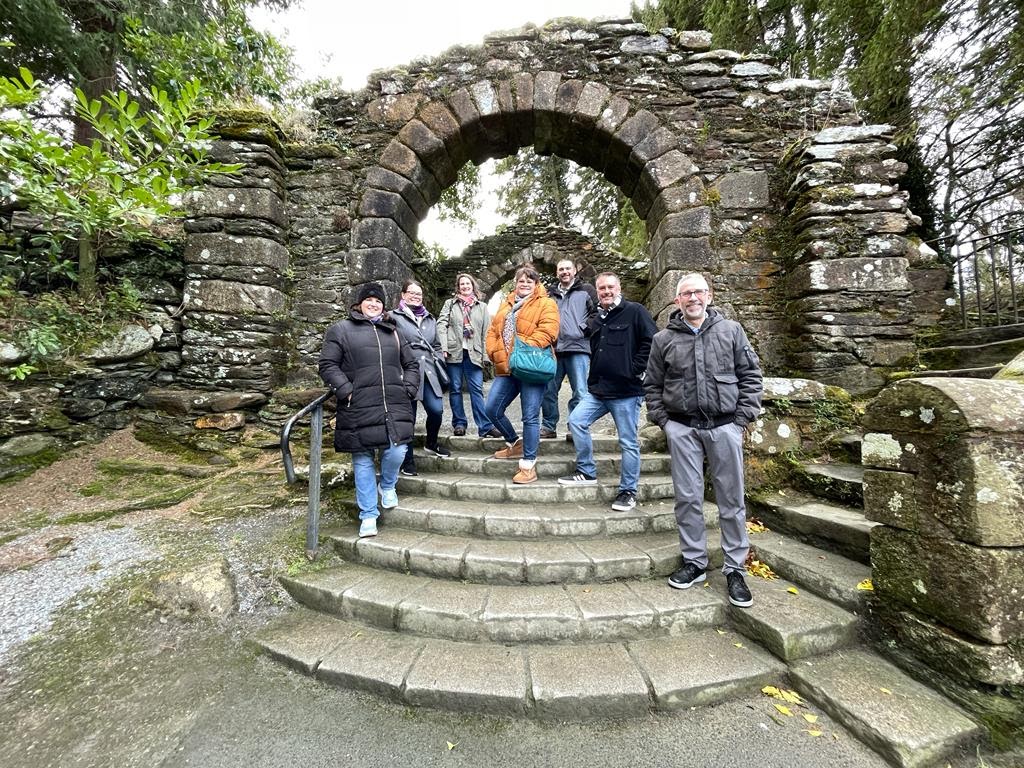
$100K student scholarship pool available for 2022 summer courses in Ireland Six professors from Georgia Southern University’s College of Education (COE) recently broadened their horizons during a trip to Ireland as they learned from and shared insight with instructors and educational leaders in the Wexford County community. Led by Howard Keeley, Ph.D., director of the University’s Center for Irish Research and Teaching, COE faculty traveled to Georgia Southern’s learning center in Wexford, Ireland, to observe Irish educational settings and exchange ideas with local leaders just ahead of a summer study abroad program opportunity for Georgia Southern students in which $100,000 of scholarship funding is available. “The main thing we did was get in front of leaders in the education space in Ireland,” stated Keeley. “We spoke to a number of folks who are either principals or vice principals or, in some way, senior administrators in a variety of schools including all-boys, all-girls, religious, secular and mixed schools.” The group included Catherine Howerter, Ph.D., associate professor of elementary and special education; Kip Sorgen, Ph.D., assistant professor of leadership, technology and human development; Alex Reyes, Ph.D., assistant professor of middle grades and secondary education; Amanda Wall, Ph.D., associate professor of middle grades and secondary education; Betsy Barrow, Ed.D., assistant professor of middle grades and secondary education; and Dan Calhoun, Ph.D., professor of leadership, technology and human development. Reyes, who trains pre-service and in-service teachers to work with culturally and linguistically diverse students, was excited to travel to Wexford after a study abroad program in Czech Republic she spearheaded with Wall was canceled in March 2020 due to the pandemic. Intrigued by Ireland, a plurilingual country, she was curious to see how Wexford’s environment might benefit students culturally. “I thought it was really exciting,” said Reyes. “All of the street signs are in Irish, even though English is the main language spoken. That prioritizing of that cultural heritage is fascinating. It was great to learn that the students in their primary and secondary schools take Irish language and culture as a subject every year.” She was especially motivated by a field trip to an Irish-language school, Meanscoil Gharman, which serves middle and high school students. With the exception of one daily class in English, teachers and students conducted all lessons in Irish. “It was really interesting to see that perspective,” she said. “There has been a revitalization of that culture. I thought that was fascinating to see how that can be handled in school.” In addition, Reyes was duly impressed with the country’s prioritization of social and emotional literacy for children, and the mandated well-being hours that are incorporated into daily school routines as a result of the pandemic. A program that promotes hygiene and an anti-bullying campaign also fit into the wellness curriculum. “It really impressed me that as a nation they prioritize the wellness of students, and how language and cultures can really be supported in a meaningful way,” Reyes said. “It’s affirming to see a proactive approach that has positive outcomes. Now, thinking ahead, we can look at how we can create opportunities for our students to experience this kind of approach.” Sorgen, who teaches in the educational leadership program at Georgia Southern, was interested in Ireland’s professional preparation. “None of them had advanced degrees, like what we offer at Georgia Southern,” noted Sorgen. “Learning about how to be a principal in Ireland is on-the-job training. In Georgia, there are specific educational requirements for our school administrators guided by professional standards. In Ireland, they generally ascend through the ranks, which makes professional mentoring essential to their success. We are exploring ways our educational leadership students could learn from Irish administrators about their experience, specifically with mentoring.” He also foresees the international partnership as a two-way exchange. “Given educational leadership programs are not common in Ireland, our faculty are considering ways in which we could use our expertise to foster leadership development of principals and teachers in Wexford,” said Sorgen. “We would utilize the Georgia Southern Wexford campus to host some of these sessions, furthering Georgia Southern’s relationship within the Wexford community.” Keeley also arranged meetings with education policy makers, including an extended meeting with an Irish congressman who is a representative for the County of Wexford in the Irish national parliament and chairs the joint committee for the Irish equivalent of the House and Senate Committee on education and higher education. “That was a tremendous opportunity for our faculty to talk to somebody at the highest level of government in Ireland, creating Irish state policy on education,” said Keeley. “And I know from the feedback we got from our College of Education colleagues that particularly for those in higher education, that to them was a really useful, next-step experience.” The trip exceeded expectations. “It was a fantastic learning experience for everyone,” said Keeley. “We had lots of high-level and also very practical experiences, and I could see our College of Education team thinking, ‘How can I bring what I’m learning, what I’m experiencing in this moment, into my classroom, into my curriculum, into my prospective study abroad courses in a way to build student success for our Georgia Southern folks.’ I think it was a great visit.” Complementing the faculty’s trip, a COE Irish study abroad program on diverse education in Ireland was recently approved for Summer 2022 and will give education students the opportunity to take one or two courses with the study abroad component. This will be a part of a broader study abroad program in Wexford, presented by the Honors College and the Center for Irish Research and Teaching, with assistance from the Office of the Provost and the Office of Global Engagement. The costs for undergraduate students at Georgia Southern’s Wexford campus will be offset by a $100,000 scholarship fund with awards of $1,000 for each student accepted into the program. “For students traveling to Wexford, Ireland, this summer, we will be able to defray the cost of the program through a generous travel scholarship through the Georgia Southern University Foundation,” said Dustin Anderson, Ph.D., associate provost for Student Success. “The donation makes these the most affordable multi-week programs that we ever have been able to offer.” Keeley is thrilled the gifts from generous donors will enable a number of students to earn valuable global experiences. “For students to have an opportunity to have international lives is powerful, and it’s powerful in ways that sometimes we can’t even predict,” he said. “Just the very fact of being abroad is going to change any of us, right? It can have a really transformative effect to feel a sense that, you know, as a student, ‘I can do this,’ and then a sense after the fact, ‘I did this,’ and just that in itself is educational. Giving students a safe space in Wexford, Ireland, to grow and feel that they are in a sense global citizens and bring the best of America, bring the best of Georgia, bring the best of the states from Savannah to Ireland, and learn to be an ambassador. That’s wonderful.” In addition to the education courses, students will also be able to choose from a Wexford-Savannah honors inquiry and an interdisciplinary program open to all students on human migration with courses in geography, religious studies, public health and a CORE study abroad course. Students interested can learn more about the program by clicking here and can email Kristin Karam in the Office of Global Engagement for more information about the scholarships. Georgia Southern University-Wexford is a global hub for learning housed in a historic building constructed in 1812. The space now features state-of-the-art classrooms and student apartments. Georgia Southern is the first public university in the United States to open an outreach learning facility in Ireland. If you're a reporter looking to know more about this initiative, then let our experts help. Howard Keeley, Ph.D., is the director of the Center for Irish Research and Teaching at Georgia Southern University. He is available - simply click on his icon now to arrange an interview today.


Dr. Janice Nevin named among Modern Healthcare’s 2022 ‘Top 25 Women in Health Care’
Nevin praised for her work expanding ChristianaCare’s efforts in health equity, value-based care and emerging technology ChristianaCare President and CEO Janice E. Nevin, M.D., MPH, has been named one of Modern Healthcare’s Top 25 Women in Healthcare for 2022. This is the second time Dr. Nevin has received this distinction. Modern Healthcare chose awardees – female executives from different sectors of the health care industry – who are guiding health care improvement by influencing policy and care delivery models across the country. A panel of judges and the top editors of Modern Healthcare made the selections. The publication focused on Dr. Nevin’s leadership in ChristianaCare’s use of innovation and technology to aid in the battle against COVID-19 and improve health equity. It also called attention to her leadership in ChristianaCare’s collaboration with Highmark Health; through a new joint venture company, ChristianaCare and Highmark are combining their expertise and capabilities to create better health and to make health care more affordable for everyone by taking costs out of the system. “I am deeply gratified by this award, but it is even more so a recognition of the incredible work all of ChristianaCare’s caregivers do every day to create better health,” said Dr. Nevin. “Living our values of love and excellence, we are transforming care and becoming not just a health system—but a system that truly impacts health.” Dr. Nevin has overseen growth at ChristianaCare during the past year that includes a joint venture with AccentCare (formerly Seasons Hospice & Palliative Care) to expand in-home hospice and palliative care services throughout Delaware and a recently announced letter of intent to acquire Crozer Health, as well as the continued integration into the health system of Union Hospital in Cecil County, Maryland, which joined ChristianaCare in January 2020. At the same time, she has worked tirelessly to ensure the system continued its tradition of clinical excellence while maintaining financial health and stability. This year, ChristianaCare was recognized for the second consecutive year by Healthgrades as one of America’s 50 Best Hospitals and by Forbes as one of the best health systems to work for in the United States. Dr. Nevin continues to promote caregiver wellbeing and health equity. For the work of ChristianaCare’s Center for WorkLife Wellbeing to support its caregivers, ChristianaCare earned a 2021 Joy in Medicine recognition from the American Medical Association. The American Hospital Association’s Institute for Diversity and Health Equity named ChristianaCare a 2021 Carolyn Boone Lewis Equity of Care Award honoree for demonstrating health equity as a priority across the organization. “ChristianaCare is lucky to have Dr. Nevin’s leadership,” said Nicholas M. Marsini, Jr., chair of the ChristianaCare board of directors. “Having Modern Healthcare recognize her extraordinary efforts and passion is a wonderful acknowledgement of what we see on an ongoing basis. Dr. Nevin is incredibly invested in the wellbeing of ChristianaCare’s workforce, the communities we serve and the future of the U.S. healthcare system.” The recognition also highlighted Dr. Nevin’s work in promoting gender equity – from building an executive cabinet evenly split between women and men to the creation of ChristianaCare’s Gender Equity Taskforce, which focuses on issues like pay equity and leadership access. The profiles of all the winners were featured in the February 21 issue of Modern Healthcare.