
Experts Matter. Find Yours.
Connect for media, speaking, professional opportunities & more.

Toolkit is easily incorporated into any laboratory science course Wilmington, Del., April 1, 2021 – St. Georges Technical High School in southern New Castle County, Delaware is the first high school in the United States to use ChristianaCare Gene Editing Institute’s innovative CRISPR in a Box Educational Toolkit™ in a science class. CRISPR in a Box brings to life the much-heralded CRISPR gene editing technology – the “genetic scissors” that allow scientists to edit DNA. The toolkit is designed for educational sessions in secondary and post-secondary schools and is suitable for remote learning. “Gene editing is the future of medicine,” said Eric Kmiec, Ph.D., director of ChristianaCare’s Gene Editing Institute. “Our partnership with the Delaware Department of Education will help cultivate the next generation of genetic scientists and enhance Delaware’s position as a leader in the biosciences.” “We are thrilled that students at St. Georges Technical High School will be the first In the United States to experience a live demonstration of CRISPR gene editing using our Innovative CRISPR in a Box educational toolkit,” said Siobhan Hawthorne, Education and Community Outreach leader at ChristianaCare’s Gene Editing Institute. “This toolkit will provide STEM students with a visual understanding of how the exciting CRISPR technology can unlock medical treatments to improve lives.” Delaware Secretary of Education Susan Bunting praised her department's partnership with ChristianaCare's Gene Editing Institute to develop the “Seeds of STEM” course that teaches high school students about gene editing. “Gene editing approaches diseases in new ways and will have significant impact in the health care and agriscience fields,” Bunting said. “This is a great example of an industry and education partnership investing in youth by providing hands-on knowledge and skills around emerging technology.” “We are so fortunate that ChristianaCare’s Gene Editing Institute reached out to our program to plan a high school ‘first’ opportunity with this new CRISPR experiment,” said Danya Espadas, one of the St. Georges biotech teachers. “Giving students the chance to use a cutting-edge, 21st century tool for medicine in their own high school lab – to have that technology at their fingertips – transcends what they see in a textbook or a video. By being able to do it themselves, it makes it real for them.” Espada said the experiment focuses on editing a gene of a non-infectious E.coli bacteria to become resistant to an antibiotic, thereby allowing researchers to create a new class of antibiotics that cannot be overcome by bacteria that are gene resistant. “We’re talking about eventually saving lives, here,” she said. “What can be more important than that?” The tools in CRISPR in a Box have been designed based on the pioneering discoveries of the Gene Editing Institute that are currently being used to explore next-generation medical therapies and diagnostics for diseases, including lung cancer and sickle-cell anemia. Component items in the toolkit include the CRISPR/Cas complex, a target DNA molecule, a mammalian cell free extract and a synthetic DNA molecule. All materials in the kit are safe, synthetic materials. There are no live cultures or viruses involved. The kit is meant to provide a hands-on demonstration of CRISPR’s capabilities, and not allow for manipulations of living organisms. “The kit is easy and fun to use,” said Kristen Pisarcik, research assistant at the Gene Editing Institute who has taught students at Delaware Technical Community College which first used the toolkit. “In a short period of time students will reliably and successfully complete the laboratory activity and be able to see the results of gene editing,” she said. Since the foundations of the kit touch upon key themes in biology, it can be readily incorporated into practically any science or biology course with a laboratory component, “One of the beauties of CRISPR in a Box is that there is no need to purchase specialized equipment. If a teaching lab can support bacterial cultivation, it can perform the in vitro gene editing lab activity,” Pisarcik said. CRISPR in a Box is the evolution of a partnership between the Gene Editing Institute, Delaware Technical Community College and Rockland Immunochemicals that began in 2017 with a National Science Foundation grant to develop the first-ever gene editing curriculum for community college students. Video and photo collection of first class in U.S. to use CRISPR in a Box™ educational gene editing toolkit. About ChristianaCare’s Gene Editing Institute The Gene Editing Institute, a worldwide leader in CRISPR gene editing technology and the only institute of its kind based within a community health care system, takes a patient-first approach in all its research to improve the lives of people with life-threatening disease. Since 2015, researchers at the Gene Editing Institute have been involved in several ground-breaking firsts in the field, including the development of the first CRISPR gene editing tool to allow DNA repairs outside the human cell which will rapidly speed therapies to patients and a unique version of CRISPR called EXACT that reduces the number of off-target edits to other areas of the genome, which is vital for further research and patient applications. Its researchers are currently developing a patient trial for lung cancer using CRISPR and employing the technology to combat the COVID-19 pandemic. About the biotech program St. Georges Technical High School The Biotech career program of study at St. Georges Technical High School is the first such program offered in a Delaware high school. With two teachers and approximately 100 students in grades 10-12, the program presents advanced content in biology and chemistry with opportunities for students to learn basic laboratory techniques and procedures and to maintain and operate common instruments and equipment used in a biotechnology laboratory. St. Georges is a comprehensive career and technical high school with 1,100 students who study in one of 16 different career pathways.



UConn Researcher Develops Successful Zika Virus Vaccine in Preclinical Studies
UConn researcher Paulo Verardi, associate professor of pathobiology and veterinary science in the College of Agriculture, Health and Natural Resources, has demonstrated the success of a vaccine against Zika virus and recently published his findings in Scientific Reports, a Nature Research publication. He has also filed provisional patents with UConn’s Technology Commercialization Services for the novel vaccine platform technology used to generate the vaccine, as well as genetic modifications made to the vaccine that significantly enhance expression of the vaccine antigen. Verardi, a Brazilian native, was in Brazil visiting family in the summer of 2015 when the Zika outbreak first began to make waves and soon reached epidemic status. Back in the United States, Verardi kept tabs on the Zika epidemic and its emerging connection to microcephaly, a serious birth defect that causes babies to be born with small heads and underdeveloped brains. In October of that year, Verardi called then-Ph.D.-student Brittany Jasperse (CAHNR ‘19) into his office and told her he wanted to apply their newly developed vaccine platform and start developing a vaccine for Zika virus. It’s an impressive achievement and there’s a full article attached for those looking to know more. Verardi emphasizes that developing vaccines for viruses, in this case Zika, help the world be better prepared for outbreaks of novel and emerging viruses by having vaccine development frameworks in place. “Emerging viruses are not going to stop popping up any time soon, so we need to be prepared,” Verardi says. “Part of being prepared is to continue the development of these platforms.” If you’re a journalist looking to know more about Zika virus and this emerging news about a vaccine – then let us help. Dr. Paulo Verardi is a virologist who specializes in vaccine research and development. He is an Associate Professor at UConn and a member of the Center of Excellence for Vaccine Research. Dr. Verardi is available to speak with media regarding this emerging development – simply click on his icon now to arrange an interview today.


What Can A Forgotten Piece of Our Opioid Addiction and Treatment History Teach Us?
As the nation struggles with the third wave of a continuing opioid epidemic, a newly republished book co-authored by Nancy Campbell, the head of the Department of Science and Technology Studies at Rensselaer Polytechnic Institute, offers insight into present-day drug addiction and treatment by exploring a complex chapter from the nation’s past. Written with JP Olsen and Luke Walden, The Narcotic Farm: The Rise and Fall of America’s First Prison for Drug Addicts details the history of the United States Narcotic Farm, a federal institution that opened in 1935 outside of Lexington, Kentucky. Jointly operated from 1935 to 1975 by the U.S. Public Health Service and the Federal Bureau of Prisons, the Narcotic Farm was a combination prison, hospital, working farm, rehabilitation center, and research laboratory. “All of our scientific knowledge about human opioid addiction comes from that time, comes from that place,” said Campbell, a leading figure in the social history of drugs, drug policy, and harm reduction, on an episode of the Landmark Recovery Radio podcast. The facility, which was also the subject of a 2009 documentary featuring Campbell, has a complicated legacy. It revolutionized treatment methods commonly accepted today, such as using methadone to medically manage heroin detox and the development of drugs like naloxone and buprenorphine. But it fell under a cloud of suspicion in 1975, when Congress learned that researchers had recruited patients as test subjects for CIA-funded LSD experiments as part of the notorious MK-Ultra project. “With the ongoing opioid epidemic worsening this past year in the midst of the COVID-19 pandemic, the lessons learned in this book continue to be relevant today,” Campbell said. Campbell is also the author of Using Women: Gender, Drug Policy, and Social Justice and Discovering Addiction: The Science and Politics of Substance Abuse Research, as well as the co-author of Gendering Addiction: The Politics of Drug Treatment in a Neurochemical World. Her most recent book, OD: Naloxone and the Politics of Overdose, was published in 2020. “Nobody should die of overdose. A high overdose death rate signals that we have not cared for the people who have been hurt most by the war on drugs, first pursued by President Dwight D. Eisenhower in 1954,” Campbell said in a recent “Academic Minute” segment. Campbell is available to discuss a wide range of topics relating to drug policy and history, including the Narcotic Farm.



Product Returns Represent Billion-Dollar Strategic Blind Spot for Major Retailers
“Product returns have never, to our knowledge, been explicitly included as a stage in a major customer journey model,” the authors note in their paper. “This exclusion represents a strategic blind-spot for marketers.” In December 2020, Linne Fulcher, vice president, customer strategy, science and journeys at Walmart U.S., published a blog post that outlined Walmart’s new return policy. Dubbed “Carrier Pickup by FedEx,” the service was just in time for the holidays, free, and “here to stay,” Fulcher wrote. She described the policy as “an incredibly convenient way to make that unwanted gift ‘magically’ disappear,” whether customers bought items in a store, online, or from a third party vendor. “We want the returns experience to be easy, safe and seamless,” she added. Returns are big business. According to the National Retail Federation (NRF), U.S. consumers returned an estimated $428 billion worth of merchandise last year—approximately 10.6 percent of total U.S. retail sales. The numbers for ecommerce are even more startling: online shopping accounted for roughly $565 billion of 2020 retail sales, of which $102 billion in merchandise—about 18 percent—was returned. However, retail advisory firm Optoro noted in 2019 that of 117 top retailers, not even a third of them quantify the full cost of returns. Even before the pandemic hit, Sandy Jap, Sarah Beth Brown professor in marketing, Ryan Hamilton, associate professor of marketing, and former Goizueta Business School dean, Tom Robertson, were perplexed at how little academic research existed regarding returns. “Instead of viewing returns as a nuisance and an added cost, they are an opportunity to engage with customers and build brand loyalty,” explains Robertson. “Returns are part and parcel of the new retail landscape. This has been exacerbated by the strong uptick in online.” To help retailers identify opportunities, Jap, Hamilton, and Robertson wrote “Many (Un)happy Returns? The Changing Nature of Retail Product Returns and Future Research Directions,” published in Journal of Retailing last year. The article is essentially a researcher’s road map for exploring this “strategically important area,” says Jap. Some retailers, such as Warby Parker and Stitch Fix, have built returns into their business models. Others, like Zappos and Nordstrom, have made consumer-generated returns easy, assuming that doing so engenders brand loyalty and repeat business. Yet most retailers seem “to lack a coherent philosophy” on returns and “appear not to have built return rates into their business models at all,” the trio state in their paper. “There are so many interesting and important questions to be answered around product returns,” says Hamilton. “Important as returns are, the academic marketing research has barely scratched the surface.” “Many (Un)happy Returns” highlights five specific areas where advancements in theory and practice would provide opportunity for greater understanding: 1. How product returns transform the customer journey 2. The “dark side” of returns—exploring the gray area between justified returns and outright fraud 3. The effects of returns on traditional retailer supply chains 4. Customer response to easy product returns and practices 5. The effect of retailers’ product return practices on their reputation “These questions represent a range of important directions for assembling a body of work on retailer-initiated and customer-initiated return behaviors and processes,” they write. “Ultimately, these might serve to improve the performance of return forecasting models, illuminate optimal go-to-market strategies and distribution processes in the evolving, technology-oriented marketplace that characterizes retailing today.” Each of the five points above are detailed in a piece recently published by Emory University. That article is attached here: If you are a journalist looking to cover this topic or if you are simply interested in learning more, then let us help. Ryan Hamilton, associate professor of marketing at Emory’s Goizueta Business School. Sandy Jap holds the Sarah Beth Brown Endowed Professorship of Marketing Chair at Emory’s Goizueta Business School. Both are available to speak with media, simply click on eithr expert's icon now – to book an interview today.



How well do you know your sense of touch? UMW’s Sushma Subramanian explains it all in new book
The University of Mary Washington’s Sushma Subramanian’s latest book, How to Feel: The Science and Meaning of Touch, is now available on bookstore shelves and online retailers across America. The journalist, assistant professor and author was recently featured in Discover Magazine, where she shares her inspiration for the book and sits down to answer to serious questions about science and the need to touch. Several years ago, Sushma Subramanian was procrastinating on her work when she noticed her desk was a bit wobbly. It was a rather mundane moment, she recalls, and one that’s only a vague memory now. But as she began to fiddle with the shaky tabletop, the science journalist found herself noting how the experience felt: the grain of the wood against her fingers, the pinching of her skin and the sensation of her muscles straining to lift the desk. As Subramanian explains in her book, How to Feel: The Science and Meaning of Touch, it was a moment when she began to consider how little she knew about this multifaceted sense — “a capacity,” she writes, “that never shuts off.” The questions kept forming, eventually leading Subramanian, a professor of journalism at the University of Mary Washington, to write an article for Discover in 2015 about the development of tactile touch screens — which use haptic technology, such as vibrations in handheld devices. In her latest work, she dives deeper into that world, but also explores the limits of our sense of touch and what makes it so versatile. Discover caught up with Subramanian to talk about touch in the age of COVID-19, the future of tactile research and how we experience the sense differently across personal and cultural barriers. March 08 - Discover Magazine Her interview is also part of the attached article and is a very compelling read. If you are a journalist looking to speak with Sushma Subramanian about her latest book, then let us help. Simply click on Sushma’s icon now to arrange a time and interview.


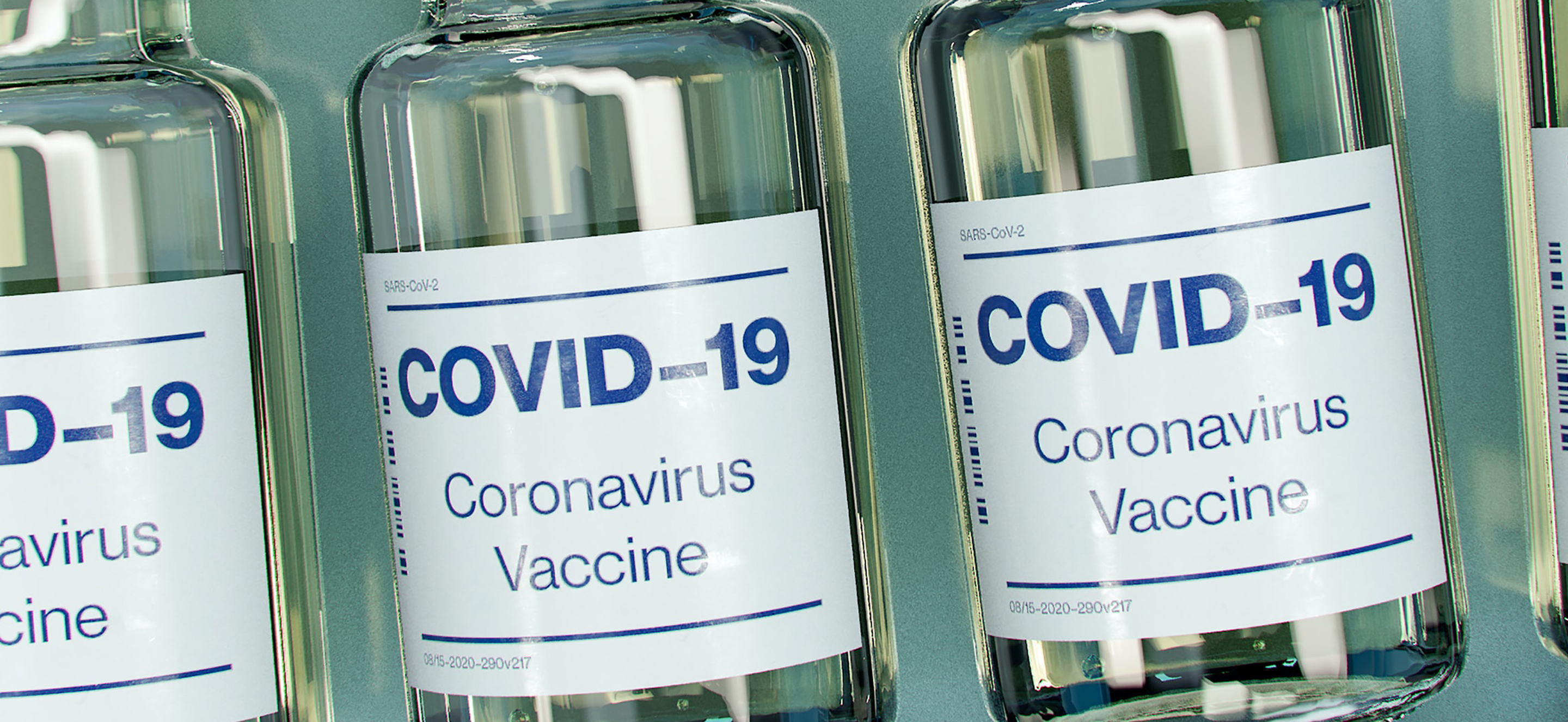
Ask the Expert: Vaccine myths and scientific facts
Now that there are authorized and recommended COVID-19 vaccines, it is critical people receive accurate information. Peter Gulick, professor of medicine at the Michigan State University College of Osteopathic Medicine and infectious disease expert, reviews some myths about the vaccine and counters these with scientific facts. Myth: The COVID-19 vaccines were developed in a rush, so their effectiveness and safety can’t be trusted. Fact: Studies found that the Pfizer/BioNTech and Moderna are both about 95% effective compared to the influenza vaccine, which ranges from being 50% to 60% effective each year. The Johnson & Johnson vaccine is 85% effective at curbing serious or moderate illness. The most important statistic is that all three were 100% effective in stopping hospitalizations and death. As of March 9, 2021, the Centers for Disease Control and Prevention reports that 93.7 million people have been vaccinated and all safety data collected from these doses show no red flags. There have been about 5 cases of anaphylaxis, an allergic reaction, per 1 million but this is no different than allergic reactions from other vaccines. There are many reasons why the COVID-19 vaccines could be developed so quickly and here are a few: The COVID-19 vaccines from Pfizer/BioNTech and Moderna were created with a messenger RNA technology that has been in development for years, so the companies could start the vaccine development process early in the pandemic. China isolated and shared genetic information about COVID-19 promptly so scientists could start working on vaccines. The vaccine developers didn’t skip any testing steps but conducted some of the steps on an overlapping schedule to gather data faster. The Pfizer/BioNTech and Moderna vaccines were created using messenger RNA, or mRNA, which allows a faster approach than the traditional way that vaccines are made. Because COVID-19 is so contagious and widespread, it did not take long to see if the vaccine worked for the vaccinated study volunteers. Companies began making vaccines early in the process — even before FDA authorization — so some supplies were ready when authorization occurred. They develop COVID-19 vaccines so quickly also due to years of previous research on the SARS COV-1, a related virus. Myth: The messenger RNA technology used to make the Pfizer/BioNTech and Moderna COVID-19 vaccine is brand new. Fact: The messenger RNA technology behind these two vaccines has been studied and in development for almost two decades. Interest has grown in these vaccines because they can be developed in a laboratory using readily available materials, making vaccine development faster. mRNA vaccines have been studied before for flu, Zika and rabies. Myth: You only need one dose of J&J vaccine so it’s more effective. Fact: Johnson & Johnson’s vaccine uses a different strategy — a weakened cold virus that is reprogrammed to include the code for the spike protein. Once inside the body, the viral genes trigger a similar response against the virus. All three vaccines are considered overall effective and 100% effective in preventing hospitalizations and death. Myth: Vaccine efficacy and effectiveness mean the same thing. Fact: Efficacy and effectiveness do not mean the same thing. “Efficacy” refers to the results for how well a drug or vaccine works based on testing while “effectiveness” refers to how well these products work in the real world, in a much larger group of people. Most people, however, use them interchangeably even though they have different scientific meanings. Myth: The vaccines aren’t effective against new strains of the virus. Fact: Currently, we know both the U.K. strain as well as the South African variant have increased transmissibility of 30% to 50% over the natural strain. As far as an increase in causing more serious disease, it is not known yet. We have over 600 U.K. variants in Michigan and one case of the South African variant, and I just heard of 47 cases of the U.K. variant in Grand Ledge. We (Michigan) are second in the nation in variants, but that's likely because we test for them more. The most important information is that the vaccines, in general, are 100% effective in prevention of hospitalization and death. So, it is felt they all offer some protection against variants to prevent serious disease. As far as the Johnson & Johnson, it was used with variants and has efficacy overall of 72% in U.S., 66% in Latin America and 57% in South Africa (where the main strain is the South African variant). All companies are looking at modifying (their products) (the mRNA) to cover variants and either give a booster or a multivalent vaccine to cover all variants. Myth: There are severe side effects of the COVID-19 vaccines. Fact: The COVID-19 vaccine can have side effects, but the vast majority go away quickly and aren’t serious. The vaccine developers report that some people experience pain where they were injected; body aches; headaches or fever, lasting for a day or two. This is good and are signs that the vaccine is working to stimulate your immune system. If symptoms persist beyond two days, you should call your doctor. Myth: Getting the COVID-19 vaccine gives you COVID-19. Fact: The vaccine for COVID-19 cannot and will not give you COVID-19. The two authorized mRNA vaccines instruct your cells to reproduce a protein that is part of the SARS-CoV-2 coronavirus, which helps your body recognize and fight the virus, if it comes along. The COVID-19 vaccine does not contain the SARS-Co-2 virus, so you cannot get COVID-19 from the vaccine. The Johnson & Johnson vaccine was developed using adenovirus vector technology and also will not give you COVID-19. It shows your immune system a weakened, common cold virus “disguised” as the coronavirus instead. Adenovirus vaccines have been around for about two decades, the same as mRNA vaccines. Johnson & Johnson developed a vaccine for Ebola using this technology. Myth: The vaccines are ineffective against the virus variants. Fact: More time is needed to study the vaccines’ effectiveness against the variants. Studies are now being conducted to determine if a booster dose is needed to protect against the variants or if modifications to the vaccines are needed. Myth: I already had COVID-19 and I have recovered, so I don't need to get the vaccine. Fact: There is not enough information currently available to say if or for how long after getting COVID-19 someone is protected from getting it again. This is called natural immunity. Early evidence suggests natural immunity from COVID-19 may not last very long, but more studies are needed to better understand this. The CDC recommends getting the COVID-19 vaccine, even if you’ve had COVID-19 previously. However, those that had COVID-19 should delay getting the vaccination until about 90 days from diagnosis. People should not get vaccinated if in quarantine after exposure or if they have COVID-19 symptoms. Myth: I won't need to wear a mask after I get the vaccine. Fact: It may take time for everyone who wants a COVID-19 vaccination to get one. Also, while the vaccine may prevent you from getting sick, more research is needed, but early indications show that while the vaccine is effective in reducing transmission, it is possible for a vaccinated person to spread the virus. Until more is understood about how well the vaccine works, continuing with precautions such as mask-wearing and physical distancing will be important. Myth: COVID-19 vaccines will alter my DNA. Fact: The COVID-19 vaccines will not alter any human genome and cannot make any changes to your DNA. The vaccines contain all the instructions necessary to teach your cells to make SARS-CoV-2's signature spike protein, release it out into the body, and your immune system gets a practice round at fighting off COVID-19. Myth: The COVID-19 vaccine can affect women’s fertility Fact: There is currently no evidence that antibodies formed from COVID-19 vaccination cause any problems with pregnancy, including the development of the placenta. In addition, there is no evidence suggesting that fertility problems are a side effect of any vaccine. People who are trying to become pregnant now or who plan to try in the future may receive the COVID-19 vaccine when it becomes available to them but it’s always prudent to consult with your doctor. Myth: The COVID-19 vaccine was developed to control the general population either through microchip tracking or "nanotransducers" in our brains. Fact: There is no vaccine microchip, and the vaccine cannot track people or gather personal information into a database. Myth: The vaccines were developed and produced using fetal tissue. Fact: The vaccines do not contain fetal cells nor were fetal cells used in the production the Pfizer and Moderna vaccines. Johnson & Johnson used human cell lines or also known as cell cultures to grow the harmless adenovirus but did not use fetal tissue. These same cell lines have been used for other vaccines including hepatitis, chickenpox and rabies and have been around for years. Peter Gulick is an associate professor of medicine at Michigan State University, College of Osteopathic Medicine, and serves as adjunct faculty in the College of Human Medicine and the College of Nursing. Dr. Gulick is available to speak with media - simply click on his icon now to arrange an interview today. Peter Gulick is an associate professor of medicine at Michigan State University, College of Osteopathic Medicine, and serves as adjunct faculty in the College of Human Medicine and the College of Nursing. Dr. Gulick is available to speak with media - simply click on his icon now to arrange an interview today.


Telecommuting Expert Predicts Permanent Changes to Work After the Pandemic
With the sudden shift to remote work brought about by the COVID-19 pandemic, many corporations have had to quickly assemble a patchwork of policies, procedures, and technologies. Timothy Golden, a professor in the Lally School of Management at Rensselaer Polytechnic Institute, foresees that many companies will adopt remote work on a permanent basis, and need to devote considerable attention and focus to systematically assessing the lessons they have learned. Golden is a leading expert in the field of telecommuting, telework, and the relationship between technology and managerial behavior. With more than 20 years of experience studying the impact of remote work on corporations and individuals, Golden’s insights about the future are rooted in a deep understanding of the history of remote work. In the wake of the pandemic, Golden envisions companies adding a Chief Remote Work Officer, who is responsible for maintaining the effectiveness of the company’s remote work program, to their C-Suite. This person will likely be a boundary spanner who garners resources and support from across silos in the company to ensure remote work remains effective in its long-term implementation. With the continuing importance of remote work, the Chief Remote Work Officer will need a seat at the executive table to ensure it receives the attention it needs. With remote work becoming even more firmly engrained in corporate cultures, Golden expects changes in the ways employees interact. With large numbers of employees continuing to work remotely, employees will expect support for this work mode in many forms — from promotion opportunities and performance metrics, to mentoring and technology support. Another implication of remote work going forward is that the demand for real estate will change, and companies will see real estate as platforms for collaborative work, rather than simply for work. With a significant permanent portion of the workforce likely to remain as remote workers, companies will be able to scale back their real estate yet also reallocate existing spaces to ones that are used for more collaborative interactions, rather than simply offices for individualized working. Golden is available to speak about these and other aspects of the future of remote work, as well as specific lessons he has learned through decades of studying this topic.


Power Grid Expert Weighs in on Texas Outages And How to Build a Better System
Having run countless simulations and experiments aimed at building a more resilient power grid, Luigi Vanfretti is well acquainted with the weaknesses in the nation’s current system. This expertise was recently featured in a report about the factors that caused massive, ongoing power outages in Texas. Frozen well heads, gas pipes, and other factors contributed to a “perfect storm” of conditions, Vanfretti said. Some politicians and pundits have floated the notion that the catastrophe was primarily due to frozen wind turbines, but according to Vanfretti, an associate professor of electrical, computer, and systems engineering at Rensselaer Polytechnic Institute, the problem is far more complex. Additionally, the electrical grid in Texas is unique in that it has limited connections to neighboring states, which means there are limitations to how much assistance it can receive during a crisis. “It’s about the ability to route the power,” Vanfretti recently told the Times Union. Vanfretti is an expert in power grid modeling, simulation, stability, and control. His research focuses on creating a smarter, cleaner, more reliable power grid that is capable of integrating renewable energy. Within his Analysis Laboratory for Synchrophasor and Electrical Energy Technology (ALSET) Lab, Vanfretti and his team model the power grid and run simulations in order to develop, test, and improve smart inverters, software, and hardware that will be needed to create the smart grid of the future. You can watch him discuss his research here. Vanfretti is available to speak about what contributed to the devastating outages in Texas, as well as the changes and research necessary to create a more resilient power system.


Eliminating The Barriers To Telehealth & Patient Retention
During the ongoing national pandemic, healthcare is in a period of rapid evolution, bringing telehealth to the forefront of patient care. Telehealth is a proven strategy to improve health outcomes, but it’s gated behind socioeconomic privilege and leaves behind many of our community’s most vulnerable patients. One such disparity is the inability of many Americans to access digital health care. This silent epidemic affects lives daily. Many patients, especially those in rural communities, face obstacles when trying to get the care they need. From access to reliable transportation and affordable child care to financial instability and lack of culturally competent providers, there is no shortage of hurdles standing in the way of disadvantaged populations accessing quality care. Well-implemented telehealth services can offer a clear path through these common barriers to care while improving health outcomes and boosting patient retention. “We know that mobile health intervention is an effective tool for retaining patients in care, but it’s only as effective as it is accessible,” said Richard Walsh, our CEO. “It would be negligent to assume that every individual has access to the devices, internet, or knowledge necessary to engage in telemedicine.” Like other leaders in the industry, we know telehealth is a privilege, but at Continuud, we believe it should be a right.” As Nathan Walsh, our CXO, said, “During a public health crisis such as this, we have to be proactive in ensuring that underserved communities have access to the care that they need in every way possible.” Through our research and conversations with community health leaders, we have identified 4 common barriers to telehealth success: access to video-ready phones or tablets, access to a reliable & affordable internet connection, an understanding of how to use the device to access services, and trust in technology being used for health services. Our solution is to create a platform that not only solves these problems but also enhances the patient experience and drives the best possible outcome of telehealth intervention. Our platform, Access, provides 8-inch tablets with an unlimited data connection to patients. Each device ships with a secured environment and limited functionality customized by the health care provider to include the tools that patients need to access care. We have created a simple deployment and warehousing solution to make it easy for organizations to get started quickly. Our end-to-end deployment and recall services handle every aspect of the platform so organizations can remain focused on serving their patients. The platform supports patient-by-patient interface customizations, so each patient’s experience is tailored to their unique treatment plan. We have device insurance and same-day replacement built into the program to account for loss, theft, and damaged devices, so organizations will always have access to the inventory they need to serve their clients. At Continuud, we offer an integrated ecosystem designed from the ground up to enable health care providers to work more efficiently toward a common goal of driving positive health outcomes in their communities. Continuud is known throughout Indiana for our innovative approach to connecting high-risk populations to care and implementing strategic technology to help retain and learn from patients so providers can evolve with the needs of their patients. To learn more about our platform, click here to visit our homepage. If you would like to schedule a demo with our team to talk about the platform in greater detail, click here.


Japan Society Presents When Practice Becomes Form: Carpentry Tools from Japan
Installation view at the Takenaka Carpentry Tools Museum, Kobe, Japan. On the occasion of the 50th anniversary of Japan Society’s landmark building, the institution is pleased to present the new exhibition, When Practice Becomes Form: Carpentry Tools from Japan. The exhibition celebrates the spirit of architecture and craftsmanship through Japanese woodworking tools as well as architectural patterns and various models. The site-specific installation, conceived by the esteemed contemporary architect Sou Fujimoto in collaboration with Brooklyn-based Popular Architecture, reinterprets major themes from the exhibition and is in dialogue with the gallery’s spaces, highlighting an enduring connection between traditional Japanese wooden construction and modern architecture. Featuring hand tools and joinery techniques that have been used for hundreds of years to build Japan’s wooden architectural masterpieces (from temples and shrines to teahouses and bridges), the exhibition unpacks how the intangible qualities of craftsmanship, such as consummate experience, knowledge, and the honed skills of master carpenters, have been transformed into significant forms of architecture. A diverse array of tools—planes, chisels, saws—have played an important role in the development of architecture in Japan’s history, and this philosophy extends to Japan’s cultural heritage today. Integral to the process of making by master carpenters (tōryo) is their extensive knowledge of the local environment and of wood as a material. Using natural resources and learning from their predecessors’ practices, they construct buildings using a refined methodology. Their philosophy of sustainability—for example, joinery can be restored or repaired as needed by future craftspeople—has been handed down over generations. Themes emerging from the exhibition have been interpreted by the internationally acclaimed architect Sou Fujimoto. His firm, Sou Fujimoto Architects, is based in Paris and Tokyo, and has been selected as site design producer for the 2025 World Exposition in Osaka, Japan. Fujimoto has designed the Serpentine Gallery pavilion in London (2013) among other internationally recognized projects. For this exhibition, Fujimoto has worked with Popular Architecture to explore the coexistence of nature and architecture. “Japan Society has been a home of cultural exchange, and a meeting place of past and present. In this exhibition, traditional Japanese craftsmanship is revealed in a new light by the design of contemporary architect Sou Fujimoto, and it becomes a precious educational opportunity to learn from this history,” says Yukie Kamiya, Japan Society Gallery Director. The building of Japan Society’s headquarters, designed by the architect Junzo Yoshimura (1908–1997), a major figure in 20th century Japanese architecture, opened to the public in 1971, becoming New York City’s first permanent structure designed by a Japanese citizen. It will commemorate its 50th anniversary in 2021. The building resides on land donated by John D. Rockefeller 3rd (1906–1978), former President and Chairman of Japan Society, who sought to revitalize the organization’s activities after World War II. Rockefeller 3rd and Yoshimura first met in Japan in 1951, and their friendship for over two decades resulted in Japan Society’s current building in Manhattan. Since its opening, the building has continued to serve as the central platform for the interexchange of ideas, knowledge, and innovation between the U.S. and Japan within a global context. In 2011, the building was designated landmark status by the New York City Landmarks Preservation Commission. When Practice Becomes Form: Carpentry Tools from Japan explores the connections between techniques, tools, and forms from traditional practices in Japanese carpentry and contemporary design perspectives. Paying homage to Japan Society’s building, where the arts and cultures of Japan and the United States intersect, this exhibition delves into the artistry and craftsmanship of architectural practice. Complementing the exhibition is a series of related public programs, including lectures, a hands-on workshop, and gallery tours. A digital publication illustrated and designed by Nathan Antolik further expands upon the exhibition. This exhibition is organized by Japan Society in collaboration with Takenaka Carpentry Tools Museum, Japan. The exhibition design is by Sou Fujimoto, in collaboration with Popular Architecture as local architect. About Sou Fujimoto Born in Hokkaido in 1971, Sou Fujimoto graduated from the Department of Architecture, Faculty of Engineering at Tokyo University and established Sou Fujimoto Architects in 2000. He has won several international competitions, including his recent 1st prize for the 2014 International Competition for the Second Folly of Montpellier, France ("L'Arbre Blanc"). In 2019, he was selected as the master architect for the Tsuda University Kodaira Campus Master Plan development. Among his notable projects are the annual summer pavilion for the Serpentine Gallery in London (2013)—the youngest architect to receive the commission; House NA in Tokyo (2012); Musashino Art University Museum & Library (2010); and House N (2008). In 2012, he was part of the Japanese team that won a Golden Lion award for Best National Participation at the Venice Architecture Biennale for their design of alternative housing concepts for homes destroyed by the 2011 tsunami. Most recently, he was selected as site producer for the 2025 World Exposition in Osaka, Japan. About Popular Architecture Brooklyn-based Popular Architecture combines simplicity with innovation across multiple scales ranging from master plans to buildings, interiors, and products. The firm is directed by Casey Mack, RA, LEED AP. After completing his M.Arch at Columbia, Mack worked with the Office for Metropolitan Architecture in Hong Kong and New York. He has taught urban design at the New York Institute of Technology and Passivhaus housing at Parsons School of Constructed Environments. Currently, with the support of the Graham Foundation for Advanced Studies in the Fine Arts, he is writing the book Digesting Metabolism: Artificial Land in Japan 1954-2202 (Hatje Cantz Verlag, 2021).

