
Experts Matter. Find Yours.
Connect for media, speaking, professional opportunities & more.

Baylor’s Jeff Levin Named a Fellow of Prestigious International Society
Baylor scientist Jeff Levin, Ph.D., M.P.H., has been invited to become a Fellow of the prestigious International Society for Science and Religion (ISSR), a multidisciplinary learned society based at Cambridge University. Founded in 2002, ISSR is the world’s preeminent scholarly organization devoted to the intersection of science and religion. The Society has only about 200 Fellows, mostly from the physical and biological sciences, philosophy, history and theology. Levin is one of the few Fellows with a background in the biomedical sciences. Levin, an epidemiologist and religious scholar, holds a distinguished chair at Baylor, where he is University Professor of Epidemiology and Population Health, professor of medical humanities and director of the Program on Religion and Population Health at the Institute for Studies of Religion. He also serves as adjunct professor of psychiatry and behavioral sciences at Duke University School of Medicine and as an affiliated member of the Center for Medical Ethics and Health Policy at the Baylor College of Medicine. Levin is a founding father of the field of research devoted to the influence of religious faith and spirituality on physical and mental health. He has been conducting studies on this subject since the early 1980s. He came to Baylor in 2009. Levin’s work “is the culmination of a lifetime of diligent scholarship, for which he is rightly renowned worldwide, said Stephen G. Post, director of the Center for Medical Humanities, Compassionate Care and Bioethics at Stony Brook University, and an ISSR Fellow. “It is hard to imagine that any one scholar could have made such a pioneering contribution across this interface, but Jeff has been digging deep for nearly 40 learned years,” Post said. Levin’s colleagues at Baylor were excited to hear about this honor. “This is an amazing honor for a world-class scholar. This recognition is a true testament to his many important publications and remarkable career,” said Byron Johnson, Ph.D., co-director of ISR and Distinguished Professor of the Social Sciences. Among the ISSR’s distinguished Fellows are several Templeton Prize laureates, Gifford lecturers and leading academic scientists and theologians in Europe and North America. “I never expected this and wasn’t sure I was even on their radar,” Levin said. “The science and religion field has become a major intellectual endeavor, but the subject of religion and health up to now has not really been acknowledged by the field or accepted in it. So this is a first—an honor for me, for sure, but also recognition of the work that so many of my colleagues and I have been doing since the 1980s.” Levin has been published in more 220 scholarly publications, including 11 books. His most recent book is “Religion and Medicine: A History of the Encounter Between Humanity’s Two Greatest Institutions,” forthcoming this fall from Oxford University Press. ABOUT BAYLOR UNIVERSITY Baylor University is a private Christian University and a nationally ranked research institution. The University provides a vibrant campus community for more than 17,000 students by blending interdisciplinary research with an international reputation for educational excellence and a faculty commitment to teaching and scholarship. Chartered in 1845 by the Republic of Texas through the efforts of Baptist pioneers, Baylor is the oldest continually operating University in Texas. Located in Waco, Baylor welcomes students from all 50 states and more than 90 countries to study a broad range of degrees among its 12 nationally recognized academic divisions. ABOUT THE BAYLOR INSTITUTE FOR STUDIES OF RELIGION Launched in August 2004, the Baylor Institute for Studies of Religion (ISR) initiates, supports and conducts research on religion, involving scholars and projects spanning the intellectual spectrum: history, psychology, sociology, economics, anthropology, political science, epidemiology, theology and religious studies. The Institutes mandate extends to all religions, everywhere, and throughout history, and embraces the study of religious effects on prosocial behavior, family life, population health, economic development and social conflict.


The Spencer Foundation recently awarded Baylor University’s Diana R. Garland School of Social Work a $50,000 grant to study if and how accredited Master of Social Work (M.S.W.) programs incorporate curricula around religion and spirituality (RS) into social work education as well as assessing faculty views around the topic and how universities’ religious affiliations impact M.S.W. education. The School of Social Work’s Edward C. Polson, Ph.D., assistant professor, and Holly Oxhandler, Ph.D., assistant professor and associate dean for research and faculty development, are co-principal investigators for the study, “Graduate Social Work Faculty Views on Preparing Students to Ethically Integrate Clients’ Religion/Spirituality in Practice: A National Survey.” As of spring 2019, there were 290 M.S.W. programs accredited by the Council on Social Work Education (CSWE), but little is known about how or if RS content is delivered within these colleges and universities. “Given that social workers provide the largest proportion of mental healthcare services in the U.S. [according to the Substance Abuse and Mental Health Administration], and clients have expressed a preference for integrating their RS in previous research, this is especially important to consider,” Oxhandler said. “In addition, no study has examined the potential impact religiously-affiliated colleges or universities have on M.S.W. education, including preparing students to ethically integrate clients' RS.” The research team, which will include a graduate assistant from the School of Social Work, will survey the approximately 5,000 full-time faculty across all of the CSWE-accredited M.S.W. programs to answer three questions: 1) How do M.S.W. programs prepare students to ethically integrate clients' RS in practice (if at all)? 2) What are M.S.W. faculty members' views and behaviors related to educating students on RS in social work? 3) In what ways, if any, do colleges' /universities' religious affiliation impact training on CSWE competencies in M.S.W. programs? Over the last few decades, research has shown a growing awareness that RS plays an important role in Americans' lives and the ethical integration of clients' RS in mental health treatment often contributes to positive outcomes. A previous study by Oxhandler revealed social workers held overwhelmingly positive attitudes toward integrating RS into treatment, but few were engaged in the practice. The study indicated only two practitioner characteristics that could predict their orientation toward integrating clients' RS into treatment: intrinsic religiosity (degree to which practitioners are internally motivated by RS) and prior training. This lack of training was reflected through surveys showing only 13 percent of social workers had taken a course in their M.S.W. program. Further, in another study by Oxhandler and Baylor alumna, Kelsey Moffatt, the team found a mere 78 of 257 programs mentioned a course on RS on their school websites in 2018. “We look forward to learning more about how M.S.W. faculty across the US integrate religion and spirituality content into their M.S.W. curricula as an element of clients’ culture and coping skills,” Oxhandler said. “Recognizing that clients tend to prefer their therapist assess and discuss the client’s spirituality as it relates to treatment, coupled with the fact that very few mental health care providers are trained in this area, we saw a need to better understand what's happening within M.S.W. programs.” The Spencer Foundation has been funding education research since 1971 and is the only national foundation focused exclusively on supporting education research. Their Small Research Grants on Education program supports research projects that will contribute to the improvement of education, and their goal is “to support rigorous, intellectually ambitious and technically sound research.” “I am truly grateful for the Spencer Foundation’s support for Dr. Polson and I to carry out this exciting project,” Oxhandler said. ABOUT BAYLOR UNIVERSITY Baylor University is a private Christian University and a nationally ranked research institution. The University provides a vibrant campus community for more than 17,000 students by blending interdisciplinary research with an international reputation for educational excellence and a faculty commitment to teaching and scholarship. Chartered in 1845 by the Republic of Texas through the efforts of Baptist pioneers, Baylor is the oldest continually operating University in Texas. Located in Waco, Baylor welcomes students from all 50 states and more than 90 countries to study a broad range of degrees among its 12 nationally recognized academic divisions. ABOUT THE DIANA R. GARLAND SCHOOL OF SOCIAL WORK AT BAYLOR UNIVERSITY Baylor University’s Diana R. Garland School of Social Work is home to one of the leading graduate social work programs in the nation with a research agenda focused on the integration of faith and practice. Upholding its mission of preparing social workers in a Christian context for worldwide service and leadership, the School offers a baccalaureate degree (B.S.W.);a Master of Social Work (M.S.W.) degree available on the Waco or Houston campuses or online; three joint-degree options, M.S.W./M.B.A., M.S.W./M.Div. and M.S.W./M.T.S., through a partnership with Baylor’s Hankamer School of Business and George W. Truett Theological Seminary; and an online Ph.D. program. Visit www.baylor.edu/social_workto learn more.


Whether making the transition to college, starting a new job, ending a relationship or retiring, change can cause psychological stress, which in turn can make for wear and tear on the body. The good news is, we can develop coping mechanisms to reduce stress and live happier, healthier lives, say Baylor University psychologist Annie Ginty, Ph.D., and her University of California-Irvine collaborator, Sarah Pressman, Ph.D. Using a grant from AXA Research Fund — which supports projects in health, environment, new technology and socioeconomics — Ginty and Pressman produced three short videos to help students and the general public understand what stress is, what it does to our bodies and how to handle it. The videos stem from a two-year AXA postdoctoral research fellowship by Ginty, assistant professor of psychology and neuroscience in Baylor’s College of Arts & Sciences. She investigated the relationship between biological responses to stress and adaptation during a stressful transition, particularly students’ adjustment to college. The videos, 1 to 3 minutes each, are housed on AXA’s YouTube channel and bear Baylor's new logo. “Psychological stress is bad for health; exercise stress is good,” said Ginty, who works with nonprofits to serve at-risk adolescents by providing high-intensity interval training workouts to reduce stress and improve health. “When we think about exercise, your heart rate and metabolic system increase, meaning you’re breathing harder. The rest of your muscle physiology is changing. Your body is working together to maintain homeostasis for balance. This is good stress,” she said. “But with psychological stress, the heart works much harder than the rest of the body. That metabolic imbalance can be hard on the heart and make the body more vulnerable to disease.” In the videos, Baylor students discuss the causes of psychological stress in their lives, how their bodies react and ways they handle stress. For them, a college education poses looming deadlines, fear of living up to expectations, anxiety about tests and adjusting to a new atmosphere. In the first video — "Stress and Your Health" — they describe such reactions as higher heart rate, restlessness, loss of sleep, skin breakouts, headaches and tense muscles. “If I fail at a test, I then in my mind see myself not getting into medical school, which is a pretty big domino effect,” said Devin Mangold of Wolfforth, Texas, a senior neuroscience major in the Honors College at Baylor. Such stressors can take a toll on moods and emotions, putting the physiological stress system into overdrive and possibly becoming a threat to long-term physical health — which in turn creates more stress. The second video — "Effects of Stress on Your Body" — explores how stress can affect emotions and the body. Stressed people may become anxious, sad, worried and angry. The stressors can interfere with sleep and can leave less time to exercise. People also tend to eat foods with higher fat and higher carbohydrates, said Pressman, associate professor of psychological science at UC-Irvine. That can lead to muscle tension, which can translate into injury. The third video — "Coping with Stress" — is about the importance of coping mechanisms so that minor stressors don’t turn into serious health issues. Social networking has been shown by research to reduce the effects of stress in such ways as lowering blood pressure. The best ways to cope are physical activity, a healthy diet and cognitive reappraisal. “Cognitive reappraisal” is “a fancy way of saying we’re changing how we interpret our situation,” said Danielle Young, Psy.D., clinical research coordinator of the Baylor Behavioral Medicine Laboratory in the department of psychology and neuroscience department. “It’s the difference between saying, ‘This is going to be the hardest test ever, and I’m going to fail’ and ‘This is going to be a hard test, but I’m going to do the best I can.’ Even that slight shift in thought can make you less stressed.” A recent study by Ginty of 230-plus Baylor students examined the effect of reappraising stress. “We found that if we gave brief instructions about how increases in heart rate during stress mean they were ‘ready’ and were not a ‘bad thing,’ people rated their levels of anxiety as more helpful to their performance,” Ginty said. The video encourages individuals to experiment with coping techniques that work for them. Students who appear in the video suggest methods from working out to cooking to reading to walking their dogs. “My natural demeanor is laid back, but internally, I stress myself,” said senior neuroscience major Simba Masando of Harare, Zimbabwe. Early in college, he “just went headfirst into the material” of a capstone course. “Now as a senior, I’m doing some preliminary courses I’m not necessarily interested in, but they’re required. I’ve alleviated some pressure in the major, but some of the requirements are a little more worrisome.” As a member of Baylor Behavioral Medicine Lab, what he’s learned about stress oping has been “greatly helpful” as he looks ahead to post-graduate school and his eventual goal of opening a school in Zimbabwe. “I’m an avid learner,” he said. “School is my job, as I see it, but my hobbies are learning, too. In basketball, there’s always a new move I want to learn; in piano, there’s a new technique. If you take the piano away from me, I’ll try guitar. And if you take basketball away from me, I’ll try tennis.” ABOUT ANNIE GINTY Research articles by Annie Ginty, Ph.D., include: “The behavioural, cognitive, and neural corollaries of blunted cardiovascular and cortisol reactions to acute psychological stress,” published in ; “Challenge and threat imagery manipulates heart rate and anxiety responses to stress,” published in ; and “Depression and anxiety are associated with a diagnosis of hypertension 5 years later in a cohort of late middle-aged men and women” published in ABOUT BAYLOR UNIVERSITY Baylor University is a private Christian University and a nationally ranked research institution. It provides a vibrant campus community for more than 17,000 students by blending interdisciplinary research with an international reputation for educational excellence and a faculty commitment to teaching and scholarship. Chartered in 1845 by the Republic of Texas through the efforts of Baptist pioneers, Baylor is the oldest continually operating University in Texas. Located in Waco, Baylor welcomes students from all 50 states and more than 90 countries to study a broad range of degrees among 12 nationally recognized academic divisions. ABOUT THE COLLEGE OF ARTS & SCIENCES AT BAYLOR UNIVERSITY The College of Arts & Sciences is Baylor University’s oldest and largest academic division, consisting of 25 academic departments and seven academic centers and institutes. The more than 5,000 courses taught in the College span topics from art and theatre to religion, philosophy, sociology and the natural sciences. Faculty conduct research around the world, and research on the undergraduate and graduate level is prevalent throughout all disciplines. Visit www.baylor.edu/artsandsciences.


Why is it so hard to pass laws to regulate guns in America? Let our experts explain
So far this year in the United States, there have been eight mass shootings taking the lives of more than 60 people. It’s tragic, but the concept of taking action to remedy this problem is still seen more as political than proactive. In fact, the possibility of being caught up in gun violence is now a part of the everyday lives of a majority of Americans. “Today, 59% of Americans say random acts of violence, like mass shootings, pose the biggest safety threat to them, according to a Reuters/Ipsos poll conducted this month after 31 people were killed in back-to-back rampages in El Paso, Texas, and Dayton, Ohio. The poll also found that 78% of Americans believe another such attack will likely unfold in the next three months. So far this year, there have been more than 250 mass shootings, according to the Gun Violence Archive, a widely cited non-profit that counts incidents in which at least four people other than the shooter were injured or killed.” TIME, Aug. 13, 2019 It is almost baffling why there are bottlenecks and roadblocks to finding a solution – and there are lots of questions that need to be asked. Why don’t national lawmakers pass laws regarding gun violence/mass shooting? How has public opinion changed on gun control in the last 30 years? How does gun violence in the U.S. compare to other countries? What is the current state of gun control laws in the U.S.? If you need answers, that’s where our experts can help. Dr. Gregg R. Murray, professor of political science at Augusta University, is available to talk about why lawmakers are having such a tough time tackling gun violence in America. Murray’s research focuses on political behavior and psychology with specific interests in voter mobilization and turnout. He is also executive director of the Association for Politics and the Life Sciences.


Buying local? Higher price means higher quality in consumers' minds
BLOOMINGTON, Ind. -- Why are we willing to pay much more for a six pack of craft beer, a locally produced bottle of wine or a regional brand item, often choosing them over national brands? It's because when people prefer to "buy local," they more frequently base their decisions on price as a perception of quality, according to research from the Indiana University Kelley School of Business and three other universities. The study, published in the Journal of Marketing, suggests that marketers can use this understanding of local identity versus global identity to shape consumers' price perceptions and behavior. "Consumers tend to use price to judge a product's quality when their local identity is most important to them," said Ashok Lalwani, associate professor of marketing at Kelley. "When promoting high-priced or branded products, marketers can situationally activate consumers' local identity. To accomplish this objective, businesses can encourage consumers to 'think local' or employ local cultural symbols in advertising and other promotional material. The researchers also suggested that the opposite was true for low-price products. "Discount stores, such as dollar stores, should discourage consumers from using the price of a product to infer its quality," Lalwani said. "They would be better served by temporarily making consumers' global identity more prominent. Cues in advertisements that focus on a product's global appeal would help achieve that goal." Many companies find it difficult to set and increase prices in the digital marketplace because of the pricing transparency of the internet, consumers' deal-seeking attitudes and global product availability. For their study, Lalwani and his colleagues conducted in-depth interviews, two field studies and seven experiments, and reviewed secondary data. In their interviews with 15 senior-level managers from Fortune 500 companies, they found that while the executives considered local or global communities in their pricing decisions, none knew when such strategies were effective or why. For example, an executive at a snack food maker told them, "It is important to have a reasonably high price since it communicated 'premium-ness' and then reinforce it with advertising and packaging. But we don't know for sure why such consumers prefer premium brands." A pet products manager said, "In dog sweaters, it is difficult to judge quality, so I am sure that my pet parents use price, in addition to other factors, to choose." Through the field studies, experiments and secondary data, the researchers found that when consumers choose to identify more with others around them, they perceive greater variance among brands, which increases their reliance on price as a cue to judge quality. Past research has found that consumers from more globalized countries and communities, such as the United States and its larger cities, often have a stronger global mindset because they interact with many types of people and cultures and hear news from abroad. In contrast, those living in smaller population areas or from isolated or insular nations often have a stronger local identity because they have less access to other cultures. This paper provides useful guidelines for firms to adapt strategies for different regions and address whether companies should be more locally or globally oriented. "For products to be marketed to the places where people tend to have a more local identity (such as rural areas), local flavors and ingredients can be used in the products. As these consumers are more likely to make price-quality associations, marketers may not need to allocate much ad budget to convince consumers about price-quality associations," Lalwani and his co-authors wrote. The opposite is true as well, according to the authors, indicating that in more metropolitan areas, consumers most often don't have an established connection between price and quality. For marketers, this means that putting additional effort into differentiating their brand will help consumers associate a higher price with higher quality. Lalwani is in the process of reviewing results of a large-scale national survey of the U.S. that measures which states tend to have more of a local identity versus a global one, for a follow-up study. His co-authors on the paper, "How Does Consumers' Local or Global Identity Influence Price-Perceived Quality Associations? The Role of Perceived Quality Variance," are Zhiyong Yang of the University of North Carolina, Sijie Sun of the University of Hawaii at Hilo and Narayan Janakiraman of the University of Texas at Arlington.


‘Bottom-line mentality’ can lead to loss of employee respect and loyalty, research shows Supervisors driven by profits could actually be hurting their coveted bottom lines by losing the respect of their employees, who counter by withholding performance, according to a new study led by Baylor University. The study, “The Influence of Supervisor Bottom-Line Mentality and Employee Bottom-Line Mentality on Leader-Member Exchange and Subsequent Employee Performance,” is published in the journal Human Relations. “Supervisors who focus only on profits to the exclusion of caring about other important outcomes, such as employee well-being or environmental or ethical concerns, turn out to be detrimental to employees,” said lead researcher Matthew Quade, Ph.D., assistant professor of management in Baylor University’s Hankamer School of Business. “This results in relationships that are marked by distrust, dissatisfaction and lack of affection for the supervisor. And ultimately, that leads to employees who are less likely to complete tasks at a high level and less likely to go above and beyond the call of duty.” While other studies have examined the impact of bottom-line mentality (BLM) on employee behavior, Quade said this is the first to identify why employees respond with negative behaviors to supervisors they perceive to have BLM. The research team surveyed 866 people. Half of those surveyed were supervisors; the other half were their respective employees. Data was collected from those who work in a range of jobs and industries, including financial services, health care, sales, legal and education. Researchers measured supervisor BLM, employee BLM, task performance and leader-member exchange – the rating employees gave of their relationships with their supervisors. Employees rated their supervisors’ BLM by scoring on a scale statements like: “My supervisor treats the bottom line as more important than anything else” and “My supervisor cares more about profits than his/her employees’ well-being.” They rated leader-member exchange via statements such as “I like my supervisor very much as a person” and “My relationship with my supervisor is composed of comparable exchanges of giving and taking.” Supervisors rated their employees by scoring statements such as: “This employee meets or exceeds his/her productivity requirements,” “This employee searches for ways to be more productive” and “This employee demonstrates commitment to producing quality work.” Based on the responses and the data collected and analyzed, the researchers found: High-BLM supervisors create low-quality relationships with their employees. In turn, employees perceive low-quality leader-member exchange relationships. Thus, employees reciprocate by withholding performance. When supervisor BLM is high and employee BLM is low, the damaging effects are strengthened. When both supervisor and employee BLM are high, the negative performance is still evident. The last finding on that list was particularly significant, Quade said, because it contradicts a common belief that when two parties (in this case, supervisors and employees) think alike and have similar values, there will be a positive outcome. Not so much in the case of BLM, the study shows. “When supervisor and employee BLM is similarly high, our research demonstrates the negative effect on performance is only buffered, not mitigated – indicating no degree of supervisor BLM seems to be particularly beneficial,” the researchers wrote. “It seems even if employees maintain a BLM, they would prefer for their managers to focus on interpersonal aspects of the job that foster healthier social exchange relationships with their employees in addition to the bottom line.” The profit-performance relationship can spark a conundrum for companies, Quade said, because organizations want to be profitable, and performance is an important indicator of an organization’s health and vitality. If leaders believe a negative dynamic regarding BLM exists in their organization, the researchers suggest a few practical steps: Be cautious of a BLM approach or emphasizing bottom-line outcomes that could neglect other organizational concerns, such as employee well-being and ethical standards. Managers should be aware of the message they pass along to employees (and the possible performance repercussions) when they tout bottom-line profits as the most important consideration. Organizations that need to emphasize bottom-line outcomes should consider pairing the BLM management style with other management approaches known to produce positive results, such as practicing ethical leadership. “Supervisors undoubtedly face heavy scrutiny for the performance levels of their employees, and as such they may tend to emphasize the need for employees to pursue bottom-line outcomes at the exclusion of other competing priorities, such as ethical practices, personal development or building social connections in the workplace,” the researchers wrote. “However, in doing so they may have to suffer the consequence of reduced employee respect, loyalty and even liking.” ABOUT THE STUDY “The Influence of Supervisor Bottom-Line Mentality and Employee Bottom-Line Mentality on Leader-Member Exchange and Subsequent Employee Performance” is published in the journal Human Relations. Authors are Matthew Quade, Ph.D., assistant professor of management in Baylor University’s Hankamer School of Business; Benjamin McLarty, Ph.D., assistant professor of management, Mississippi State University; and Julena Bonner, Ph.D., assistant professor, Utah State University. ABOUT BAYLOR UNIVERSITY Baylor University is a private Christian University and a nationally ranked research institution. The University provides a vibrant campus community for more than 17,000 students by blending interdisciplinary research with an international reputation for educational excellence and a faculty commitment to teaching and scholarship. Chartered in 1845 by the Republic of Texas through the efforts of Baptist pioneers, Baylor is the oldest continually operating University in Texas. Located in Waco, Baylor welcomes students from all 50 states and more than 90 countries to study a broad range of degrees among its 12 nationally recognized academic divisions. ABOUT HANKAMER SCHOOL OF BUSINESS AT BAYLOR UNIVERSITY At Baylor University’s Hankamer School of Business, integrity stands shoulder-to-shoulder with analytic and strategic strengths. The School’s top-ranked programs combine rigorous classroom learning, hands on experience in the real world, a solid foundation in Christian values and a global outlook. Making up approximately 25 percent of the University’s total enrollment, undergraduate students choose from 16 major areas of study. Graduate students choose from full-time, executive or online MBA or other specialized master’s programs, and Ph.D. programs in Information Systems, Entrepreneurship or Health Services Research. The Business School also has campuses located in Austin and Dallas, Texas. Visit www.baylor.edu/business and follow on Twitter at twitter.com/Baylor_Business.

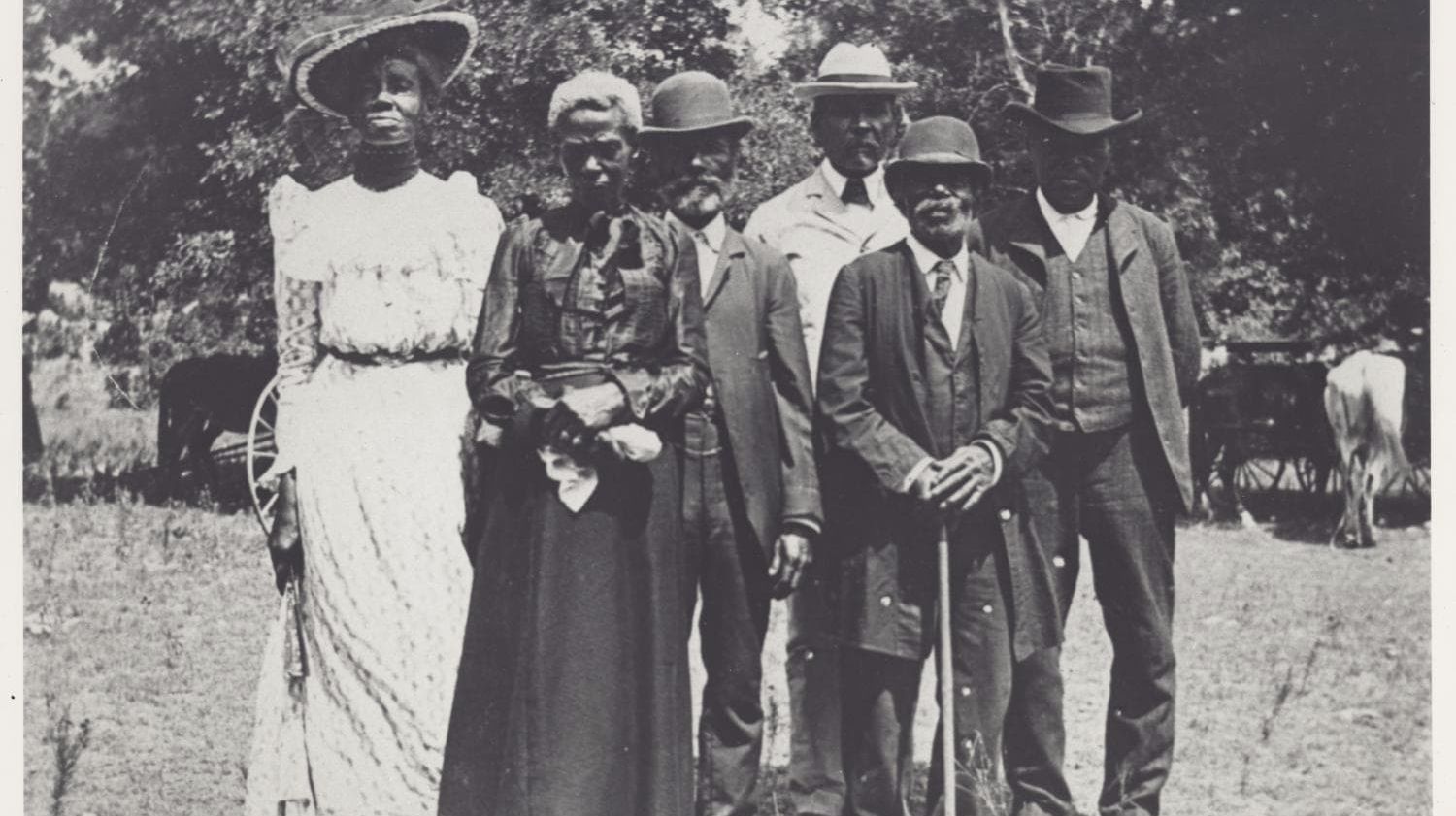
Juneteenth: Our experts can explain the history, meaning and truth behind this historic moment
Most will know that Abraham Lincoln issued the Emancipation Proclamation on Jan. 1, 1863. It’s taught in schools and is even part of the Disney experience. But fewer know or are even taught that it took more than two and a half years before a large number of enslaved people even knew they were free. It’s an astounding and sad part of our collective history that is finally being told on a broader platform. It wasn’t until June 19, 1865, that many enslaved people were finally told they were free. What followed was by no means a celebration or easy life for those slaves who were finally broken from the bonds of their owners. They faced lynching, murder, violence and what would be more than 100 years of segregation and discrimination. Across the country, the day will be recognized with various forms of reflection and celebration. Though Texas was the first state to recognize Juneteenth as a state holiday, it meant only partial staffing was required and most government offices and agencies stayed open. Across the country, more than 40 states operate in similar fashion. As America reconciles with its past – is it time Juneteenth was given more attention? Are children taught about the hard and painful journey most African Americans had to take between now and when they were set free? Does it need to be recognized as a national holiday? What do our educators and legislators need to do to make sure Juneteenth is known on a wider scale? There are a lot of questions to be answered – and that’s where the experts from Augusta University can help. Professor Seretha Williams is an expert in Africa and African Diaspora, Digital Humanities, and Digital Publication. She is available to speak with media regarding Juneteenth – simply click on her icon to arrange an interview.

The ‘Heaven 11’: Gospel Music Expert Lists 11 Most Influential Black Gospel Songs
June is African American Music Appreciation Month Photo by Robert Rogers, Baylor Marketing & Communications Baylor Professor Robert Darden attends Baylor University's 2019 Pruit Symposium, "Lord, Make Me An Instrument: Black Sacred Music at the Intersection of Gospel and Jazz." WACO, Texas (May 31, 2019) – Robert F. Darden, professor of journalism, public relations and new media at Baylor University and a former gospel music editor for Billboard Magazine, is leading a national movement to preserve the fast-disappearing legacy of African American sacred music on vinyl. To celebrate African American Music Appreciation Month in June, Darden, who is founder and director of Baylor’s Black Gospel Music Restoration Project, compiled the “Heaven 11” – a list of the 11 most influential black gospel songs. “There is no way to quantify the ‘greatest’ gospel song of all time, but certain songs have been more influential than others through the years,” said Darden, who selected songs from the 1940s through the 1980s. (Listen to the “Heaven 11” on this Spotify playlist, created by Baylor Proud.) The list includes Darden’s comments about each selection: 1. “Move on Up (A Little Higher)” “The Queen of Gospel Mahalia Jackson’s first big hit, and one of the best-selling gospel songs of all time. It was also understood to be an early ‘Freedom Song’ in the African-American community.” 2. “Take My Hand, Precious Lord” “Perhaps the best-known, most beloved of all gospel songs. Written by Thomas Dorsey after the loss of his wife and infant child, it is still sung today at virtually every African-American funeral service in the country.” 3. “Oh Happy Day” “This song by Edwin Hawkins was the first gospel song to be a hit single in the 1960s, and had a revolutionary combination of gospel choir, stirring chorus and a thoroughly modern beat.” 4. “The Reason Why We Sing” “Kirk Franklin did to the ‘80s and ‘90s what Hawkins did to the ‘60s and Andrae Crouch did to the ‘70s, combined straight-ahead gospel with the beat of the day, while paying tribute to the old gospel classic, ‘His Eye is on the Sparrow.’” 5. “People Get Ready” “This tune by Curtis Mayfield is not really a gospel song, but it was so compelling that it was adopted by both the Civil Rights Movement and the African-American church. There are a number of great versions, including the Chambers Brothers, the Blind Boys of Alabama and even Rod Stewart.” 6. “We Shall Overcome” “This is the ‘signature’ song of the Civil Rights Movement, an adaptation of an old gospel tune that has been honed by the fire and blood of a thousand movement events and is still sung by oppressed people around the world.” 7. “Peace Be Still” “This song by the Rev. James Cleveland and the Angelic Choir of the First Baptist Church of Nutley, New Jersey, is the song and the arrangement that made young black people want to join mass choirs and sing. After the assassination of President John F. Kennedy, ‘Peace Be Still’ was the gospel anthem that the black church turned to.” 8. “Through It All” “Andrae Crouch and the Disciples forever changed gospel music, opening it up lyrically and musically. He was also a brilliant composer – you could just as easily substitute “My Tribute,” “The Blood,” “Soon and Very Soon” and any one of several other enduring classics here.” 9. “Touch the Hem of His Garment” “This song by the Soul Stirrers, featuring Sam Cooke, helped invent the hard-charging gospel quartet sound. The popularity of this song helped convince Cooke, the writer and featured singer, to launch a mainstream performing career.” 10. “Mary, Don’t You Weep” “The great old spirituals often make great gospel songs. This is one by the Caravans, featuring Inez Andrews, and is one of my personal favorites.” 11. The next great gospel song “We haven't heard it yet. Few people still alive even know of its existence. But it could be in the next batch of long-lost gospel classics by a hitherto unknown gospel artist donated to the Black Gospel Music Restoration Project.” Search-and-rescue mission to preserve black gospel music Darden founded Baylor’s Black Gospel Music Restoration Project (BGMRP) more than a decade ago in a search-and-rescue effort to identify, acquire, preserve, digitize and catalog recordings from the black gospel music tradition. This music, from the Golden Age of Gospel from 1945 to 1975, was quickly vanishing as albums made the transition to CDs. “Thousands of at-risk songs have been saved for future generations,” Darden said. “These recordings are priceless, irreplaceable and historic in a way that scholars are only now realizing.” Through the work of the Baylor Libraries’ Digital Projects Group, recordings from the BGMRP are available online in the Baylor Libraries Digital Collection, and in some cases includes other materials, such as taped interviews, photographs, press packets, tour books and programs, newspaper and magazine clippings and sheet music. Music from the BGMRP also has been included in a permanent exhibit featuring African-American musical history at the Smithsonian Institution’s National Museum of African American History and Culture, which opened in 2016 in Washington, D.C. The interactive exhibit, “Musical Crossroads,” has featured these key recordings from the BGMRP: · “The Old Ship of Zion” by The Mighty Wonders of Aquasco, Maryland (1972) · “Amen” by Wings over Jordan (1953) · “I Won’t Be Back” by The Caravans (1962) · “Over My Head” by Wings Over Jordan (1953) · “There’s a Tree on Each Side of the River” by The Davis Sisters (1957) Visit Baylor’s Black Gospel Music Restoration Project website to learn more and to listen to the collection of digitized recordings. ABOUT BAYLOR UNIVERSITY Baylor University is a private Christian University and a nationally ranked research institution. The University provides a vibrant campus community for more than 17,000 students by blending interdisciplinary research with an international reputation for educational excellence and a faculty commitment to teaching and scholarship. Chartered in 1845 by the Republic of Texas through the efforts of Baptist pioneers, Baylor is the oldest continually operating University in Texas. Located in Waco, Baylor welcomes students from all 50 states and more than 90 countries to study a broad range of degrees among its 12 nationally recognized academic divisions.

Belief in the ‘Prosperity Gospel’ Does Not Turn People into Successful Entrepreneurs
But the belief that God financially rewards the faithful can fuel values linked to entrepreneurial thinking, Baylor University study finds Belief in the “Prosperity Gospel” — that God financially blesses faithful followers — does not turn individuals into successful entrepreneurs. But prosperity beliefs can fuel values linked to entrepreneurial thinking, such as power and achievement, according to a Baylor University study. However, researchers found no direct relationship between prosperity beliefs and willingness to take risks, and little connection to recognizing opportunities. Risk-taking and identifying opportunities are typical traits of entrepreneurs, according to the national study. “As revealed in our findings, a belief that God will provide financial benefit to the faithful is not enough to push someone to launch a business,” said lead author Kevin D. Dougherty, Ph.D., associate professor of sociology in Baylor’s College of Arts & Sciences. “The relationship between prosperity beliefs and starting a business is indirect and inconsistent.” The study — Prosperity Beliefs and Value Orientations: Fueling or Suppressing Entrepreneurial Activity” — is published in the Journal for the Scientific Study of Religion. For the study, researchers analyzed data from a nationally representative survey of 1,066 working adults. Their goal was to connect prosperity beliefs, human values, entrepreneurial attitudes and entrepreneurial action. They found that values — both by themselves and in conjunction with religious beliefs — are important predictors of how and whether individuals might launch a business. Participants responded to a three-item scale to measure beliefs that faith and faithful behavior lead to success at work and in business. The items included: “God promises that those who live out their faith will receive financial success;” “Believers who succeed in business are evidence of God’s promised blessing;” and “I believe faithful believers in God receive real financial benefits in this life.” Participants also responded to questions relating to The Theory of Basic Human Values, which recognizes such universal values as openness to change, achievement, security, power and benevolence. In general, “entrepreneurs tend to think differently than non-entrepreneurs, prizing achievement and self-direction while downplaying tradition and conformity,” said co-author Mitchell J. Neubert, Ph.D., professor of management in Baylor’s Hankamer School of Business. Value orientations of self-enhancement and openness to change are associated with recognizing opportunities and taking risks — entrepreneurial behaviors that correlate with creating new businesses. While prosperity beliefs by themselves show little direct impact on entrepreneurship, they do influence the impact of values and attitudes related to creating a business. Prosperity beliefs can strengthen the relationship between self-enhancement values and opportunity recognition, but they seem to reduce the relationship between openness to change and willingness to take risks. Another significant finding pertains to gender. Men and women who accept prosperity beliefs are no different in their willingness to take risks or start businesses, said co-author Jerry Z. Park, Ph.D., associate professor of sociology in Baylor’s College of Arts & Sciences. In general, risk-taking and business startups are more common among men. The study also shows that education and experience are key predictors of entrepreneurship, but those resources may be difficult to acquire for some prosperity believers because of social and economic circumstances. While individuals in that group have hope, it seems contingent on divine action rather than human action, Neubert said. “Can prosperity preachers Joel Osteen and T.D. Jakes save the U.S. economy? Probably not. But nor are they damning it,” Dougherty said. “The type of positive, self-help gospel they preach can enhance specific value orientations that are related to entrepreneurial thinking and entrepreneurial behavior.” *The research was supported by a National Science Foundation grant. ABOUT BAYLOR UNIVERSITY Baylor University is a private Christian University and a nationally ranked research institution. The University provides a vibrant campus community for more than 17,000 students by blending interdisciplinary research with an international reputation for educational excellence and a faculty commitment to teaching and scholarship. Chartered in 1845 by the Republic of Texas through the efforts of Baptist pioneers, Baylor is the oldest continually operating University in Texas. Located in Waco, Baylor welcomes students from all 50 states and more than 90 countries to study a broad range of degrees among its 12 nationally recognized academic divisions. ABOUT THE COLLEGE OF ARTS & SCIENCES AT BAYLOR UNIVERSITY The College of Arts & Sciences is Baylor University’s oldest and largest academic division, consisting of 25 academic departments and seven academic centers and institutes. The more than 5,000 courses taught in the College span topics from art and theatre to religion, philosophy, sociology and the natural sciences. Faculty conduct research around the world, and research on the undergraduate and graduate level is prevalent throughout all disciplines. Visit www.baylor.edu/artsandsciences.




WACO, Texas (May 13, 2019) – The movie-watching experience continues to evolve. And while directors wish all people could experience their movies on the silver screens in theaters, they know most people these days will be watching on the big screens in their living rooms or on the small screens in their hands. The movie-watching experience and the takeaways matter, said award-winning filmmaker Chris Hansen, M.F.A., who serves as professor and chair of the film and digital media department in Baylor University’s College of Arts & Sciences. “As a director, I want people to engage with the story and the characters. I want you to be able to put yourself in the characters’ shoes and see the world from their points of view so that, whether you agree or disagree with their actions, you understand where they’re coming from,” Hansen said. Hansen has directed five independent films. His most recent project, Seven Short Films About (Our) Marriage, is now in post-production. In the following Q&A, Hansen shares thoughts on how we – as audience members – can do our part to get the best movie-watching experience and what he – as the director – hopes we take away from that experience. Q: As a director who puts in countless hours and organizes a team that puts in countless hours on a project, what do you hope audiences take away from your film? A: Film critic Roger Ebert once called films “a machine that generates empathy.” I see my films falling within that description. I want to generate empathy in the viewer for these characters and their situations, and I want audiences to come away talking about and thinking about their struggles. Q: So much goes into making a movie. There’s the script, cinematography, setting, dialogue, music, costumes, etc. Is there any one thing you hope your audiences notice? A: I hope that I, along with the other artists who have collaborated on the film, have created an experience where none of those things stands out above the other, except that they create a moment or moments that move people. If you’re thinking, “That was great dialogue,” then that can take you out of the world of the movie. Q: Your films are all available on various streaming platforms, which means that people are most likely watching them on televisions in their homes. What are your thoughts on the home viewing experience? A: The quality of the home viewing experience has gotten better and better over the years. We now have (or have access to) better and larger television screens, terrific audio systems and movies available in high-resolution formats. On the flip side, the home does not afford the best viewing environment because it’s not immersive the way a theater is. The experience of the theater provides fewer interruptions and allows the viewer to be fully immersed in the world of the movie, although even that environment is being disrupted by people using their cell phones in the middle of a movie. Still, it’s better than the home viewing experience, which gives the viewer many distractions and interruptions. Q: When you watch films at home, what steps do you take to limit distractions? A: As a person with a wife and children, I try to plan viewings of movies around their schedules, so I can watch uninterrupted when I know people won’t be home. And I try to control my own distraction level, but the “always on” nature of email and texting are hard to resist. My preference would always be to have people turn the phone off, turn the lights off and turn their attention solely to the screen. That’s hard to get people to do at home. Q: What are your thoughts about people watching movies on their smartphones or tablets? A: Very few filmmakers I know would express a preference that people watch their work on smaller screens. It’s just not ideal, and there are so many carefully planned details that can be missed. Having said that, I’ll admit to having watched films and TV shows on my tablet, especially when I’m traveling. The truth is, given the changing nature of the world we live in, people are going to watch in whatever way is most convenient for them. But watching on a screen as small as a phone means you’re getting a much more utilitarian experience of the film. You can say you watched it and can probably recount the plot accurately. But you will often have missed the fuller experience of seeing the film on a larger screen. Q: When students come to you and say, ‘I want to make movies!’ what’s the first thing you say to them? A: One of the first things I tell people is that the best way to learn how to make movies is to make movies. You learn by doing and getting critical feedback from someone who has done it and understands the form. And of course, in our program at Baylor, we also teach the theory side of things. We believe in a solid balance between theory and practice. We teach our students how this is done, but then they just actually have to do it and learn from their successes and their failures. Q: Do students in Baylor’s film and digital media program have the opportunity to work on your films? If so, in what ways? A: Students in our program do indeed have the opportunity to work on faculty-led projects. We make our films in the summer and offer the opportunity as a credited course so that they can have a lab-like learning experience. Students rotate through crew roles while working under professionals who help them understand their jobs. Some of our students have called this one of their best learning experiences in our major because it takes all the things they learn in the classroom and puts those to the test on a project that’s much larger in scope than what they’ve been able to experience before. And being a crew member on a film set can be a stressful experience. We’re dependent on the weather and limitations of time and money. It’s a great way for them to understand the ups and downs of the process and how they’ll respond to the pressure. Q: What can you share about your newest project and where can people find your previous films? A: My latest film, currently in post-production, is a feature film called Seven Short Films About (Our) Marriage. It’s the story of one marriage that unfolds over seven episodes over a number of years, as this couple struggles with the common issues that marriages face and try to make their love last. My films are currently all available on various streaming platforms. You can find Blur Circle, Where We Started, Endings, and The Proper Care & Feeding of an American Messiah either on Amazon Prime, iTunes, and in some cases, on Blu-ray disc via Amazon and other outlets.