
Experts Matter. Find Yours.
Connect for media, speaking, professional opportunities & more.

What Makes Horror Movies Scary? “We do,” Says Baylor Film Expert
The best scary movies adapt to society’s current fears and turn current cultural, social and political preoccupations into elements of horror, says a Baylor University film historian and an expert on the horror film genre. “We are the monster,” said James Kendrick, Ph.D., associate professor of film and digital media in Baylor’s College of Arts & Sciences. Kendrick has authored three books: Darkness in the Bliss-Out: A Reconsideration of the Films of Steven Spielberg; Hollywood Bloodshed: Violence in the 1980s American Cinema; and Film Violence: History, Ideology, Genre. The themes of horror films have changed and developed over the years to capture the zeitgeist and adapt to societal fears, Kendrick said. However, as elements of fear transform with society, the elements of horror films remain. “Character and story, atmosphere and the monster,” Kendrick said. “That’s all you really need. Interesting, engaging characters in an effective setting pitted against some kind of monstrosity. That is the core of the genre, and anything and everything else grows from and functions to support those three elements.” The audience must be able to relate to characters and feel a sense of empathy for them, he said. The atmosphere must engage the audience and provide an effective platform for fear. Source:



Baylor Horror Film Expert Lists 10 Movies 'Everyone Should See'
October brings pumpkin spice, changing leaves, cooler temperatures and Halloween. And Halloween, of course, brings horror films. James Kendrick, Ph.D., associate professor of film and digital media in Baylor University’s College of Arts & Sciences, is a Hollywood film historian and an expert on cult and horror films. While horror is not everyone’s favorite genre, Kendrick says, horror films are known to have a universal appeal. “We all know what it means to be frightened, to feel dread, to want to look away,” Kendrick said. “On some level we all fear death and are aware of our human mortality, and the best horror films engage that fear in complex and challenging ways.” In honor of Halloween, Kendrick has developed a list of 10 horror classics he says “everyone should see.” 1. Nosferatu (F.W. Murnau, 1922) 2. The Bride of Frankenstein (James Whale, 1935) 3. Cat People (Jacques Tourneur, 1942) 4. Psycho (Alfred Hitchcock, 1960) 5. Night of the Living Dead (George A. Romero, 1968) 6. The Exorcist (William Friedkin, 1973) 7. Suspiria (Dario Argento, 1977) 9. The Shining (Stanley Kubrick, 1980) 10. The Babadook (Jennifer Kent, 2014) James Kendrick, Ph.D., serves as associate professor of film and digital media in Baylor University’s College of Arts & Sciences. Kendrick’s primary research interests are post-Classical Hollywood film history, violence in the media, cult and horror films, media censorship and regulation and cinema and new technologies. He has authored three books: Darkness in the Bliss-Out: A Reconsideration of the Films of Steven Spielberg, Hollywood Bloodshed: Violence in the 1980s American Cinema and Film Violence: History, Ideology, Genre. In addition to this, he is also the film and video critic for the website Qnetwork.com. Kendrick is a member of the Society for Cinema and Media Studies, the University Film and Video Association and the Online Film Critics Society. Source:

Movies like “Marshall” that are built around actors of color (Chadwick Boseman plays the iconic attorney) and have appeal to consumers of color historically see a significant surge in ticket sales in weeks five through eight – if producers are willing to keep them in theaters that long and allow for word-of-mouth advertising to build, said Tyrha Lindsey-Warren, Ph.D., clinical assistant professor of marketing in Baylor’s Hankamer School of Business. She studies consumer behavior, multicultural media, movies and entertainment. “I believe that Hollywood often pulls movies starring women and actors of color out of the theaters way too soon and before word-of-mouth has time to fully spread,” Lindsey-Warren said. “In my opinion, and according to our studies, Hollywood is leaving a great deal of money on the table.” Movies built around actors of color typically make money – in many cases as much or more than five times the budget, she said. For example, the 2017 comedy “Girls Trip,” which was built around four African-American female leads, was made for $19 million and has grossed more than $100 million at the box office. A challenge, Lindsey-Warren said, is that Hollywood expects to make its money back in the opening weekend. That strategy often doesn’t translate well to consumers of color. She cited a Nielsen study that showed African-Americans make an average 6.3 trips every year to see movies, and they tend to strongly support movies where there are characters like themselves and to whom they can relate. But they don’t rush to theaters for premier weekends. “Historically, African-American consumers have not been such early adopters of seeing movies on opening weekend and have typically waited to hear from trusted sources, by way of word-of-mouth, if the movie is worth seeing,” she said. “I call this behavior giving word-of-mouth time to spread. These are insights that Hollywood has not fully embraced regarding consumers of color and for movies built around actors of color.” Source:


These days, it doesn’t take much to turn a civil conversation into a full-blown catastrophe. Just mention the words “climate change” and feathers can start to ruffle. But it doesn’t have to be that way, says Dan Peppe, Ph.D., climate change expert and associate professor of geosciences at Baylor University. His research focuses on understanding how plant and animal communities have responded to changes in climate throughout Earth’s history. “Climate change is a fundamentally important issue to our society and is vital for us to have open and honest discussions about it and its potential impacts,” Peppe said. He said the best place to start such a dialogue is with scientific observation. Have a discussion about increases in temperature, he said. Understand what scientists are saying about those temperature changes and their effects. The trick to keeping this cordial? Keep politics out. “All of this conversation is a scientific one based on observation, and as such, shouldn't be a political one,” he said. “Once that baseline is established, we can then begin a conversation of the many possible ways to address those risks.” Peppe said there is often more than one solution to issues of climate change, but people need to listen to each other. “Hopefully there can be a respectful and civil conversation around those potential solutions,” he said. As part of Earth Science Week, Peppe is taking part in the Earth Science Symposium at The Mayborn Museum in Waco, Texas, where he will moderate a panel discussion on climate change. Panelists will discuss the science of climate change, the risks associated with it, and some of the potential solutions. “We hope that this will be a really productive discussion, and one in which the audience can participate,” Peppe said. Source:
Earlier this week, Equifax announced a second breach of customer's personal data. That brings the total number of people who have had their personal information either seen shared or stolen to a whopping 145.5 million. To put that into perspective - that's the collective populations of Georgia, California, Texas, New York, Florida, Illinois, Pennsylvania, and Missouri combined. Goizueta Business School Expert Kevin Crowley says competitors could take advantage of this drop in confidence but don't look for another firm to swoop in and try to purchase Equifax at a low price. Source:



Baylor Law Professor Shares Insights Following Trump’s DACA Announcement
Baylor Law School Professor Laura Hernandez, J.D., is interviewed as an expert on the Deferred Action for Childhood Arrivals (DACA) program in response to President Trump’s announcement that his administration will phase out the program. Hernandez founded the Baylor Law Immigration Clinic, which has helped hundreds of immigrants in Texas, including a number of those covered under DACA. Source:


Relief effort in Houston a complicated one
Record amounts of rain fall will bring catastrophic flooding to the Houston area. How to manage such a crisis brings to mind any number of logisical nightmares and heart-breaking scenarios. Goizueta’s Ken Keen is an expert in crisis response. Keen was commander of the Joint Task Force in Haiti when the earthquake hit six years ago. He was charged to lead the largest U.S. military based response to a foreign disaster commanding more than 22,000 personnel, 19 ships and 57 aircraft. Keen spent 39 years in the U.S. Army with positions including Military Deputy Commander of the U.S. Southern Command, Commander, Joint Task Force-Haiti and Commander positions around the world. He can speak to emergency preparedness and the steps following a natural disaster. Source:


Baylor Gospel Expert: MLK’s ‘I Have a Dream’ Inspired Response from Black Gospel Artists
Fifty-four years ago this week. On Aug. 28, 1963, from the steps of the Lincoln Memorial in Washington, D.C., Dr. Martin Luther King Jr. delivered “I Have a Dream” – one of the most iconic speeches in American history and a defining moment of the Civil Rights Movement. For black gospel artists recording in the years after 1963, King’s speech was fertile ground for creative expression, said Robert Darden, professor of journalism and founder and director of Baylor’s Black Gospel Music Restoration Project (BGMRP). “These artists responded by creating songs that sampled portions of Dr. King’s recorded audio, drew inspiration from his words or supported the Civil Rights Movement in the wake of its delivery,” Darden said. Darden founded Baylor’s Black Gospel Music Restoration Project more than a decade ago in an effort to identify, acquire, preserve, digitize and catalog recordings from the black gospel music tradition. This music, from the Golden Age of Gospel from 1945 to 1975, was quickly vanishing as albums made the transition to CDs. Through the work of the Baylor Libraries’ Digital Projects Group, recordings from the BGMRP are available online in the Baylor Libraries Digital Collection, and in some cases includes other materials, such as taped interviews, photographs, press packets, tour books and programs, newspaper and magazine clippings, and sheet music. Music from the BGMRP also has been included in a permanent exhibit featuring African-American musical history at the Smithsonian Institution’s National Museum of African American History and Culture. Source:

Millennials who are pursuing careers in public relations do not feel prepared to offer advice on ethics to their companies — and in fact, they do not expect to face ethical dilemmas at work, according to a Baylor University study. Millennials or Generation Y — generally identified as people born between 1981 or 1982 through 2000 — are projected to make up one third to one half of the country’s workforce by 2025. They will shift from being “doers” to being “deciders” in businesses, and their ethical compass will set the course for subsequent generations of public relations professionals, said study author Marlene Neill, Ph.D., assistant professor of journalism, public relations and new media in Baylor’s College of Arts & Sciences. “The study findings about lack of ethical readiness are a cause for concern,” Neill said. “If Millennials don’t feel equipped, they may be misled by their superiors or used as instruments of unethical behavior.” Without mentoring or training, they must learn by trial and error. Researchers found that factors that have a positive impact on Millennials readiness to face ethics issues include ethics training in college, workplace training, training through professional associations and mentoring by someone inside or outside their organization. But while the majority (74 percent) had received ethics training in college, most had not received training in the workplace through such methods as videos, handbooks and learning modules; or through a professional organization such as PRSA. Besides lacking confidence, most appear to be overly optimistic that they will not have to confront such common dilemmas as truthfulness in communication, altering researching results, working with questionable clients or blurring of personal and professional speech online, Neill said. Source:

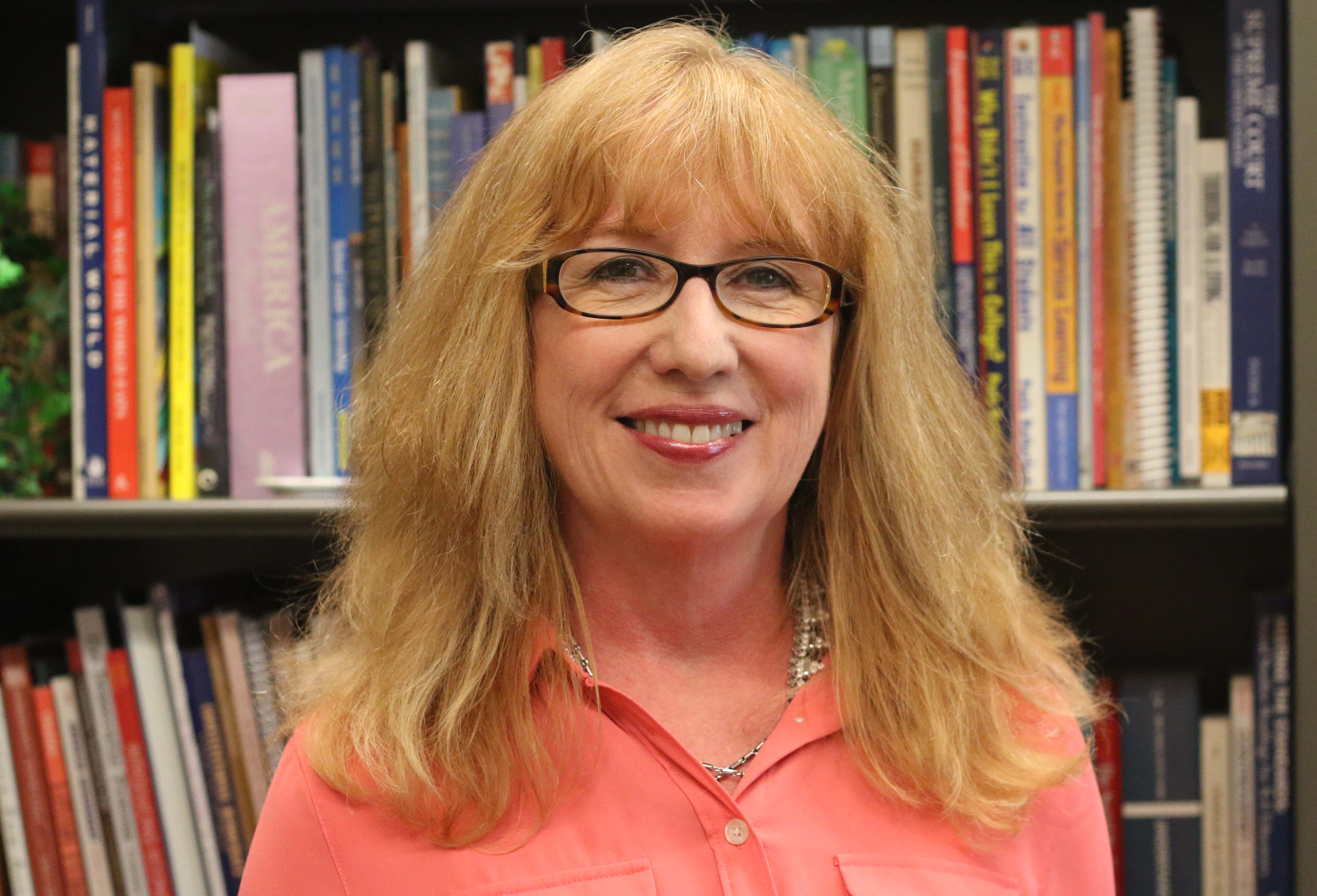
In the attached Q&A, Baylor University’s Karon LeCompte, Ph.D., associate professor of curriculum and instruction and an expert on civics education and leadership theory, discusses the importance of investing in student leaders and how parents and teachers can identify leadership characteristics in their children. LeCompte co-directs Baylor’s iEngage Summer Civics Institute, a five-day program that helps students learn how to make a difference in their neighborhoods, schools and communities. "Authentic leaders with experiences that manifest characteristics of extensive skills and high moral values will be on the front stage of our democracy,” she said. “They are the future. It is our responsibility to give them the best gifts that we can – our attention and faith in their ability to lead. Source:
