
Experts Matter. Find Yours.
Connect for media, speaking, professional opportunities & more.

It Works on TV - Do Property Rehabs Drive Up Prices in Surrounding Neighborhoods?
When a house is distressed, the negative impact tends to ricochet around its surrounding neighborhood. Distressed homes (e.g. foreclosures) can significantly bring down the value of other homes in the area, as these properties are often poorly maintained and then typically sold at discounted prices In the past, and particularly in the wake of the 2008 subprime crisis, federal and local governments sought to mitigate this negative effect by incentivizing the rehabilitation of distressed properties through programs like the Neighborhood Stabilization Program (NSP). Until now, there has been some skepticism as to whether or not these kinds of initiatives actually work. New research by Goizueta Foundation Term Associate Professor of Finance Gonzalo Maturana and Goizueta’s Assistant Professor of Finance Rohan Ganduri might change the narrative definitively. They have analyzed new data that shows that rehabilitation projects not only help to stabilize housing prices in affected neighborhoods but can also actually increase the value of neighboring properties by as much as four percentage points. Using highly robust, non-parametric statistical analysis methods, Maturana and Ganduri parsed more than 10 years of information on rehabilitated property transactions and real estate prices across the United States. The effect of renovating dilapidated or derelict houses in these areas pushes prices up between 2.3 and four percentage points in their surrounding blocks, they find. And that’s not all. While the average amount spent by authorities on these renovations comes in at roughly $36,000, their study estimates a societal welfare gain of $134,000 per rehabilitated property—almost four times the cost of the rehabilitation. These insights should provide interesting food for thought for the U.S. Congress and local governments, Maturana notes. After the housing crash in 2008, Congress allocated $6.9 billion in funding to the NSP to help stabilize communities affected by high vacancy and foreclosure rates, but the Department of Housing and Urban Development didn’t find any positive impact on local housing markets at the time. “Our findings suggest that rehabilitation projects do drive a positive uptick in prices that can help revitalize distressed neighborhoods,” says Maturana. “And they provide very timely support for policy interventions, such as President Biden’s infrastructure spending program which proposes an allocation of $20 billion to rehabilitate 500,000 single-family homes in low-income neighborhoods in the United States.” With the current economy facing some uncertain times - this is a topic that is important for everyone. And if you're a reporter looking to know more then let us help. Gonzalo Maturana is an associate professor of finance at the Goizueta Business School. He is an expert in the areas of corporate, household and real estate finance. Rohan Ganduri's research interests include banking, credit risk, real estate, household finance, and corporate finance. Both Gonzalo and Rohan are available to speak to media regarding this topic – simply click on either icon now to arrange an interview today.

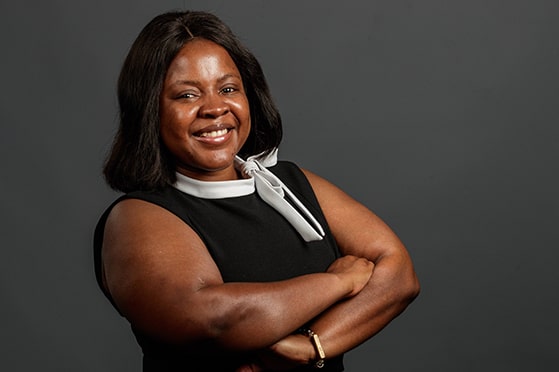
‘Rising star’ graduate: Sylvia Ofori’s journey from Ghana to Georgia Southern to Harvard
On her first flight from Ghana to the United States, Sylvia Ofori arrived in Atlanta, Georgia, at 1 a.m. By 4 o’clock the next afternoon, Ofori was in her first American classroom in Georgia Southern University’s Jiann-Ping Hsu College of Public Health on the Statesboro Campus. Jet-lagged and attempting to absorb a foreign campus and classroom procedures, Ofori was out of sorts when her professor, Isaac Chun-Hai Fung, Ph.D., encouraged her to apply for a student research position following class introductions. Within days, she’d interviewed and earned the spot, supported by funding from the Centers for Disease Control and Prevention. In their first meeting, Fung challenged Ofori to publish 10 papers by the end of her public health doctoral program. “I wasn’t familiar with publications, but he threw that challenge at me from the beginning,” Ofori remembered. “Wow. His plan was for me to start working on dissertation-related projects immediately.” Ofori’s first project was a scoping review on the use of digital technology to improve and monitor handwashing in children. Following a presentation of her review at the University’s 2019 Research Symposium, her work was published in an academic journal, and many more followed as co-author with Fung and another mentor, Kamalich Muniz-Rodriguez, DrPH. By the end of her doctoral training, Sylvia had published 11 papers with Fung, and three more manuscripts will be submitted. On May 13, Ofori earned a DrPH in public health with a concentration in epidemiology as she crossed the stage in one of two Savannah commencement ceremonies. In June, she’ll begin as a Postdoctoral Fellow in the Department of Epidemiology at Harvard University to continue global public health research she began at Georgia Southern. There's a full article detailing Sylvia's amazing story - and her success to date. It's attached here: If you're a reporter looking to know more about Sylvia's story, or how Georgia Southern has students from around 100 countries across the world currently studying on both the Statesboro Campus and the Armstrong Campus in Savannah. Simply reach out to Georgia Southern Director of Communications Jennifer Wise at jwise@georgiasouthern.edu to arrange an interview today.


Georgia Southern launches Asian Studies Digital collection
Georgia Southern University Libraries and Nalanda Roy, Ph.D., recently launched a digital collection, “An Integral History: Asian Studies Digital Archive.” The archive provides a curated collection of multidisciplinary resources in support of the Asian American and Pacific Islander community in the United States. Contributions are curated from Digital Commons, the University’s open-access institutional repository, and highlight Georgia Southern’s scholarly and cultural assets related to the Asian Studies minor. The collection represents faculty and student research, books, videos, community resources and campus events. “The Asian Studies Digital Archive is an important addition to Georgia Southern’s collections because developing an understanding of other cultures will create a cultural awareness,” said Roy, an associate professor of international studies and Asian politics and coordinator of the University’s Asian Studies program. “It will also teach us to have more meaningful interactions with others around us, and celebrate our differences and similarities.” Each May, Asian American and Pacific Islander Heritage Month is observed to recognize the Asian Americans and Pacific Islanders who have contributed to American history, society and culture. The Asian Studies Digital Archive will carry that legacy forward, and continue to grow, as faculty are encouraged to participate in the initiative. “As the coordinator of the Asian Studies program at Georgia Southern University, creating the Digital Archive has been a dream project,” said Roy, who is a Certified Diversity Executive and a former Inclusive Excellence Faculty Fellow at Georgia Southern. “I am very happy to work with the Georgia Southern Libraries to create a resource that will be helpful to both the Georgia Southern and local communities.” For more information on the Asian Studies Digital Archive, visit: Facts about Asian American and Pacific Islander Heritage Month *U.S. Census Bureau 1978 — Congress passed a resolution creating Asian/Pacific American Heritage Week. 1992 — The observance expanded to a month (May), timed to coincide with two important milestones in Asian/Pacific American history: arrival of the first Japanese immigrants in the United States (May 7, 1843) and completion of the transcontinental railroad on May 10, 1869 (the majority of workers who laid the tracks were Chinese immigrants). 2020 — Total Asian population in the U.S. is roughly 6% or 20 million. 5.1 million — The estimated number of the Asian population of Chinese, except Taiwanese, descent in the U.S. in 2020. The Chinese (except Taiwanese) population was the largest Asian group in the U.S. 690,000 — The estimated number of total Native Hawaiian and Other Pacific Islander population in the U.S. 607,010 — Native Hawaiian residents make the largest NHPI group in the U.S If you're a reporter looking to know more about "An Integral History: Asian Studies Digital Archive" - then let us help with your coverage and stories. Nalanda Roy, Ph.D., is available to answer your questions - simply reach out to Georgia Southern Director of Communications Jennifer Wise at jwise@georgiasouthern.edu to arrange an interview today.
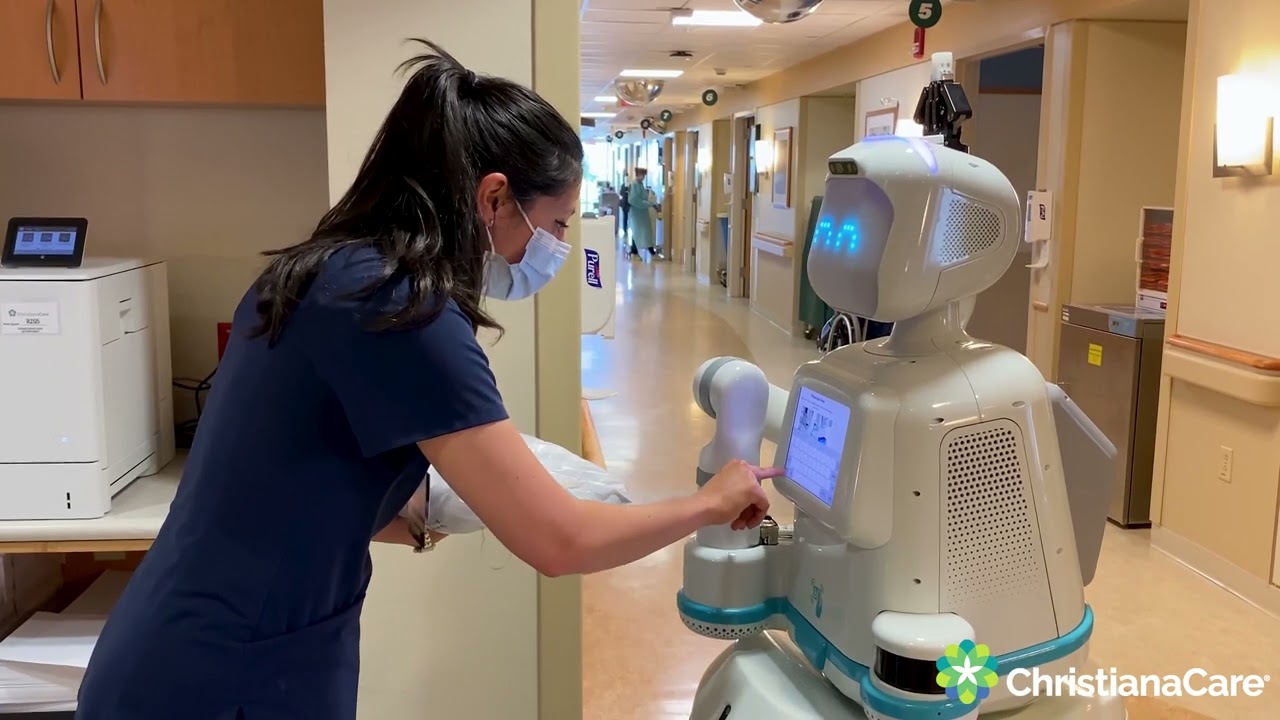
ChristianaCare is the first health system in the Philadelphia region piloting an innovative tool called Moxi, a collaborative robot — or “cobot”— that can assist in the hospital by making deliveries and performing other non-clinical tasks so that nurses and other clinical staff can spend more time focused on what they do best—caring for patients. With a landmark $1.5 million grant from the American Nurses Foundation, ChristianaCare will deploy a total of five Moxi cobots at Christiana Hospital. It is the largest single grant in the history of Nursing at ChristianaCare. Research published in the Journal of Nursing Management shows that nurses spend a significant amount of time — up to 33% of their shifts — on time-consuming but simple tasks such as dropping off lab specimens, collecting supplies or picking up medications from the pharmacy. By taking over these time-consuming but simple tasks, Moxi enables nurses to focus on patient care, where their skills are most needed. “Nurses need the time and space to deliver care and patient education at the top of their license,” said Ric Cuming, Ed.D., MSN, RN, NEA-BC, FAAN, chief nurse executive and president, ChristianaCare HomeHealth. “Moxi will be doing those hunting and gathering tasks such as getting equipment and supplies, which nurses are doing today but don’t need to be doing.” Cobots are designed to share workspace and interact directly with people. In ChristianaCare’s initiative, the Moxi cobots will be integrated with the Cerner Corporation electronic health record (EHR) platform and use artificial intelligence to proactively identify when nurses will need equipment, supplies, medications and lab tests. The Moxi cobots will be deployed to 11 inpatient units, partnering with more than 400 nurses. The American Nurses Foundation grant will enable ChristianaCare to evaluate the impact of cobots on nursing practice with the goal of scaling the technology if successful. “Moxi is not a replacement for a nurse or nursing position — or any position,” Cuming said. “It is an additional resource for nurses and their teams. “With robotic technology, we are using resources wisely and effectively, creating more efficient workflows, reducing repetitive tasks and freeing up nurses’ time for the complex clinical work that they excel at doing.” Reimagining Nursing ChristianaCare is one of 10 grant recipients from the American Nurses Foundation Reimagining Nursing (RN) Initiative. “We are proud that the American Nurses Foundation has the confidence in bold nurse-led ideas that will lead to large-scale, replicable change,” said Katherine Collard, MS, RN-BC, chief nursing informatics officer at ChristianaCare. “This grant will support nurses at ChristianaCare and our nursing colleagues across the nation in realizing their full potential, giving them the tools, resources and power to improve health care now and in the future.” With the American Nurses Foundation grant, ChristianaCare will conduct research on driving nursing outcomes through robotics. “We have a transformative opportunity to generate new knowledge and to move the science forward around robotics in nursing and in health care,” said Susan Birkhoff, Ph.D., RN, nurse scientist at ChristianaCare. “Through research, we will study Moxi’s impact to nursing caregivers that will have broad implications for nursing practice, workforce and education,” she said. ChristianaCare began exploring the potential of robotics to support Nursing with two Moxi cobots acquired in February, funded through the generosity of donors including Good Samaritan, Inc. and E.J. “Woody” Rice. With the grant, said Birkhoff, ChristianaCare will take Moxi to the next “bold frontier,” adding three more cobots with the goal of automating and optimizing nurses’ workflow without interrupting care. With five total cobots, ChristianaCare will be home to the largest number of Moxi robots in health care. The Little Bot That Can Before Moxi can become fully part of the care team, it must learn to navigate the hospital and respond to the nurses’ needs. Using artificial intelligence, Moxi is mapping out Christiana Hospital through sensors and other machine-learning technology so that the cobots can ultimately navigate and work autonomously. “When the Moxi cobots are fully integrated, we anticipate that they will complete up to 200 delivery tasks a day,” Collard said. “By making point-to-point deliveries, Moxi can save nurses hours of time and thousands of steps.” Designed to be compatible with the busy environments of hospitals, Moxi’s features include: Social intelligence: Moxi won’t bump into people or objects in hallways, waves when it sees someone new and happily poses for selfies. Mobile manipulation: Moxi can learn to use its robotic arm to operate existing automatic doors and elevator panels. Human-guided learning: The more Moxi is used, the more Moxi learns and adapts to the environment and specific ways of doing things. Friendly and safe design: With heart-shaped eyes and a friendly appearance, Moxi is designed to navigate safely and get the job done so nurses can focus on patient care. “What Moxi is doing in health systems like ChristianaCare is really transforming the way we think about health care and allowing staff to focus on the people in the hospital as opposed to the tasks,” said Dr. Andrea Thomaz, CEO and co-founder of Diligent Robotics, which created Moxi. “Robots are not something way in the future. Our robots work side-by-side with humans to ease the stress and workload of one of the most demanding jobs in society, nursing. The partnership between Diligent and ChristianaCare shows that the future is now.” Hospital Helper Directly from the Cerner EHR, Moxi will be able to anticipate clinician and patient needs and perform tasks without human involvement. Examples could include: Delivering items to patients based on nurses’ order requests. Making rounds across units to deliver lab samples on collections completed in the electronic health record. Making just-in-time deliveries of pharmaceuticals not stocked on the floor. Prioritizing tasks based on the nursing workload in a unit, so that the busiest nurses will get help first. “Connecting Moxi to the existing technology that clinicians use on a daily basis is key to making it easier to anticipate needs so clinicians can spend more time on patient care,” says Eva Karp, DHA, MBA, RN-BC, senior vice president, chief clinical and patient safety, Cerner. “Moxi could make a real difference in a nurse’s day — alleviating burnout and staffing shortages, which have become especially prevalent since the pandemic.” Incorporating the electronic health record into Moxi is part of the study funded by the American Nurses Foundation. “It’s absolutely in the best interest of our patients that Moxi can work alongside nurses so we can spend more time working directly with our patients to do what we do best,” said Pam Owen, MSN, RN-BC, nurse manager on 7E, one of the pilot units. “And Moxi brings a smile to people’s faces.” Fast Facts About Moxi Works in 22-hour shifts. Needs only two hours of charging time. Weighs about 300 pounds. Can carry a total weight of 70 pounds. Gender-neutral. Pronouns are “it” for a single Moxi cobot and “they” for more than one. Named one of America’s Greatest Disruptors in 2021 by Newsweek and one of the Best Inventions of 2019 by Time Magazine. About ChristianaCare Headquartered in Wilmington, Delaware, ChristianaCare is one of the country’s most dynamic health care organizations, centered on improving health outcomes, making high-quality care more accessible and lowering health care costs. ChristianaCare includes an extensive network of primary care and outpatient services, home health care, urgent care centers, three hospitals (1,299 beds), a freestanding emergency department, a Level I trauma center and a Level III neonatal intensive care unit, a comprehensive stroke center and regional centers of excellence in heart and vascular care, cancer care and women’s health. It also includes the pioneering Gene Editing Institute. ChristianaCare is nationally recognized as a great place to work, rated by Forbes as the 2nd best health system for diversity and inclusion, and the 29th best health system to work for in the United States, and by IDG Computerworld as one of the nation’s Best Places to Work in IT. ChristianaCare is rated by Healthgrades as one of America’s 50 Best Hospitals and continually ranked among the nation’s best by U.S. News & World Report, Newsweek and other national quality ratings. ChristianaCare is a nonprofit teaching health system with more than 260 residents and fellows. With its groundbreaking Center for Virtual Health and a focus on population health and value-based care, ChristianaCare is shaping the future of health care.



Last month, workers at an Amazon warehouse in Staten Island voted to unionize. In the decision's wake, employees across other firms—backed by national labor organizations—are following suit. Villanova University economics professor Cheryl Carleton, PhD, explains that the successful warehouse unionization in New York (a grassroots initiative) is changing the way we view labor unions. "It prevents employees from thinking about unions as just the large existing unions," notes Dr. Carleton. "Workers themselves can coalesce and maintain a unified front to negotiate for what they need from firms." And if unions succeed, firms without unions must compete to entice employees to their operations. As a counterweight to growing unionization efforts, companies have increasingly engaged in the use of intimidation tactics. We see this in the ways firms retaliate against union organizers. "Many large firms that have lots of money and have fostered strong relationships with political powers do not want to let workers have a stronger voice in negotiation of wages, benefits and work rules. They will try to have these unions nullified or intimidate workers not to join them," says Dr. Carleton. "There has been considerable consolidation in industries in the United States, which gives firms a lot more power." And according to economics professor Mary Kelly, PhD, "firms will argue that if they compensate existing [union-represented] workers with higher pay, better benefits and improved working conditions, those higher costs will limit the number of new workers hired, encourage the replacement of some labor with capital/technology if possible and/or 'force' prices higher to consumers." But even if unionization fails, there are still costs to the company. "We see this now with companies increasing the benefits they provide and spending more money to prevent more unionization efforts. The 'spillover' effects of the presence or threat of unions increases cost to firms," says Dr. Carleton. But we still don't know the final economic impact of unionization. "Companies, the stock market and shareholders always respond to change and uncertainty, so when a company unionizes it is a period of uncertainty," says Dr. Carleton. "If the company does unionize, does it create more stability and more profitability? Or does it end up being more costly for the firm? Time will tell!" Despite all the uncertainty, "the idea of unions and the need for unions is still present, and the current labor market situation has given workers the impetus they need," Dr. Carleton says. "Unions are necessary to stand up to industries. Each worker has little power, but combined workers have a stronger voice."


School to provide increased access to preventative health services for young students so they can learn, grow and thrive To address health issues at the earliest and most preventable stages, provide whole child health, and advance health equity in the community, ChristianaCare opened a new school-based health center at Kuumba Academy Charter School in Wilmington on Friday, May 6th. The creation of the center, made possible through ChristianaCare’s partnership with the Community Education Building (CEB), which houses Kuumba Academy, means that students at the kindergarten-through-8th grade school will have increased access to an array of health services. “At ChristianaCare, we recognize the comprehensive health needs of adolescents in our community and are committed to partnering and using our resources wisely and effectively to expand our school-based health centers,” said Bettina Tweardy Riveros, J.D., chief health equity officer and senior vice president of Government Affairs and Community Engagement at ChristianaCare. “We know that childhood trauma adversely affects the ability of children to learn and build healthy relationships and it increases their risk of mental health issues and lifelong chronic disease. The opening of our school-based health center at Kuumba Academy means that ChristianaCare can support medical and behavioral health services and wraparound social care our children need, so we can positively influence their health, their education and their futures.” With the latest opening, ChristianaCare now operates 21 school-based health centers throughout the First State, in partnership with the Delaware Department of Health & Social Services, the Delaware Division of Public Health and several school districts. Kuumba Academy students, who spoke at an event Friday to celebrate the grand opening, will have access through its school-based health center to the following: Comprehensive behavioral health services. Crisis intervention and suicide prevention. Substance use disorder treatment. Tobacco cessation. Nutrition and weight management. Physical examinations. Health screenings. Treatment for minor illnesses and injuries. Reproductive health. In addition, Kuumba Academy students also will have access to resources that help their families surmount obstacles such as transportation, challenging appointment times, and worries about cost and confidentiality. “Kuumba Academy remains committed to meeting the needs of the whole child and family,” said Sally Maldonado, head of school at Kuumba Academy, the mission of which is to provide an innovative learning environment for the whole child from kindergarten through eighth grade. “The opening of this school-based health center means that our students and families will have daily access to the high-quality behavior and health services that they deserve, and we are grateful to ChristianaCare and CEB for their partnership. We are beginning to see ourselves on the other side of this pandemic and we are energized to emerge with these newfound partnerships focused on health and wellness for our village.” ChristianaCare has partnered with CEB and Kuumba Academy on community-focused health initiatives in the past. In February 2021, ChristianaCare provided more than 800 vaccinations to community members and staff at CEB. On February 7th of this year, ChristianaCare vaccinated 38 people, including 19 children, against COVID-19. This added to the more than 6,000 vaccinations that ChristianaCare Community Health has administered since 2021. “At CEB, we understand the importance that health plays on a child’s ability to learn and succeed,” said Linda Jennings, CEO at CEB. “We are beyond excited to partner with Kuumba and ChristianaCare to launch the Kuumba Academy School-Based Health Center at CEB and add to the list of holistic and integrated support we provide to students and their families.” Today’s event coincides with Better World Day, an annual, national event on the first Friday in May. During Better World Day, students showcase their learning about initiatives that they believe will have a positive impact on their community and the world. Through collaboration and acts of service, students learn the power of their voice to make change. About ChristianaCare Headquartered in Wilmington, Delaware, ChristianaCare is one of the country’s most dynamic health care organizations, centered on improving health outcomes, making high-quality care more accessible and lowering health care costs. ChristianaCare includes an extensive network of primary care and outpatient services, home health care, urgent care centers, three hospitals (1,299 beds), a freestanding emergency department, a Level I trauma center and a Level III neonatal intensive care unit, a comprehensive stroke center and regional centers of excellence in heart and vascular care, cancer care and women’s health. It also includes the pioneering Gene Editing Institute. ChristianaCare is nationally recognized as a great place to work, rated by Forbes as the 2nd best health system for diversity and inclusion, and the 29th best health system to work for in the United States, and by IDG Computerworld as one of the nation’s Best Places to Work in IT. ChristianaCare is rated by Healthgrades as one of America’s 50 Best Hospitals and continually ranked among the nation’s best by U.S. News & World Report, Newsweek and other national quality ratings. ChristianaCare is a nonprofit teaching health system with more than 260 residents and fellows. With its groundbreaking Center for Virtual Health and a focus on population health and value-based care, ChristianaCare is shaping the future of health care. About Kuumba Academy Charter School Kuumba Academy Charter School’s mission is to provide an innovative learning environment for the whole child from kindergarten through eighth grade. Our directors, staff, and families share the core belief that parents are children’s primary educators. KACS parents, in partnership with teachers and administrators, believe that every child can maximize his or her learning potential given the opportunity to do so. In response to the outcry from Wilmington parents looking for a high-quality public education and increased access to arts education for their children, Christina Cultural Arts Center leaders, parents, and community supporters took action and were granted a Department of Education charter to create Kuumba Academy Charter School (KACS) in 2001. KACS was the first school model in the state that partnered a public charter school with a nonprofit community organization. Christina Cultural Arts Center (CCAC) and KACS form a unique nonprofit/public school partnership committed to educational excellence. Through the innovative union of academics, arts, technology, and family engagement, each KACS student’s individual learning style is nurtured—resulting in creative learners who are agents of positive change in the community. The CCAC/KACS model is regarded by many as the single most significant achievement in Wilmington’s post public school desegregation history. About the Community Education Building (CEB) CEB was established in 2012 after Bank of America donated the former MBNA Bracebridge IV building to The Longwood Foundation. Living up to its commitment of increasing access to education, the Longwood Foundation created CEB as an independent entity, and transformed the space into an ecosystem to support the social, emotional, physical, and academic development of Wilmington’s youth. CEB is an innovative co-location and shared services model. Focused on supporting the entire family, CEB offers vibrant programs and support systems that provide a sound foundation for each student. It serves as a hub for families by offering services such as healthy meals, life coaches, and mental health services. This model leads to deeper family engagement in their child’s learning and allows schools to focus on teaching and learning, not operations and overhead. CEB is an educational ecosystem that holistically integrates programs and resources for students and their families, ensuring that every student has an equitable opportunity to succeed.


Levity Aside, the 2022 White House Correspondents Dinner Reminded Us of Our Mission
As expected, Trevor Noah, host of Comedy Central’s “The Daily Show” did a fantastic job presiding over last Saturday night’s White House Correspondents’ Association dinner. True to form, Noah didn’t hold back, delivering some clever comedy that poked fun at everyone - both on the right and left. No one, including President Biden, was spared. What’s notable is that it’s been a long time since the WHCA event was attended by the President. Six years to be exact. And while it provided a great platform to lighten the mood and share some laughs, it was the message on the role that a free press plays in a civil society that Noah spoke to that stood out. His speech also reminded us of the important role our university and corporate clients have in helping national and local media find and connect with credible experts for their stories. Here are some highlights of the speech: Noah reminded us just how fortunate we are to live in a society where the media plays a critical role in our democracy. “So as we sit in this room tonight, I really hope we all remember what the real purpose of this evening is. Yes, it’s fun. Yes, we dress nice. Yes, the people eat, they drink, and have fun. But the reason we are here is to honor and celebrate the Fourth Estate and what you stand for — an additional check and balance that holds power to account. And gives voice to those who otherwise wouldn’t have one." Noah went on to focus on the importance of local media: "I’m not just talking about CNN or Fox or any of the other major organizations. I’m talking about everyone.” “Every single one of you, whether you like it or not, is a bastion of democracy,” Then, Noah went on to underscore the importance of a free press by addressing the Ukrainian invasion and the way Russia has violently suppressed its media outlets and free speech. Noah said: “If you ever begin to doubt your responsibilities — how meaningful it is — look no further than what’s happening in Ukraine. Journalists are risking and even losing their lives to show the world what’s really happening. In America, you have the right to seek the truth and speak the truth even if it makes people in power uncomfortable. Even if it makes your viewers or your readers uncomfortable. You understand how amazing that is? I stood here tonight and I made fun of the president of the United States and I’m going to be fine. Do you really understand what a blessing it is? Maybe it’s happened for so long, it might slip your mind. It’s a blessing.” Noah then reminded us that we all have responsibilities by asking everyone in the room this important question: “Ask yourself this question. If Russian journalists who are losing their livelihoods and their freedom for daring to report on what their own government is doing — if they had the freedom to write any words, to show any stories, or to ask any questions, if they had basically what you have, would they be using it in the same that you do? Ask yourself that question every day because you have one of the most important roles in the world.” It was a very fitting end to an event that has in a lighthearted way since 1920 allowed us to laugh at our differences and come together across the aisle. I hope as you begin your week, you will remember that while the news is a business, our role in educating the public, countering mis/disinformation and speaking truth to power is something we can’t take for granted. President Biden in his WHCD remarks said it best: “I mean this from the bottom of my heart, that you, the free press, matter more than you ever did in the last century,” he said. “You are the guardians of the truth.” A link to the full broadcast of Trevor Noah’s remarks at the 2022 White House Correspondents Association is here:



ChristianaCare also ranks as No. 2 overall health care employer nationwide for diversity and inclusion, No. 40 overall For the second consecutive year, Forbes magazine has ranked ChristianaCare as one of the best employers for diversity and inclusion in the United States in its list of Best Employers for Diversity 2022. ChristianaCare ranked as the No. 2 employer for diversity and inclusion in the health care industry and the No. 40 employer in the nation overall. “Through purposeful actions, we commit to valuing diversity and fostering an environment for inclusion as we support all caregivers and serve all our neighbors with love and excellence, in our actions and in our words,” said Neil Jasani, M.D., MBA, FACEP, chief people officer at ChristianaCare. “We know when we support our caregivers and they can be their authentic selves, they will be exceptional today and even better tomorrow.” ChristianaCare, Delaware’s largest private employer, has committed to being an anti-racism organization and works to ensure that commitment is reflected through the organization’s policies, programs, and practices. (Read more about ChristianaCare’s anti-racism commitment here.) All employees of ChristianaCare are referred to as caregivers, whether they provide direct patient care or support that care indirectly. ChristianaCare’s inclusion efforts include 10 employee resource groups, which connect caregivers who have a common interest or bond with one another. Formed by employees across all demographics – such as disability, gender, race, military status, national origin, sexual orientation, etc. – these voluntary grassroots groups work to improve inclusion and diversity at ChristianaCare. More than 1,100 caregivers at ChristianaCare participate in employee resource groups. ChristianaCare also has developed LeadershipDNA, a leadership development program that is specifically targeted to underrepresented, diverse populations early in their leadership journey within the organization and is designed to foster professional and career development. ChristianaCare President and CEO Janice E. Nevin, M.D., MPH, has signed the CEO Act!on for Diversity & Inclusion Pledge, which outlines a specific set of actions the signatory CEOs will take to cultivate a trusting environment where all ideas are welcomed, and employees feel comfortable and empowered to have discussions about diversity and inclusion. More than 1,600 of ChristianaCare’s caregivers have also signed the pledge. “This recognition shows that we are making progress in our commitment to invest in our caregivers and to make all who join us feel included,” said Pamela Ridgeway, chief diversity officer and vice president of talent at ChristianaCare. “Taking care of people is what we do, and our ability to help people achieve optimal health is tied directly to how successful we are at embracing diversity and creating an inclusive environment for our caregivers.” Forbes’ Best Employers for Diversity were identified from an independent survey of more than 60,000 U.S. employees working for companies employing at least 1,000 people in their U.S. operations. Respondents were asked to rate their organizations on criteria such as age, disability, ethnicity, gender and sexual orientation equality, as well as general diversity. More than 10,000 companies were reviewed and approximately 2,000 were given a diversity score that is derived from employee surveys and publicly available information. The final list ranks the 500 employers that not only received the most recommendations, but also have the most diverse boards and executive leadership, and the most proactive diversity and inclusion initiatives.

With an estimated 1.5-million faculty in the US and a near 50,000 growth in UK-based academics in the last decade (to 225,000), universities and colleges have a whole range of interests and expertise on offer. In fact, despite rumours to the contrary, academia is a large and growing global ‘industry’. If you’re responsible for external relations, communications, marketing, civic engagement, knowledge exchange - or any other aspect of external engagement or “connectedness” in a university or college - then the ability to choose which faculty experts you selectively promote and publicise can be a very tough assignment. I’ve had first-hand experience with this. I was once in that very position - trying to keep up with the opportunities and the expectations afforded by 800 academics at just the one mid-sized UK institution where I worked. With the benefit of that firsthand experience and having since worked with more than 100 higher education institutions in the UK, Europe and North America, here are a few observations and also a few tips on how to organize your expertise: Approach #1: The Focus on Expertise Clusters An approach taken by some universities nowadays is to promote their expertise as a group of “grand challenges” or “beacons of excellence” - drawing together as many areas of research expertise under (usually) three or four headings. While identifying “token clusters” of expertise for focus and prioritisation may seem logical, this approach doesn’t really work. It may help with internal politics but it fails to generate enough precision to be relevant to various communities such as the media and industry. Approach #2: Selectively Promoting Key Experts One trap that universities can also fall into is to focus on a small group of academics who appear to be more suitable to promote. The reasoning for this approach is often driven by the need to have a manageable number for internal communications/press office staff to work with. The easy route to take is to just work with academics who are more keen to work with comms staff in promoting their work and who are already at ease in speaking to the media. Selection of experts on these factors, while important, isn’t the optimal way to build up the profile for the institution with key audiences. First off, this approach often doesn’t yield the diversity that audiences such as journalists and potential student and faculty recruits want to see represented. This approach will also miss the mark if it just plays to popular disciplines or hot topics. Being more inclusive to promote a wider range of disciplines and specialized topics is better value all round. Approach #3: The Faculty “Expertise Audit” I’ve seen institutions make many mistakes in positioning their faculty as experts, given it’s a proven way to differentiate brand, build profile and reputation. That’s why I’ve started to work with several universities on what I refer to as a “faculty expertise audit”. This brings a more structured process that helps prioritize key areas of research expertise and identify specialist experts. The audit also looks at the resources and overall capacity that universities have available to support an “expertise marketing” program that optimizes all these elements to significantly boost performance. Start with The Business Case for Expertise At the heart of this more structured, targeted audit approach is ensuring you are generating “return-on-investment” and “value-for-effort.” A good starting point is to ask: Where is the budget coming from? Where is current and expected demand for your programs? When starting this assessment, you have to think longer than a year out. Instead, look very hard and in detail at the next three to five years (the typical cycle of research investment and university strategies) and identify which expertise is most likely to solve the problems and consequential explorations that governments, industry, benefactors/donors, and funding agencies will want to support. I’m not saying that research areas without such sizable levels of predicted investment should be ignored - far from it - but we are in a competitive climate and universities now have to secure ‘orders’ (for applied and contracted expertise) that will ensure institutional sustainability and success. In turn, that success will allow investment in other areas that are socially vital but financially a weaker bet as regarded by funding sources. Having proven where research funding is most available, pressing and externally directed, then the audit is designed to identify and match the institution’s research talent to these requirements. These audits involve shortlisting, enlisting and then coaching the appropriate academic experts. The best results come from one-to-one sessions with academics which create buy-in and yield a more detailed marketing plan to leverage your experts. While more inclusive, this is an efficient process designed to create a “shared roadmap” for where the university and the academic both want to take their expertise. A large part of this roadmap then covers off other important activities such as creating a more discoverable and engaging online presence with enriched academic profiles that perform far better than the traditional “faculty directory.” Keeping online academic profiles fresh, content-rich, jargon-free, and compelling makes the job of expert ‘mining’ so much easier. Developing a sustained program of content with an organized lead generation process is also necessary. These extra steps are where many universities miss the mark. The result is a significant loss of inbound opportunities for research grants, consulting revenues, academic collaborations as well as local and global media coverage. I recently spoke with a Vice Chancellor of a prominent UK University who admitted that they as an institution deserved a failing grade when it came to promoting their faculty research achievements, saying that he “doubted any of their academics would be happy with the way their work was being promoted online.” This is an important aspect of the faculty audit. As a consultative process, it is non-threatening and we’re listening to staff and academics. That not only enriches the information the University has to promote its brand better, it also helps to enlist the support of the academic community who see that the university cares and that it is getting their input to put together a plan – both for the university and for individual academics. The academic is happy (they understand the value for them personally and for their institution); the University is happy (it is able to focus and prioritise its expertise in an evidence-based manner), and Communications and press office staff are happy (they have so more to work with in connecting the work of the University to a variety of local and global communities). The Benefits of A Faculty Audit Having completed many of these, I’ve seen very clearly, the results of a well run Faculty Audit process that without exception yield an excellent return on investment. Here are just some of the benefits to consider: Greater Insights: Gain a deeper understanding of the hidden strengths and opportunities within your academic ranks. Better Planning: A detailed report from a Faculty Audit enables a more strategic approach to planning where faculty research and expertise can support various programs within the University - such as industry engagement, media coverage and recruitment. Building Trust: When conducted by a third-party, a Faculty Audit is seen as more credible and less prone to perceptions of internal bias. More Engaged Faculty: Increased collaboration with faculty is gained through a more consultative process that builds “shared awareness” and enables more proactive support of their research. Increased Capacity: Producing more proactive content with faculty yields better results in terms of media coverage, research engagements, etc. Demonstrate Diversity: A better understanding of expertise that goes beyond the “usual suspects” to engaging a more diverse set of faculty to promote the University. News Coverage: Positioning your faculty and their research in a more relevant way aligns with the interests of the outside world and what's on the mind of outsiders. Less Stress: A more proactive, well structured plan helps everyone to synchronise activities better versus scrambling too much to meet deadlines in the “here and now.” Is a Faculty Audit Right for Your Institution? Here are some key considerations when evaluating the value of a Faculty Audit for your institution. You are ideally suited to undertake a faculty expertise audit if: You have a stretched workload where there's little capacity for proactive comms. You're tending to turn to the same academics for expert commentary in the media or elsewhere. You tend to get complaints (or mild mutterings) about not supporting academics enough. You don't have time to get to know the range of academic experts in your institution - especially new arrivals or eager early career academics. You've adopted an 'inside out approach' rather than one that engages with the interests of the outside world and what's on the mind of outsiders. There's weak management of expectations with the academic community - and a need for clarity and shared pathways for publicity. You're operating too much in the here and now and don't have the time to plan for future events, milestones and opportunities. You want to be more strategic in your comms and engagement - and make a real difference via attracting interest, income and investment. You don't have an integrated approach to comms (where content can be repurposed and recycled). You want more global reach and presence and can exploit digital tools to enable this. Additional Resources Academic Experts and the Media (PDF) This report, based on detailed interviews with some of the most media-experienced academics across the UK and United States draws on their experiences to identify lessons they can share in encouraging other academics to follow in their path. Download the UK Report Here Download the US Report Here The Complete Guide to Expertise Marketing for Higher Education (PDF) Expertise Marketing is the next evolution of content marketing. Build value by mobilizing the hidden people, knowledge and content you already have at your fingertips. This win-win solution not only gives audiences better quality content, but it also lets higher ed organizations show off their smarts. Download Your Copy Click Here for Additional Resources


Expert Perspective: New Proposal to Use Southern Plantations to Teach Kids About Racism
America's history is steeped in racism - and how the country accepts and reconciles its past has been a topic of much debate and consideration. Last year, Georgia Southern University Associate Professor of Geography Amy Potter, Ph.D., was awarded a $75,000 National Science Foundation grant for the project, “The Role of Museums in the Landscape of Minority Representation.” And recently, she co-authored a fantastic piece titled, New Proposal to Use Southern Plantations to Teach Kids About Racism, that has been getting a lot of pick-up from news organizations across the country. New Proposal to Use Southern Plantations to Teach Kids About Racism State legislatures across the United States are cracking down on discussions of race and racism in the classroom. School boards are attempting to ban books that deal with difficult histories. Lawmakers are targeting initiatives that promote diversity, equity and inclusion in higher education. Such efforts raise questions about whether students in the U.S. will ever be able to engage in free and meaningful discussions about the history of slavery in America and the effect it had on the nation. As cultural geographers, we see a potential venue for these kinds of discussions that we believe to be an overlooked and poorly used resource: plantation museums... April 02 - Yahoo!News If you're a reporter looking to know more about this important topic - then let us help with your coverage and stories. Amy Potter, Ph.D., is available to answer your questions - simply reach out to Georgia Southern Director of Communications Jennifer Wise at jwise@georgiasouthern.edu to arrange an interview today.