
Experts Matter. Find Yours.
Connect for media, speaking, professional opportunities & more.

Social media ‘likes’ found to positively influence healthy food choices – new research
Social media users who view images of healthy foods that have been heavily endorsed with ‘likes’ are more likely to make healthier food choices, a new study has found. The research, by psychologists from Aston University’s College of Health and Life Sciences, found that study participants who viewed highly liked mock Instagram posts of fruit and vegetables ate a significantly higher proportion of grapes than cookies, with consumption of grapes increasing by 14 per cent more calories, compared to those who viewed highly liked high calorie foods. The study, which is published in the scientific journal Appetite, investigated the acute effect of socially endorsed social media posts on participants’ eating behaviour. The 169 participants, who had an average age of 21 years old (but total ages across the group ranged from 18 to 48), were asked to look at mock Instagram posts of different types of food, that either had a few or a lot of ‘likes’, and later given access to grapes and cookies to consume. As well as viewing images of fruit and vegetables, participants also looked at less nutritious foods such as cakes and biscuits, and non-food images such as stylish interior designs. However, the researchers found that the participants went on to consume a larger proportion of grapes after viewing highly liked images of fruit and vegetables, compared to the other images. Aston University psychology PhD student Lily Hawkins, who led the study alongside supervisor Dr Jason Thomas, said: “The findings of the study suggest that not only exposure to healthy food images on social media, but those that are also heavily endorsed with ‘likes’, may nudge people to choose to eat more healthy foods, in place of less nutritious foods.” “What we see others approve of eating and post about eating on social media can affect our actual eating behaviour and could result in a greater consumption of healthier meals and snacks.” “One reason for this may be because thinking that others ‘like’ and eat fruit and vegetables nudges participants to alter their behaviour in order to fit in with what they perceive to be the norm.” The most recent figures from the NHS’s Health Survey for England showed that in 2018 only 28 per cent of adults were eating the recommended five portions of fruit and vegetables per day. In Wales, this was 24 per cent, in Scotland 22 per cent and in Northern Ireland around 20 per cent. Children and young people across the UK had even lower levels of fruit and vegetable consumption. The study findings suggest that social media could be used in future as a way to encourage healthier eating - by encouraging users to follow more social media accounts which have highly liked nutritionally balanced posts, also containing healthier foods. The researchers said the next stage of their work will trial an intervention using real Instagram accounts, to test whether asking people to actively follow more social media accounts posting images of highly liked nutritionally rich foods, can encourage people to consume more fruit and vegetables over a sustained period of time. Professor Claire Farrow, Director of Aston University’s Applied Health Research Group, whose work has contributed to the national Child Feeding Guide resource, added: “We know that social interactions can strongly shape what, when and how much we eat. These findings highlight the important role that social media has in shaping those influences online.” “The findings suggest that people do not simply passively view information about what other people are eating online, but that this digital information can shape our food preferences and choices, particularly when we think lots of other people like certain foods. It is promising that exposure to healthy foods, and likes of those foods, was related to greater intake of healthy foods.” “Further research is needed to explore whether and how these findings can be translated into digital interventions to help support individuals who want to make healthier food choices, and to understand how social media platforms can be used as a tool to support healthy eating behaviour.”


Aston University to host event for new incoming students aimed at ‘building better democracy’
University experts have developed a unique online system which combines evidence and values to create effective decision-making The Deliberative Practice Network (DPN) has been used for creative teaching over the past three years and is now being looked at as a tool for online democracy The event will create a unique learning experience for new students and others using in-depth deliberation to consider a topical social issue. Aston University will host an event at the end of Welcome Week 2021 aimed at creating a unique learning experience for new students and others using in-depth deliberation to consider a topical social issue. Experts from the University have developed a unique online system called the Deliberative Practice Network (DPN) which combines evidence and values to create effective decision-making. Their system has been used for creative teaching over the past three years and is now being looked at as a tool for online democracy. As part of this pilot project, a ‘deliberative event’ will be held in the Wright Lecture Theatre on Saturday 25 September, at the end of Induction Week, open to everyone interested in 'building better democracy'. At the start of the day the newsworthy issue of ‘mandatory vaccination against Covid’ will be presented; complemented by talks: ‘Vaccination 101’, ‘Available Data’ and ‘Vaccine passport and live music events’. Voting and commenting on a controversial proposal will be encouraged via the DPN, and results will be instantly available. Speakers will then put the case for and against the proposal and delegates will be encouraged to debate in groups, and online. David Seedhouse, professor of Deliberative Practice at Aston Pharmacy School, said: “The event is open to all who wish to explore inclusive democracy, informed debate, and online decision-making. It will interest delegates from a wide range of backgrounds. “It can be difficult for citizens to have a say about decisions which affect us so we want to provide an example of a more inclusive form of democracy, based on detailed consideration over time, rather than a one-off show of hands.” Dr Patrycja Rozbicka, senior lecturer in politics and international relations at the School of Sciences and Humanities at Aston University, said: “This event will be an opportunity for new students to get engaged with what we do at Aston University and to have a bit of fun, before classes kick in. “Over a week there will be more information and discussion, culminating in a second vote on the original proposal." Dr Killian Mullan, lecturer in sociology and policy at Aston University, said: “This event is a fantastic opportunity for students to engage in critical, open, and informed debate on a crucial topic affecting society, helping students develop skills in evaluating competing arguments.” You can sign up to attend the free event HERE.

Timpson CEO joins Aston University as visiting professor
• James Timpson OBE has been the chief executive of Timpson since 2011 • He will work within Aston University’s College of Business and Social Sciences to develop connections in personal financial wellbeing and tax • Professor Timpson will engage with students about values in leadership and will deliver a public lecture on corporate kindness. The CEO of retail chain Timpson has joined Aston University as a visiting professor within the College of Business and Social Sciences. James Timpson will work closely with Aston University’s head of accounting to develop connections between Aston Business School and the tax and financial wellbeing industry over the next three years. In his first 12 months he will engage with both first year and pre-University students about University life, running a business and values in leadership and corporate kindness, delivering a public lecture around the latter reflecting Timpson’s work with ex offenders. He will also have the opportunity to talk to Masters students who have interests in corporate cultural development alongside Aston University’s Work and Organizations and Strategy departments and its MBA programme. Professor Timpson will also work with colleagues at Aston Business School to develop connections on his interests related to the University’s research agenda, such as TaxWatch, and connect Timpson with the student placements team to explore possible opportunities for student third year placements on MSc and MBA project work. Professor Timpson said: “I am excited to join Aston University as a visiting professor and to pass on some of the knowledge and connections I have built over the last 27 years in business. “I am looking forward to discussing the mechanisms of business with the business leaders of tomorrow at Aston University and about culture and corporate kindness at the University and its activity and plans in this area. “The Timpson Foundation specialises in the recruitment of marginalised groups within society as well as supporting numerous other socially minded projects. Approximately 10 per cent of our workforce is made up of people who have criminal convictions. We believe in giving people a second chance.” Professor Andy Lymer, head of accounting at Aston Business School, said: “I am really looking forward to working with James. “This well-deserved award recognises the distinguished contribution that he has made and continues to make to the business community. We are privileged to have a business leader of James' stature join our faculty. “As a university that values highly practical experience, his wide and varied track record at boardroom level will provide invaluable stimulus and advice for our students and staff alike.”

Aston University Professor Patricia Thornley elected Fellow of The Royal Academy of Engineering
• Professor Patricia Thornley joins a total of 69 leading engineers from around the world to the Fellows of the Royal Academy of Engineering • Each individual recognised for their outstanding and continuing contributions to their profession • Patricia Thornley is the Director of the Energy and Bioproducts Research Institute (EBRI) at Aston University Professor Patricia Thornley from Aston University has joined the Royal Academy of Engineering as a Fellow. The Director of the Energy and Bioproducts Research Institute, which is based at the University, joins a total of 69 leading figures in the field of engineering and technology to the Fellowship of the Royal Academy of Engineering this week. The group consists of 60 Fellows, four International Fellows and five Honorary Fellows, with each individual having made exceptional contributions to their sectors in their own way, as innovation leaders, inspiring role models, or through remarkable achievements in business or academia. This year’s new Fellows are the first to reflect the Academy’s Fellowship Fit for the Future initiative announced in July 2020, to drive more nominations of outstanding engineers from underrepresented groups ahead of its 50th anniversary in 2026. This initiative will see the Academy strive for increased representation from women, disabled and LGBTQ+ engineers, those from minority ethnic backgrounds, non-traditional education pathways and emerging industries, and those who have achieved excellence at an earlier career stage than normal. These new Fellows will be admitted to the Academy, which comprises nearly 1,700 distinguished engineers, at its AGM on 22 September. In joining the Fellowship, they will add their capabilities to the Academy’s mission to create a sustainable society and an inclusive economy for all. Sir Jim McDonald FREng FRSE, President of the Royal Academy of Engineering, said: “Our Fellows represent the best of the best in the engineering world, and we welcome these 69 excellent and talented professionals to our community of businesspeople, entrepreneurs, innovators and academics. “This year’s new Fellows are the most diverse group elected in the history of our institution. The engineering profession has long suffered from a diversity shortfall and the Academy is committed to changing that, including by ensuring that our own Fellowship community is as inclusive as it can be. It is well established that diverse organisations tend to be more agile and more innovative, and as the UK’s National Academy for engineering and technology, we have a responsibility to reflect the society we serve in addressing the shared challenges of our future.” Professor Thornley added: “It is such an honour to be admitted to the Academy and be able to represent Aston University, EBRI and females within engineering, and I look forward to working with the Royal Academy of Engineering in the future.”


Indebted Chinese Real Estate Developer Could Become Systemic Risk
Recent speculation surrounding the property developer China Evergrande Group caused the S&P 500 to have its worst day since May. But what we should look out for is systemic risk, according to John Sedunov, PhD, associate professor of finance at Villanova University. Evergrande currently has the biggest debt out of all publicly traded real-estate management or development companies. “The big issue seems to be Evergrande’s ability to repay its debt. The bigger issue is a potential for systemic crises or contagion to unfold,” said Dr. Sedunov. Another possibility is that Beijing could allow Evergrande to default. “Evergrande is a large Chinese developer, and the Chinese government may allow it to fail. It owes a lot of money to financial institutions and other market participants,” says Dr. Sedunov. With these risks, assets were moved from stocks, oil and Bitcoin to much safer options. “What’s potentially at stake is a contagion event where institutions with large exposure to Evergrande experience distress or fail as a result of lost cash flows they are expecting from Evergrande. This scenario is exacerbated if the company is allowed to fail,” said Dr. Sedunov. Does this present any other future concerns? Per Dr. Sedunov, Evergrande’s collapse could also impact the housing market. “More at issue is also that the real estate sector in China looks to be quite overheated (and it may be here as well), and this could be a signal of a collapse in real estate values, which again can bleed back into the financial system,” he said.



Could There Be a Ninth Planet?
A new study re-examined work from 2016 and proposed additional evidence of a ninth planet. While this investigation has been met with much skepticism, Scott Engle, PhD, assistant professor of astrophysics and planetary sciences at Villanova University, contends Planet Nine's existence is a possibility. "Proposing that the Solar System contains a yet undiscovered planet is always going to be a remarkable claim, so it makes complete sense that there's been a lot of excitement from the public and also a divided response from the field," says Dr. Engle. "This recent study certainly makes a more convincing claim than in 2016. The authors seem to understand the weight behind such a claim, and they appear to have aimed this study to address some of the claim's criticisms. Naturally, though, its existence is just an interesting possibility." If Planet Nine is confirmed, what would this change in the field of astronomy? Alongside the excitement of a new planet's discovery, a swell of studies would emerge to continue to investigate the planet. "First, we'll want to pin down the planet's orbit, which will continually improve as we track the planet over time. Once we get a good idea of its orbit, there's also the possibility of going back through the image archives—maybe we'll get really lucky, and Planet Nine photobombed some image that Hubble was taking of an unrelated object." Planet Nine would be unique, particularly because of its position so far from the Sun. "Theoreticians will have a field day determining if the planet formed that far from the Sun or if it formed closer to the Sun and 'migrated out' to its current distance... and then [picking apart the] implications those results have for the current structure of the Solar System and our theories on how it formed. Astronomers will also want to know the composition of Planet Nine—whether it 'belongs' with the Solar System or is a captured rogue planet." Can we expect any extraterrestrial discoveries? Before we start to imagine life on Planet Nine, Dr. Engle noted it is probably not habitable: "Likely not in any human sense of the word. There is a wide range of properties allowed by the latest results, but as the authors state, a gas giant seems probable. Also, the planet orbits at such a distance that it receives 1/57,000th the amount of sunlight that we receive here on Earth, or less." But a discovery of a ninth planet could spark novel findings and "eureka" moments. "The detection would also serve as a great reminder that even 'right in our own backyard' there are still incredible discoveries to be made," said Dr. Engle.
Offshore A’s – UMW’s David Rettinger is the go-to expert for the Varsity Blues trial
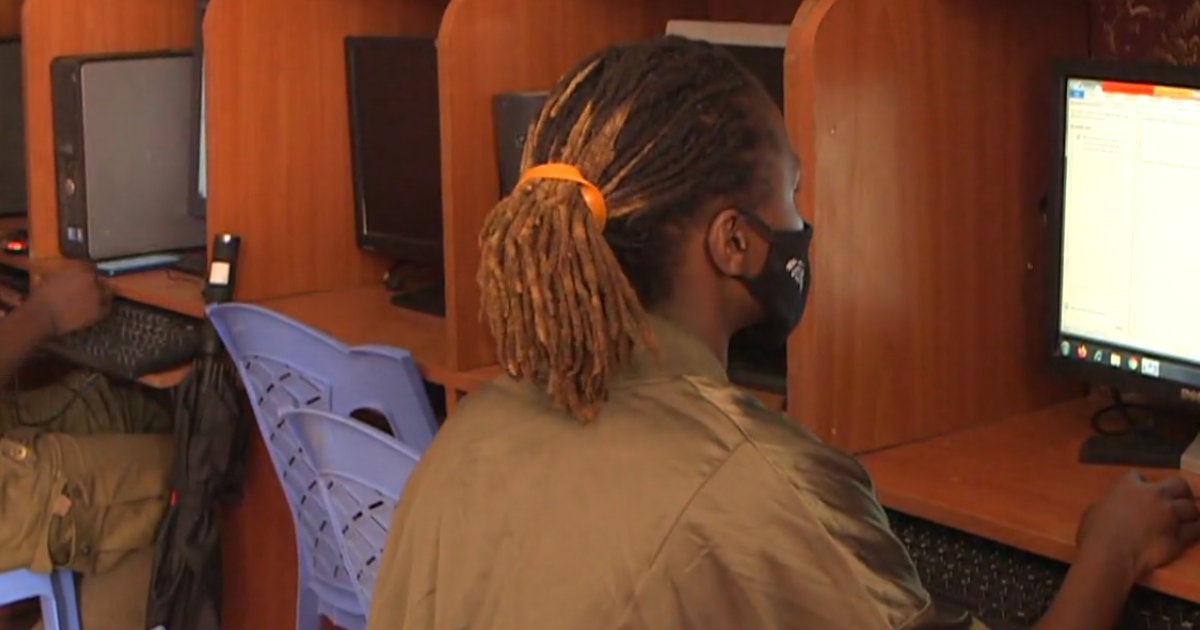
The Varsity Blues case captured headlines over two years ago, when news broke that wealthy parents paid upwards of $25 million in bribes to help their children cheat on test scores and secure college admission. As the trial gets underway this week, Professor of Psychological Science David Rettinger, who oversees Academic Integrity Programs at the University of Mary Washington, can provide unique insight into the scandal and the rise of contract cheating at colleges and universities across the country. He was recently interviewed by CBS News about the billion dollar cheating industry that has emerged in Kenya, where Americans are paying African students to do homework, write essays and in some cases, even complete degrees for them. "I think the state of cheating at colleges and universities is serious and getting more serious," David Rettinger ... told CBS News. He said that cheating is problematic because it means people can graduate from degree programs without actually being qualified in their fields. "We trust our doctors have been to medical school," Rettinger said. "Cheating leads us to overall social corruption because it leads us to having a cadre of professionals who can't actually do the work that they claim they can do." You can see the full interview and story here: Dr. David Rettinger is available to speak with media regarding this issue of cheating and academic integrity. Simply click on his icon now to arrange an interview today.


Experts in the Media – UMW entomologist is the go-to expert on the Spotted Lanternfly
Move over cicadas. Spotted Lanternflies are now in the spotlight, hitchhiking across America. The invasive species, which came via cargo from Asia, are now wreaking havoc through the East Coast. Just this week, University of Mary Washington Assistant Professor of Biology Josephine Antwi, whose research focuses on the effects that pests have on crops of economic importance, was interviewed by The Washington Post about the potential devastation these bugs can have on trees and agricultural crops like apples, grapes, stone fruits and hop plants. The New York Times and USA Today have also published stories about the insects. Despite having wings, the adults don’t fly far. The bugs are often spread by vehicles. Residents in quarantined counties are urged to inspect vehicles and goods for transport to ensure that the insects and their egg masses are not hitching a ride. “If females lay eggs on a substrate that eventually moves (e.g., automobiles or goods), then they quickly spread that way,” Josephine Antwi ... wrote in an email. If you're writing about the Spotted Lanternfly, Dr. Antwi is available to speak with media; simply click on her icon to arrange an interview today.

Anti-mask ordinances amount to disability discrimination
University of Rochester health policy expert Mical Raz says anti-mask ordinances amount to disability discrimination for individuals with compromised immune systems—that includes people who have cancer and autoimmune disease, as well as those who have received organ transplants. As Dr. Raz explained in a recent Washington Post essay, immunocompromised individuals—even those who are vaccinated—may now find themselves inadequately protected in workplaces where mask requirements are legally banned and there are no vaccine requirements. Dr. Raz also co-authored a piece in the JAMA Health Forum discussing the implications of some states banning attempts to mandate masking. As she points out, vaccines have been less effective in individuals with different categories of immunosuppression. Dr. Raz concludes that allowing mask requirements is an important form of disability accommodation.



Baylor Expert: 9/11 Reshaped Every Aspect of American Life – Not Necessarily for the Better
English professor, culture expert says terror attacks damaged America, but it’s not too late to recover sense of purpose and generosity The Sept. 11, 2001, terrorist attacks on the World Trade Center and the Pentagon continue – 20 years later – to have profound effects on everything from America’s political, religious and cultural polarization to American entertainment choices, said Baylor University faith and culture expert Greg Garrett, Ph.D., professor of English. “It shouldn’t surprise anyone that an event that shook our sense of security and our identity would be reflected in every aspect of American life,” Garrett said. “But what does surprise and alarm me is the degree to which 9/11 continues to shape our attitudes about race, religion, immigration and the Other, whether that Other is in Afghanistan or just across town. The United States initiated a perpetual war against terror in response to the 9/11 attacks, and the fear that took root in the American psyche has proven difficult to shake.” Garrett, author of more than two dozen books, is internationally recognized as an expert on faith, culture, race and story, and he argues that the reaction to 9/11 can be measured just as much through literature and culture as through accounts of executive orders and covert military operations. Country music, procedurals and reality TV after 9/11 “Initially, Americans supported the War on Terror across political, religious and cultural lines,” Garrett said. “Country musicians like Toby Keith leaned into militant songs about American greatness and righteous revenge. The top-selling act the Chicks (then the Dixie Chicks) was drummed out of country music for their public stand against going to war. The TV show 24 reflected the growing darkness of America’s extra-legal approach to that war—the willingness to use torture, rendition and the opening of a dark site in Guantanamo Bay to house suspected terrorists—and it actually shaped opinion and policy as it grew in popularity and influence.” Two other types of television shows became extremely popular as a result of 9/11, Garrett said. Procedurals (shows such as CSI, Law and Order and House, M.D.) gained a new popularity because they offered viewers something the ongoing War on Terror never could or will: closure. “A serious problem was introduced in every episode, grappled with and solved by the end of an hour,” he said. Another type of show that leapt in popularity in the months and years following the attacks – reality shows – offered “train-wreck escapism,” Garrett said. “The contestants on Survivor and The Bachelor, and the wayward souls on Jersey Shore and Keeping Up with the Kardashians, presented exaggerated versions of our present moment that allowed viewers to forget about the dark actuality of the times,” he said. Springsteen, Harry Potter and critiquing ‘moral failures of the War on Terror’ Not all popular culture offered reinforcement or escapism, Garrett said, adding that some of the most powerful pop culture from 2001 onward critiqued the “moral failures of the War on Terror and critiqued the American people for so readily accepting them.” “Punk rock, always a prime medium for protest, was one of the earliest forms of dissent,” Garrett said. Green Day’s 2004 album American Idiot reached the top of the charts in the United States and 18 other countries, ultimately selling 16 million albums. But mainstream acts like Bruce Springsteen also asked complicating questions about the attacks and their aftermath. “After primarily offering empathy and comfort in The Rising (2002), Springsteen realized that America had betrayed many of its most important ideals, as revealed by songs like ‘Your Own Worst Enemy’ on the No. 1 2007 album Magic,” Garrett said. “Later novels in J. K. Rowling’s Harry Potter series, the most popular fictional narrative of all time, introduce questions of torture and terror, and powerful TV dramas like Battlestar Galactica and the British import Doctor Who also criticize the choices made by the American government and its allies.” Zombies and the Apocalypse Perhaps the most significant byproduct of 9/11 in our culture is the resurgence in apocalyptic stories such as 28 Days Later, Sean of the Dead, The Walking Dead, Game of Thrones, World War Z and The Road, Garrett said. Stories about the Zombie Apocalypse – whether in games, books, comics, TV or movies – asked serious questions about what it means to be human, and about what moral compromises a person might be willing to take to stay alive, Garrett explained. They also reflected the new 24/7 sense of encroaching menace that “seeped into our culture and lit up our phones at all hours of the day and night.” “You could fight all day every day against this menace, these creatures who look like humans but seek your destruction. And then the next morning, you still have to rise and confront it again,” Garrett said. ‘Not too late’ “People 20 years ago said that 9/11 changed everything, and so it did.” Garrett said. “But 20 years later it is not too late to recognize that the fears those attacks brought to the surface don’t have to be the way we continue to live. In my faith tradition, Jesus constantly admonishes his followers not to be so afraid. We make bad and selfish decisions out of fear. We abridge hospitality, compassion and liberty when we believe we are endangered. That’s not the America I grew up in, and it’s not the America in which I hope to die. That America, the light of the world, the city on a hill, Lady Liberty lifting her torch to welcome all, is the America that our founders dreamed, and that we can dream once again.” ABOUT GREG GARRETT, PH.D Greg Garrett, Ph.D., is a professor of English at Baylor University and Theologian-in-Residence at the American Cathedral of the Holy Trinity in Paris. An award-winning professor, Garrett has written about 9/11 and its aftermath in a number of books, including One Fine Potion: The Literary Magic of Harry Potter (Baylor University Press), Living with the Living Dead: The Wisdom of the Zombie Apocalypse, and A Long, Long Way: Hollywood’s Unfinished Journey from Racism to Reconciliation (both Oxford University Press). ABOUT BAYLOR UNIVERSITY Baylor University is a private Christian University and a nationally ranked research institution. The University provides a vibrant campus community for more than 19,000 students by blending interdisciplinary research with an international reputation for educational excellence and a faculty commitment to teaching and scholarship. Chartered in 1845 by the Republic of Texas through the efforts of Baptist pioneers, Baylor is the oldest continually operating University in Texas. Located in Waco, Baylor welcomes students from all 50 states and more than 90 countries to study a broad range of degrees among its 12 nationally recognized academic divisions. ABOUT THE COLLEGE OF ARTS & SCIENCES AT BAYLOR UNIVERSITY The College of Arts & Sciences is Baylor University’s largest academic division, consisting of 25 academic departments and eight academic centers and institutes. The more than 5,000 courses taught in the College span topics from art and theatre to religion, philosophy, sociology and the natural sciences. Faculty conduct research around the world, and research on the undergraduate and graduate level is prevalent throughout all disciplines. Visit baylor.edu/artsandsciences.

