
Experts Matter. Find Yours.
Connect for media, speaking, professional opportunities & more.

The days of wiping down groceries may be coming to an end, but will Americans' reliance on hand sanitizer follow suit? This week, the Centers for Disease Control and Prevention (CDC) released a report confirming that the risk of catching the coronavirus from surfaces is low. Kevin Minbiole, PhD, chair of the Department of Chemistry at Villanova University, weighs in on hand sanitizer use—and whether too much sanitizing is a bad thing. "I think that a lot of the concern on the overuse of hand sanitizer a decade ago or so was the overuse of triclosan, a strong antimicrobial agent that would persist in wastewater," said Dr. Minbiole, referring to a theory that arose following the H1N1 pandemic in 2009. At that time, scientists expressed worry that bacteria were becoming resistant to hand sanitizer. "It seemed like overkill to go beyond soap and water or simply ethanol (alcohol)—or to add triclosan into hand soap," Dr. Minbiole continued. While Dr. Minbiole does not dismiss this theory, he notes, "I believe there was merit to the concerns of overapplying antibiotics and antiseptics when they were not needed." Looking to the future, Dr. Minbiole does not see hand sanitizer playing as big a role. "I don't foresee a backlash so much here, as folks recognize that this particular virus is more of an airborne concern," he says.


Solar geoengineering - it’s a topic that has caused an ethical lightening storm in the science community. The concept is complex. Should the world take on the crisis of climate change by attempting to artificially attempting to cool the earth? It’s an idea that has the National Academies of Sciences, Engineering and Medicine seeking a billion dollars in the next five years to investigate the theory. It’s a topic that is somewhat controversial, and journalists are looking to leading experts from across America for expert insight, opinion and perspective. Prakash Kashwan, a political scientist at the University of Connecticut, said he felt the report could have better emphasized the seriousness of some concerns over others. Uncertainties about the impacts of solar geoengineering on global weather patterns have the potential to affect some regions of the world more severely than others, he pointed out. Some experts have raised concerns about potential effects of geoengineering on monsoon rainfall in parts of Asia and Africa, he said. More than 2 billion people around the world rely on these rainfall patterns to support their water and agricultural needs. These kinds of issues should be given special weight, Kashwan suggested. "Some uncertainties are much more highly consequential for the global society, and especially for the poor and vulnerable," he told E&E News. Kashwan also reiterated concerns about potential political effects. While the report makes clear that geoengineering is not a substitute for climate mitigation, he suggests that this doesn't necessarily prevent policymakers from using it in that way. "The problem is the extent to which researchers are really helpless in deciding how research is used in the political system," he said. "That part has yet to be fully appreciated." Kashwan suggests that more dialogue might be warranted before funding a national research program, with greater input from both the international community and political experts who can weigh in on the ways that geoengineering research might affect political decisions. March 26, Scientific American It's a captivating idea – but it could have political, social and ethical consequences. Dr. Kashwan has also been interviewed by The New York Times. If you are a journalist looking to learn more about solar geoengineering, its possibilities and the reasons some scientists are worried – then let us help with your coverage. Prakash Kashwan is an Associate Professor of Political Science at UConn and an expert in the areas of environmental and climate justice, planetary justice, global commons, climate governance, and climate geoengineering governance. Dr. Kashwan is available to speak with media regarding this topic – simply click on his icon now to arrange an interview today.

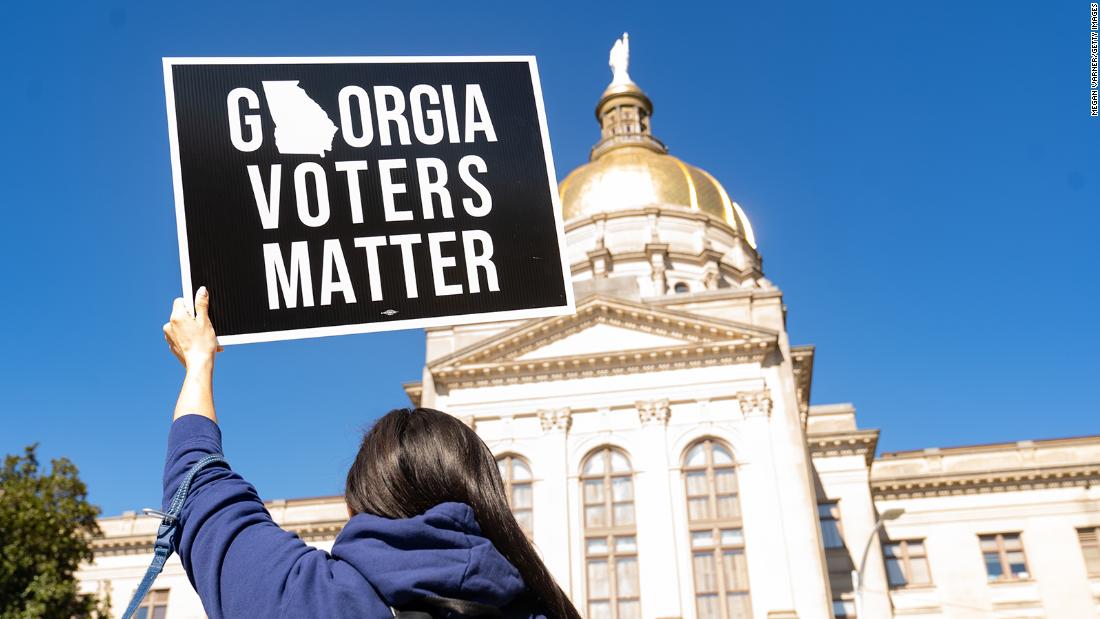
Election integrity and the Peach State - What does the new voting law in Georgia mean for voters?
It’s a law that passed in record time. Georgia politics is once again capturing the national spotlight and headlines with The Election Integrity Act of 2021. Here’s what it means in a nutshell: “The new law imposes new voter identification requirements for absentee ballots, empowers state officials to take over local elections boards, limits the use of ballot drop boxes and makes it a crime to approach voters in line to give them food and water. "It's like the Christmas tree of goodies for voter suppression," Democratic state Sen. Jen Jordan said on the Senate floor as lawmakers prepared to vote on the nearly 100-page bill Thursday. Republicans cast the measure, dubbed The Election Integrity Act of 2021, as necessary to boost confidence in elections after the 2020 election saw Trump make repeated, unsubstantiated claims of fraud. By Thursday evening, a lawsuit challenging the new law had already been filed by a trio of voting rights groups: the New Georgia Project, the Black Voters Matter Fund and Rise Inc. "In large part because of the racial disparities in areas outside of voting -- such as socioeconomic status, housing, and employment opportunities -- the Voter Suppression Bill disproportionately impacts Black voters, and interacts with these vestiges of discrimination in Georgia to deny Black voters (an) equal opportunity to participate in the political process and/or elect a candidate of their choice," the lawsuit states. March 26 – CNN The new law is under a lot of scrutiny and is getting a lot of coverage. If you are a journalist looking for expert perspective on the legality and legitimacy of new law, what it may mean for future elections in Georgia voters and potentially voters across America, then let us help. Dr. Stephen Farnsworth is a sought-after political commentator on presidential politics. He has been widely featured in national media, including The Washington Post, Reuters, The Chicago Tribune and MSNBC. Dr. Farnsworth is available to speak with media any time regarding the election and its aftermath – simply click on his icon to arrange an interview today.


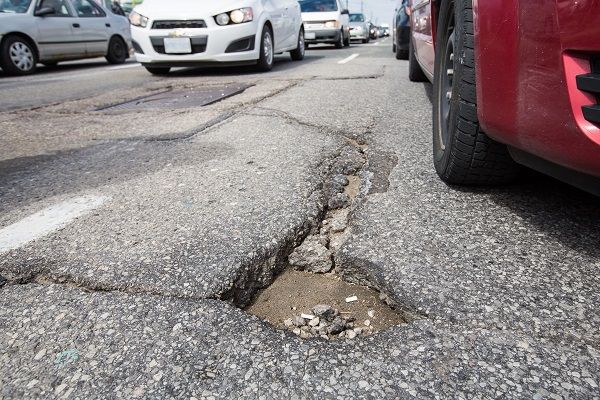
MEDIA RELEASE: After a one-year hiatus, the annual CAA Worst Roads campaign returns
With a renewed focus on education and safety, CAA South Central Ontario (CAA SCO) is proud to announce that following a one-year hiatus due to COVID-19, the annual CAA Worst Roads Campaign is back, and voting is now open. “The campaign is a platform for all road users to highlight which roadway improvements should be prioritized by our different levels of government,” says Raymond Chan, government relations manager CAA SCO. “The campaign gives decision-makers a snapshot of what roads the public perceives are not meeting their expectations.” Over the course of the last year people have changed their transportation habits. More people are cycling or driving their vehicles instead of carpooling and using public transit. CAA believes funding for roadway improvements needs to be consistent to ensure that quality and safety is maintained. “Our roads are essential, they are the arteries used every day to keep workers, goods and services flowing and should be maintained more than ever,” adds Chan. “As people are encouraged to stay home and telework during the pandemic, governments should continue to take advantage of lighter traffic patterns as an opportunity for road repair. These efforts can also be refocused on increasingly popular modes of transportation, such as cycling and walking.” Investing in infrastructure improvements, including the proper maintenance of roads and bridges, is important to the vitality and economic recovery of local communities. CAA continues to advocate for longer-term dedicated infrastructure funding to help municipalities prepare, plan, budget and execute on repair backlogs and capital projects. The success stories over the last 17 years are a result of governments prioritizing infrastructure through multi-year capital investments. Some examples include: 1. Riverdale Drive, Washago Despite appearing on the CAA Worst Roads list for the first time in 2019, the poor road conditions of Riverdale Drive was not new to residents of Severn. After 20 years since the street’s last resurfacing, Council approved $50,000 of prep work for Riverdale Drive led by Ward 5 Councillor Sarah Valiquette. 2. Dufferin Street, Toronto Appearing on the provincial top 10 list annually since 2015, Dufferin Street between Bloor Street and Dundas Street underwent resurfacing from September to November 2018. An estimated 35,000 vehicles travel Dufferin Street daily and the number of commuters is increasing. In response to community concerns, Toronto City Council adopted a motion to expedite studies relating to pedestrian and cyclist safety along Dufferin Street, among other improvements in December 2020. 3. College Road, Windsor The intersection of Campbell and College Avenue underwent sewer, road and water main rehabilitation in May 2019. College Avenue between South Street and Brock Street was repaired in November 2019. CAA is calling on all Ontarians to vote for their Worst Roads today and join the community of drivers, cyclists, transit riders and pedestrians committed to improving Ontario’s roads. Nominations for CAA’s Worst Roads can be cast at caaworstroads.com until April 18. To encourage participants to act on their concerns, they will be entered into a grand prize draw to win free gas for a year, or one of 5 secondary prizes. Once voting closes, CAA will compile a list of the 10 Worst Roads in Ontario, along with the Worst Roads in regions across the province. The regional top five lists will help shine further light on the state of local roads in municipalities across Ontario. CAA will present the list of 2021 Worst Roads to local and provincial officials to help inform future funding and planning decisions. Here is a roundup of Ontario's Top 10 Worst Roads in 2019: 1. Eglinton Avenue East, Toronto 2. Riverdale Drive, Washago 3. Dufferin Street, Toronto 4. County Road 49, Prince Edward 5. Barton Street East, Hamilton 6. Burlington Street East, Hamilton 7. Avondale Road, Belleville 8. Sheppard Avenue East, Toronto 9. Carnegie Beach Road, Scugog 10. Bathurst Street, Toronto


How safe is your baby food? A UConn expert explains.
A new congressional report has raised concerns from regulators and outcry from parents about the level of heavy metals - including things like lead, arsenic, and mercury - that are found in commercial baby foods. Dr. C. Michael White, chair of Department of Pharmacy Practice at the University of Connecticut and an expert in the safety of drugs and dietary supplements, has weighed into the baby food debate with a recent piece for The Conversation. In his article, Dr. White examines such topics as: How do heavy metals get into baby food? How much heavy metal is too much? What can parents do to reduce a child’s exposure? Is anyone doing anything about it? Dr. White says that, while there are steps for parents to take now, baby food manufacturers will ultimately have to alter certain practices to reduce the presence of heavy metals in their products. The U.S. has made important inroads in reducing heavy metals in air and water since the 1980s, dramatically lowering exposure. With additional focus, it can further reduce heavy metal exposure in baby food, too. Dr. White is available to speak with media regarding this topic. Simply click on his icon now, to arrange an interview today.


A selection of 30 films celebrating the past 20 years of Japanese cinema streams online throughout the U.S. on Japan Society’s virtual cinema, including films by Hirokazu Kore-eda, Naomi Kawase and Takashi Miike Plus, online U.S. premieres of Sion Sono’s Red Post on Escher Street and Yukiko Mishima’s Shape of Red, a special focus on Kiyoshi Kurosawa and a selection of breakout films by up-and-coming filmmakers Red Post on Escher Street © 2021 “Red Post on Escher Street” Film Partners Japan Society and the Agency for Cultural Affairs, Government of Japan (ACA), in collaboration with the Visual Industry Promotion Organization (VIPO), announce the inaugural ACA Cinema Project online film series 21st Century Japan: Films from 2001-2020, streaming nationwide on Japan Society’s Virtual Cinema from February 5-25, 2021. As Japan’s film industry enters the third decade of the new millennium, this 30-film online series takes a look back at the last 20 years of Japanese cinema to celebrate some of the most remarkable narrative fiction films and filmmakers that define the era. Covering a wide range of production styles and genres—from small budget independent debuts to festival favorites and award-winning major studio releases—this diverse slate of feature and short films offers a guided tour of modern Japanese cinema, including special spotlights dedicated to the work of Kiyoshi Kurosawa and a selection of breakout films by up-and-coming filmmakers. A large majority of the films included are streaming in the U.S. exclusively on Japan Society’s Virtual Cinema. Series highlights include the online U.S. Premiere of Red Post on Escher Street, the latest film by cult favorite director Sion Sono (Love Exposure, 2009)—a comically reflexive, wildly unhinged, return-to-roots feature about a talented young director undergoing the production of a new film. Red Post on Escher Street is co-presented with Grasshopper Film, who will screen the title in tandem with Japan Society as part of the newly launched Projectr Movie Club from February 5-18. In addition, director Yukiko Mishima’s female-driven romantic drama Shape of Red makes its online U.S. premiere—a steamy tearjerker about a tenuous love affair adapted from the novel by Naoki Prize-winning author Rio Shimamoto featuring popular stars Kaho and Satoshi Tsumabuki. Billed as “Special Screenings,” these titles are planned to include pre-recorded video Q&As with the respective film’s director. Other highlights include harder-to-see gems by some of Japan’s most internationally prominent filmmakers, including: Hirokazu Kore-eda’s 2009 Doona Bae-starring fantasy drama Air Doll; Naomi Kawase’s 2014 Cannes competition title and self-proclaimed masterpiece Still the Water; Takashi Miike’s 2005 family-friendly monster adventure film The Great Yokai War; Shinya Tsukamoto’s 2015 adaptation of Shohei Ooka’s famous anti-war novel Fires on the Plain; trailblazing gay director Ryosuke Hashiguchi’s 2001 LGBT-themed comedic drama Hush!; and the award-winning 2006 murder mystery drama Sway by Miwa Nishikawa, whose latest film Under the Open Sky (2020) premiered at the Toronto International Film Festival. “While it’s impossible to really capture the last two decades of Japanese narrative fiction filmmaking in its full breadth, we are excited to share at least the tip of the iceberg for these three weeks in February,” says K. F. Watanabe, Deputy Director of Film at Japan Society. “Online or otherwise, a large majority of these titles remain unavailable to watch with English subtitles in the U.S., so I hope this series provides an opportunity to create new fans of filmmakers such as Naoko Ogigami or Shuichi Okita and expand any preconceptions of what modern Japanese cinema can offer.” Katsura Toda, Senior Specialist for Arts and Culture at the Agency for Cultural Affairs, says, “The ACA Cinema Project was launched with the hope of sharing the diverse appeal of Japanese films to audiences around the world and to create more opportunities for these films to be seen. We are pleased to present U.S. audiences with the works of a great variety of directors—including well-established masters, filmmakers with distinctive voices and rising stars of the 21st century—and hope that many people will be able to encounter Japanese films in a fresh way.” $99 All-Access Passes with a 21-day rental window go on sale January 29 through February 4. $8 individual tickets with a 3-day rental window go on sale February 5. Individual tickets for Red Post on Escher Street and Shape of Red are $12. Japan Society members receive a 20% discount on all tickets via coupon code. All films screen online at japancuts.japansociety.org in Japanese with English subtitles unless otherwise noted. All titles available within the U.S. from February 5-25 unless sold out or otherwise noted. Titles also available beyond the U.S. are noted below. Lineup and other details are subject to change. For complete information visit japansociety.org. View the full film line-up here. Screeners available for most titles. Please send all press inquiries to Michael Lieberman at pr.lieberman@gmail.com. For inquiries regarding Japan Society and its Virtual Cinema, please contact Allison Rodman at arodman@japansociety.org.


Continuing to Learn and Explore American History
In the United States, students take several American history courses throughout their K-12 experience. So, why should students bother to continue taking American history courses in college? For Southern Utah University's Dr. Mark Miller, the answer is simple. “When I teach a history course, I am always looking for ways to point out how an issue or event in the past is relevant to something going on in today's world,” said Dr. Miller. “With this year's presidential election going on there have been plenty of examples to tie into regarding past politics and past political crises we have lived through as Americans.” Dr. Miller has conducted some exciting research that will be published in 2021. His upcoming articles includes: “Polygamy under the Red Cliffs: Women’s Voices and Historical Memory at Centennial Park” in Utah Historical Quarterly, “A River Again: Fossil Creek, Desert Fishes, and Dam Removal in the American Southwest” in Pacific Historical Review, and “‘One Territory, Many Peoples:” Racial and Ethnic Groups and the Development of Arizona Territory” in The Smoke Signal. “I think my work on plural marriage and environmental history shows that history is never dead,” said Dr. Miller. “It reveals that in current debates history is quite important. What happened in the past still informs the present. Since both of these topics are quite controversial today, I think historians provide a valuable service by exposing the history behind debates over allowing polygamy in modern America or whether we should make trade offs in development and water use to preserve unique species. Knowledge of people who practice plural marriage and their religious history as well as the history of preservation efforts toward endangered species is vital to all participants in the debates.” Dr. Mark Miller is a professor of history and the department chair of History, Sociology, & Anthropology at Southern Utah University. His research and teaching specialties include United States History, American West, Borderlands, Indigenous Culture and History, World Civilization, and Latin America. He has published articles and books on modern American Indian History, most recently Forgotten Tribes (2006) and Claiming Tribal Identity (2013). He has published articles on race and ethnicity, on indigenous identity and politics in several journals. Dr. Miller is familiar with the media and available for an interview. Simply visit his profile.


Air Flow Expert Working to Make Sure New Jet Fighters Take Flight — and Land — Safely
The next generation of jet fighters are being designed to be both stealthy and high-speed and, as part of this makeover, their geometry will be unique and won’t include a vertical tail. The new design will improve the aircraft’s maneuvering, minimalize its visibility, and improve its overall performance — but it will also decrease the aircraft’s performance during takeoff and landing. Miki Amitay, an endowed professor of mechanical, aerospace, and nuclear engineering at Rensselaer and the director of the Center for Flow Physics and Control (CeFPaC), is an expert in this type of problem. With the support of a new grant from the Office of Naval Research, Amitay and his team will use their extensive knowledge of flow physics to determine how air flow will affect these new jet fighters and how that flow can be manipulated or changed for optimal operation. More specifically, the team will use state-of-the-art wind and water tunnels within CeFPaC to research the flow physics associated with this new plane geometry and then explore options for mitigating difficult flow conditions during takeoff and landing. Those options can’t include changing the shape of the plane itself, so the researchers will employ active flow techniques they have developed. For example, Amitay has developed almost weightless actuators that can electrically generate a strong jet — called a synthetic jet — that pushes out puffs of air in such a way that it helps control the flow of air around various parts of the aircraft at specific and optimal times. Amitay is available to talk about the flow physics associated with aircraft flight and new technologies — like his synthetic jet — that can improve performance, efficiency, and safety.


VCU Engineering researchers are working to make clean energy easier and cheaper
Lane Carasik, Ph.D., assistant professor in VCU’s Department of Mechanical and Nuclear Engineering, is developing methods to make clean energy more cost-effective. He’s motivated by a simple principle. “The cheaper we make renewable and clean energy, the easier it is to implement it,” he said. With $100,000 in seed funding from the Jeffress Trust Awards Program, Carasik and his Fluids in Advanced Systems and Technology (FAST) research group are designing efficient, low-cost enhancements to equipment used in solar, nuclear and geothermal energy systems. Jeffress Trust awards support high-impact, one-year projects that integrate computational and quantitative scientific methodologies across a broad range of scientific disciplines. These energy systems use heat exchangers, which take energy from heat generation components and convert it to electricity. Heat exchangers usually comprise two working substances such as water, steam or air separated by tubes or plates. The FAST research group is optimizing a specialty insert that can be placed inside a heat exchanger’s tubes to improve performance. To visualize the insert’s form, imagine holding a piece of metal tape in both hands and gently twisting it. See the FAST Lab and examples of the heat transfer enhancements being designed there. “A liquid running through a tube is relatively undisrupted by the geometry of the tube or the shape of the fluid,” Carasik said. “But this twisted tape component spins the fluid. This increases turbulence, which increases heat transfer.” While “twisted tape” inserts are already in use in some advanced energy systems, the process of fabricating them has been limited by mechanical constraints. Typically, the inserts are placed inside a tube and tack welded at either end. But because of the metal’s limited tensile strength, these inserts can only be twisted a little before they break down and cause manufacturing defects. 3D printing, on the other hand, allows for a more complex — and effective — insert that can be used to characterize heat transfer performance. “With additive manufacturing, you can actually print tighter, ‘twistier’ versions of them,” Carasik said. “You can also add your own intentional defects to find out how to make the heat transfer better and improve the performance of the whole system.” Each geometric form the research group prints and tests starts with a world of calculations: thermal-hydraulics design calculations, solid geometry, material properties and more. From there, components are computer-designed, then printed in the Mechanical and Nuclear Engineering Innovation Lab. Finally, they are tested in the FAST research group’s Modular Separation Effects Testing Facility (MSEFT), a scaled testing loop that emulates the operating conditions experienced by these components. Undergraduates — even first-year students — participate in each step of the process, alongside Carasik, postdoctoral research associate Cody Wiggins, Ph.D., and doctoral student Arturo Cabral. “I really like getting students into research early on, Carasik said. “By the time they’re three years in, they’re working at a level I would expect from bachelor’s level engineers in industry.” Senior Meryem Murphy was curious about undergraduate research but had never really participated. “One day, I was arguing with Arturo about something and Dr. Carasik said, ‘If you’re like this all the time, you should work for the lab.’” She took him up on it and spent her junior year working on an MSEFT redesign and running an experiment to see if 3D-prototyped concepts can be replicated with test metals. Over the summer, Murphy interned with Atomic Alchemy, a medical radioisotope startup in Boise, Idaho. She said the position built on the hard, and soft, skills she gained in the lab. “Sometimes in class, you’re required to collaborate,” she said. “But in research, it’s just ‘what you do’ to get it done.” Rising sophomore Ryan McGuire is also looking forward to starting his second year in the lab. During his freshman year, McGuire helped develop a 3D printing technology to duplicate sequences of 3D-printed parts for the FAST research group. It’s called Retrospective Additive Manufacturing Sequencing — RAMS for short. McGuire said the thrill of solving problems in the lab has made him reassess his own goals. “When I was younger, I wanted to be [famous],” he said. “But now I no longer want to be famous. Research seems like more fun.” Upon hearing about McGuire’s change in priorities, Carasik said, “Researchers can be famous too, and for good reason.”



Let Your Brain Rest: Boredom Can Be Good For Your Health
The human brain is a powerful tool. Always on, the brain is thinking and dealing with decisions and stressors and subconscious activities. But as much as the human brain function has a large capacity, it also has limits. Alicia Walf, a neuroscientist and a senior lecturer in the Department of Cognitive Science at Rensselaer Polytechnic Institute, says it is critical for brain health to let yourself be bored from time to time. Being bored can improve social connections. When neuroscientists do studies looking at brain activity they often compare what areas are “on” when people do a specific cognitive task and when they are told to do nothing. Remarkably, there is extensive activity in the do nothing part of the experiment. This has led social neuroscientists to discover that we have what is called a default mode network, many brain regions that are on by default, or when we are not doing other things. It also turns out that when we are not busy with other thoughts and activities, we focus inward as well as on social interactions. Being bored can help foster creativity. Many scientists and artists have reported being inspired or solving a complex problem when they have actually stopped thinking about it. This eureka moment is called insight. Neuroscientists have shown different patterns of brain activity when people solve problems compared to by working through them step-by-step. Even the ancient Greek Archimedes is known to come up with his major finding relating to displacement of water while taking a bath. Additionally, being bored can improve overall brain health. During exciting times, the brain releases a chemical called dopamine which is associated with feeling good. When the brain has fallen into a predictable, monotonous pattern, many people feel bored, even depressed. This might be because we have lower levels of dopamine. One approach is to retrain the brain to actually enjoy these less exciting, and perhaps boring, times. Especially when we are young, our brains are able to adapt to new ways to think and behave. “Give boredom a try and see what your brain comes up with,” says Walf.
