
Experts Matter. Find Yours.
Connect for media, speaking, professional opportunities & more.
UF water researchers develop prediction system for harmful algae
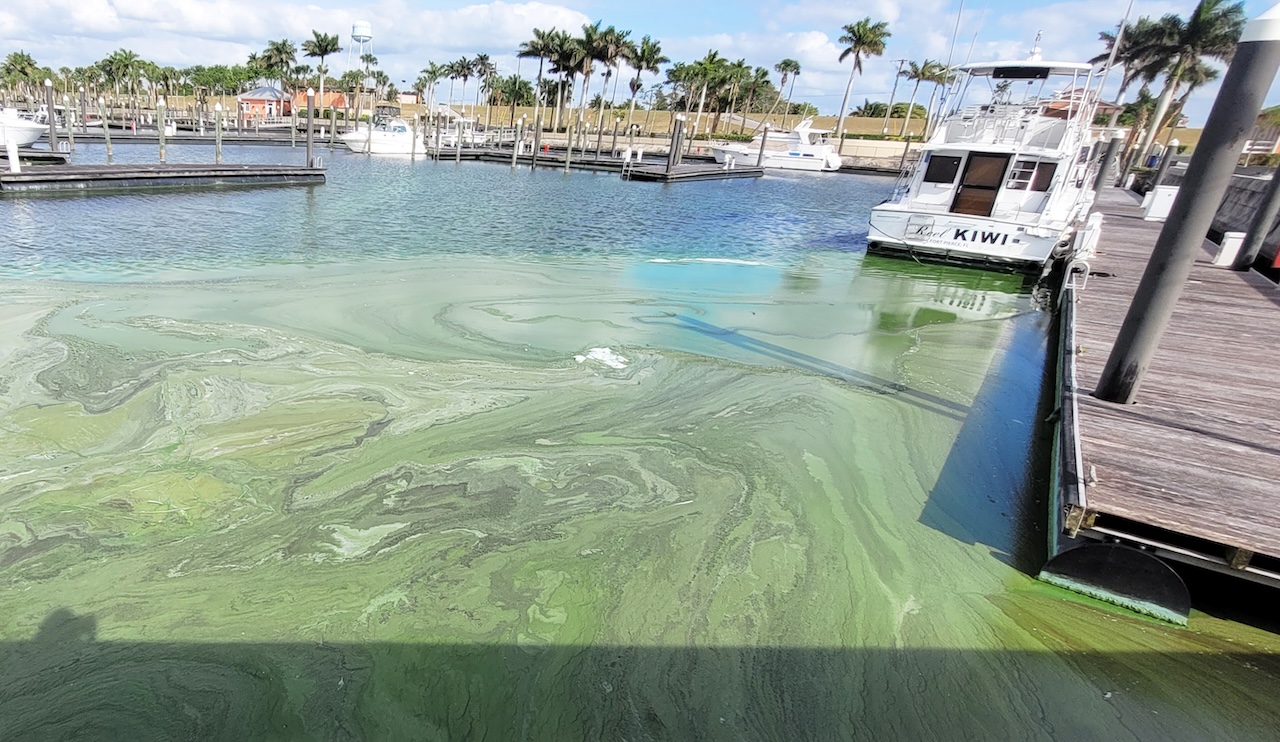
The slimy algae topping Florida’s waterways are more than just unsightly. They are often toxic to humans, animals and the environment. To mitigate those risks, University of Florida researchers are collaborating with North Carolina State University and University of South Florida scientists on a next-day prediction model to warn and inform water managers about harmful algal blooms. The research is funded by two U.S. Army Corps of Engineers grants for two phases, totaling $4.4 million. The project is led by David Kaplan, Ph.D., a professor with the Engineering School of Sustainable Infrastructure and Environment in the Herbert Wertheim College of Engineering and director of the Howard T. Odum Center for Wetlands, and Mauricio Arias, Ph.D., an associate professor at USF. In a paper published recently in the Journal of Environmental Management, Kaplan, UF assistant professor Elise Morrison, Ph.D., and NCSU’s Maria Menchu Maldonado, Ph.D., chronicled their work with harmful algal blooms in the Caloosahatchee River and Estuary, the environmentally sensitive link between Lake Okeechobee and Florida’s southwestern coast. Maldonado performed the work under the guidance of NCSU collaborator Natalie Nelson. In a collaboration between multiple colleges, organizations, departments and universities, the paper’s other authors are Eric Milbrandt of the Sanibel-Captiva Conservation Foundation, Edward Phlips of UF and Natalie G. Nelson of NCSU. The project’s facilitators include Darlene Velez, research coordinator with the UF Water Institute, and Lisa Krimsky, Ph.D., a water resources regional specialized agent with IFAS. Using water samples and computer algorithms, the team developed prediction models based on two water sources feeding the river: Lake Okeechobee and the river’s watershed – the water run-off from the surrounding land. The models determine levels of chlorophyll-a, which is a pigment in algae that is indicative of algal bloom conditions. “For watershed-dominated conditions, the model was able to predict 49% of the variation in next-day chlorophyll-a, which isn’t bad, but for lake-dominated conditions, the model was much better, explaining 78% of the variation in next-day chlorophyll-a in the water,” Kaplan noted. Unlike traditional forecasting models for algal blooms, which are often complex and require much computing power, these models are designed to be practical for daily decision-making, particularly for the Southwest Florida Water Management District (SWFWMD), which has made improving the health of the Caloosahatchee Estuary a state priority. Ultimately, researchers want to develop an algae-prediction system and tools for water managers to reduce risks in all freshwater bodies. “Definitely, this model could be expanded with the use of more data,” said Maldonado. “The same procedure could be applied in other lakes that are highly managed. And this could be done around the world.” Algal blooms in Florida’s lakes, rivers and estuaries have caused significant environmental and economic damage in recent years, UF researchers contend. Blooms are becoming more frequent and longer lasting. The initial project – called Coupling Lake, Estuarine, and Watershed Models for the Caloosahatchee River and Estuary (CLEW) – designed data- and model-driven guidance for Lake Okeechobee water releases. “The overall motivation is that Lake Okeechobee is a challenging natural resource to manage, particularly deciding when and how much water to discharge from the lake to either estuary,” Kaplan said. “There are many competing needs surrounding management of the lake, which has only so much volume. We don't want to cause flooding or other ecological harm.” The follow-up project is UF’s collaboration with USF to develop tools for end users, meaning agencies and managers to make better decisions. The team wants to deliver a system where water managers press the button to get the one-day risk forecast. The study was organized to predict whether the algae-toxin risk is low, medium or high. “In this case, there is a threshold of algal organisms that is considered harmful,” Maldonado said. “Those waters carry phytoplankton species, a microscopic algae that produce toxins. They can be dangerous to swim in, and they can be harmful to the environment. It can be a liver toxin.” Beginning in the late 19th century, the Caloosahatchee River and its watershed underwent extensive modifications that significantly altered the hydrology of the region, according to SWFWMD. The once-shallow river was deepened and widened into a regulated waterway that was connected to Lake Okeechobee and the Kissimmee Chain of Lakes for navigation, water supply and flood control purposes. “Water quality is a challenge in Lake Okeechobee, including sometimes pretty bad harmful algal blooms,” Kaplan said. “And then, of course, the downstream recipients of whatever water is discharged are very sensitive to the amount of water they're getting and what's in it. They’d prefer it to be only the right amount at only the right times with the best quality."



Georgia Southern professor re-elected to board of world’s largest scientific society
Professor of chemistry and chair of the Department of Biochemistry, Chemistry and Physics Will Lynch, Ph.D., has been re-elected to the American Chemical Society’s (ACS) board of directors. This marks his second three-year term on the board. With ACS serving as the largest science organization in the world, Lynch says the society’s work impacts lives every day. “We support the scientific enterprise by advocating for everything from research funding to laboratory safety,” said Lynch. “That work strengthens scientific integrity that ACS champions and ultimately shows up in the things that people rely on daily. Bottled water, medicines, cellphones and computer screens all come from chemistry. Many people do not realize how deeply science shapes their world.” With a budget of nearly $900 million and a global community of over 200,000, planning is essential to the success of ACS. Lynch is proud to have chaired the committee that created the society’s next five-year strategic plan. He hopes that his work will continue to put the society’s vast resources to use helping advocate for scientists around the world. “My focus now is implementing ACS’ strategic plan, which envisions a world built on science and setting up the indicators to measure our success,” said Lynch. “We want to make sure we support chemists whether they are in academia, industry, government labs or retired.” Serving in a leadership role for a world-renowned scientific organization is part of Lynch’s calling to help others. He began his service with ACS over 40 years ago when he volunteered at a regional meeting while pursuing his bachelor’s degree. He started making connections immediately and grew his professional network from the local to the national level. Forming friendships in the scientific community and witnessing the ways their work changed lives inspired Lynch to continue to grow his own knowledge so he could do more for others. “Getting to do research as an undergraduate pulled me in, and I knew that chemistry was where I could make a difference. I realized I had a path to help society through science and I never looked back.” Looking to know more about Georgia Southern University or connect with Will Lynch? Simply contact Georgia Southern's Director of Communications Jennifer Wise at jwise@georgiasouthern.edu to arrange an interview today.


ExpertSpotlight: Why Hangovers Hurt (and Why Almost Everyone Gets Them Wrong)
The hangover is the ultimate party plot twist: a night of celebration followed by a morning of regret. Headache, nausea, fatigue, brain fog, these aren’t random punishments for having fun. They’re your body’s way of saying it’s been busy processing alcohol, which acts as a diuretic (hello dehydration), irritates the stomach lining, disrupts sleep, and triggers inflammation. Even “just a few drinks” can tip that balance, especially when sleep is short and water is scarce. One of the biggest myths is that hangovers are all about dehydration. Water helps, but it’s only part of the story. Alcohol breaks down into acetaldehyde, a toxic byproduct that contributes to headaches and nausea. It also messes with blood sugar, expands blood vessels, and fragments REM sleep, which is why you can wake up exhausted even after eight hours in bed. Darker drinks often get blamed too; while congeners (chemical byproducts in darker alcohols) can make symptoms worse for some people, quantity and timing usually matter more than color. Then there’s the cure-all folklore: greasy breakfasts, hair of the dog, miracle supplements. Some comfort foods can help stabilize blood sugar, and anti-inflammatory foods may take the edge off, but no remedy truly “cures” a hangover once it’s underway. Time, hydration, light food, and rest remain the most reliable fixes. Prevention, of course, is king: pacing drinks, alternating with water, eating beforehand, and prioritizing sleep do far more than any next-morning hack. Journalists covering health, lifestyle, or New Year’s recovery stories: connect with experts who can explain the real science behind hangovers, what actually works, what’s wishful thinking, and how our bodies respond to alcohol. Whether you’re debunking myths or offering evidence-based tips, expert insight can turn morning-after misery into a smarter story. Find your expert here: www.expertfile.com


AI-driven software is 96% accurate at diagnosing Parkinson's
Existing research indicates that the accuracy of a Parkinson’s disease diagnosis hovers between 55% and 78% in the first five years of assessment. That’s partly because Parkinson’s sibling movement disorders share similarities, sometimes making a definitive diagnosis initially difficult. Although Parkinson’s disease is a well-recognized illness, the term can refer to a variety of conditions, ranging from idiopathic Parkinson’s, the most common type, to other movement disorders like multiple system atrophy Parkinsonian variant and progressive supranuclear palsy. Each shares motor and nonmotor features, like changes in gait — but possess a distinct pathology and prognosis. Roughly one in four patients, or even one in two patients, is misdiagnosed. Now, researchers at the University of Florida and the UF Health Norman Fixel Institute for Neurological Diseases have developed a new kind of software that will help clinicians differentially diagnose Parkinson’s disease and related conditions, reducing diagnostic time and increasing precision beyond 96%. The study was published recently in JAMA Neurology and was funded by the National Institutes of Health. “In many cases, MRI manufacturers don’t communicate with each other due to marketplace competition,” said David Vaillancourt, Ph.D., chair and a professor in the UF Department of Applied Physiology and Kinesiology. “They all have their own software and their own sequences. Here, we’ve developed novel software that works across all of them.” Although there is no substitute for the human element of diagnosis, even the most experienced physicians who specialize in movement disorder diagnoses can benefit from a tool to increase diagnostic efficacy between different disorders, Vaillancourt said. The software, Automated Imaging Differentiation for Parkinsonism, or AIDP, is an automated MRI processing and machine learning software that features a noninvasive biomarker technique. Using diffusion-weighted MRI, which measures how water molecules diffuse in the brain, the team can identify where neurodegeneration is occurring. Then, the machine learning algorithm, rigorously tested against in-person clinic diagnoses, analyzes the brain scan and provides the clinician with the results, indicating one of the different types of Parkinson’s. The study was conducted across 21 sites, 19 of them in the United States and two in Canada. “This is an instance where the innovation between technology and artificial intelligence has been proven to enhance diagnostic precision, allowing us the opportunity to further improve treatment for patients with Parkinson’s disease,” said Michael Okun, M.D., medical adviser to the Parkinson’s Foundation and director of the Norman Fixel Institute for Neurological Diseases at UF Health. “We look forward to seeing how this innovation can further impact the Parkinson’s community and advance our shared goal of better outcomes for all.” The team’s next step is obtaining approval from the U.S. Food and Drug Administration. “This effort truly highlights the importance of interdisciplinary collaboration,” said Angelos Barmpoutis, Ph.D., a professor at the Digital Worlds Institute at UF. “Thanks to the combined medical expertise, scientific expertise and technological expertise, we were able to accomplish a goal that will change the lives of countless individuals.” Vaillancourt and Barmpoutis are partial owners of a company called Neuropacs whose goal is to bring this software forward, improving both patient care and clinical trials where it might be used.


UF professor to expand proven disease-prediction dashboard to monitor Gulf threats
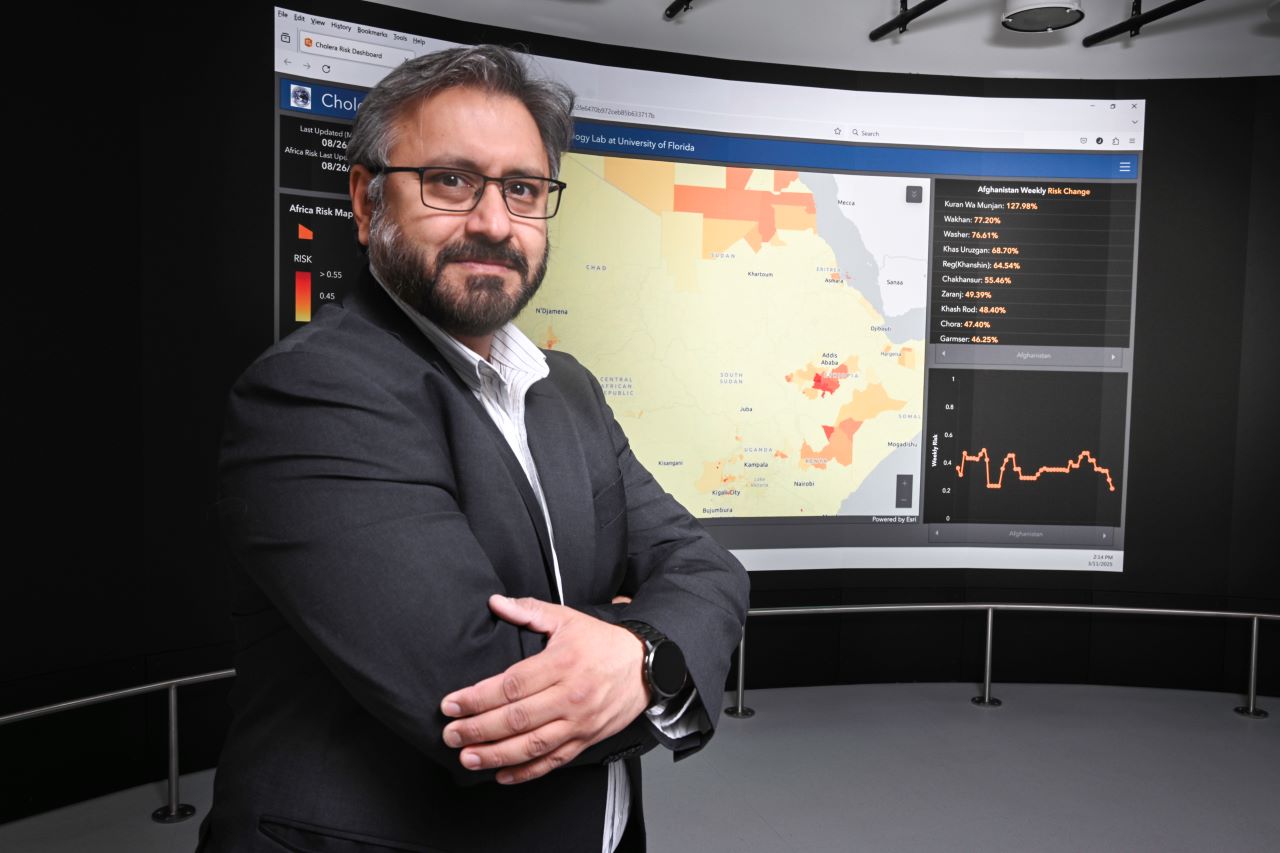
After deploying life-saving cholera-prediction systems in Africa and Asia, a University of Florida researcher is turning his attention to the pathogen-plagued waters off Florida’s Gulf Coast. In the fight to end cholera deaths by 2030 – a goal set by the World Health Organization – UF researcher and professor Antar Jutla, Ph.D., has deployed his Cholera Risk Dashboard in about 20 countries, most recently in Kenya. Using NASA and NOAA satellite images and artificial intelligence algorithms, the dashboard is an interactive web interface that pinpoints areas ripe for thriving cholera bacteria. It can predict cholera risk four weeks out, allowing early and proactive humanitarian efforts, medical preparation and health warnings. Cholera is a bacterial disease spread through contaminated food and water; it causes severe intestinal issues and can be fatal if untreated. The US Centers for Disease Control reports between 21,000 and 143,000 cholera deaths each year globally. Make no mistake, the Cholera Risk Dashboard saves lives, existing users contend. His team now wants to set up a similar pathogen-monitoring and disease-prediction system for pathogenic bacteria in the warm, pathogen-fertile waters of the Gulf of America. “Its timeliness, its predictiveness and its ease of access to the right data is a game changer in responding to outbreaks and preventing potentially catastrophic occurrences.” - Linet Kwamboka Nyang’au, a senior program manager for Global Partnership for Sustainable Development Data Closer to home Jutla is seeking funding to develop a pathogen-prediction model to identify dangerous bacteria in the Gulf to warn people – particularly rescue workers – to use protective gear or avoid contaminated areas. He envisions post-hurricane systems for the Gulf that will help the U.S. Navy/Coast Guard and other rescue workers make informed health decisions before entering the water. And he wants UF to be at the forefront of this technology. “If we have enough resources, I think within a year we should have a prototype ready for the Gulf,” said Jutla, an associate professor with UF’s Engineering School Sustainable Infrastructure and Environment. “We want to build that expertise here at UF for the entire Gulf of America.” Jutla and his co-investigators have applied for a five-year, $4 million NOAA RESTORE grant to study pathogens known as vibrios off Florida’s West Coast and develop the Vibrio Warning System. These vibrios in the Gulf can cause diarrhea, stomach cramps, nausea, vomiting, fever and chills. One alarming example is Vibrio vulnificus, commonly known as flesh-eating bacteria, a bacterium that often leads to amputations or death. The Centers for Disease Control and Prevention (CDC) has reported increases in vibrio infections in the Gulf region, particularly from 2000 to 2018. The warm and ecologically sensitive Gulf waters provide a thriving habitat for harmful pathogens. “The grant builds directly on the success of our cholera-prediction system," Jutla noted. "By integrating AI technologies into public health decision-making, we would not only lead the nation but also become self-reliant in understanding the movement of environmentally sensitive pathogens, positioning ourselves as global leaders.” Learning from preparing early Jutla’s dashboards are critical tools for global health and humanitarian officials, said Linet Kwamboka Nyang’au, a senior program manager for Global Partnership for Sustainable Development Data. “Its timeliness, its predictiveness and its ease of access to the right data is a game changer in responding to outbreaks and preventing potentially catastrophic occurrences,” Kwamboka Nyang’au said. Over the last few years, Jutla and several health/government leaders have been working to deploy the cholera-predictive dashboard. “Our partnership with UF, the government of Kenya and others on the cholera dashboard is a life-saving mission for high-risk, extremely vulnerable populations in Africa. By predicting potential cholera outbreaks and coordinating multi-stakeholder interventions, we are enabling swift action and empowering local governments and communities to prevent crises before they unfold,” said Davis Adieno, senior director of programs for the Global Partnership for Sustainable Development Data. The early warnings for waterborne pathogens also allows the United Nations time to issue early assistance to residents in the outbreak’s path, said Juan Chaves-Gonzalez, a program advisor with the United Nations’ Office for the Coordination of Humanitarian Affairs. “There are several things we do with the money ahead of time. We provide hygiene kits. We repair and protect water sources. We start chlorination, we set up hand-washing stations, train and deploy rapid-response teams. At the community level, we try to inject funding to procure rapid-diagnostic tests,” he said. “We identify those very, very specific barriers and put money in organizations’ hands in advance to remove those barriers.” Eyes on the Gulf In the United States, hurricanes stir up vibrios in the Gulf, posing a high risk of infection for humans in the water. There has been a nearly 200% increase in these cases over the last 20 years in the U.S., according to the CDC. “After Hurricane Ian, we saw a very heavy presence of these vibrios in Sarasota Bay and the Charlotte Bay region. Not only that, but they were showing signs of antibiotic-resistance. Last year, we had one of the largest number of cases of vibriosis in the history of Florida,” Jutla said. Samples from 2024 hurricanes Helene and Milton are being analyzed with AI and complex bioinformatics algorithms. “If there is a risky operation by rescue personnel, not using personal protective equipment, then we would want them to know there is a significant concentration of these bacteria in the water,” Jutla said. “As an example, Navy divers operating in contaminated waters are at risk of infections from vibrios and other enteric pathogens, which can cause severe gastrointestinal and wound infections.” Safety and economics “Exposure to vibrios and other enteric pathogens,” Jutla added, “can disrupt economic activities, particularly in coastal regions that are dependent on tourism and fishing. And vibrios may be considered potential bioterrorism agents due to their ability to cause widespread illness and panic.” In developing the Vibrio Warning System, Jutla noted, he and his team want to significantly enhance public health safety and preparedness along the Gulf Coast. By leveraging advanced AI technologies, satellite datasets and predictive modeling, they plan to mitigate the risks posed by environmentally sensitive pathogenic bacteria, ensuring timely interventions and safeguarding human health and economic activities. “Hospital systems and healthcare providers in the Gulf region will have a tool for anticipatory decision making on where and when to anticipate illness from these environmentally sensitive vibrios, and issue a potential warning to the general public,” he said. “With the potential to become a leader in environmental pathogen prediction, UF stands at the forefront of this critical research, poised to make a lasting impact on local, regional, national and global health and safety.”
Farm but no fowl: How Florida aquaculture is growing the economy
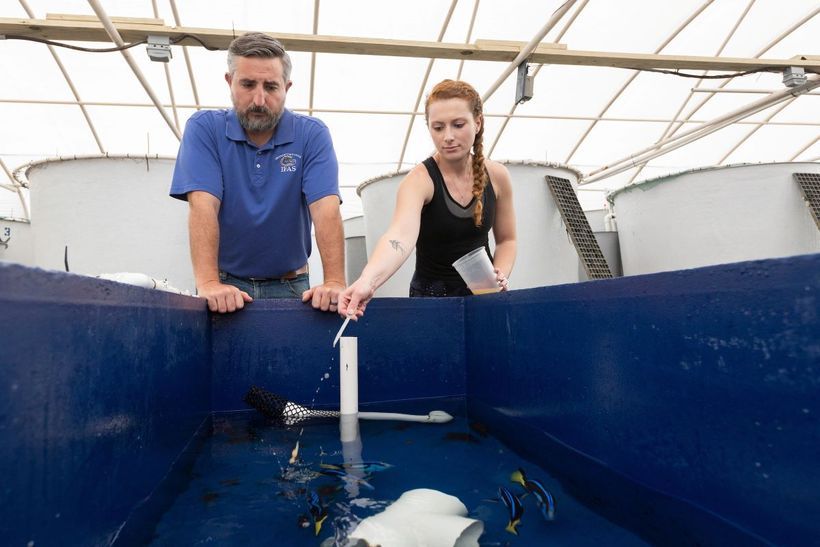
Florida’s thriving aquaculture industry is a vital part of the state’s economy, generating more than $165 million in sales annually and supporting jobs across rural and coastal communities. Recognized as agriculture by the Florida Legislature in 1993, aquaculture contributes to food security, environmental sustainability and economic resilience. “Just like terrestrial, land-based agriculture, aquaculture is the process of growing or raising a product,” said Shirley Baker, UF/IFAS professor of aquaculture and associate director of the School of Forest, Fisheries and Geomatics Sciences. “The people who do the work consider themselves farmers. Their products are simply plants and animals grown or raised underwater.” Overseen by the Florida Department of Agriculture & Consumer Services (FDACS), the industry includes an estimated 1,500 varieties of food fish, bait fish, mollusks, aquatic plants, alligators, turtles, crustaceans, amphibians, caviar and ornamental fish. With proper regulatory support, aquaculture can continue to be a driving force in Florida’s economy and environmental stewardship. The hallmark of Florida aquaculture is ornamental, or tropical fish, the saltwater and freshwater species bred for aquariums. In 2023, the sector generated more than $57 million, making the state the country’s top pet fish producer. In fact, 95% of ornamental fish in the United States come from the Sunshine State. About 90% of Florida’s ornamental fish are freshwater varieties. Farmers primarily raise live-bearing species in sterilized earthen ponds dug into loam or bedrock. They fill ponds with sexually mature fish called broodstock and harvest offspring using baited traps. Most egg-laying fish are grown in commercial hatcheries. Like ornamental fish, the demand for farmed seafood has grown as wild-caught sources are increasingly depleted. Globally, more than 50% of all seafood for human consumption is produced through aquaculture. “Seafood is considered one of the most in-demand sources of lean protein in the world, and it has to come from somewhere,” said Matthew DiMaggio, director of the UF/IFAS Tropical Aquaculture Laboratory in Ruskin. “The ocean can't produce any more than it already has, so aquaculture has to make up the deficit.” In Florida, as the number of fish farms and the scale of their operations have grown, the value of food fish sales has skyrocketed. Between 2018 and 2023, sales rose from $4 million to $26 million, a 550% increase. Some of the most common Florida food fish are tilapia, striped bass, cobia, pompano and red drum. They’re housed in various ways. Operations can include fiberglass ponds, vats and tanks inside greenhouses and recirculating systems occupying entire warehouses. Farmers typically start with fingerlings, or juvenile fish, purchased from reputable suppliers. Aquaculture farmers share their experiences Evans Farm of Pierson, Florida, is among the pioneering food fish farms in the state. Originally cattle farmers, the company expanded to sell tilapia, striped bass and caviar harvested from sturgeon. Fish are kept in filtered, recirculating ponds and long tanks known as raceways. They’re transported live to grocery stores and markets in vans outfitted with tanks and filtration systems. “Our fish are thriving, and they’re healthy. We grow them with great water quality, and we feed them excellent food,” said Jane Davis, who owns the business with her mother and brothers. “Although they’re raised in water, they’re no different than other agriculture crops, whether it's cattle, chickens or anything else.” Mollusks are another significant contributor to Florida aquaculture. While the sector includes oysters and scallops, clams are the dominating commodity; in 2023, they brought in $32 million of the state’s $43 million in mollusk sales. Clam farmers generally obtain grain-sized seed clams from hatcheries. The smallest varieties are initially cared for in nursery systems. Once the shells become large enough, they’re transferred to bags submerged off the coast. Cedar Key resident Heath Davis, no relation to Jane Davis, transitioned from fishing to clam farming in the mid-1990s. He and his father, Mike Davis, own Cedar Key Seafarms, one of the state’s leading wholesale clam distributors. “Before, as fishermen, we would go out and place nets wherever we thought the fish were,” Heath Davis said. “But clamming is like farming. We lease a 2-acre, underwater plot from the state and harvest the product from our designated field.” The Florida Aquaculture Plan In November, the Florida Aquaculture Review Council, the official conduit between FDACS and farmers, published the latest revision of the Florida Aquaculture Plan, a detailed list of research and development priorities. Florida’s climate, infrastructure, streamlined regulations and positive business environment have positioned the state to become the national leader in aquaculture, but innovation is required to remain competitive, according to the document. It’s a message Heath Davis echoed. “Aquaculture farming is such a huge part of Florida’s economy,” he said. “It could hold some of the answers needed to sustain the growing number of people living on this peninsula.”

Artificial intelligence is a resource-intensive technology. A paper recently published in Nano Letters by collaborators at the Virginia Commonwealth University (VCU) College of Engineering and Georgetown University hopes to improve AI’s ability to parse the vast amounts of information it creates by applying magneto-ionics to the established concept of physical reservoir computing (PRC). “Demonstrating we can make solid-state devices with magneto-ionic materials is an important step into further energy-efficient computing research, and this Nano Letters publication reinforces that,” said Muhammad (Md.) Mahadi Rajib, Ph.D., a postdoc with Jayasimha Atulasimha, Ph.D., Engineering Foundation Professor in the Department of Mechanical & Nuclear Engineering. What makes a decision? Our brains make countless complex decisions everyday. Input comes in, we weigh options and decide what to do. Within that simple path are countless identical loops of input, consideration and output as neurons fire in a chain that takes you from cause to effect. For artificial intelligence, nodes within a neural network receive inputs and provide output, much like the neurons in our brains. These outputs can be sent to other nodes for continued processing, but those outputs need weight to have value. For AI, weight signifies one input or connection is more important than another. Traditional neural networks have multiple layers consisting of countless nodes like this. Each node requires training in order to weigh things properly. Training consumes processing power, and processing power takes time and energy. Making tasks like analysis and prediction more efficient is how to continuously improve AI technology. Less training, more efficiency. Physical reservoir computing reduces the number of nodes an AI needs to train. Only the final output layer needs training in PRC, using a simple method for classification or prediction tasks. A physical “black box” replaces neural network nodes and synapses, like the ones used for AI inference, in PRC and processes inputs by implementing a nonlinear mathematical function with temporal memory. To explain the inner workings of the black box, imagine two stones thrown into still water. One stone is thrown with high force and the other with low force, creating big and small ripples respectively. If the stones are thrown so the second stone lands before the previous ripples have dissipated, the new ripple is affected by the earlier one. This illustrates the concept of temporal memory. In this analogy, if multiple stones are thrown one after another into still water according to some complex trend, observing the ripples over time allows you to understand the trend and train a simple set of weights to predict the force of the next stone throw from the ripple pattern. Repeatedly performing this cycle of input, interaction and observation is PRC. It reveals patterns over time that can predict chaotic systems, like market trends or the weather, using techniques like linear regression modeling to plot each output as a single point. The magneto-ionic approach. Using this same example above, the “water” in a magneto-ionic PRC is represented by a positive and negative electrode with solid-state electrolyte between them through which ions move when voltage is applied. The application of voltage is equivalent to throwing a stone and the ripple effect is comparable to the movement of oxygen ions in the system. “In addition to its energy efficiency, a useful feature of the magnetoionic system is that time scales for ion diffusion can be controlled from microseconds to minutes,” Atulasimha said. “This leads to simple experimental demonstration, as no megahertz and gigahertz measurements are needed. One can work at the natural time scales of the target application in practical systems and remove the need for complex frequency conversion, which takes both energy and space due to complex electronics.” Atulasimha imagines these energy-efficient reservoir systems have applications in edge computing devices like drones, automated vehicles and surveillance cameras. Tasks such as household energy load forecasting, weather prediction or processing hourly readings from wearable devices, which operate on hour-scale data, can also be performed using magneto-ionic PRC without additional preprocessing. “We showed that the magneto-ionic physical reservoir has both memory and nonlinear behavior, two important properties necessary for using it as a reservoir block,” Rajib said. “Our system stands out because voltage-controlled ion migration is a highly energy efficient method of manipulating magnetization. We demonstrated the required reservoir properties in a physical system and did so using a very energy efficient approach.” Two labs came together in order to pursue this research. Virginia Commonwealth University collaborators included Atulasimha, Rajib, and VCU Ph.D. students Fahim Chowdhury and Shouvik Sarker. The Georgetown University team included Kai Liu, Ph.D., Professor and McDevitt Chair in Physics, Dhritiman Bhattacharya, Ph.D., Christopher Jensen, Ph.D. and Gong Chen, Ph.D. Atulasimha’s group illustrated physical reservoir computing using numerical models of spintronic devices and sought a material system to experimentally demonstrate PRC. Liu’s team worked with magneto-ionic materials and was intrigued by the possibility of using them for computing applications.


Playing "Ketchup": Kraft Heinz, Food Industry Work to Meet Evolving Consumer Trends
In September, the Kraft Heinz Company revealed its intention to split into two smaller entities—one focused on in-demand products, like shelf-stable meals, spreads and sauces, and the other on slower-growth businesses, such as the Oscar Mayer, Kraft Singles and Lunchables brands. The move is among the latest in a series of breakups and spinoffs announced by major "Big Food" conglomerates, including Kellogg's, Keurig Dr Pepper Inc. and Unilever, and experts speculate more divvying and downsizing are bound to follow. Beth Vallen, PhD, a professor in the Villanova School of Business who studies consumer behavior and food marketing, contends these demergers and restructurings are the direct result of a recent yet significant shift in shoppers' spending habits. "It is certainly a possibility that we are moving away from 'Big Food,'" says Dr. Vallen. "The companies are likely to be more agile as smaller entities, and the more targeted businesses will allow them to focus on their different market segments as we face increasingly complex consumer and macro trends in the food industry." Among the more noteworthy factors the professor cites are changes in how shoppers evaluate products and how often they make purchases, particularly amid rising costs, economic pressures and increased competition in the marketplace. When it comes to groceries, a LendingTree survey from earlier this year found that nearly nine in 10 Americans are reassessing what items they cart to the checkout lane. "Inflation and uncertainty have driven consumers to look for more value when they shop," says Dr. Vallen. "This might result in behaviors like switching to lower-cost alternatives, and along these lines, consumers are seeking out retailers with high-quality store brand offerings that might replace their typical, branded items. "Consumers are also shopping less frequently. This could be due to reliance on technology, like online grocery purchases, which requires more planning, as well as a desire to make groceries stretch between purchases to save money." Another development affecting the industry is a broader drive across the population toward health-conscious options and low-calorie meals, heightened to a degree by the rise of GLP-1 drugs like Ozempic. A recent KFF Health Tracking Poll evidences that these medications, which have been shown to promote weight loss, are taken by roughly one in eight American adults; and households with users are expected to account for more than a third of food and beverage sales by 2030. According to Rebecca Shenkman, MPH, RDN, LDN, the director of the MacDonald Center for Nutrition Education and Research at Villanova's M. Louise Fitzpatrick College of Nursing, the impact of these drugs' usage on consumers' eating habits should not be underestimated. "GLP-1 receptor agonists reduce appetite and food intake through multiple mechanisms, and evidence suggests both a reduction in snacking frequency and a shift toward healthier choices among users," shares Shenkman. "They report fewer cravings for sweet, salty and fatty snacks, particularly during the first 12 to 24 weeks of treatment. In addition, consumer surveys and clinical trials indicate increased intake of fruits, vegetables and water, and decreased consumption of processed foods and sugary beverages. "With millions of users and average daily reductions of 700 to 900 calories, demand for calorie-dense snacks could decline significantly." Among the brands and businesses at greatest risk, in Dr. Vallen and Shenkman's respective estimations, are "packaged and processed foods" as well as "sugary beverages and high-fat treats." In turn, with shoppers increasingly moving away from these "unhealthy" options and expressing an openness to dispensing with long-term staples, companies in the sector will need to emphasize adaptability in the coming years, making a conscious effort to understand customers' distinct preferences and needs. "Altogether, there are numerous trends that are seemingly pulling consumers in different directions—between health, taste, value and convenience," concludes Dr. Vallen. "Looking ahead, it will be important for firms to understand how these trends impact different consumers—and in different categories. Health likely means something different to Gen X and Gen Z and may vary further based on whether we are talking about a family dinner or a late-night treat. Taking efforts to understand consumer motivations will be crucial for companies to appropriately respond to current trends."



“Lake Health Under the Microscope: RPI Researcher Offers First Real-World Look at Herbicide Impact”
In a recent Rensselaer Polytechnic Institute news release “RPI Collaborates on First-of-its-Kind Research Study to Keep New York Lakes Healthy,” Dr. Kevin Rose is featured as the essential expert behind an unprecedented field study of the aquatic herbicide florpyrauxifen-benzyl (FPB / ProcellaCOR) in New York lakes. As Director of the Darrin Fresh Water Institute (DFWI) at RPI, Rose helped lead the research team that examined long-term, real-world behaviour of the herbicide—discovering that while it disappears rapidly from open water, it lingers in lake-bed sediments for over a year and even spreads beyond original treatment zones. Rose’s involvement highlights his role in translating cutting-edge freshwater science into actionable insights for lake managers, regulators and communities. “New products are occasionally introduced into ecosystems as we work to prevent harm from threats like invasive species,” says Rose. “Many of these tools can bring tangible benefits, but it’s essential to understand their long-term impacts and potential unintended consequences.” Dr. Rose’s leadership brings clarity to an issue that can easily be oversimplified in public debate. By grounding the study in real-world field data rather than controlled laboratory assumptions, he provides a more accurate picture of how aquatic herbicides travel, transform, and linger in lake systems. His work highlights why science-based lake management — informed by long-term monitoring — is critical for maintaining the health, resilience and recreational value of New York’s freshwater ecosystems. For journalists covering invasive species, lake health, climate resilience, herbicide use or the future of freshwater ecosystems, Dr. Kevin Rose is an essential source. He brings both scientific authority and real-world relevance to a topic that affects communities, policy decisions and environmental outcomes across the state. Click on his icon now to arrange an interview today.



Ready or not, winter weather has decided to make an early cameo! So, the question is: are you actually ready for winter driving? CAA South Central Ontario (CAA SCO), Ministry of Transportation of Ontario (MTO), Ontario Provincial Police (OPP), and Toronto Police Service (TPS) have joined forces to encourage Ontario drivers to get ready now for the cold and snowy weather, before the next unexpected snow event hits. “Now is the ideal time for motorists to install winter tires, check their car battery, and ensure they have an emergency car kit packed,” says Nadia Matos, manager of external communications, CAA SCO. “These simple steps can help motorists confidently navigate winter roads. Ontario weather can be unpredictable, and snowstorms can hit without much notice, so it’s always best to ensure your vehicle is prepared beforehand.” Besides vehicle preparedness, driver behaviour is just as critical in ensuring safe driving operations in winter weather. “Road safety is everyone’s responsibility,” says Sergeant Murray Campbell of the Toronto Police Service. “As daylight hours shorten and visibility decreases, we encourage all road users to stay alert, watch out for one another, adjust their driving to match weather conditions, keep their vehicle lights on, and plan ahead to accommodate longer travel times.” This year, the organizations are focused on protecting motorists who may be caught in unexpected winter weather. “We always encourage motorists to drive according to the road and weather conditions,” says Sergeant Kerry Schmidt of the Ontario Provincial Police. “Drivers should also slow down and move over when approaching stopped emergency vehicles and tow trucks with their emergency lights flashing while they are assisting vehicles and motorists in need of help. It is also unsafe and illegal to try to pass a full echelon of snowplows that are clearing all lanes of a highway during winter events.” Before heading out on the road this winter, MTO encourages motorists to download and use the 511 app to check the weather and road conditions before they leave home. The 511 app can be found at 511on.ca or in the app store on their mobile devices. For a safer trip this winter, motorists can also follow these additional safety tips: • Install winter tires for better traction. On cold and snowy roads, winter tires can help reduce your braking distance by up to 25 per cent. Members can call CAA before Dec. 20 to have our mobile tire service change them at home for a fee. • Test your car battery. If necessary, replace it before it fails. CAA SCO will test Members’ batteries free of cost during a service call. • Pack a fully stocked emergency car kit. The kit should include a flashlight, extra batteries, warning devices (e.g., flares, reflective vests/strips), a first aid kit, blankets, jumper cables, non-perishable food and water, and a phone charger. Be sure to always keep an ice scraper, small shovel, and snow brush handy in your car. • Service your vehicle. Have your brakes checked, oil changed, and top up your windshield washer fluid and any other fluids that are getting low. • Always keep your gas tank at least half full. Cold weather causes condensation in the system, which can lead to a fuel line freeze-up and prevent the car from starting. • Check your lighting system. Ensuring you have full lighting is very important in the winter months. Check your headlights and signal lights to ensure they work correctly.

