
Experts Matter. Find Yours.
Connect for media, speaking, professional opportunities & more.

MEDIA RELEASE: Driven by Good™: CAA South Central Ontario announces brand platform, new tagline
It’s a brand platform and tagline that tells the story of who we are and what we stand for as an organization. CAA South Central Ontario (CAA SCO) today announced a new tagline – Driven by Good™. Accompanied by a new brand platform, this will create a sustained and consistent approach for marketing the CAA club brand moving forward. It will also help to express CAA values and a commitment to always doing the right thing as an organization. The new brand platform was created in partnership with BIMM and reinforces why CAA was named the most trusted brand in Canada for the third year in a row in the annual Gustavson Brand Trust Index, released last week. “This new marketing approach will help CAA Members create a deeper, more emotional connection to our brand,” said Rhonda English, chief marketing officer, CAA Club Group of Companies. “For over 115 years, we have been helping people through advocacy and roadside assistance and for decades with travel and insurance. CAA has been approaching business in a positive and impactful way since its inception and it is time to align our marketing and communications accordingly.” Driven by Good™ was inspired by the people who work at CAA SCO and how they strive to do the right thing for Members and customers every day. It was inspired by a vision of a world where people who, when faced with a choice to do the easy thing, the reactionary thing, the thing that best serves them, pause, and make a choice to do good. As the platform and tagline were developed, CAA collected more than 250 stories of Associates going above and beyond to do the right thing in their day-to-day lives. Stories like the colleague who cleared all the vehicles of snow in her apartment parking lot after a nasty snowfall. Or the Associate, an amateur photographer, who set up his garage like a photo studio so he could take photos of his neighbour's ill child and her father. Or the co-worker who scrambled to find a coat and warm clothing to help someone in distress. “All of these stories, big and small, show how CAA is made up of Associates who are truly driven by doing good in the world. We are proud that our Associates bring this same approach to their work, showing that as an organization we aren’t driven by profit, we are focused on keeping Members safe and adding value to their day-to-day lives,” continued English. “We are inspired by these kind and courageous acts, which represent a world that we want to be a part of and contribute to.” The first campaign that is part of the new brand platform launches today, to begin to tell CAA's story in this new way. It is focused on inviting our audience into the ‘World of Good’ that we all want to live in. It showcases the good choices that people make that we at CAA are inspired by every day. It also draws on stories and experiences from Associates across the organization focused on how we are Driven by Good™. For more information and to see CAA’s newest brand spot, go to https://www.caasco.com/campaigns/brand/driven-by-good.


The Case for Career Advocates: An Organization Is Not a Meritocracy
“This blog post is the first in a three-part series that summarizes the key messages I deliver to my students, in the hopes that it can catalyze and support the career success of a broader group of ambitious employees who aspire to make it to the C-Suite,” writes Renee Dye 94PhD, associate professor in the practice of Organization & Management. “Most of my lessons are derived from my own unlikely personal journey from literary scholar to top-tier management consultant to C-suite executive for a publicly traded company, but they are also heavily informed by leading researchers like Sylvia Anne Hewlett. In the final blog, I discuss the impact of remote work on career success.” One of the paradoxes of the Gen-Zs and Generation Alphas is their intuitive understanding of the phenomenon of social media…at the same time they maintain an almost ideological conviction that the workplace – apart from systemic biases – is otherwise a meritocracy, where talent is perfectly and objectively evaluated – and the best and most deserving rise to the top. Surely a cursory exploration of Instagram and TikTok would convince even the most skeptical of the fundamentally idiosyncratic nature of success in a networked world? The Real World is likewise characterized by outcomes in which success is imperfectly correlated with capability level. Someone whose capability level is less than yours may lap you in the race to the top of the organization. That may seem unfair, but that’s because you’re making the mistake of assuming that career success is predicated purely on capability. A survey of MBA graduates from my school a few years ago produced a startling insight: of all the skills that we provided to our students during their MBA tenures, our students felt most unprepared to navigate “organizational politics” in their careers. The reason that I found this fact so astonishing is that today’s students, who are Digital Natives and in part Social Media Natives, are the most connected and self-promoting generation the world has ever seen. Yet today I find that my students continue to exhibit little practical understanding of how career success is forged…so much so that I now devote an entire class session in my core Strategy class to demonstrating the importance of relationship management and advocacy cultivation. Capability is not unimportant; far from it. As I tell my students, though, capability is table stakes these days as the level of education and skill sets continues to advance among individuals. If you’re not smart and capable you’re not getting in the door. But once you’re in, your career path and ultimate career success will be more determined by (1) your level of aspiration and unflagging commitment to achieving your goals; (2) your performance outcomes in your individual roles; (3) your work ethic and conscientiousness; and (4) the relationships you have with other people within your organization. And the relationships that matter the most are the individuals with influence and power over your future career opportunities. Let me put it starkly: without career advocates (notice the plural), it will be much, much harder to make it to the senior management ranks. Full stop. Some facts to bear this assertion out: • People with advocates are 23% more likely to move up in the careers • Women with advocates are 22% more likely to ask for a stretch assignment to build their reputations as leaders Ultimately, having an advocate confers a career benefit of 22-30%, depending on who’s doing the asking and what they’re asking for. That’s increasing your odds of making it to the C-Suite by nearly a third! If anecdotal evidence is more your thing, here are a couple of quotations for you: • A lot of decisions are made when you are not in the room, so you need someone to advocate for you, bring up the important reasons you should advance” (Catalyst Survey, as quoted in Elizabeth McDaid, “Mentor vs. Sponsor,” September 3, 2019) • When you get to the level in your career when decisions are not just being made by an individual manager, feedback from other leaders becomes crucial. Rosalind Hudnell, Chief Diversity Officer, Intel. As quoted in Hewlett, Sylvia Ann, Melinda Marshall, and Laura Sherbin. “The Relationship You Need to Get Right,” HBR 2011) • “I was great at building businesses and had tons of cheerleaders, but I had that typical Asian keep-your-head-down-and-you’ll-get-taken-care-of mindset.” My boss had to take me aside and tell me that if I didn’t actively cultivate her as my sponsor, I would never progress beyond senior associate” (quoted in Hewlett, Sylvia Ann, Melinda Marshall, and Laura Sherbin. “The Relationship You Need to Get Right,” HBR 2011) To reiterate: an organization is not purely a meritocracy where talent and hard work speak for themselves; and it’s much, much harder to advance within an organization without effective advocates. Renee Dye is an Professor in the Practice of Organization & Management at Goizueta Business School. For more insight and to continue reading this article and series, please visit Dye’s blog. To arrange an interview – simply click on Dye’s icon now to book a time today.


The Case for Career Advocates: An Organization Is Not a Meritocracy
This blog post is the first in a three-part series by Renee Dye 94PhD, associate professor in the practice of Organization & Management that summarizes the key messages she delivers to students in the hopes that it can catalyze and support the career success of a broader group of ambitious employees who aspire to make it to the C-Suite One of the paradoxes of the GenZs and Generation Alphas is their intuitive understanding of the phenomenon of social media…at the same time they maintain an almost ideological conviction that the workplace – apart from systemic biases – is otherwise a meritocracy, where talent is perfectly and objectively evaluated – and the best and most deserving rise to the top. Surely a cursory exploration of Instagram and TikTok would convince even the most skeptical of the fundamentally idiosyncratic nature of success in a networked world? The Real World is likewise characterized by outcomes in which success is imperfectly correlated with capability level. Someone whose capability level is less than yours may lap you in the race to the top of the organization. That may seem unfair, but that’s because you’re making the mistake of assuming that career success is predicated purely on capability. A survey of MBA graduates from Emory University's Goizueta Business School a few years ago produced a startling insight: of all the skills that we provided to our students during their MBA tenures, our students felt most unprepared to navigate “organizational politics” in their careers. The reason that I found this fact so astonishing is that today’s students, who are Digital Natives and in part Social Media Natives, are the most connected and self-promoting generation the world has ever seen. Yet today I find that my students continue to exhibit little practical understanding of how career success is forged…so much so that I now devote an entire class session in my core Strategy class to demonstrating the importance of relationship management and advocacy cultivation. Capability is not unimportant; far from it. As I tell my students, though, capability is table stakes these days as the level of education and skill sets continues to advance among individuals. If you’re not smart and capable you’re not getting in the door. But once you’re in, your career path and ultimate career success will be more determined by (1) your level of aspiration and unflagging commitment to achieving your goals; (2) your performance outcomes in your individual roles; (3) your work ethic and conscientiousness; and (4) the relationships you have with other people within your organization. And the relationships that matter the most are the individuals with influence and power over your future career opportunities. Let me put it starkly: without career advocates (notice the plural), it will be much, much harder to make it to the senior management ranks. Full stop. Some facts to bear this assertion out: • People with advocates are 23% more likely to move up in the careers • Women with advocates are 22% more likely to ask for a stretch assignment to build their reputations as leaders Ultimately, having an advocate confers a career benefit of 22-30%, depending on who’s doing the asking and what they’re asking for. That’s increasing your odds of making it to the C-Suite by nearly a third! If anecdotal evidence is more your thing, here are a couple of quotations for you: • A lot of decisions are made when you are not in the room, so you need someone to advocate for you, bring up the important reasons you should advance” (Catalyst Survey, as quoted in Elizabeth McDaid, “Mentor vs. Sponsor,” September 3, 2019) • When you get to the level in your career when decisions are not just being made by an individual manager, feedback from other leaders becomes crucial. Rosalind Hudnell, Chief Diversity Officer, Intel. As quoted in Hewlett, Sylvia Ann, Melinda Marshall, and Laura Sherbin. “The Relationship You Need to Get Right,” HBR 2011) • “I was great at building businesses and had tons of cheerleaders, but I had that typical Asian keep-your-head-down-and-you’ll-get-taken-care-of mindset.” My boss had to take me aside and tell me that if I didn’t actively cultivate her as my sponsor, I would never progress beyond senior associate” (quoted in Hewlett, Sylvia Ann, Melinda Marshall, and Laura Sherbin. “The Relationship You Need to Get Right,” HBR 2011) To reiterate: an organization is not purely a meritocracy where talent and hard work speak for themselves; and it’s much, much harder to advance within an organization without effective advocates. "This blog post is the first in a three-part series that summarizes the key messages I deliver to my students, in the hopes that it can catalyze and support the career success of a broader group of ambitious employees who aspire to make it to the C-Suite,” writes Renee Dye 94PhD, associate professor in the practice of Organization & Management. “Most of my lessons are derived from my own unlikely personal journey from literary scholar to top-tier management consultant to C-suite executive for a publicly traded company, but they are also heavily informed by leading researchers like Sylvia Anne Hewlett. In the final blog, I discuss the impact of remote work on career success.” For more insight and to continue reading this article and series, please visit Dye’s blog. To arrange an interview – simply click on Dye’s icon now to book a time today.
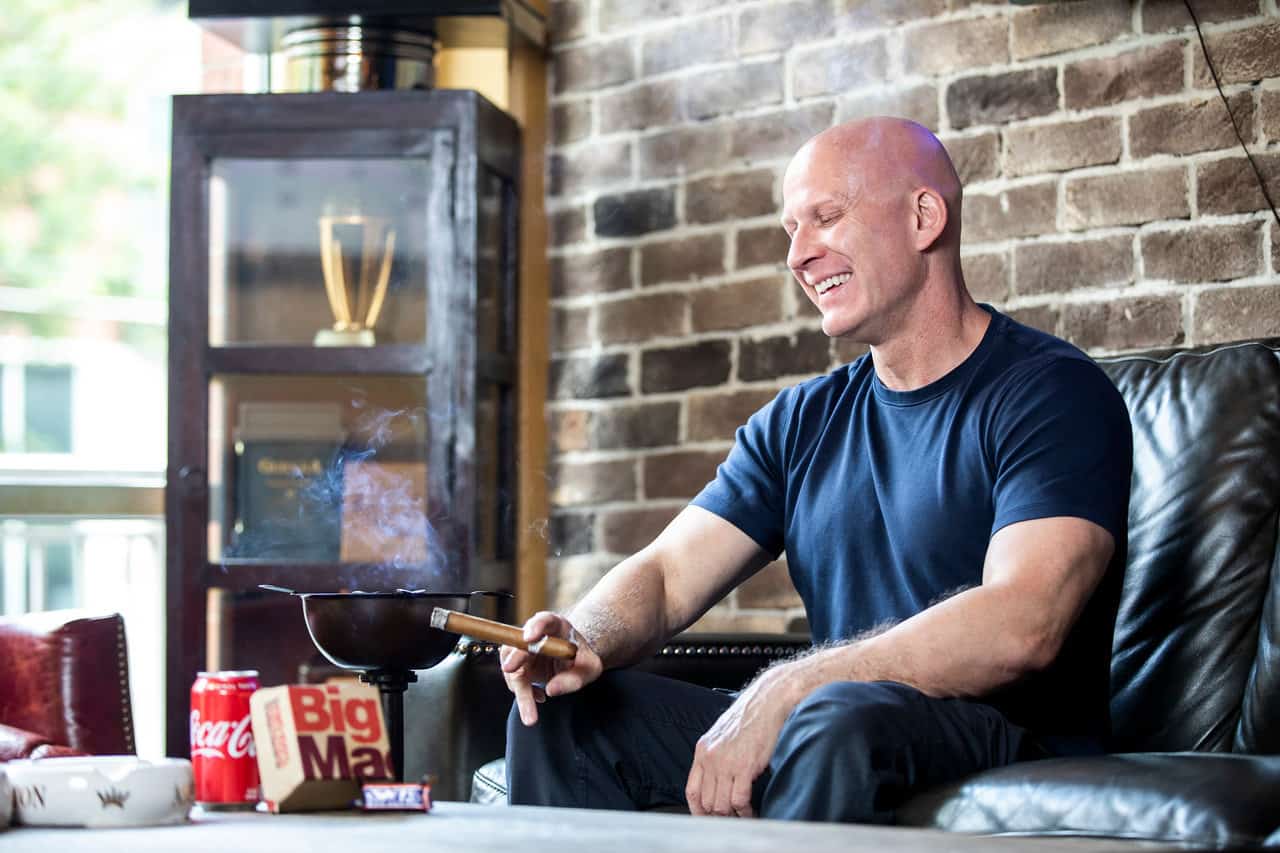
When it comes to marketing, the endgame is almost always to increase brand awareness, strengthen relationships between companies and consumers, and boost market share. But counter-marketing efforts are often employed to reduce consumption of “vice” goods such as cigarettes, sugary sodas, and fast food. Earlier this year, Michael “Mike” Lewis, professor of marketing, faculty director, Emory Marketing Analytics Center, published “Investigating the Effects of Excise Taxes, Public Usage Restrictions, and Anti-Smoking Ads across Cigarette Brands.” in the Journal of Marketing. Mike, along with co-authors, Yanwen Wang PhD14, associate professor of marketing and Canada research chair in Marketing Analytics at the University British Columbia, and Vishal Singh, professor of marketing, Leonard N. Stern School of Business, New York University, took a closer look at the role counter-marketing plays in the consumption of “vice” goods. Given that many “vice” categories are dominated by high-equity brands such as Marlboro, McDonald’s, and The Coca-Cola Company, the authors wanted to explore whether or not strong brands “might also affect the efforts of advocacy groups and regulators to disrupt these relationships and reduce consumption,” they note in their paper. The research focused specifically on the interplay between branding and counter-marketing with respect to cigarette consumption. By focusing on brand manufacturers rather than on regulators and consumers, the authors believe they’ve closed a gap. “The literature on smoking cessation has largely ignored the impact of branding on efforts to reduce cigarette consumption,” they write. “This is an oversight given that marketing researchers have found that brand-consumers’ relationships have significant effects on consumer decision-making.” A full article on the research is attached and is well worth the read. In that piece, readers will learn more about how the researchers expected that strong brands would take advantage of their increased customer loyalty and diminished price sensitivity to protect them from counter-marketing tactics. And while it might be counter-intuitive, the author’s research suggests that market leading cigarette brands would be better off pushing for excise taxes on cigarettes (versus smoking restrictions), as such tax increases would be attractive to government agencies (by increasing government revenue), and big brand cigarette companies would capture more market share. In other words, when it comes to combating counter-marketing efforts, “brand managers may devise strategies or lobbying efforts based on their category position,” suggest the researchers. “This isn’t a clear-cut battle of good versus evil. It’s more a matter of a brand’s people advocating for one position,” said Lewis. “A position that’s going to make them more resilient to some of these tactics.” In addition to big brand cigarette companies, the paper’s findings have implications for brands that anchor other vice categories, such as McDonald’s and The Coca-Cola Company, entities that have been the target of counter-marketing campaigns by various anti-obesity groups. According to Lewis, Wang, and Singh’s research, much of the response by these brands to the counter-marketing attempts has been centered around public relations, but the authors see opportunities to employ “different tactics” that are “appropriate for different brands,” they write. "Relationships between consumers and relatively weak brands may be disrupted using taxes, while for strong brands, the appropriate tactic seems to be usage restriction that limit public consumption. Our results suggest that brand building is the correct response to taxes, whereas usage restrictions would call for other responses, such as lobbying.” If you are a reporter looking to know more about this subject or if you have questions, then let our experts help. Professor Michael Lewis is an Associate Professor of Marketing at Emory University’s Goizueta Business School. In addition to exploring trends in the overall marketing landscape, Lewis is an expert in sports analytics and marketing. He is available for interview - simply click on his icon to arrange a discussion today.


Even with a drastic reduction in driving due to the COVID-19 pandemic, Black Americans saw the largest increase in traffic-related deaths in 2020 when compared to other racial groups. An estimated 38,680 people died in motor vehicle traffic crashes in 2020 — the largest projected number of deaths since 2007 — and the number of Black people who died in such crashes was up 23 percent from 2019, according to the U.S. Department of Transportation’s National Highway Traffic Safety Administration. UConn’s Dr. Norman Garrick spoke with NBC News about the new report: Norman Garrick, a civil and environmental engineering professor at the University of Connecticut, said the numbers are saddening, but not surprising. “Black people tend to be overrepresented as walkers in this country,” Garrick said. “This is not by choice. In many cases, Black folks cannot afford motor vehicles. And people that walk in this country tend to experience a much, much higher rate of traffic fatality. We’re talking eight to 10 times more. It’s a perfect storm of a lot of horrible forces.” This most likely represents yet another way the health crisis has had an outsize effect on Black people. Even in the early days of the pandemic, the National Safety Council found that the emptier roads were proving to be more deadly, with a 14 percent jump in roadway deaths per miles driven in March. And Black people are more likely to face traffic injuries in general; from 2010-2019, Black pedestrians were 82 percent more likely to be hit by drivers, according to a 2021 report from Smart Growth America, a Washington, D.C.-based advocacy group focused on urban development. June 22 - NBC News Dr. Garrick is a professor in the UConn School of Engineering's Department of Civil Engineering and is co-director of the Sustainable Cities Research Group. He is an expert in the areas of transportation behaviors, parking, public transit, and bicycle lanes. Dr. Garrick is available to speak with media – simply click on his icon now to arrange an interview today.


As America tries to come to grips with and find lasting solutions to issues of systemic racism, new research shows staggering hiring trends that negatively impact Black Americans when they enter the workplace and as they near retirement age. Sociologist and UConn expert Dr. Matthew Hughey discussed the findings with the Washington Post: "A new experiment at Texas A&M University helps illustrate the surprising pattern, which has not been widely studied but tends to line up with Labor Department data reviewed by The Washington Post: Black workers are typically less likely to be hired than White workers with the same experience, but the gap closes in middle age. When he saw the chart above, University of Connecticut sociologist Matthew Hughey was struck by the steadiness of the trend for Whites, compared to the volatile swoop of the line representing Black workers. It shows hiring managers tend to accept White applicants at face value while subconsciously scrutinizing Black ones, he said. “Black people have always been more objectified, scrutinized and surveilled than White people,” Hughey said. “Every little thing is nitpicked on a résumé or explained as a possible red flag.” The larger pattern is common in government data, but the chart comes from a new analysis in the Journal of Policy and Management from Texas A&M economist Joanna Lahey, a widely cited authority on discrimination in the labor market. Lahey noticed the counterintuitive pattern of age discrimination against Black workers when she and her collaborator, Douglas Oxley, asked about 150 business and MBA students to evaluate about 40 résumés each. About a quarter of the students had previously screened résumés in the real world, and 11 percent had experience in human resources." May 14, 2021 - Washington Post If you are a journalist looking to cover this subject, let us help. Professor Matthew Hughey is a scholar of racism and racial inequality in identity formation, organizations, media, politics, science, religion, and public advocacy. If you are looking to book an interview, simply click on Dr. Hughey’s icon today.


New CBS Sitcom "United States of Al" Taps Experience of Social Work Student and Veteran
On April 1, 2021, CBS premiered United States of Al - a new comedy from producer Chuck Lorre (Two and a Half Men, Big Bang Theory) about a Marine combat veteran struggling to readjust to civilian life and the interpreter who served with his unit in Afghanistan and has just arrived to start a new life in America. The show explores the relationship between these two men and how they help each other adjust to their new lives. So, what does a CBS sitcom have to do with the USC Suzanne Dworak-Peck School of Social Work? Enter Master of Social Work (MSW) student Josh Emerson, who landed in the right place at the right time through his field internship at No One Left Behind. No One Left Behind (NOLB) is an all-volunteer, national nonprofit organization that supports recipients of the Special Immigrant Visa (SIVs), and those pursuing an SIV. The founders of No One Left Behind believe the U.S. has a moral obligation to protect these interpreters, and their families, who served side-by-side with American soldiers. Emerson, a veteran of the U.S. Army who deployed to Iraq and Afghanistan, is very familiar with Iraqi and Afghan interpreters. “I went on missions with these interpreters, got to know them, built relationships with them,” he said. “I was so very happy to be able to work with them in this capacity. In addition to providing resources for SIV ambassadors living in the United States, NOLB advocates on behalf of the SIV population to the executive and legislative branches of government provides subject matter expertise to the media, and partners with U.S. businesses to provide opportunities for what they call “this next generation of Americans.” Alea Nadeem, MSW ’15, is a board member of NOLB and reached out to USC with a field internship opportunity for social workers to do macro-level clinical work in a nonprofit setting. Nadeem became Emerson’s field instructor. “What Josh has brought to No One Left Behind has never been brought to the board before,” Nadeem said. “They now see the value in social work.” Bringing the issue to a larger audience Chase Millsap, a consultant and writer on United States of Al, is a former board member of No One Left Behind. “I am still very supportive, impressed and proud of all the work the NOLB team does on a daily basis,” he said. A veteran of the U.S. Marine Corps and U.S. Army Special Forces, he holds a master’s degree from USC Sol Price School of Public Policy. "USC helped me to learn the tools about how to connect entertainment and policy,” Millsap said. “United States of Al is a perfect example of those two worlds coming together in a powerful (and funny) way.” Millsap’s idea was to bring the issues around SIVs into America's living rooms, in a way that would make them relatable. Emerson’s experience as a veteran, his clinical and project management skills obtained through his social work studies and his stellar ability to work one-on-one with SIV recipients and applicants allowed him to inform the show’s stories with a wide breadth of knowledge. Emerson joined James Miervaldis, chairman of the NOLB board, in helping the writers and actors on the show understand the SIV issues, the ways in which NOLB provides assistance and advocacy, and sharing funny stories of cultural differences between Afghans and Americans. Emerson and Miervaldis have also been able to include some of NOLB’s SIV ambassadors in the process, those with an SIV who have already established themselves in the U.S. and are contracted by NOLB to help others assimilate. “They’re talking to the exact people they're portraying,” Emerson said. Nadeem sees Emerson’s contribution to the show as another platform through which to educate. “There are a lot of different tentacles to social work, and it may not seem like the most obvious place in TV and film, but it is,” she said. The show itself touches on everything social workers value ― service, challenging social injustice, dignity and worth of a person, the importance of human relationships and integrity. “This just makes so much sense that a social worker would be involved in this show because that's what we're always trying to communicate to a larger audience,” Nadeem said. “Through this show, you can make a greater impact for these folks to sort of assimilate them to be American citizens, and then also have the whole world appreciate their culture and appreciate what they've done for our nation to keep U.S. service members safe.” A valued member of the team Emerson, a father of five who resides in New Hampshire, knew he wanted to work with veterans after leaving military service. He felt that an MSW was the most versatile degree for this and chose the USC Suzanne Dworak-Peck School of Social Work because of its military social work track. “I think to be a good social worker you need to have experience in life,” Emerson said. “To have seen some things, or been through some things, to understand the population you're dealing with and what they're going through.” When Emerson began his internship at NOLB in 2020, Miervaldis immediately began working with him to focus on SIVs who recently had come to the United States. The first case Miervaldis assigned to Emerson was an SIV family with two young children who needed emergency surgery at a specialty hospital in Washington D.C. “This SIV packed up his family, his pregnant wife and the two kids, used up all his money to take them by bus from Texas to D.C. in the middle of a pandemic and ended up in a bad part of town,” Miervaldis said. As the SIV’s assigned caseworker, Emerson established a relationship and trust with the SIV, helped him obtain safe housing and a job interview, and coordinated details for the children’s surgery with the hospital. “He’s gone and done everything,” Miervaldis said. “We are very proud of Josh’s initiative and empathy for a family in such need. No One Left Behind is the safety net for our allies.” Last year, NOLB helped over 600 families with visas and resettlement. “Josh has exceeded all our expectations and done so while communicating with clients who speak in broken English, Dari and Pashtu, struggling during a pandemic,” Miervaldis said. “His professionalism and empathy are great credits to USC. We would not be where we are today without him. That is not hyperbole.” Miervaldis hopes NOLB will have more social work interns from USC to continue Emerson’s work. For him, Emerson’s project management skills have been the greatest asset, creating a new process for how NOLB provides help for SIV families. “We told Josh, you're a pathfinder, you're a pioneer,” Miervaldis said. “We need to figure out very quickly what works, what doesn't work, and he took it and said, ‘okay, point me in the right direction.’ He’s very much valued as a member of the team.” From advocacy to TV No One Left Behind gets about 20 messages every day from Iraqi or Afghan interpreters who served with U.S. forces in their countries, and who now receive daily death threats from the Taliban. “They're not allowed to live in their homes or their neighborhoods anymore because they helped the U.S.,” Emerson said. “Now the U.S. is withdrawing from all these countries, and the Taliban and terrorist activities in general are picking up, and these people are getting pressured and killed. NOLB has over 300 cases of SIVs who have been killed waiting for their visas.” Emerson hopes that the added exposure from United States of Al will bring awareness particularly to service members about what these interpreters are experiencing and how they can help. One of the requirements for an SIV is a letter of recommendation from the U.S. service member with whom they served, and those have been the most difficult items for SIV applicants to secure. “I have been able to provide some input to what should be addressed in the show,” Emerson said. “It's interesting to see how advocacy on an issue can turn into something this large scale.” See more news from USC Suzanne Dworak-Peck here.


The Legacy of Ruth Bader Ginsburg, Associate Justice of the U.S. Supreme Court
"With her passing, feminist icon and jurist Ruth Bader Ginsburg leaves a legacy in both her formal role as a Supreme Court justice and author of some of the most important legal opinions during her service as well as her advocacy for gender equity," says Teresa Boyer, EdD, founding director of Villanova University's Anne Welsh McNulty Institute for Women's Leadership. In her personal and professional life, Ginsburg created a map for women to be the equals of the most powerful leaders in our nation. "By all accounts she was a brilliant legal mind, and from the start of her career she leveraged that mind to fight for the rights of those she felt were denied them, especially women," says Dr. Boyer. "Despite her decidedly liberal stance, she held a close personal friendship with her strongest conservative opposition on the Supreme Court, Antonin Scalia. Even with their intellectual differences, they held each other as equals, respecting each other's work. In a time when cross-gender friendships were rare, especially where a woman was as powerful as a man, Ginsburg once again showed that gender needn't dictate one's status in life." "Although Sandra Day O'Connor was the first woman to sit on the nation's highest court, Ruth Bader Ginsburg was the one that became a literal feminist icon," notes Dr. Boyer. "Ginsburg was unapologetically fierce in her opinions, both legal and otherwise. It is this ferocity which earned her the status 'Notorious RBG.' Especially in the early days of Ginsburg's career (and some would argue even today), women could hold opinions, but to be fierce and unapologetic about them was distinctly unfeminine." The images of Ginsburg wearing her lace collar, lipstick and jewelry were a deliberate contrast, owning her femininity at the same time she owned her power. "That iconic image will be upheld for decades to come—and I suspect a run on black robes and lace collars for Halloween this year," says Dr. Boyer.


Individuals With Intellectual and Developmental Disabilities More Likely to Contract COVID-19
Recent news coverage has indicated that individuals with intellectual and developmental disabilities (ID/DD) are more likely than those without ID/DD to contract COVID-19 and to die as a result of it. "Similar to other individuals with disability, those with ID/DD often have pre-existing health conditions that increase their risk," says Suzanne C. Smeltzer, EdD, RN, the Richard and Marianne Kreider Endowed Professor in Nursing for Vulnerable Populations at Villanova University's M. Louise Fitzpatrick College of Nursing. Some people with ID/DD live in group settings in which they come in contact with others who may be infected with COVID-19. The frequent turnover of personal assistants and contact of persons with ID/DD with multiple personal assistants may increase the risk of COVID-19 in part because of their exposure to multiple potential carriers and the need for many of their personal assistants to use public transportation. Dr. Smeltzer says, "There is also concern in the disability community, among family members of individuals with disability and among disability advocates that those with these disabilities will be viewed as less deserving of more aggressive therapies, such as ventilators. The quality of life of persons with ID/DD may be considered by others as low, even though quality of life can only be judged by the people themselves." Initial limitations put in place in many health care institutions included the exclusion of family members and other support persons because of risk for COVID-19 infection. However, a groundswell of advocacy resulted in changes in this policy because individuals with ID/DD hospitalized during the COVID-19 pandemic were being deprived of essential support. "These support persons are needed to help those with ID/DD understand what was happening in the hectic health care settings and to help with communication and decision making," says Dr. Smeltzer. "Individuals with ID/DD need the same care as others and must receive explanations about their care and must be allowed to participate in making decisions about their care."
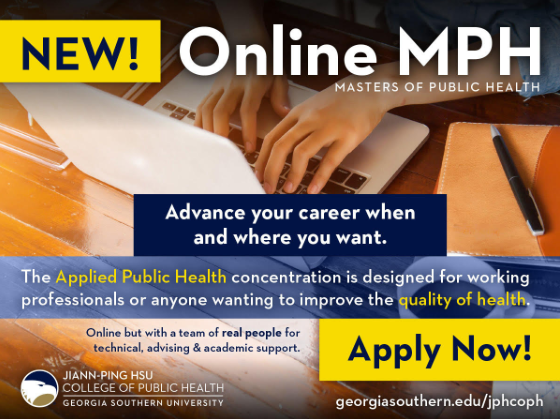
Beginning in Fall 2020 Georgia Southern University will offer its first fully online Master of Public Health (MPH) degree with a concentration in applied public health. “For those who do not have the ability to enroll in one of our on-campus MPH concentrations, the online applied public health option would be ideal for anyone passionate about improving health and making a difference in their community,” stated Interim Dean Stuart Tedders, Ph.D. Students will complete a broad-based program of study with a focus on public health education, information and advocacy, and with the flexibility to tailor their elective options. Students will apply their skills and knowledge to become front-line public health practitioners or public health leaders. Academic advisors and technical support will be provided to all students enrolled in the online master’s program. Additionally, the online program includes a field experience located within reach of the student’s location. Are you a journalist looking to cover this topic or learn more about Georgia Southern University and the programs it offers? Simply contact Melanie Simón at 912.344.2904 to arrange an interview or contact Karl Peace via his icon directly.

