
Experts Matter. Find Yours.
Connect for media, speaking, professional opportunities & more.
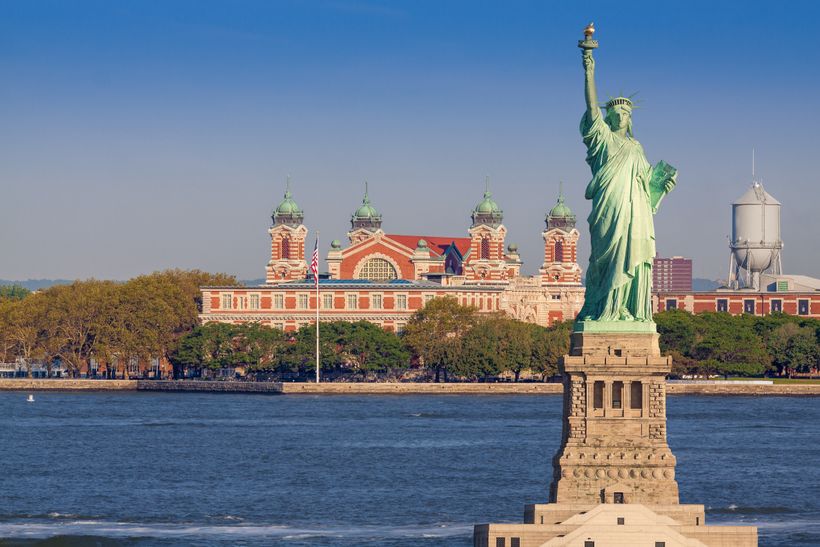
Immigrants in the United States earn 10.6% less than similarly educated U.S.-born workers, largely because they are concentrated in lower-paying industries, occupations and companies, according to a major new study published July 16 in Nature, co-authored by a University of Massachusetts Amherst sociologist who studies equal opportunity in employment. The research—one of the most comprehensive global comparisons of immigrant labor market integration to date—analyzes linked employer-employee data from over 13 million people across nine advanced economies in Europe and North America. The U.S. results, drawn from a unique combination of Census Bureau, earnings and employer data, reveal that only about one-quarter of the wage gap is due to pay inequality within the same job and company. Instead, the majority stems from structural barriers that limit immigrants’ access to better-paying workplaces. “These findings are important because they show that most of the immigrant wage gap isn’t about being paid less for the same work—it’s about not getting into the highest-paying jobs and firms in the first place,” says Donald Tomaskovic-Devey, professor of sociology and founding director of the Center for Employment Equity at UMass Amherst Key U.S. Findings First-generation immigrants with legal status in the U.S. earn 10.6% less than comparable native-born workers. 3.4%, a third of that gap, is attributable to unequal pay for the same job at the same employer. No data was available on second-generation immigrants in the U.S., but other countries showed persistent but smaller gaps into the next generation. The study suggests that efforts to close immigrant wage gaps should focus on increasing immigrants’ access to better jobs and firms. Promising approaches include: Language and skills training Recognition of foreign credentials Access to professional networks Employer anti-bias interventions “Improving job access is essential,” says co-author Andrew Penner, professor of sociology at the University of California, Irvine. “This means addressing the barriers that keep immigrants out of the highest-paying firms and occupations.” As of 2023, immigrants constituted approximately 14% of the U.S. population, totaling over 47 million people. There are approximately 1 million new long-term permanent residents annually. U.S. immigration policy encompasses diverse pathways, including family-based migration, employment-based visas, the Diversity Visa Lottery and humanitarian protection. Immigration has been a defining feature of the U.S. population since its founding, with distinct waves shaped by economic needs, political developments and global conflicts. “For almost 250 years, we have been a nation of immigrants, and this pay gap indicates that we can do more as a country to help people following the paths of our forebears realize the American dream,” Tomaskovic-Devey adds. Global Comparison The study includes 13.5 million individuals in nine immigrant-receiving countries: the U.S., Canada, France, Germany, Denmark, Netherlands, Norway, Spain and Sweden. The U.S. had one of the smallest pay gaps (10.6%) among the nine countries studied. By contrast, Canada showed a 27.5% gap and Spain a 29.3% gap. The most favorable outcomes for immigrants were in Sweden (7% gap) and Denmark (9.2%). The authors identify two main sources of the immigrant-native pay gap: Sorting—Immigrants are more likely to work in lower-paying industries, occupations and firms. Within-job inequality—In all countries immigrants are paid less than natives doing the same job for the same employer, but these gaps are relatively small. Across the nine countries, three-quarters of the 17.9% average wage gap for immigrants was due to sorting; just one-quarter stemmed from unequal pay within jobs. In the U.S., this pattern was consistent: structural job access—not wage discrimination—was the dominant force. The study also exposes persistent disadvantages for immigrants from certain world regions, including Sub-Saharan Africa, Latin America and the Middle East. Across all countries, immigrants from these regions faced larger wage gaps than immigrants from Western or Asian countries. The international research is the latest in a series of high-profile publications from a team spanning over a dozen countries in North America and Europe that has been investigating the dynamics of workplace earnings distributions for the last decade.



Hidden History of Bermuda is Reshaping the Way We Think About Colonial America
Early colonialism in the Americas tends to conjure images of Jamestown and Plymouth Colony. But long before settlers there acclimated to the New World’s growing conditions and overcame starvation conditions, an English settlement established in Bermuda in 1612 was wealthy and prosperous. University of Rochester historian and archaeologist Michael Jarvis has been uncovering the hidden history of Smith’s Island in Bermuda and its pivotal role in reshaping the understanding of colonial America. Nicknamed “Chainsaw Mike” by his students, he has spent 14 years excavating Smith’s Island and one of the first English settlements in the New World. Jarvis argues that Bermuda’s role in supplying Jamestown with food and influencing early colonists make it a cornerstone of America’s origin story rather than the historical footnote to which it has largely been relegated. His research on Smith’s Island was recently the cover story of Smithsonian magazine and was featured on the History Unplugged podcast. Jarvis is an expert on colonial America, the international and intercolonial networks of trade at the time, and settlement patterns in eastern North America, Bermuda, the Bahamas, and the communities surrounding European gold- and slave-trade forts in West Africa. He can be reached at 585-275-4558 and michael.jarvis@rochester.edu.


Humans have long taken inspiration from the natural world. From the indigenous cultures of the world who understand and utilize the properties of plant and animal products, to Leonardo da Vinci’s “flying machine” sketches inspired by his observations of flying birds, humankind has often looked to nature to help solve its problems and drive innovation. With rapid scientific advancements of the 19th and 20th centuries, and the exponential growth of sustainability practices over the last quarter century, the concepts of bio-inspired design and biomimicry have been increasingly pursued across myriad disciplines of study and implementation. Alyssa Stark, PhD, associate professor of biology at Villanova University, is one of the “boots-on-the-ground” researchers in pursuit of nature’s solutions to human problems. She recently took the time to chat with us about these fields, her research interests and the future of biomimicry. Villanova PR: We sometimes hear the terms “bio-inspired design” and “biomimicry” used interchangeably. Are they the same concept? Alyssa Stark: I see those as two different things. Bio-inspired design is when we are looking at an organism and see that it’s doing something that we want to emulate as humans. I work with animals that have unique adhesive properties. I ask questions like: Can we see that? Can we build it? Can we transfer that information, those ideas, those principles – it could be chemistry, physics, biological structure – and make something useful for us? That is also true with biomimicry, but the big difference for me is that we're keeping in mind the sustainability components. The natural world is not polluting. If we're using this biomimicry lens, how do we learn from nature to make products or solve problems in a sustainable way, keeping in mind the specific environment in which we are located? As an example, we wouldn't use a heavy water process if we were in the Arizona desert, instead we should look to our immediate surroundings to solve problems. PR: It seems the work going on in this field really takes a unique level of interdisciplinary collaboration. What types of different professionals are working in biomimicry? AS: It really pulls together biologists, engineers, physicists, chemists, even design artists and businesspeople. I've worked with a lot of different businesses that want to have sustainability in their company at broad levels by using biomimicry. They are not motivated by making a cool product, but realizing it actually saves them money if they think about their whole company in a biomimetic perspective. There are people who work on the social side of biomimicry, helping these companies completely restructure themselves to be more efficient and more time and money sensitive, without ever making a product. But of course, products are a huge part of it, too. And to make that happen, all of those professions, and more, are vital and active in this space. PR: In terms of products, what are some of the most successful examples of biomimetic designs being implemented? AS: A classic one is a building in Africa that doesn't have any air conditioning units because it has a series of vents like a termite mound. Or the bullet train being shaped like a kingfisher’s beak. One scientist found that whales have bumps on their fins, which you might think is not hydrodynamic. But as it turns out, it actually cuts through water more efficiently by creating little vortices. This concept was then applied to wind turbines. There are many examples of biomimicry actually working and being used. My mind is blown when I talk to an artist or designer about biomimicry because it's just wild the way they think. PR: Where does your overall work as a biologist fit into the world of biomimicry? AS: My hard science work is very much functional morphology – shape and structure of things and how they function. That includes behavior and their organismal interaction with the environment. I ask questions like: How do their structures function and perform? How sticky are they? How fast are they? How do they behave in their environment? What happens if they hit different challenges in their environment? My work kind of naturally fits well with biomimicry, especially for product development. I observe the natural world and then I start testing questions and predictions that I have about it, like figuring out how the heck this ant is sticking to this wet leaf. My results can then be applied directly. We have to first understand how these organisms work, and then others can run with it to try to put it to use. PR: What organisms do you work with and what about them are you studying? AS: I mostly study geckos, ants, and sea urchins and I just started working with some coral, looking at why some coral undergo bleaching, and some don’t. With sea urchins, we're also figuring out where their incredibly hard teeth are mineralized so we can understand it enough to try to mimic it. I like playing in that zone, because it still provides me a chance to do the hard science, but also talk to engineers and others and provide them information. With geckos, what I kind of broke open with my PhD thesis was that they have an adhesive that works in wet environments. Having a reusable adhesive that can work on skin, especially in the medical world, is a big problem and where most of my research lies. Think of a bug that you can’t pry off, but then it suddenly runs. How do these organisms move with such sticky feet? Figuring out how to make a reusable adhesive that doesn’t get dirty and can handle all these different environments is a difficult problem to solve. PR: How do you see this field evolving, especially as we strive for a greener, more sustainable future? AS: I would say the next step is the social levels of these big ecosystems. How do we build a city that functions like a rainforest or like a coral reef? Not just a product, but how do we actually shape our world by taking behaviors, processes, or systems that we see in the natural world to help us? Look at a pride of lions and their hierarchy, or what kind of feedback loops are there in an ant colony that allow them to give information back to their colony members quickly and share resources. I think that is the future of this field, and it’s an exciting future. *To learn more about Dr. Stark’s research and the field of biomimicry, click here to listen to a recent episode of NPR’s science show, “The Pulse.”


AU study shows participation in civil society groups lowers suicide rates
A new study by Lance Hunter, PhD, professor of social science in Augusta University’s Pamplin College of Arts, Humanities, and Social Sciences, reveals a direct link between voluntary involvement in civil social groups and a lower risk of suicide. In the study, published in Cross-Cultural Research, Hunter looked at data gathered from 2000 to 2019 from 156 countries with varying levels of development from Africa, Asia, Australia, Europe, North America and South America and found that participation in civil society groups, both political and non-political, may produce positive social and psychological benefits that are associated with lower suicide rates. September is National Suicide Prevention Month, during which mental health advocates, prevention organizations and other community groups promote suicide prevention awareness. “The greater the voluntary participation in civil society groups within the country, the lower the suicide rates are for that country,” said Hunter. “Voluntary civil society participation is a great way for people to connect with other individuals with similar interests and possibly find meaning and purpose to some degree. That in turn decreases feelings of social isolation, which can decrease the likelihood of suicidality or suicide.” Based on the research, he noted that social isolation is a major factor in suicide ideation and attempted suicide but it’s not the only factor. “It is important to note there are many psychological, biological, social and mental health factors that can contribute to suicide risk. Civil society participation and social isolation are just two factors among many that can affect suicidality,” said Hunter. Meredith Rausch, PhD, associate professor in the College of Education and Human Development’s Department of Research, Counseling and Curriculum, said research shows ideation and deaths by suicide in the United States tend to rise between February and April and again in August and September. “I have found the change in seasons often leads to people feeling overwhelmed when it comes to thinking about enduring another season,” said Rausch. “While the advent of spring or autumn may seem enjoyable or hopeful to some people, others find it to represent an entirely new season and the idea of experiencing that is exhausting.” Rausch also notes it’s important to note how these times of the year also coincide with the academic year, causing an increase in bullying, frustration with academics or other negative experiences for school-aged children. According to a 2023 study by the World Health Organization, more than 700,000 people worldwide die each year by suicide, and suicide is the fourth-leading cause of death among people 15 to 29 years old. Interested in learning more - let us help. Lance Hunter, PhD, is available to speak with media about this important topic - simply click on his icon to arrange an interview today.


ExpertSpotlight: The Life and Legacy of Steven Biko
Steven Biko’s legacy is a powerful symbol of resistance and activism during the apartheid era in South Africa, representing the courage and determination of the Black Consciousness Movement. His life, philosophies, and tragic death sparked international outrage and galvanized movements for racial justice and human rights worldwide. As the world continues to grapple with issues of racial inequality and social justice, Biko’s story remains highly relevant. His teachings on the psychological liberation of oppressed people have left an indelible mark on both African history and global activism. Key story angles of interest include: The rise of the Black Consciousness Movement and its influence on anti-apartheid activism Steven Biko’s role as a thinker, activist, and leader in challenging apartheid policies The global impact of Biko’s writings and philosophy on contemporary social justice movements The role of international solidarity and media in exposing apartheid’s atrocities The enduring influence of Biko’s ideas in modern discussions on race, identity, and liberation The circumstances and global reactions to Biko’s arrest, torture, and death in custody Connect with an expert about the The Life and Legacy of Steven Biko: To search our full list of experts visit www.expertfile.com


Covering the legacy of Nelson Mandela - let our experts help with your questions and coverage
It was on this day in 1964 - Nelson Mandela is sentenced to life in prison in South Africa. Nelson Mandela's legacy as a champion of freedom, justice, and human rights continues to inspire people worldwide. His life and work are not only historically significant due to his role in ending apartheid in South Africa but also for his broader impact on global movements for equality and social justice. Mandela's relevance today is underscored by ongoing struggles against racism, oppression, and inequality. Reflecting on his contributions offers valuable lessons for current and future generations. Key story angles include: Mandela’s Life and Legacy: Exploring the key milestones of Mandela's life, including his activism, imprisonment, presidency, and post-presidential work. Impact on South African Society: Analyzing how Mandela's efforts to dismantle apartheid and promote reconciliation have shaped modern South Africa. Global Influence: Investigating Mandela's influence on international human rights movements, his role as a global symbol of resistance and peace, and his impact on world leaders. Continued Relevance in Social Justice Movements: Examining how Mandela’s principles and strategies are applied in contemporary struggles against racial injustice, inequality, and political oppression. Personal Stories and Tributes: Sharing personal narratives from those who worked with Mandela, were inspired by him, or were directly impacted by his legacy. Educational and Cultural Contributions: Discussing Mandela's contributions to education, culture, and the promotion of peace, and how his legacy is preserved and taught worldwide. These angles offer journalists a comprehensive framework to explore the historical significance and enduring impact of these pivotal figures and events. Connect with an Expert about the legacy and life of Nelson Mandela: Frederick W. Gooding, Jr. Dr. Ronald E. Moore Professor in Humanities · Texas Christian University David Walton Assistant Professor of History and Director of the Global Black Studies Program · Western Carolina University John Aerni-Flessner Assistant Professor of African History · Michigan State University Stephanie Bangarth Associate Professor, Department of History · King's University College, University of Western Ontario Richard A. Wilson, Ph.D. Gladstein Distinguished Chair of Human Rights and Board of Trustees Distinguished Professor · University of Connecticut To search our full list of experts visit www.expertfile.com Photo credit: Gregory Fullard

Georgia Southern University opens doors to Gullah Geechee Cultural Heritage Center
Georgia Southern University’s Gullah Geechee Cultural Heritage Center officially opened its doors with a grand opening and ribbon cutting on June 19. Coinciding with the Center’s Juneteenth celebration, the public was invited to attend the afternoon festivities at 13040 Abercorn Street in Savannah. The ribbon cutting saw many local dignitaries in attendence, including Savannah Mayor Van R. Johnson, Georgia Rep. Carl Gilliard, Georgia Sen. Derek Mallow and Chatham County Chairman Chester Ellis, as well as Gullah Geechee Cultural Heritage Corridor Executive Director Victoria Smalls, Gullah Geechee historian and preservationist Queen Quet and Georgia Southern Provost and Vice President for Academic Affairs Carl Reiber, Ph.D., offered opening remarks. “This is a monumental occasion,” said Maxine Bryant, Ph.D., director of the Gullah Geechee Center. “To celebrate our grand opening on the nationally recognized Juneteenth is extremely meaningful. We will simultaneously honor the freedom of enslaved Black Americans and the Gullah Geechee culture that has preserved more African traditions than any other group.” The Gullah Geechee people of Coastal Georgia are descendants of enslaved Africans from plantations along the lower Atlantic coast. Many came from the rice-growing region of West Africa and were brought to the Americas for their agricultural and architectural knowledge and skills. The enslaved Africans were isolated on the Sea Islands. This isolation enabled them to create and maintain a unique culture steeped in remnants of Africa. This culture became known as Gullah Geechee and is visible in the people’s distinctive arts, crafts, foodways, use of waterways, music, dance and language. Much of the Gullah Geechee community today, which is estimated to be a population of 1 million, can speak the African Creole language or tell the stories of their ancestors who are credited with influencing southern and American culture. Local Gullah Geechee artists and the McIntosh County Shouters showcased their talent at the event. The Gullah Geechee Cultural Heritage Center, established in 2019, honors myriad contributions made by Gullah Geechee people, provides educational resources for the public, promotes scholarship and research, and serves as a model for national reconciliation and reparations. It is part of the Gullah Geechee Corridor, which stretches across 27 counties in Georgia, South Carolina, North Carolina and Florida. If you're interested in learning more about Georgia Southern University’s Gullah Geechee Cultural Heritage Center - then let us help. Simply reach out to Georgia Southern's Director of Communications Jennifer Wise at jwise@georgiasouthern.edu to arrange an interview today.


Podcast: UK’s first non-white prime minister is ‘big moment’ – but can Rishi Sunak survive?
Academic focuses on importance of UK having its first prime minister of Indian descent Rishi Sunak’s personal family history could be seen as a testament to the ‘British dream’, as he is also ‘richest man’ ever to sit in the House of Commons But his ability at restoring economic stability and tackling cost-of-living crisis will decide his fate at the polls Having the first non-white leader of the UK is undoubtedly a “big moment” in the history of British politics, according to an academic at Aston University. But, although he may be able to count on the British Asian vote at the next general election, Rishi Sunak faces a major challenge to remain in No 10 due, in part, to the growing number of Conservative MPs intending to stand down. Mr Sunak’s rise to become Britain’s first Asian and first Hindu leader has been discussed by Dr Parveen Akhtar, a senior lecturer and deputy head of politics, history and international relations at Aston University. Dr Akhtar, who has studied across Europe and authored a book on British Muslim politics, was speaking as part of the latest episode in the 'Society matters' podcast series, presented by journalist Steve Dyson. She said Rishi Sunak benefitted from a “privileged upbringing”, but also married into wealth in the form of the daughter of Indian billionaire N R Narayana Murthy, co-founder of information technology company Infosys. With the couple having a combined wealth of £730 million, Parveen said Rishi Sunak can “allegedly lay claim to another title – the richest man to ever sit in the House of Commons”. A “scandal” over his wife’s non-domiciled tax status had even threatened to end Sunak’s career less than a year ago. But she added: “Whatever the mixed feelings are around his personal fortune, this is nevertheless a big moment. Becoming the first non-white leader of the UK is important. It’s important for the country and it’s important for the UK’s ethic minority communities too.” Dr Akhtar, who is currently writing a new book on the politics of Pakistan and Pakistanis abroad, said Rishi Sunak’s paternal grandparents were from Gujranwala, which is in present-day Pakistan. Sunak, himself, was born in Southampton, but his father Yashvir, a family doctor, and mother, Usha, a pharmacist who studied at Aston University, were born and brought up in present-day Kenya and Tanzania respectively.However, they joined an exodus of Asians from East Africa in the second half of the last century, fuelled by Idi Amin’s wholesale expulsion of Asians from Uganda in 1972. Sunak’s “cultural affinity” lies with his Indian roots, Dr Akhtar said, including being a practising Hindu, and he himself had said that ‘British Indian’ is what he ticks on the census. She added: “The Sunaks’ personal family history could be read as a testament to the British dream: the idea that the UK is a land of opportunity where, no matter who you are, if you work hard, you can make it right to the top. The formula for success is simple: head down, hard work perseverance.” While Sunak was privately educated at Winchester, and went on to study at both Oxford University in England and Stanford University in the US, he has spoken about various jobs, including being a waiter in an Indian restaurant. Dr Akhtar said that, in some ways, the Conservative Party has a “lot to be proud of” when it comes to promoting ethnic minority colleagues, as reflected by three key posts in Liz Truss’s short-lived administration, and Suella Braverman as the current Home Secretary. Sunak’s own heritage could prove to be an asset in strengthening ties and negotiating trade deals with other countries, with India’s Prime Minister referring to him as the ‘living bridge’ of UK Indians, and US President Joe Biden describing his success as a ‘ground-breaking milestone’. But can an unelected Sunak win the next election amidst soaring inflation and the cost-of-living crisis? Dr Akhtar replied: “These are challenging times to be at the helm of the ship, a ship which many in his party appear to be jumping off, given the number of Conservative MPs who have announced their intention not to stand at the next general election. “If, in the coming months, people feel further fiscal pain, if there are prolonged strikes by teachers and nurses, firefighters and railway workers, if the NHS is overwhelmed this winter, then no matter how slick Sunak’s PR messaging, he will not be elected come election time.”

New approach to help ease poor countries’ debt burden Many face having national credit rating downgraded Aston University expert coins the term the ‘credit rating impasse’ in new book. An Aston University financial regulation expert has suggested a new approach to help ease poor countries’ debt burden. Currently many poorer countries face having their credit rating downgraded if they ask private investors for loans. Dr Daniel Cash, senior lecturer in law and founder of the Credit Rating Research Initiative, has suggested that a temporary change to the way ratings are decided could help these countries avoid a damaging credit rating, which would prevent them borrowing money in the future. His theory is explored in his new book Sovereign Debt Sustainability: Multilateral Debt Treatment and the Credit Rating Impasse. The study details the history of multilateral debt treatment in Africa, whilst also looking at the impact of the pandemic. When vulnerable countries try to negotiate new lending terms with their lenders their credit rating is immediately downgraded, in some cases they could be labelled as in default - failing to repay a loan. Dr Cash calls this situation the ‘credit rating impasse’. To avoid this happening, he argues that other factors should be temporarily taken into account, making it easier for them to borrow money in the future to spend on improvements such as healthcare or infrastructure. The UN has identified 54 developing economies with severe debt problems. While accounting for little more than 3% of the global economy, they represent 18% of the world’s population, and more than 50% of people living in extreme poverty. The book sets out a new framework which could be used to overlie the existing credit rating system. The book suggests considering factors such as ESG (Environmental, Social and Governance) – which indicates a country’s impact on society, the environment, and how transparent and accountable it is. Taking ESG and sustainability factors into account indicates if a nation has the potential to grow while benefiting the environment and communities. Dr Cash said: “The credit rating impasse is a systemic problem, and a cure is needed to prevent the bankruptcy of countries around the world. “Lower-income states are being forced to prioritise debt payments over public spending on healthcare or access to food. “Instead, they should be offered help to enable borrowing to make vital improvements.” The book is free to read via Open Access Book and was funded by the Open Society Foundations (OSF).

High quality biodiesel produced from microalgae ‘fed’ on leftover coffee grounds Breakthrough in the microalgal cultivation system Could decrease reliance on palm oil to produce biofuel. Two Aston University researchers have produced high-quality biodiesel after ‘feeding’ and growing microalgae on leftover coffee grounds. Dr Vesna Najdanovic, senior lecturer in chemical engineering and Dr Jiawei Wang were part of a team that grew algae which was then processed into fuel. In just the UK, approximately 98 million cups of coffee are drunk each day, contributing to a massive amount of spent coffee grounds which are processed as general waste, often ending up in landfill or incineration. However the researchers found that spent coffee grounds provide both nutrients to feed, and a structure on which the microalgae (Chlorella vulgaris sp.) can grow. As a result, they were able to extract enhanced biodiesel that produces minimal emissions and good engine performance, and meets US and European specifications. The study, Enhancing growth environment for attached microalgae to populate onto spent coffee grounds in producing biodiesel, appears in the November 2022 issue of Renewable and Sustainable Energy Reviews. Up till now, algae has been grown on materials such as polyurethane foam and nylon that don’t provide any nutrients. However, the researchers found that microalgal cells can grow on the leftover coffee without needing other external nutrients. They also found that exposing the algae to light for 20 hours a day, and dark for just four hours days created the best quality biodiesel. Dr Najdanovic said: “This is a breakthrough in the microalgal cultivation system. “Biodiesel from microalgae attached to spent coffee grounds could be an ideal choice for new feedstock commercialisation, avoiding competition with food crops. “Furthermore, using this new feedstock could decrease the cutting down of palm trees to extract oil to produce biofuel. “In southeast Asia this has led to continuous deforestation and increased greenhouse gas emissions.” The research was developed in collaboration with colleagues from Malaysia, Thailand, Egypt, South Africa and India. Their work was supported by the 2020-21 Global Challenges Research Fund (GCRF) block grant funded by the UK Research and Innovation (Aston University).