
Experts Matter. Find Yours.
Connect for media, speaking, professional opportunities & more.
As April marks Autism Acceptance Month, journalists looking to move beyond awareness and into meaningful storytelling have access to a diverse group of experts from the University of Delaware. From innovative health technologies to classroom strategies, mental health support and adulthood transitions, these scholars offer fresh, research-backed perspectives on what it means to support autistic individuals across the lifespan — and why the conversation is evolving. Reimagining Health Through Technology and Inclusion Daehyoung “DH” Lee Assistant Professor Dr. Lee is exploring how technology can close health gaps for individuals with intellectual and developmental disabilities. His work focuses on mobile health apps and wearable devices — including a gamified intervention designed to improve physical, mental and cognitive health outcomes. Story angles: How gamification and wearable tech are transforming health outcomes for autistic individuals The future of inclusive digital health tools Addressing disparities in physical activity and wellness Why Motor Skills Matter in Autism Anjana Bhat Professor A leading researcher on motor development in autistic children, Dr. Bhat has spent years advancing understanding of how motor challenges impact daily life. She was recently named a Catherine Worthingham Fellow for her contributions to the field and for elevating the role of physical therapy in autism care. Story angles: The overlooked link between motor skills and autism Why physical therapy should be part of early intervention New research reshaping how clinicians and families approach care Centering Lived Experience in Education and Development Sarah Curtiss Assistant Professor Dr. Curtiss examines how to build programs that truly support autistic youth by grounding them in lived experience. Her work spans social development, sexuality education, family dynamics and the transition to adulthood — always with a focus on resilience and real-world context. Story angles: Rethinking how schools support autistic students beyond academics Conversations around sexuality education and autism What successful transitions to adulthood really require Preparing Educators for Complex Needs Sarah Mallory Assistant Professor With expertise spanning the School of Education and the Center for Disabilities Studies, Dr. Mallory focuses on preparing educators to work with students who have significant behavioral and academic needs. Her work also includes empowering individuals with developmental disabilities to make self-protective decisions and navigate complex social situations. Story angles: Supporting students with intensive needs in today’s classrooms Teaching self-advocacy and safety skills Training the next generation of special education professionals Mental Health and Systems-Level Support Alisha Fletcher Director, Delaware Network for Excellence in Autism A licensed clinical social worker with more than 20 years of experience, Fletcher leads efforts to support professionals and families across Delaware. Through training and technical assistance, she addresses the mental health and service needs of autistic individuals across settings. Story angles: The growing demand for autism-informed mental health care Supporting families navigating complex service systems Building statewide networks that improve outcomes Why This Matters Now As acceptance grows, so does the need for deeper, more nuanced coverage. Autism is not a single story — it intersects with health care, education, technology, family life and public policy. These experts can help audiences better understand those intersections and highlight solutions that are already making a difference. To contact any of these experts, please email MediaRelations@UDel.Edu.

A future in pharmacy, made possible by support and mentorship
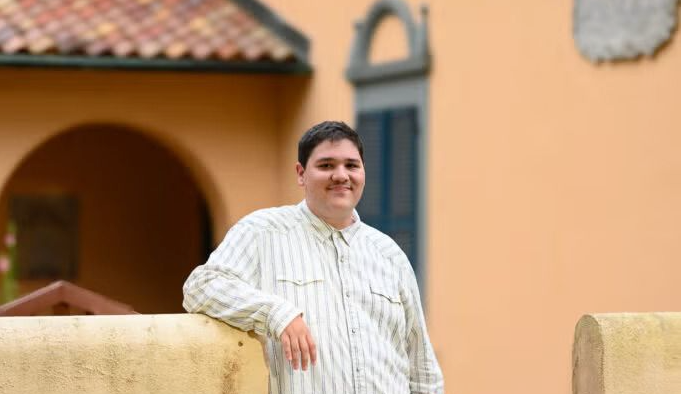
A freshman chemistry major from Hinesville, Georgia, Geovanii Pacheco already has his sights set on a career in pharmacy. His ambition is rooted not just in a love for science, but in personal experience. Growing up, his family spent countless hours navigating prescriptions and insurance coverage for his older brother, Devin, who has autism. During those moments, one pharmacist consistently stood out. This was someone who advocated for his family, helped them through paperwork and made sure Devin got the medication he needed. “It really resonated with me,” Pacheco said. “As a pharmacist, I’d like to embody what she did for us, for others as well.” That goal brought Pacheco to Georgia Southern University where he is now supported by the National Science Foundation’s S-STEM Scholarship Program Award. This is a nearly $2 million grant designed to support Pell-eligible students pursuing degrees in biochemistry, biology, chemistry, geosciences, mathematics, physics or sustainability science. For Pacheco, the program has been nothing short of life-changing. “I can say that I’m not going to college with any financial stress,” he said. “I have no money coming out-of-pocket.” Administered through Georgia Southern’s College of Science and Mathematics, the federally funded program provides last-dollar scholarships that cover remaining costs after Pell Grants and other aid are applied. In addition to financial support, the program pairs students with dedicated faculty mentors and offers structured programming aimed at retention, professional development and long-term success. Sara Gremillion, Ph.D., professor of biology and principal investigator on the grant, said the goal is to ensure that students don’t just enroll in college, but that they also thrive once they arrive. “They may not have a strong expectation about what to expect in college,” said Gremillion. “This program not only removes financial barriers, but it also surrounds students with the support they need to navigate college and plan for their future.” Pacheco has felt that impact from day one. Thanks to the program, he moved into his residence hall a week early to attend a one-week Basebamp program to jump start his college experience. There, he met fellow scholarship recipients and connected with his faculty mentor before classes even began. His mentor, Shainaz Landge, Ph.D., associate professor of chemistry, has helped connect Pacheco with opportunities from joining the Student Affiliates of the American Chemical Society to learning about upcoming pre-pharmacy organizations and undergraduate research. “Students such as Geovanii serve as prime examples of the fulfillment derived from mentorship and teaching,” said Landge. “Their growth and engagement highlight the critical role that effective mentorship plays in fostering both academic development.” That blend of mentorship and financial support is exactly what the grant was designed to provide. Over five years, the program will serve dozens of students in eligible majors such as chemistry, biology, biomedical science, biochemistry, physics, mathematics, sustainability science and geoscience. Each student receives individualized scholarship support, up to $15,000 per year, based on need, along with a faculty mentor who stays with them throughout their undergraduate journey. For Pacheco and his family, the scholarship brought immediate relief. He vividly remembers opening the acceptance email with his mother and scrolling down to see the financial aid details. “She was tickled, let me tell you,” he said. “It lifted so much stress off her shoulders. It was life-changing.” Applications to be part of the next cohort of COSM S-STEM Scholars are open until Feb. 1, 2026. Eligibility requirements, necessary documentation and other information can be found at this webpage. Looking to know more about Georgia Southern University or the National Science Foundation’s S-STEM Scholarship Program Award? Simply contact Georgia Southern's Director of Communications Jennifer Wise at jwise@georgiasouthern.edu to arrange an interview today.

Study: What makes a smell bad?
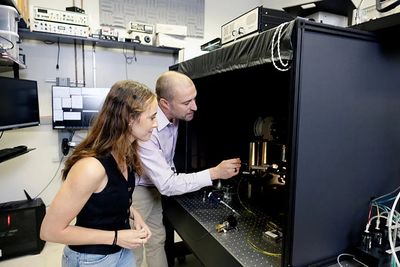
You wouldn’t microwave fish around your worst enemy — the smell lingers both in kitchen and memory. It is one few of us like, let alone have positive associations with. But what makes our brains decide a smell is stinky? A new study from UF Health researchers reveals the mechanisms behind how your brain decides you dislike — even loathe — a smell. Or as first author and graduate research fellow Sarah Sniffen puts it: How do odors come to acquire some sort of emotional charge? In many ways, our world capitalizes upon the importance of smells to influence emotions, running the gamut from perfumes to cooking and even grocery store design. “Odors are powerful at driving emotions, and it’s long been thought that the sense of smell is just as powerful, if not more powerful, at driving an emotional response as a picture, a song or any other sensory stimulus,” said senior author Dan Wesson, Ph.D., a professor of pharmacology and therapeutics in the UF College of Medicine and interim director of the Florida Chemical Senses Institute. But until now, researchers have puzzled over what circuitry connects the parts of the brain vital to generating an emotional response with those responsible for smell perception. The team started off with the amygdala, a brain region that curates your emotional responses to sensory stimuli. Although all our senses (sound, sight, taste, touch and smell) interact with this small part of your brain, the olfactory system takes a more direct route to it. “This is, in part, what we mean when we say your sense of smell is your most emotional sense,” Sniffen said. “Yes, smells evoke strong, emotional memories, but the brain’s smell centers are more closely connected with emotional centers like the amygdala.” In the study, researchers looked at mice, who share neurochemical similarities with people. They can learn about odors and categorize them as good or bad. After observing their behavior and analyzing brain activity, the team found two genetically unique brain cell types that allow odors to be assigned into a bucket of good feelings or bad feelings. Initially, the team expected that one cell type would generate a positive emotion to an odor, and another would generate a negative emotion. Instead, the brain’s cellular organization gives the cells the capability of doing either. “It can make an odor positive or negative to you,” Wesson said. “And it all depends upon where that cell type projects in your brain and how it engages with structures in your brain.” But why is knowing more about how we categorize smells important? Well, for starters, smells — and our reactions to them — are a part of life. Sometimes, however, our reactions to them can be outsized, or take on a negative association so strong it disrupts how we live. “We’re constantly breathing in and out and that means that we’re constantly receiving olfactory input,” Sniffen said. “For some people that’s fine, and it doesn’t impact their day-to-day life. They might even think, ‘Oh, odors don’t matter that much.’ But for people who have a heightened response to sensory stimuli, like those with PTSD or anxiety or autism, it’s a really important factor for their day-to-day life.” In the future, the research could help clinicians adjust for heightened sensory response that some people struggle with in their everyday lives, Wesson added. One example? A patient associating a clinic’s smell with transfusions that made them queasy. Based upon the receptor systems in these specific brain pathways, the team members believe they might be able to change those associations. Potentially, medications could suppress some of these pathways’ activity to allow you to overcome stressful and aversive emotional responses. Conversely, these pathways could be activated to restore enjoyment to things that people might have grown indifferent to — like those who lose their appetite from illness. “Emotions in part dictate our quality of life, and we’re learning more about how they arise in our brain,” Wesson said. “Understanding more about how our surroundings can impact our feelings can help us become happier, healthier humans.” This research was supported by funding from the National Institute on Deafness and Other Communication Disorders and the National Institute on Drug Abuse. Sarah Sniffen was supported by a fellowship from the National Institute on Deafness and Other Communication Disorders.

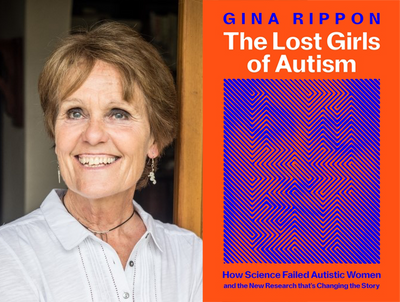
Gina Rippon, professor emeritus of cognitive neuroimaging at Aston University, has won an award for her book, The Lost Girls of Autism The book won the 2025 British Psychological Society Popular Science Award It explores the emerging science of female autism, and examines why it has been systematically ignored and misunderstood for so long. The Lost Girls of Autism, the latest book from Gina Rippon, professor emeritus of cognitive neuroimaging at Aston University Institute of Health and Neurodevelopment (IHN), has won the 2025 British Psychological Society (BPS) Popular Science Award. The annual BPS Book Awards recognise exceptional published works in the field of psychology. There are four categories – popular science, textbook, academic monograph and practitioner text. With the subtitle ‘How Science Failed Autistic Women and the New Research that’s Changing the Story’, The Lost Girls of Autism explores the emerging science of female autism, and examines why it has been systematically ignored and misunderstood for so long. Historically, clinicians believed that autism was a male condition, and simply did not look for it in girls and women. This has meant that autistic girls visiting a doctor have been misdiagnosed with anxiety, depression or personality disorders, or are missed altogether. Many women only discover they have the condition when they are much older. Professor Rippon said: “It's such a pleasure and an honour to receive this award from the BPS. It’s obviously flattering to join the great company of previous winners, but I’m also extremely grateful for the attention drawn to the issues raised in the book. “Over many decades, due to autism’s ‘male spotlight’ problem, autistic girls and women have been overlooked, deprived of the help they needed, and even denied access to the very research studies that could widen our understanding of autism. This book tells the stories of these girls and women, and I’m thrilled to accept this prize on their behalf.”


University of Delaware, in close collaboration with Delaware State Police, the Delaware Association of Chiefs of Police, the Office of Highway Safety, and the Delaware DMV, has co-developed the Blue Envelope Program – now launched statewide as of Aug. 26, 2025. The program offers no-questions-asked, no-ID-required, free envelopes that drivers with disabilities (including communication differences, sensory needs, mobility limitations, or other differences) can keep in their vehicle. The envelope includes space for emergency contact or medical notes, instructions for law enforcement and tips to ensure safe, respectful, clear exchanges during traffic stops. The University of Delaware Center for Disabilities Studies helped review and approve the content and design to ensure inclusivity and accessibility. UD experts – including Sarah Mallory (Associate Director of the Center for Disabilities Studies) and Alisha Fletcher (Director, Delaware Network for Excellence in Autism) – are available to speak about how the program supports an underserved and underrepresented group and improves outcomes in law enforcement encounters. Why This Matters: Traffic stops can be stressful for drivers with disabilities and can lead to misinterpretations or heightened risk. The Blue Envelope helps reduce misunderstandings while preserving dignity and safety. Delaware joins around 10 other states (including Maine, Massachusetts, New Jersey, New York, Rhode Island, and Vermont) in adopting a traffic-stop communication aid for drivers with disabilities This is a practical, no-barrier solution that promotes equity, accessibility, and respectful law enforcement practices. To speak with either Mallory or Fletcher to learn more about the program's development, impact and what’s next, email mediarelations@udel.edu.
New autism and disability training at Aston University aims to close gaps in healthcare
Aston University is leading a national shift in healthcare education with the rollout of Tier 1 of the Oliver McGowan Mandatory Training (OMMT) — a pioneering initiative developed by NHS England to improve support for individuals with autism and learning disabilities. Oliver McGowan was an 18-year-old with autism and learning disabilities who died in 2016 after a bad reaction to medication for epileptic seizures, which both he and his parents had requested should not be given after a previous bad reaction. Oliver's death was ruled 'avoidable' and revealed serious gaps in training for medical professionals caring for those with autism and learning difficulties. Oliver's mother Paula set up a foundation to campaign for appropriate training, and in 2022, an UK act of parliament mandated learning disability and autism training for all healthcare staff registered with the Care Quality Commission (CQC). This is now being introduced. The evaluation of the project at Aston University is being led by Dr Amreen Bashir, senior lecturer in biomedical science, in close collaboration with Dr Mary Drozd, senior teaching fellow in nursing and Dr Jayne Murphy, associate professorial teaching fellow in nursing. Aston is one of the first universities in the UK to implement this training across undergraduate healthcare programmes, including Nursing, Biomedical Science, Pharmacy, Optometry, and Physician Associate Studies. “Our students not only gained new knowledge, but they were vocal about the importance of this training staying in the curriculum permanently,” said Dr. Bashir. Student feedback highlights the transformative impact of the training: “I will use the training to ensure the patient care I provide is accommodating to people with special needs and will offer reasonable adjustments when needed. I understand autism and learning difficulties are not like other disabilities which are commonly physically noticed and that they may me hidden.” “The most useful aspect of the Oliver McGowan training is its focus on real-life experiences shared by individuals with autism and learning disabilities. These personal insights help to contextualise the challenges they face, making the training relatable and impactful.” “It opened my eyes as to how even within people who are practising and have already been working in clinical settings lack the understanding on how to care and approach those with autism and/or learning disabilities. It shouldn’t have got to a stage where what happened with Oliver happened and I am glad I have had this training so that I know what I can do as a healthcare professional in these situations. My previous job as a support worker also helped as I worked with service users who had autism and learning disabilities as well as physical disabilities and so this training assisted the knowledge I had already gained.” Measuring the impact A total of 176 students completed the pre-intervention survey and 94 students completed the survey post-OMMT. Participants were drawn from Nursing, Biomedical Science, Physician Associate Practice, Optometry, and Pharmacy at Aston University. How the training works Tier 1 of the OMMT consists of two parts: a 90-minute e-learning session completed independently, followed by a one-hour live interactive webinar co-facilitated by trained professionals and experts by experience. This format allows for reflective discussion and a deeper understanding of autism and learning disabilities through real-world perspectives. Post-training surveys measured changes in knowledge, attitudes, and perceptions. Early results Students showed significantly improved understanding of autism and learning disabilities, as well as greater sensitivity toward tailoring communication to individual needs. The training also identified critical areas for further attention, such as the role of ethnicity in healthcare access and the impact of silent conditions like constipation, which can go undetected and lead to preventable harm. The findings will be presented at the upcoming 'Horizons in STEM' higher education conference, which is being hosted at Aston University, with a manuscript currently in preparation for peer-reviewed publication. By embedding OMMT into its core curricula, Aston University is setting a benchmark for inclusive healthcare education across the UK. To follow this research or explore collaboration on the OMMT initiative, contact: Dr Amreen Bashir – a.bashir6@aston.ac.uk Dr Mary Drozd – m.drozd@aston.ac.uk Dr Jayne Murphy – j.murphy5@aston.ac.uk


Professor Gina Rippon signs a copy of The Lost Girls of Autism for talk attendee Dr Georgie Agar Professor Gina Rippon’s new book, The Lost Girls of Autism, investigates why autism was thought to be a male condition for so long She gave a public talk at Aston University on 6 May 2025 exploring the central themes of the book Women and girls with autism have long been overlooked as they are better at masking and camouflaging so ‘fail’ standard tests. Autism in women and girls has been overlooked for decades, and Gina Rippon, professor emeritus of cognitive neuroimaging at Aston University Institute of Health and Neurodevelopment (IHN), has given a talk about her new book on the topic at Aston University. The book, The Lost Girls of Autism, was released on 3 April 2025, coinciding with Autism Acceptance Month, with the subtitle ‘How Science Failed Autistic Women and the New Research that’s Changing the Story’. Autism is characterised by a number of now well-known traits, including social awkwardness, extreme obsessions, and unusual movements and coping mechanisms known as ‘stimming’. It was (allegedly) first described in the 1940s separately by Austrian psychiatrists Leo Kanner and Hans Asperger. Originally identified as a rare developmental condition, since the 1980s, there has been an 800% increase in diagnoses, leading to concerns about an ‘autism epidemic’. There is a strong and enduring belief that it is a condition much more prevalent in males. Professor Rippon described her research as “looking at how brains get to be different and what that means for the owners of those brains”. This includes looking at the functions of different areas of the brain using scanners. During research into a number of brain conditions and diseases with obvious differences between the sexes, including how the disease progresses, such as Alzheimer’s in women, or prevalence in one particular sex, such as Parkinson’s in men, Professor Rippon also became interested in autism, also assumed to be largely a condition in males. However, during a research review, she found that many autism studies made no reference to sex differences. Amalgamated data from autism studies found that 80% of participants were male, and 25% of testing centres only tested males with autism. By only looking at males, Professor Rippon explained, the notion that autism is a male disorder became self-fulfilling. This does not just refer to scientific research. Even now, boys are ten times more likely to be referred for assessment for autism and twice as likely to be diagnosed than girls, even when they have exactly the same traits. 80% of autistic females have received multiple wrong diagnoses, including borderline personality disorder, social anxiety or obsessive-compulsive disorder (OCD). But why? The reason is the unchallenged belief that ‘autism is a “boy” thing’ causing a male spotlight problem in all aspects of the autism story. It could also be that females with autism express the condition differently. Professor Rippon said: “This took me back to [my previous book] The Gendered Brain when I was looking at the very clear view of what males should be like and what females should be like. If you look at the autistic population you have this clear idea that males are like this, but females, er, not so much? Females have poor social skills, but not as poor, or obsessive interests, but not as obsessive, so the trouble with females, is that they are not autistic enough.” The gold standard tests for autism are the Autism Diagnostic Observation Schedule (ADOS) and the Autism Diagnostic Interview (ADI) tests. Professor Rippon believes these are heavily biased towards how the condition manifests itself in males, such as social awkwardness or extreme obsessions. For example, parents may well be asked if their son has an unusual interest in weather patterns or train timetables, but they are not asked if their daughter has an unusual interest in Barbie dolls, because dolls are seen as socially acceptable. Research has shown that females with autism are more likely to ‘camouflage’ their symptoms, watching how ‘normal people’ behave, even practising social interactions, so they appear more normal. They are also more likely to ‘mask’ symptoms behind a persona, such as the ‘class clown’ or ‘star athlete’, in an effort to fit in. Autistic females describe this behaviour as a ‘survival strategy’ to avoid being spotted as different. It is also the case that girls are more likely to have sensory processing problems, such as aversion to strong smells, which can be enough to affect their day-to-day lives. This has only recently been added to the diagnostic criteria for autism. If the camouflaging or masking collapses, rates of other conditions such as disordered eating or anorexia, self-harm and gender dysphoria are disproportionately high, and it is these which will become identified as the underlying difficulty, rather than autism itself. Professor Rippon said: “The next stage should be asking why this group of individuals persists in hiding their autism, especially when autism has been defined as a lack of interest in social connection. There’s what I call the ‘born to be mild’ effect, where little girls are trained to socialise more, to behave, not to make a fuss, if you feel uncomfortable, don’t tell anyone else about it. There’s a lovely comment from one late-diagnosed female who rues the fact that she was so well behaved and wishes that she had just burned more cars so that someone would have spotted her carefully camouflaged distress!” The final slide in the presentation covered what Professor Rippon called “an ironic footnote”. While Leo Kanner and Hans Asperger are described as the fathers of autism, writing in the 1940s, it was in fact a Soviet female psychiatrist, Grunya Sukhareva, writing in the 1920s, who first described autism, even clearly examining the differences in the condition between boys and girls. Why her research was ignored for so long is unclear, but the male spotlight problem may well have been avoided. For more information about The Lost Girls of Autism, visit https://www.panmacmillan.com/authors/gina-rippon/the-lost-girls-of-autism/9781035011629.

Hormone Supplementation in Rhesus Monkeys Points to Potential Autism Treatment
For years, Florida Tech’s Catherine Talbot, assistant professor of psychology, has worked to understand the sociality of male rhesus monkeys and how low-social monkeys can serve as a model for humans with autism. Her most recent findings show that replenishing a deficient hormone, vasopressin, helped the monkeys become more social without increasing their aggression – a discovery that could change autism treatment. Currently, the Centers for Disease Control and Prevention report that one in 36 children in the United States is affected by autism spectrum disorder (ASD). That’s an increase from one in 44 children reported in 2018. Two FDA-approved treatments currently exist, Talbot said, but they only address associated symptoms, not the root of ASD. The boost in both prevalence and awareness of the disorder prompts the following question: What is the cause? Some rhesus monkeys are naturally low-social, meaning they demonstrate poor social cognitive skills, while others are highly social. Their individual variation in sociality is comparable to how human sociality varies, ranging from people we consider social butterflies to those who are not interested in social interactions, similar to some people diagnosed with ASD, Talbot said. Her goal has been to understand how variations in biology and behavior influence social cognition. In the recent research paper published in the journal PNAS, “Nebulized vasopressin penetrates CSF [cerebral spinal fluid] and improves social cognition without inducing aggression in a rhesus monkey model of autism,” Talbot and researchers with Stanford, the University of California, Davis and the California National Primate Research Center explored vasopressin, a hormone that is known to contribute to mammalian social behavior, as a potential therapeutic treatment that may ultimately help people with autism better function in society. Previous work from this research group found that vasopressin levels are lower in their low-social rhesus monkey model, as well as in a select group of people with ASD. Previous studies testing vasopressin in rodents found that increased hormone levels caused more aggression. As a result, researchers warned against administering vasopressin as treatment, Talbot said. However, she argued that in those studies, vasopressin induced aggression in contexts where aggression is the socially appropriate response, such as guarding mates in their home territory, so the hormone may promote species-typical behavior. She also noted that the previous studies tested vasopressin in “neurotypical” rodents, as opposed to animals with low-social tendencies. “It may be that individuals with the lowest levels of vasopressin may benefit the most from it – that is the step forward toward precision medicine that we now need to study,” Talbot said. In her latest paper, Talbot and her co-authors tested how low-social monkeys, with low vasopressin levels and high autistic-like trait burden, responded to vasopressin supplementation to make up for their natural deficiency. They administered the hormone through a nebulizer, which the monkeys could opt into. For a few minutes each week, the monkeys voluntarily held their face up to a nebulizer to receive their dose while sipping white grape juice – a favorite among the monkeys, Talbot said. After administering the hormone and verifying that it increased vasopressin levels in the central nervous system, the researchers wanted to see how the monkeys responded to both affiliative and aggressive stimuli by showing them videos depicting these behaviors. They also compared their ability to recognize and remember new objects and faces, which is another important social skill. They found that normally low-social monkeys do not respond to social communication and were better at recognizing and remembering objects compared to faces, similar to some humans diagnosed with ASD. When the monkeys were given vasopressin, they began reciprocating affiliative, pro-social behaviors, but not aggression. It also improved their facial recognition memory, making it equivalent to their recognition memory of objects. In other words, vasopressin “rescued” low-social monkeys’ ability to respond prosocially to others and to remember new faces. The treatment was successful – vasopressin selectively improved the social cognition of these low-social monkeys. “It was really exciting to see this come to fruition after pouring so much work into this project and overcoming so many challenges,” Talbot said of her findings. One of Talbot’s co-authors has already begun translating this work to cohorts of autism patients. She expects more clinical trials to follow. In the immediate future, Talbot is examining how other, more complex social cognitive abilities like theory of mind – the ability to take the perspective of another – may differ in low-social monkeys compared to more social monkeys and how this relates to their underlying biology. Beyond that, Talbot hopes that they can target young monkeys who are “at-risk” of developing social deficits related to autism for vasopressin treatment to see if early intervention might help change their developmental trajectory and eventually translate this therapy to targeted human trials. Catherine F. Talbot is an Assistant Professor in the School of Psychology at Florida Tech and co-director of the Animal Cognitive Research Center at Brevard Zoo. Dr. Talbot joined Florida Tech from the Neuroscience and Behavior Unit at the California National Primate Research Center at the University of California, Davis, where she worked as a postdoc on a collaborative bio-behavioral project examining naturally occurring low-sociability in rhesus monkeys as a model for the core social deficits seen in people with autism spectrum disorder, specifically targeting the underlying mechanisms of social functioning. If you're interested in connecting with Catherine Talbot - simply contact Adam Lowenstein, Director of Media Communications at Florida Institute of Technology at adam@fit.edu to arrange an interview today.

With Rise in US Autism Rates, Florida Tech Expert Clarifies What We Know About the Disorder
A new report from the Centers for Disease Control and Prevention (CDC) found that an estimated 1 in 31 U.S. children has autism; that's about a 15% increase from a 2020 report, which estimated 1 in 36. The latest numbers come from the CDC’s Autism and Developmental Disabilities Monitoring (ADDM) Network, which tracked diagnoses in 2022 among 8-year-old children. Autism spectrum disorder (ASD) is a neurological disorder that refers to a broad range of conditions affecting social interaction. People with autism may experience challenges with social skills, repetitive behaviors, speech and nonverbal communication. The news has experts like Florida Tech's Kimberly Sloman, Ph.D, weighing in on the matter. She noted that the definition of autism was expanded to include mild cases, which could explain the increase. “Research shows that increased rates are largely due to increased awareness and changes to diagnostic criteria. Much of the increase reflects individuals who have fewer support needs, women and girls and others who may have been misdiagnosed previously," said Sloman. Her insight follows federal health secretary Robert F. Kennedy Jr.'s recent declaration, vowing to conduct further studies to identify environmental factors that could cause the disorder. In his remarks, he also miscategorized autism as a "preventable disease," prompting scrutiny from experts and media attention. “Autism destroys families,” Kennedy said. “More importantly, it destroys our greatest resource, which is our children. These are children who should not be suffering like this.” Kennedy described autism as a “preventable disease,” although researchers and scientists have identified genetic factors that are associated with it. Autism is not considered a disease, but a complex disorder that affects the brain. Cases range widely in severity, with symptoms that can include delays in language, learning, and social or emotional skills. Some autistic traits can go unnoticed well into adulthood. Those who have spent decades researching autism have found no single cause. Besides genetics, scientists have identified various possible factors, including the age of a child’s father, the mother’s weight, and whether she had diabetes or was exposed to certain chemicals. Kennedy said his wide-ranging plan to determine the cause of autism will look at all of those environmental factors, and others. He had previously set a September deadline for determining what causes autism, but said Wednesday that by then, his department will determine at least “some” of the answers. The effort will involve issuing grants to universities and researchers, Kennedy said. He said the researchers will be encouraged to “follow the science, no matter what it says.” April 17 - Associated Press Sloman emphasized that experts are confident that autism has a strong genetic component, meaning there's an element of the disorder that may not be preventable. However, scientists are still working to understand the full scope of the disorder, and much is still unknown. “We know that there’s a strong genetic component for autism, but environmental factors may interact with genetic susceptibility," Sloman said. "This is still not well understood.” Kimberly Sloman’s research interests include best practices for treating individuals with autism spectrum disorder (ASD). She studies the assessment and treatment of problem behavior with methods such as stereotypy, individualized skill assessments and generalization of treatment effects. Are you covering this story or looking to know more about autism and the research behind the disorder? Let us help. Kimberly is available to speak with media about this subject. Simply click on her icon now to arrange an interview today.


The Lost Girls of Autism is published on 3 April 2025, coinciding with Autism Awareness Month in April In the book, Professor Rippon explores the ‘male’ history of autism, and why autism in women has been misunderstood and ignored Professor Rippon will give a free public lecture on the book at Aston University on 6 May 2025. Gina Rippon, professor emeritus of cognitive neuroimaging at Aston University Institute of Health and Neurodevelopment (IHN), has written a new book, entitled The Lost Girls of Autism. The book will be released on 3 April 2025, coinciding with Autism Acceptance Month in April. It has the subtitle ‘How Science Failed Autistic Women and the New Research that’s Changing the Story’. Historically, doctors believed that autism was a male condition, and simply did not look for it in girls and women. This has meant that autistic girls visiting a doctor have been misdiagnosed with anxiety, depression or personality disorders, or are missed altogether. Many women only discover they have the condition when they are much older, missing decades of support. In more recent years, it has become apparent that girls and women with autism have different traits and behaviours to boys and men, and are more likely to hide autistic traits to fit in – known as camouflaging. In The Lost Girls of Autism, Professor Rippon explores the emerging science of female autism, and examines why it has been systematically ignored and misunderstood for so long. Professor Rippon will give a free public lecture about her book on Tuesday 6 May 2025 at 18:00 BST at Aston Business School. Visit https://www.eventbrite.co.uk/e/the-lost-girls-of-autism-an-audience-with-author-gina-rippon-tickets-1304020734119 for more information and tickets. Copies of the book will be on sale at the event. Professor Rippon said: “This book reveals how a ‘male spotlight’ problem has biased many aspects of the autism story, from what autism is, to how we recognise it, and even how brain imagers like me search for answers. It shows how and why autistic women have been unrecognised, overlooked and unsupported. It shines a new light on how the story is changing and how we are now beginning to recognise the full spectrum of the autistic experience. It is for anyone with an interest in autism in all its presentations.”